Machu Picchu complete guide 2026
From Cusco: Machu Picchu Day Trip with Train Tickets
How do I visit Machu Picchu?
Buy a timed-entry ticket linked to your passport via tuboleto.cultura.pe, book your train from Ollantaytambo to Aguas Calientes, and take the bus up to the citadel entrance. Book all three simultaneously, ideally 4–8 weeks ahead in dry season. The citadel sits at 2,430 m — far lower than Cusco — so altitude is rarely a problem for visitors who have already spent a night in the region.
The honest planner’s guide to the Inca citadel
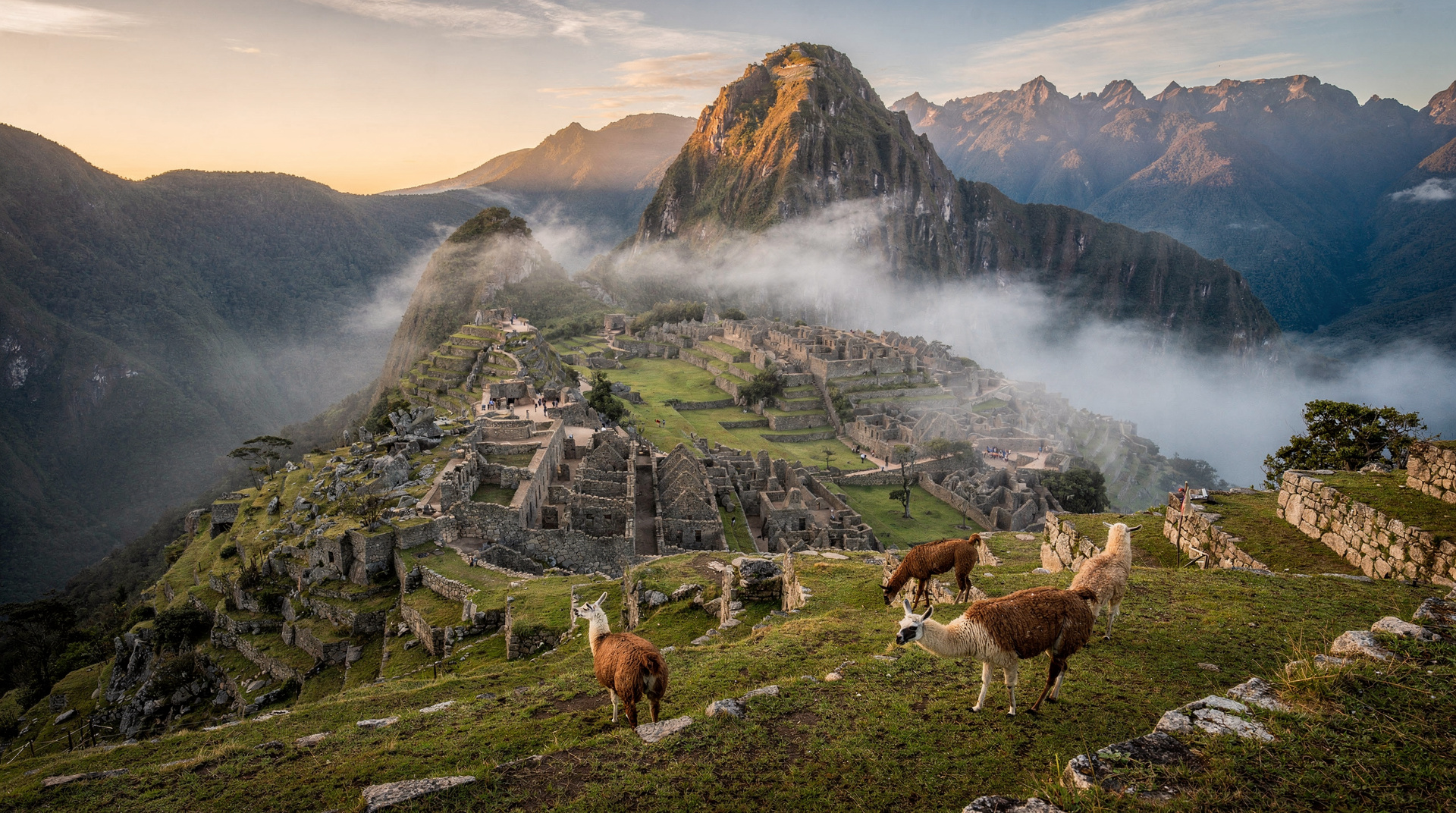
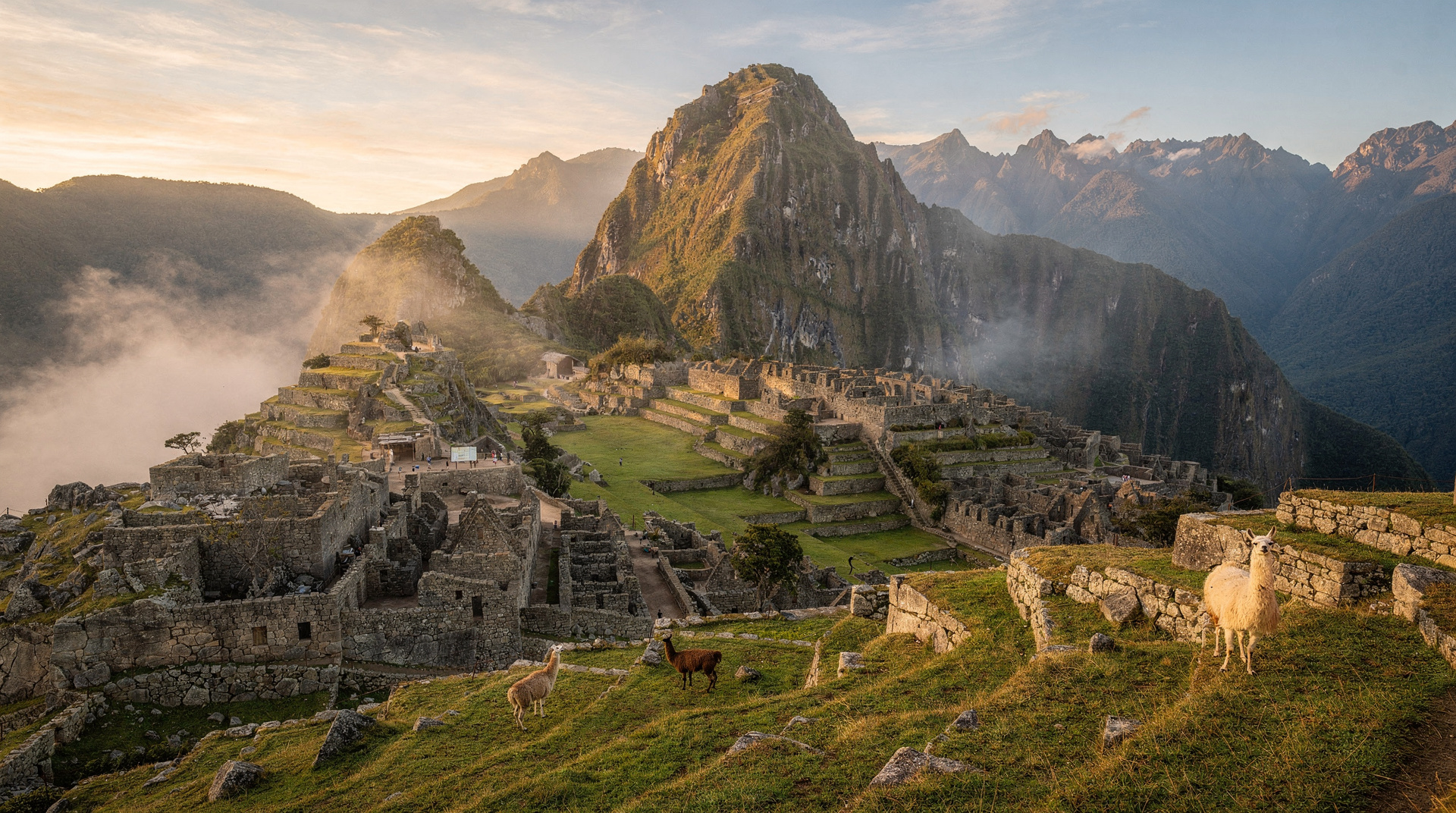
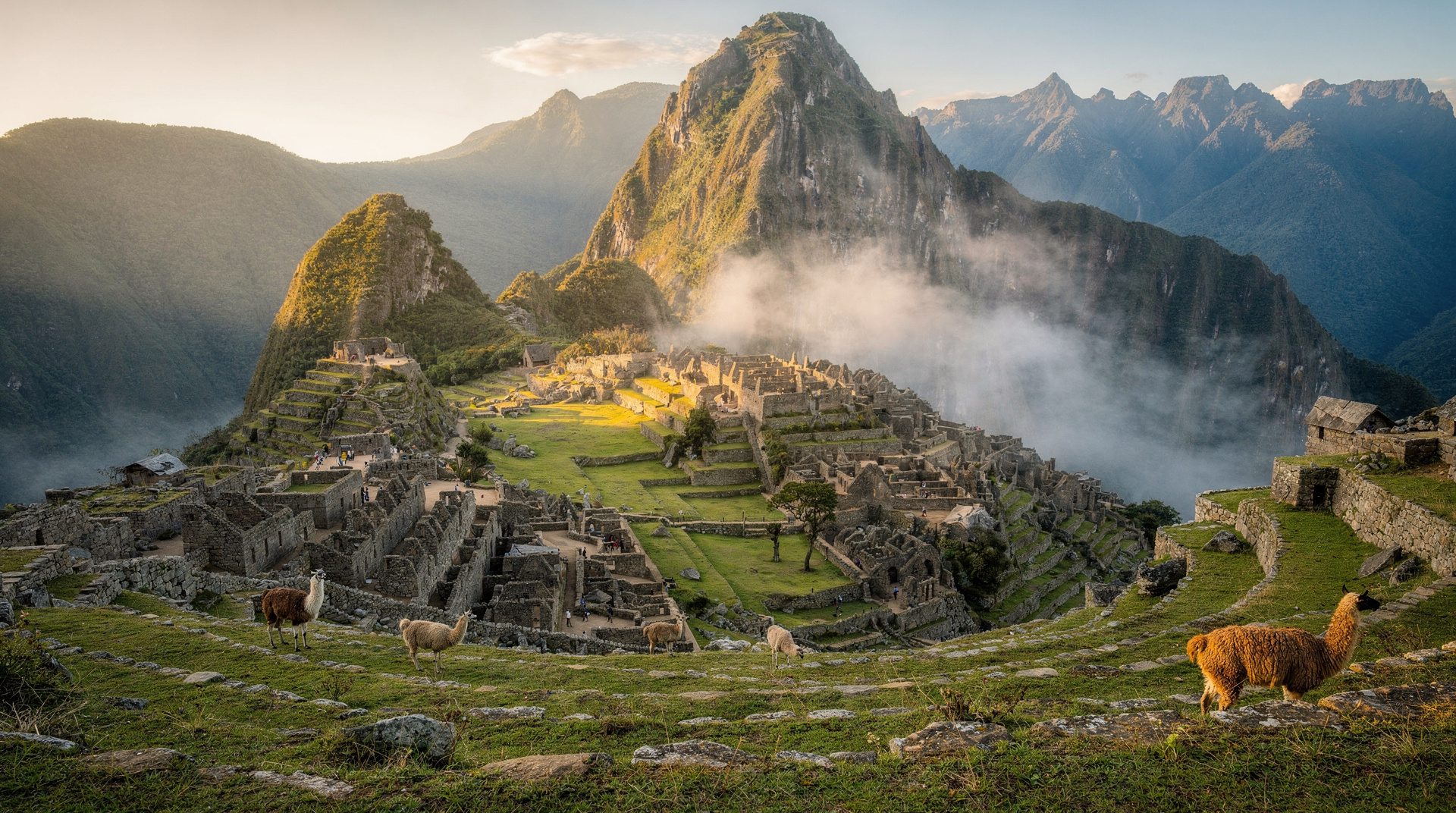
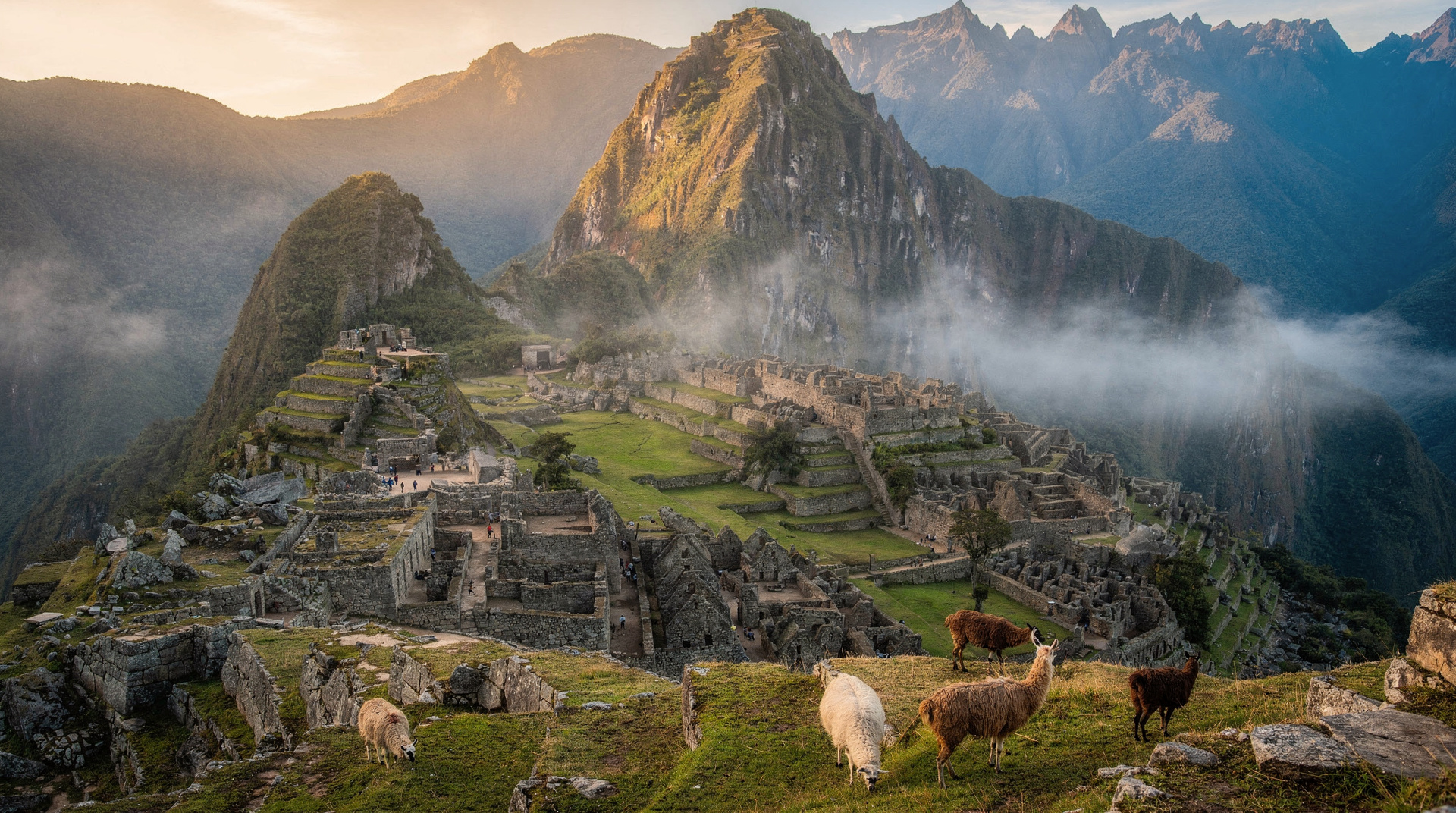
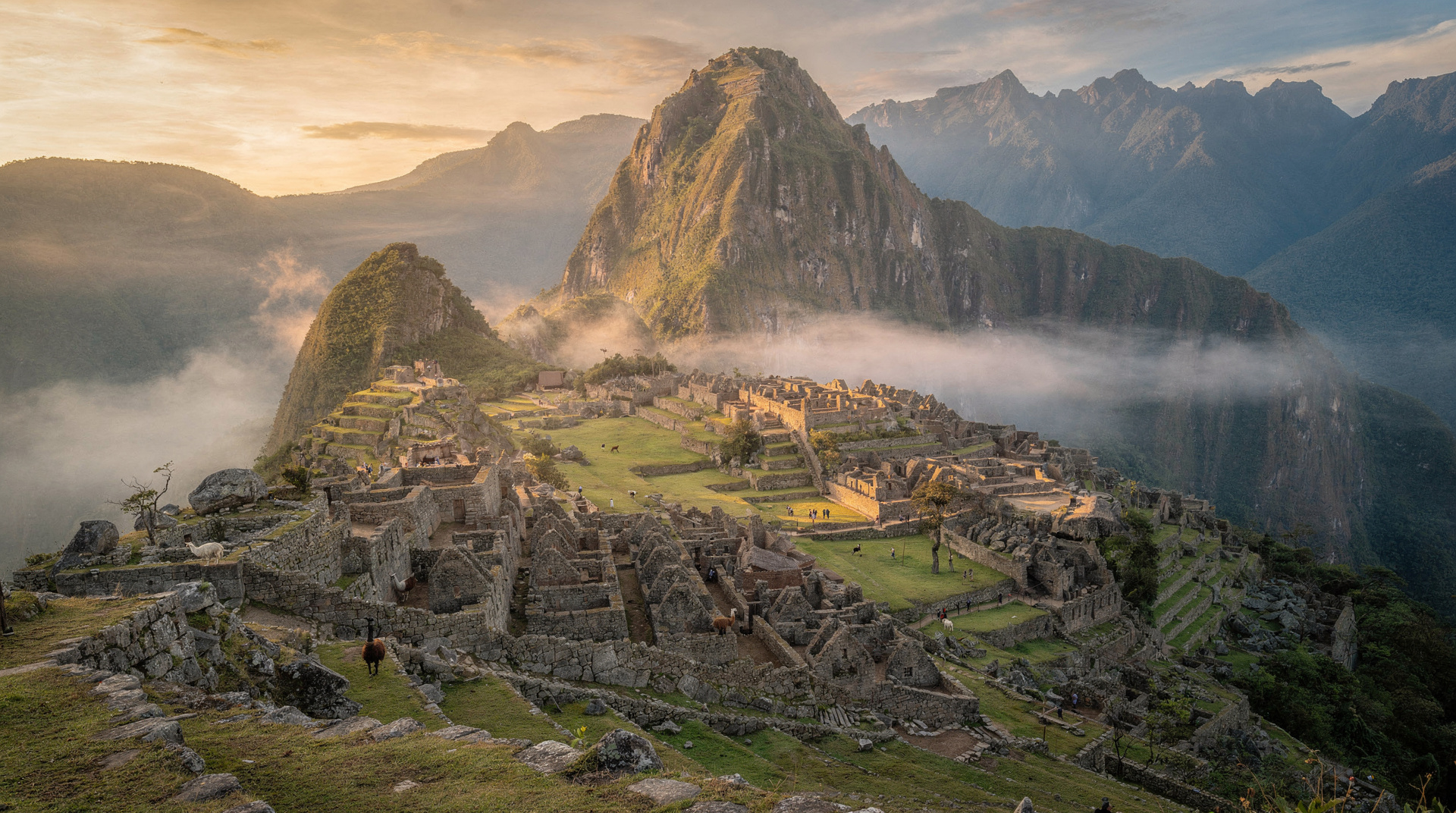
Machu Picchu sits at 2,430 m on a narrow ridge in the Urubamba cloud forest, roughly 80 km northwest of Cusco by road and nearly 1,000 m lower in altitude. The Inca emperor Pachacuti had it built in the mid-15th century; the Spanish never found it; and apart from local farmers who quietly kept growing crops on its terraces, it remained largely unknown to the outside world until Hiram Bingham arrived in 1911. Today it is a UNESCO World Heritage Site, one of the New Seven Wonders of the World, and at roughly five million visitors per year, one of the most visited heritage sites on the planet.
The photographs you have seen are accurate. But they cannot convey the stillness that settles in certain corners of the site before 8 am, the smell of damp stone and cloud forest, the hummingbirds moving between terraces, or the way the engineering looks impossible until a guide explains the principle behind each section. Machu Picchu rewards attention and preparation more than almost anywhere else in South America. Visitors who rush through with no context frequently feel underwhelmed; those who invest some preparation time come away calling it one of the best experiences of their lives.
This guide is the single reference you need before booking anything. It covers tickets, circuits, trains, transport alternatives, the mountain add-ons, timing, practical budget, and the handful of details that other guides omit. Everything that deserves its own full treatment links to a dedicated guide; this is your overview and planning anchor.
| Where | 80 km northwest of Cusco, 2,430 m, Urubamba cloud forest |
| Cost | Around S/152 entry ($45); $215–480+ total per person depending on style |
| Time needed | 1 long day (14–16 hrs door to door) or 2 days (recommended) |
| Getting there | Colectivo to Ollantaytambo, train to Aguas Calientes, bus to the gate |
| Best time | May, June or September; earliest entry slot regardless of season |
Why planning matters more at Machu Picchu than elsewhere
Most major heritage sites in South America can be visited with moderate advance planning. Machu Picchu is different because of three converging factors: a strict timed-entry ticket system introduced in 2024 that cannot be navigated on the day of arrival; a single transport corridor (there is no road to Aguas Calientes) that creates genuine bottlenecks; and peak-season demand that books out months ahead at every level — trains, hotel rooms, and mountain add-on tickets alike.
The visitors who have a poor experience at Machu Picchu almost always arrive underprepared. They miss the early entry window, spend the prime morning hours queuing rather than exploring, and leave exhausted having seen less than they expected. The visitors who plan well — who book early, understand the circuit system, and structure their day intelligently — almost universally describe it as exceptional.
Tickets and the timed-entry system
Since 2024, all visitors must hold a ticket for a specific timed circuit, purchased in advance and linked to their passport number. Entry is through the main gate in one-hour slots, from 6:00 to 15:00, with a late-arrival tolerance of up to 30 minutes in normal season (up to 45 minutes at the busiest times, 1 June to 15 October). At the mountain checkpoints there is no tolerance at all. Tickets are sold only on tuboleto.cultura.pe or at the Ministry of Culture (DDC Cusco) office in Machu Picchu Pueblo, where tickets bought in person are valid for entry the next day. Tickets cannot be transferred between passports. This is not a bureaucratic inconvenience; it is the mechanism that keeps the site from overwhelming itself.
The official booking portal is tuboleto.cultura.pe. This is a government Ministry of Culture portal — the only legitimate source of Machu Picchu tickets. Authorised agencies also book through this system on behalf of clients, which is perfectly legitimate. What is not legitimate is any third-party website, street tout, or unofficial agent claiming to have “spare tickets” or operating outside the official system. Counterfeit tickets are widespread in Aguas Calientes; the scanners at the gate detect them reliably and rejection is immediate with no refund.
Current entry prices (2026):
- Adult citadel entry (one circuit): approximately S/152 (~$45)
- Children aged 8–17: approximately S/77
- Children under 8: free (booking still required)
- Huayna Picchu add-on: approximately S/100–120 (~$30–35), strictly limited daily numbers
- Machu Picchu Mountain add-on: approximately S/100–120 (~$30–35), limited daily numbers
All prices are set by Peru’s Ministry of Culture and subject to annual revision. Always check tuboleto.cultura.pe for current figures rather than relying on figures from travel blogs, which may be out of date.
The full tickets guide covers every ticket type, the booking process step by step, how to spot fake tickets, and what to do if something goes wrong. Read it before booking anything.
Book Circuit 3 with a licensed guide included if you want a guided experience integrated with your entry ticket — the most straightforward option for visitors who do not want to manage multiple separate bookings.
The three circuits in plain terms
Since 1 June 2024 Machu Picchu has had three visitor circuits, which group ten routes between them. You select your circuit and route when purchasing your ticket, along with a specific entry time. There is no “Circuit 4”.
Circuit 1 — Panorámico: The circuit built around the famous view. Route 1-B (upper terrace) climbs to the high part of the site, towards the upper platforms and the Inca bridge area, and does not enter the urban sector. Circuit 1 also includes route 1-A (Machu Picchu Mountain) and, in high season only, routes 1-C (the Sun Gate, Intipunku) and 1-D (the Inca Bridge). Best for first-time visitors focused on the iconic photograph. The maximum stay on route 1-B is 2 hours 30 minutes.
Circuit 2 — Machu Picchu Clásico (the Inca city circuit): The archaeological depth route. Route 2-A crosses the urban sector: the Temple of the Sun viewpoint, the plaza of the temples, the Intihuatana pyramid, the Sacred Rock, the Doce Vanos, the eastern qolqas, the water mirrors, the Temple of the Condor and the Pisonay plaza. Route 2-B covers the lower terrace. The maximum stay on route 2-A is 2 hours 30 minutes. This is where a guide adds the most value.
Circuit 3 — Machu Picchu Realeza (the Royalty circuit): Route 3-B is another path through the urban sector, and the circuit also includes route 3-A (Huayna Picchu mountain) and, in high season only, routes 3-C (the Great Cavern) and 3-D (Huchuy Picchu). The maximum stay on route 3-B is 2 hours 30 minutes.
Which circuit and route suit you depends on how much time you have and whether you want a mountain climb. The detailed circuits guide explains each route, and tuboleto.cultura.pe shows exactly which options are on sale for your date.
Getting there: the three main routes
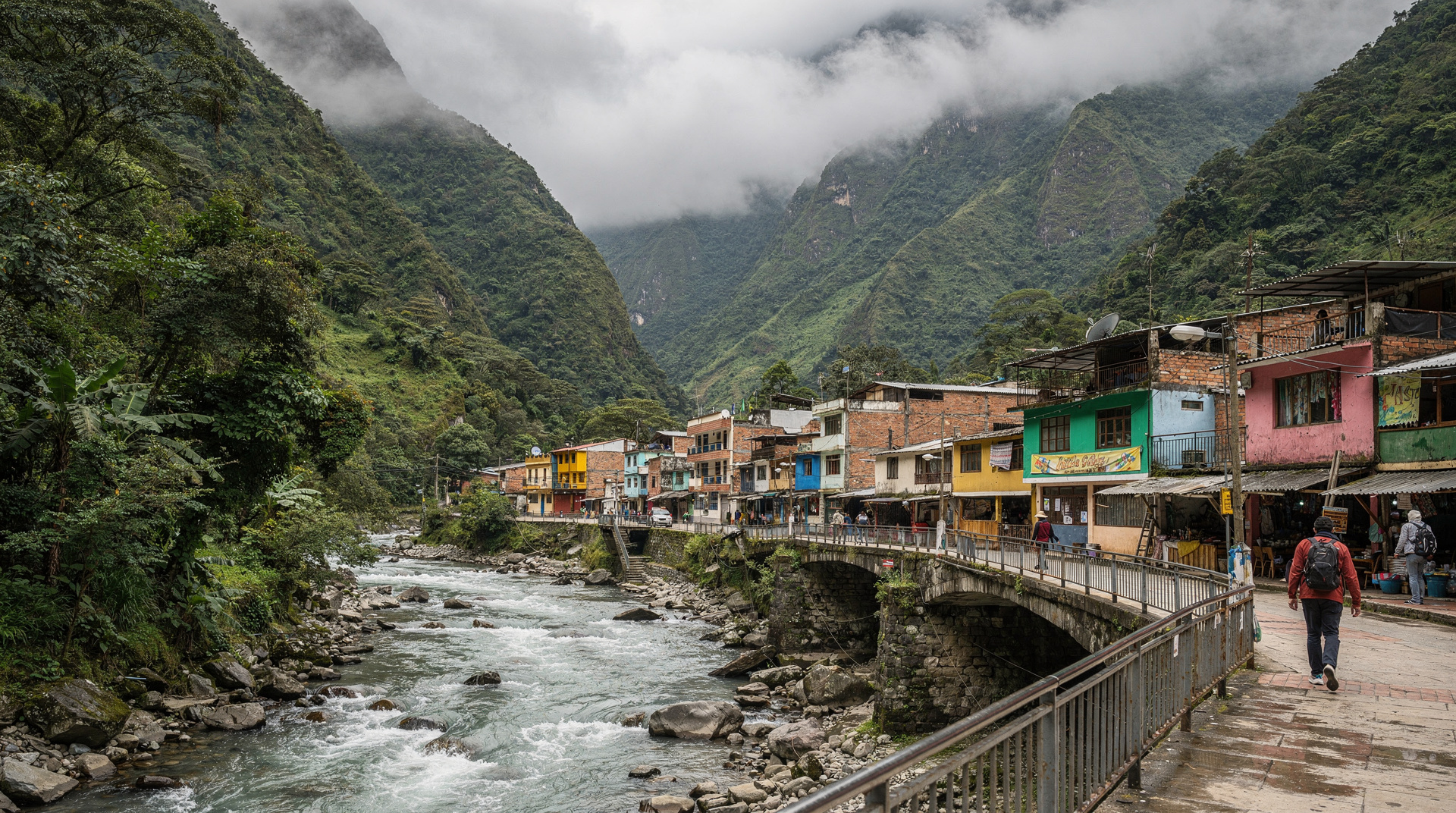
All routes to Machu Picchu converge on the town of Aguas Calientes, which sits directly below the citadel in the Urubamba valley. From Aguas Calientes, a bus up to the citadel gate takes 20 minutes (S/80 round trip), or a path on foot takes 45–60 minutes uphill.
Standard train route (recommended for most visitors)
Take a bus or colectivo from Cusco to Ollantaytambo in the Sacred Valley — approximately S/20–30 by shared colectivo, 1.5 hours. From Ollantaytambo, board a PeruRail or Inca Rail service to Aguas Calientes — roughly 1.5 hours on the Vistadome service, 2 hours on the standard Expedition class. Return train tickets cost approximately $60–130 depending on service class and booking lead time. The trains guide covers every service, class, price and booking tip.
A day trip from Cusco including train, bus and entrance ticket bundles all the logistics in a single booking — the simplest option if you are visiting for the first time and do not want to manage separate reservations.
Hidroeléctrica budget route
The low-cost alternative replaces the train with a shared van from Cusco to Hidroeléctrica station (4–5 hours, approximately S/60–90 each way) followed by a 10 km walk along the riverside path to Aguas Calientes (2.5–3 hours, essentially flat). Total transport is roughly half the train cost. Full detail in the Hidroeléctrica guide.
Trek routes
The 4-day Inca Trail arrives through the Sun Gate (Inti Punku) at dawn on day four — one of the most memorable arrivals at any site in the world. Permits are limited and sell out months ahead. The Salkantay trek (5 days) is the most popular permit-free alternative, ending in Aguas Calientes.
The mountain add-ons
Two peaks adjacent to the citadel can be climbed for dramatically different views. Both require separate tickets in addition to citadel entry.
Huayna Picchu: The iconic pointed peak in the background of the classic photograph. Near-vertical stone steps with rope handholds, 45–75 minutes to the summit, looking directly down onto the citadel. It is route 3-A of Circuit 3, with strictly limited daily numbers (check tuboleto.cultura.pe). In peak season, book as early as possible. There is no late-arrival tolerance at the checkpoint. Not suitable for vertigo sufferers. Price: approximately S/100–120 (~$30–35).
Machu Picchu Mountain: The larger peak to the south. Longer ascent (2–2.5 hours) gaining 700 m, panoramic view of the full ridge from a distance. It is route 1-A of Circuit 1, with limited daily numbers (check tuboleto.cultura.pe), and there is no late-arrival tolerance at the checkpoint. Price: approximately S/100–120 (~$30–35).
The Huayna Picchu vs Machu Picchu Mountain guide compares both options in full, including honest difficulty assessments and booking advice.
Timing: seasons, months and time of day
Dry season (May–September) brings reliable morning sunshine, cold nights in Aguas Calientes and the highest demand for trains and tickets. May and September offer nearly identical conditions to July–August but meaningfully fewer visitors.
Rainy season (November–March) is cheaper, less crowded, and dramatically atmospheric in the morning mist. Rain typically falls in the afternoons. The Inca Trail closes entirely in February for maintenance, but the citadel stays open year-round.
Shoulder months (April and October) balance reasonable weather, thinner crowds and lower prices. April in particular — when the dry season is just starting and vegetation is still lush from the rains — is considered by many experienced visitors to be the best single month.
Whatever month you visit, the single most impactful timing decision is your entry slot. The difference between the 6 am slot and the 9 am slot in terms of crowd level is larger than the difference between visiting in May versus July. Always book the earliest available slot. The best-time guide gives a detailed month-by-month breakdown including crowd patterns, weather, and price variation.
Altitude: why Machu Picchu is easier than you expect
At 2,430 m, Machu Picchu is significantly lower than Cusco (3,400 m) and the Sacred Valley (2,800–3,000 m). Most travellers who have spent 1–2 days in Cusco or the Valley feel entirely comfortable at the citadel. The altitude surprise goes the other way: coming down from Cusco to Machu Picchu often feels like a relief.
The mountain add-ons are a different matter. Huayna Picchu and Machu Picchu Mountain both involve strenuous climbing at elevations above 2,700 m and 3,000 m respectively. Attempt these only after proper acclimatisation in Cusco. The altitude sickness guide is worth reading before your trip regardless.
One day or two: making the right call
One day is genuinely sufficient for a single circuit and leaves most visitors satisfied. The format requires an early start from Cusco (3:30–4 am) and makes for a 14–16 hour travel day. It works. To make it work well: book the morning entry slot, hire a guide for the first 90 minutes, bring all your food and water, and leave the site before 1 pm to catch your return train.
Two days is a meaningfully better experience. Staying overnight in Aguas Calientes eliminates the 3:30 am Cusco departure and gives you two first-bus entry opportunities. If Huayna Picchu or Machu Picchu Mountain is on your list, two days is effectively required. The Aguas Calientes guide covers accommodation, food and how to structure the overnight stay.
Practical details that most guides skip
Food and water: The only food inside the site is at the Sanctuary Lodge at extreme prices. Pack minimum 1.5 litres of water and a light lunch before boarding the bus from Aguas Calientes. This point cannot be overstated — a significant number of visitors are caught out by this.
What to wear: Layers are essential. At 2,430 m, temperature varies 15–20°C between standing in direct sun and moving into cloud shadow. A lightweight waterproof layer is worth carrying regardless of morning forecast — afternoon weather changes fast in the cloud forest. Sturdy closed-toe shoes with grip are required; the stone paths are uneven and can be slippery when wet. Sandals are a mistake.
Photography rules: No tripods. Selfie sticks are banned in most zones. Drones are absolutely prohibited — the fine is significant. Standard cameras and phones are unrestricted.
Toilets: Located at the main entrance before the gate. There are none inside the citadel. Use them before entering.
Touching the stones: Prohibited. Signs are everywhere and guides repeat it. Fingerprint oils accelerate erosion on stone that has survived six centuries. The rule exists for a reason and is genuinely respected by responsible visitors.
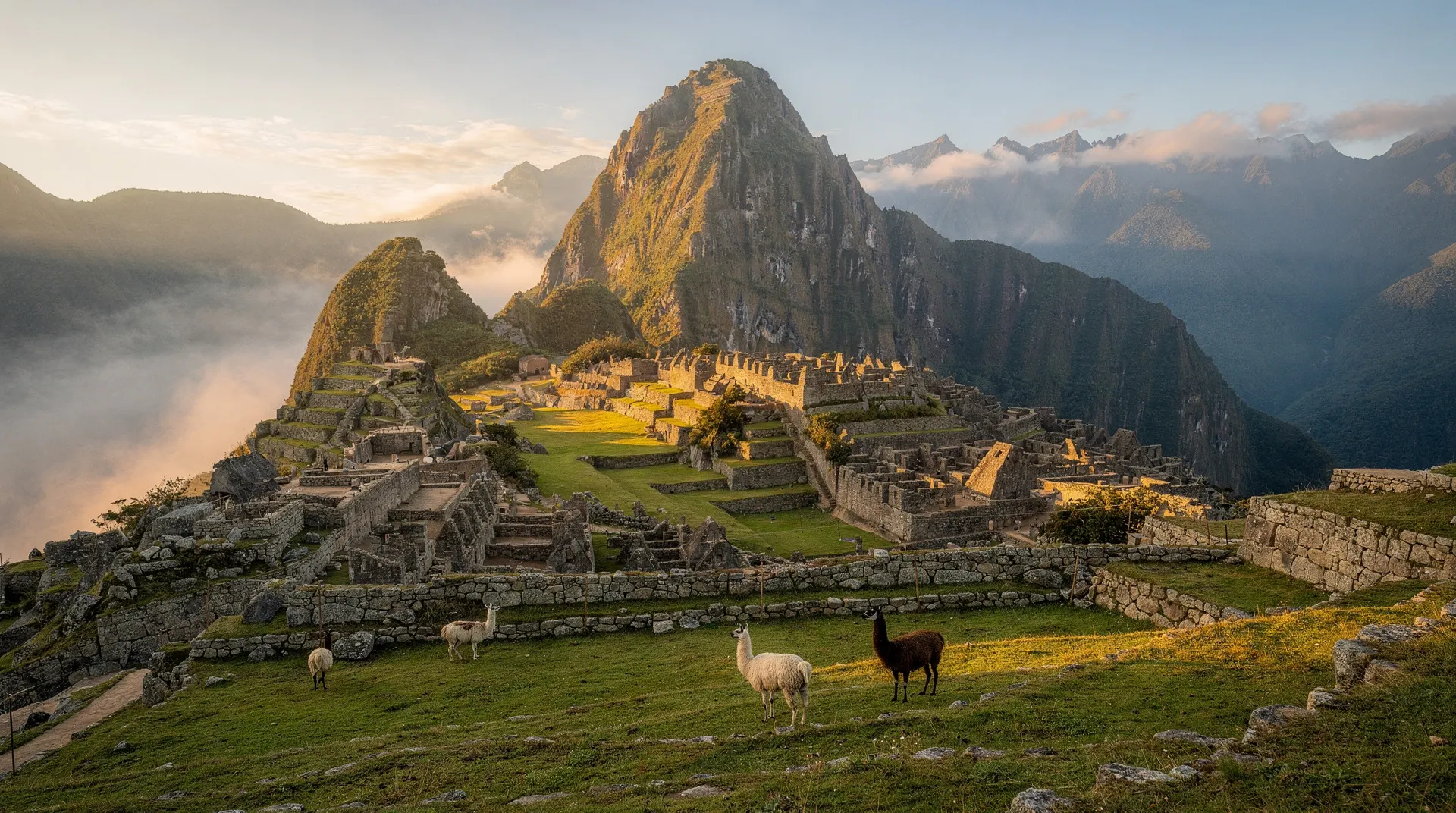
Llamas on the terraces: The herd is part of the active conservation programme — they graze the terraces and their presence is intentional, not incidental. Do not feed them or attempt to pet them. They bite and will do so without much warning.
Where to find the guided experience
A licensed guide adds more at Machu Picchu than at almost anywhere else in Peru. The density of astronomical alignments, construction techniques and historical context packed into the site is genuinely hard to absorb without someone pointing it out. An on-site guide booked at the gate costs approximately S/120–150 for a 2-hour session; English-speaking guides are available. Booking a full day trip that includes a licensed guide from Cusco is usually better value and removes the uncertainty of availability at the gate.
The history in brief: why Machu Picchu matters
Pachacuti, the ninth Sapa Inca, is generally credited with ordering the construction of Machu Picchu around 1450 CE. At this point the Inca Empire was at its greatest expansion — a territory stretching from southern Colombia to central Chile, with Cusco as its capital. Machu Picchu was not an administrative centre or a military fortification; scholars believe it functioned as a royal estate and a ceremonial site, used by the Inca nobility and vacated after the Spanish conquest brought the empire to a close in the 1530s.
The Spanish never found it. Their advance reached Cusco in 1533 and systematically destroyed or converted the major Inca sites they encountered. Machu Picchu’s geographic isolation — on a ridge above the cloud forest, accessible only by mountain paths — kept it unknown to outsiders. Local farming families continued to cultivate the terraces; their presence is documented in 19th-century land records. When the American historian Hiram Bingham arrived in 1911, guided by a local farmer named Melchor Arteaga, he found vegetation-covered ruins still being tended by farming families who had never left.
Bingham’s subsequent three National Geographic-backed expeditions (1912, 1914–1915) excavated, documented and publicised the site extensively. He also removed approximately 46,000 artefacts to Yale University, which returned them to Peru in 2012 following a prolonged diplomatic dispute. The returned collection is now housed at the Casas Concha Museum in Cusco — worth visiting before or after your citadel trip. The broader question of what Machu Picchu’s precise ceremonial function was remains genuinely contested among archaeologists.
Budget planning
Budget visit (Hidroeléctrica route, guesthouse, no mountain add-on):
- Transport: approximately S/300 total (~$90)
- Citadel entry: S/152 (~$45)
- Accommodation (1 night): S/100–150 (~$30–45)
- Food (2 days): S/80–120 (~$25–35)
- Bus to citadel: S/80 (~$24)
- Total per person approximately: $215–240
Standard visit (train, mid-range hotel, no mountain add-on):
- Transport (colectivo + train return): S/400–550 (~$120–160)
- Citadel entry: S/152 (~$45)
- Accommodation (1 night): S/250–400 (~$75–120)
- Food (2 days): S/120–160 (~$35–50)
- Bus to citadel: S/80 (~$24)
- Total per person approximately: $300–400
Premium visit (Vistadome train, guided experience, mountain add-on):
- Add Huayna Picchu ticket: S/100–120 (~$30–35)
- Add licensed guide for 2 hours: S/120–150 (~$35–45)
- Upgrade to Vistadome train: add approximately $30–40
- Total per person approximately: $380–480
None of these figures include the Cusco portion of your trip (accommodation, food, other sites). The full Peru trip cost guide covers the complete picture.
Connecting Machu Picchu to the broader south Peru trip
Most visitors to Machu Picchu are in the country for more than just the citadel. The most common itinerary frameworks:
The classic: Cusco + Sacred Valley + Machu Picchu (4–5 days). The 4-day itinerary is the most visited itinerary on this site and covers the highlights efficiently. Day one in Cusco for acclimatisation and city sites, days two and three in the Sacred Valley (particularly Ollantaytambo and Pisac), day four at Machu Picchu.
Adding Rainbow Mountain or Humantay Lake: A day trip from Cusco to Rainbow Mountain Vinicunca (5,200 m — acclimatise thoroughly first) or Humantay Lake adds a high-altitude trekking element. These are typically added before Machu Picchu on a 6–7 day itinerary.
The grand south Peru circuit: Lima → Paracas/Nazca → Arequipa → Colca Canyon → Puno → Lake Titicaca → Cusco → Sacred Valley → Machu Picchu. A 2-week itinerary that covers the defining sites of southern Peru. See the southern Peru 2-week itinerary.
The honest bottom line
Machu Picchu has two failure modes: arriving unprepared and finding the logistics exhausting, or rushing through and feeling underwhelmed. Both are entirely preventable. Book your ticket, your train, and your mountain add-on simultaneously the moment your travel dates are fixed. Plan for a minimum 2 pm finish at the site — ideally later. Bring everything you need to eat and drink. If budget allows even a modest overnight, stay one night in Aguas Calientes.
The day trip guide covers single-day logistics in full. The tickets guide explains every ticket type and how to avoid pitfalls. The 4-day Cusco and Machu Picchu itinerary shows how Machu Picchu fits into a broader southern Peru trip. And the tours hub lists the vetted organised options if you prefer guided logistics.
Few places on Earth reward preparation as fully as this one does.
What to pack, beyond the basics already covered above
Beyond the layers, sturdy shoes and sunscreen already mentioned, a few smaller items make a real difference on the day: a printed (not just digital) copy of your entry ticket QR code as backup against phone battery or signal issues at the gate, small-denomination soles for the Sanctuary Lodge toilets and any last-minute snack purchases in Aguas Calientes, and a compact rain cover for your daypack even in dry season, since cloud-forest microclimates near the site can produce a brief shower with little warning. The general what to pack for Cusco guide covers the wider trip packing list this slots into.
Visiting with children or across generations
Machu Picchu works well for families and multi-generational groups precisely because the citadel’s own altitude is forgiving and the main circuit routes involve nothing more technical than stone steps. The Machu Picchu with kids guide covers pacing, what to bring for younger children, and how to structure the day so no one is rushed at the Hut of the Caretaker viewpoint — the one spot where families with small children benefit from arriving early rather than mid-morning when the terrace fills up.
Choosing your month with more precision
The seasonal overview above covers the broad strokes; if you have flexibility and want the specific month-by-month trade-offs — exact rainfall patterns, crowd levels, and which weeks inside each season are genuinely best — the Machu Picchu in each month guide breaks down all twelve months individually rather than by season alone.
Choosing between ticket types and circuit combinations
Once you’ve decided on a circuit and whether you want a mountain route, the actual booking screen on tuboleto.cultura.pe lists exactly which options are on sale for your date. The Machu Picchu ticket types compared guide and the circuits compared guide both walk through the options, which is worth reading immediately before you book rather than relying on this overview alone.
If a single day is truly your only option
Some visitors genuinely cannot spare two days, whether due to flight schedules or a broader multi-country itinerary. The Machu Picchu day trip guide is the leanest possible version of this plan, useful if you’ve read the two-day recommendation above and still need the tightest single-day itinerary that works.
Building acclimatisation into the days before
Because altitude is rarely an issue at the citadel itself, the acclimatisation work happens before you ever reach Machu Picchu — in Cusco or the Sacred Valley. The Cusco acclimatisation plan lays out a sensible day-by-day approach for the 2–3 days before your Machu Picchu day, which matters more for your comfort on this trip than anything covered in the mountain add-on sections above.
For solo travellers and higher-budget trips
Solo travellers taking on the full Machu Picchu logistics independently should see the solo travel Cusco guide for safety and booking-alone specifics. At the other end of the spectrum, the luxury Cusco guide covers how the premium visit described in the budget table above (Vistadome, private guide, mountain add-on) fits into a broader high-end Peru itinerary, including which hotels and operators specialise in that tier.
Frequently asked questions about Machu Picchu complete guide 2026
Do I need a guide at Machu Picchu?
How far in advance should I book Machu Picchu tickets?
Can I visit Machu Picchu on a day trip from Cusco?
What is the best circuit at Machu Picchu?
Is Machu Picchu worth it for the price?
What should I eat and drink at Machu Picchu?
Top experiences
Bookable activities with verified prices and instant confirmation on GetYourGuide.