Huayna Picchu vs Machu Picchu Mountain — which should you climb?
Machu Picchu: Huayna Picchu Entry Ticket
Should I climb Huayna Picchu or Machu Picchu Mountain?
Huayna Picchu offers the most dramatic downward view over the citadel and is the more iconic climb, but its limited daily places mean tickets sell out months ahead and the ascent involves near-vertical steps with rope handholds — not suitable for vertigo sufferers. Machu Picchu Mountain is easier to book, offers a broader panoramic view from higher elevation, but takes 2–2.5 hours versus Huayna Picchu's 1.5 hours. Both are genuinely rewarding; the choice depends on availability, fitness and comfort with exposed heights.
Two peaks, two very different experiences
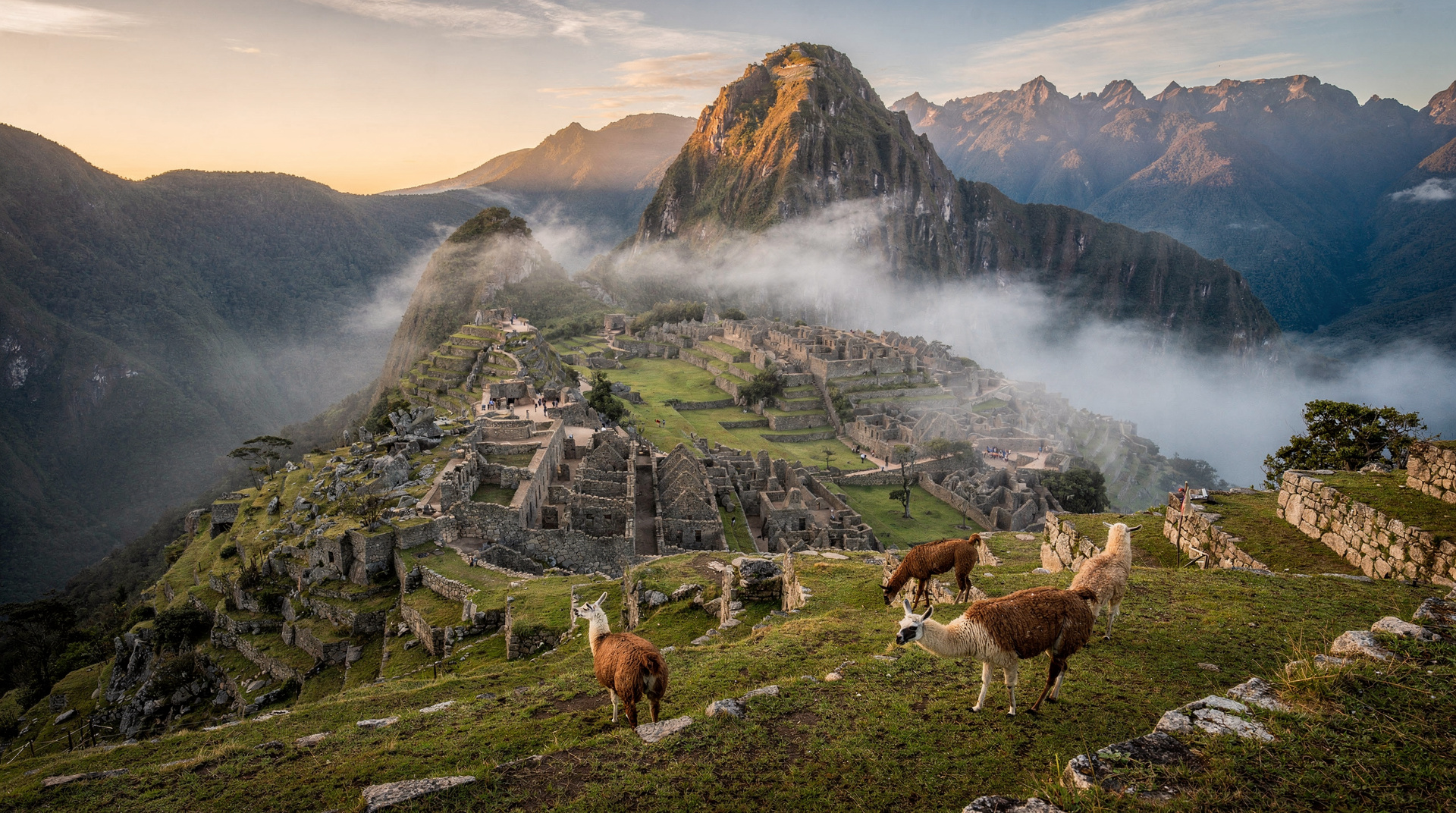
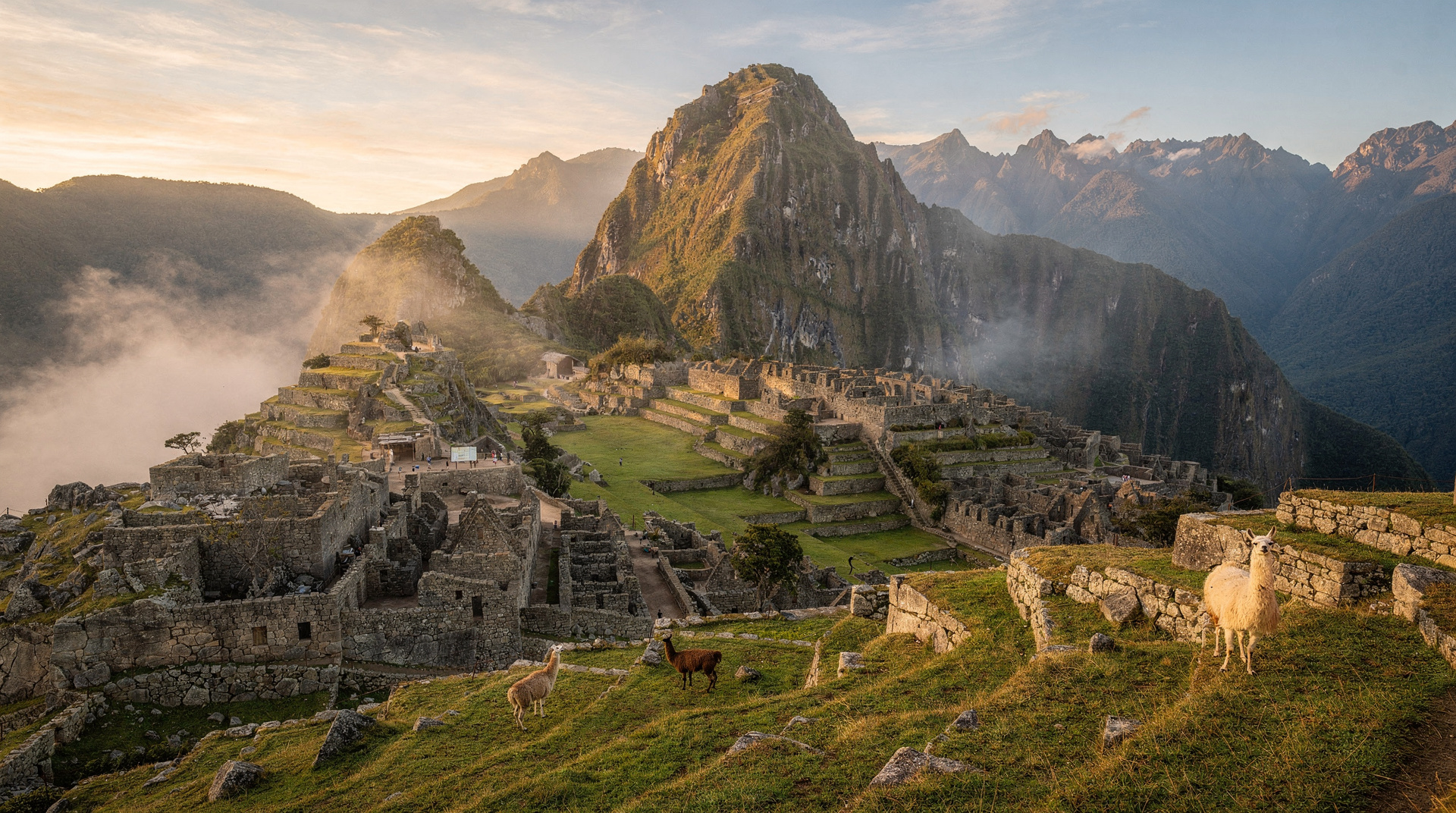
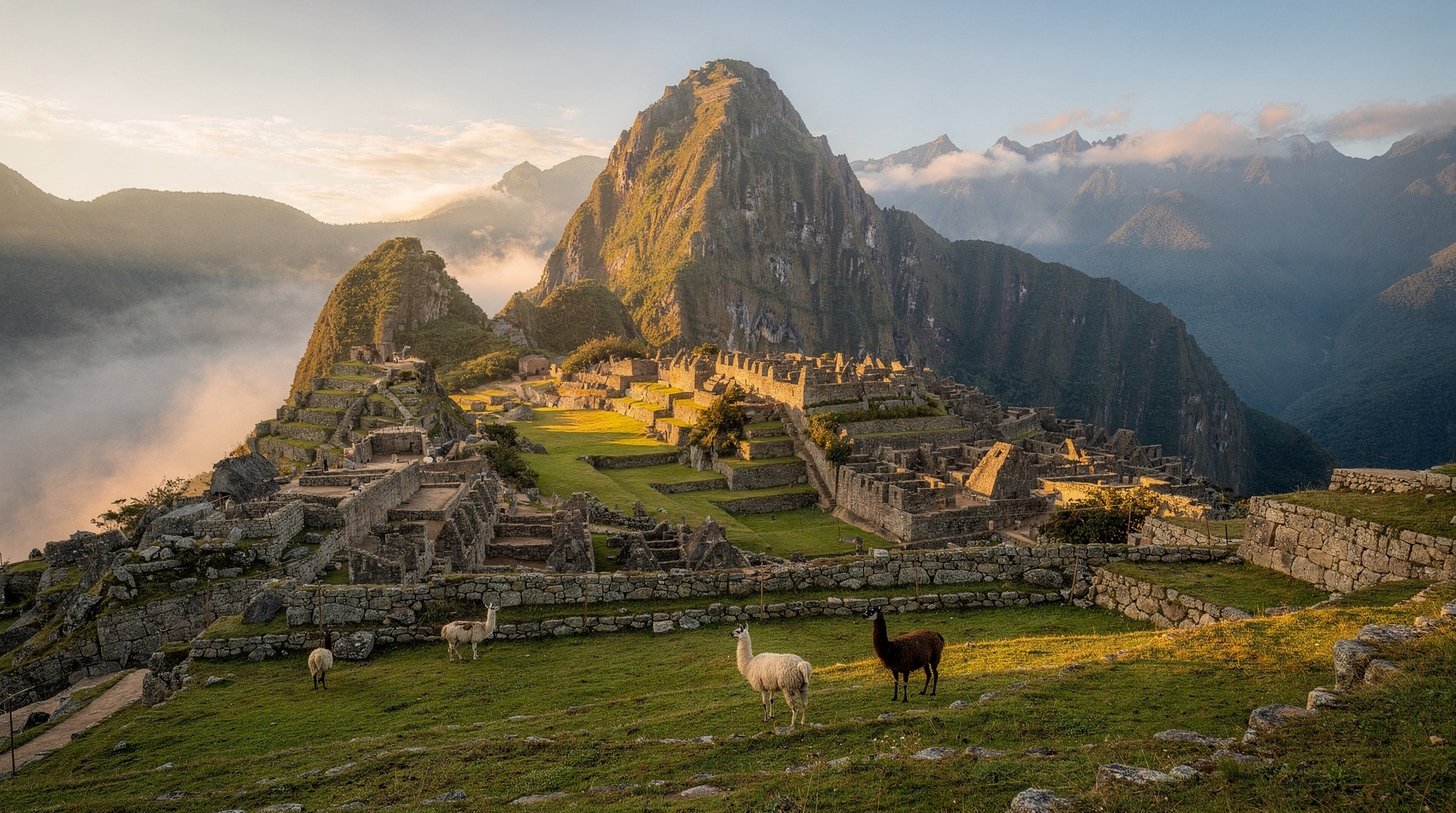
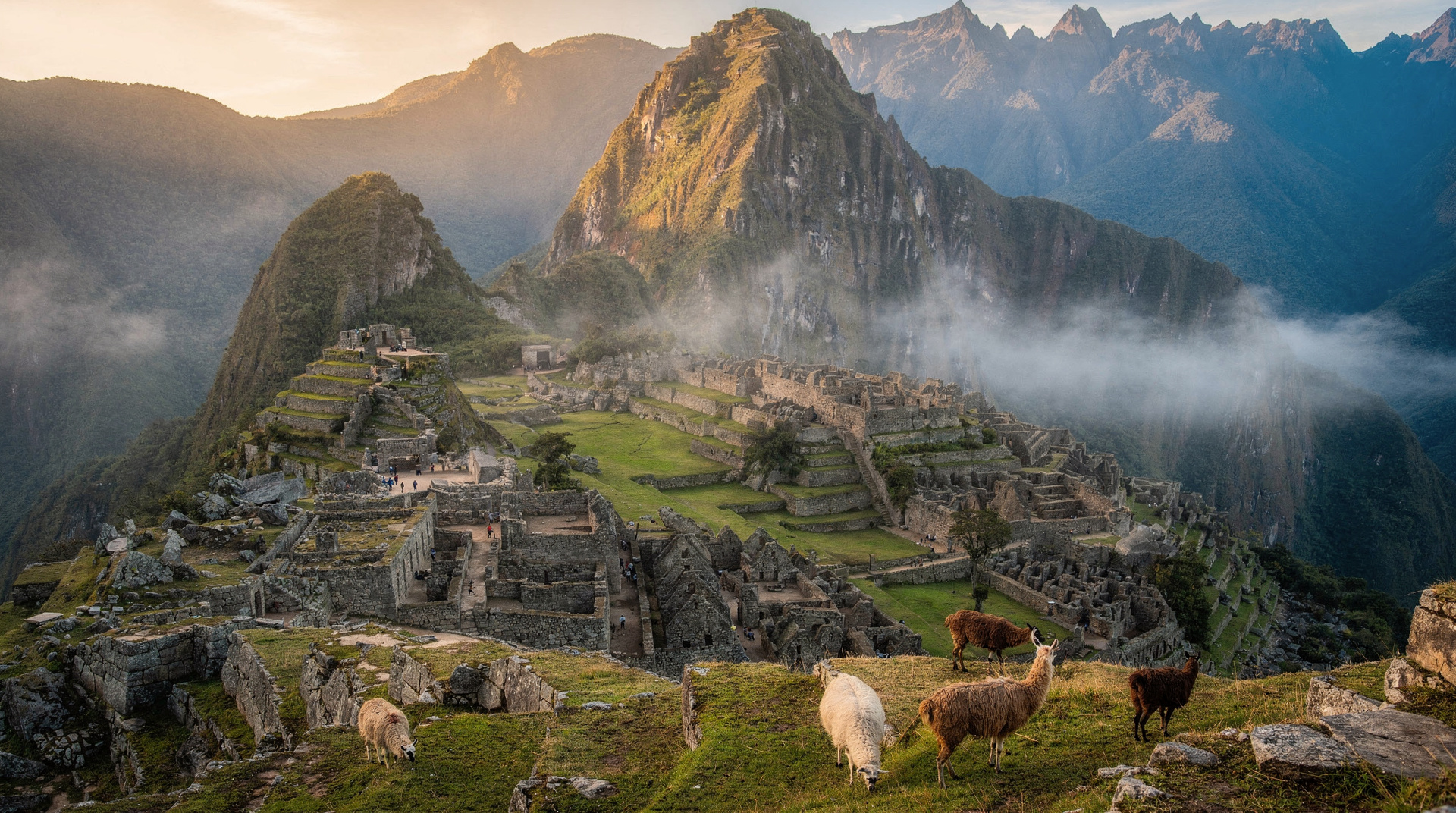
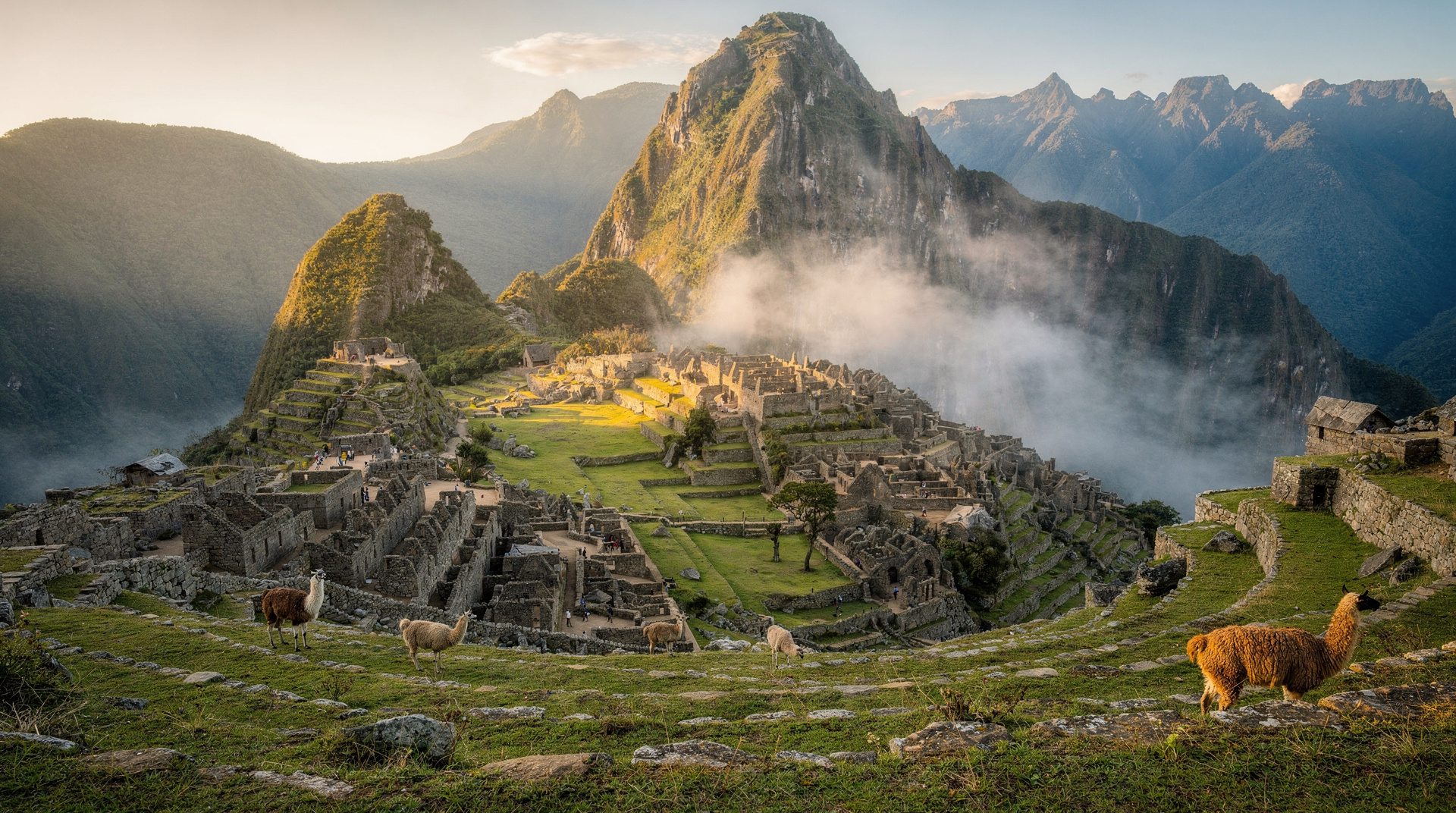
The classic photograph of Machu Picchu shows the citadel sprawled across its ridge with a sharp, pyramid-like peak rising in the background. That peak is Huayna Picchu, which translates from Quechua as “young mountain.” On the opposite side of the site, invisible in the famous shot, is Machu Picchu Mountain — the “old mountain” — a much larger, grassy peak that offers a completely different perspective.
Both peaks are climbable. Since June 2024 each is a route within the circuit system (Machu Picchu Mountain is route 1-A of Circuit 1, Huayna Picchu is route 3-A of Circuit 3), booked through the official ticket system. Both sell out in advance. And they offer genuinely different experiences: one dramatic and close-up, one expansive and panoramic. The right choice depends on your priorities, your fitness level, and — in peak season — which one you can actually still book.
This guide gives you the full comparison so you can decide, with honest assessments of difficulty, views, booking practicalities and whether either is truly worth the extra effort after a full day at the citadel.
| Huayna Picchu | Dramatic downward view, 1.5–2 hrs, exposed rope sections, book 2–3 months ahead |
| Machu Picchu Mountain | Panoramic ridge view, 3.5–4 hrs, no rope sections, book 4–6 weeks ahead |
| Cost (either add-on) | Around S/100–120 on top of citadel entry |
| Both require | A ticket for the matching circuit route (1-A or 3-A), booked on tuboleto.cultura.pe |
| Not suitable for | Vertigo sufferers (Huayna Picchu specifically) |
Why these mountains exist (and why the Inca built on them)
This distinction between the two mountains echoes a pattern found throughout the wider region — the same trade-off between an intimate, dramatic close-range perspective and a broader, contextual panorama shows up at sites like Rainbow Mountain, where the close-up ridge walk and the wider valley views compete for a visitor’s limited time and energy at altitude.
Both peaks were sites of Inca construction, which means the paths you climb today follow routes that were engineered over 500 years ago. The Inca built on Huayna Picchu specifically — there are ruins near the summit and the Temple of the Moon on the descent route — suggesting these peaks were not just picturesque additions to the Machu Picchu landscape but functionally integrated into whatever the site’s ceremonial purpose was.
Standing on either summit and looking back at the citadel, you understand immediately why the Inca would have valued both peaks. They serve as natural observation points over the surrounding valley system, with views in all four directions that no structure within the citadel can match.
Huayna Picchu: the iconic climb
The trailhead and approach
The Huayna Picchu trail begins from a gate inside the citadel, positioned toward the northern end of the main site and reached from route 3-A of Circuit 3. Entry is by time slot; check the slots offered for your date on tuboleto.cultura.pe. The mountain checkpoint applies no late-arrival tolerance.
The lower portion of the trail is a series of steep stone steps ascending through thick vegetation. The path is well maintained, with the original Inca stonework clearly visible in many sections. This section, while steep, is not technically challenging — standard hiking difficulty.
The upper section: where it gets serious
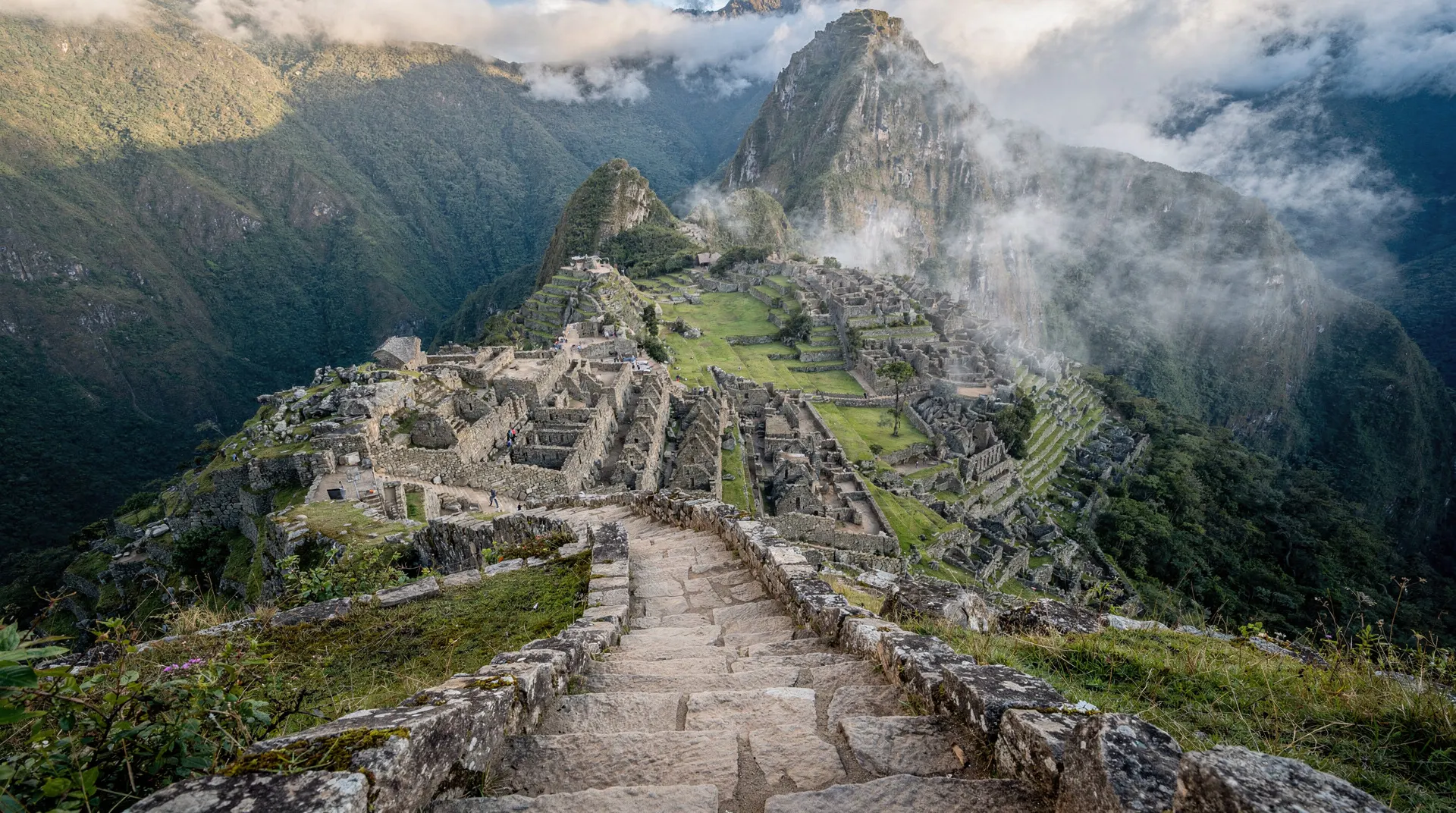
Roughly 200–250 m below the summit, the character of the trail changes. Steps become narrower and more irregular. The path traverses the exposed ridge of the peak, with significant drop-offs on one or both sides at certain points. Fixed rope handholds are installed in the most exposed sections and are essential in wet conditions. Some of the final steps are nearly vertical — requiring you to use both hands on the rope while your feet find purchase on carved stone edges.
This section takes most people 20–30 minutes. It is not technically mountaineering, but it is not gentle hiking either. Anyone who genuinely dislikes heights will find this section uncomfortable.
Weather note: The upper section is significantly more hazardous when wet. The carved stone steps can become slippery. In rainy season, morning ascents (before afternoon showers build) are strongly preferred. If rain begins mid-ascent, descend carefully and slowly.
The summit experience
Total elevation gain from the citadel: approximately 360 m. Summit altitude: around 2,693 m. Time from trailhead to summit: 45–75 minutes depending on fitness and the queue at narrow passages.
The summit view is the entire point. Looking almost directly down onto the citadel from close range — roughly 360 m below — the scale of Machu Picchu becomes clear in a way that is not apparent from any viewpoint within the site itself. The terraces, the urban sector, the temple rooflines: all visible simultaneously. The Urubamba river gleams as a thin silver thread far below in the canyon. Huayna Picchu sits at the northern end of the Machu Picchu ridge; looking south you see the complete length of the site with Machu Picchu Mountain beyond it.
Allow 20–30 minutes at the summit. The narrow peak means only a handful of people can be at the very top simultaneously; take turns for unobstructed photographs.
The Temple of the Moon (return route option)
On the descent, a branch trail leads to the Temple of the Moon — a cave-based Inca structure carved into the rock face on the lower northern slope of Huayna Picchu. It is rarely visited (most people return via the same main route) and is atmospheric in the best sense: cool, quiet, and with remarkable stonework including carved niches and a central altar. Adding this detour adds roughly 30–40 minutes to the return. It requires a separate access step at the trailhead control — confirm availability when booking.
Booking Huayna Picchu
Places are limited and the daily quota is not published in a form we could verify; check live availability on tuboleto.cultura.pe. This is the most constrained ticket in the Machu Picchu system.
Book Huayna Picchu tickets through tuboleto.cultura.pe or an authorised operator. Choose the Circuit 3 ticket with route 3-A (Huayna Picchu) when booking.
Cost: approximately S/100–120 (~$30–35) in addition to citadel entry (approximately S/152 $45), so total entry cost with Huayna Picchu is roughly S/250–270 ($75–80).
Booking lead times:
- July–August: 2–3 months ahead minimum
- May, June, September: 6–8 weeks
- April, October: 3–5 weeks
- November–March (outside Christmas): 2–3 weeks usually sufficient
If Huayna Picchu is a priority for your trip, check availability before you book your flights and set the booking date in your calendar the moment travel dates are fixed.
Machu Picchu Mountain: the broader view
The approach and trail character
The Machu Picchu Mountain trailhead is at the southern end of the citadel, reached from route 1-A of Circuit 1. The trail climbs the grassy ridge above the site, ascending roughly 700 m of total elevation over a 3–4 km trail.
The character is very different from Huayna Picchu. There are no near-vertical rope sections. The path is steep in places but follows a consistent grade without the sudden exposure of the Huayna Picchu upper section. The risk of vertigo is significantly lower; there are some exposed ridgeline sections but nothing requiring rope handholds. This is strenuous hiking rather than scrambling.
What you see from the summit
Summit altitude: approximately 3,082 m — significantly higher than Huayna Picchu and 650 m above the citadel.
The view is panoramic in the true sense. Looking north, the full length of the Machu Picchu ridge spreads below you — the citadel, with Huayna Picchu visible as the small peak at the far end. The scale of the site from this distance is different from anything seen from within it or from Huayna Picchu: you see the entire Machu Picchu complex as a coherent landscape feature, nestled on its ridge above the U-bend of the Urubamba valley.
On clear days — which in dry season means most mornings — the Vilcanota range is visible in the distance with snow-capped peaks above the cloud forest. The depth of field in these views is extraordinary.
The trade-off: at this distance, the citadel itself looks smaller. You are trading intimacy for scale. Many visitors find this perspective more intellectually satisfying — it contextualises the site within its landscape — but less emotionally immediate than Huayna Picchu’s dramatic downward plunge.
Duration and practicalities
Round trip from citadel: approximately 3.5–4 hours. Start early to complete the climb in cooler morning temperatures and minimise exposure to afternoon cloud and possible rain.
Book Machu Picchu Mountain tickets in advance (Circuit 1, route 1-A). It is generally easier to obtain than Huayna Picchu, but check availability on tuboleto.cultura.pe. In July–August, book 4–6 weeks ahead.
Cost: approximately S/100–120 (~$30–35) in addition to citadel entry.
Side-by-side comparison
| Feature | Huayna Picchu | Machu Picchu Mountain |
|---|---|---|
| Summit altitude | ~2,693 m | ~3,082 m |
| Elevation gain from citadel | ~360 m | ~700 m |
| Round-trip time | 1.5–2 hours | 3.5–4 hours |
| Technical difficulty | Strenuous with exposed rope sections | Strenuous but no technical scrambling |
| Suitable for vertigo sufferers | No | Generally yes |
| Circuit route | Circuit 3, route 3-A | Circuit 1, route 1-A |
| Booking difficulty (July–Aug) | Very high — book 2–3 months ahead | Moderate — book 4–6 weeks ahead |
| View character | Dramatic downward view onto citadel | Panoramic view of full ridge and landscape |
| Best for | Drama, intimate scale, iconic bucket-list | Endurance hikers, broad Andean perspective |
Can you climb both?
On a two-day Machu Picchu visit it is theoretically possible to attempt one peak per day. In practice, combining either mountain with a full citadel circuit on the same day is already a physically demanding commitment — factor in the altitude, steep terrain and the energy expenditure. A realistic two-day plan:
Day one: Huayna Picchu (Circuit 3, route 3-A) in an early slot, then the rest of your visit at a relaxed pace.
Day two: Machu Picchu Mountain (Circuit 1, route 1-A) if energy and booking allow, or simply Circuit 2 (Clásico) through the urban sector.
Each peak is booked as its own circuit route. See the circuits guide for how to combine mountain and circuit bookings efficiently, and the how to get to Machu Picchu guide for the transport logistics of a two-day stay.
Honest verdict: which one, and is it worth it?
If Huayna Picchu is bookable and heights do not bother you: do it. The view looking down directly onto the citadel is one of the more memorable things you can do in Peru, and the brevity of the climb means you are back at the main site within two hours. The Temple of the Moon on the descent is an excellent addition if your timing allows.
If Huayna Picchu is sold out: Machu Picchu Mountain is not a consolation prize. For visitors who want to understand the site’s setting within its landscape, the summit view from Machu Picchu Mountain is arguably more intellectually satisfying. The longer hike is a commitment but a rewarding one.
If neither is available or possible: you will not feel you have had an incomplete Machu Picchu experience. The citadel itself, with a good guide on Circuit 2 (Clásico), is the main event. Both mountains are exceptional additions, but the central experience of walking through the site does not require them.
Physical preparation: what both climbs actually require
Neither peak is a technical mountaineering objective. Both require the same general level of preparation: reasonable cardiovascular fitness, the ability to sustain uphill effort for 45–120 minutes depending on the peak, and functional footwear.
What to wear and bring for either mountain:
-
Closed-toe shoes with a grippy sole. Stone steps that have been worn smooth over centuries are slippery in wet conditions. Sandals and flip-flops are genuinely dangerous on these trails.
-
Water: minimum 1 litre. You are already at 2,430 m and adding 360–700 m of ascent in altitude. Hydration matters more than you expect.
-
Waterproof layer: mountain weather changes in minutes at this altitude. Starting the descent in rain on near-vertical steps is significantly more hazardous than ascending in the dry.
-
Layers: even in dry season the wind on both summits is cold.
-
No large backpack: the narrow sections on Huayna Picchu in particular require unencumbered movement. A small daypack is fine; a 20-litre hiking pack is not.
Altitude note: At 2,693 m (Huayna Picchu summit) and 3,082 m (Machu Picchu Mountain summit), you are above the elevation of the citadel. Most visitors acclimatised to Cusco (3,400 m) will feel no altitude effects at either summit. If you are arriving at Machu Picchu after spending only one night in Cusco or the Sacred Valley, pay attention to any headache, shortness of breath or dizziness. Both climbs are strenuous enough that altitude symptoms during exertion are possible even at these modest elevations.
Photography from both summits
Both peaks offer unique photographic perspectives unavailable from anywhere within the citadel.
Huayna Picchu: The close-range downward view means you can photograph the entire citadel as a coherent whole — terraces, urban sector, surrounding ridges — in a single frame. Morning light from the east illuminates the site beautifully from the summit in the early hours. An early slot typically gives you direct sun on the site below, often with mist in the valleys.
Machu Picchu Mountain: The panoramic view from the larger peak is better for wide landscape compositions — the full ridge seen from a distance, the Urubamba canyon, the chain of mountain ridges. Telephoto lenses work well here for compressing the distance between Huayna Picchu (visible as the small peak at the far end of the site) and the main citadel. Morning light on the citadel from this direction is front-lit and clear.
Training beforehand: is it necessary?
Neither climb requires dedicated training in the way a multi-day trek does, but a few weeks of preparation genuinely improves the experience for visitors who are not regularly active. For Huayna Picchu, the limiting factor is usually not cardiovascular fitness but comfort with exposure and the ability to maintain steady footing on irregular steps for 20–30 minutes — practising on stairs or steep local trails in the weeks before the trip builds the right kind of confidence. For Machu Picchu Mountain, sustained cardiovascular effort over 3.5–4 hours is the bigger factor; a few weeks of regular hill walking or stair climbing makes a genuine difference to how the second half of the ascent feels.
Travellers arriving from sea level should also weigh in the compounding effect of altitude: even though both summits sit only modestly above the citadel itself, the exertion of a sustained climb is where altitude effects tend to surface, more than standing around at elevation does. Completing at least two to three days of acclimatisation in Cusco or the Sacred Valley before attempting either mountain is a sensible baseline, even for visitors who consider themselves generally fit.
Alternatives if neither mountain works for you
For visitors who want elevated, panoramic perspectives on Machu Picchu without either mountain — whether due to booking unavailability, physical limitation, or simply preferring not to commit the extra hours — the citadel’s own upper terraces and the classic viewpoint near the caretaker’s hut offer an excellent overview without any additional ticket or significant extra walking. It will not match the summit perspectives from either mountain, but it is a legitimate and satisfying way to see the site’s scale without the climb. The Machu Picchu complete guide covers this viewpoint and the standard circuit routes that pass through it in detail.
Cancellation policies
Mountain tickets booked via tuboleto.cultura.pe are subject to the same Ministry of Culture cancellation terms as other citadel tickets — which are generally non-refundable once purchased. Some authorised agencies offer flexible booking terms (amendment or credit) for an additional fee at the time of booking. If you are booking months ahead for July–August, consider whether the flexibility is worth the premium cost.
What happens if you cannot get a mountain ticket
If Huayna Picchu is fully booked (which is common for peak-season dates by the time most people start planning), Machu Picchu Mountain is the reasonable alternative. If both are unavailable on your target date, consider adjusting your visit date slightly — Monday and Tuesday slots are consistently easier to book than Friday–Sunday slots.
For the full planning picture — ticket booking, transport logistics, best timing and what to do on the citadel itself — see the Machu Picchu complete guide.
Combining the mountain with the correct circuit
Since June 2024 there are three circuits grouping ten routes, and each mountain is one of those routes, so the circuit you book decides which mountain you can climb.
Huayna Picchu: route 3-A of Circuit 3 (Realeza), which also includes route 3-B through the urban sector. Check on tuboleto.cultura.pe exactly what your ticket covers.
Machu Picchu Mountain: route 1-A of Circuit 1 (Panorámico), alongside the upper terrace route 1-B. Given the 3.5–4 hour round trip, plan the day around the mountain.
Circuit 2 (Clásico) has no mountain: it covers the urban sector (2-A) and the lower terrace (2-B).
The circuits explained guide covers the route detail. The tickets guide explains how to book through tuboleto.cultura.pe.
Which one to book if you can only try for one
If you have to choose which mountain to attempt booking first, prioritise based on what you actually value rather than which is more famous. Travellers who care most about the classic postcard perspective and a shorter time commitment should chase Huayna Picchu first and set a calendar reminder for the exact date bookings open for their travel month. Travellers who prioritise a guaranteed booking, a lower-stress climb, and genuinely different views of the wider Sacred Valley landscape should book Machu Picchu Mountain with confidence rather than treating it as a fallback.
Frequently asked questions about Huayna Picchu vs Machu Picchu Mountain — which should you climb?
How far in advance should I book Huayna Picchu tickets?
Is Huayna Picchu dangerous?
Can I combine a mountain ticket with a citadel circuit?
What time should I enter for Huayna Picchu?
Are the views from Machu Picchu Mountain better than from Huayna Picchu?
Can children climb either mountain?
Top experiences
Bookable activities with verified prices and instant confirmation on GetYourGuide.