Ollantaytambo
The living Inca town with a hilltop fortress and the main train station for Machu Picchu — how to visit and when to stay the night.
Cusco: Pisac, Maras, Moray, Ollantaytambo Small Group Tour
Quick facts
- Country
- Peru
- Altitude
- 2,800 m / 9,200 ft
- Currency
- Peruvian sol (S/) — USD widely used
- Best for
- Inca archaeology, living Inca town, Machu Picchu train departure
The fortress that stopped the conquistadors
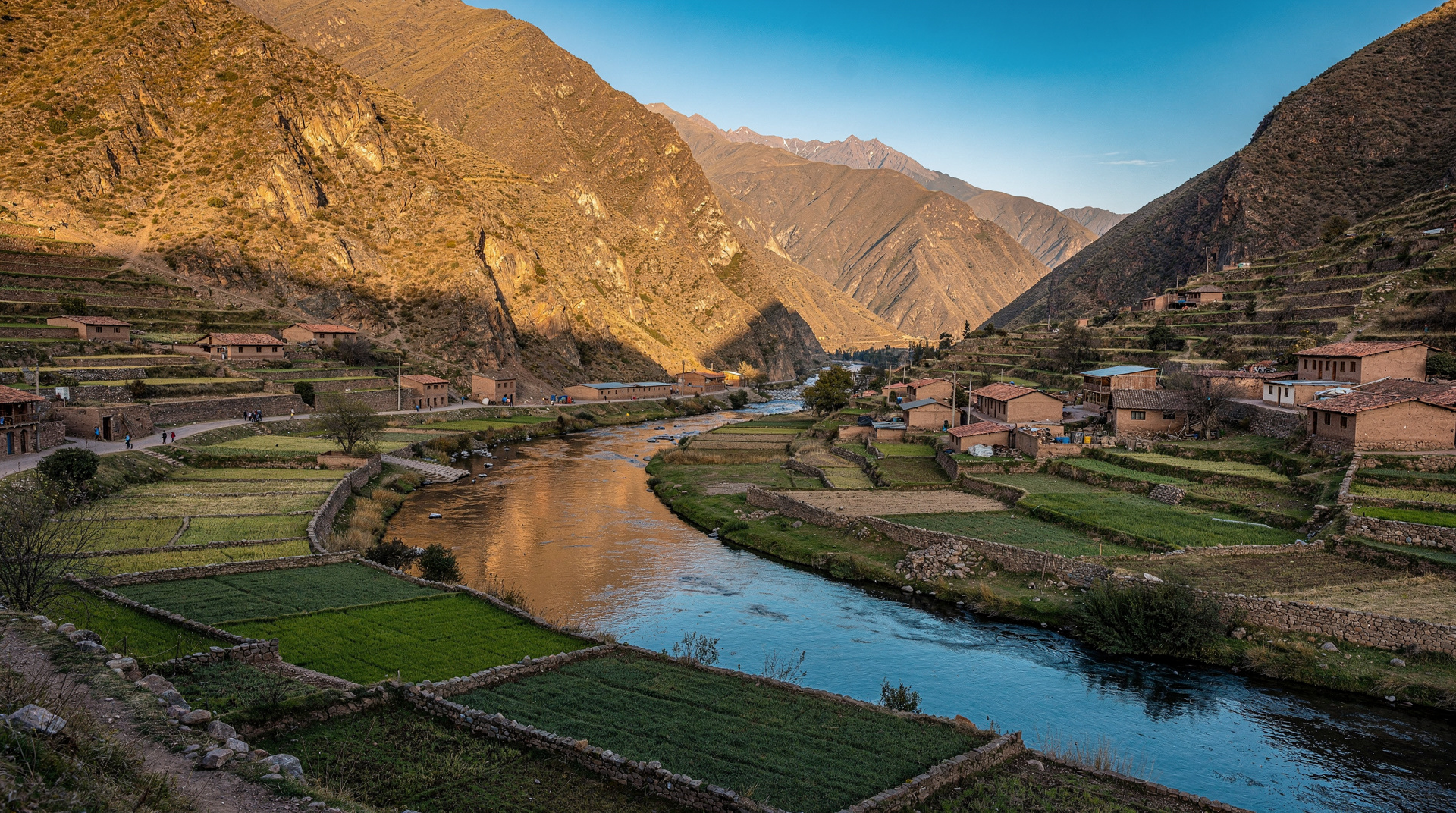
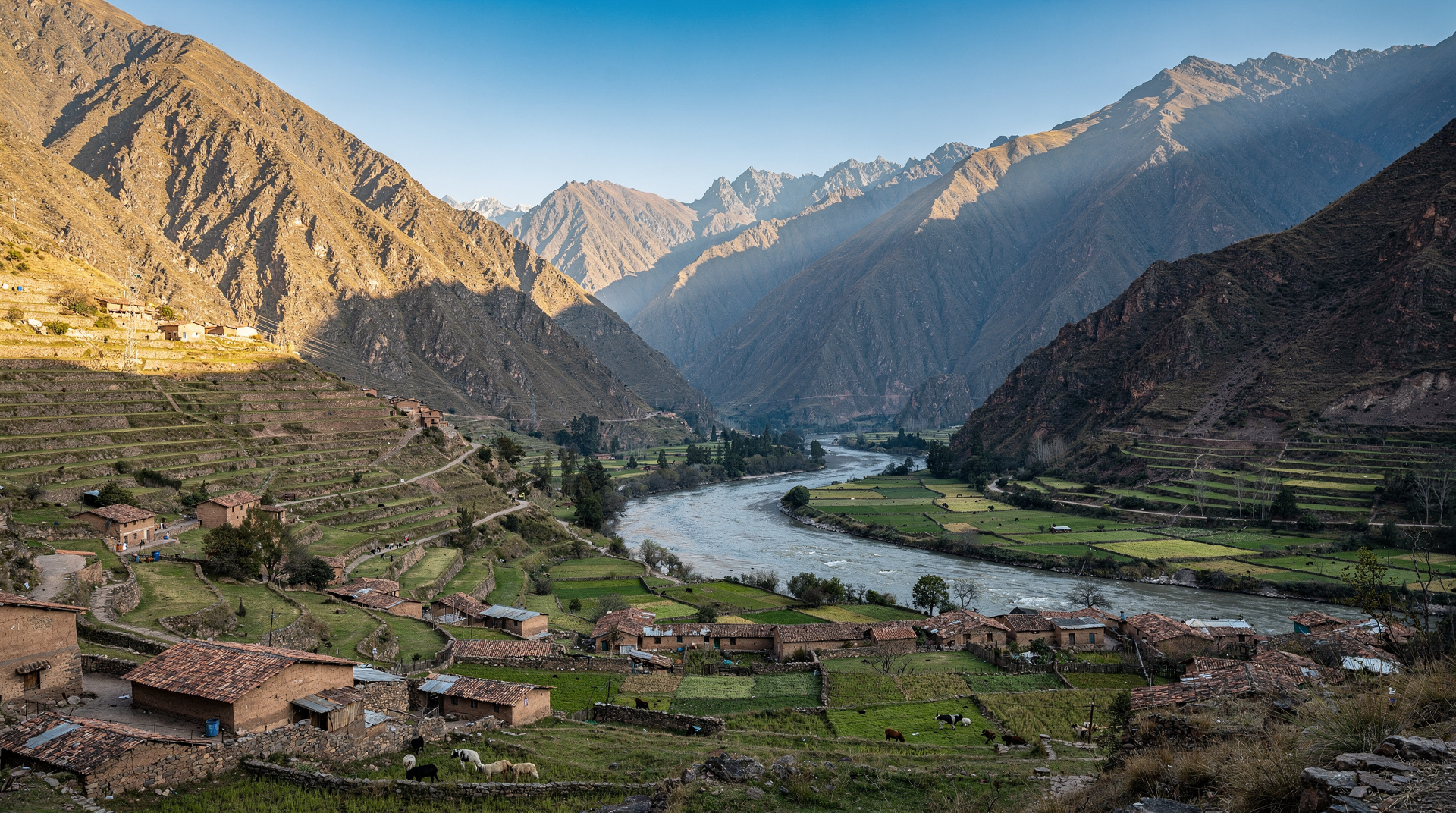
At the western end of the Sacred Valley, where the Urubamba River narrows and the mountains crowd in on both sides, Ollantaytambo stands as one of the most remarkable towns in South America. It is simultaneously an active Inca fortress, a living Inca town, a pilgrimage site for serious archaeologists, and the departure point for the train to Machu Picchu. Most visitors treat it as a half-day stop on a valley tour. A small but growing number of travellers choose to sleep here — and they consistently report it as a highlight of the trip.
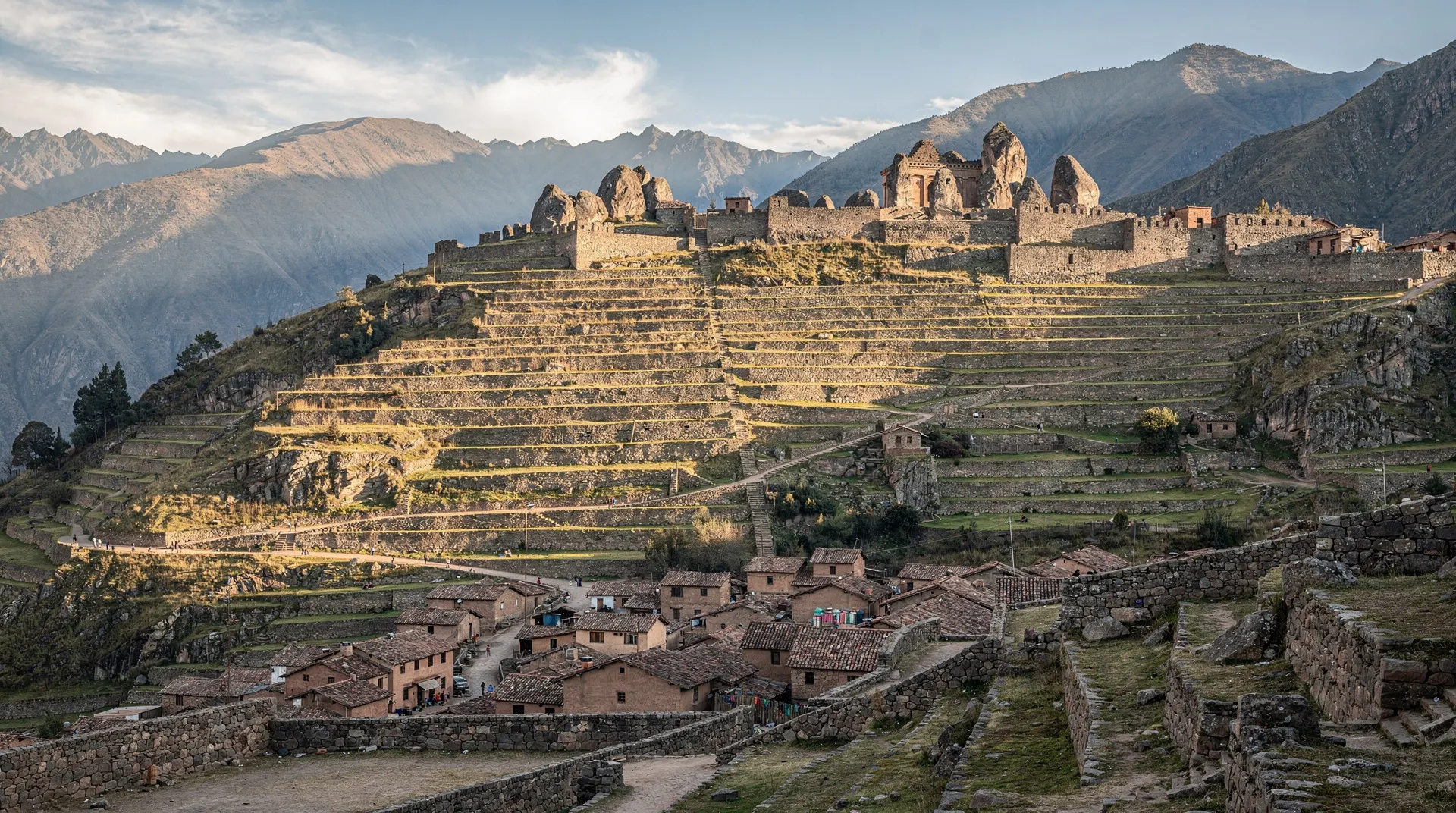
The name refers both to the fortress above the town and to the settlement below. In 1537, just five years after the Spanish conquest of Cusco, the Inca resistance leader Manco Inca chose Ollantaytambo as the site of a counterattack against Hernando Pizarro’s cavalry force. The Inca diverted the Urubamba River to flood the plain, pelted the Spanish with stones and boiling water from the terraces above, and drove them back. It was one of the very few military victories the Inca achieved against the Spanish in open combat, and the site’s defensive logic becomes clear the moment you stand at the base of the terraces and look up.
| Where | Western Sacred Valley, Peru — 2,800 m, on the Machu Picchu rail line |
| Cost | Fortress covered by Boleto Turístico (~S/130); Pinkuylluna storehouses free |
| Time needed | Half-day for the fortress and town; overnight if catching an early train |
| Getting there | Bus/taxi from Cusco (~1.5–2 hrs) or included on Sacred Valley tours |
| Best time | Before 9:30am or after 3pm to avoid tour coach groups |
The fortress
The Ollantaytambo fortress occupies a steep hillside directly above the town, accessed via a staircase that begins at the plaza. The structure is divided into several distinct zones, and a Boleto Turístico (Cusco tourist ticket, ~S/130 for the full circuit) is required for entry.
The Temple of the Sun
The most celebrated feature of the upper platform is the Temple of the Sun — an unfinished construction consisting of six enormous monolithic blocks of pink granite, each weighing around 50 tonnes, arranged vertically with thin stone slabs fitted between them. The pink granite was quarried at Cachicata, a site visible across the gorge on the opposite slope of the valley, some 5 km away and 300 m higher. Moving these blocks involved crossing the river, moving them up a mountain, then manoeuvring them into position on the temple platform. How this was accomplished without wheels or steel tools continues to exercise archaeologists and engineers.
The temple was never completed — work was abandoned when the Spanish arrived — which means you can still see half-finished blocks on the ramp leading to the platform, parked in mid-process as if the workers simply dropped their tools and left.
The terraces and military platforms
Below the temple, a series of broad terraces cascades down the hillside. These served both agricultural and defensive functions: the flat surfaces provided footing for defenders, and the steep risers between them were designed to slow attackers. The lowest terrace is where the flooding tactic was coordinated during the 1537 battle. Standing here and tracing the route Pizarro’s cavalry would have had to cross gives the history a visceral immediacy that no amount of reading provides.
The water temple and ritual fountains
On the opposite side of the main complex, a series of ritual fountains fed by an Inca aqueduct still flows. This section — sometimes called the Baño de la Ñusta or Princess Bath — is less visited and more meditative than the main fortress, and the engineering of the water system (which has functioned continuously for over five centuries) is impressive in its own right.
Views from the top
Climbing to the upper platform takes 15–20 minutes from the entrance. The view from the summit covers the full width of the valley with the Pinkuylluna storehouse ruins carved into the opposite cliff face clearly visible, the town’s Inca street grid laid out below, and the mountains closing the valley at either end. Go in the morning before the coach groups arrive for the clearest photographs and the most peaceful atmosphere.
The living Inca town
Below the fortress, Ollantaytambo preserves something that no other Inca site in Peru offers: a town that has been continuously inhabited since the 15th century within its original Inca plan.
The street layout consists of rectangular canchas — walled compounds each containing a central open courtyard surrounded by individual dwellings. These compounds were built in the Inca period and families still live in many of them today. Walking the narrow streets between the compound walls, which rise 3–4 m on either side, is a disconcerting and quietly moving experience: you are inside a functioning urban environment from 600 years ago, not a reconstructed or frozen archaeological site.
The central plaza holds a small Sunday market — less touristic than Pisac’s, more oriented towards local produce — and several restaurants facing the fortress. The town is compact enough to walk completely in an hour, though if you allow yourself to wander into the compounds and get temporarily lost in the lanes, an afternoon disappears without effort.
The train station
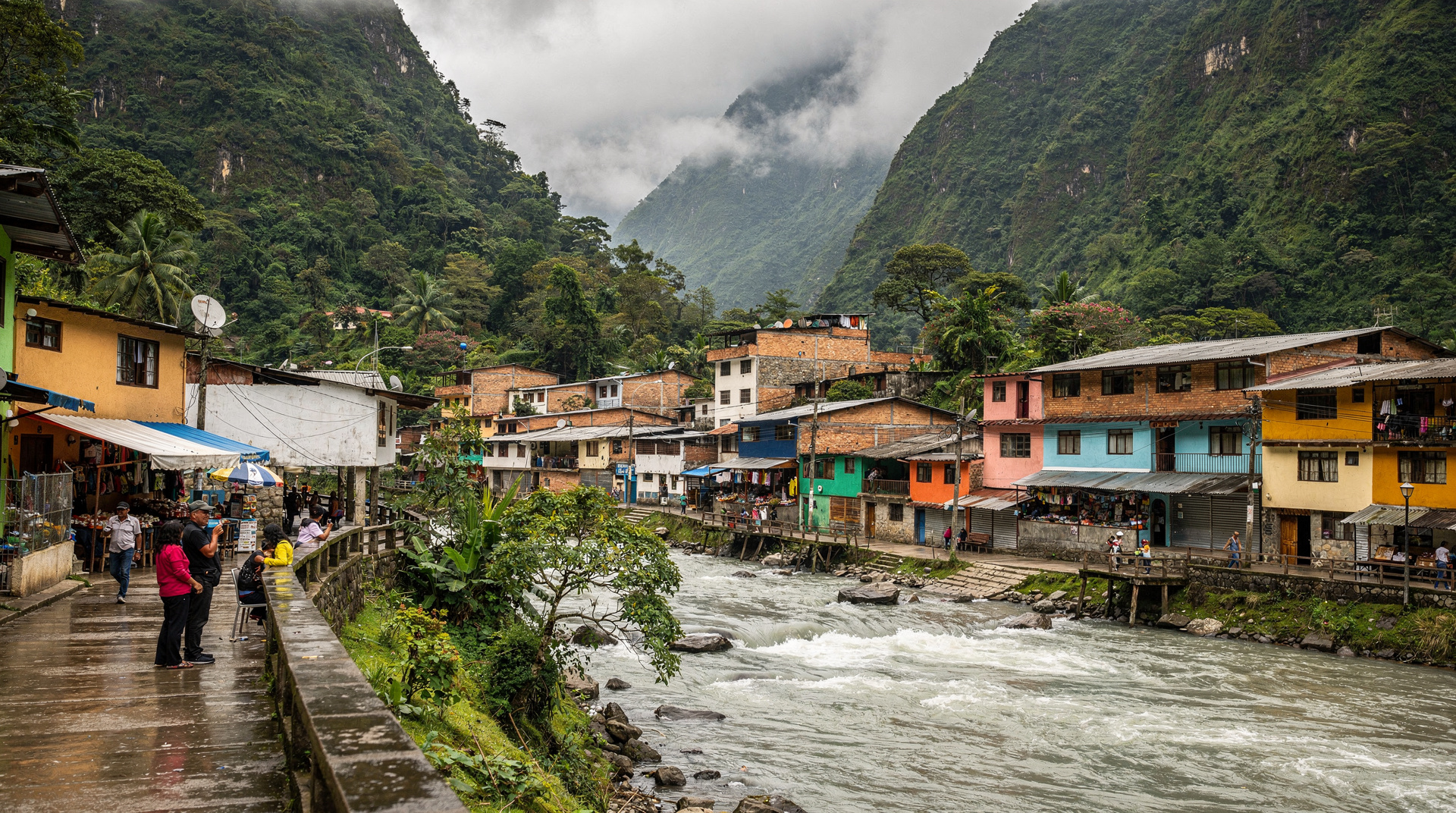
Ollantaytambo’s train station, a short walk from the town centre, is the main departure point for PeruRail and Inca Rail services to Aguas Calientes for Machu Picchu. The majority of Cusco-based travellers reach the station by bus or taxi from Cusco (~1.5–2 hours, S/30–50 by shared bus or S/80–120 by taxi), take a morning train to Aguas Calientes, and return in the evening.
Round-trip train fares from Ollantaytambo to Aguas Calientes range from roughly $60 to $130 depending on service class (Expedition, Vistadome, Hiram Bingham luxury) and how far ahead you book. Trains during May–August fill quickly; booking six to eight weeks ahead is advisable. A Machu Picchu day trip from Cusco by train bundles the train, the bus from Aguas Calientes up to the citadel, and entrance to Machu Picchu into a single booking, which removes the complexity of coordinating multiple separate tickets.
For travellers who want more flexibility or who are visiting on a tighter budget, the trains to Machu Picchu comparison guide covers all service options, price tiers, booking platforms and the trade-offs between early and last-minute purchasing. The how to get to Machu Picchu guide covers the full range of route options from Cusco including the road alternatives.
Staying overnight in Ollantaytambo
This is the practical decision that separates relaxed Machu Picchu visits from rushed ones. If you stay in Ollantaytambo the night before your Machu Picchu visit, you can board an early morning train from directly outside your hotel, arrive at Aguas Calientes by 6:30–7 am, and be on the first bus up to the citadel before most day-trippers have left Cusco. The difference in crowd levels at the site between 7 am and 10 am is substantial.
Ollantaytambo has a solid range of accommodation. Budget guesthouses in converted stone houses start at around S/60–80 per night. Mid-range hotels with en-suite rooms and valley views run S/150–250. A handful of boutique properties — El Albergue, Apu Lodge — occupy historic buildings and offer breakfast included at around S/300–400. Staying in the town rather than a resort outside it puts you inside the Inca street grid, which is an experience in itself.
The 4-day Cusco and Machu Picchu itinerary builds an Ollantaytambo overnight into the sequence on day three, and the 7-day Sacred Valley itinerary extends the valley stay to two nights.
Combining Ollantaytambo with the Sacred Valley
Most visitors reach Ollantaytambo as the final stop on a Sacred Valley tour that begins in Pisac or Chinchero and works westward along the valley. A full-day Sacred Valley tour typically ends at Ollantaytambo in the late afternoon, leaving you with the option of returning to Cusco or staying the night. The latter is nearly always the better choice if your Machu Picchu visit is the next day.
If you would rather plan the whole valley yourself, the Ollantaytambo ruins guide goes deeper on the fortress, and the Ollantaytambo village guide covers the town’s lanes, food and lodging. Neighbouring stops such as Pisac, Chinchero and Maras and Moray fit naturally into the same loop, and the one-day Sacred Valley itinerary shows how they can be sequenced. For moving between them, see getting around the Sacred Valley.
The fortress is included on most full-day valley tours with time to walk the main terraces and the upper platform. For a more independent and unhurried exploration of the site — particularly if you want to spend time in the water temple section or sketch the architecture — arriving at Ollantaytambo before the main tour groups (before 10 am or after 3 pm) makes a significant difference to the experience.
An honest overnight schedule
If you are using Ollantaytambo as your Machu Picchu launchpad, a realistic overnight plan looks like this:
| Time | What happens |
|---|---|
| Afternoon, day 1 | Arrive from Cusco or a Sacred Valley tour; walk the town’s canchas and check into your guesthouse |
| Evening, day 1 | Dinner facing the fortress; early night given the following morning’s train |
| 5:30–6:30am, day 2 | Walk to the station and board the first train to Aguas Calientes |
| Day 2 onward | Full day at Machu Picchu with the early-entry advantage over Cusco-based day-trippers |
This sequence removes the 1.5–2 hour Cusco-to-Ollantaytambo transfer from your Machu Picchu morning entirely, which is the single biggest reason overnighting here beats a same-day departure from Cusco.
Sleeping lower than Cusco also helps with the altitude. The Cusco altitude versus Sacred Valley guide explains why many travellers feel better here, and the acclimatization plan shows how to order your first days. Once you arrive in Aguas Calientes, the Machu Picchu by train guide walks through the rest of the day.
Eating in Ollantaytambo
The restaurants facing the plaza and the fortress serve solid Peruvian standards — trout, lomo saltado, quinoa soups — in the S/25–45 range, with a handful of cafes doing reasonable pizza and pasta for travellers who want a break from Andean food before a long trekking or train day. Given the town’s role as an overnight base rather than a day-trip lunch stop, restaurants here are noticeably less rushed than the tourist-menu spots in Pisac or Chinchero; a slow dinner facing the floodlit fortress terraces is one of the valley’s understated pleasures.
How to get there
From Cusco: Collectivos leave from near the Terminal Terrestre in Cusco for Urubamba (~S/8, 1.5 hours), with onward connections to Ollantaytambo (~S/4, 30 minutes). The combined journey takes 2–2.5 hours by public transport. A direct taxi from Cusco to Ollantaytambo costs S/80–120 and takes 1.5–2 hours depending on traffic at the Pisac junction.
On a tour: Most full-day Sacred Valley tours include Ollantaytambo as the final stop with return transport to Cusco included.
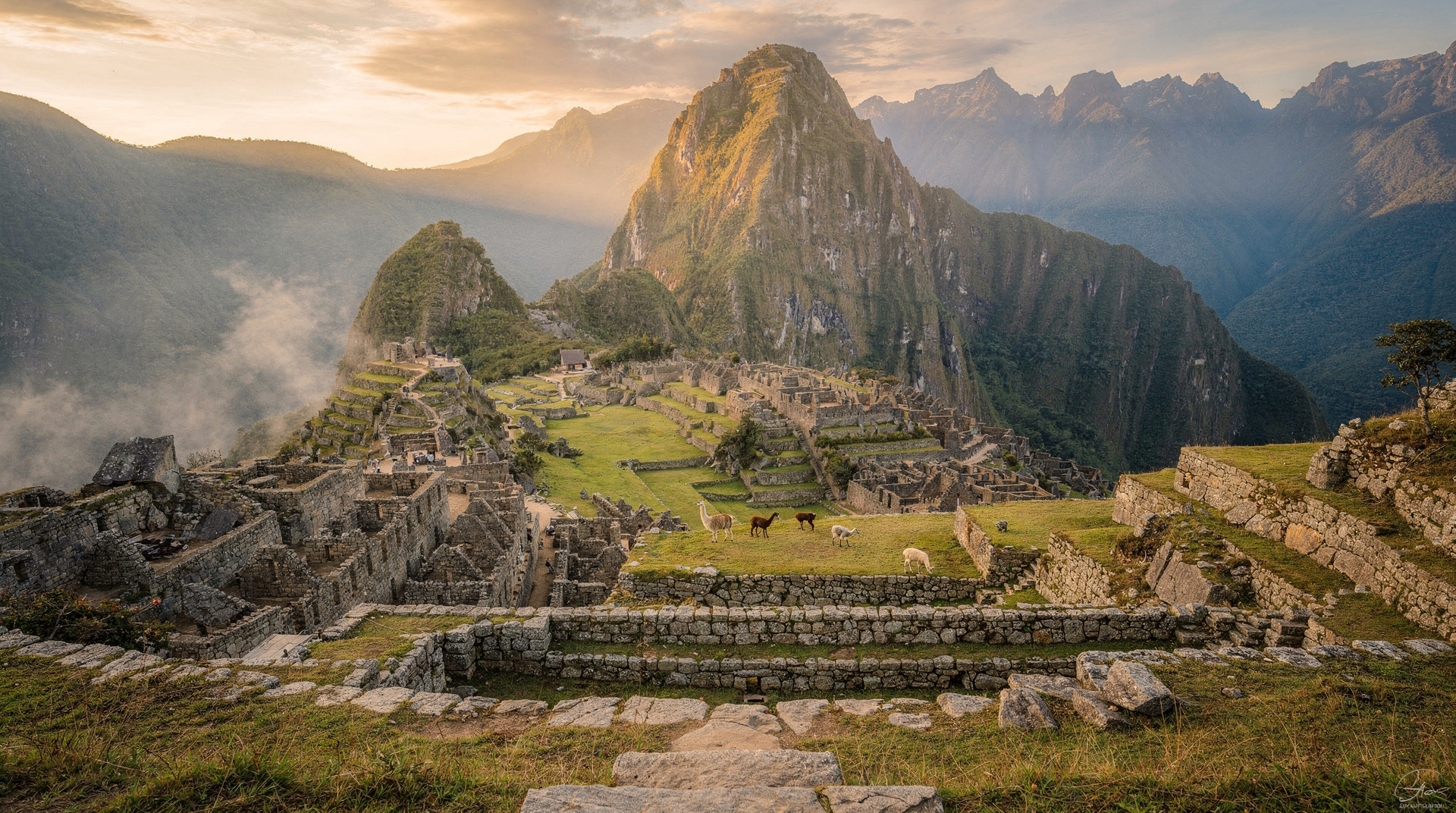
On the way to Machu Picchu: If you are travelling independently, the standard sequence is Cusco → Ollantaytambo by bus or taxi → Ollantaytambo → Aguas Calientes by train → bus to citadel entrance. See how to get to Machu Picchu for the full routing.
Honest tips
Visit the fortress early or late. The main tour coaches arrive between 10 am and 2 pm. Before 9:30 am and after 3 pm the site is genuinely quieter. The light is also better for photography in both windows.
Wear layers. At 2,800 m, Ollantaytambo is comfortable by Inca Trail standards but the temperature drops sharply after sunset, particularly in the valley bottom. An extra layer for the evening is useful if you are staying overnight.
The Pinkuylluna storehouses are free. Across the valley from the main fortress, the Inca storage buildings carved into the cliff face can be reached by a short trail from the town (30–40 minutes return). This is not covered by the Boleto Turístico and has no separate entrance charge. The views back across to the fortress from here are excellent and the site is rarely crowded.
Buy train tickets early. If you are travelling independently to Aguas Calientes, book your train from Ollantaytambo at the same time as your Machu Picchu entrance ticket. Both sell out in peak season and the train booking window opens 90 days ahead. The trains to Machu Picchu guide shows exactly when and where to book for the best prices.
Ollantaytambo rewards every extra hour you give it. The fortress alone justifies a half-day visit. The living town layout adds something that photographs cannot convey. And the positioning as the gateway to Aguas Calientes and Machu Picchu means that staying here overnight is not a detour — it is the most logical place to be.
Frequently asked questions about Ollantaytambo
Is it better to sleep in Ollantaytambo or Cusco before Machu Picchu? Ollantaytambo, if your schedule allows it. It removes the 1.5–2 hour transfer from Cusco on the morning of your visit, meaning you can catch an earlier train and reach the citadel closer to opening, when crowds are noticeably thinner.
Can I do the short Inca Trail from near Ollantaytambo? Yes — the 2-day short Inca Trail begins at a different trailhead reached from the valley and also arrives through the Sun Gate, offering a shorter trekking alternative to the full 4-day route for travellers with less time or a lower fitness threshold.
Top experiences
Bookable activities with verified prices and instant confirmation on GetYourGuide.