Cusco, Sacred Valley & Machu Picchu: 7-day comprehensive itinerary
From Cusco: Machu Picchu Day Trip with Train Tickets
Seven days done right
A week is the right amount of time to see Cusco and the surrounding region without rushing. You acclimatise properly, you have room for a rest day if the altitude is unkind, and you leave having covered the Sacred Valley at a pace that lets it sink in rather than blur into a montage of ruins and market stalls.
This itinerary covers Cusco, the Sacred Valley in depth — Pisac, Ollantaytambo, Chinchero, Maras and Moray — Machu Picchu with an overnight in Aguas Calientes, and Rainbow Mountain. It is designed to be genuinely comprehensive without being punishing.
Planning ahead: Book Machu Picchu entrance tickets at tuboleto.cultura.pe (two to four weeks ahead in high season; as early as possible for June–August). Book your trains on perurail.com or incarail.com. For an overnight in Aguas Calientes, arrange accommodation there before you arrive — the town books out quickly on peak weekends.
| Where | Sacred Valley (3 nights) + Aguas Calientes (1 night) + Cusco (3 nights) |
| Cost | around $850–1,500 mid-range per person, excl. int’l flights |
| Time needed | 7 days for the full Sacred Valley + Machu Picchu + Rainbow Mountain combination |
| Getting there | Fly into Cusco Airport (CUZ), train Ollantaytambo–Aguas Calientes |
| Best time | May–September dry season, avoid February (Inca Trail closure, unreliable Rainbow Mountain roads) |
Who this seven-day plan suits
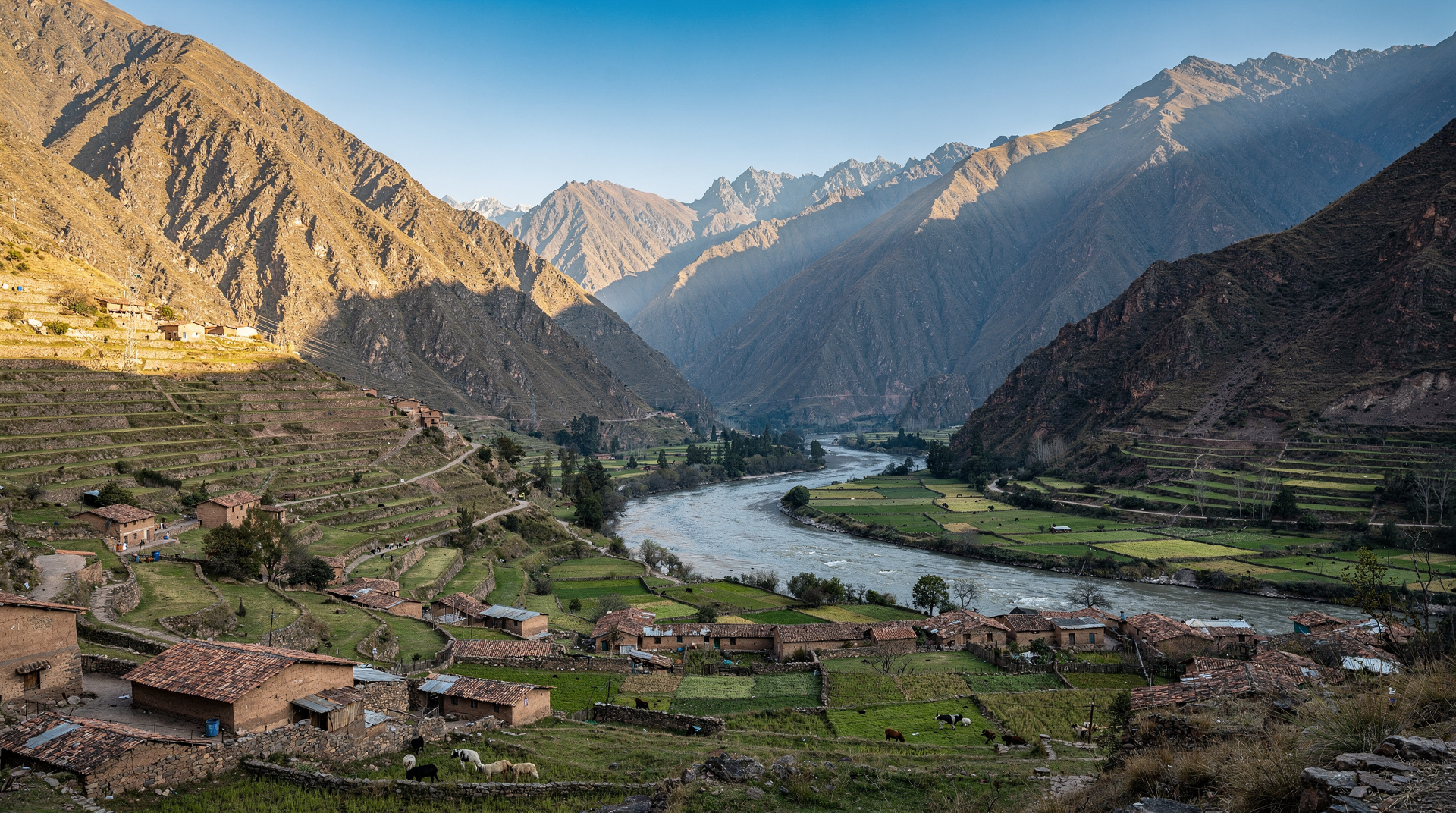
This itinerary is built for travellers who want genuine depth rather than a highlights reel — three separate nights in the Sacred Valley alone is more than most Cusco trips allow, and it means Pisac, Ollantaytambo, Chinchero, Maras and Moray all get proper time rather than a rushed single-day loop.
It suits first-timers with a full week available, couples wanting an unhurried pace, and anyone who has read a shorter itinerary (the 4-day or 5-day plan) and felt it looked too tight. It is not the right choice if you only have four or five days — trying to stretch this exact sequence into a shorter trip means cutting the valley depth that is the whole point of the extra time.
Day 1: Arrive — Sacred Valley, Ollantaytambo
Altitude: 2,800 m
Land at Cusco Airport (CUZ) and transfer directly to Ollantaytambo, 45–60 minutes by taxi or shuttle. Bypass Cusco on this first day; sleeping at 2,800 m instead of 3,400 m is the single most effective thing you can do for your acclimatisation.
Walk Ollantaytambo’s extraordinary living Inca street grid in the afternoon. The town was rebuilt after the Spanish conquest but never fully dismantled; the ancient water channels still run through the streets. Have dinner at a plaza restaurant — the trout from the local rivers (trucha, S/30–40) is excellent and a good, light choice for altitude day one.
Where to stay: El Albergue (beside the station), KB Tambo, or Samanapaq. Budget: Hostal Ollanta or Las Orquídeas.
Day 2: Ollantaytambo ruins and afternoon in Urubamba
Altitude: 2,800–3,000 m
Give Ollantaytambo fortress the morning it deserves. The terraced complex above the town is one of the finest Inca military and ceremonial sites in existence — larger and more intact than most visitors expect. The six monolithic granite slabs of the Temple of the Sun at the summit, hauled from a quarry six kilometres away across the valley, are extraordinary. Allow two hours to climb, explore and absorb the views back down to the town and across to the grain stores (qollqas) cut into the cliff face opposite.
The Pisac ruins and market, Chinchero or Moray and Maras are all feasible additions by taxi in the afternoon. Chinchero is worth 90 minutes: the colonial church built on Inca foundations, the weaving cooperative where women demonstrate backstrap-loom techniques, and the views across the plain toward Cusco. See the full Chinchero weaving guide for context on what to look for in the cooperative.
Overnight in Ollantaytambo or move to Urubamba (larger town, good mid-range hotel options including Casa Andina Premium Sacred Valley).
Day 3: Pisac market and ruins — afternoon Maras salt mines
Altitude: 2,950–3,350 m (Pisac) — 3,380 m (Maras)
The Pisac market is at its most vibrant on Tuesday, Thursday and Sunday mornings. Arrive by 9 a.m. before the tour coaches. Ignore the outer tourist rows (alpaca scarves in fluorescent colours, the same ceramic inca faces in every stall) and move into the interior where farmers sell potatoes — Peru has over 3,000 native varieties — dried herbs, chicha and fresh produce. This is what the market actually is.
After the market, take a taxi up the switchback road to the Pisac ruins on the ridge above the town. The site is extensive: citadel, solar observatory (Intihuatana), agricultural terraces and a cemetery with hundreds of carved niches. Allow 90 minutes. The views down the valley justify the climb alone.
In the afternoon, the Maras and Moray combined excursion covers both sites efficiently. Moray’s circular terraces in their bowl-shaped depressions have an eerie, almost alien quality. The Maras salt mines — over 3,000 individual pools, still worked by the same families, cascading down a warm hillside above the valley floor — photograph magnificently in afternoon light. Try the small bags of pink and white salt sold directly by the working families at the site exit; they are priced fairly and the money goes directly to them.
Return to your valley accommodation. Dinner in Urubamba or Ollantaytambo.
Day 4: Machu Picchu — overnight in Aguas Calientes
Altitude: 2,430 m
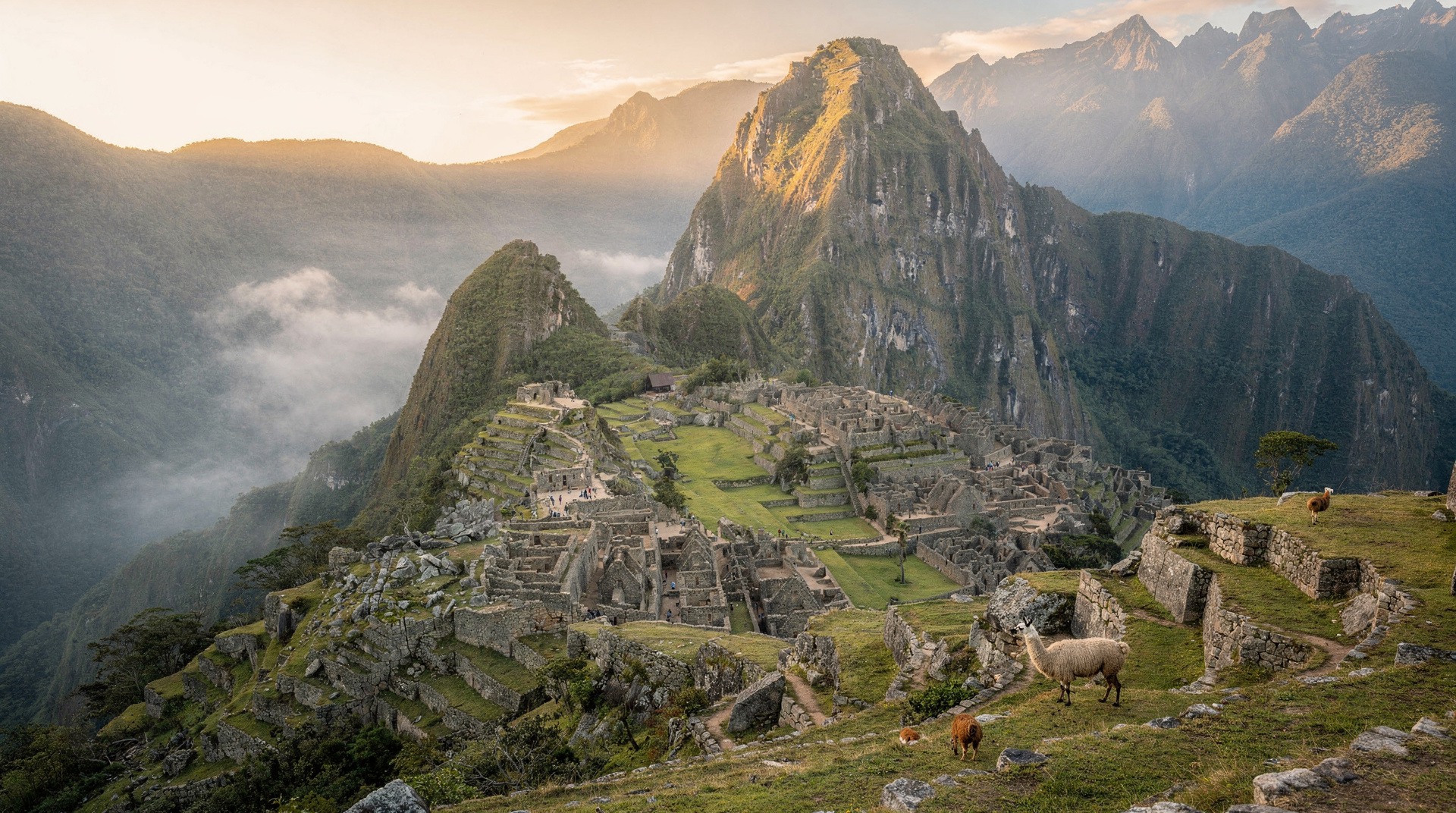
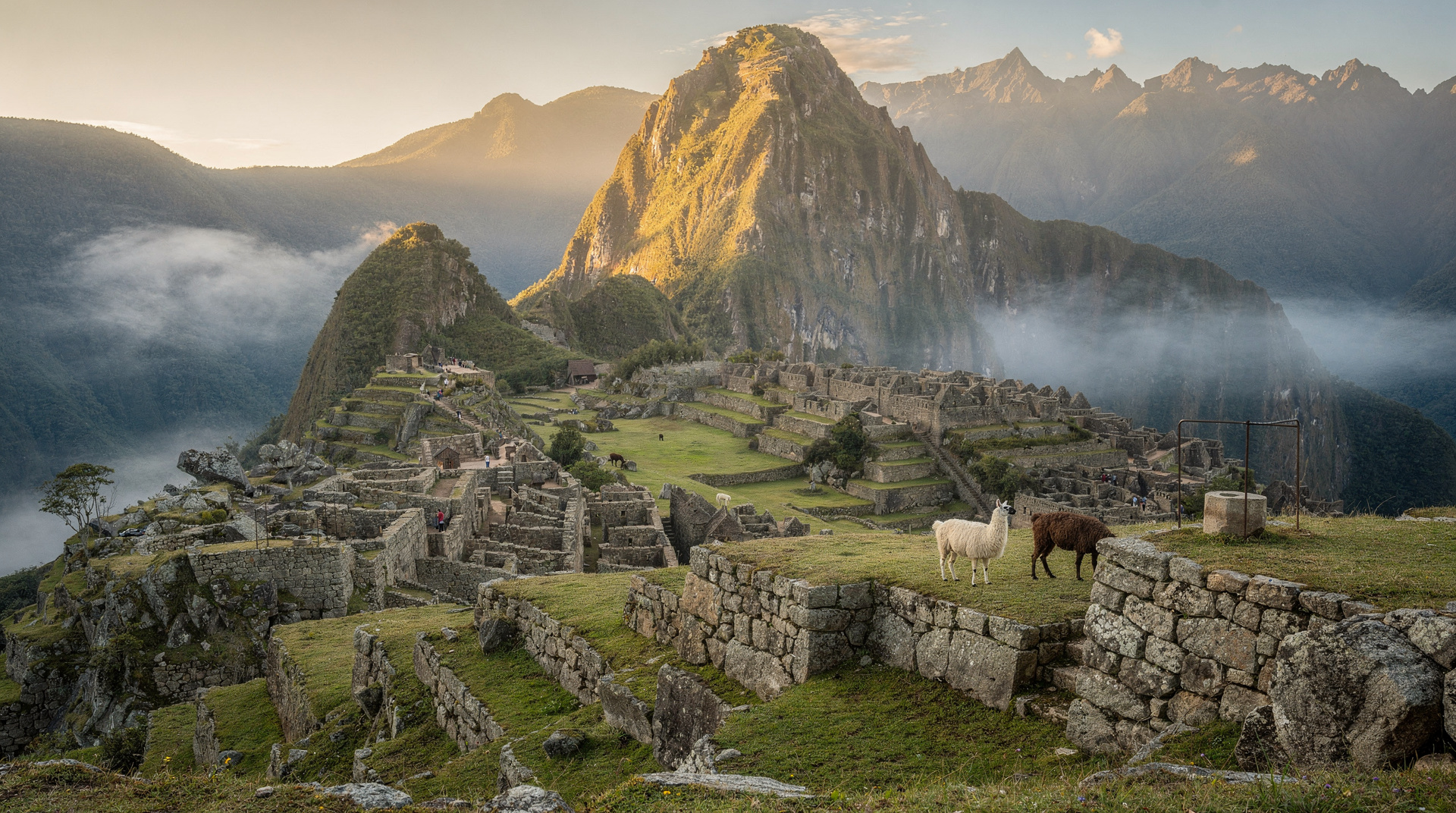
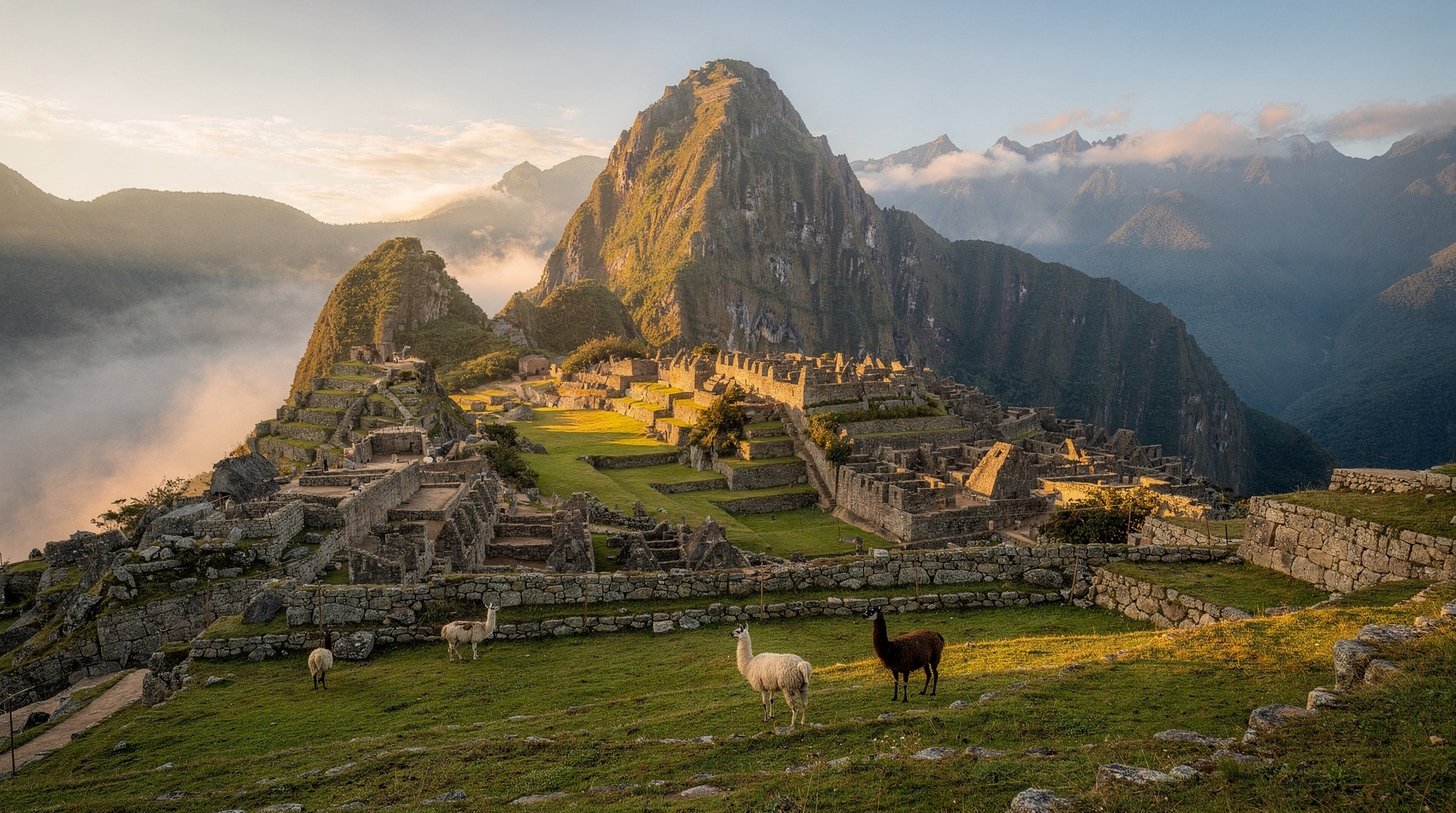
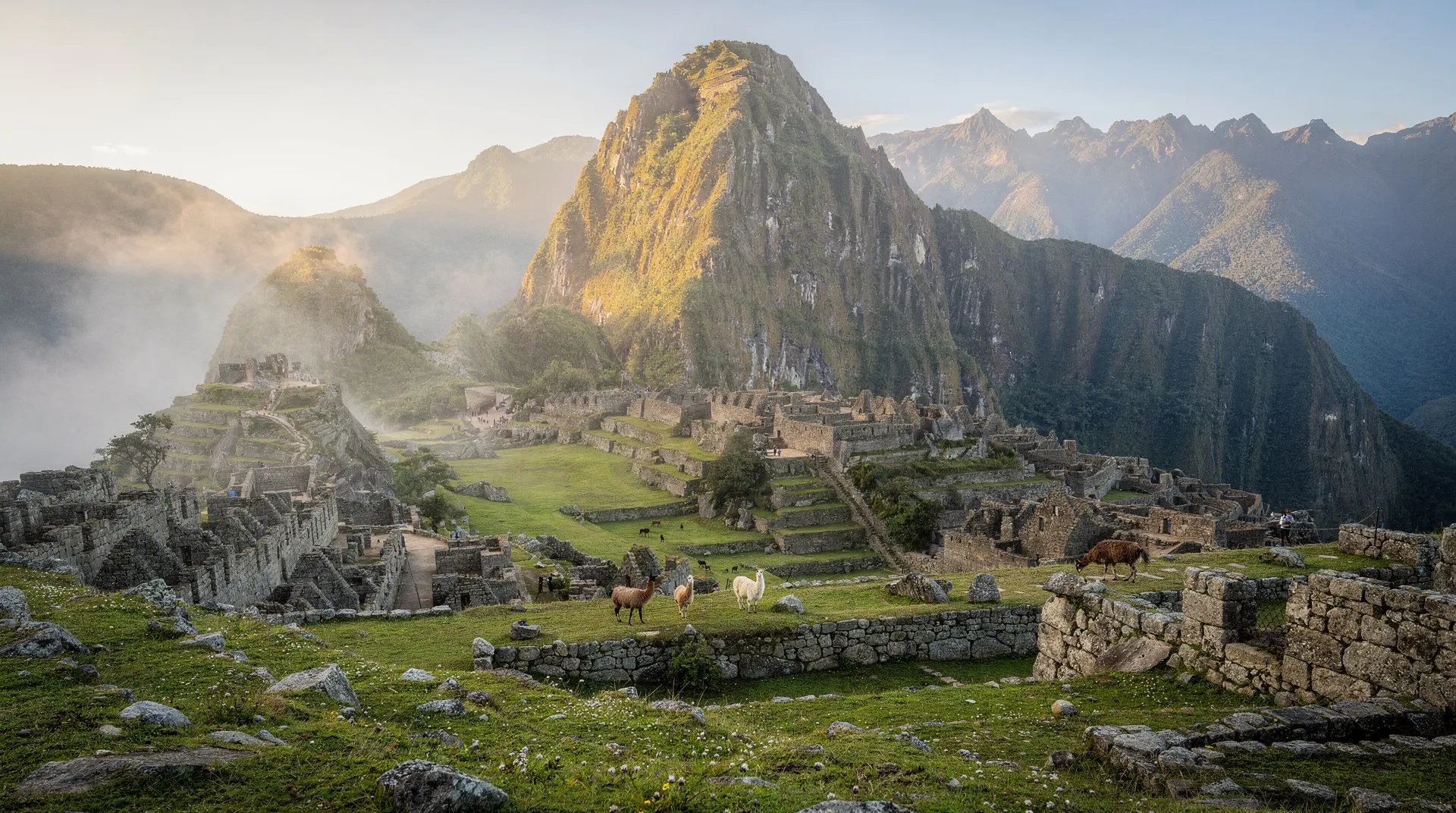
Early train from Ollantaytambo. Your two-day train and entrance package (if booked) handles the logistics; alternatively, combine your pre-booked PeruRail or Inca Rail ticket with your tuboleto.cultura.pe entrance. The 90-minute train journey through cloud-forest gorges, with the track hugging the Urubamba River, is one of the great train rides in South America.
Bus from Aguas Calientes to the citadel gate. At Machu Picchu, follow your assigned circuit — see the circuits explained for which section suits your interests and physical level. Allow at least three hours inside, ideally four. The city is most atmospheric in the first two hours after gates open (6 a.m.) and in the last hour before closing (5 p.m.) — midday is the most crowded.
The key advantage of an overnight in Aguas Calientes is that you can visit on the evening of your arrival day and then return for a second morning session before the day-trip crowds arrive. If your entrance ticket is for a single timed entry, the second morning requires a separate ticket; check at the gate when you arrive. The option to include Huayna Picchu or Machu Picchu Mountain requires a separate add-on ticket, booked in advance at tuboleto.cultura.pe.
Evening in Aguas Calientes: the town is small, a little kitschy, but the restaurants on and around the main plaza are better than their setting suggests. The hot springs (aguas calientes) that give the town its name are at the top of the main street and worth a soak after a day of walking.
Where to stay: Inkaterra Machu Picchu Pueblo Hotel is the benchmark for luxury (from $350 USD per night); Tierra Viva Machu Picchu is reliable mid-range (from $120 USD); budget travellers can find clean hostels for $25–50 USD.
Day 5: Return to Cusco — afternoon in the city
Altitude: 3,400 m
Early morning at Machu Picchu before the day-trippers arrive, then bus down to Aguas Calientes, train back to Ollantaytambo, and a shared shuttle or taxi to Cusco. You should be in the city by early afternoon.
This is a half-day in Cusco: drop your bags, walk to Qorikancha (Temple of the Sun; check current fares and hours on the official Qorikancha site) for a focused one-hour visit, then up through the historic centre to the Plaza de Armas. Have dinner in the city; this is your first proper evening in Cusco and the altitude will feel manageable now that you are three days acclimatised.
Day 6: Cusco in depth — San Blas, ruins, food
Altitude: 3,400 m
Full day for the city. Morning in San Blas: the artisan quarter, the carved pulpit, the workshops. Look for workshops where artisans are actually working rather than simply selling — the difference between craft production and craft performance is visible if you look carefully. A market tour and cooking class is one of the most worthwhile half-day activities in Cusco; visiting San Pedro Market with a knowledgeable guide, then cooking a three-course Andean lunch, gives you a frame of reference for every market stall and restaurant menu you encounter for the rest of your trip.
Afternoon: the guided half-day city tour takes you to Sacsayhuamán, Q’enqo, Puca Pucara and Tambomachay — all on the Boleto Turístico. The guide at Sacsayhuamán is not optional if you want to understand the construction sequence; the sheer scale of the walls requires context to process.
Evening: proper dinner out. Cusco’s restaurant scene has genuine depth — look for places serving ceviche (yes, in the mountains — it travels well and the highland trout version is excellent), ají de gallina (S/28–40) or a tasting menu of novo-andino cuisine. See best restaurants in Cusco for current reliable options.
Day 7: Rainbow Mountain — fly home
Altitude: 4,300–5,200 m
Pickup at 3–4 a.m. for the three-hour drive to the Rainbow Mountain trailhead near Cusipata. The guided Rainbow Mountain day trip includes transport, guide, and usually a packed breakfast. The hike to the 5,200 m summit ridge is approximately 7 km return, taking two to three hours each way. Horse hire is available if needed (S/70–100 at the trailhead).
By day seven you are as acclimatised as you are going to get after seven days at altitude. Rainbow Mountain at this point in the trip is far more enjoyable than it would have been on day two or three. The mineralogical colours — reds from iron oxide, purples from manganese, greens and yellows from other mineral deposits — are striking on clear dry-season mornings.
Return to Cusco by mid-afternoon. If your flight is late afternoon or evening, this works perfectly: shower, luggage, taxi to airport. Most Lima-bound flights depart Cusco between 3 p.m. and 8 p.m.
Note: If Rainbow Mountain on departure day feels too rushed or risky given your flight time, swap days six and seven. The cooking class and city tour are lower-intensity and give you more flexibility.
Where to stay — summary by night
| Night | Location | Altitude | Recommended tier |
|---|---|---|---|
| 1 | Ollantaytambo | 2,800 m | Mid-range S/150–300 |
| 2 | Ollantaytambo or Urubamba | 2,800–2,850 m | Mid-range S/150–350 |
| 3 | Sacred Valley | 2,800–3,000 m | Mid-range S/150–350 |
| 4 | Aguas Calientes | 2,040 m | Mid-range S/180–400 |
| 5–7 | Cusco | 3,400 m | Mid-range S/200–450 |
Seven-day budget estimate
Mid-range spend (S/ approximate, per person):
- Accommodation (7 nights): S/1,400–2,800
- Machu Picchu ticket + train: S/500–700
- Guided tours (valley, Cusco city, Rainbow Mountain): S/300–600
- Meals: S/600–1,000
- Transport (taxis, buses): S/200–350
- Boleto Turístico: S/130
Total mid-range estimate: S/3,130–5,580 (approximately $850–1,500 USD per person). Budget travellers sharing accommodation, eating set lunches and using shared transport can do it for S/1,800–2,500.
Key tips for the full week
February: Do not plan Rainbow Mountain or the Inca Trail in February — the Trail closes for maintenance all month, and Rainbow Mountain roads become unreliable after heavy rain. See Cusco in the rainy season if you are visiting November–March.
Inti Raymi (24 June): If your trip overlaps with this festival, Cusco’s streets fill with performers and spectators — a genuinely extraordinary spectacle. Accommodation prices spike. Book everything three to four months ahead if you want the festival window.
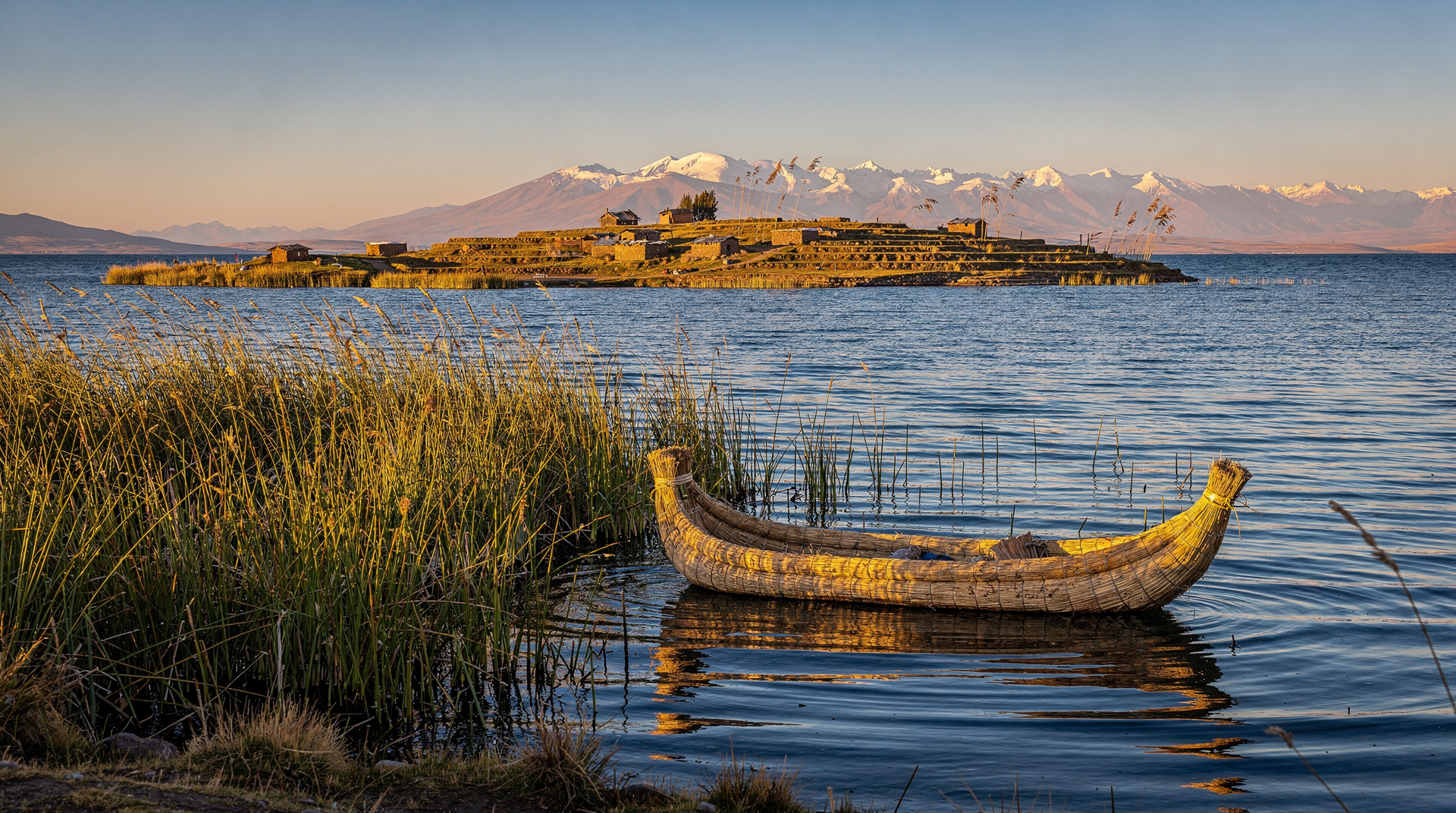
Extending or shortening: If a full week feels like too much, the 5-day itinerary covers Machu Picchu and Rainbow Mountain with the same acclimatisation logic in a tighter frame. If you want to extend beyond a week, combining this trip with Lake Titicaca is the natural next step for southern Peru.
The Boleto Turístico: Decide early whether the full S/130 pass or the partial S/70 pass makes economic sense for you. If you have already paid separately at Ollantaytambo and Pisac, only the Cusco-area sites remain on the full pass. See Boleto Turístico explained for the full breakdown.
Frequently asked questions about Cusco, Sacred Valley & Machu Picchu
Is seven days too long for Cusco and the Sacred Valley? Not if you want real depth rather than a highlights reel. Three full nights in the valley (rather than the one or two nights typical of shorter itineraries) means Pisac, Ollantaytambo, Chinchero and Maras-Moray each get proper time instead of being crammed into a single rushed day.
Should I do Rainbow Mountain on the last day if my flight is that evening? It works well if your flight is late afternoon or evening — the itinerary is built around exactly that timing. If your flight is earlier or you would rather not risk tight connections after an early 3–4 a.m. start, swap days six and seven so the lower-intensity city activities fall on departure day instead.
Top experiences
Bookable activities with verified prices and instant confirmation on GetYourGuide.