San Blas
Explore San Blas, Cusco's hillside artisan neighbourhood. Find the carved pulpit, genuine craft workshops, and quiet cobbled lanes away from the tourist
Cusco: City Center and San Blas Walking Tour
Quick facts
- Country
- Peru
- Altitude
- 3,400 m / 11,150 ft
- Currency
- Peruvian sol (S/) — USD widely used
- Best for
- Artisan workshops, colonial church, quiet lanes, authentic atmosphere
Cusco’s most characterful neighbourhood
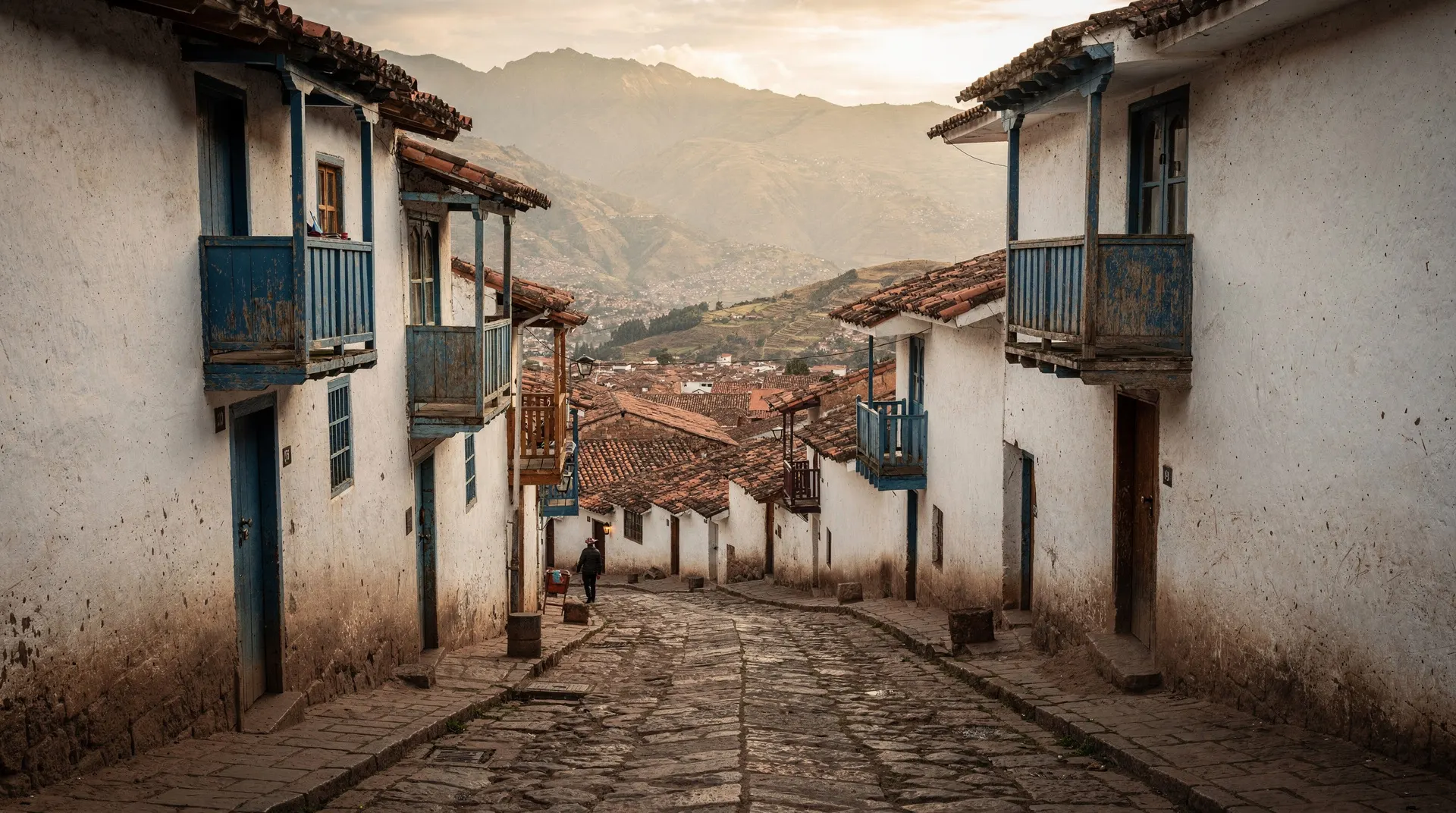
Most visitors arrive in Cusco and spend their first hours circling the Plaza de Armas. San Blas, fifteen minutes uphill on foot, is where the city starts to breathe differently. The streets narrow to little more than a metre in places; the stones underfoot are the original Inca pavement; laundry hangs between windows of houses that have stood for four hundred years. No tour coaches can reach here. It is, by the standards of a major tourist city, remarkably quiet.
San Blas is Cusco’s traditional artisan quarter. Weavers, silversmiths, woodcarvers, ceramicists and leather workers have operated in the neighbourhood for generations, and a significant number still do — though knowing which workshops are genuinely artisan-run and which are retail outlets for mass-produced goods brought in from Lima requires local guidance. This is one of the better arguments for joining a tour rather than wandering independently.
At 3,400 m, the uphill climb to San Blas is the first real test of Cusco’s altitude for new arrivals. Take it slowly, rest if you need to, and the altitude sickness guide remains the most useful reference for managing your first days in the Andes.
| Where | Uphill from the Plaza de Armas, historic centre |
| Cost | Free to walk; church ~S/10; textiles S/150–400 |
| Time needed | Half day (1–2 hrs walking, longer with workshops and food) |
| Getting there | On foot only — narrow streets, no vehicle access |
| Best time | Morning light, after your first acclimatisation day |
The church and its famous pulpit
San Blas church (Templo de San Blas) is small, unremarkable from the outside, and remarkable inside. Built in the early seventeenth century on the site of an Inca shrine, it holds what is widely considered the most elaborate carved wooden pulpit in the Americas. The pulpit is carved from a single cedarwood trunk and decorated with over 600 individual figures — saints, angels, cherubim, conquistadors, indigenous motifs — worked in a style that blends Spanish Baroque with Andean visual traditions.
Admission is around S/10 and the church is typically open from 10 am to 6 pm Monday to Saturday. Photography inside is allowed but without flash. Even if religious art is not usually your focus, the technical achievement of the pulpit is difficult not to admire: it was carved, art historians believe, in the late seventeenth or early eighteenth century, and neither the tools used nor the master carver’s identity are definitively known.
The church plaza fronting it, Plazoleta San Blas, has two or three café terraces where you can sit and recover from the climb before continuing into the neighbourhood streets.
Artisan workshops: what is genuine
The neighbourhood has about two dozen workshops and galleries at any given time, ranging from internationally recognised master weavers to small-scale potters and jewellers. The most famous name is the Mendivil family (Hilario Mendivil, now deceased, pioneered a distinctive long-necked sacred figure style that is iconic in Cusco art), and their studio on the Plazoleta still sells original works at prices reflecting their reputation — pieces start at several hundred dollars.
For textiles, look for natural dye processes. Genuine naturally dyed work uses cochineal (insects harvested from cacti), indigo, and local plant extracts; the colours are slightly muted and irregular compared with synthetic dyes. Workshops that let you watch the process are generally worth the purchase premium. A high-quality hand-woven alpaca textile in San Blas costs S/150–400 depending on size and complexity; if something similar is offered for S/30 on the Plaza, it is almost certainly machine-made.
A guided walking tour through San Blas is the most efficient way to separate the authentic from the decorative. Good guides have personal relationships with the workshop owners and can take you into working spaces that are not open to casual drop-ins. They also explain the cultural and historical context of each craft tradition — what the motifs mean, why certain designs are regionally specific, how the Spanish colonial period influenced Andean artistic production.
For a more in-depth private experience of the neighbourhood, a private San Blas tour allows you to set your own pace and focus on whichever craft traditions interest you most.
Walking the streets
The neighbourhood is loosely bounded by Calle Choquechaka to the south, Cuesta San Blas rising from the Plaza de Armas, and the open viewpoint at Qusqo Wasi to the north. A circuit of the main streets — Cuesta San Blas, Tandapata, Siete Culebras, Carmen Bajo — takes about an hour at a relaxed pace without stopping in any workshops.
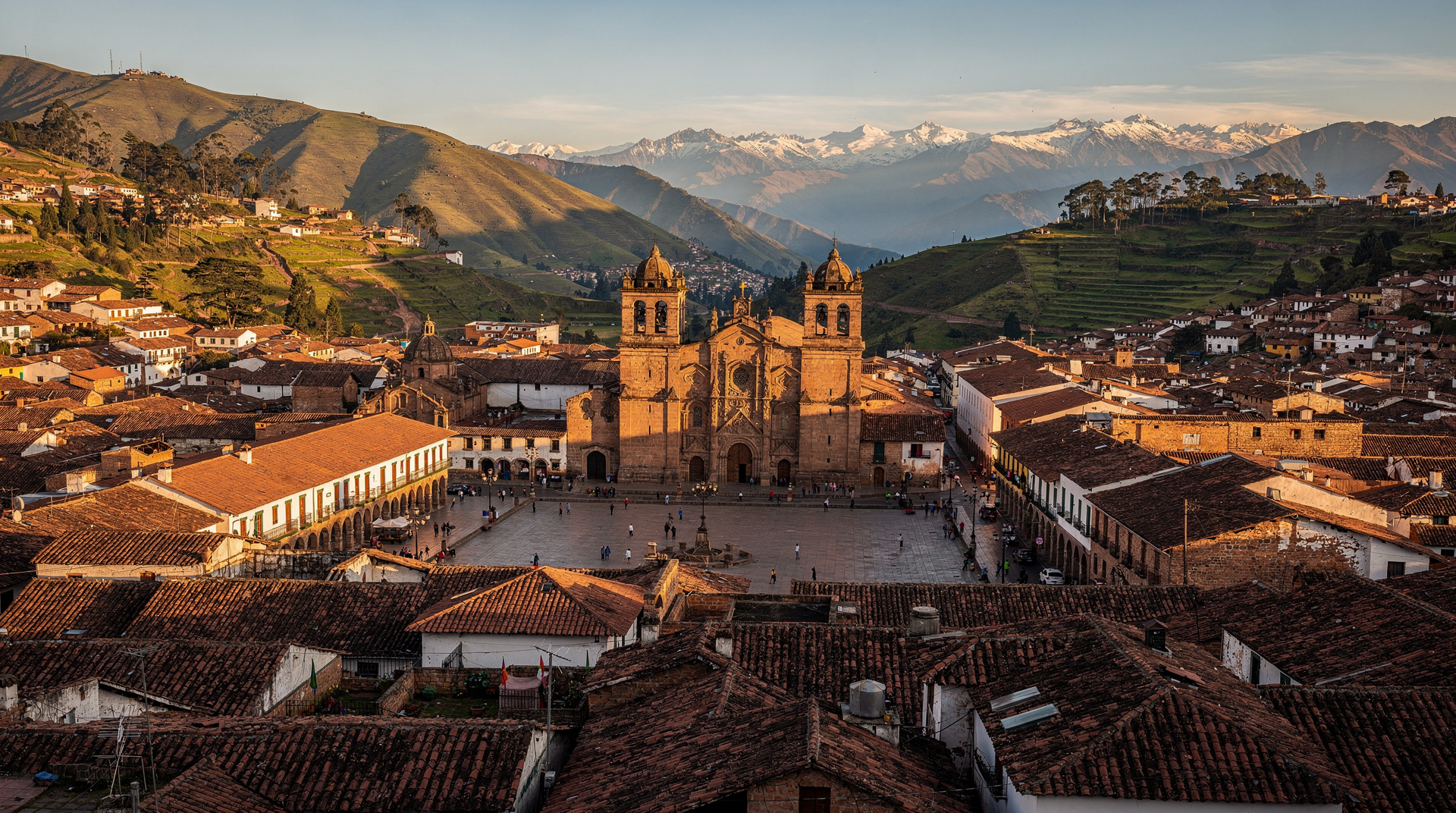
The views from the upper streets and the Qusqo Wasi viewpoint are among the best available of central Cusco’s roofline and the mountains behind the city. These shots are particularly good in the morning when the light comes in from the east and the terracotta tiles are still damp from overnight cold.
Siete Culebras (Seven Snakes) is worth finding: a narrow alley named for carved snake motifs on the walls, linking Carmen Bajo with the lower streets. The carvings are faded but legible. Snakes (amaru) were significant in Inca cosmology as symbols of the underworld, and their presence on the walls here is not coincidental.
Combining San Blas with food
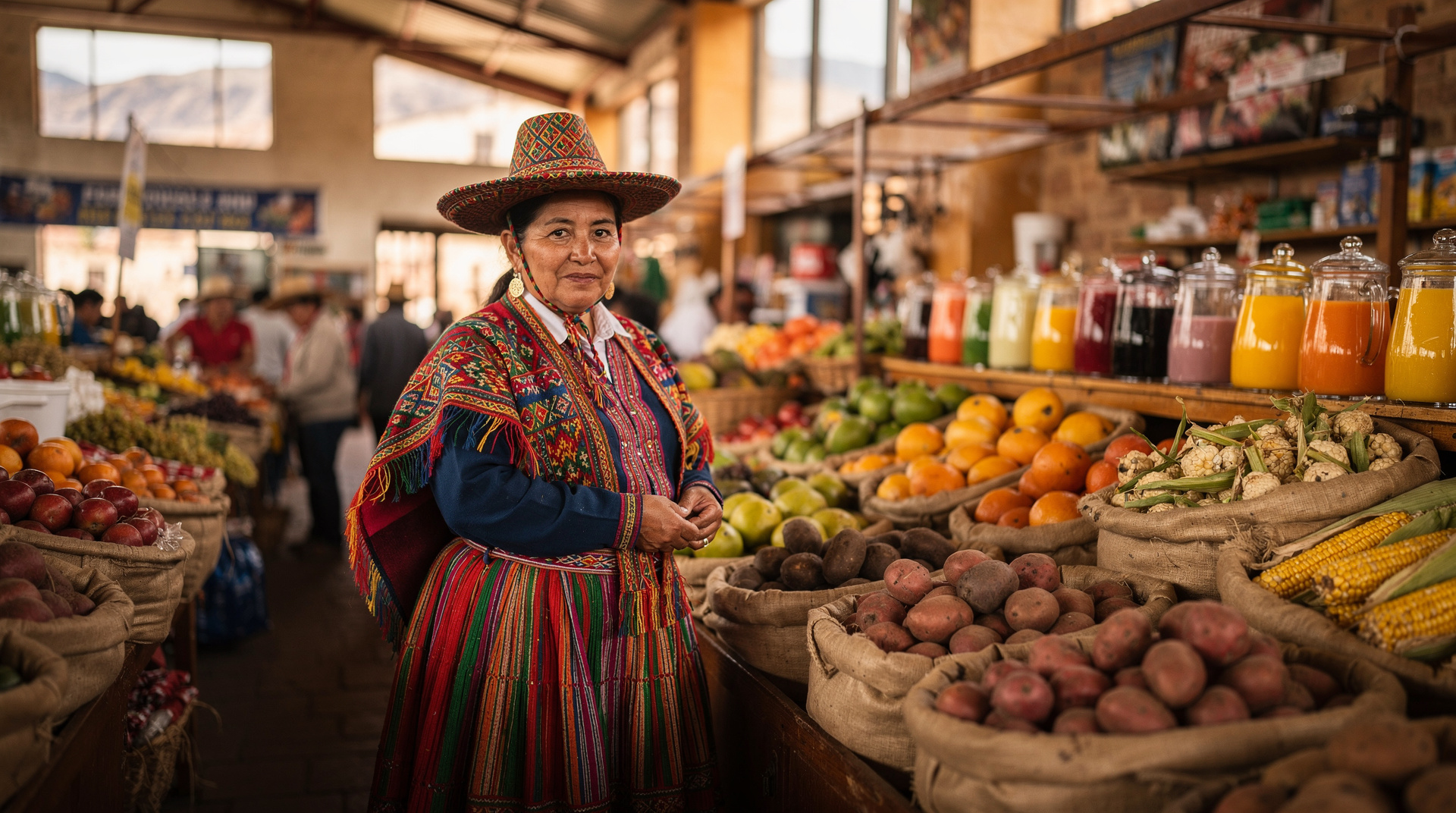
San Blas sits roughly halfway between the Plaza de Armas and the San Pedro Market — Cusco’s main daily food market, a ten-minute walk downhill. Combining a morning in San Blas with an afternoon cooking class makes a particularly coherent full-day programme: you cover the craft and architectural side of Cusco before moving into Andean food culture.
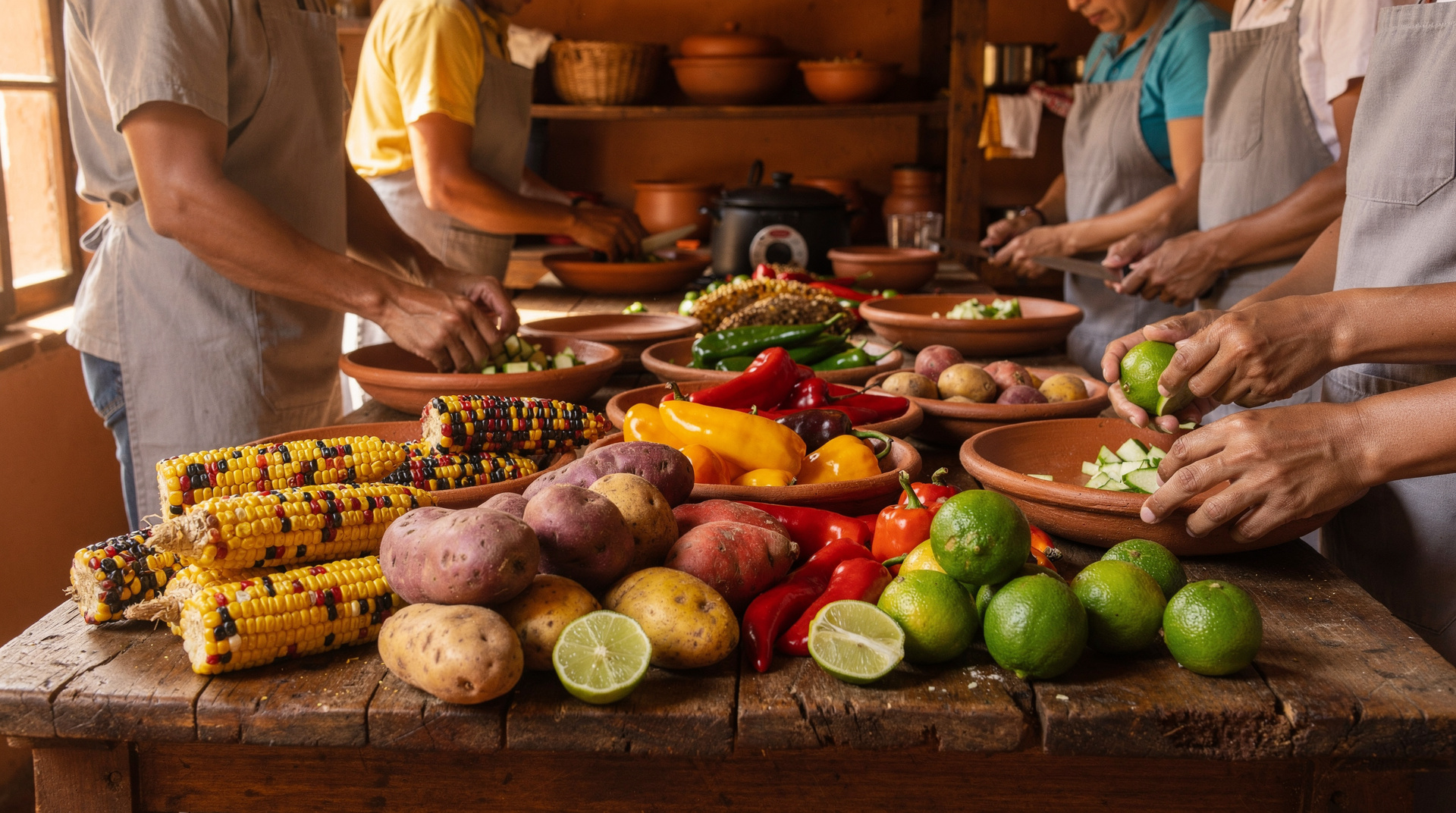
The market tour and cooking class is well suited to pairing with a San Blas morning: the market tour begins at San Pedro with an introduction to Andean ingredients — the dozens of potato varieties, the purple corn, the chillies, the chuño (freeze-dried potato) — before moving to a kitchen. The cooking session itself lasts about two hours and produces a full Peruvian meal. Total cost runs around $30–45 per person including the food. The guide to Cusco cooking classes compares the main operators if you want to evaluate options before booking.
Eating and drinking in San Blas
The neighbourhood has a small but reliable cluster of restaurants and cafés concentrated around the Plazoleta and along Tandapata. For breakfast, several spots serve excellent café de olla (pot-brewed coffee with cinnamon) and bread with avocado from around 7 am. Prices in San Blas restaurants run 20–30% below equivalent places on the Plaza de Armas, partly because foot traffic is lower and partly because the clientele is a more local mix.
Chicha — fermented maize beer, slightly sour, served in large cups — is available at houses flying a red plastic bag or bunch of dried flowers from a pole above the door. These informal chicherías are neighbourhood institutions. A cup costs S/2–3 and the experience of sitting in a courtyard drinking chicha with Cusco residents is worth more than whatever else you had planned for that half-hour.
For a more formal meal, several San Blas restaurants specialise in modern Andean cooking that reinterprets traditional ingredients — alpaca, quinoa, native potatoes — in ways that feel distinct from the standard tourist-menu fare found closer to the Plaza. Reservations are rarely needed outside peak dinner hours, but the better-known spots do fill up on weekend evenings.
Avoid restaurants on the Plazoleta that display menus with prices in US dollars and photographs of the dishes. These target tourists specifically and charge accordingly, without any particular quality advantage over the places slightly further back in the neighbourhood.
Getting there and practical details
San Blas is reachable only on foot from the Plaza de Armas — the streets are too narrow and steep for vehicle access. Cuesta San Blas is the main ascending lane; it takes 10–15 minutes depending on your pace and how hard the altitude is hitting you. Do not be embarrassed about stopping to rest; almost everyone does on their first day in Cusco.
There are no ATMs in San Blas itself. The nearest reliable cash machines are on Avenida El Sol, a ten-minute walk downhill from the neighbourhood. Most workshops accept soles only; a minority of the larger galleries take cards. Bring cash.
The neighbourhood is safe throughout daylight hours. After dark, the steep cobblestones become genuinely hazardous without good lighting, so plan your San Blas evening on nights when you are confident about the terrain underfoot. Taxis back to the Plaza or to your hotel are available via the Cabify and InDriver apps; drivers will meet you on the nearest accessible street, which in practice means descending to Choquechaka or Cuesta San Blas before calling.
The how many days in Cusco guide and the 4-day itinerary both suggest slotting San Blas into your second day, after an initial acclimatisation rest — this remains the most sensible approach.
Where San Blas fits in a wider Cusco day
San Blas works best as a slow chapter rather than a checklist item. Because the quarter sits just above the historic centre of Cusco, it pairs naturally with a morning among the colonial arcades and churches below, followed by the climb once you have found your breathing rhythm. Those who prefer stonework to crafts can continue from the upper lanes toward Sacsayhuamán, whose enormous walls make a fitting contrast to the intimate scale of the neighbourhood.
Another sensible pairing is Qorikancha, the Inca temple beneath the Santo Domingo church. Seeing Inca masonry there and then walking streets still paved with Inca stones in San Blas gives a clear sense of how the colonial city grew directly on top of the earlier one. If you want the wider story behind this layering, the Inca empire guide for travellers supplies useful background, and the Cusco archaeological sites overview helps you decide which ruins deserve your limited time.
A relaxed way to spend the morning
There is no need to plan San Blas minute by minute. A good rhythm is to arrive early, while the lanes are still cool and the light is soft, and begin at the church before the small crowds gather. From there, drift through the workshops without any obligation to buy; owners are generally happy to explain their craft to anyone who shows genuine curiosity, and a polite question about technique or dyes tends to open more doors than a haggling opening line.
Leave room for unplanned moments: a doorway glimpsed through a half-open gate, a ceramicist shaping clay in a courtyard, a view back across the tiled rooftops that appears at the end of a stair. Pause at a café terrace when your legs ask for it. The neighbourhood rewards lingering far more than rushing, and the stairs become much more pleasant once you stop treating them as an obstacle.
If you are travelling with family, the quarter is calm enough to enjoy at a child’s pace, though the steep cobbles call for good shoes and a patient attitude; the Cusco with kids guide covers what else suits younger travellers. Budget-minded visitors will find that San Blas costs very little to enjoy, since most of its pleasure lies in walking and looking; the Cusco on a budget guide shows where to save elsewhere in the city.
Before you buy a souvenir
Treat any purchase here as an investment in a story as much as an object. Ask who made the piece, where, and how long it took, and notice whether the answer comes easily. Makers who are proud of their work usually enjoy explaining it. Compare two or three workshops before committing, and remember that a fair price for real handwork will never feel like a bargain-bin figure.
Visitors who want to understand what they are looking at before they shop can read the guide to Andean textiles beforehand; knowing the difference between a hand-spun thread and a machine-spun one makes every conversation in the quarter more rewarding. For a wider look at how local weaving traditions are kept alive, the Chinchero weaving guide and the Chinchero destination page describe cooperatives in the Sacred Valley that welcome visitors, a useful comparison to the workshops you see here. And if you keep a few free hours for a second neighbourhood, the Cusco tourist traps guide is worth a skim so that your souvenir shopping and your general wandering stay free of unpleasant surprises.
Frequently asked questions about San Blas
Is San Blas walkable for someone with knee or mobility problems? It’s genuinely steep — the streets climb consistently from the Plaza de Armas and are entirely cobblestone. Taking it slowly with rest stops works for most visitors, but anyone with real mobility limitations should budget extra time and consider a taxi to the upper Qusqo Wasi viewpoint, then walking downhill through the neighbourhood instead.
How do I know if a textile is genuinely handwoven? Look at price and irregularity: a genuine hand-woven alpaca piece with natural dyes runs S/150–400 and shows slightly muted, irregular colouring; anything offered far cheaper, with perfectly uniform bright colour, is almost certainly machine-made. Workshops that let you watch the weaving process are the most reliable sign of authenticity.
Top experiences
Bookable activities with verified prices and instant confirmation on GetYourGuide.