San Pedro Market
Mercado de San Pedro is Cusco's best daily market for Andean food and local life. Honest guide to what to eat, what to buy and cooking tours.
Cusco: San Pedro Market and Peruvian Cooking Class
Quick facts
- Country
- Peru
- Altitude
- 3,400 m / 11,150 ft
- Currency
- Peruvian sol (S/) — USD widely used
- Best for
- Andean food, local atmosphere, fresh juice, cooking class starting point
The market that makes sense of Andean food
Mercado de San Pedro sits four blocks southwest of the Plaza de Armas in a Victorian-era iron hall and is, without much competition, the most useful single hour you can spend in Cusco before trying to make sense of the city’s food. The market does not exist for tourists. It is where Cusco residents buy their produce, their meat, their potatoes, their herbal remedies, and their lunch. The result is that the prices are honest and the food is what people actually eat, rather than what a restaurant has decided tourists want to eat.
For visitors, the market functions as both an orientation experience and a practical destination. You can eat a proper breakfast here for S/8–12, drink a glass of freshly squeezed orange or strawberry juice for S/2–3, buy a bag of dried herbs or chilli pastes to take home, and spend an instructive hour understanding why Peruvian cuisine is considered one of the most complex and varied food cultures in the world — before you have visited a single restaurant.
The market also serves as the starting point for several of Cusco’s best cooking class experiences, which is the most structured way to translate what you see here into understanding.
| Where | Calle Santa Clara, ~10 min walk from the Plaza de Armas |
| Cost | Breakfast S/8–12, juice S/2–4, lunch menú S/10–15 |
| Time needed | 1–2 hours browsing, half day with a cooking class |
| Getting there | Walkable from anywhere in central Cusco |
| Best time | 8 am–2 pm for peak activity and freshest food |
What you will find inside
The market hall is divided into loose zones by product type, though the organisation is more organic than formal. The outer stalls nearest the entrances tend to sell tourist-oriented goods: textiles, alpaca products, carved gourds, and silver jewellery. Walk past these into the interior and the market changes character rapidly.
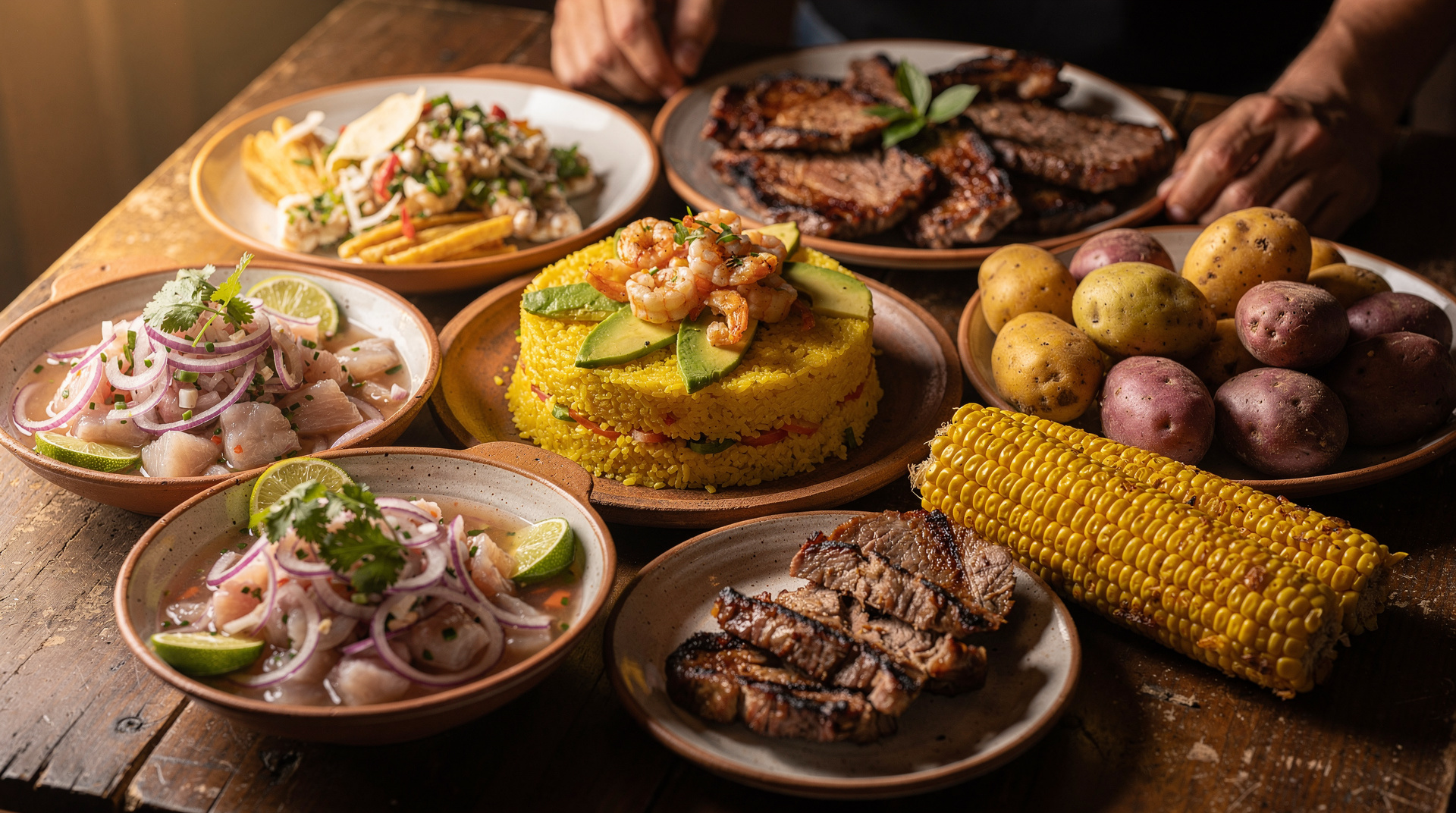
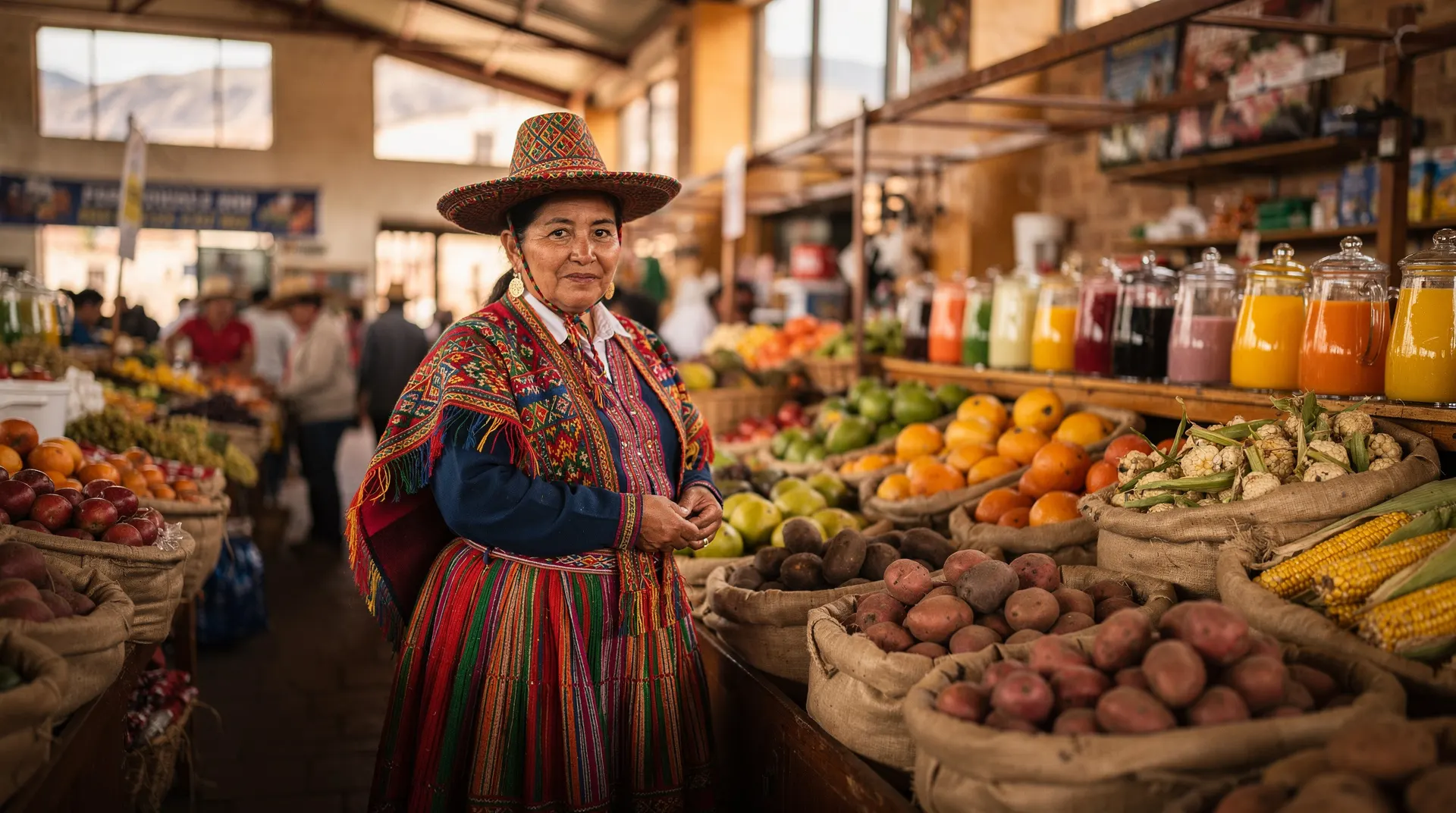
Produce section: The scale of the potato display stops most visitors. Peru is the origin of the potato, and the variety here is extraordinary — over 3,000 cultivated varieties exist in the Andes, and a decent Cusco market will have 30 to 50 distinct types on display on any given day, ranging from the familiar yellow-fleshed papas amarillas through purple, pink, black, knobbly, smooth, waxy and floury forms of every description. The blue-grey freeze-dried potato (chuño) and its white version (moraya) are stacked in bags and look unlike anything in a European or North American supermarket; they are the Inca preservation technology that allowed food to be stored for years at altitude.
Corn appears in similarly bewildering variety: giant-kernelled choclo (the variety most commonly boiled and eaten as a side dish), purple corn used for chicha morada (a cold drink), and white and yellow varieties at various stages of drying. The Peruvian food guide covers what each type is used for and where it appears on restaurant menus.
Juice stalls: The central juice corridor is one of the best food-value spots in Cusco. Stalls line up along the central aisle with displays of every available fruit, and a full glass of freshly pressed juice — orange, strawberry, papaya, lucuma, maracuyá (passion fruit), or combinations thereof — costs S/2–4 depending on the fruit. Point and pay; no ceremony required. The juices at mid-morning, when the fruit is freshest and the stall holders are fully operational, are significantly better than anything served in a restaurant.
Cooked food stalls: The back of the market is where the prepared food concentrates. Breakfast stalls open from 6 am and serve quinoa porridge (api), tamales, chicharrón (fried pork belly with hominy), and bread. By 10 am the lunch stalls are setting up, and the S/10–15 lunch menú (set menu of soup plus main course plus drink) here is the best-value meal in central Cusco. The soup is typically a thick caldo with noodles, potato and meat; the main course might be lomo saltado (stir-fried beef with tomatoes and chips), seco de pollo (slow-cooked chicken in coriander sauce), or rocoto relleno (stuffed hot peppers).
Anticuchos — grilled beef heart on skewers, marinated in ají panca chilli and cumin — are available from mid-morning at a few stalls and typically cost S/4–6 for two skewers. They sound intimidating and taste excellent.
Cooking classes that start here
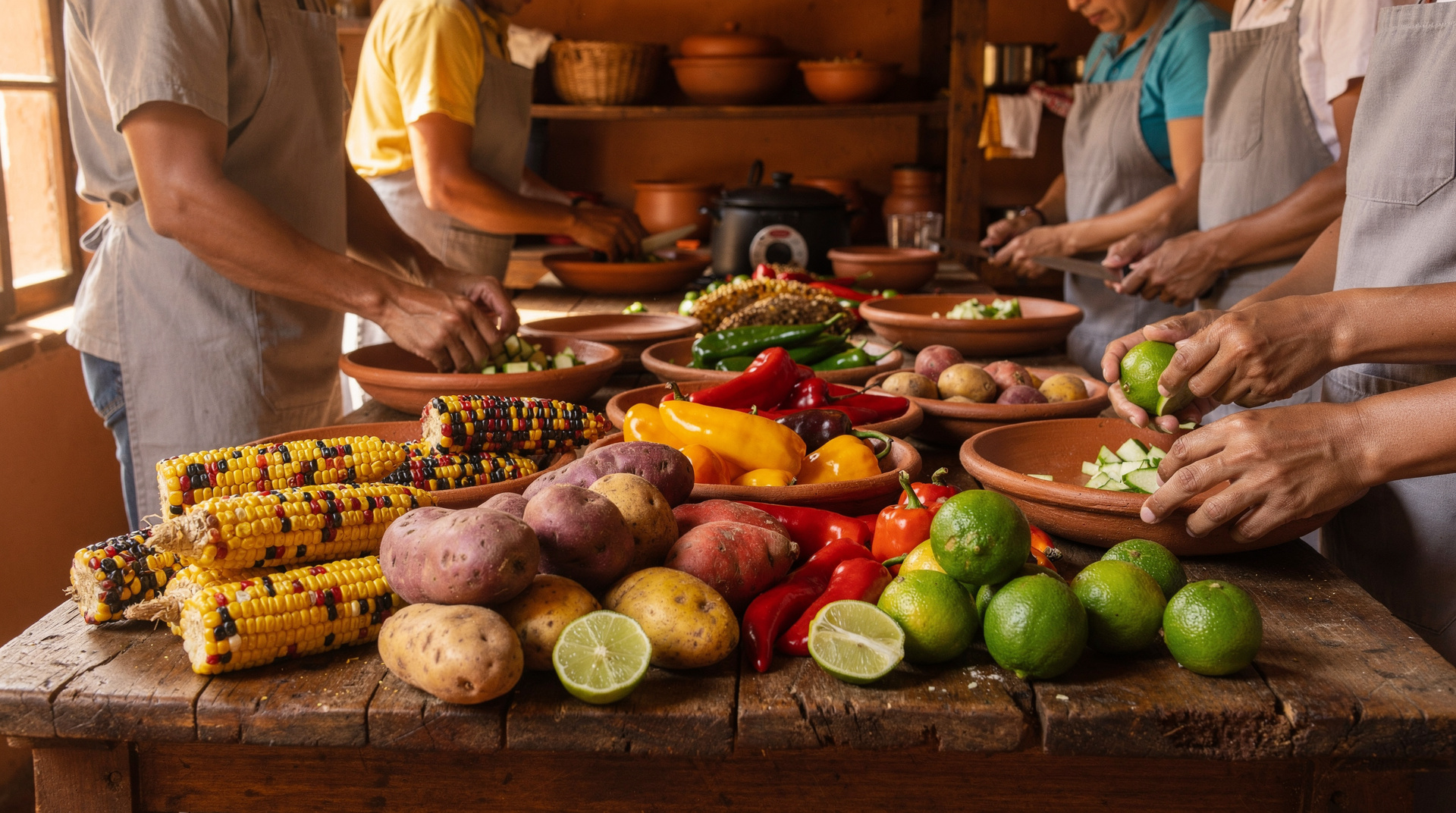
The most popular cooking class format in Cusco begins with a guided market tour at San Pedro, then moves to a kitchen for a hands-on session. This structure makes pedagogical sense: seeing the ingredients in raw form before you cook them grounds the cooking class in something real rather than abstract.
The San Pedro market cooking class is the most direct combination of market tour and kitchen session, typically lasting 3 to 4 hours in total. You walk the market with a guide who explains the ingredients, buy what you need for the class, and then cook a full Peruvian meal — usually including a starter, a main course, and dessert — in a well-equipped kitchen. Prices run around $35–45 per person; groups are typically small (6–12 people).
The market and cooking class combination is a comparable option that varies mainly in the specific dishes taught on any given day. Most operators rotate through the canon of Peruvian classics: ceviche, causa limeña (cold potato terrine), lomo saltado, ají de gallina (creamy yellow chilli chicken), and arroz con leche for dessert. A few operators also cover chicha morada preparation and pisco sour mixing.
For a shorter, more focused session without the full market component, the three-hour cooking class is the right format — particularly suited to travellers with a packed itinerary who want the cooking experience without the extended market walk. Cost is typically $30–40 per person.
The guide to Cusco cooking classes compared reviews the main operators and formats in detail, covering dish variety, group sizes, kitchen quality, and whether vegetarian or vegan options are available.
Shopping at San Pedro
Beyond food, San Pedro has a reliable herbal medicine section at the rear of the building where curandero-supply stalls sell dried medicinal plants, flowers, roots, and prepared mixtures for common ailments. Mate de coca (coca leaf tea) is available in bulk here at a fraction of the cost in tourist shops — a bag of 100 tea bags costs around S/8–10. This is also where you find maca (a root vegetable believed to boost energy and fertility), moringa, quinoa flour, and various Andean medicinal preparations.
The textile section in the outer stalls is a mix of genuine and mass-produced. Alpaca products here are cheaper than in San Blas but the range of authentic hand-woven pieces is correspondingly smaller. If textiles are your main shopping objective, San Blas is the better destination; if you want a market atmosphere and value pricing on functional alpaca knitwear (jumpers, beanies, scarves), San Pedro is fine.
Prices in the interior food and produce sections are not negotiable — stall holders price clearly and uniformly. In the craft and textile outer sections, gentle bargaining is standard practice for foreigners, though pushing hard for discounts on goods that are already cheaply priced is poor form.
Getting there and practical details
San Pedro Market is on Calle Santa Clara, about ten minutes on foot southwest from the Plaza de Armas. The main entrance is on Calle Santa Clara; secondary entrances face Tupac Yupanqui. The building is open from approximately 6 am to 8 pm daily, with peak activity between 8 am and 2 pm.
The market is cash-only throughout. Bring soles; vendors do not accept USD or cards. The nearest ATMs are on Avenida El Sol, about five minutes’ walk east.
Pickpocketing is the main security concern in crowded markets anywhere. Keep phones in front pockets, keep bags in front of you, and do not carry a wallet in a back trouser pocket. The risk is manageable with standard awareness.
The market can be overwhelming on a first visit — the smells, the noise, the density of activity, and the altitude combined can produce mild disorientation. If you start to feel unwell, sit down at a juice stall, drink water slowly, and give yourself ten minutes before continuing. Most visitors who take it slowly find that the acclimatisation advice from the altitude sickness guide is relevant here just as it is everywhere in Cusco.
For planning your broader Cusco visit, the how many days in Cusco guide suggests pairing a San Pedro morning with a San Blas afternoon on day two — a combination that covers the food culture and the artisan culture in a single day at a manageable pace.
San Pedro versus a restaurant introduction to Peruvian food
| San Pedro Market | Restaurant tasting menu | |
|---|---|---|
| Cost | S/10–30 for a full breakfast, juice and lunch | $30–80+ per person |
| Atmosphere | Loud, local, unfiltered | Curated, quiet, tourist-paced |
| Ingredient literacy | See raw potatoes, corn, chillies before eating them | Ingredients already prepared and plated |
| Best for | Budget travellers, food-curious visitors, cooking-class starters | Special-occasion meals, dietary-restriction flexibility |
Most visitors do both — the market gives context that makes a later restaurant meal, or the historic centre’s more polished dining scene, considerably more legible.
How to walk the market without getting lost
A simple method works better than wandering. Enter by the main door, take one slow loop of the outer stalls to get your bearings, then head to the interior and let your nose lead you. Start with the produce aisles while your energy is high, stop for a juice in the middle of the visit, and keep the cooked food stalls for the end, when you are hungry and have seen enough raw ingredients to understand what is on the plate. This order turns the visit into a small lesson rather than a blur of colours.
Take your time at the altitude. Cusco sits high, and a market full of strong smells and crowds is tiring even for people who feel fine in the street. If you have only just landed, the Cusco acclimatization plan explains how to pace the first days, and the coca tea and altitude remedies guide covers what the herbal stalls at the back are really selling.
Eating well, and eating safely
Look for the stalls where locals queue. A busy counter means fast turnover, and fast turnover is the best food-safety signal a visitor has. Choose dishes that are cooked in front of you and served hot, and be a little more careful with anything cold that has been sitting in the open. The San Pedro market food guide goes stall by stall through the dishes worth ordering, and the Cusco and Andean food guide to cuy explains the more adventurous items you may spot on menus around the hall.
If you are curious about the drinks side of Peruvian cooking, the pisco sour guide is a good follow-up once you have tried the market’s fruit juices and purple corn drinks. For a sit-down meal after the market, the best restaurants in Cusco and the ceviche and Peruvian dishes guide help you build on what you have just tasted.
Fitting San Pedro into your days
San Pedro works best as a morning stop in the first or second day, when you are still adjusting and do not want a strenuous programme. It pairs naturally with a slow walk through the historic centre of Cusco and a visit to Qorikancha, both close enough that you will not need transport. A short itinerary such as the Cusco 3-day short itinerary leaves room for exactly this kind of unhurried market morning.
Travellers heading out to the Sacred Valley can also use San Pedro as a place to pick up snacks and fruit for the road, and anyone planning a longer stay will find the market useful as a daily reference point for what is in season. If you want to compare it with a market outside the city, the Pisac market and ruins guide shows how a craft-focused market differs from an everyday one like this. Families will find the colour and variety easy to enjoy, and the Cusco with kids guide has tips on keeping younger travellers comfortable in busy places. For those watching their spending, the Cusco on a budget guide explains why eating here, rather than in tourist restaurants, stretches a trip budget so far.
A first-hand account of the atmosphere, with the small details a guidebook skips, is in the blog post San Pedro market morning.
Frequently asked questions about San Pedro Market
Is the food at San Pedro Market safe for tourists to eat? Generally yes if you follow the same sense used anywhere: choose stalls with high turnover and visible hygiene, eat food cooked fresh in front of you, and be cautious with anything that’s been sitting out for hours. Juices made from fruit peeled in front of you and thoroughly cooked lunch dishes are the safest bets for a first visit.
Do I need to book a cooking class in advance? For peak season (June–August) and popular operators, booking a day or two ahead is sensible since group sizes are small (6–12 people). Outside peak months, same-day or next-day booking is usually possible — the Cusco cooking classes compared guide lists which operators tend to fill up fastest.
Top experiences
Bookable activities with verified prices and instant confirmation on GetYourGuide.