Rainbow Mountain (Vinicunca)
The honest guide to Rainbow Mountain: crowds, 5,200 m altitude, the Palccoyo alternative, and what the Instagram photos don't prepare you for.
Vinicunca Rainbow Mountain Day Trip from Cusco
Quick facts
- Country
- Peru
- Altitude
- 5,200 m / 17,060 ft
- Currency
- Peruvian sol (S/) — USD widely used
- Best for
- High-altitude trekking, coloured mineral landscapes, Andean scenery
The mountain that surprised everyone, including Peru
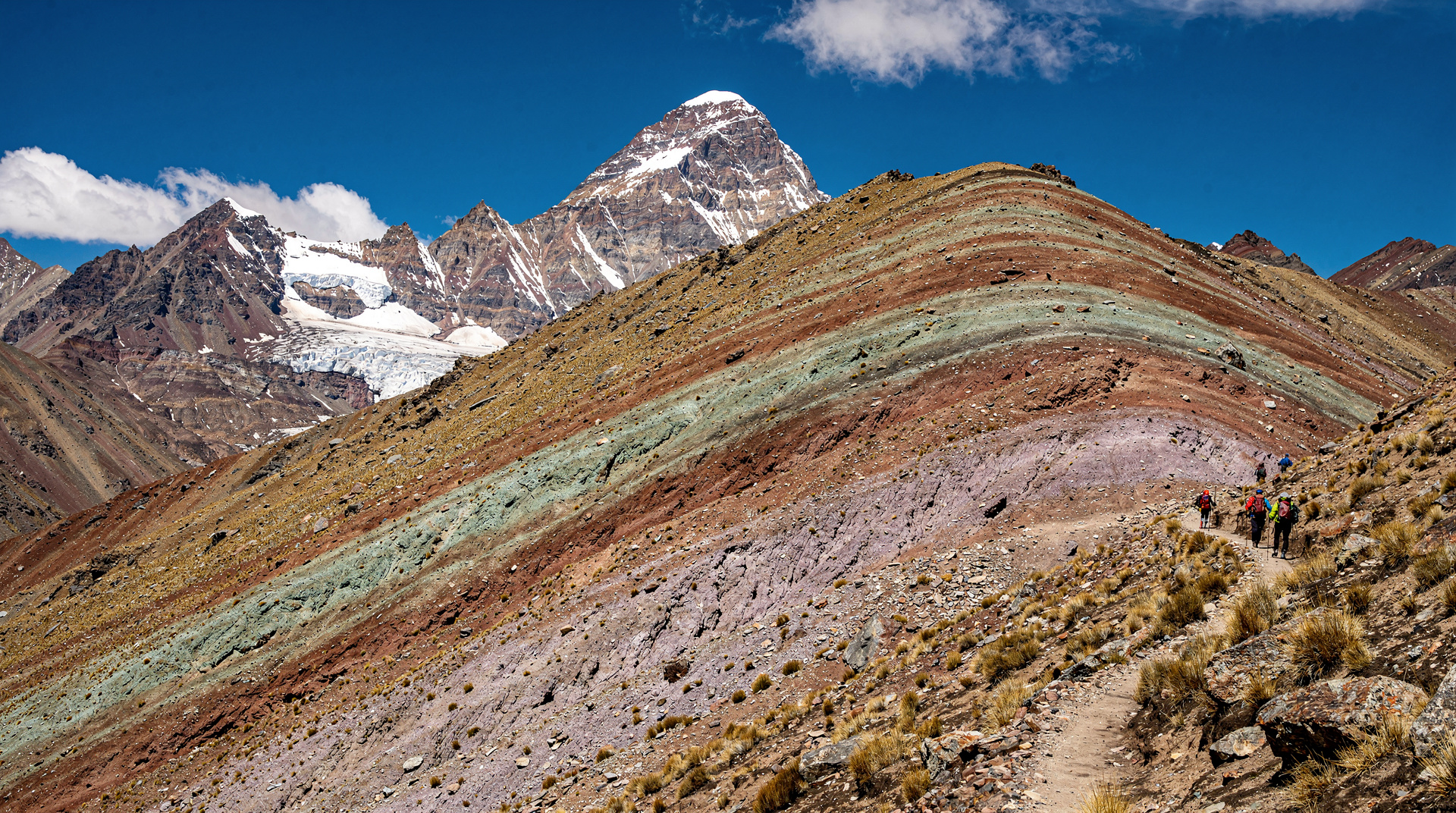
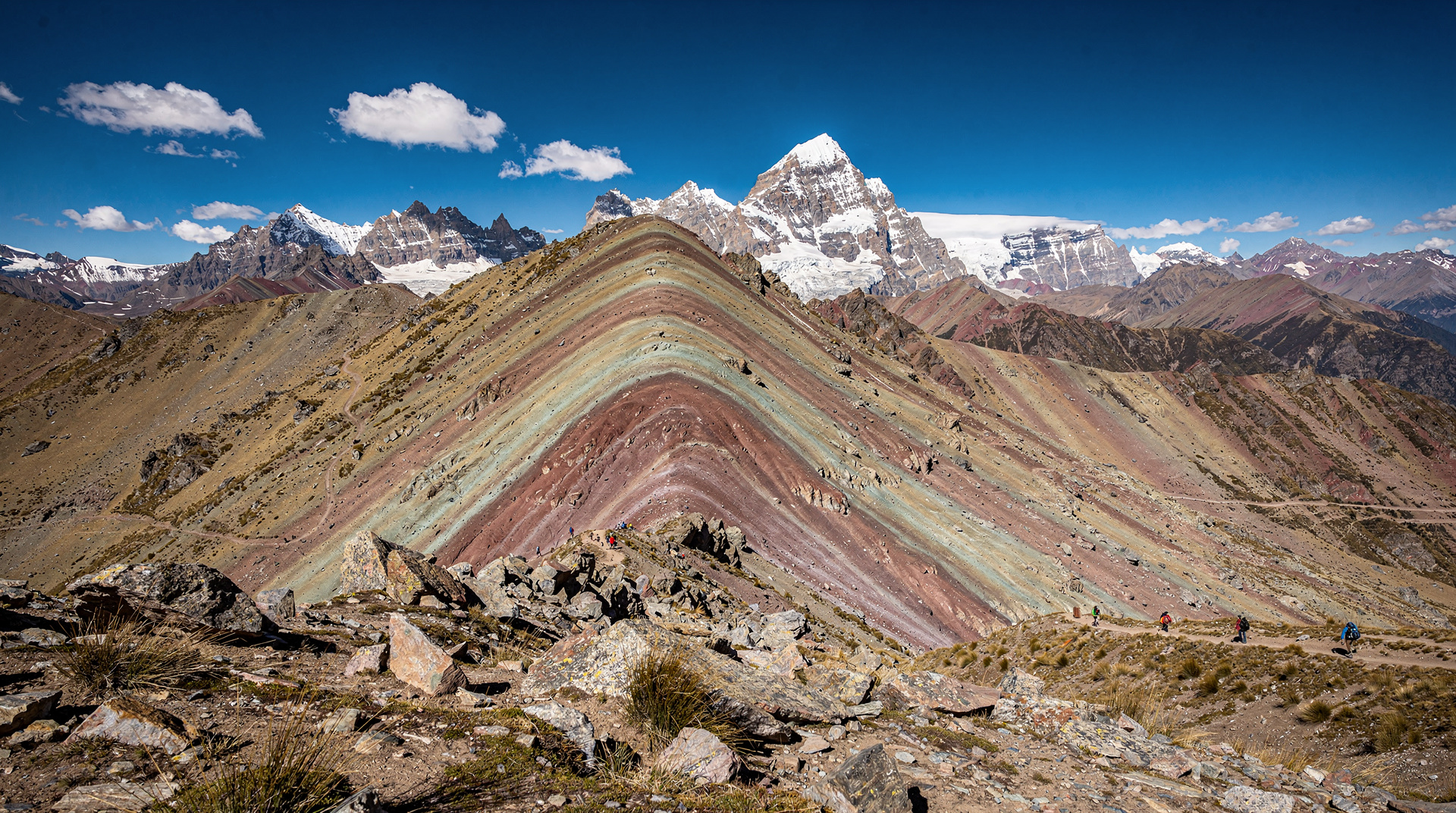
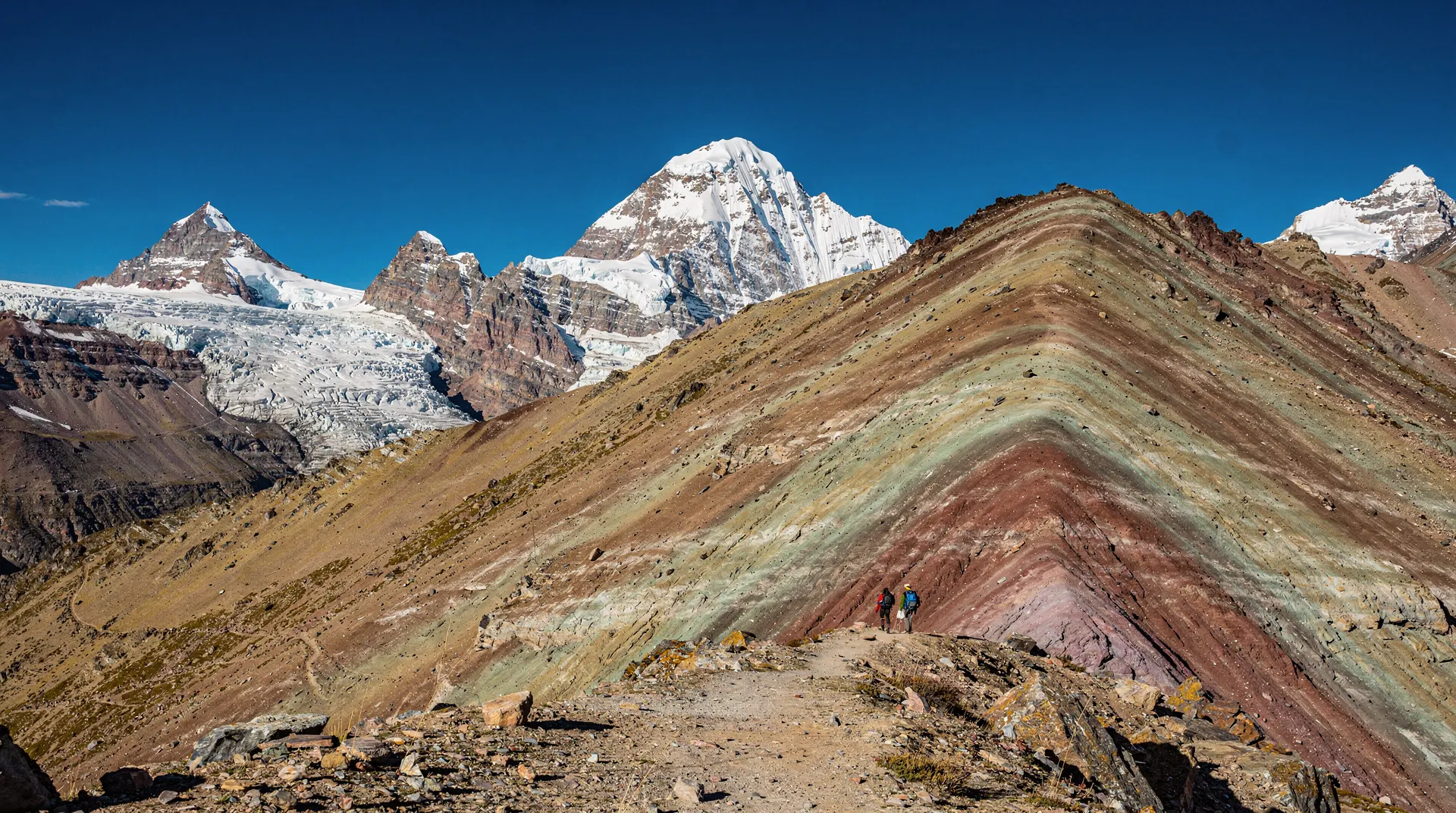
For most of its existence, Vinicunca was a working mountain. Local herders grazed their animals across its slopes. Nobody thought it remarkable. Then, around 2015, the permanent snow cap that had covered the summit for centuries melted — a direct effect of rising temperatures in the Andes — and revealed the layered mineral sediments beneath. The colours were extraordinary: bands of red, gold, green, purple and white striped across a 5,200 m peak above a remote highland valley. A few early photographs circulated. Within two years, Vinicunca had become one of the most searched destinations in South America and was receiving thousands of visitors per day.
This condensed history matters because it explains both why Rainbow Mountain is spectacular and why it requires honest assessment before you decide whether to go. The site is real, the colours are real, and on the right day the landscape is genuinely unlike anywhere else on Earth. But the combination of extreme altitude, intense crowding, and the gap between Instagram expectations and physical reality has left a significant number of visitors disappointed, unwell, or both.
This guide tells you what to expect, who should go, and what the alternatives look like.
| Where | Cusipata trailhead, ~3 hrs drive from Cusco via Ausangate |
| Cost | Around S/70–100 day trip incl. transport, guide, breakfast |
| Time needed | Full day (3:30 am–5/6 pm), 4–5 hrs walking |
| Altitude | 5,200 m at summit — the single biggest factor in how the day goes |
| Best time | Dry season (May–Sep), tours departing before 4 am |
The landscape: what you are actually seeing
The coloured stripes of Vinicunca are not paint, erosion art, or digital enhancement. They are layers of different mineral sediments deposited over millions of years and compressed into the mountain’s visible face. The colours correspond to distinct mineral compositions: red from iron oxide, yellow from sulphurous compounds, green from copper oxides, white from calcium carbonate and gypsum, purple from manganese.
In dry season (May–September), when the snow is absent and the light is clear, the full colour range is visible from the viewpoint near the summit. In wet season (November–March), the peak is frequently snow-covered or wrapped in cloud, which can reduce the colours to near-invisible. This is the single most important variable in your visit: check the forecast and aim for clear weather. Even in dry season, afternoon cloud can build quickly — most guided visits deliberately schedule the summit arrival for before noon to beat the weather.
The trek
The standard approach begins at the Cusipata trailhead (approximately 4,300 m), reached by a 3-hour drive from Cusco through the Ausangate corridor. From the trailhead, a trail ascends roughly 900 m in vertical gain over approximately 7 km to the main viewpoint near the summit (5,200 m). The terrain is a mix of dirt path, stone steps, and open highland grass.
The ascent takes 1.5–2.5 hours depending on fitness and altitude acclimatisation. The descent is 1–1.5 hours. Total walking time on a standard day trip is 4–5 hours. There is no technical difficulty — no scrambling, no glacier crossing, no specialist equipment required. The challenge is entirely the altitude.
Horses are available at the trailhead for approximately S/60–80 each way; they are a practical option for anyone who is less fit, has joint problems, or is struggling with altitude on the ascent. Using a horse is not a compromise — it is a sensible choice at 5,200 m, and several experienced trekkers use them on the steeper final sections.
A Rainbow Mountain day trip from Cusco includes transport, a guide, and breakfast at the trailhead. The guide element is more useful than it sounds — the route is clear but the altitude management advice (when to slow down, when to stop, how to read your body’s signals) is genuinely helpful for people who have not trekked above 5,000 m before.
The altitude: the honest conversation
At 5,200 m, Vinicunca is higher than the base camp approach to Everest’s advanced base camp route in Tibet. It is higher than any point in the European Alps. It is among the highest places that ordinary tourists visit on foot anywhere on Earth.
Altitude sickness at this elevation is not a theoretical risk — it is an expected physiological response that most unacclimatised visitors will feel to some degree. Symptoms range from mild (headache, breathlessness, light-headedness) to severe (persistent vomiting, inability to walk steadily, pulmonary or cerebral oedema in extreme cases). The severe outcomes are rare but real, and they happen to fit young people as often as to older or less fit visitors.
The minimum recommendation before attempting this trek is at least two full nights in Cusco or the Sacred Valley at altitude before departure. Many guides suggest three nights as the sensible baseline. The Cusco acclimatisation plan and the altitude sickness guide both cover what those first nights should involve and what medications (particularly acetazolamide/Diamox) are worth considering.
Coca leaves and altitude sweets are sold at the trailhead. They help marginally. They are not a substitute for acclimatisation time.
If you arrive in Cusco and go directly to Rainbow Mountain the next day, there is a reasonable chance you will turn back before the summit, spend the descent in significant discomfort, or require horse assistance you had not budgeted for. This is not a character failing — it is physiology at extreme altitude. Schedule the trek for day three or later.
The crowds: what the photos don’t show
On a peak day in July or August, Rainbow Mountain receives between 1,500 and 2,000 visitors. The trail from the trailhead to the summit is a single path. The viewpoint near the top is a relatively narrow ridge. The result during high season is a near-continuous stream of people moving in both directions, significant queuing at the most photogenic viewpoint points, and the kind of noise level that is incompatible with a meditative mountain experience.
This does not make the visit worthless. The landscape is striking enough to remain impressive even with people in the frame. But if you are going because of the empty-mountain images on social media, set your expectations accordingly. Those photographs were taken very early in the morning, in shoulder season, or by guides who know when to arrive.
Strategies for reducing the crowd impact:
- Book a tour that departs Cusco by 3:30 am, reaching the trailhead by 7 am and the summit before 9 am
- Visit in May or September rather than July or August
- Consider the Palccoyo alternative (see below)
A guided Rainbow Mountain tour with an early departure typically includes the strategic timing advice built into the schedule.
The Red Valley extension
From the main Vinicunca viewpoint, a further 30–40 minute walk along the ridge brings you to the Red Valley — a bowl of deep crimson rock formations at slightly lower altitude (around 5,000 m) that most visitors on standard tours miss entirely. The Red Valley is significantly less crowded than the main summit viewpoint, the colours are vivid and different in character, and the views back across the Ausangate massif are outstanding.
If you are physically comfortable at the summit and have time in your schedule, the Red Valley extension is genuinely worth doing. An ATV tour to Rainbow Mountain including the Red Valley covers both sites with motorised transport on the approach, which reduces the physical demands and makes the extension more accessible.
Palccoyo: the honest alternative
Roughly 3 hours from Cusco in a different direction, Palccoyo is a lower-altitude (around 4,900 m), significantly less-visited alternative to Vinicunca that offers comparable mineral colour striping across a different ridge profile.
The practical differences:
- Altitude: 4,900 m versus 5,200 m — still high but meaningfully more accessible for less acclimatised visitors
- Crowds: A fraction of Vinicunca’s daily numbers; typically 50–150 visitors on a busy day
- Trek length: Much shorter approach from the trailhead — the main coloured ridge is visible within 30 minutes of starting
- Trade-off: The colours are slightly less saturated than Vinicunca on an optimal day, and the site is less iconic; you will not get the specific Instagram-famous striped peak photograph
For most visitors who are not fully acclimatised, value a quieter experience, or have limited fitness at altitude, Palccoyo is the objectively better choice. It delivers 80% of the visual experience with 20% of the altitude stress and crowd management. A full-day Palccoyo tour is the most straightforward way to visit and includes transport and a guide.
| Rainbow Mountain (Vinicunca) | Palccoyo | |
|---|---|---|
| Altitude | 5,200 m | ~4,900 m |
| Daily visitors | 1,500–2,000 in peak season | 50–150 |
| Walk to main viewpoint | 1.5–2.5 hrs ascent | ~30 min |
| Iconic photo | Yes — the famous striped peak | No, but three separate coloured formations |
| Best for | Fit, acclimatised trekkers wanting the famous view | Less fit or less acclimatised travellers, families |
The Vinicunca versus Palccoyo guide gives the side-by-side comparison in full detail to help you choose which is right for your itinerary and fitness level. If neither altitude sits comfortably with your fitness or schedule, Ausangate offers a different high-Andes experience with its own turquoise lakes, best explored on a multi-day trek rather than a single push to a viewpoint.
Where Rainbow Mountain fits in your itinerary
Rainbow Mountain is a full day from Cusco: typically a 3:30 am departure, return to Cusco by 5–6 pm. It requires a full day of commitment and cannot be meaningfully combined with Machu Picchu on the same day.
It fits most naturally on day three or four of a Cusco-based itinerary, after you have had time to acclimatise. Attempting it on your first or second day in the region is not advised.
A logical sequence for a 7-day trip: arrive Cusco, rest on day one, Sacred Valley on day two, Rainbow Mountain on day three, then Machu Picchu over days four and five. The 7-day Sacred Valley and Machu Picchu itinerary maps out exactly this kind of sequence with the acclimatisation logic built in.
Practical details
What to bring: Warm layers (temperature at 5,200 m is typically 5–10°C at midday in dry season, colder with wind chill), waterproof jacket, sunscreen at altitude, at least 2 litres of water, snacks, sunglasses, trekking poles if you use them. Gloves are useful in the early morning at the trailhead.
Food at the trailhead: Several stalls sell breakfast (bread, eggs, quinoa porridge) and hot drinks from around 6 am. Prices are elevated but the food is hot and useful before the ascent. Lunch is usually included in organised tours; if you are going independently, bring your own.
Photography: The best light for the mountain colours is between 8 am and 11 am. The afternoon sun from the west can flatten the colours. Early morning before the main groups arrive is the best combination of light quality and manageable crowds.
Dress modestly: The trailhead area is at the edge of an indigenous Quechua community. The locals who operate the stalls and horse hire at the trailhead are benefiting directly from the tourism, which is a positive development, but the site holds genuine cultural meaning beyond its new tourism role. Respectful behaviour is the basic baseline.
Toilets: Basic facilities exist at the trailhead (small fee, usually S/1–2) and there is nothing beyond that point until you return. Plan accordingly, especially on the 4–5 hour walking window.
Phone signal: Coverage is patchy to non-existent for much of the trek. Download offline maps in advance and let someone know your rough schedule if you are travelling independently rather than with an organised tour.
Rainbow Mountain is one of the world’s more unusual landscapes and, on a clear early morning in May or September, it more than justifies the demanding logistics. Go acclimatised, go early, set realistic expectations, and keep Palccoyo in your back pocket if you are uncertain about your altitude tolerance. The mountain will deliver if you approach it on its own terms.
Frequently asked questions about Rainbow Mountain (Vinicunca)
How many days in Cusco before attempting Rainbow Mountain? At least two full nights at altitude first, ideally three. Read the Cusco acclimatisation plan and schedule the trek for day three or later — going the morning after you land significantly raises the chance of turning back before the summit.
Is Rainbow Mountain harder than the Inca Trail? Physically the single day is shorter than any day of the Inca Trail, but the peak altitude of 5,200 m is higher than anywhere the Inca Trail reaches, so the altitude challenge is more acute even though the walking distance is less.
Top experiences
Bookable activities with verified prices and instant confirmation on GetYourGuide.