Inca Trail
The classic 4-day Inca Trail ends at the Sun Gate at dawn. Limited permits, book months ahead, closed all February. Honest guide to doing it right.
From Cusco: 4-Day Inca Trail Guided Trek to Machu Picchu
Quick facts
- Country
- Peru
- Altitude
- 4,215 m / 13,828 ft (Dead Woman's Pass)
- Currency
- Peruvian sol (S/) — USD widely used
- Best for
- Classic Andean trekking, Inca archaeology, the Sun Gate arrival at Machu Picchu, bucket-list multi-day walk
The route that defined Andean trekking
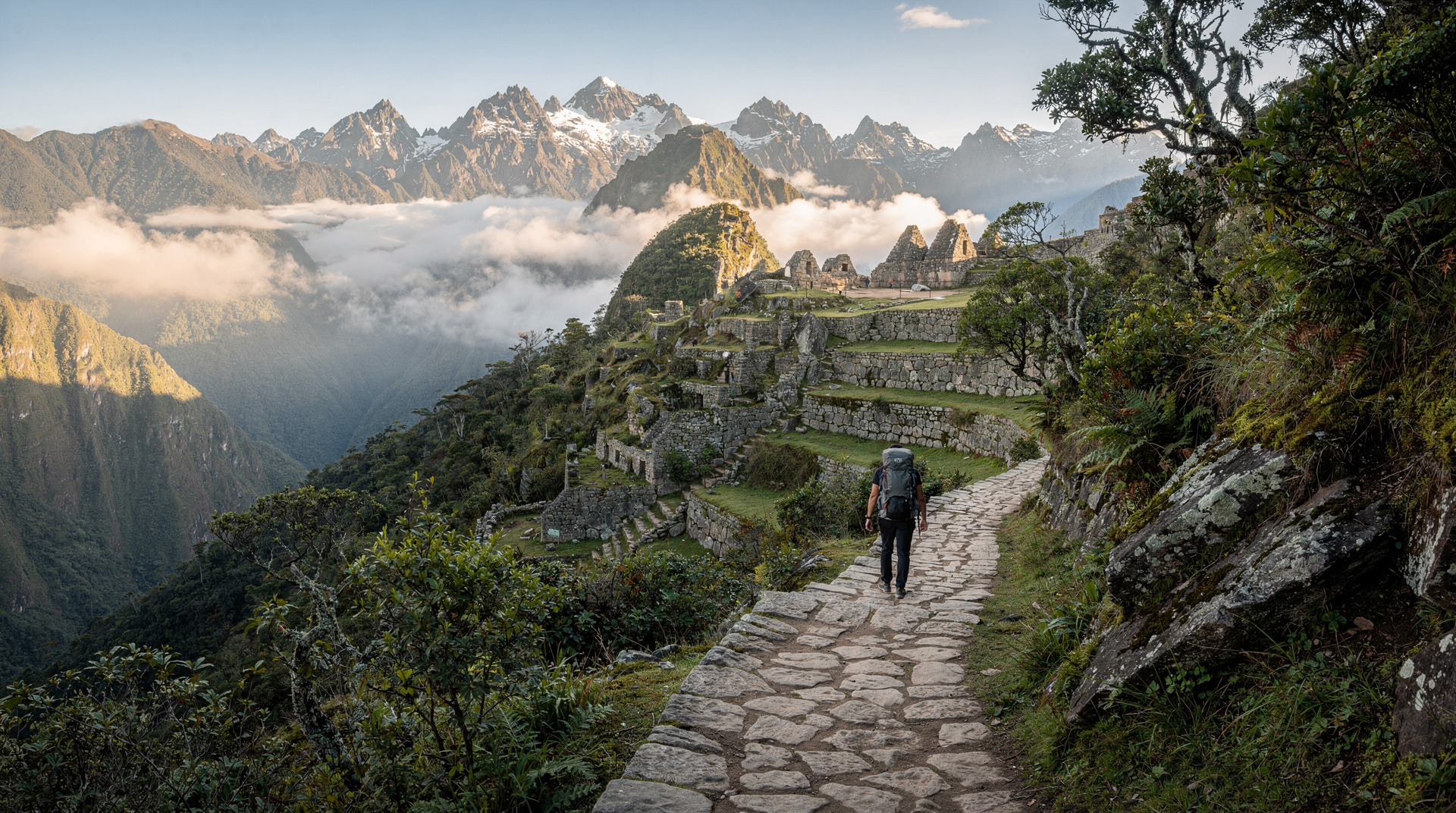
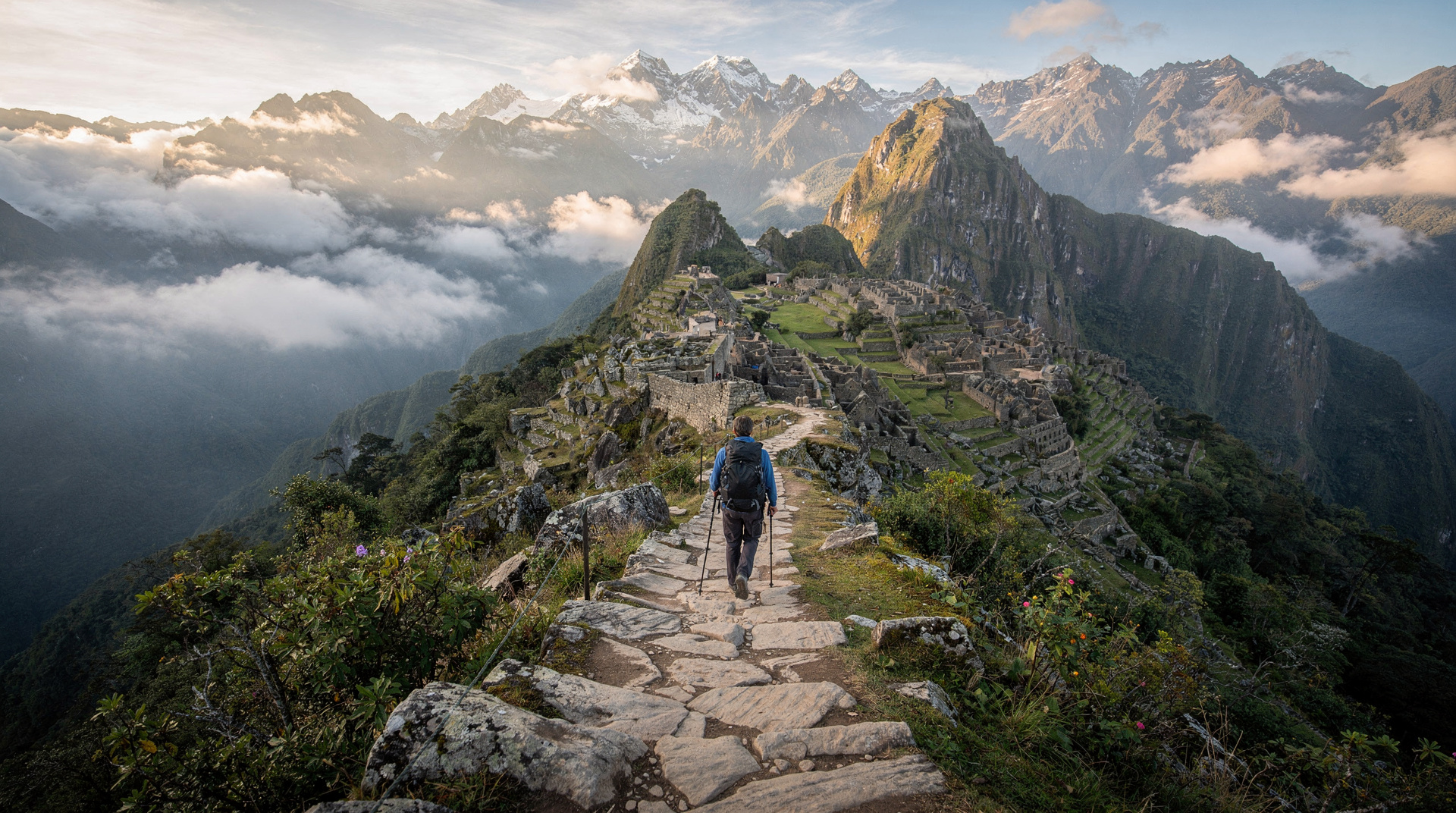
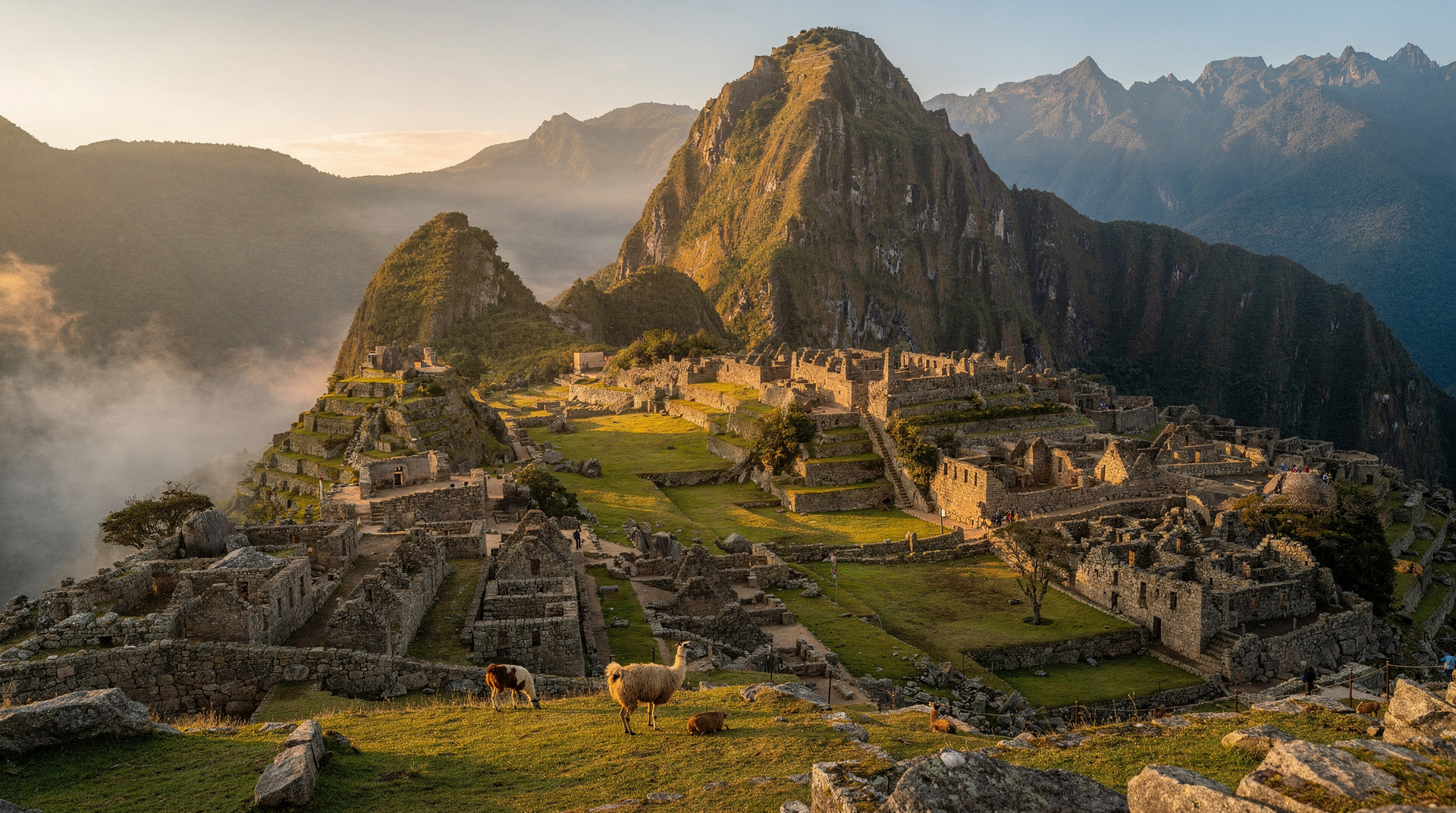
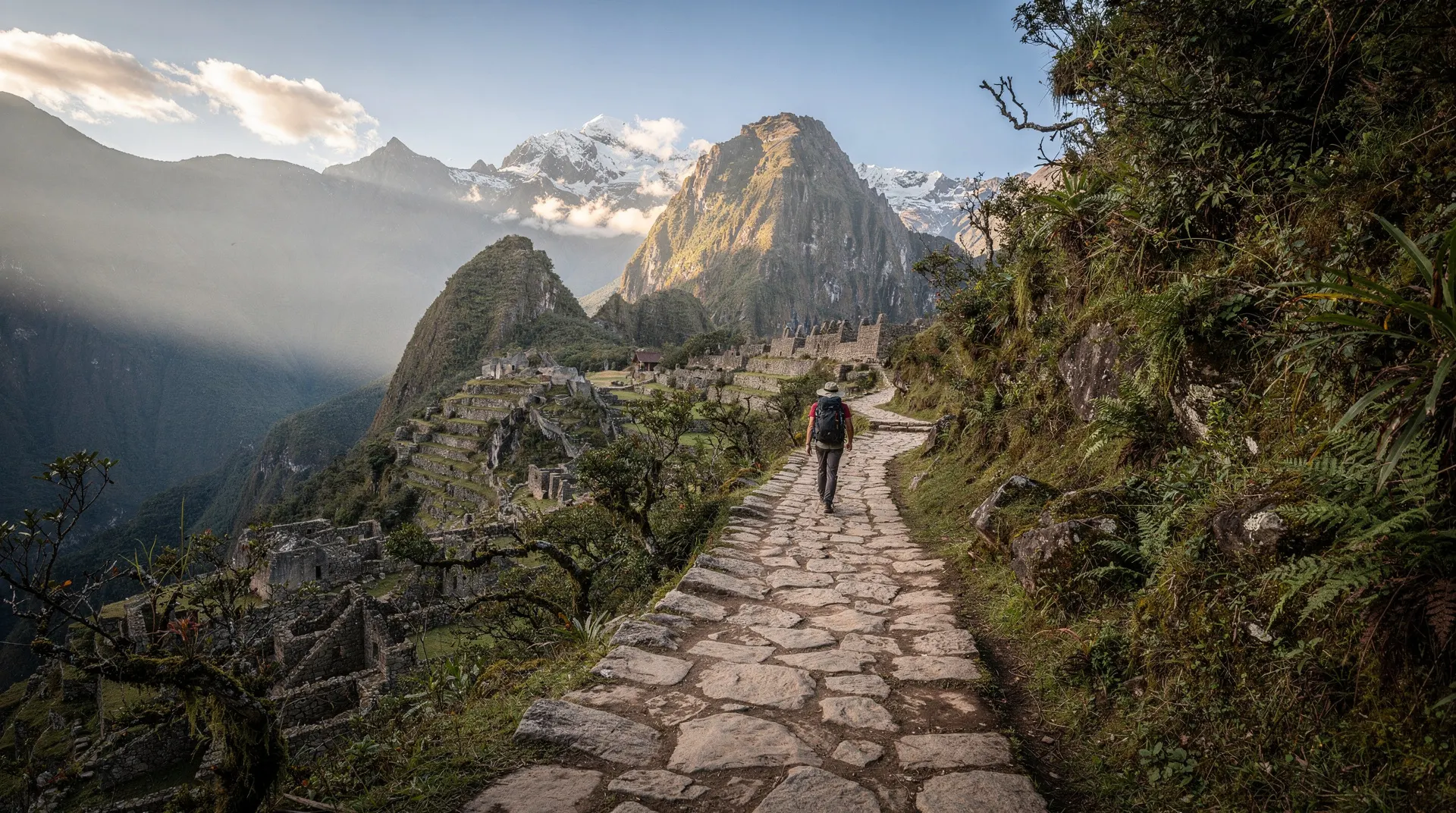
There is a specific moment that most Inca Trail veterans describe in the same terms: the approach through the Intipunku — the Sun Gate — on the morning of day four, when the fog burns off just enough to reveal Machu Picchu below, framed by the ridgeline and the Huayna Picchu peak beyond. It is a view you have earned, on foot, over four days and across a 4,215 m mountain pass, through three distinct climate zones and past some of the most significant Inca archaeological sites still standing in Peru.
The classic Inca Trail is not the longest trek in South America, or the highest, or even the most physically demanding. What it is, and what no other route replicates, is the only path that delivers you to Machu Picchu through the Sun Gate — the Inca’s own ceremonial approach — on the same route that pilgrims, messengers, and Inca nobility walked six centuries ago.
That singular combination of archaeology, altitude, and arrival moment explains why the route has waiting lists that stretch months into the future and why travellers who are serious about trekking to Machu Picchu treat the permit booking window as a fixture in their planning calendar.
This is the honest guide to what the route involves, what it costs, and what you need to do months before you set foot on it.
| Where | Starts at Piscacucho (KM82), ends at Machu Picchu |
| Time needed | 4 days / 3 nights (classic route) |
| Cost | Around $650–800 per person, all-inclusive |
| Permits | Limited daily quota — book months ahead |
| Best time | May–September; closed entirely every February |
The permit: the thing you must know first
The Peruvian Ministry of Culture limits the number of people on the Inca Trail each day: the confirmed official figure is 750 visitors per day for the whole Inca trail network. Those places sell out.
In peak season (June–August), the most popular departure dates sell out very quickly after sales open, months before the departure. In shoulder season (May and September), permits sell out weeks to months in advance. If your trip is in the June–August window and you have not booked by March at the latest, assume the permits are gone.
The Inca Trail permits guide covers the booking system in detail: where to book, what documents are required (passport number at time of booking, which means your travel companions must be confirmed), and the cancellation policies. Booking through a licensed tour operator is mandatory — independent permits are not issued.
Critically: the Inca Trail is closed every February for maintenance and environmental recovery. No permits are issued, no exceptions. If February is your travel window, the Salkantay trek is the primary alternative; it has no permit system and runs year-round in reasonable weather.
The route: four days, three mountain ecosystems
Day one: Piscacucho (82 km marker) to Wayllabamba (3,000 m)
The trail begins at Piscacucho, approximately 2 hours from Cusco by minibus, at the kilometre 82 marker on the Cusco–Aguas Calientes railway line. The first day is a warm-up — a 12 km walk through lower highland terrain, crossing the Cusichaca river and climbing gently through scrub and eucalyptus forest to the camp at Wayllabamba (around 3,000 m). The pass is not attempted today. It is the preparation for tomorrow.
The first day includes the initial archaeological site, Llaqtapata — a lower-altitude farming complex with terracing and storage facilities that gives the first concrete evidence of the Inca infrastructure the trail is built through. It is frequently passed quickly; resist the temptation. The guide’s explanation of agricultural terracing and Inca land use sets the context for everything the higher sites will show.
Day two: Wayllabamba to Pacaymayo — Dead Woman’s Pass (4,215 m)
Day two is the hardest day on the classic route. From Wayllabamba, the trail climbs 1,200 m to the Abra de Huarmihuañusca — Dead Woman’s Pass — at 4,215 m, named for the profile of the ridge line when viewed from below, which resembles a prone figure. The ascent takes most groups 3–5 hours from camp. The descent to Pacaymayo camp on the far side adds another 1–1.5 hours.
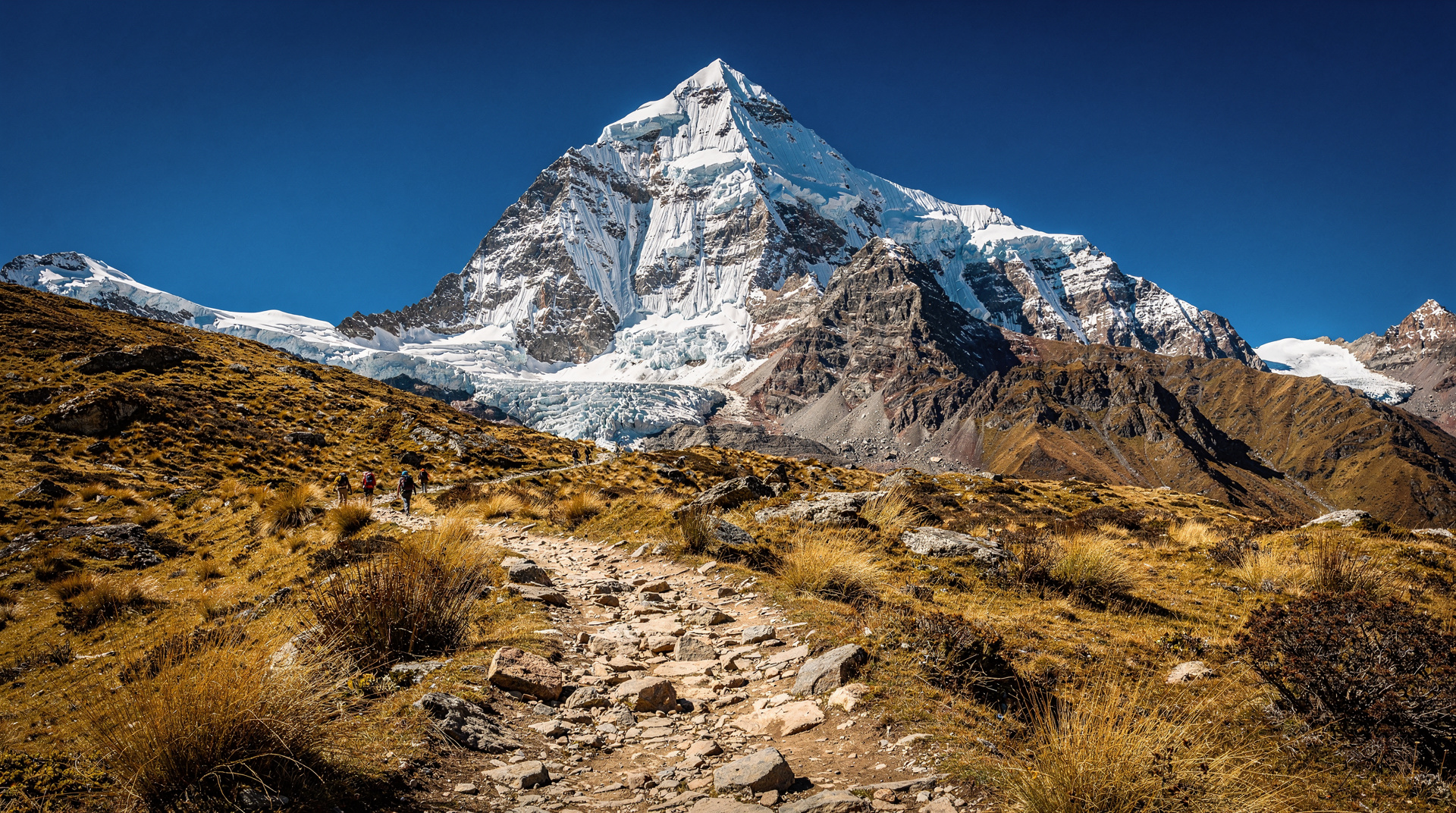
At the pass, the view north and south is unobstructed and extraordinary on clear days. The Andes stretch in every direction. The altitude is real — 4,215 m is serious, and most visitors feel it on the ascent regardless of acclimatisation level. The honest experience: the last 400 m of the climb slow most people to a 20–30 steps and pause rhythm. That is not a sign of failure; it is physiology at 4,000 m-plus. You will get there.
A second pass, Abra de Runkurakay (3,998 m), is crossed later in day two on some itinerary variations, arriving at Pacaymayo (approximately 3,600 m) for the night.
Day three: Pacaymayo to Wiñay Wayna — the archaeology day
Day three is the route’s greatest gift to history-minded travellers. From Pacaymayo, the trail passes Runkurakay (a circular Inca waypoint with remarkable views), then Sayaqmarka — a dramatically positioned ceremonial complex built on a narrow rocky promontory above the cloud forest canopy — and Phuyupatamarka (“town in the clouds”), another ceremonial site perched above the valley with panoramic views that extend on clear days to the distant Urubamba river.
The descent from Phuyupatamarka drops through original Inca-paved stairway sections — steep, uneven, and wet in the mornings — into cloud forest. The final camp at Wiñay Wayna (“forever young” in Quechua) sits adjacent to one of the best-preserved Inca sites on the trail: a sequence of ceremonial baths, terracing, and residential structures in a dramatic cloud forest setting at around 2,650 m.
The contrast between day two’s bleak high-altitude pass and day three’s cloud forest archaeology is one of the Inca Trail’s defining characteristics. Most trekkers identify day three as their favourite.
Day four: Wiñay Wayna to Machu Picchu — the Sun Gate
Camp rises before dawn. The final 6 km of trail is walked in darkness and early light, arriving at the Intipunku (Sun Gate) — at 2,730 m, significantly lower than the passes — at approximately 6–7 am. On clear mornings in dry season, Machu Picchu is visible below, lit by the early sun. This is the moment the Inca Trail builds towards and the experience that no other approach to the site replicates.
The descent to the site takes 30–45 minutes from the Sun Gate. Entry is with the standard Machu Picchu timed-entry ticket (separate from the trail permit; must be booked in advance).
The altitude: three nights of acclimatisation first
Dead Woman’s Pass sits at 4,215 m — lower than the Salkantay Pass (4,630 m) but still among the highest points most visitors will walk on foot. The sustained effort of day two’s 1,200 m ascent at altitude makes the acclimatisation requirement more serious than for a single day hike.
The minimum requirement before starting is three nights at altitude in Cusco or the Sacred Valley. Most experienced guides suggest four. The Cusco acclimatisation plan covers how to structure those first days, including avoiding alcohol, keeping activity light on day one, and building gradually to longer walks before the trek. The altitude sickness guide covers what to do if symptoms escalate on the trail — and importantly, the difference between expected breathlessness and altitude sickness that requires descent.
The good news about the Inca Trail from an altitude perspective: the highest point is reached on day two, and the remaining two days descend progressively toward Machu Picchu at 2,430 m. You acclimatise as you go. This is the opposite of the pattern on many high-altitude Cusco day trips, where you ascend steeply, reach the high point, and return to lower altitude within a few hours.
What the trail costs
The total cost of the classic 4-day Inca Trail is typically $650–800 per person, covering:
- Government permit fee (~$200–250 per person, paid to the Peruvian government)
- Licensed tour operator fee (guide, porters, equipment, meals, camp fees)
- Transport to the start and return from Aguas Calientes
The government-mandated minimum porter wage and weight limits on the Inca Trail mean the porter welfare standards are regulated more rigorously here than on unregulated alternatives like the Salkantay. The permit fee structure funds trail maintenance and archaeological site conservation. Choosing a licensed operator that visibly complies with these regulations — rather than the cheapest bid available — is one of the more meaningful ethical decisions a trekker makes on this route, since porter welfare abuses have historically been a genuine problem on cut-price itineraries elsewhere in the region.
A 4-day classic Inca Trail trek at this price point includes all the above. It is significantly more expensive than the Salkantay trek ($350–500) or other Machu Picchu approaches, and that cost differential is worth considering honestly. If budget is a primary constraint, Salkantay is a capable alternative. If the Sun Gate arrival and the archaeological sites are the non-negotiable point of your trip, the Inca Trail premium is justified.
The short Inca Trail options
For travellers who cannot commit four days but want some experience of the trail, two shorter formats exist.
The 2-day version begins at Kilometre 104 (rather than 82), enters the trail system at the Chachabamba archaeological site, and walks the final section from Wiñay Wayna to the Sun Gate and Machu Picchu in a long single day. It includes Wiñay Wayna and the Sun Gate arrival — the emotional core of the four-day route — while skipping Dead Woman’s Pass. Permits are required and are typically easier to obtain than the 4-day variant. A short 2-day Inca Trail option is the most accessible entry point for travellers on tight schedules.
The train-and-hike combination — travelling by train to Aguas Calientes and hiking up to Machu Picchu and the Sun Gate from below — gives the Sun Gate view in reverse (from the site looking up, rather than the trail looking down) and requires no permit. It is a legitimate way to visit the site. It is not the Inca Trail experience.
Inca Trail versus Salkantay: an honest comparison
The two most-asked-about Machu Picchu treks are compared constantly, and the honest answer is that they suit different priorities rather than one being objectively better.
| Inca Trail (4 days) | Salkantay (5 days) | |
|---|---|---|
| Permits | Capped, sells out months ahead | No permit system, book anytime |
| Highest point | 4,215 m (Dead Woman’s Pass) | 4,630 m (Salkantay Pass) |
| Archaeology | Extensive — Inca sites throughout | Minimal until arrival at Machu Picchu |
| Arrival at Machu Picchu | Through the Sun Gate on foot | By bus from Aguas Calientes |
| Cost | $650–800 | $350–500 |
| Porter regulation | Strictly government-regulated | Less regulated, varies by operator |
Choose the Inca Trail if the Sun Gate arrival and the archaeological sites along the way are non-negotiable for you, and if you can commit to booking months in advance. Choose Salkantay if budget matters, if February is your only travel window, or if you prefer more dramatic high-altitude scenery over ceremonial ruins. The Inca Trail versus Salkantay guide goes into the comparison in more depth, including day-by-day itinerary differences.
When to go: the dry season window
The Inca Trail is at its best in dry season, May–September. June–August are the most reliable months for clear skies but the heaviest permit demand. May and September offer good weather with slightly easier permit availability.
Outside dry season: October and April are shoulder months — the trail is open, weather is mixed, and the cloud forest sections can be genuinely beautiful in the mist. November–January sees increasing rain; the paved Inca sections become extremely slippery and the camp experience deteriorates. February is closed entirely, with no exceptions, for annual maintenance.
The Inca Trail complete guide covers the month-by-month weather breakdown and what each season means practically for the trail conditions.
Fitness preparation before you go
The classic Inca Trail is not a technical trek, but it does demand sustained fitness across four consecutive days at altitude, and the honest recommendation is to prepare specifically rather than assume general fitness will carry you through. In the months before your trip, prioritise stair climbing, hill walking with a loaded daypack, and cardiovascular conditioning over pure gym strength work — the trail rewards the ability to sustain moderate effort for hours, not short bursts of power. If you have access to any elevation in your training environment, use it; if not, stair machines and repeated hill repeats are a reasonable substitute.
On the trail itself, pacing is more important than raw fitness. Groups that succeed comfortably on Dead Woman’s Pass are usually the ones who set a slow, steady rhythm from the start rather than pushing hard early and burning out on the final push to 4,215 m. Trekking poles genuinely help on both the ascent (reducing strain) and the descent on day three’s stone stairways (protecting the knees), and are worth practising with beforehand if you have not used them regularly.
Practical planning
Book your permit first, then your flights. This single piece of sequencing prevents the most common and most painful planning mistake on this route. Not the other way around. If you book flights to Cusco for July without a permit in hand, and the permits are sold out when you try to book in March, you are in a difficult position. Sales for the following year open in autumn or early in the year (2026 permits went on sale on 17 November 2025): check the date on the official platform, tuboleto.cultura.pe, or with your operator. The Inca Trail permits guide explains the booking calendar in detail.
Porters and packing: Licensed operators on the Inca Trail include porter support for the group camping equipment and communal supplies. Personal pack weights are limited by park regulation. Most trekkers carry a daypack of 5–7 kg with personal items; the operator’s porters carry the rest. Tips for porters and guides are expected and important — they carry heavy loads at altitude over four days.
What to bring: Warm sleeping bag (-5°C minimum), trekking poles (the stone steps on day three’s descent are genuinely hard on knees), waterproof layers, layers for the cold early mornings at camp (Pacaymayo camp at 3,600 m can be very cold at night), sunscreen, sunglasses, personal first aid. The trail’s own guide packing list is reliable.
Machu Picchu tickets: The Machu Picchu entry ticket is separate from the Inca Trail permit and must be purchased in advance. The afternoon of day four at the site can be busy with day-trippers arriving from Aguas Calientes by bus; morning visits via the Sun Gate are distinctly quieter.
The 4-day Inca Trail package handles the permit coordination, guide, porter logistics, and Machu Picchu entry ticket — the most practical approach for travellers who do not want to manage the multi-step booking process independently.
Trekkers who cannot secure an Inca Trail permit or need a February option should read the Inca Trail versus Salkantay guide for an honest comparison. The 5-day Salkantay trek remains the strongest alternative: more physically demanding, more varied in landscape, and available without the permit constraints.
The Inca Trail is not overhyped. The archaeology along the route is genuine and accessible in a way that a taxi to Machu Picchu cannot replicate. The Sun Gate arrival is everything trekkers say it is. And after four days of altitude and effort, arriving at a 600-year-old gateway to see the site below in morning light is one of the more earned moments in South American travel.
Top experiences
Bookable activities with verified prices and instant confirmation on GetYourGuide.