Inca Trail vs Salkantay: honest comparison for 2026
From Cusco: 4-Day Inca Trail Guided Trek to Machu Picchu
Should I do the Inca Trail or the Salkantay?
The Inca Trail if the Sun Gate arrival and the Inca archaeological sites along the route matter to you — but book permits months ahead and budget $650–800. The Salkantay if permits are unavailable or you prefer not to plan that far ahead — comparable difficulty, higher maximum altitude (4,630 m vs 4,215 m), no permit needed, costs $350–500. Neither is objectively better; they suit different travellers.
Two routes to the same destination — and completely different decisions
Both the classic Inca Trail and the Salkantay trek end at Machu Picchu. Both cross high Andean passes. Both require multi-day camping or lodge-based trekking, a certified guide, and genuine cardiovascular fitness.
Beyond those shared basics, the two routes suit different travellers for different reasons, and the honest answer to “which is better?” is that neither is universally superior — the right choice depends entirely on what you prioritise.
This guide goes through every point of comparison directly, without the bias of tour operators who benefit from selling one over the other.
The essential comparison table
| Inca Trail (4-day classic) | Salkantay (5-day) | |
|---|---|---|
| Distance | 43 km | 73 km |
| Duration | 4 days / 3 nights | 5 days / 4 nights |
| Max altitude | 4,215 m (Dead Woman’s Pass) | 4,630 m (Salkantay Pass) |
| Permit required | Yes — book months ahead | No |
| Cost (all-inclusive) | $650–800 / S/2,400–2,900 | $350–500 / S/1,275–1,820 |
| Sun Gate arrival | Yes | No |
| Inca sites along route | Yes (6+ significant) | Minimal until Machu Picchu |
| Open in February | No (closed all month) | Yes |
| Max group size | 16 trekkers | No government limit |
| Scenery type | Cloud forest, Inca ruins, mountain | Glacier, high tundra, cloud forest, jungle |
Permits: the defining practical difference
The 4-day classic Inca Trail is government-regulated: the Ministry of Culture caps the number of places per day (750 visitors per day across the whole Inca trail network). Permits are booked through licensed operators and sell out months in advance for peak season dates.
Permits for June, July, and August — the peak dry season — are typically fully allocated by February of the same year. If you are planning a trip less than three months out, assume peak-season permits are gone and factor this into your decision.
The 5-day Salkantay trek requires no government permit. It does not enter the Inca Trail national park corridor. Any licensed operator can run it. Bookings can be made 1–4 weeks before your start date in most seasons.
This single difference makes the Salkantay the default choice for:
- Travellers booking less than three months ahead
- Those travelling in February when the Inca Trail is closed
- Anyone who wants flexibility without months of advance planning
Cost: the real breakdown
The Inca Trail’s higher cost is often misunderstood as a reflection of quality difference. It is not. The cost premium is almost entirely the government permit fee ($200–250 per person), which operators pass through to clients. The actual logistical cost of running a well-supported 4-day Inca Trail trek (guides, porters, food, camping equipment) is comparable to a well-supported Salkantay operation.
Inca Trail costs:
- All-inclusive 4-day trek: $650–800 (S/2,400–2,900)
- Budget: $500–600 (bare minimum, often lower quality operators)
- Premium: $900–1,200 (small groups, lodge options, elevated food)
- Single supplement (solo traveller): add $50–150
Salkantay costs:
- All-inclusive 5-day trek: $350–500 (S/1,275–1,820)
- Budget: $250–350
- Premium (lodge to lodge, no camping): $500–700
- Single supplement: typically $0–100
A quality 5-day Salkantay at $400 gives you better food, more support staff, and a more comfortable experience than a budget $500 Inca Trail — the Salkantay’s pricing tier simply runs lower because no government permit cost is baked in.
Difficulty: which is actually harder?
Both treks require good cardiovascular fitness and the ability to walk 8–12 km per day at altitude. Neither is technical (no climbing equipment, no specialised skills). Both involve camping at 3,500–4,000 m on the high passes.
The Inca Trail’s challenge:
- Dead Woman’s Pass (4,215 m) on day two: a 1,200 m ascent from 3,000 m, steep throughout
- Inca stone staircases on the descent from the pass — hard on knees over several hours
- The third day descent to Wiñay Wayna — long staircase sections requiring concentration
- Porters carry your main kit (maximum 7 kg in your daypack); the physical load management is good
The Salkantay’s challenge:
- Salkantay Pass (4,630 m) on day two: 415 m higher than the Inca Trail’s maximum; cold, exposed, wind
- Longer total distance: 73 km vs 43 km
- Altitude on the pass day is genuinely high — the world at 4,630 m feels thin; even well-acclimatised walkers breathe harder
- The descent from the pass into the cloud forest is dramatic and long
Verdict: broadly comparable overall difficulty. The Salkantay is harder on the pass day; the Inca Trail is harder on the knees over days three and four. Both require the same baseline fitness level to complete comfortably.
Acclimatisation requirement: Both treks demand proper acclimatisation. Minimum three nights at altitude (Cusco at 3,400 m or Sacred Valley at 2,700–2,900 m) before starting either route. Four nights is noticeably better for the Salkantay given the higher pass altitude. The acclimatisation plan gives a structured pre-trek schedule.
Scenery: cloud forest and ruins versus glacier and jungle
The two routes pass through quite different landscapes, and the “better scenery” question depends on what you are drawn to.
Inca Trail scenery:
- Cloud forest and mossy forest in classic forms
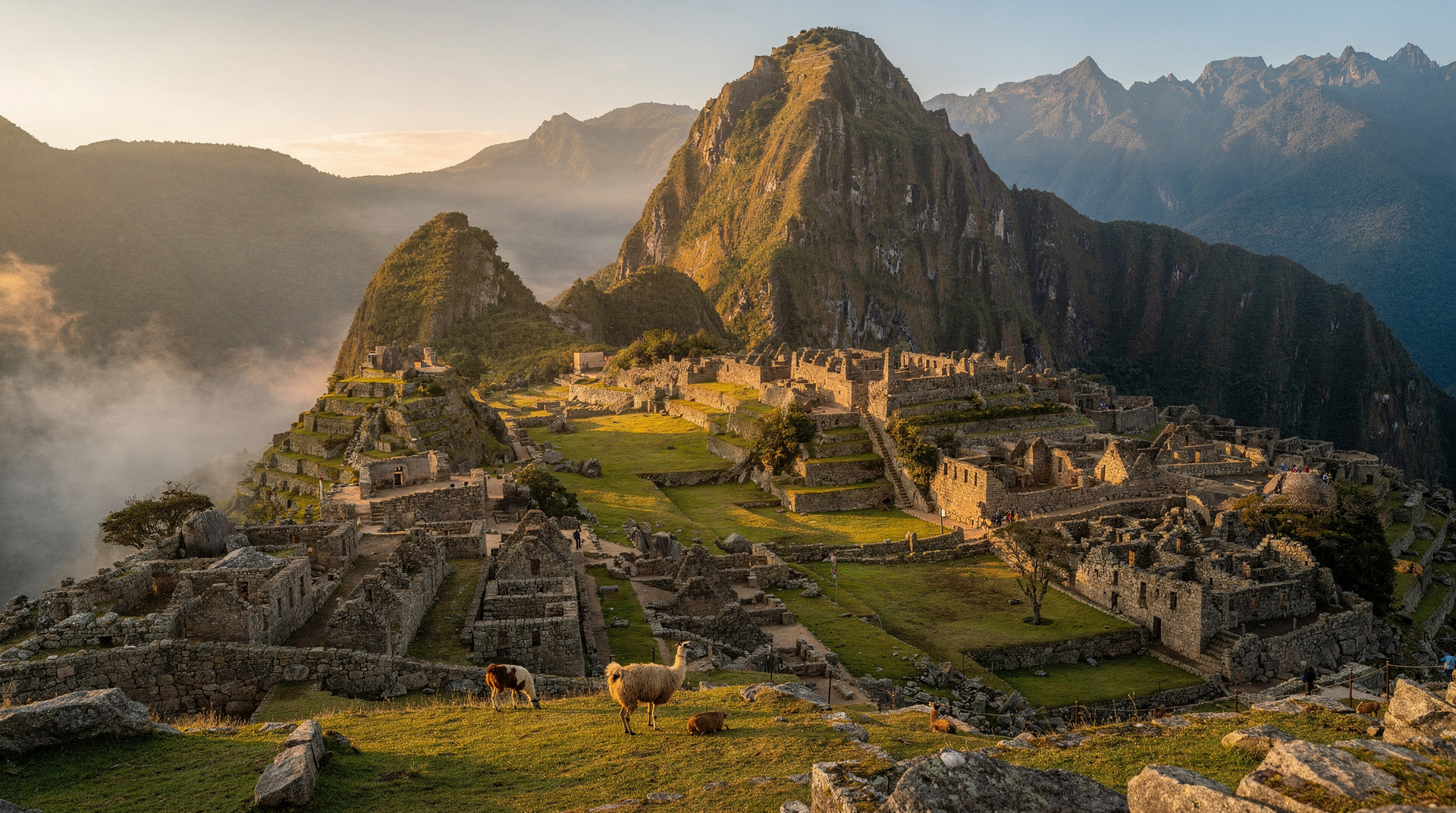
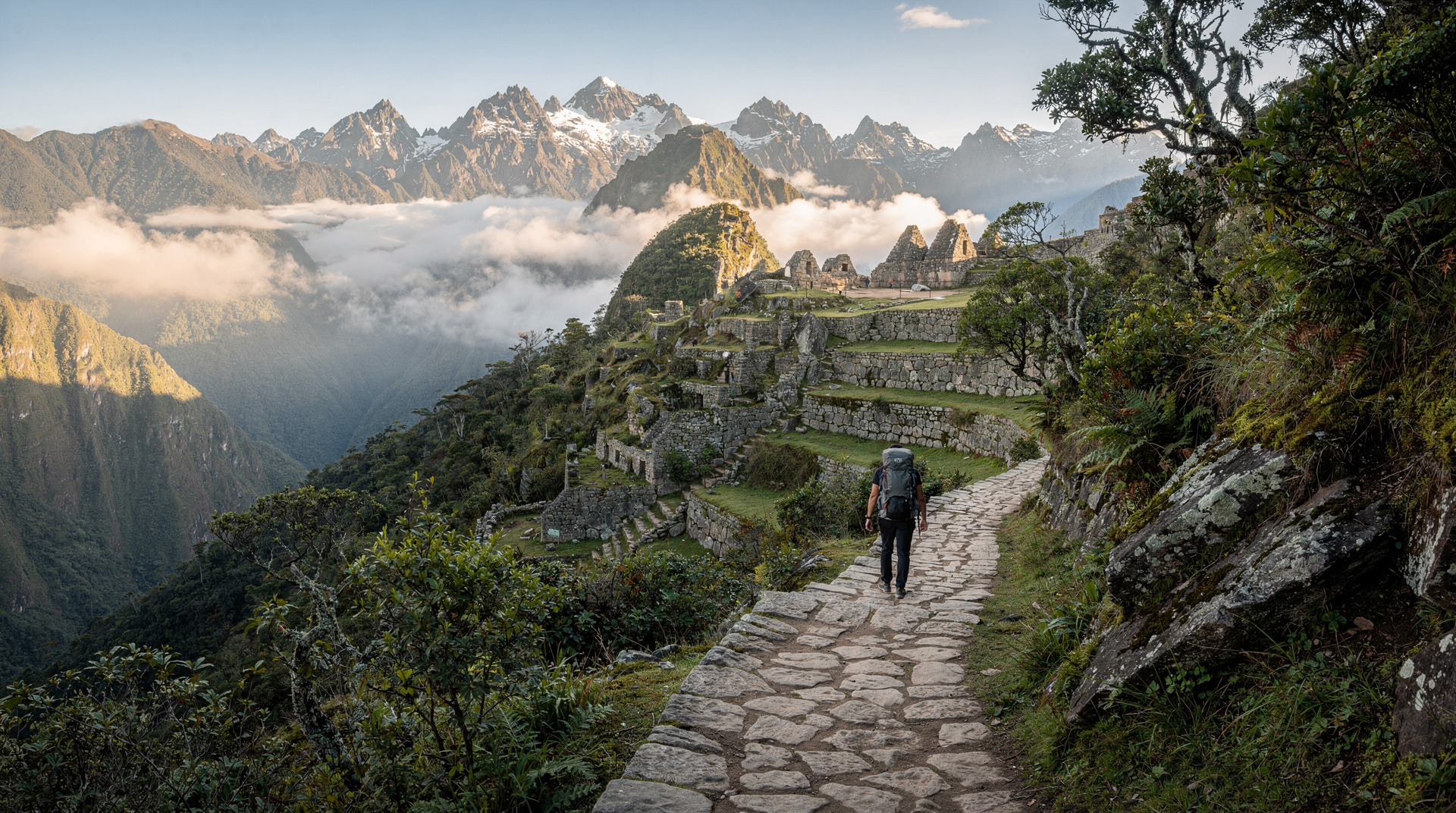
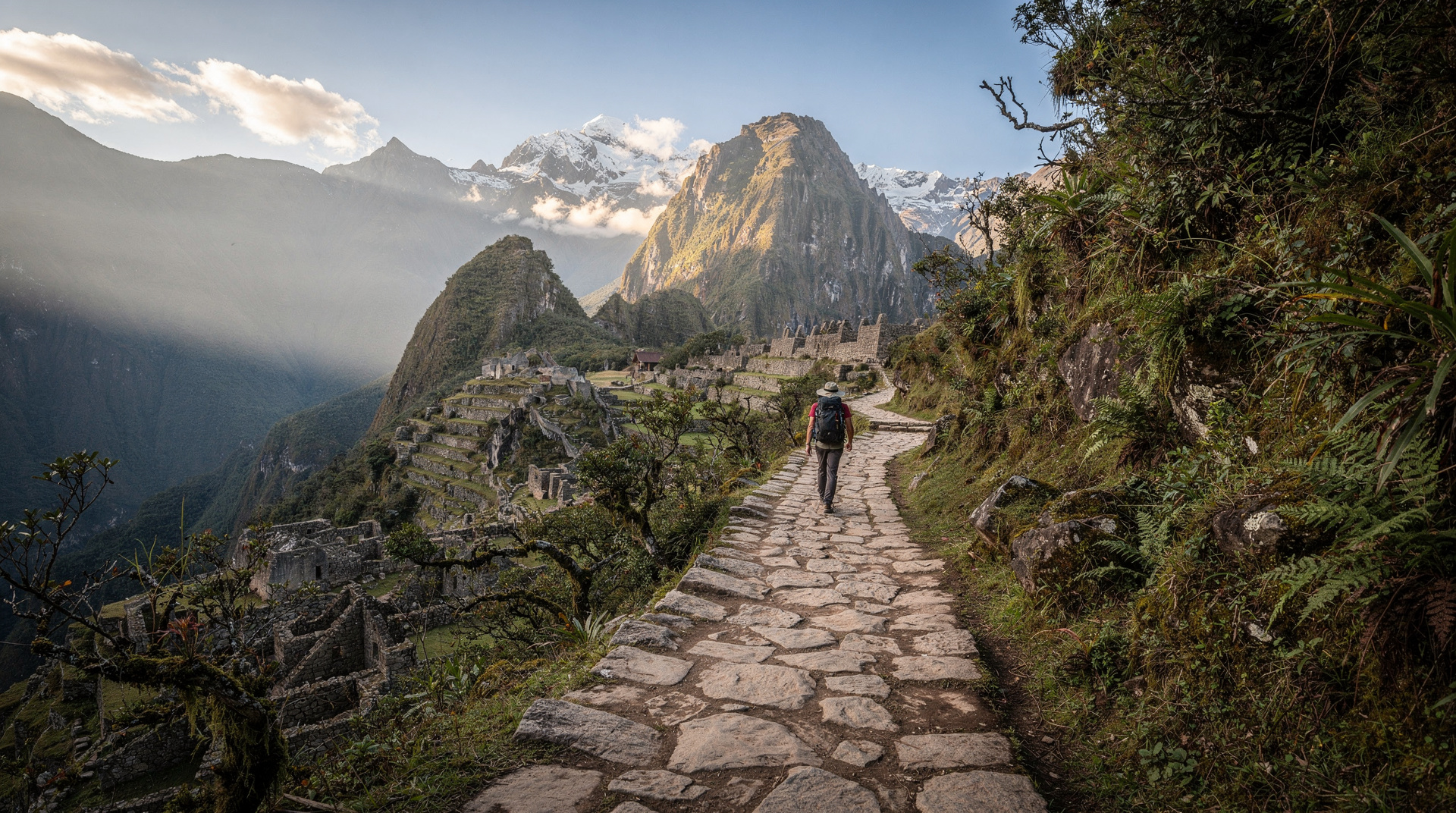
- Inca ruins at scale — Llaqtapata, Runkurakay, Sayaqmarka, Phuyupatamarka, and Wiñay Wayna are all substantial, largely intact, and visited with a certified guide who explains the context
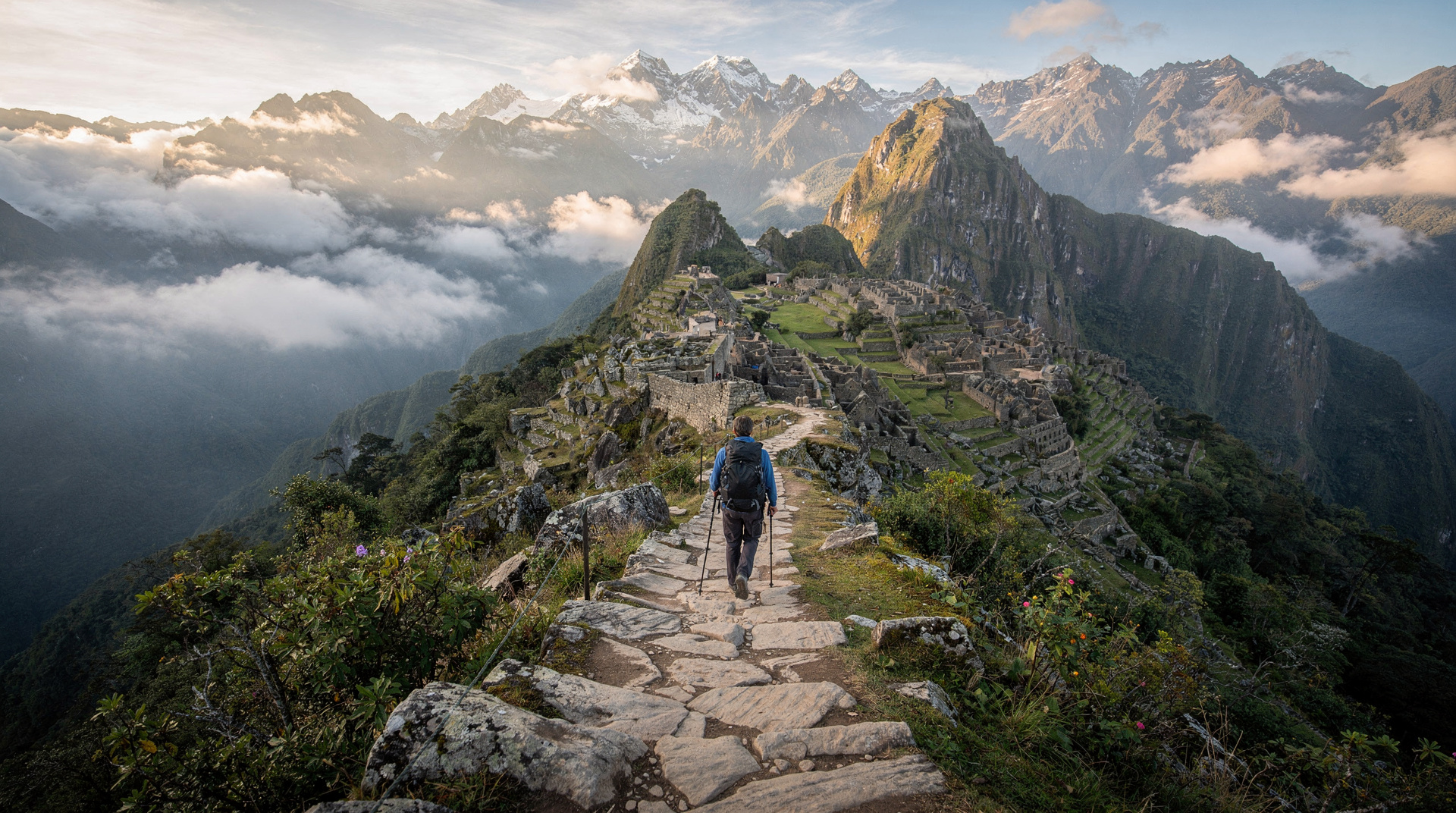
- The Sun Gate view of Machu Picchu — this is the defining moment and genuinely extraordinary
- Mountain views throughout, highest from the Dead Woman’s Pass ridge
Salkantay scenery:
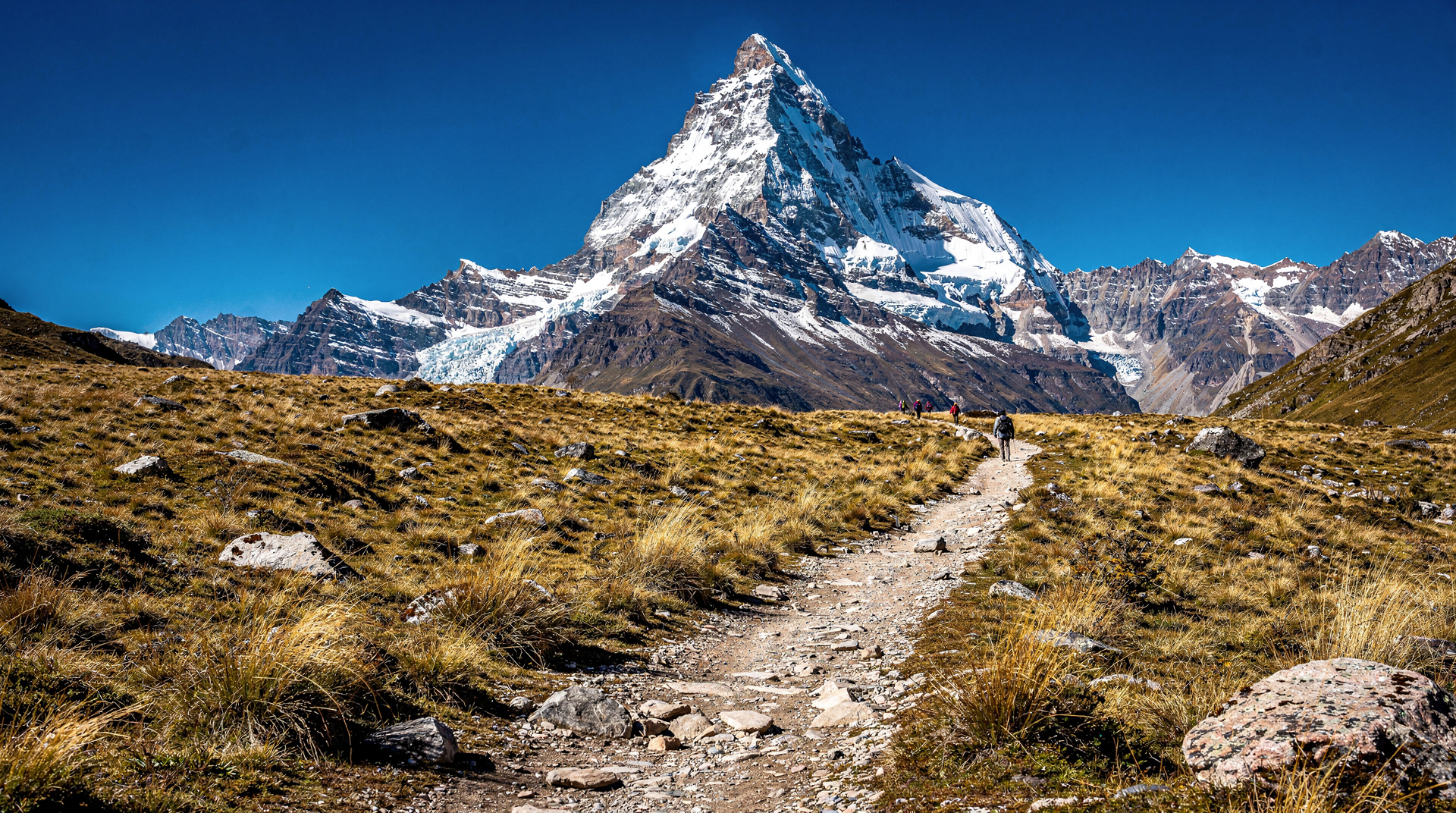
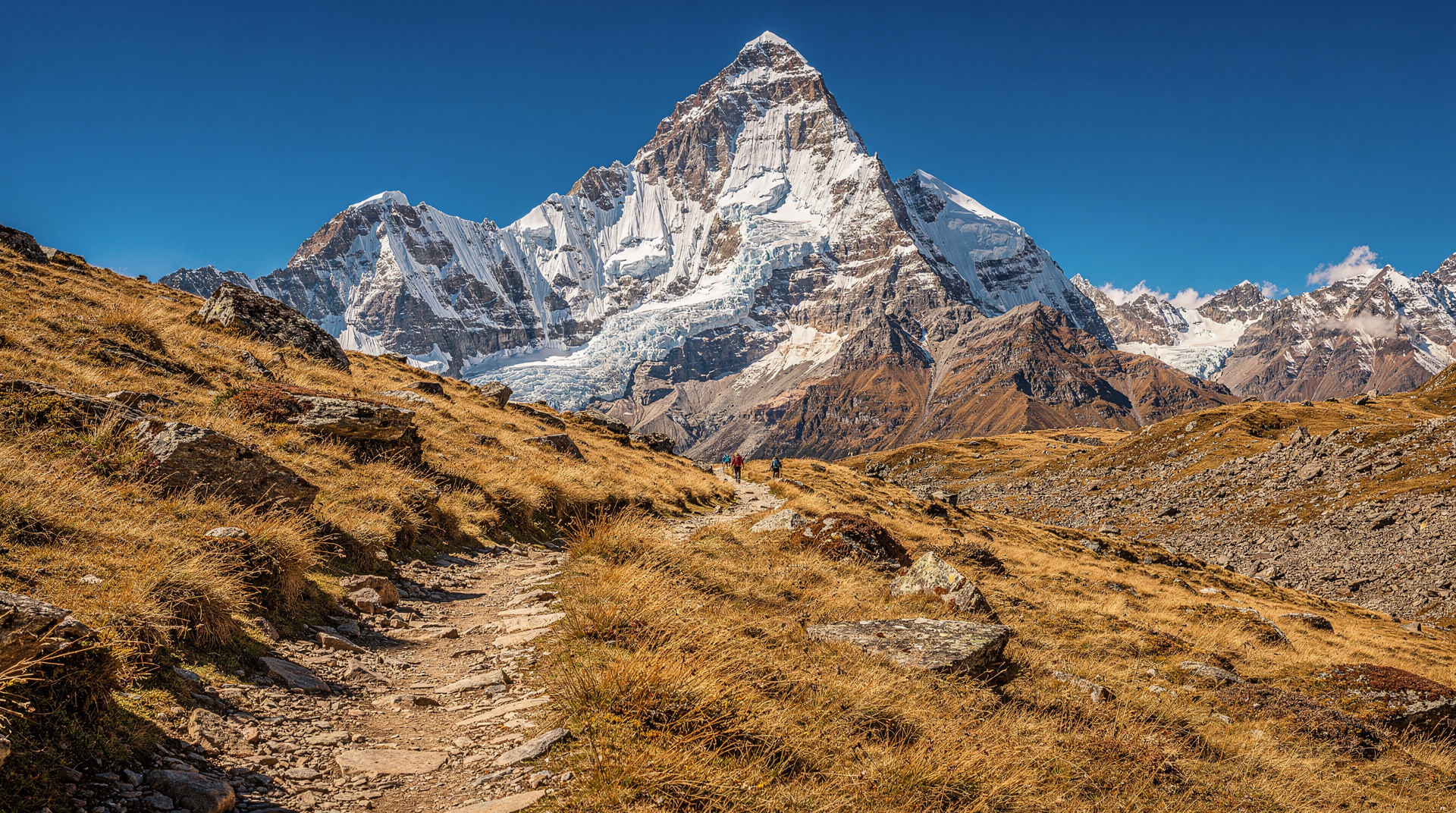
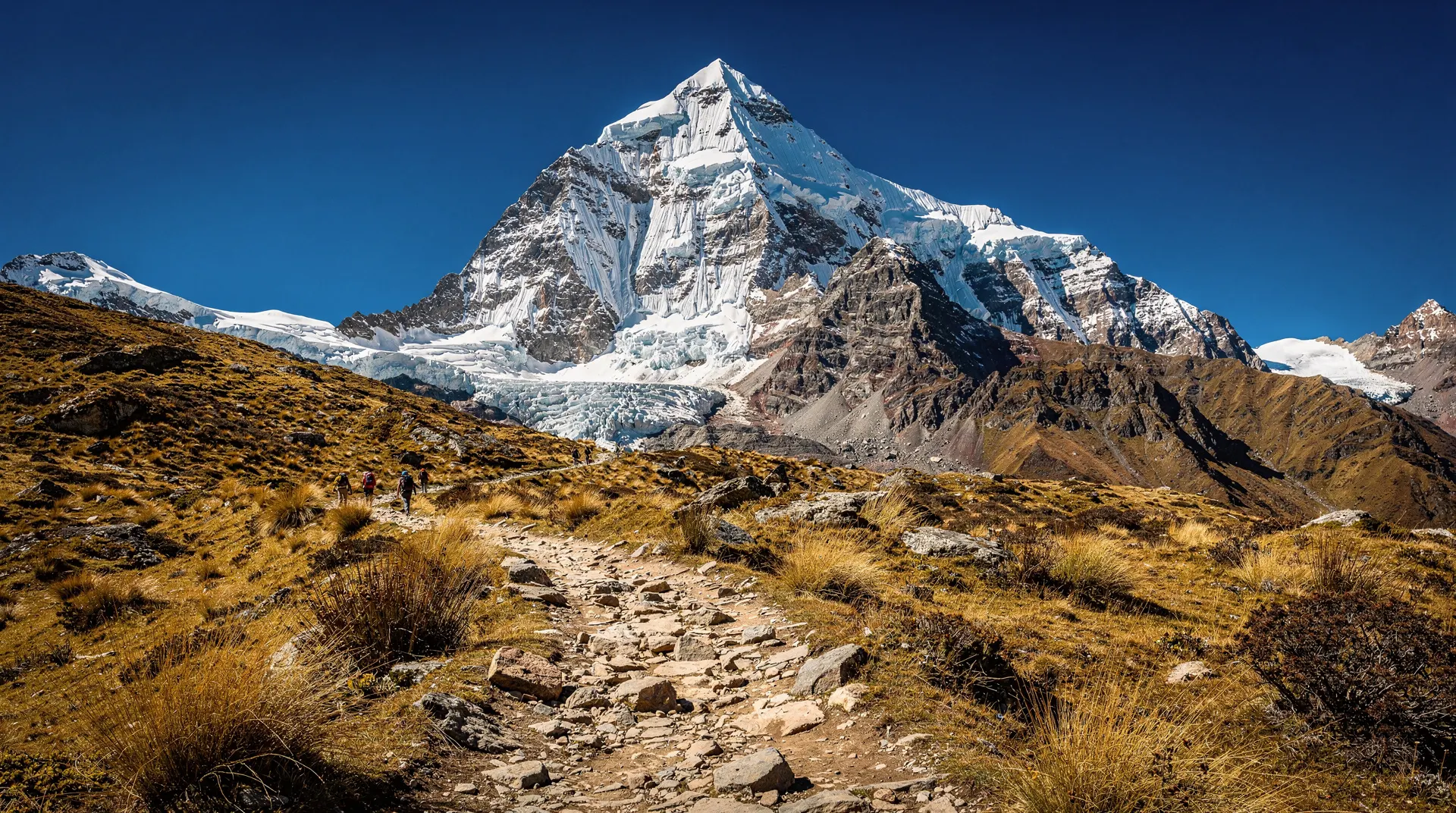
- Salkantay Nevado (6,271 m) at close range — a glaciated peak visible for much of day one and the approach to the pass
- High tundra landscape around the pass: blue glacial lakes, ichu grass, condors
- Dramatic descent from 4,630 m through four distinct vegetation zones in a single day
- Humid cloud forest and eventually sub-tropical vegetation as you descend toward Machu Picchu
- Humantay Lake (4,200 m) — a turquoise glacial lake often included as a day-one extension
Honest verdict: If you care about archaeology and the specifically Inca character of the walk, the Inca Trail is the one. If you are drawn to high-altitude glacial scenery and dramatic climate zone transitions, the Salkantay is arguably more visually spectacular.
The Sun Gate: the Inca Trail’s defining advantage
The Salkantay’s most significant trade-off versus the Inca Trail is this: the Inca Trail arrives at Machu Picchu through the Intipunku (Sun Gate, 2,720 m) — the Inca gateway that frames the citadel in the valley below. You walk through an ancient doorway and see Machu Picchu for the first time laid out below you, often with clouds lifting off the surrounding peaks. It is the most theatrical possible first glimpse of the site.
The Salkantay arrives by bus from Aguas Calientes — the same entrance used by day-trippers on organised tours. It is not a lesser experience of the site itself, but it lacks the theatrical approach.
Many experienced trekkers say the Sun Gate arrival is the experience they remember most vividly from Peru. If that matters to you, the Inca Trail is the choice, regardless of the permit and cost implications.
Crowds: the honest picture
The Inca Trail has a daily cap on places set by the Ministry of Culture. For a government-regulated, world-famous trail, that is not solitude — but it is a controlled crowd. On the trail itself, particularly days one and two before the Salkantay alternative walkers join at Km 88, the Inca Trail feels quieter than you might expect.
The Salkantay has no daily limit. In peak season, the trailhead can be busy and the high camps crowded. Many operators run simultaneous groups and the Salkantay Pass can feel like a queue on popular days. Operators with smaller groups (8–10 people) and earlier daily starts are worth seeking out.
Honest verdict: Neither trail is a wilderness experience in peak season (June–August). The Inca Trail is arguably more regulated and its crowds more predictable. The Salkantay’s crowds are less controlled and can be higher at popular points.
Which type of traveller should choose which
Choose the Inca Trail if:
- The Sun Gate arrival is genuinely important to you
- Inca archaeology and the experience of walking through Inca sites along the route matters
- You are planning ahead (3+ months) and can secure permits
- Budget is not the primary constraint
- Shorter overall distance is preferable (4 days, 43 km)
Choose the Salkantay if:
- Inca Trail permits are unavailable for your dates
- You are booking less than 2–3 months ahead
- You prefer glacier scenery to archaeological context
- Budget is a significant factor ($200–300 per person less)
- You are travelling in February when the Inca Trail closes
- You want a longer, more varied landscape route (5 days, 73 km)
The combination option
Some travellers do both on a single trip: Salkantay first (no permit needed, book immediately), then a separate day at Machu Picchu via the standard route, then — on a return trip or an extension — the Inca Trail. This is more feasible than it sounds, particularly for travellers spending 10–14 days in the region.
The best treks to Machu Picchu guide covers all five routes (including Lares, Inca Jungle, and short Inca Trail) in the same comparative framework. If you are weighing the Salkantay against something other than the classic Inca Trail, that is the reference.
The booking reality for 2026
For Inca Trail permits in peak season 2026: permits were opened for sale on 17 November 2025 (Ministry of Culture announcement). For future years, sales open in autumn or early in the year: check the date on the official platform, tuboleto.cultura.pe, or with your operator. If you are reading this after March–April and want a June–August start, the realistic options are either shoulder season dates (May or September — still dry season, fewer crowds) or the Salkantay.
For the Salkantay in 2026: bookable year-round with 1–4 weeks notice in most seasons. Peak season operators fill up but not months ahead. Quality varies significantly between operators; the difference between a budget Salkantay and a quality one is substantial in food, guiding, and equipment.
Group size and pace on each route
The Inca Trail’s government-set maximum of 16 trekkers per group (guide plus support staff excluded) creates a fairly consistent experience across operators — you will not encounter a 30-person Inca Trail group, because the permit system does not allow it. The Salkantay has no such cap; some budget operators run larger groups to spread fixed costs, which can mean a slower, more crowded pace on narrow sections of the Salkantay Pass ascent.
If group size and pace matter to you specifically, ask any Salkantay operator directly for their maximum group size before booking — a smaller, more expensive Salkantay operator can deliver a noticeably better experience than a larger, cheaper one, in a way that is less true of the Inca Trail where the cap already limits variation.
Food and camp comfort compared
Both routes are typically fully catered, but the standard differs. Inca Trail operators, competing on a smaller price band shaped by the fixed permit cost, tend to converge on a broadly similar camp standard: two-person tents, a dedicated cook and kitchen tent, three hot meals daily.
Salkantay operators span a wider range — from basic camping-only budget trips to premium mountain-lodge-based versions with private rooms, hot showers and considerably more comfortable overnight stops (the Salkantay trek guide covers the lodge-to-lodge option in detail). If camp comfort matters more to you than route choice itself, the Salkantay’s premium tier can outperform even a good Inca Trail operator on overnight quality, at a higher price than the standard Salkantay camping trip.
Before you commit: where to read further
Once you have a leaning, a few companion pages help you test it. The Inca Trail complete guide walks through the route day by day, and the Inca Trail permits guide explains how the allocation works and what to ask an operator before paying a deposit. If you are drawn to the trail itself, the Inca Trail destination page gives the wider context, while the Salkantay destination page does the same for the other route.
If you have only a few days to spare, the short Inca Trail is worth reading as a middle path: it still finishes through the Sun Gate. For anyone who wonders whether walking is the right choice at all, the train vs trek comparison sets the two approaches side by side.
Packing and timing questions that follow the choice
Whichever route you pick, the gear list changes little: layers for cold nights, waterproofs, and broken-in boots matter on both. The Inca Trail packing guide is a sound reference for either trek. Timing also deserves a look at the best time to visit Machu Picchu, since the dry and wet seasons shape both routes, and the Inca Trail closure in February explains why that month pushes many walkers toward the Salkantay.
If you would like a trekker’s voice rather than a comparison table, the Inca Trail vs Salkantay real talk blog post gives a personal account of weighing the same decision. For a fixed schedule to follow, see the 4-day Inca Trail itinerary or the 5-day Salkantay itinerary.
Frequently asked questions about Inca Trail vs Salkantay: honest comparison for 2026
Which trek is harder: Inca Trail or Salkantay?
Which trek is cheaper: Inca Trail or Salkantay?
Can I book the Salkantay on short notice in peak season?
Does the Salkantay arrive at Machu Picchu the same way as the Inca Trail?
Which trek has better scenery?
Is February an option for either trek?
Top experiences
Bookable activities with verified prices and instant confirmation on GetYourGuide.