Salkantay trek guide: the permit-free route to Machu Picchu
Cusco: 5-Day Salkantay Ultimate Trek to Machu Picchu
What is the Salkantay trek to Machu Picchu?
The Salkantay is a 5-day (or 4-day) high-altitude trek crossing the 4,630 m Salkantay Pass, no permit required, costs $350–500, and ends at Machu Picchu. It is the best alternative when Inca Trail permits are sold out. Higher and more dramatic in landscape than the Inca Trail — but it does not arrive via the Sun Gate.
The route that does not need a waiting list
The Inca Trail fills up. The Salkantay does not. That is the practical entry point for most travellers who end up on this route — the Inca Trail permits for their dates are sold out, or they are travelling in February when the Inca Trail closes entirely, or they need a five-day alternative that costs several hundred dollars less. Whatever the reason for starting here, most trekkers who complete the Salkantay finish with no regrets about not having done the Inca Trail instead.
| Where | Starts Mollepata/Soraypampa, ends Machu Picchu |
| Cost | $350–500 (5-day), $600–800 lodge-to-lodge |
| Time needed | 5 days (4-day option available) |
| Permit | None required |
| Best time | May–September (open year-round incl. February) |
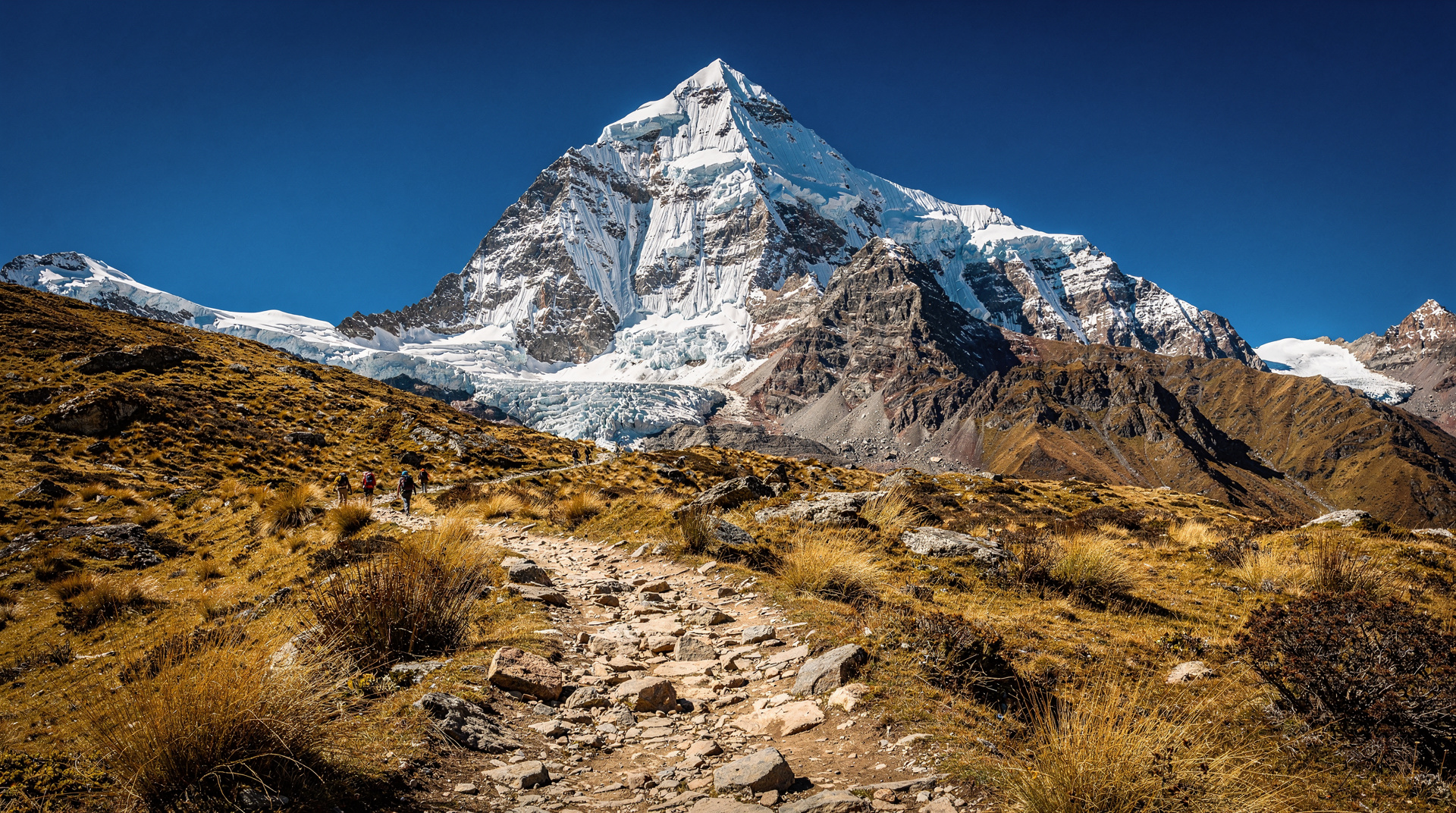
The Salkantay route crosses the 4,630 m Salkantay Pass — 415 m higher than the Inca Trail’s Dead Woman’s Pass — in the shadow of the Salkantay glacier on the southern flank of the Vilcabamba range. It then descends through three distinct climate zones over three days: high-altitude puna grassland, cloud forest, and subtropical forest, arriving at Aguas Calientes and then Machu Picchu. The route is longer, higher, and more varied in landscape than the classic Inca Trail. What it does not have is the archaeology or the Sun Gate arrival.
This guide covers the route day by day, the altitude reality, what it costs, when to go, and who the Salkantay is the right choice for.
What makes the Salkantay different from the Inca Trail
The two routes are often compared as alternatives, but they are genuinely different experiences.
The Salkantay is higher. At 4,630 m, the pass is formidable by any measure. Altitude sickness symptoms are common on day two. The exposure at the pass — wind, cold, and the vast glacier above — is more dramatic and harsher than anything on the Inca Trail.
The Salkantay has no permit. The route does not pass through the Inca Trail park zone that the government caps at 500 persons per day. You can book a month before departure, or a week before, or in February when the Inca Trail is closed entirely.
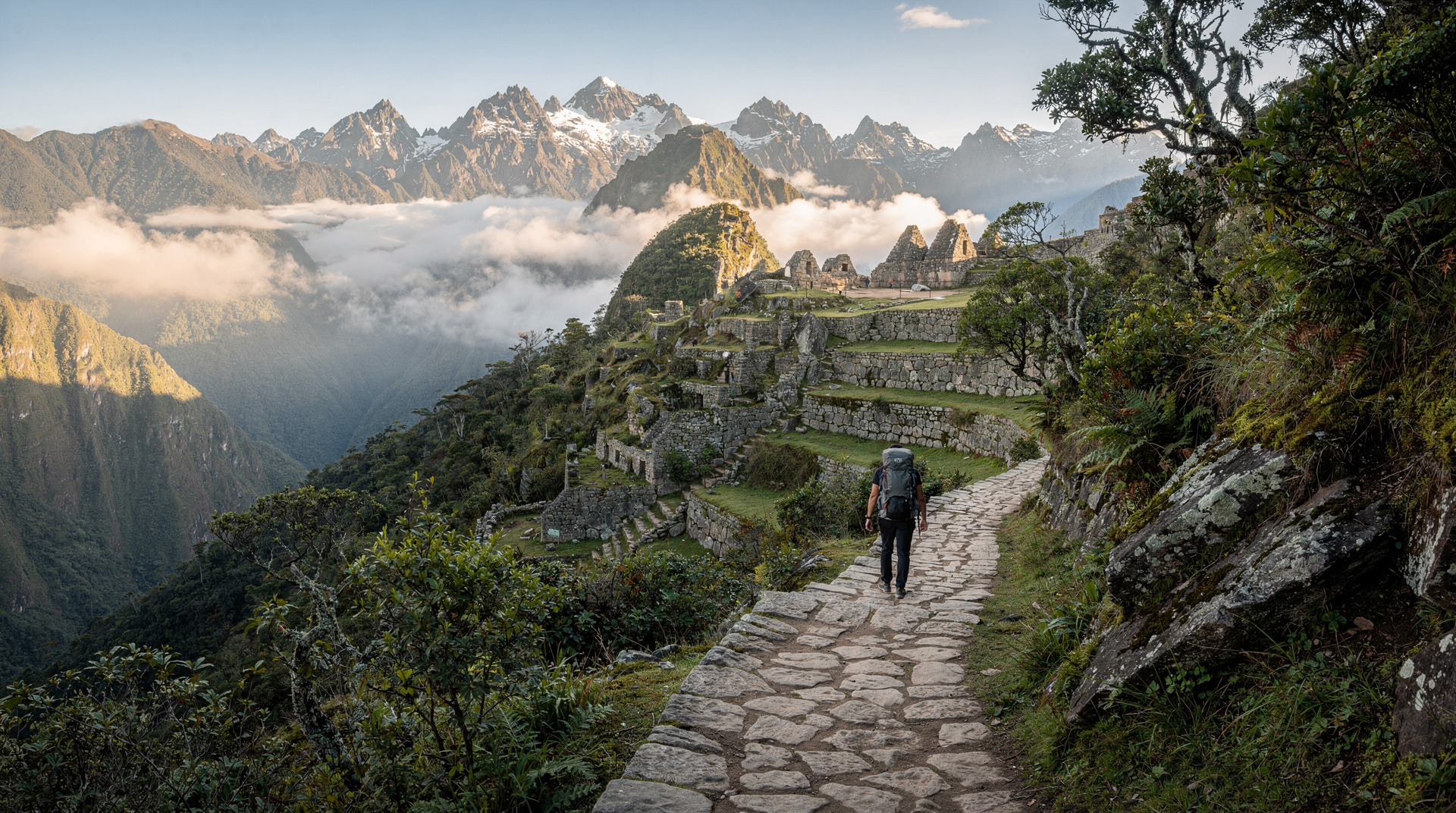
The Salkantay has no comparable archaeology. The Inca Trail passes Sayaqmarka, Phuyupatamarka, Runkurakay, and Wiñay Wayna — significant Inca sites with substantial structures and a certified guide to explain them. The Salkantay passes near some Inca-era remains but the route’s appeal is landscape and altitude, not archaeology.
The Salkantay does not arrive via the Sun Gate. The route ends at Aguas Calientes; the final approach to Machu Picchu is by bus up the road, shared with the thousands of day-trippers who arrive by train from Cusco and Ollantaytambo. If walking through the Sun Gate at dawn is the specific experience you are after, the Salkantay cannot replicate it.
For a detailed head-to-head comparison of both routes on every dimension — cost, difficulty, booking complexity, and the Sun Gate question — the Inca Trail vs Salkantay guide is the place to start.
The route day by day
Day one — Cusco to Soraypampa and Humantay Lake (3,900 m camp)
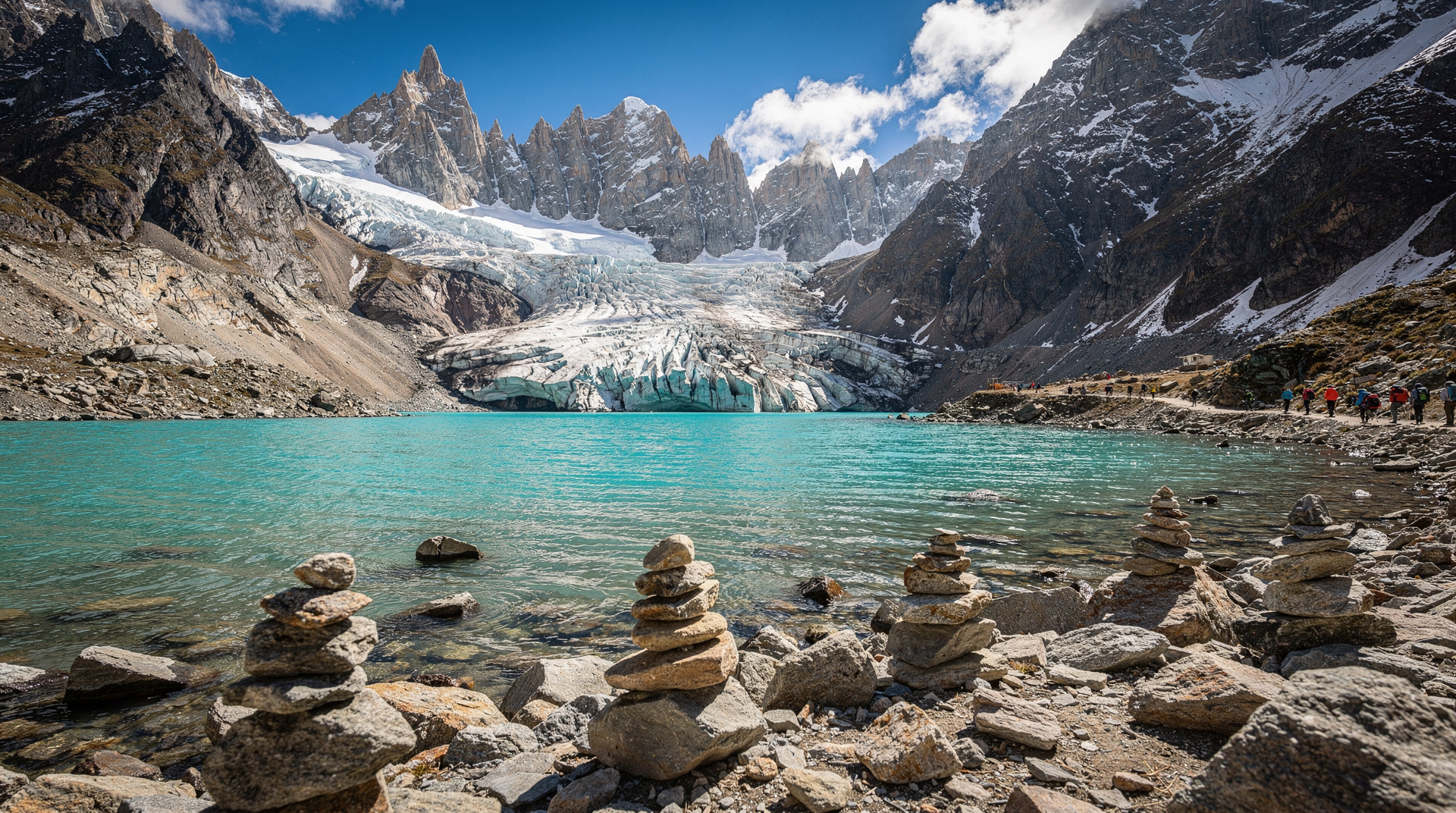
The trek begins with a 3–4 hour minibus ride from Cusco through Mollepata to the trailhead at Soraypampa (3,900 m). Most groups arrive in time for an afternoon side trip to Humantay Lake — a glacial lake at 4,200 m cradled below the Salkantay and Humantay peaks, with water that shifts between deep jade and turquoise depending on the light and the season.
The Humantay Lake side trip is steep — roughly 400 m ascent in 90 minutes — but short. Many trekkers find it the visual highlight of the entire five days. The lake is accessible as a standalone day trip from Cusco, but experiencing it on the first afternoon of the Salkantay, with the full glacier visible above and the camp below, is its natural context.
Camp at Soraypampa, 3,900 m. The altitude is noticeable; sleep at a gentle pace and do not rush the afternoon.
Day two — Soraypampa over the Salkantay Pass to Chaullay (4,630 m pass)
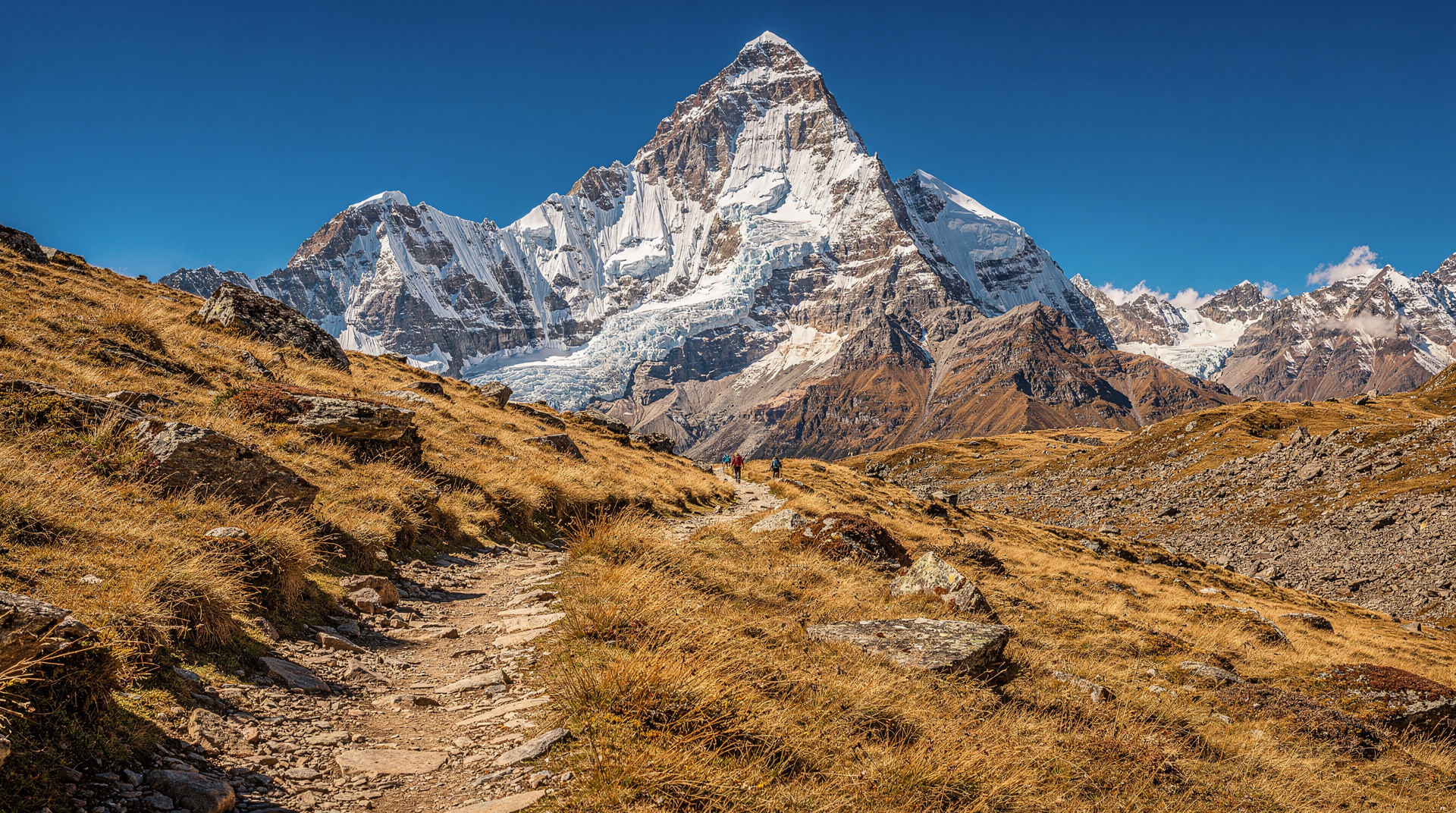
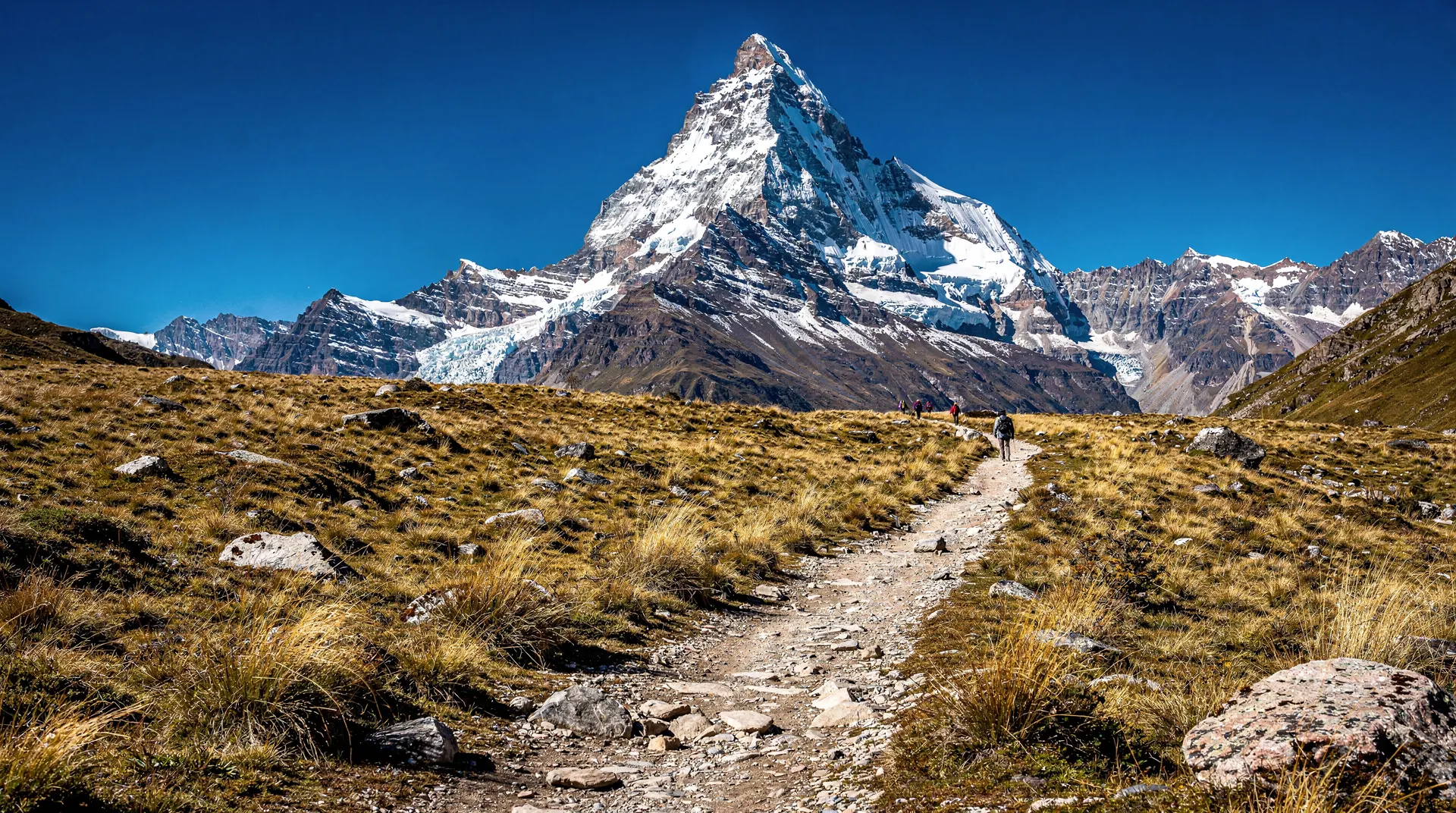
Day two is the most demanding and the most spectacular. From Soraypampa, the trail climbs 730 m to the Salkantay Pass at 4,630 m. The ascent begins in puna grassland — vast, treeless, and very cold in the early morning — and approaches the glacier zone below the Salkantay summit at 6,271 m. The glacier is visible throughout the climb and the scale of the mountain above the pass is extraordinary in clear conditions.
At the pass, expect cold and wind regardless of season. The descent from the pass is long — dropping from 4,630 m to around 2,900 m at the camp — passing through cloud forest that becomes progressively warmer and wetter with every hour. By late afternoon the vegetation has shifted from high-altitude scrub to cloud forest ferns. The temperature change over a single day’s descent is one of the Salkantay’s most memorable characteristics.
The 5-day Salkantay trek takes day two at a manageable pace with stops for the glacier views and the pass photo. The day runs 8–10 hours total.
Day three — Cloud forest descent to La Playa (around 2,000 m)
Day three continues the descent into the cloud forest, with altitude dropping below 2,000 m. The vegetation shifts to subtropical: orchids, bromeliads, and tree ferns lining the trail. The route follows river valleys as the Urubamba drainage systems merge below. This is the day mosquitoes appear — bring repellent for the lower sections.
Some itineraries include access to Santa Teresa hot springs in the afternoon — a well-earned soak after two days at altitude. The contrast with the glacier-level cold of the previous morning is genuinely surreal.
Day four — Trek to Hydroelectric and Aguas Calientes (2,040 m)
Most five-day itineraries walk the final 10 km along the railway line from the Hydroelectric station to Aguas Calientes — a flat walk alongside the Urubamba river on the train track, with cloud forest rising on both sides. Some operators transfer this section by minibus. Either way, the day ends in Aguas Calientes.
Overnight in Aguas Calientes. This is the base town for Machu Picchu and the first proper hotel beds of the trip. Warm showers and a restaurant meal take on significance they would not have under normal circumstances.
Day five — Machu Picchu
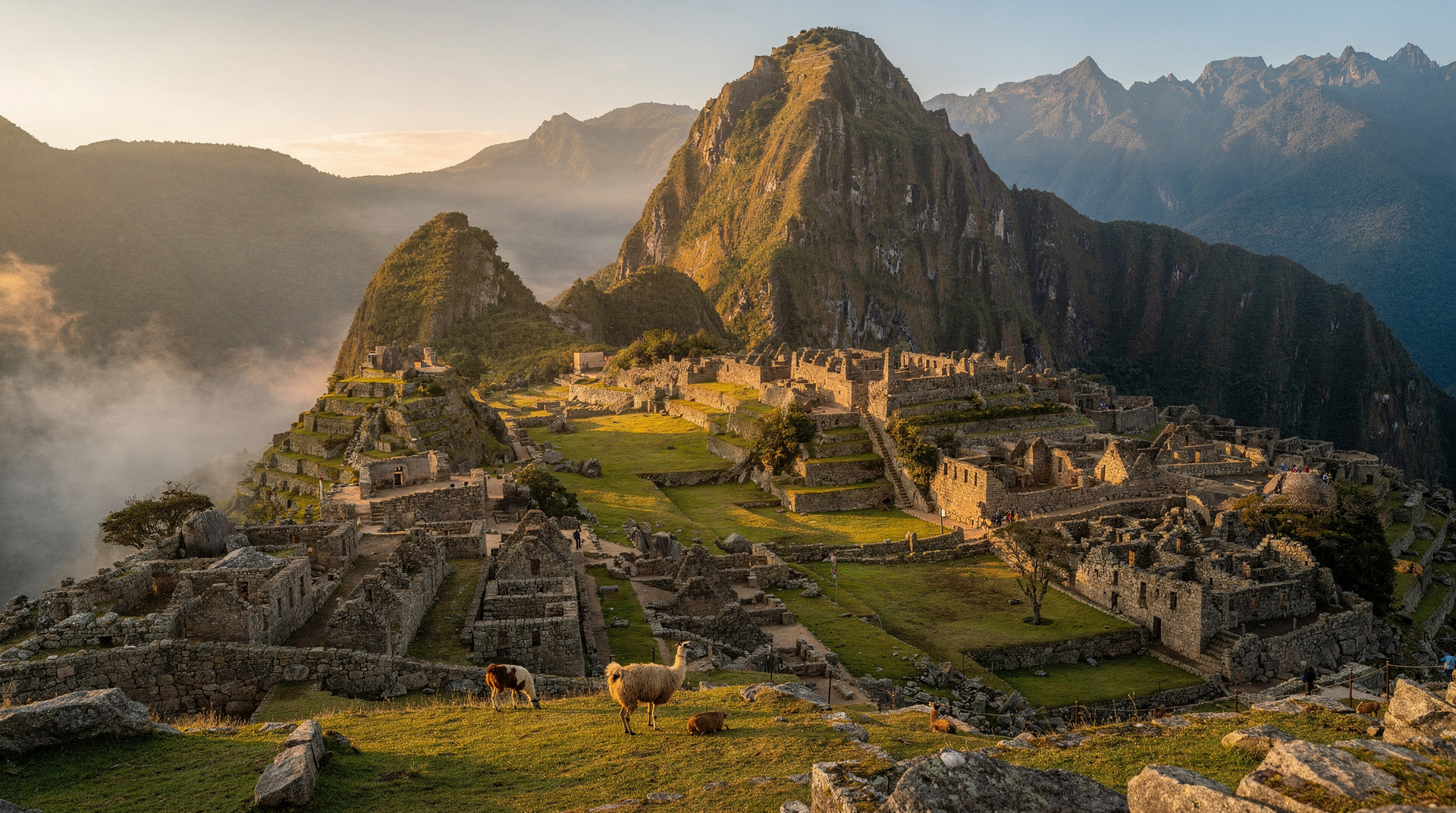
Early bus from Aguas Calientes to Machu Picchu for the morning visit, arriving before 7 am to beat the main visitor wave. The guided tour of the site is included in most packages. Return to Cusco by afternoon train, arriving in the evening.
The 4-day 3-night Salkantay variant compresses this itinerary, combining longer walking days and typically skipping the Soraypampa rest afternoon. It is the better choice for travellers with tight schedules who still want the pass crossing and cloud forest descent.
The 4-day version
The 4-day Salkantay combines what would be days one and two in the 5-day version, starting earlier from Cusco and reaching the high-altitude camp on the same day as the pass crossing — or, in some formats, crossing the pass on day one for a very long day. It is more physically demanding per day and allows less time for altitude acclimatisation before the 4,630 m crossing. Travellers with limited time and good fitness may prefer it; those more concerned about altitude should opt for the five-day format.
Altitude on the Salkantay: the honest picture
The Salkantay Pass at 4,630 m is higher than anything on the classic Inca Trail. The altitude is the primary physical challenge of the route, and it is worth being direct about what to expect.
After at least three nights acclimatising in Cusco (3,400 m) or the Sacred Valley (2,700–2,900 m), most fit trekkers can manage the Salkantay Pass with effort and some breathlessness. The sustained ascent on day two is the hardest part. The altitude sickness guide covers the difference between expected high-altitude breathlessness and symptoms requiring descent — which applies to this route even more acutely than to many Cusco day trips.
Acclimatisation strongly recommended: at minimum three nights at altitude before starting the trek. For the 5-day version where day one is at 3,900 m and day two crosses 4,630 m, arriving in Cusco the day before departure and immediately taking the minibus to the trailhead is not adequate preparation.
The descent profile of the Salkantay is helpful: after day two’s high point, the route spends three days descending progressively to near sea level. The altitude acclimatisation challenge is concentrated in the first two days.
Cost breakdown
The 5-day Salkantay trek typically costs $350–500 per person all-inclusive:
- Transport from Cusco to the trailhead and return from Aguas Calientes
- Certified guide
- Camping equipment, porters, and meals (or lodge accommodation if you choose a lodge-to-lodge itinerary)
- Machu Picchu entry ticket
No government permit fee applies — this is the primary reason the route is $200–300 cheaper than the classic Inca Trail. Lodge-to-lodge options, where you sleep in simple mountain lodges rather than tents, typically cost $600–800 and are more comfortable but remove much of the expedition feeling.
Tips for guides and porters are expected and important, at S/50–80 per staff member per trip as a reasonable baseline.
When to go
May–September is the dry season and clearly the best window. June–August offers the most reliable clear skies at the pass but also the most company on the trail. May and September balance good weather with lower crowds.
October–April is wet season. The trail does not close (unlike the Inca Trail in February), but the high pass can have fresh snow, the descent through the cloud forest is very wet, and camping in heavy rain is a significant reduction in comfort. Some trekkers find October and November manageable; December through March is the soggiest stretch.
One important distinction: the Salkantay remains open in February when the Inca Trail is completely closed. Travellers with a February window who want a multi-day trek to Machu Picchu will find the Salkantay a viable choice even in the heart of wet season with appropriate expectations about weather.
Is the Salkantay the right trek for you
The Salkantay is the right choice when:
- Inca Trail permits are sold out or the booking timeline is impossible to meet
- Budget is a primary factor and the $200–300 saving matters
- February is your window
- Dramatic mountain scenery (glacier, high pass, cloud forest) is more appealing than archaeological sites
- You want the flexibility to book without months of advance planning
The Inca Trail is the right choice when:
- The Sun Gate arrival at Machu Picchu is a non-negotiable experience
- The Inca archaeological sites along the route are part of the appeal
- You are planning well in advance and can secure permits
The best treks to Machu Picchu guide compares the Salkantay, Inca Trail, Lares, and Inca Jungle options with honest assessments of who each route suits best.
The 5-day Salkantay trek is the most complete way to experience the route: glacier approach, high pass crossing, three-day cloud forest descent, and Machu Picchu at the end — without a permit, without a waiting list, and at a price point significantly below the classic alternative.
Packing for five climate zones in five days
The Salkantay is unusual among treks in the sheer range of conditions it covers, from below-freezing pre-dawn starts at the pass to humid, mosquito-heavy warmth by day three. Layering is the only sane approach: a base layer, an insulating mid-layer (fleece or light down), and a waterproof shell are non-negotiable for the pass crossing, where wind chill can make 0°C feel far colder. For the lower days, lightweight breathable clothing and a strong DEET repellent matter more than warmth.
A decent sleeping bag rated to at least -5°C is essential for the Soraypampa camp at 3,900 m; most operators rent these if you do not want to carry your own. Trekking poles genuinely help on both the ascent to the pass and the long knee-jarring descent afterwards. Bring cash in small denominations — S/50–80 per staff member for tips is the standard expectation, and there are no ATMs on the trail itself.
Physical preparation beyond general fitness
General fitness helps but is not the whole story on the Salkantay. The specific demand is sustained uphill walking at altitude for 6–8 hours on day two, followed immediately by a long knee-punishing descent. Trekkers who prepare with hill walking or stair-climbing training in the weeks before departure, rather than relying solely on gym cardio, tend to find the descent noticeably more comfortable.
Altitude fitness cannot be trained for at sea level — the acclimatisation nights in Cusco or the Sacred Valley beforehand do the actual physiological work. Trekking poles reduce knee strain on the descent by a meaningful margin; if you have any history of knee problems, do not attempt this route without them.
Frequently asked questions about Salkantay trek guide: the permit-free route to Machu Picchu
Do you need a permit for the Salkantay trek?
How hard is the Salkantay trek compared to the Inca Trail?
How much does the Salkantay trek cost?
What is the best time of year for the Salkantay trek?
Can you do the Salkantay trek in 4 days?
Does the Salkantay trek arrive at Machu Picchu via the Sun Gate?
Top experiences
Bookable activities with verified prices and instant confirmation on GetYourGuide.