Short Inca Trail 2-day: the fast route to the Sun Gate
From Cusco: 4-Day Inca Trail Guided Trek to Machu Picchu
What is the 2-day short Inca Trail?
The short Inca Trail starts at Km 104 (not Km 82), enters at Chachabamba, walks via Wiñay Wayna to the Sun Gate, and arrives at Machu Picchu on day two. It includes the Sun Gate arrival but skips Dead Woman's Pass. A permit is required, booked through a licensed operator.
Everything that matters about the Inca Trail — in two days
There is a version of the Inca Trail that most people do not know exists, and it contains the moment that makes the four-day version famous.
| Where | Km 104 to Sun Gate to Machu Picchu |
| Cost | $350–500 all-inclusive |
| Time needed | 2 days, 1 overnight |
| Max altitude | ~2,730 m (Sun Gate) |
| Permit | Required, booked through a licensed operator |
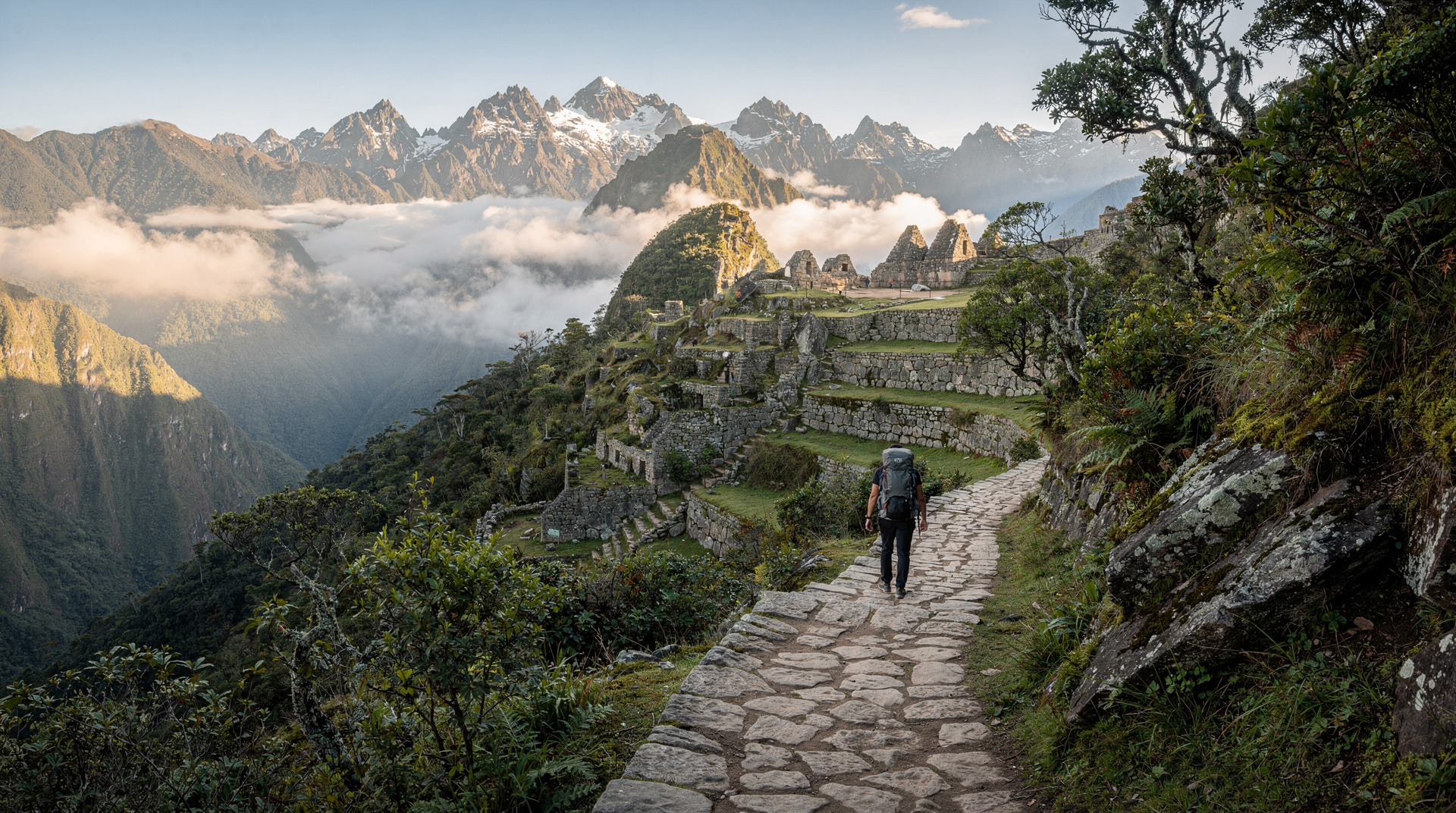
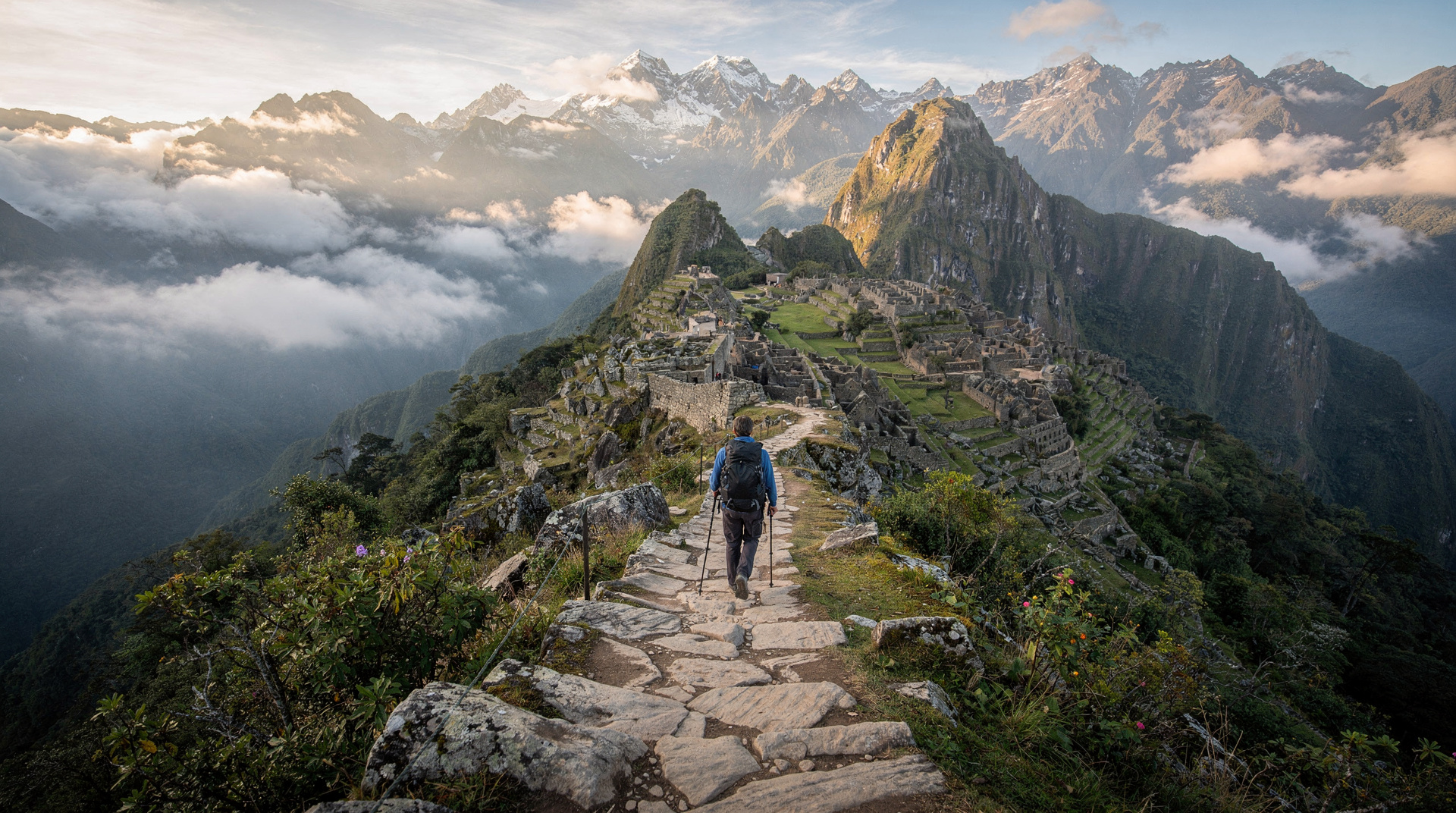
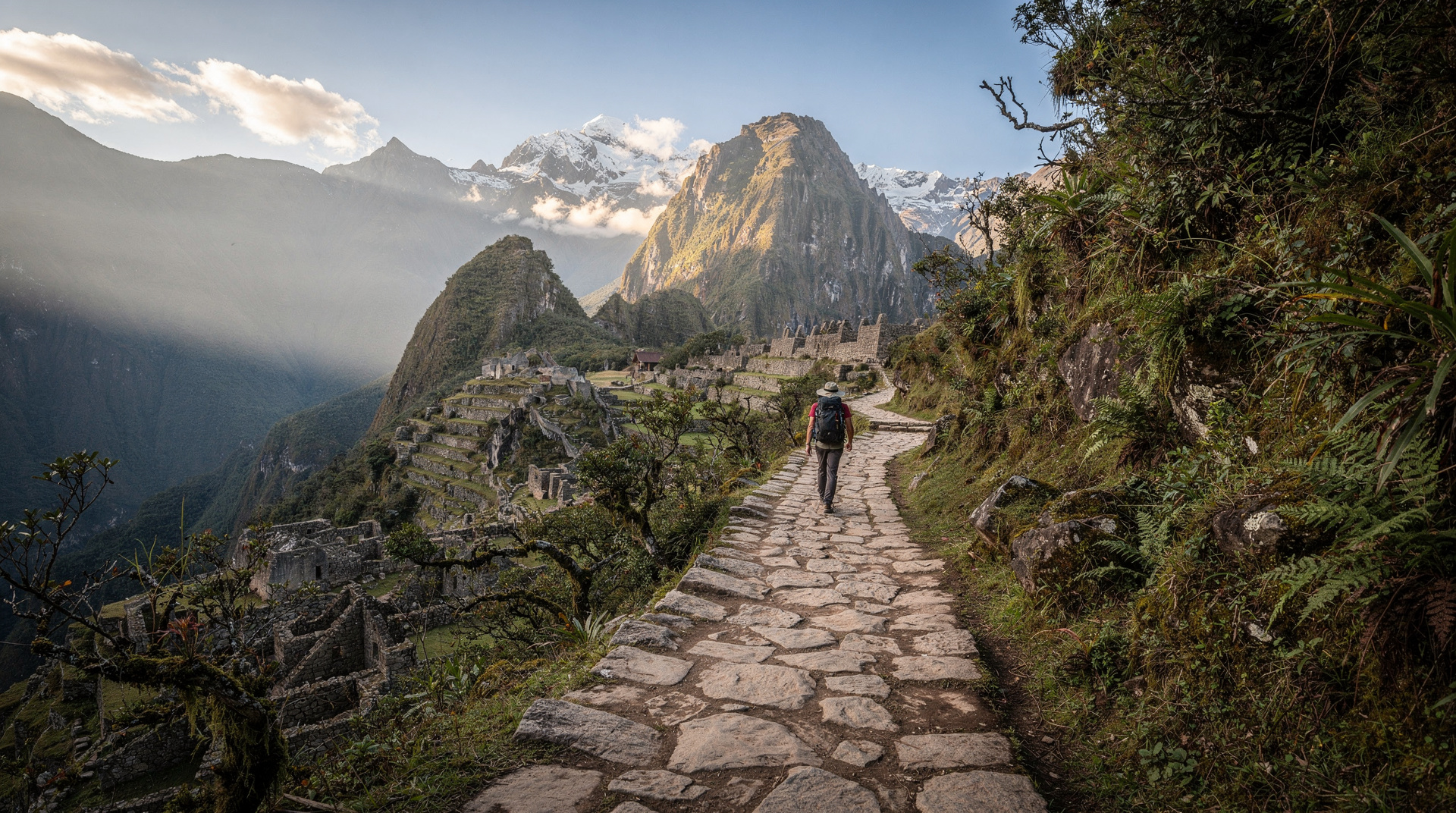
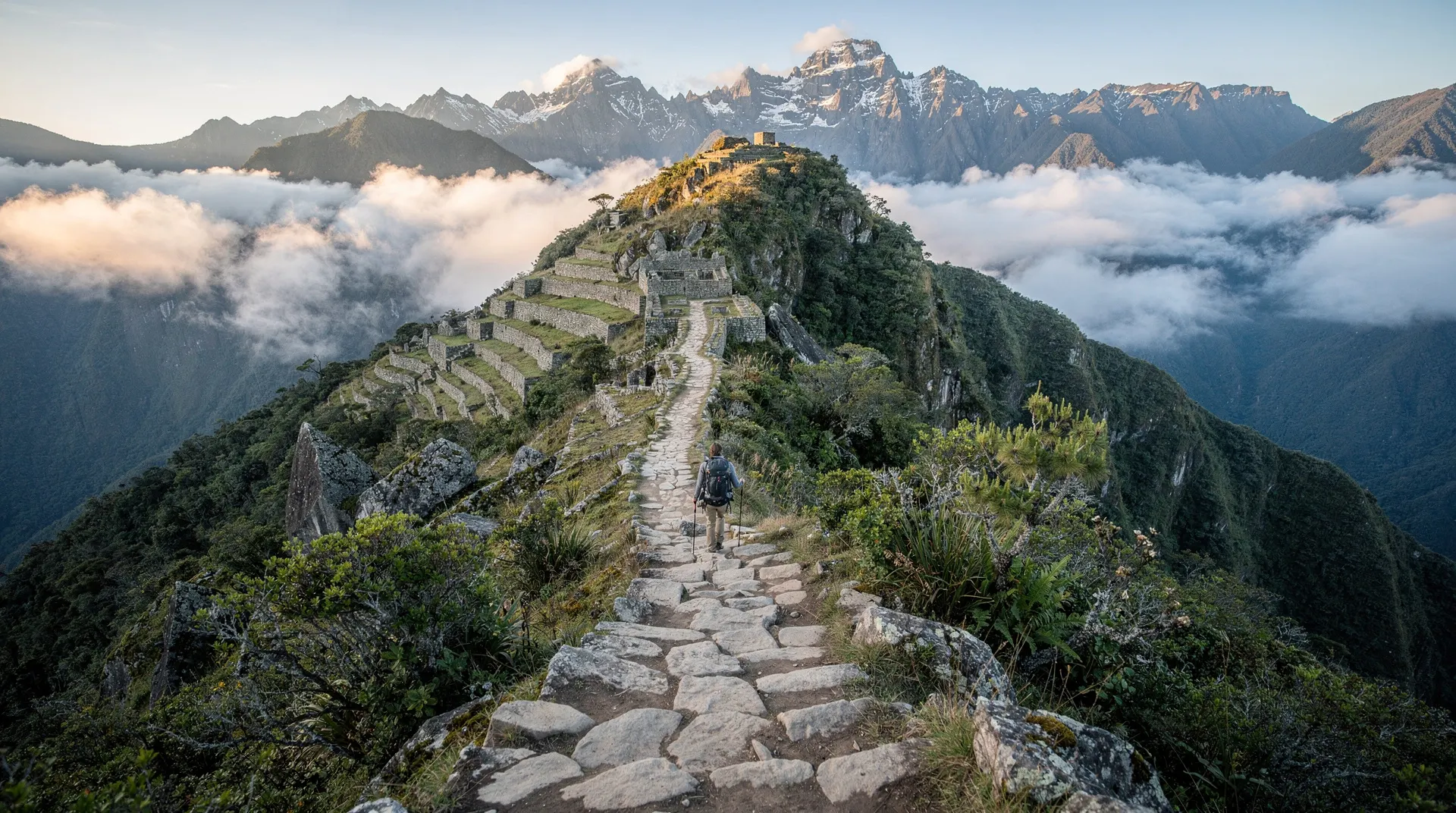
The short Inca Trail — sometimes called the 2-day Inca Trail or the Km 104 route — starts at a different point on the Cusco–Aguas Calientes railway line, enters the trail system through the Chachabamba archaeological complex, and walks the final section of the classic route: up through Wiñay Wayna, along the cloud forest ridge, and through the Intipunku — the Sun Gate — on the morning of day two, with Machu Picchu spread out below in the early light.
That arrival moment — on foot, through the Inca’s ceremonial entrance, the site visible below you — is the thing that distinguishes the Inca Trail from every other Machu Picchu approach. The short trail delivers it in two days and at significantly lower altitude than the classic route’s 4,215 m Dead Woman’s Pass.
For travellers who cannot commit four days, cannot secure 4-day permits, or want the Sun Gate experience without the high-altitude challenge of day two on the classic route, the short trail is not a compromise. It is a genuinely different product that happens to share the most significant section of the original route.
The route: what you actually walk
Day one — Transfer to Aguas Calientes and Chachabamba (2,100 m)
Day one is logistical rather than physical. From Cusco, the group travels by train to the Km 104 stop on the Cusco–Aguas Calientes railway line — a journey of roughly 3 hours. The trail starts at the Km 104 footbridge over the Urubamba river, with the Chachabamba archaeological complex immediately above it.
Chachabamba is a compact Inca site in the lower cloud forest, with ceremonial baths and agricultural terracing. Most guides spend 30–45 minutes at the site — it is a genuine introduction to the trail’s archaeological character, even on the abbreviated itinerary.
After Chachabamba, the afternoon walk continues uphill through cloud forest to Wiñay Wayna — a 3–4 hour climb of approximately 1,000 m through progressively denser vegetation, arriving at the Wiñay Wayna site and camp or nearby accommodation in the early afternoon.
Overnight at or near Wiñay Wayna (approximately 2,650 m).
The Wiñay Wayna site
Wiñay Wayna (“forever young” in Quechua) is one of the best-preserved Inca sites on the entire trail: a sequence of ceremonial baths, terracing, and residential structures in a dramatic cloud forest setting. On the classic 4-day route, this is the day-three camp, typically visited late in the afternoon when trekkers are tired. On the short trail, Wiñay Wayna gets its proper attention — the guide can take time with the site before the afternoon fades.
Day two — Wiñay Wayna to the Sun Gate to Machu Picchu (6 km, ~3 hours walking)
Day two begins in the dark, typically leaving Wiñay Wayna at 5–5:30 am by torch. The 6 km of trail to the Sun Gate follows the cloud forest ridge, largely flat with some ascent, arriving at the Intipunku at approximately 6–7 am on a clear dry-season morning.
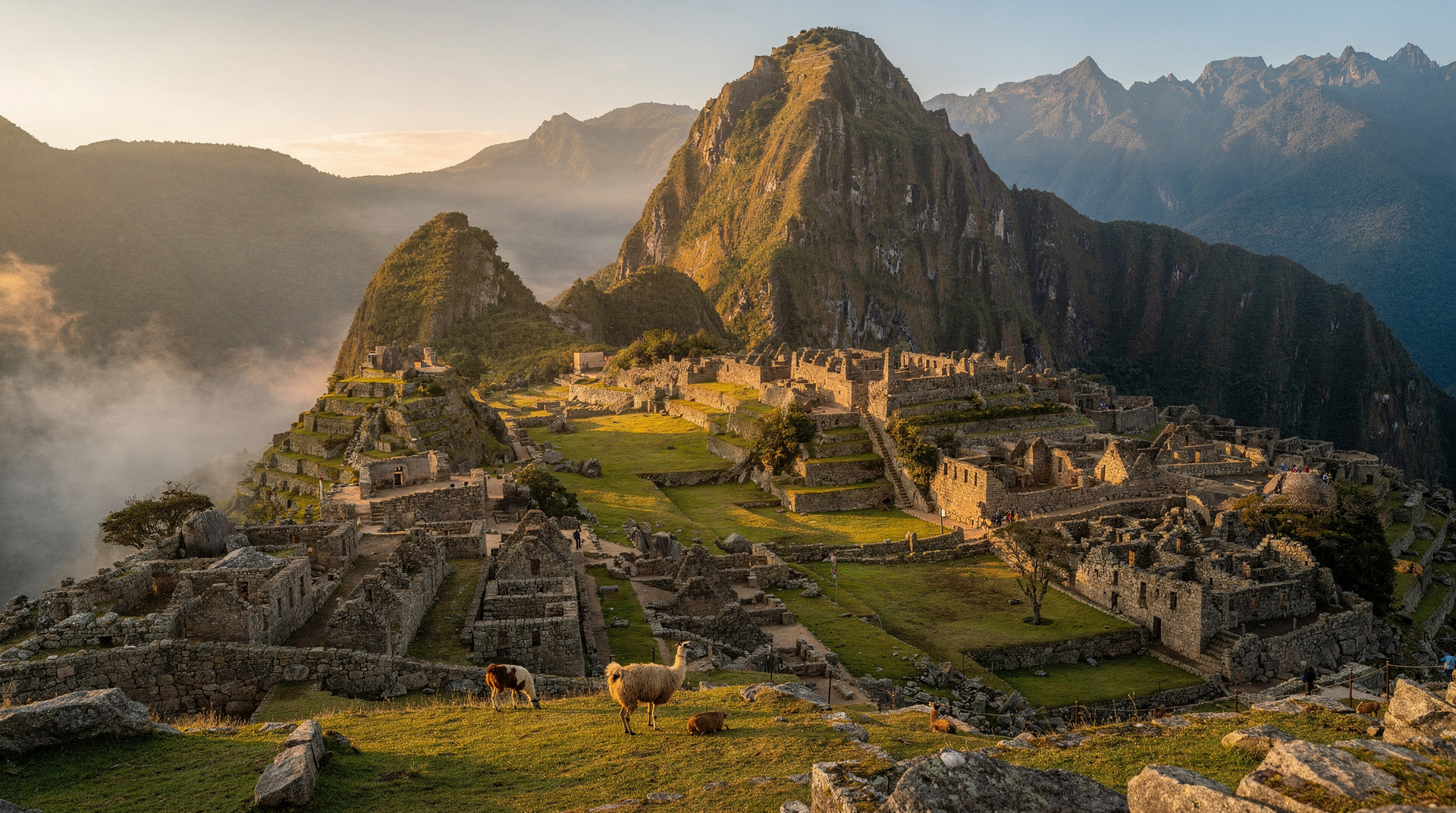
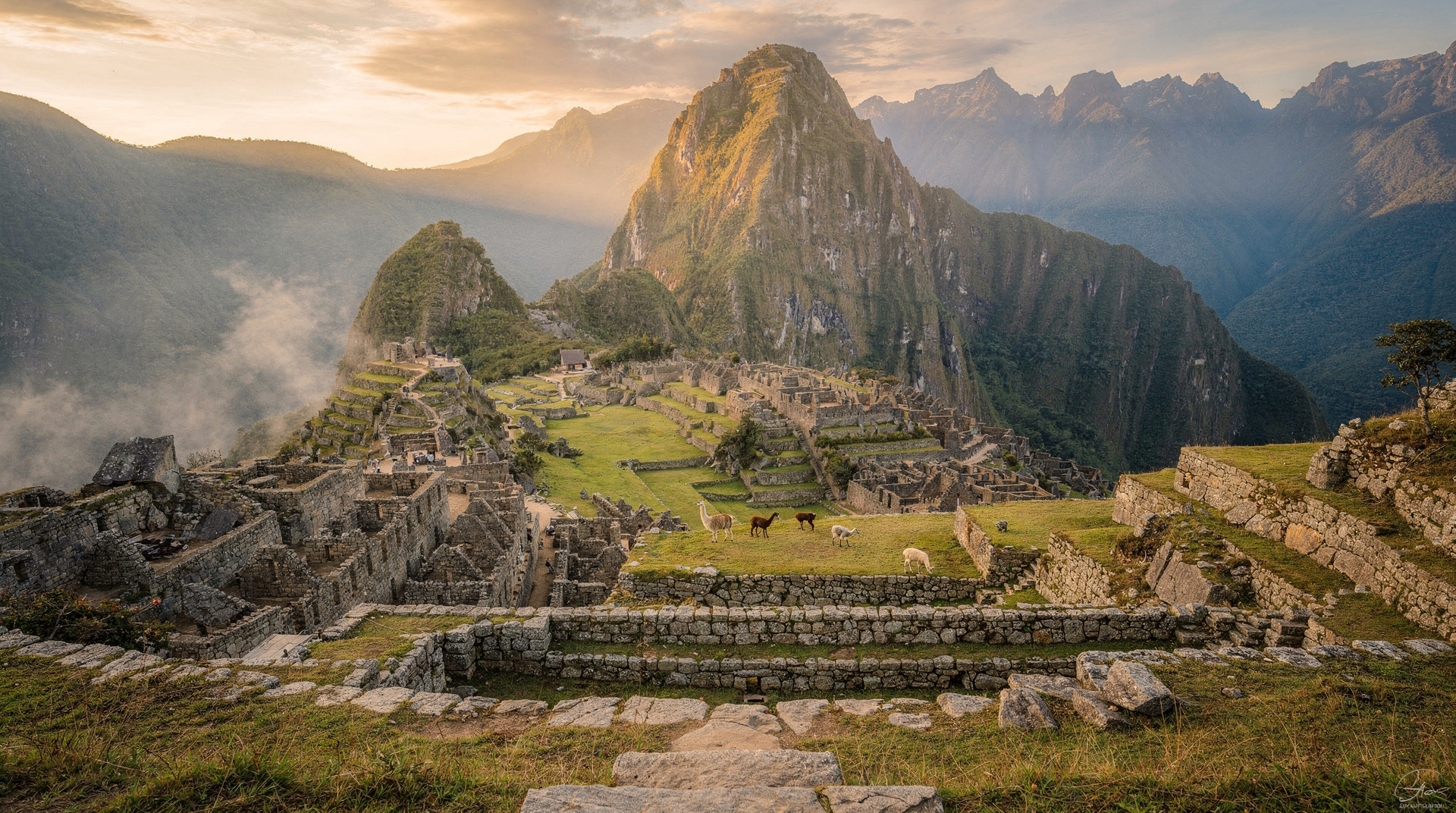
The Sun Gate view: Machu Picchu sits roughly 400 m below the Sun Gate, visible through the terraced entrance frame, with Huayna Picchu rising behind it. On clear mornings in dry season, this view is what trekkers describe when they describe the Inca Trail. The early morning timing means the tour buses have not yet arrived from Aguas Calientes — the site below is comparatively quiet.
The descent to Machu Picchu takes 30–45 minutes. Entry is with the Machu Picchu timed-entry ticket, which most short trail packages include. After the guided tour of the site, return to Aguas Calientes by bus and then to Cusco by afternoon train.
The short 2-day Inca Trail option is the most direct way to book this itinerary with permit, guide, and Machu Picchu ticket handled as a package.
The permit: limited and booked through operators
Inca Trail permits are limited by the Ministry of Culture (the whole Inca trail network is capped at 750 visitors per day), and they are booked by licensed operators. They are finite and can sell out for peak dates.
The practical implication: book at least two to three months ahead for peak season. Sales for the following year open in autumn or early in the year: check the date on the official platform, tuboleto.cultura.pe, or with your operator, and plan ahead if your dates fall in June–August.
The same passport-number requirement applies: everyone’s passport details must be confirmed at the time of booking, not at check-in. The permit is non-transferable.
The short trail does not bypass the February closure. The Km 104 trailhead is part of the same national park system; it closes when the Inca Trail closes, from 1 February to 28 February. The Salkantay trek is the alternative for February travel.
For the full permit booking mechanics — the calendar, documents required, and cancellation policies — the Inca Trail permits guide covers the system including the short trail allocation.
Altitude: the key difference from the classic route
The short Inca Trail reaches a maximum altitude of approximately 2,730 m at the Sun Gate — significantly lower than the classic route’s 4,215 m Dead Woman’s Pass. The risk of acute altitude sickness at this elevation is much lower.
That said, Cusco itself sits at 3,400 m, and the standard advice applies: spend at least two nights in Cusco or the Sacred Valley before undertaking any physical activity, even at the lower altitudes of the short trail. The day-one climb from Chachabamba to Wiñay Wayna involves 1,000 m of ascent in afternoon heat through humid cloud forest — this is aerobically demanding regardless of altitude.
The altitude consideration is the most significant practical advantage of the short trail over the classic. Travellers who are uncertain about their altitude tolerance, or who have had problems with altitude in the past, may find the short trail a more appropriate entry point. The altitude sickness guide covers preparation and symptoms.
What the short trail costs
Typically $350–500 per person all-inclusive:
- Government permit fee (lower than the 4-day permit)
- Guide
- Train travel (Cusco–Km 104 and Aguas Calientes–Cusco return)
- Overnight accommodation in Aguas Calientes or Wiñay Wayna area
- Machu Picchu entry ticket
This is a significant saving over the classic route ($650–800). The permit fee is lower, there is no multi-night camping logistics, and the reduced duration means reduced staffing. For budget-conscious travellers who prioritise the Sun Gate experience specifically, the short trail’s cost-to-experience ratio is very favourable.
What the short trail includes and what it skips
The short trail includes:
- Chachabamba archaeological site (cloud forest, lower altitude)
- Wiñay Wayna — one of the best-preserved Inca sites on the trail
- The Sun Gate (Intipunku) at dawn
- The classic final approach to Machu Picchu on foot
- Machu Picchu with early morning light before the crowds peak
The short trail skips:
- Dead Woman’s Pass (4,215 m) — the most physically demanding and most altitude-memorable part of the classic route
- Sayaqmarka and Phuyupatamarka — the major day-three archaeological sites on the classic route
- The Inca paved stairway descent sections through cloud forest on day three of the classic route
- The three-day camp experience in the Andes
There is no deception in the short trail. You are walking the final, emotionally significant section of the classic route, not a surrogate for the full experience. The question is whether the Sun Gate arrival — which both versions share — is the primary goal, or whether the full physical and archaeological journey is the point. The Inca Trail complete guide covers the full four-day experience for comparison.
The train-and-hike option: different from the short trail
A third option exists that is sometimes confused with the short trail: travelling by train to Aguas Calientes and hiking up to Machu Picchu and the Sun Gate from the site side, in reverse. This requires no permit and no Inca Trail access. It gives you the Sun Gate view from the Machu Picchu side looking up at the trail, rather than the trail looking down at the site.
It is a valid approach to the site. It is not the Inca Trail experience. The difference is arrival direction: one gives you the Inca’s ceremonial approach with the site revealed below you; the other gives you a hike up from the existing tourist infrastructure. The train-plus-hike combination is the option to consider when you want Machu Picchu without any permit or multi-day commitment.
Who the short trail is best for
The two-day short Inca Trail suits:
- Travellers with limited time who cannot take four days away from their itinerary
- Anyone who could not secure 4-day permits for their dates
- Those concerned about high-altitude acclimatisation (Dead Woman’s Pass at 4,215 m is not involved)
- Travellers who specifically want the Sun Gate arrival but do not need the full trekking experience
- Families or groups with mixed fitness levels — the two-day format is moderate rather than demanding
For a broader comparison of all the routes to Machu Picchu — classic Inca Trail, short trail, Salkantay, Lares, and Inca Jungle — the best treks to Machu Picchu guide sets out the full picture.
Acclimatisation before the short trail
The short Inca Trail’s 2,730 m maximum altitude is far more accessible than the 4,215 m of Dead Woman’s Pass. However, arriving in Cusco at 3,400 m and heading immediately to the Km 104 trailhead is not advisable.
The standard recommendation — at least two nights in Cusco or the Sacred Valley before starting — applies here. Cusco itself at 3,400 m is higher than the Sun Gate. The day-one climb from Chachabamba to Wiñay Wayna is 1,000 m of ascent in warm, humid cloud forest conditions. Arriving in Cusco and trekking the next morning means doing that climb on the first full day at altitude, which is harder than it needs to be.
Two nights in Cusco before departing for the trail is the realistic minimum. The altitude sickness guide covers what to expect and how to structure those first days at 3,400 m.
Making the most of Machu Picchu at the end
The short trail arrives at Machu Picchu through the Sun Gate in the early morning — roughly 6–7 am in dry season if you leave Wiñay Wayna before dawn. This is the quietest window of the day. The first bus from Aguas Calientes arrives at the site around 6 am; the volume of visitors builds steadily through the morning and peaks between 10 am and 2 pm.
Your Machu Picchu timed-entry ticket should be for the earliest available slot. Arriving through the Sun Gate puts you at the top of the site; the standard bus arrival puts tourists at the main entrance on the lower circuit. The two groups meet in the middle sections. Walking down from the Sun Gate to the Classic View — the postcard angle of the site — before the bus tourists reach that point is one of the practical advantages of the trail approach over any other arrival.
Most short Inca Trail packages include a guided tour of Machu Picchu as part of the day-four experience. The guide who led the trail can continue as the site guide, providing continuity. Request this arrangement when booking if it matters to you.
After the site visit, the return to Cusco is by afternoon train from Aguas Calientes — a 3.5-hour journey that returns you to Cusco by evening, leaving the same day as your Machu Picchu visit.
Practical logistics on the night before
The short trail requires an overnight near the Wiñay Wayna section — either at a basic campsite adjacent to the archaeological zone or at accommodation in the area. Your operator manages this logistics, but it is worth understanding: day one is not a full walking day in the way that the four-day classic’s days are. It is a transfer and a moderate afternoon hike to the overnight position.
Pack a headtorch that you can access easily without unpacking your full bag. Day two starts in darkness, and fumbling for a torch at 4:30 am at Wiñay Wayna camp is poor preparation for what is otherwise a well-organised morning.
What happens if the weather is bad on day two
The Sun Gate view of Machu Picchu depends on clear conditions. Cloud cover — common in shoulder months and guaranteed in wet season — obscures the site below. Most dry-season mornings clear by 7–8 am even if there is mist at dawn. Shoulder-season mornings can be persistently foggy.
If the Sun Gate view is obscured on the day you arrive, the experience is still the Inca Trail approach — the path, the gate structure, the archaeological context. The view is the famous element, but the arrival through the gate itself is the significant one regardless of visibility. Machu Picchu site entry follows regardless of weather at the Sun Gate.
The classic 4-day Inca Trail remains the definitive version for travellers with the time and permits. But if those conditions are not met, the short trail is not second best — it is a coherent, well-designed two-day route to one of the most famous views in South America.
Physical fitness required
The short trail is genuinely moderate rather than easy, and it is worth being precise about the demand rather than letting the word “short” create false expectations. Day one’s climb from Chachabamba to Wiñay Wayna covers roughly 1,000 m of ascent in 3–4 hours through humid cloud forest — comparable in effort to a serious half-day hill walk at home, made harder by heat and humidity rather than altitude.
Day two’s 6 km to the Sun Gate is largely flat but starts before dawn and requires a steady early pace to reach the gate for the best light. A person with an ordinary level of hiking fitness who has spent two acclimatisation nights in Cusco or the valley beforehand manages this comfortably. Someone with no hiking background at all, or significant joint problems, should trial a similarly-graded day walk before committing.
Trekking poles are optional but genuinely useful on the steep sections between Chachabamba and Wiñay Wayna, particularly for the knees on any downhill stretches within day one. Footwear matters more than most first-time trekkers expect: broken-in hiking boots or sturdy trail shoes with real ankle support are worth packing specifically for this trail rather than relying on the trainers you wore around the city.
The humidity of the cloud forest means you will sweat through layers regardless of temperature, so quick-drying synthetic or merino fabrics outperform cotton for comfort on day one. Pack a lightweight rain jacket even in dry season — cloud forest microclimates produce brief showers with little warning, and a soaked base layer at the 4:30 am start of day two is an uncomfortable way to begin the walk to the Sun Gate.
Comparing the short trail’s cost to other Machu Picchu approaches
At $350–500 all-inclusive, the short Inca Trail sits in an unusual middle ground: more expensive than the standard train day trip once train fares, bus tickets and entry are totalled, but considerably less than the $650–800 classic 4-day permit. What you are buying at that price point that a train day trip cannot offer is the Sun Gate arrival itself — for travellers who specifically want that moment, the short trail is the most cost-efficient way to have it. The train vs trek comparison guide sets this option alongside the full train, Hidroeléctrica and classic trek routes for a complete picture of where it fits.
Frequently asked questions about Short Inca Trail 2-day: the fast route to the Sun Gate
Does the 2-day Inca Trail still arrive via the Sun Gate?
Do you need a permit for the 2-day short Inca Trail?
How long is the walking day on the short Inca Trail?
What altitude does the short Inca Trail reach?
How much does the 2-day short Inca Trail cost?
Who is the short Inca Trail best suited for?
Top experiences
Bookable activities with verified prices and instant confirmation on GetYourGuide.