Salkantay Trek
The Salkantay Trek crosses a 4,630 m pass with no permit needed, ends at Machu Picchu, and costs $350–500. The honest case for choosing it over the Inca
Cusco: 5-Day Salkantay Ultimate Trek to Machu Picchu
Quick facts
- Country
- Peru
- Altitude
- 4,630 m / 15,190 ft (pass)
- Currency
- Peruvian sol (S/) — USD widely used
- Best for
- Multi-day trekking, Inca Trail alternative, cloud forest, high-pass experience, Machu Picchu approach
The trek that replaced the permit queue
For most of the 1990s and early 2000s, the Inca Trail was the only serious walking route to Machu Picchu. Then the Peruvian government introduced the 500-persons-per-day permit cap in 2001, and waiting lists extended to months. Travellers who arrived in Cusco without permits found the classic route closed to them.
The Salkantay trek became the beneficiary of this situation. It had always existed — local guides had walked it for decades — but the permit crisis gave it a mainstream identity: the serious alternative. The route crosses the Salkantay Pass at 4,630 m, descends through cloud forest and coffee plantations, and arrives at Aguas Calientes from the west, approaching Machu Picchu from a different angle than the Inca Trail but ending at the same place. No permit is required. Departures can be arranged in days rather than months.
Twenty-odd years later, Salkantay has developed its own reputation on its own terms — not as a backup plan, but as a genuine first choice for trekkers who want a longer, more varied, and more physically demanding route than the classic option. This guide makes the honest case for when Salkantay is the better pick, and what it actually involves.
| Where | Starts near Mollepata, ~3 hrs from Cusco; ends at Machu Picchu |
| Cost | Around $350–500 (S/1,050–1,750) for the 5-day version |
| Time needed | 5 days / 4 nights (4-day condensed version exists) |
| Permit | None required — bookable days in advance |
| Best time | May–September, ideally with 3+ acclimatisation nights first |
The route: four ecosystems in five days
The standard Salkantay format is five days and four nights, though four-day condensed versions exist. The variety of landscapes over those five days is the route’s strongest argument.
Day one: Cusco to Soraypampa (3,900 m). The approach drive climbs from Cusco through Mollepata before reaching Soraypampa, the high meadow base camp beneath the Salkantay snowpeak. Most itineraries include the afternoon hike to Humantay Lake on day one — the turquoise glacial lake at 4,200 m that sits below the Humantay snowpeak in the adjacent valley. This side trip (see the Humantay Lake guide) is one of the highlights of the entire route and should not be skipped.
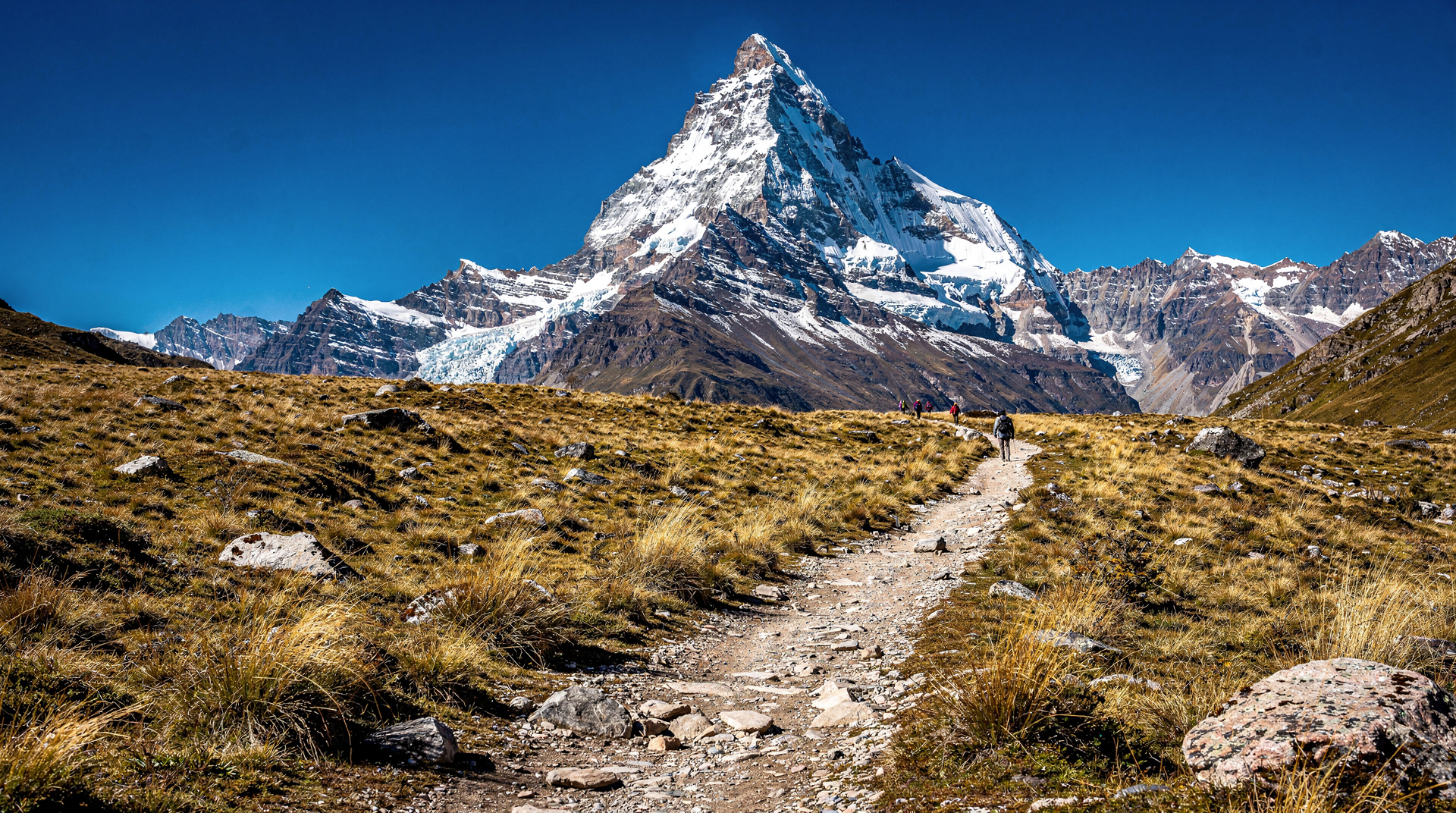
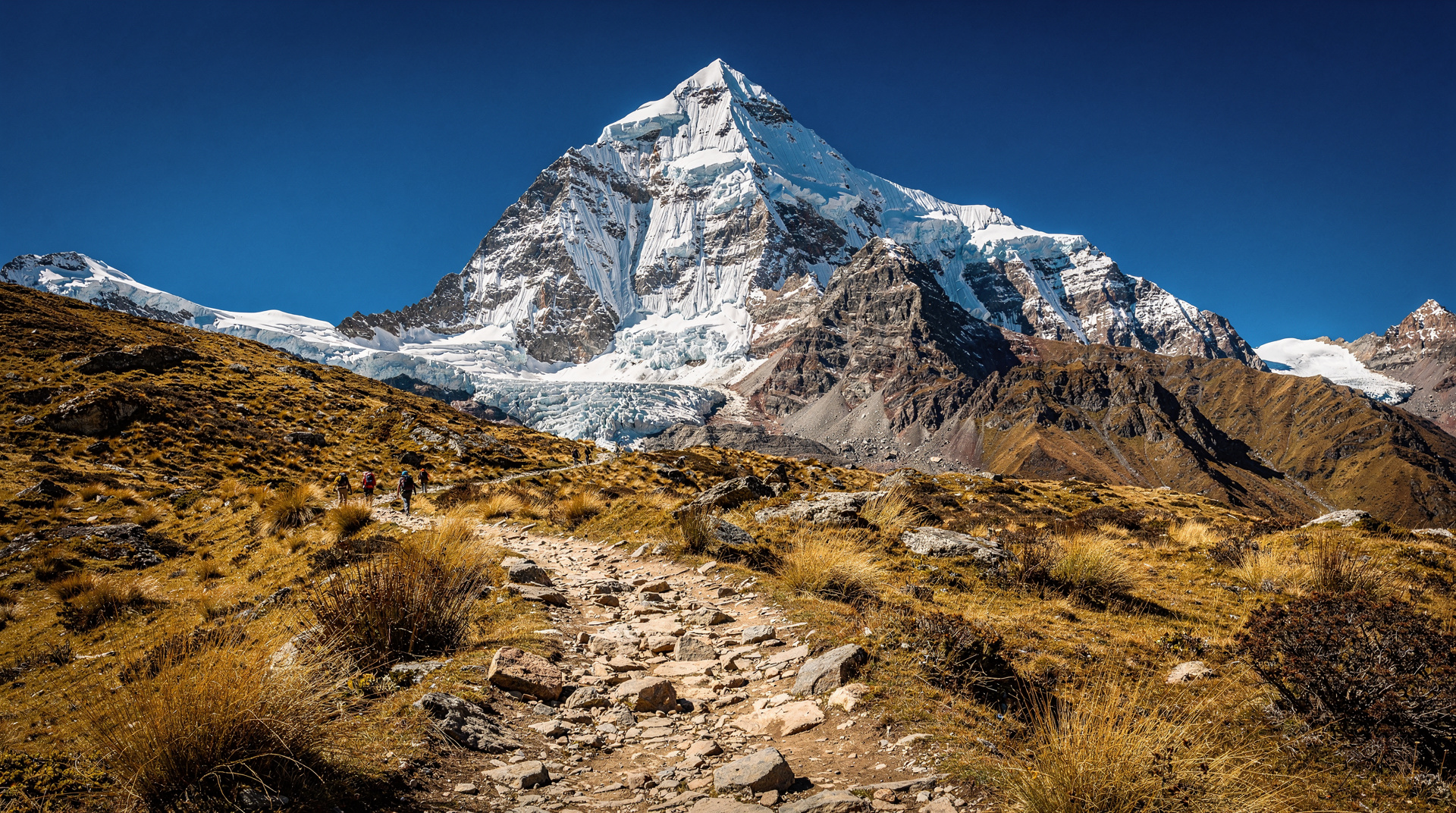
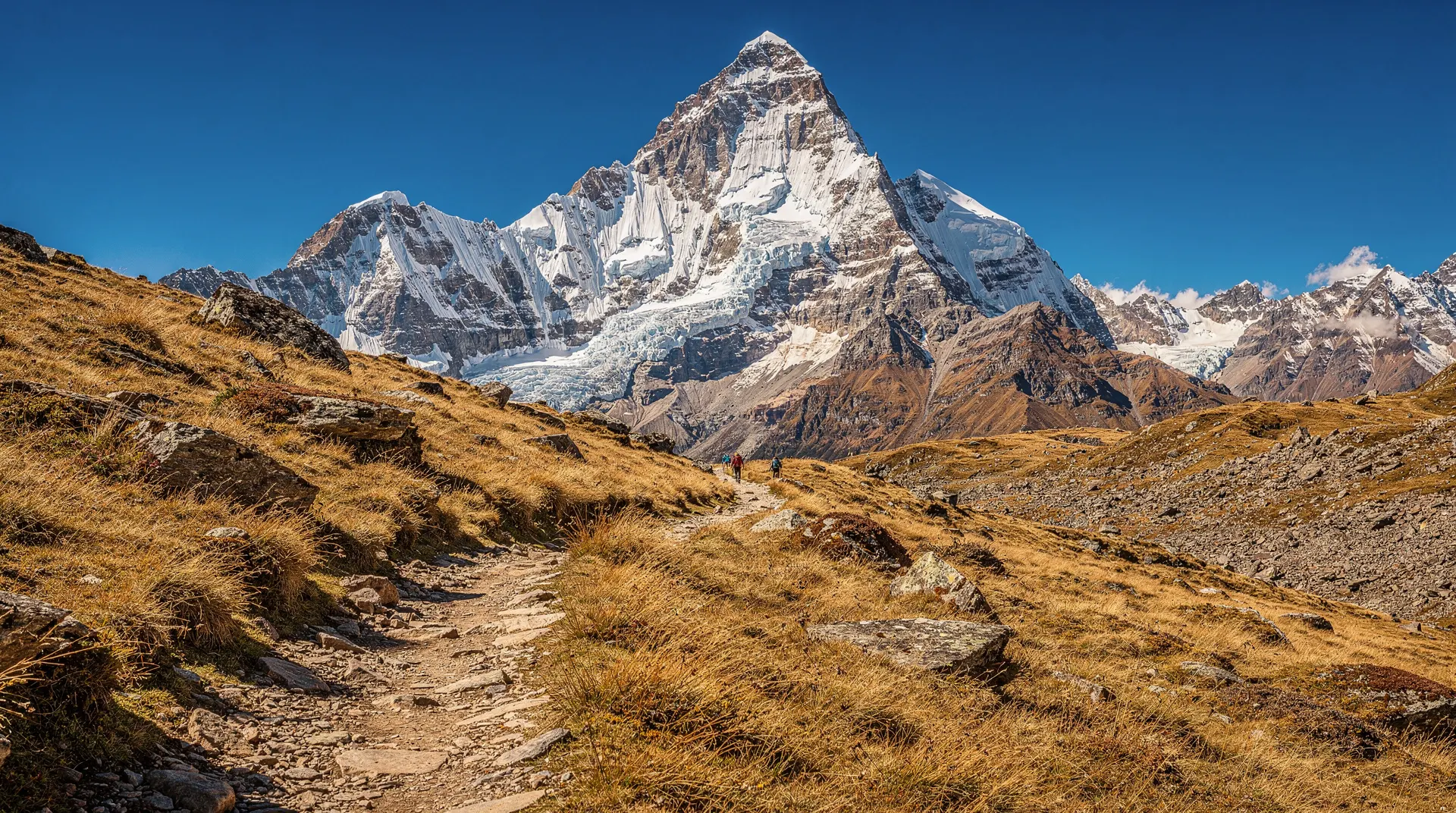
Day two: Salkantay Pass (4,630 m). The crux of the route. From Soraypampa (3,900 m), the trail climbs 730 m to the Salkantay Pass in a sustained ascent of 3–4 hours. The pass itself is a narrow col between the Salkantay massif on the left and the Humantay ridge on the right, with glaciers descending on both sides. The views at the top — back across the high Andes to the north and forward down the cloud forest valley to the south — are among the most dramatic on any trekking route in Peru. The descent from the pass drops 1,600 m over the afternoon, transitioning from alpine tundra to scrub forest to the first trees by camp.
Day three: cloud forest descent to Santa Teresa. The descent continues into the cloud forest zone, where orchids, bromeliads, and hummingbirds replace the llamas and vicuña of the high Andes. The temperature rises steadily as altitude drops. By Santa Teresa (approximately 1,500 m), you are in subtropical warmth, surrounded by fruit farms and coffee plantations, and the Santa Teresa hot springs are the standard end-of-day recovery. The contrast with the frozen pass 36 hours earlier is startling and deeply satisfying.
Day four: Aguas Calientes. The final approach to Machu Picchu’s gateway town follows the Vilcanota river valley, passing the Hidroeléctrica hydroelectric station and walking the rail line for the final stretch. This section — 2–3 hours on ballast beside the railway track — is the least exciting stretch of the entire route, though the valley scenery compensates.
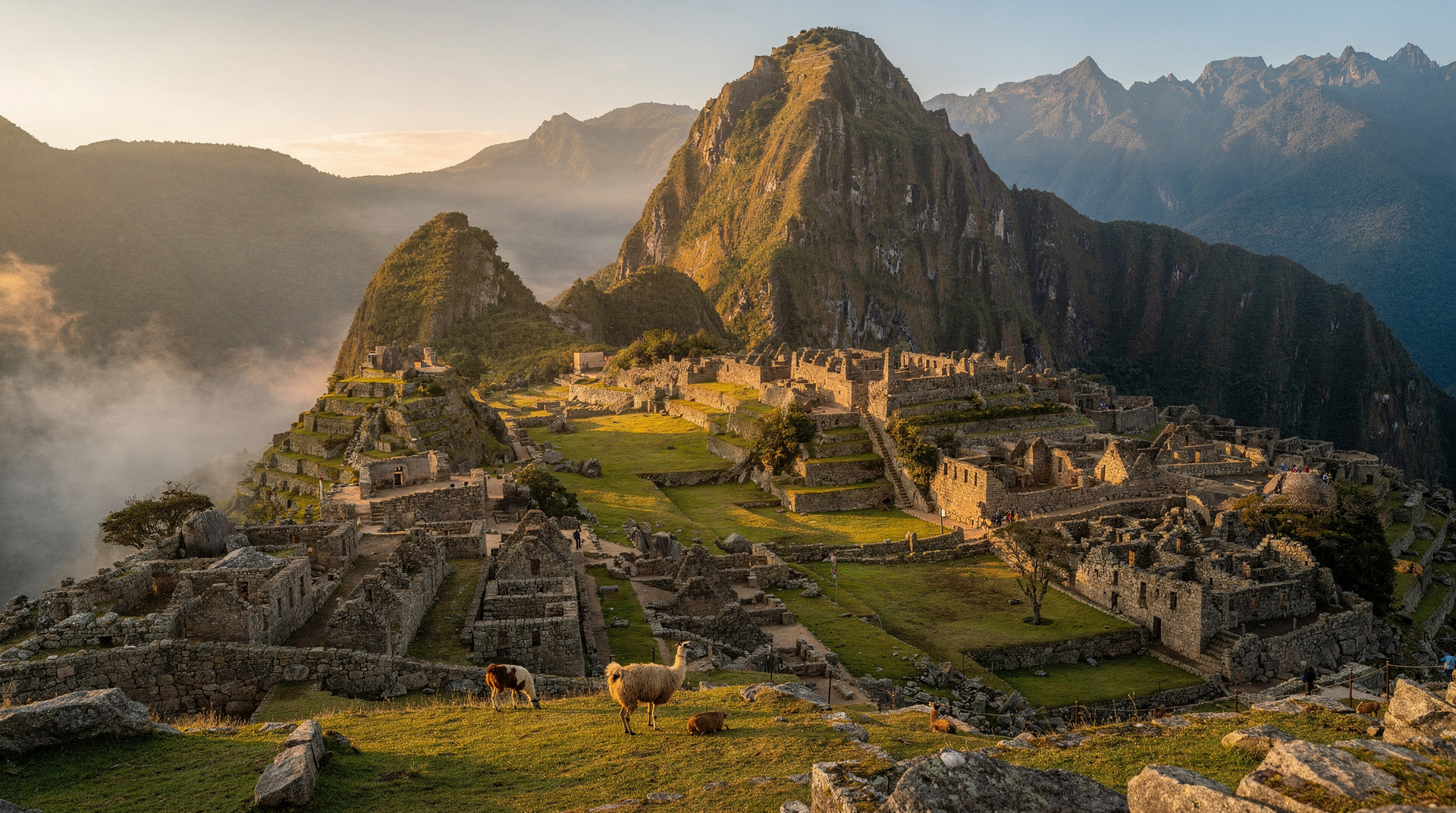
Day five: Machu Picchu. The destination. Most Salkantay itineraries build in an early bus from Aguas Calientes to the site, with the afternoon return to Cusco by train. Some operators arrange the final night in Aguas Calientes and a second day at Machu Picchu before the return — worth considering given how far you have walked to get there.
The high pass: what 4,630 m actually feels like
The Salkantay Pass sits at 4,630 m. It is lower than the Vinicunca summit (5,200 m) but higher than Humantay Lake (4,200 m), and the physical context is different from a high-altitude viewpoint: you are walking continuously for three to four hours before reaching it, under load, starting the ascent from a camp at 3,900 m in the cold before dawn.
The honest experience of the pass varies considerably by acclimatisation status. Trekkers who are well acclimatised — four or more nights at altitude before day two — typically find the ascent demanding but manageable. The gradient is steep but consistent, and the path is clear. Trekkers who are poorly acclimatised find day two one of the most physically brutal experiences of their travelling lives: severe breathlessness, headache, nausea, and the particular misery of a steep mountain climb when your body is fighting altitude.
The minimum acclimatisation recommendation is three nights in Cusco or the Sacred Valley before the trek begins. The Cusco acclimatisation plan lays out how to structure those days, and the altitude sickness guide identifies the symptoms that require a turn-back rather than a push-on. Acetazolamide (Diamox) is available at Cusco pharmacies and is worth discussing with a doctor before departure if you are concerned about your altitude response.
There is no dishonour in the pace at which you cross the pass. Everyone slows down at 4,500 m. The only pace that matters is the one that gets you there without incapacitating you for day three.
Salkantay versus Inca Trail
The Inca Trail versus Salkantay guide covers the comparison in depth, but the key variables for most travellers are these:
Permits: The Inca Trail requires advance booking — sometimes months in advance in peak season (June–August). Salkantay has no permit requirement and can be booked days before departure.
Archaeology: The Inca Trail passes through a sequence of ruins including Sayaqmarka, Phuyupatamarka, and Wiñay Wayna before the final approach to Machu Picchu’s Sun Gate. Salkantay has no significant archaeological sites along the route. If ancient Inca infrastructure is your primary interest, the Inca Trail delivers something Salkantay does not.
Landscape variety: Salkantay’s range — high alpine pass, cloud forest, subtropical valley — is greater than the Inca Trail’s, which operates mostly in cloud forest and highland terrain. The Salkantay high pass at 4,630 m is a more dramatic physical experience than the Inca Trail’s Dead Woman’s Pass (4,215 m).
Cost: Salkantay tours run approximately S/1,050–1,750 ($280–500) per person for a five-day trek with guide, porter support, meals, and accommodation. The Inca Trail, with its permit fee structure, guide requirements, and more developed infrastructure, typically costs $650–800 per person.
The honest verdict: If you can get an Inca Trail permit, the combination of Inca archaeology and the Sun Gate arrival is genuinely extraordinary. If you cannot — or if cost is a material factor — Salkantay is not a consolation prize. It is a different, physically harder, and in many ways more varied route that a significant number of returning trekkers rate as the better experience.
| Salkantay | Inca Trail | |
|---|---|---|
| Permit | None needed | Required, books out months ahead in peak season |
| Highest point | 4,630 m | 4,215 m (Dead Woman’s Pass) |
| Archaeology en route | None significant | Sayaqmarka, Phuyupatamarka, Wiñay Wayna, Sun Gate |
| Landscape variety | Alpine pass, cloud forest, subtropical valley | Mostly highland and cloud forest |
| Typical cost | $280–500 | $650–800 |
If neither route’s pace suits you, the best treks to Machu Picchu guide covers the Lares trek and the Inca Jungle route as further alternatives.
What the trek costs and what it includes
A 5-day Salkantay trek from Cusco typically includes transport from Cusco, guide and porter services, all meals on the trek, and accommodation ranging from basic camping to lodge-based stays depending on the operator and price point. The five-day format with overnight in Aguas Calientes costs approximately $350–500 per person.
The four-day compressed versions (Salkantay 4-day 3-night route) cut the timing by combining the first two days into a longer single push, which is physically harder and significantly reduces the enjoyment of the descent. The five-day version is almost always worth the extra day and modest additional cost.
Budget camping operators at the lower end of the price range provide functional kit and capable guides, but the sleeping conditions in the high camp near the pass can be genuinely cold. A sleeping bag rated to -10°C is essential regardless of what the operator provides.
Practical details
Season: May–September for reliable weather. The pass is most stable in June and July, though those months also see the most other trekkers on the route. May and September offer good weather with slightly fewer groups. October and April are possible but come with real risk of the pass being snow-covered or the cloud forest sections muddy and miserable. November–March is wet season; many operators suspend the route or issue strong weather warnings. The pass can receive significant snow at any point in wet season.
Fitness requirement: The Salkantay Pass day is demanding at any fitness level. Being reasonably fit — able to walk continuously for six or more hours on uneven ground — is the honest baseline. People who do not exercise regularly in their daily lives sometimes manage it; people who were doing regular cardio in the weeks before the trip consistently have a better experience. The cloud forest days (days three and four) are long but gentle.
Porter ethics: The porter industry on the Salkantay is less regulated than on the Inca Trail, where weight limits and porter protections are enforced by the national park. When choosing an operator, look for evidence of fair porter treatment: paid above the regional minimum, given adequate food and shelter, carrying weights within reasonable limits. Paying slightly more for a responsible operator has a direct impact on the people making your trek possible.
What to pack: Sleeping bag (-10°C minimum), trekking poles, waterproof jacket and trousers, warm layers for the high camp, lightweight warm-weather clothes for the cloud forest days, sunscreen, sunglasses, at least 3 litres of water capacity, basic first aid including personal altitude medication. The Salkantay trek guide includes a detailed packing checklist.
Machu Picchu entry: The Machu Picchu site has timed entry slots that sell out in advance during peak season. If your Salkantay operator does not include Machu Picchu tickets in the package, book them independently before you leave Cusco. Arriving at Aguas Calientes after five days of trekking without a ticket to the site is a preventable disaster.
The Salkantay trek is the route for people who want to earn Machu Picchu through a genuine physical experience — one that crosses a glaciated 4,630 m pass, drops through two distinct climate zones, and takes five days of honest effort to complete. The site is the same at the end. The journey there is completely different.
Frequently asked questions about Salkantay Trek
Is Salkantay harder than the Inca Trail? Most trekkers who have done both rate the Salkantay Pass day as physically harder than any single day on the Inca Trail — the 4,630 m altitude is higher than Dead Woman’s Pass (4,215 m) and the sustained ascent from a 3,900 m camp is demanding even for fit, acclimatised walkers.
Can I book Salkantay last minute in Cusco? Yes — unlike the Inca Trail, Salkantay has no permit system, so reputable agencies in Cusco can typically arrange a departure within a few days. Booking a week or more ahead still gets you better operator choice and porter-ethics vetting, but it’s genuinely possible to arrange on short notice.
Top experiences
Bookable activities with verified prices and instant confirmation on GetYourGuide.