Machu Picchu
Everything you need to visit Machu Picchu: tickets, circuits, trains, best times, and honest tips on what the crowd photos don't show.
From Cusco: Machu Picchu Day Trip with Train Tickets
Quick facts
- Country
- Peru
- Altitude
- 2,430 m / 7,970 ft
- Currency
- Peruvian sol (S/) — USD widely used
- Best for
- Inca archaeology, iconic scenery, bucket-list hiking
One of the world’s great sites — and how to do it justice
Machu Picchu sits at 2,430 m on a ridge above the Urubamba River in the cloud forest of southern Peru. Built in the mid-15th century under the Inca emperor Pachacuti and abandoned within a century, it was unknown to the outside world until Hiram Bingham brought it to international attention in 1911. Since then it has become one of the most visited archaeological sites on Earth, a UNESCO World Heritage Site, and one of the New Seven Wonders of the World.
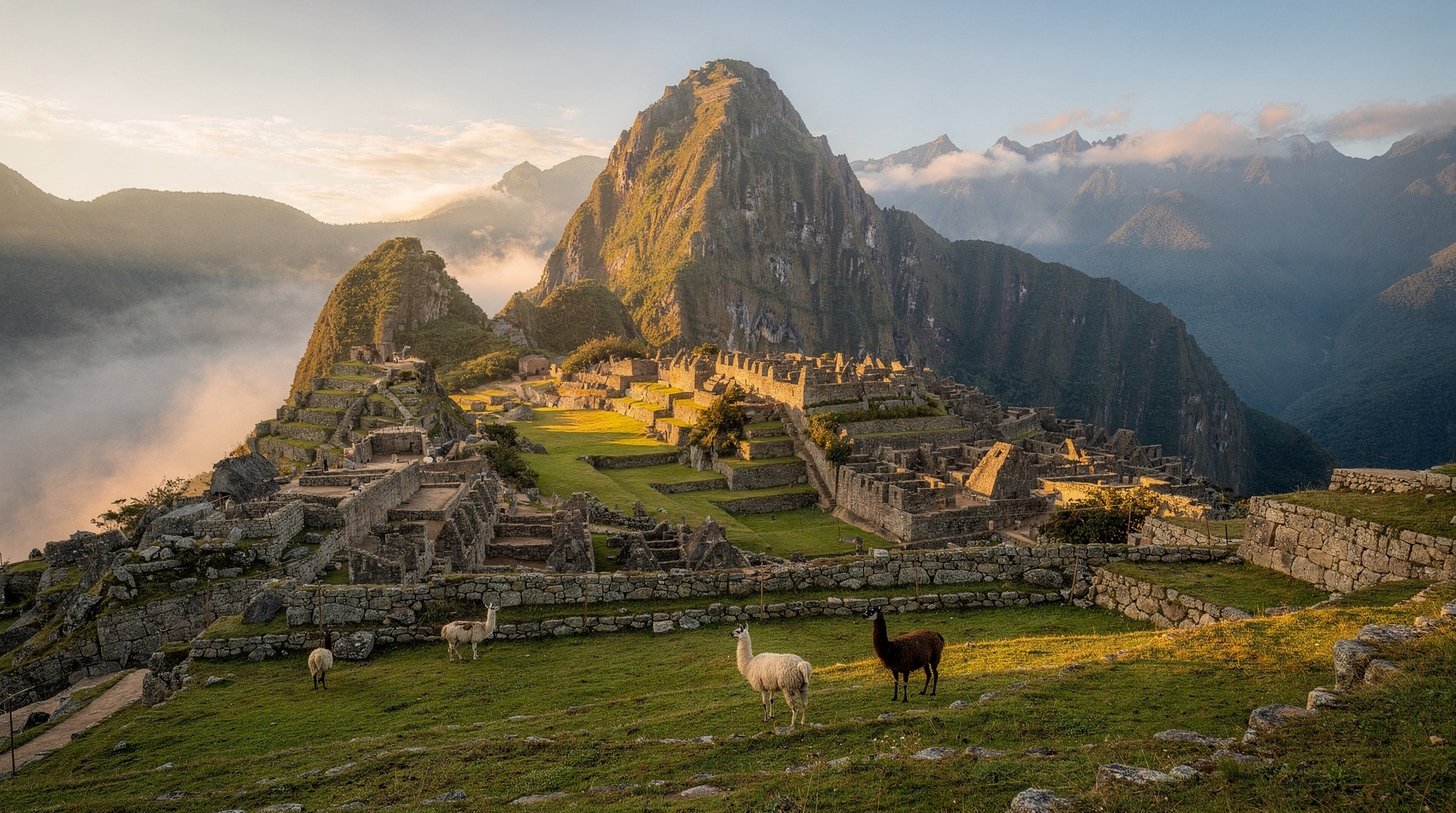
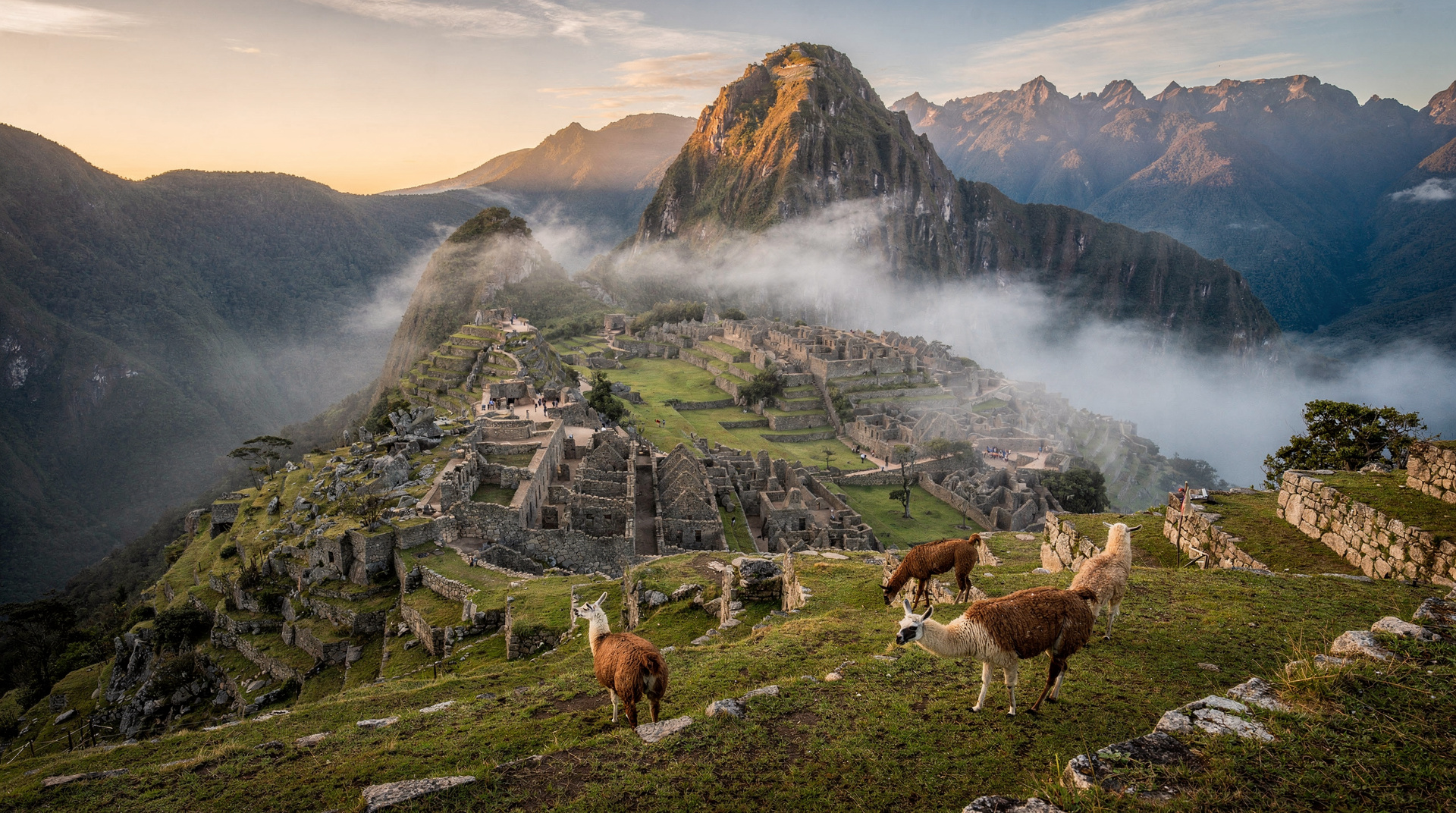
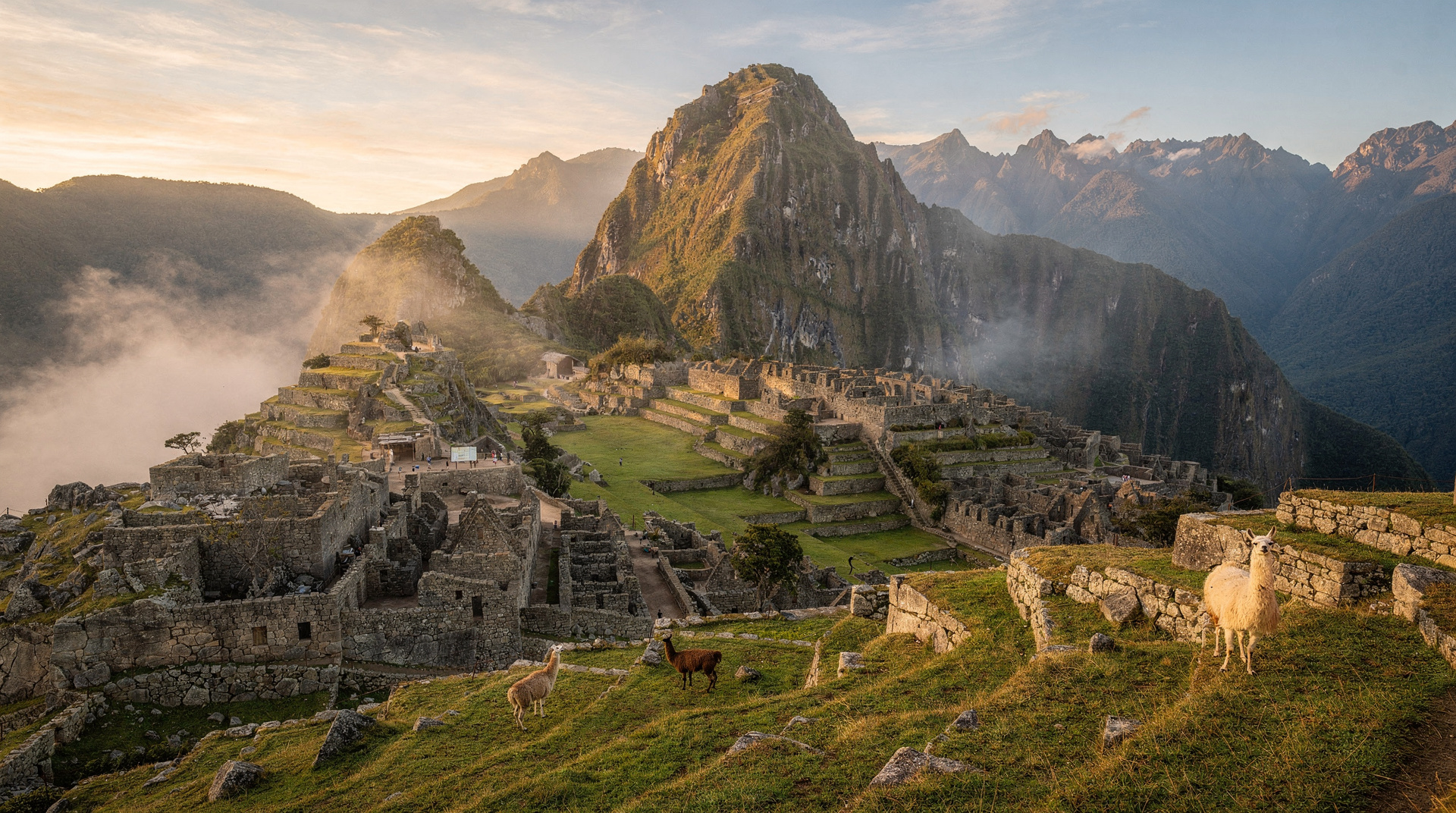
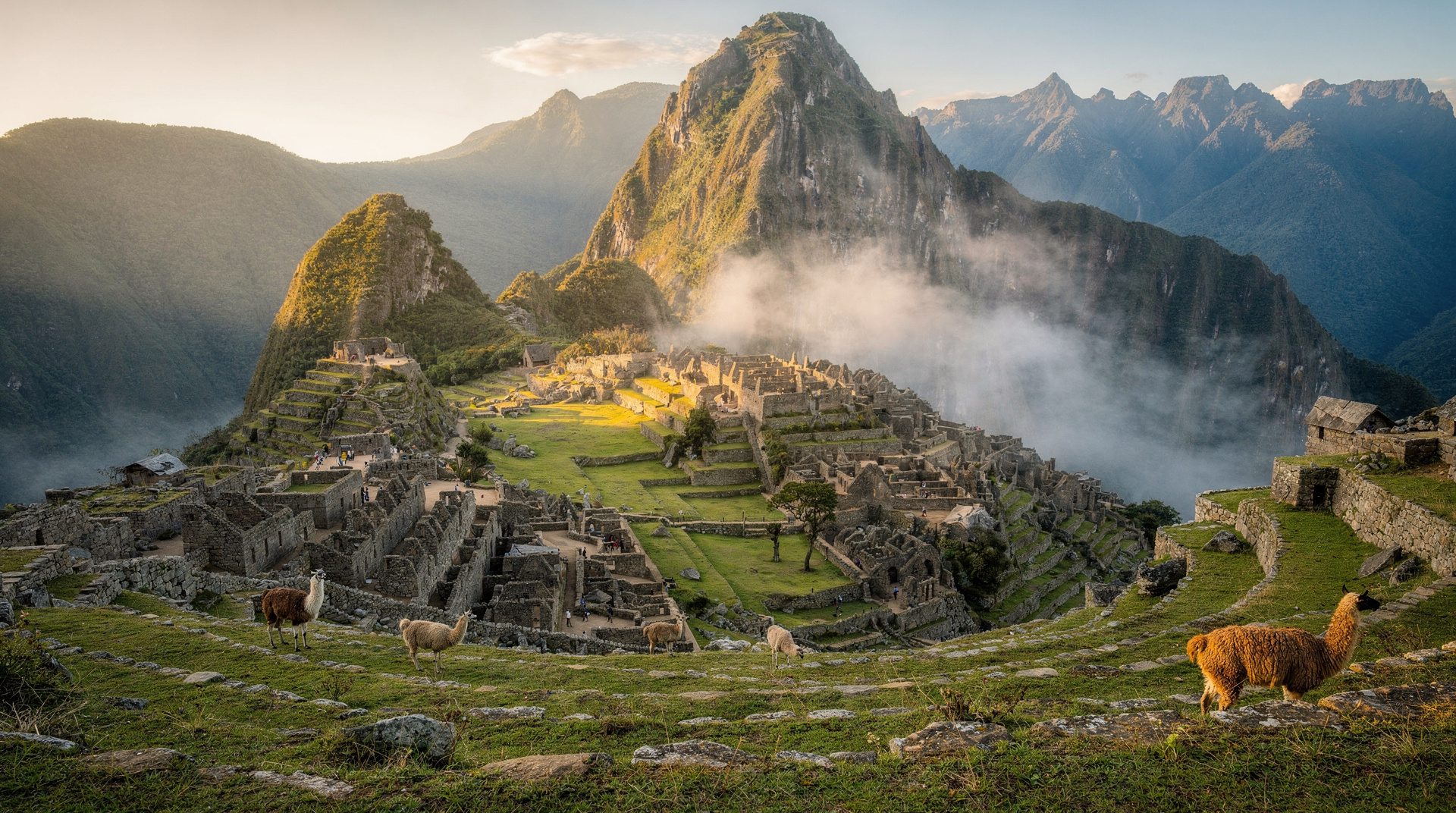
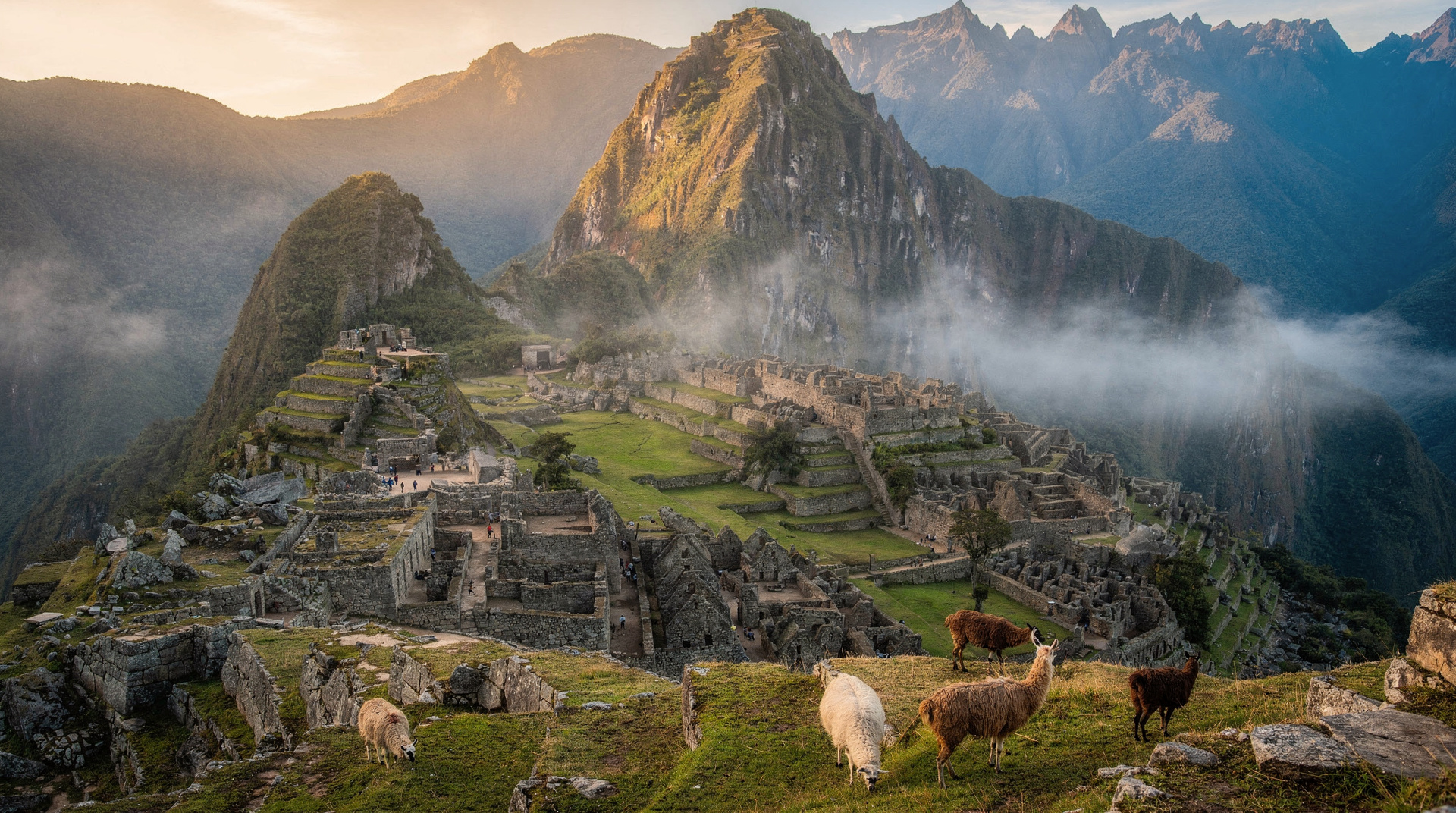
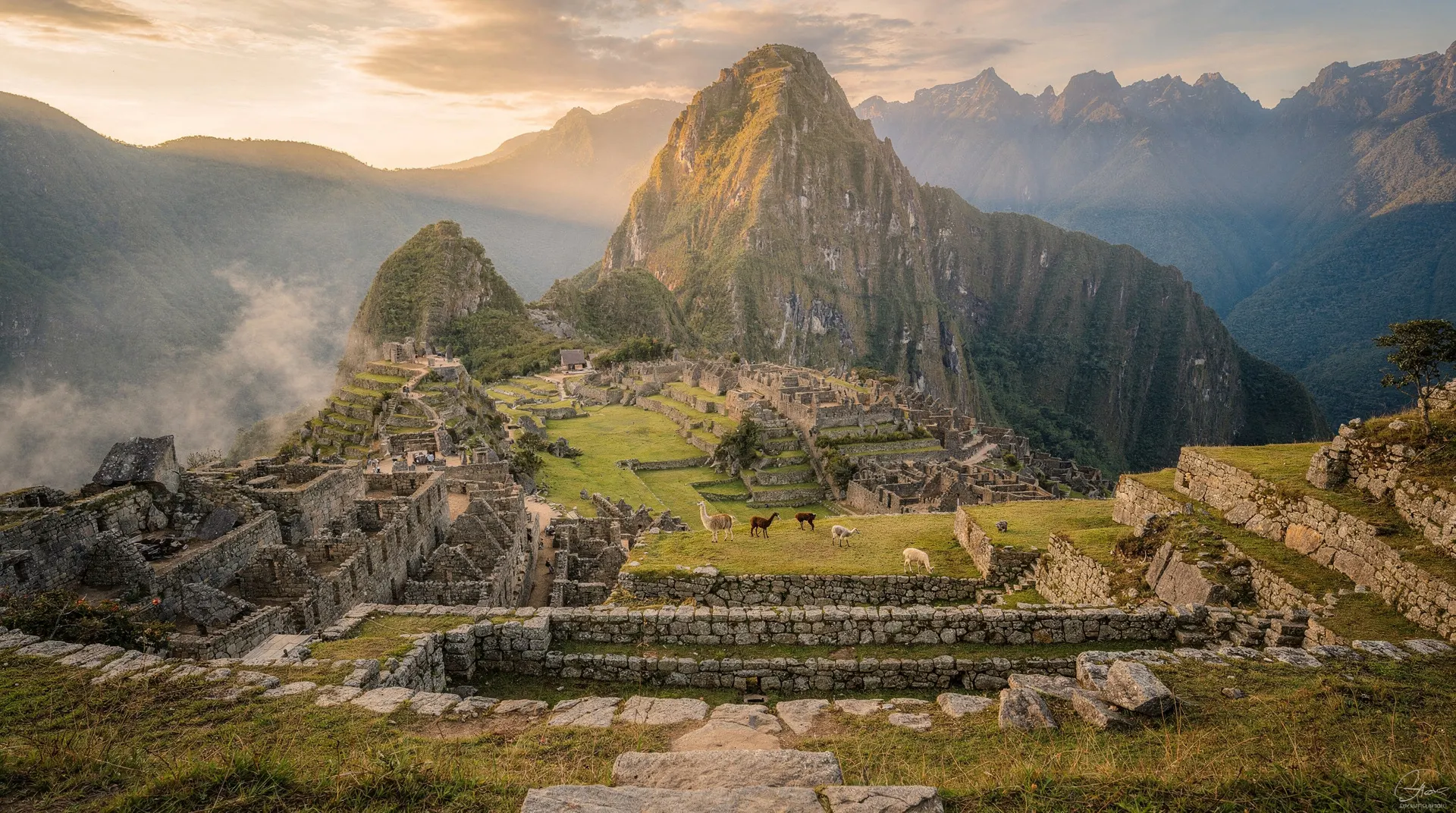
The photographs — terraces cascading down toward jungle, the pointy peak of Huayna Picchu in the background, mist drifting across stone temples — are accurate. But they don’t convey the scale, the engineering precision, or the peculiar silence that settles over certain corners of the site even at peak season. Machu Picchu is one of the rare world-famous attractions that exceeds expectations when you arrive.
This guide covers what you genuinely need to know: how to get a ticket, which circuit to choose, how to get there, and how to make the most of your time whether you have one day or two.
| Where | Cusco region, Peru — 2,430 m, above the Urubamba River |
| Cost | Circuit ~S/152 ($45); Huayna Picchu/Mountain add-on ~S/100–120 |
| Time needed | 1 day is enough; 2 days if climbing Huayna Picchu or Machu Picchu Mountain |
| Getting there | Bus/taxi to Ollantaytambo, then train to Aguas Calientes, then shuttle bus |
| Best time | May–September (dry, busier); April/October are quieter shoulder months |
Understanding the ticket system
Since June 2024, visiting Machu Picchu requires a ticket for a specific circuit, route and hourly entry slot. Tickets are sold online at tuboleto.cultura.pe or, in person, at the Ministry of Culture counter in Machu Picchu Pueblo (entry the day after purchase), and are linked to a specific passport number. Tickets cannot be transferred. See the full tickets and circuits guide before booking.
There are three circuits, grouping ten routes. There is no “Circuit 4”:
- Circuit 1 (Panorámico) — routes 1-A (Machu Picchu Mountain), 1-B (upper terrace, a viewpoint route that does not enter the urban sector), 1-C (Sun Gate, Intipunku) and 1-D (Inca Bridge). Routes 1-C and 1-D are available in high season only.
- Circuit 2 (Machu Picchu Clásico) — routes 2-A (the urban sector: Temple of the Sun viewpoint, Intihuatana, Sacred Rock, Temple of the Condor) and 2-B (lower terrace).
- Circuit 3 (Machu Picchu Realeza) — routes 3-A (Huayna Picchu), 3-B (another route through the urban sector), 3-C (Great Cavern) and 3-D (Huchuy Picchu). Routes 3-C and 3-D are high season only.
Entry is by the main gate, with one slot per hour from 6:00 to 15:00. Check your exact route and slot on tuboleto.cultura.pe.
Entry prices (as of 2026): adults S/152 ($45) per circuit. Since 1 May 2026 the SERNANP protected-area authority also charges a separate sanctuary fee of S/11 per foreign adult (S/5 for ages 3–17, free under 3), not applied on the Inca Trail network; check the final amount at checkout on the official site. Huayna Picchu (route 3-A) and Machu Picchu Mountain (route 1-A) are routes you choose when booking (~S/100–120 each, with limited daily slots). Book them well ahead — they sell out weeks in advance.
Buy via the official government portal (tuboleto.cultura.pe) or through an authorised agency. Never buy through unofficial agents who claim to have “spare” tickets; these are frequently fraudulent.
Circuit 3 with guide covers the Realeza circuit and is particularly recommended for visitors with a second half-day at the site.
The main sites within the citadel
The Hut of the Caretaker and the Sun Gate viewpoint
The postcard view of Machu Picchu — the full sweep of terraces with Huayna Picchu behind — is taken from the ridge above the site near the Hut of the Caretaker. Reaching this vantage point requires climbing roughly 20 minutes of steep stone stairs from the main entrance. The effort is worthwhile. Go early in your visit before the morning mist burns off completely if you want that atmospheric cloud effect; go after 9 am if you want clear blue sky.
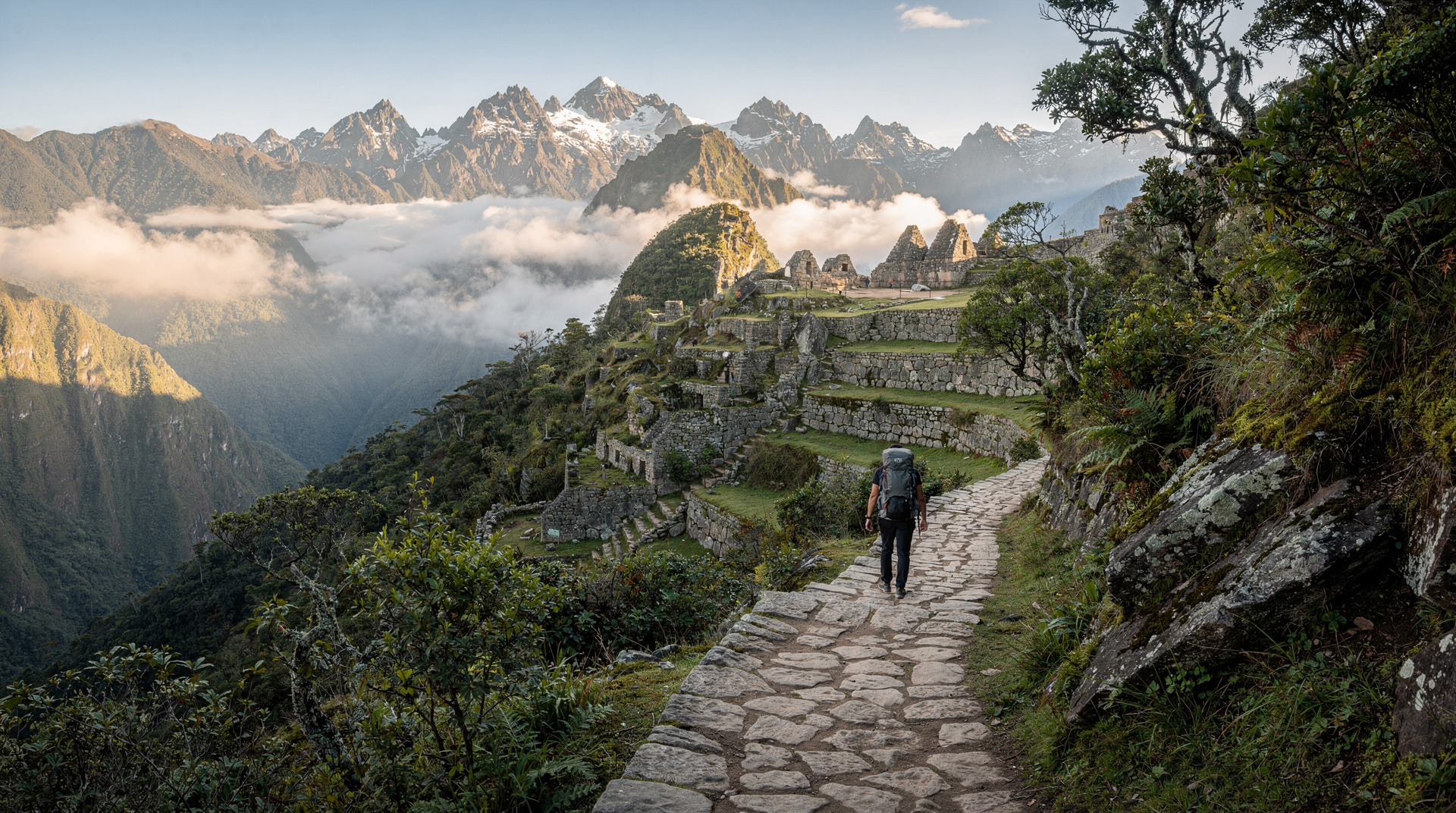
The Sun Gate (Inti Punku), a further 45-minute uphill walk from the citadel, is the point where Inca Trail trekkers arrive at dawn. The view back down onto the citadel is different from and arguably superior to the classic hut viewpoint. It is reached via route 1-C of Circuit 1, which is available in high season only.
The Temple of the Sun
The most astronomically precise building at Machu Picchu, built with stones fitted so perfectly that not even a knife blade can slide between them. During the June solstice sunrise, light enters a trapezoidal window and illuminates a sacred stone with extraordinary accuracy. Most visitors walk past it quickly; spending five minutes here repays the time.
The Intihuatana stone
The “hitching post of the sun” is a carved granite block that served as an astronomical calendar. Machu Picchu’s is one of the very few Intihuatana stones never smashed by the Spanish, who destroyed similar stones elsewhere in the Inca Empire as part of their campaign against indigenous religion. It sits at the highest point of the urban sector.
Huayna Picchu
The steep pyramid-shaped peak that appears in the background of the classic photo. Climbing it is route 3-A of Circuit 3 (sold out months ahead during high season), involves near-vertical stone steps with rope handholds, and takes 1–2 hours round trip. The summit view looking down onto the citadel is spectacular and unlike anything from within the site. Not suitable for anyone with vertigo; genuinely strenuous. Book as early as possible if this is a priority. Huayna Picchu tickets are among the fastest-selling slots at the site.
Machu Picchu Mountain (the quieter alternative to Huayna Picchu)
Machu Picchu Mountain is the taller, broader peak on the opposite side of the citadel from Huayna Picchu, and it deserves more attention than it gets. The trail is longer (2–3 hours round trip) and less exposed than Huayna Picchu’s rope-and-stair scramble, with wide switchback stairs rather than near-vertical steps. Tickets sell out more slowly than Huayna Picchu’s, which makes it the more realistic option if you are booking a few weeks rather than months ahead.
The summit view looks back down onto the citadel from a greater distance, taking in the full sweep of the valley and, on a clear day, snow-capped peaks well beyond Aguas Calientes. The Huayna Picchu versus Machu Picchu Mountain comparison breaks down which suits which kind of visitor, and the full ticket types comparison shows exactly how the add-on tickets interact with your main circuit entry.
How to get to Machu Picchu
The town of Aguas Calientes sits directly below the citadel and is the overnight base for most visitors. Getting there from Cusco involves at least one train segment.
Via train from Ollantaytambo: The most popular route. Take a bus or taxi from Cusco to Ollantaytambo (~90 minutes), then board a PeruRail or Inca Rail train to Aguas Calientes (1.5 hours). Round-trip train tickets cost roughly $60–130 depending on service class and how far ahead you book. From Aguas Calientes, a bus up to the citadel entrance costs S/80 ($24) return. The full trains to Machu Picchu comparison breaks down all service options.
A day trip from Cusco including train, bus and entrance ticket is the most convenient option for first-timers — logistics are handled, and you are not juggling multiple separate bookings.
Via the Inca Trail: A 4-day, 3-night trek arriving through the Sun Gate at dawn on day four. The 4-day Inca Trail is the classic version, though the 2-day short Inca Trail also enters through the Sun Gate. Permits are limited and sell out months ahead; February closure applies to the full trail. See the Inca Trail complete guide for permits, agencies and preparation.
For the full range of transport options from Cusco including car and minivan routes, see how to get to Machu Picchu.
One day vs two days
One day is enough to walk a circuit, see all the main structures, and feel satisfied. It is the most common format and it works. To make it work well: arrive on the first morning bus from Aguas Calientes (departures start around 5:30 am), use a guide for at least the first 1.5 hours, and stay until early afternoon when most of the day-trippers are heading back down.
Two days makes sense if you want to climb Huayna Picchu or Machu Picchu Mountain, explore the full circuit at a relaxed pace, or visit during peak season when a single day can feel rushed. Staying overnight in Aguas Calientes means you can enter with the very first bus — often with a near-empty site for 30–45 minutes before the crowds build. The 2-day Machu Picchu by train package handles both days of tickets, transport and accommodation logistics together.
A guided experience at Machu Picchu with a licensed guide significantly increases what you absorb. A half-day guided tour of the citadel typically covers the main urban sector with a 2-hour structured explanation before you are free to explore independently.
Best time to visit
The best time to visit Machu Picchu is nuanced, but the broad picture:
May–September is dry season. Sunny mornings (mist often clears by 9–10 am), cold nights in Aguas Calientes, peak crowds in July–August. June and July see the highest prices and fully booked trains weeks ahead. May and September offer nearly the same weather with noticeably fewer people.
October and April are excellent shoulder months — reasonable weather, thinner crowds, lower prices.
November–March is rainy season. The site is dramatically misty and lush. Rain typically falls in the afternoons. The Inca Trail is very muddy; the full trail closes all of February. The site itself remains open year-round. Prices drop significantly.
The month-by-month Machu Picchu guide breaks down conditions in more detail if your travel dates are fixed and you want to know exactly what to expect.
Altitude at Machu Picchu vs. Cusco
At 2,430 m, Machu Picchu itself sits nearly 1,000 m lower than Cusco, which is one reason many visitors feel noticeably better here than in the city. That does not mean altitude is irrelevant to your trip — you will typically pass through Cusco or the Sacred Valley first, and arriving at Machu Picchu already acclimatised makes the day’s walking far more enjoyable. The Cusco acclimatisation plan is worth reading before you fly in, especially if Huayna Picchu or Machu Picchu Mountain is on your list — both climbs are far more strenuous if your body is still adjusting.
Honest tips
Arrive early: The first 30–45 minutes after the gate opens are visibly quieter. The midday crush between 10 am and 2 pm is when most photos look crowded and moving between sections is slowest.
Bring water and snacks: The only food available inside the site is at the Machu Picchu Sanctuary Lodge at exorbitant prices (sandwiches ~S/60+). Pack water (at least 1.5 litres for a full-day visit) and snacks before boarding the bus from Aguas Calientes.
Dress in layers: At 2,430 m, the temperature difference between standing in sun versus cloud shadow is significant. Rain can arrive in minutes year-round. A lightweight waterproof layer is worth carrying regardless of the forecast.
Do not touch the stones: Signs are everywhere and guides repeat it, but it still happens. Fingerprint oils accelerate erosion. The preservation of what you are seeing depends on people respecting this.
Skip the overpriced bus if you are fit: The walk up from Aguas Calientes to the citadel entrance takes about 45–60 minutes on the Inca path (Camino Hiram Bingham) and saves you S/80. Descending on foot is equally easy and faster. This is particularly worthwhile on the way down.
Plan your visit
If you have one day: book the morning time slot (8 am or earlier), choose Circuit 2 (Clásico), hire a guide at the gate or book a guided citadel experience in advance, stay until early afternoon.
If you have two days: book Huayna Picchu (Circuit 3) for day one morning and Circuit 2 for day two; stay overnight in Aguas Calientes to get the early entry advantage both days.
However you arrive — by train, by trek, or by the longer road route — Machu Picchu is worth every logistical headache. Plan ahead, book early, and give yourself enough time to move slowly through the site. The complete Machu Picchu guide ties all the strands together and is the best single reference before you book anything.
Frequently asked questions about Machu Picchu
Can I visit Machu Picchu without a guide? No — since the 2024 circuit rules, every visitor must be accompanied by a licensed guide for at least part of the visit, and solo unguided entry is not permitted on any circuit. Group guides are included with most tour tickets; a private guide costs more but sets your own pace.
Is one day at Machu Picchu enough, or should I plan two? One day is genuinely enough to see the main structures and walk a circuit comfortably. Add a second day only if you want to climb Huayna Picchu or Machu Picchu Mountain, or if you are visiting in peak season (July–August) and want the early-entry advantage of overnighting in Aguas Calientes.
Top experiences
Bookable activities with verified prices and instant confirmation on GetYourGuide.