Inca Trail complete guide: everything you need to know
From Cusco: 4-Day Inca Trail Guided Trek to Machu Picchu
What do I need to know about hiking the classic Inca Trail?
The classic 4-day Inca Trail requires a government permit (book months ahead, sold out fast), costs $650–800 per person all-in, reaches 4,215 m at Dead Woman's Pass, and is closed every February. Dry season May–September is best. You arrive at Machu Picchu via the Sun Gate on day four — the only route that does so.
The route that requires a plan months in advance
The classic Inca Trail is one of the most logistically demanding hikes in South America — not because of the terrain, which is challenging but entirely achievable for a reasonably fit person, but because of the permit system. Understanding that system before everything else is the most useful thing this guide can do for you.
| Distance / duration | 43 km over 4 days / 3 nights |
| Max altitude | 4,215 m (Dead Woman’s Pass) |
| Cost | around $650–800/person all-inclusive |
| Permit | required, book months ahead via licensed operator |
| Best season | May–September (dry season) |
| Closed | all of February |
The Peruvian government caps daily numbers on the Inca trail network at 750 visitors per day, and the permits for trekkers are limited accordingly. Those permits are allocated months in advance, sell out quickly for peak dates, and cannot be transferred. If you understand nothing else from this guide, understand this: book the permit before you book flights, hotels, or anything else. A Cusco flight with no permit is a very expensive problem in high season.
This guide covers the full picture — the route day by day, what it costs, the altitude reality, the permit booking process, and what to bring. It is designed to be the single document you need before committing to the trek.
What the route actually is
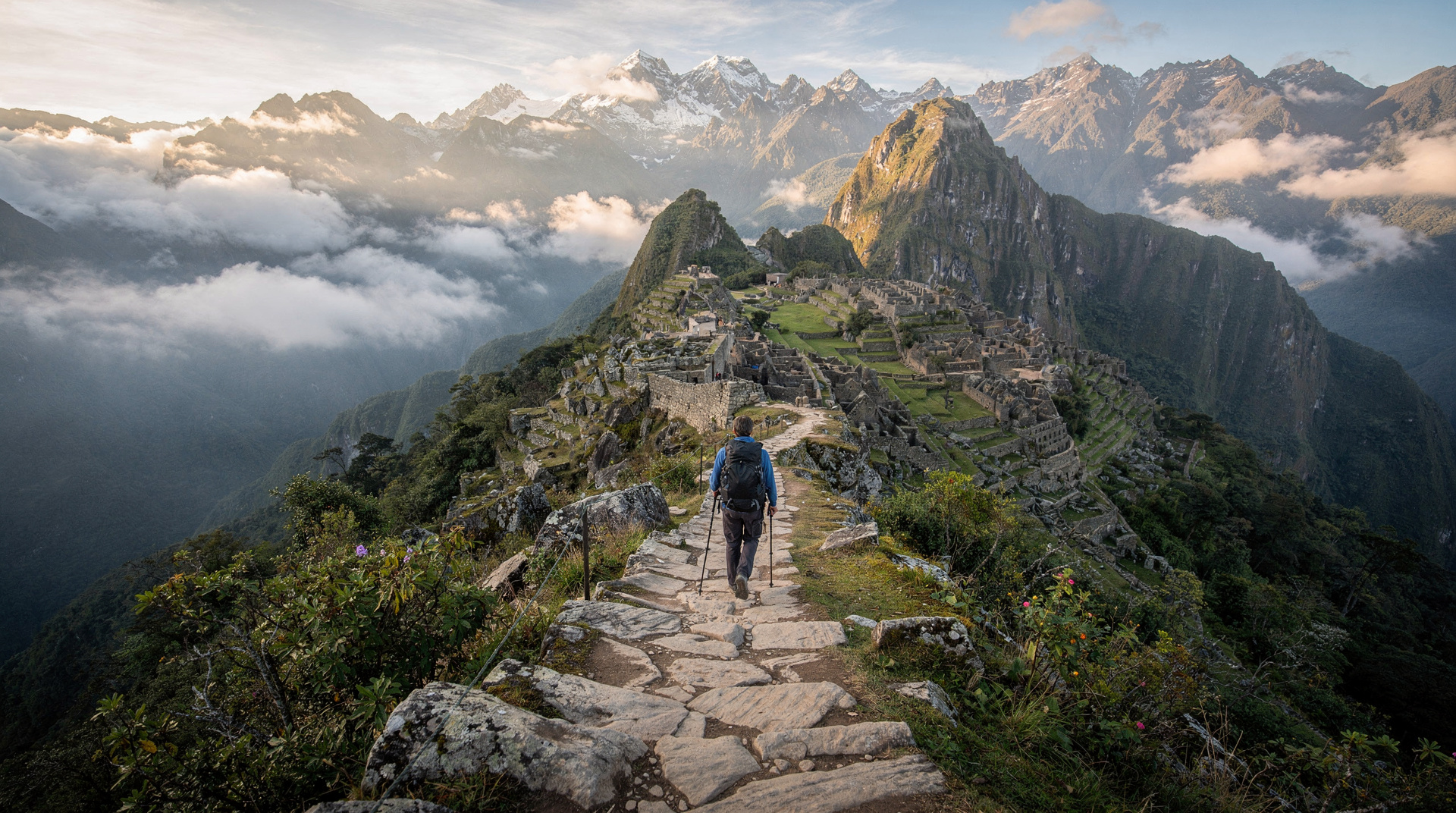
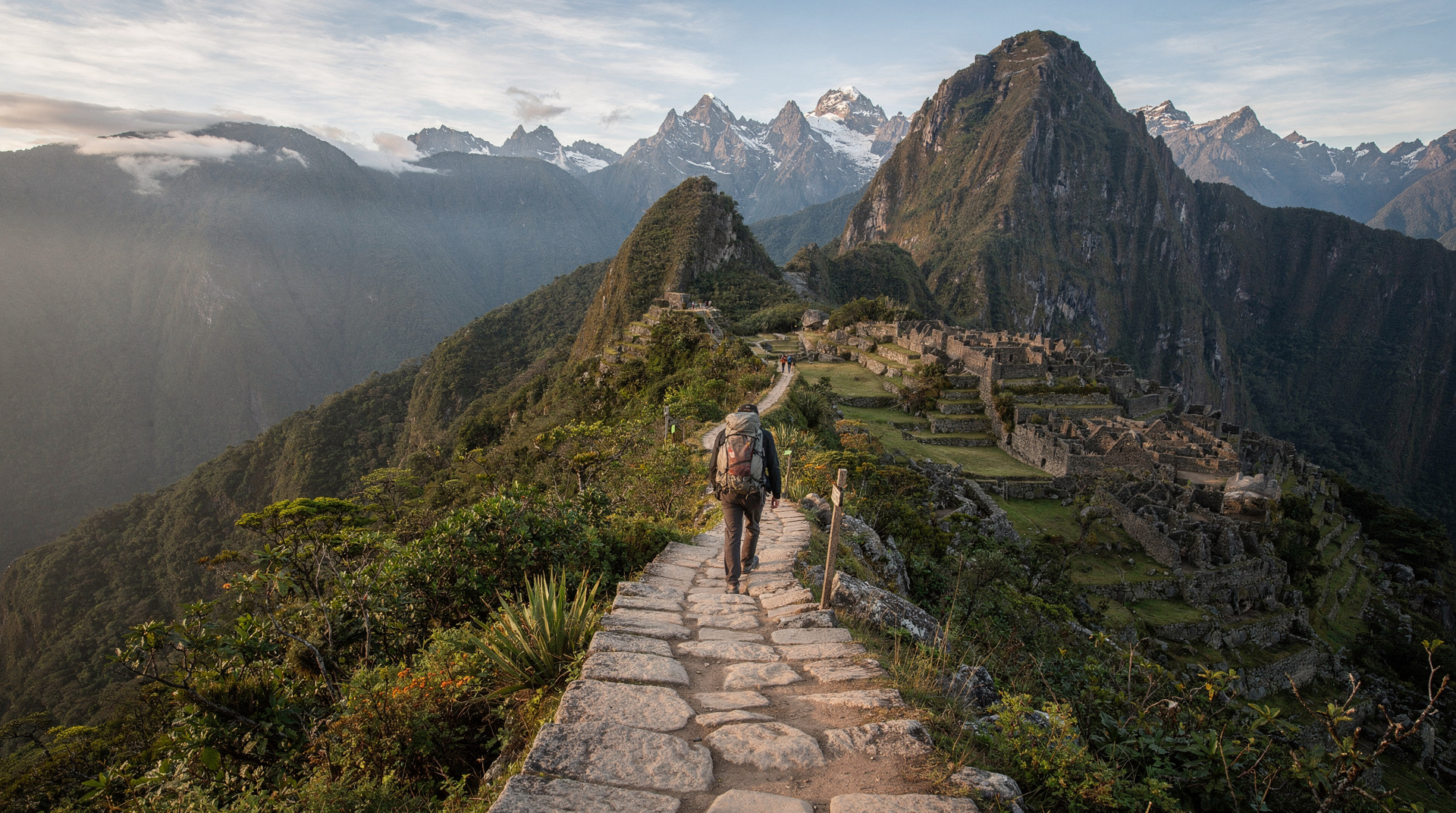
The Inca Trail is a 43 km walking route through the Andes from Piscacucho (also called the Km 82 marker on the Cusco–Aguas Calientes railway line) to Machu Picchu, following the original Inca paved road through three distinct mountain ecosystems and past six major archaeological sites. It ends at the Intipunku — the Sun Gate — on the morning of day four, with Machu Picchu visible below.
That final approach, walking in through the Inca’s own ceremonial entrance, is what no other route to the site replicates. The Salkantay trek is longer, higher, and arguably more dramatic in landscape; the Lares trek passes through more Quechua communities; the Inca Jungle trek descends by bicycle and raft. None of them arrive at Machu Picchu through the Sun Gate. That is the Inca Trail’s singular advantage.
The route crosses three passes: Dead Woman’s Pass (4,215 m) on day two, Runkurakay Pass (3,998 m) later on day two, and a third pass on day three before descending to the Wiñay Wayna camp. The highest point — Dead Woman’s Pass — is reached on day two, and the trail descends progressively toward Machu Picchu at 2,430 m over days three and four.
Day-by-day: what you will walk through
Day one — Km 82 to Wayllabamba (12 km, ~5 hours, reaching 3,000 m)
The trail begins at Piscacucho, roughly two hours by minibus from Cusco in the early morning. The first day is the warm-up: a gentle river-valley walk through scrub and eucalyptus forest, crossing the Cusichaca river and climbing gradually to the Wayllabamba campsite at around 3,000 m. The first archaeological site, Llaqtapata, appears early in the day — a lower-altitude farming complex with terracing and storage facilities that introduces the Inca land-use patterns the rest of the trail elaborates on.
Day one’s difficulty is low. Its value is pacing: do not rush it in anticipation of day two.
Day two — Wayllabamba to Pacaymayo via Dead Woman’s Pass (12 km, ~8 hours)
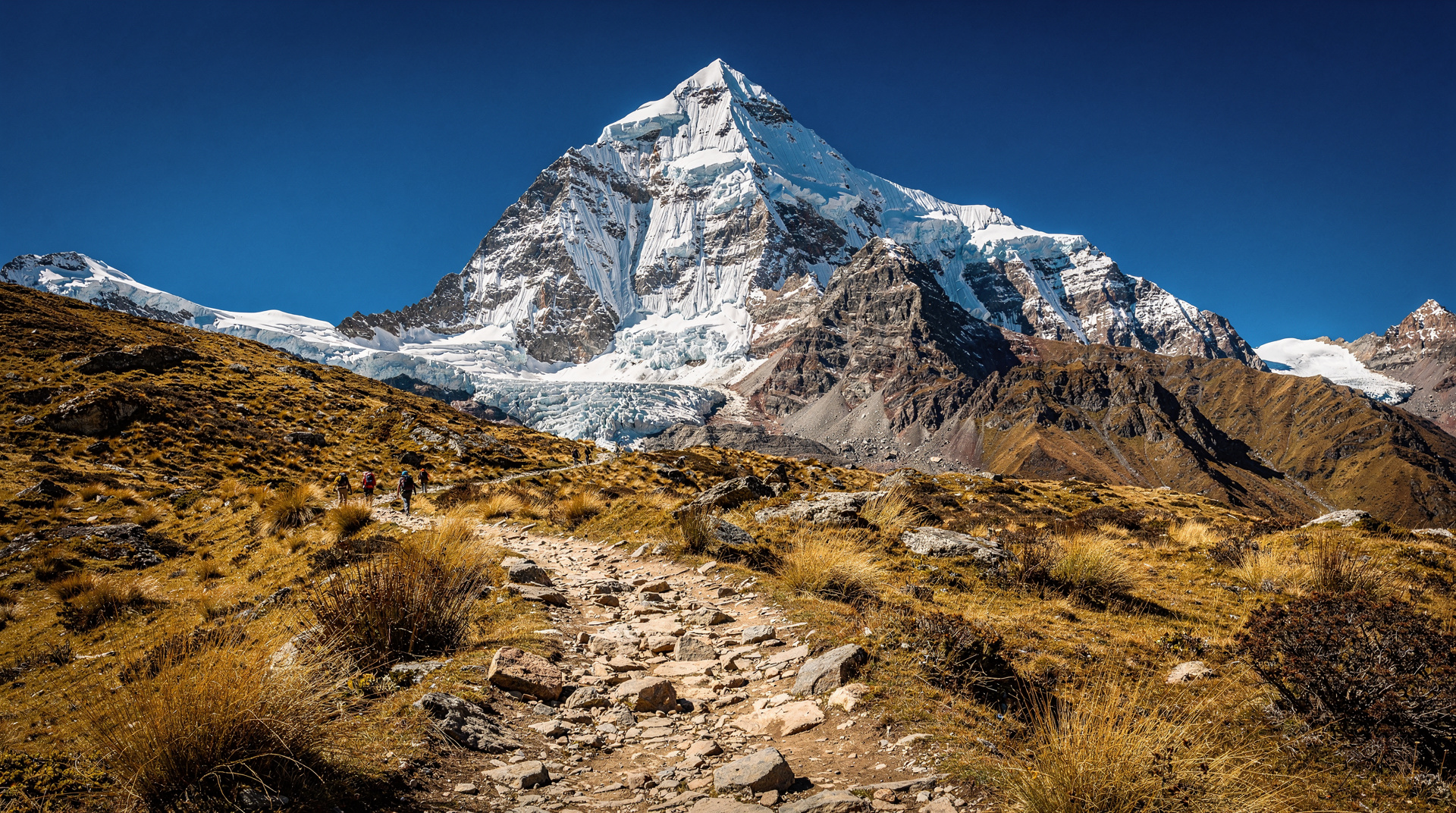
Day two is the hardest day on the classic route. The trail leaves Wayllabamba at first light and climbs 1,200 m to the Abra de Huarmihuañusca — Dead Woman’s Pass — at 4,215 m. The ascent takes most groups three to five hours from camp. The name refers to the ridgeline’s profile when seen from below: a reclined figure. At the pass, the view is unobstructed and vast on clear days, Andes in every direction.
The honest experience of that final climb: at 3,800 m, the pace slows. At 4,000 m, many trekkers are moving 20–30 steps at a time before pausing. That is altitude, not fitness failure. Breathe, move slowly, and accept that the summit takes the time it takes. After the pass, a second climb to the Runkurakay Pass at 3,998 m before the descent to Pacaymayo camp (approximately 3,600 m) for the night.
Day three — Pacaymayo to Wiñay Wayna (16 km, ~7 hours)
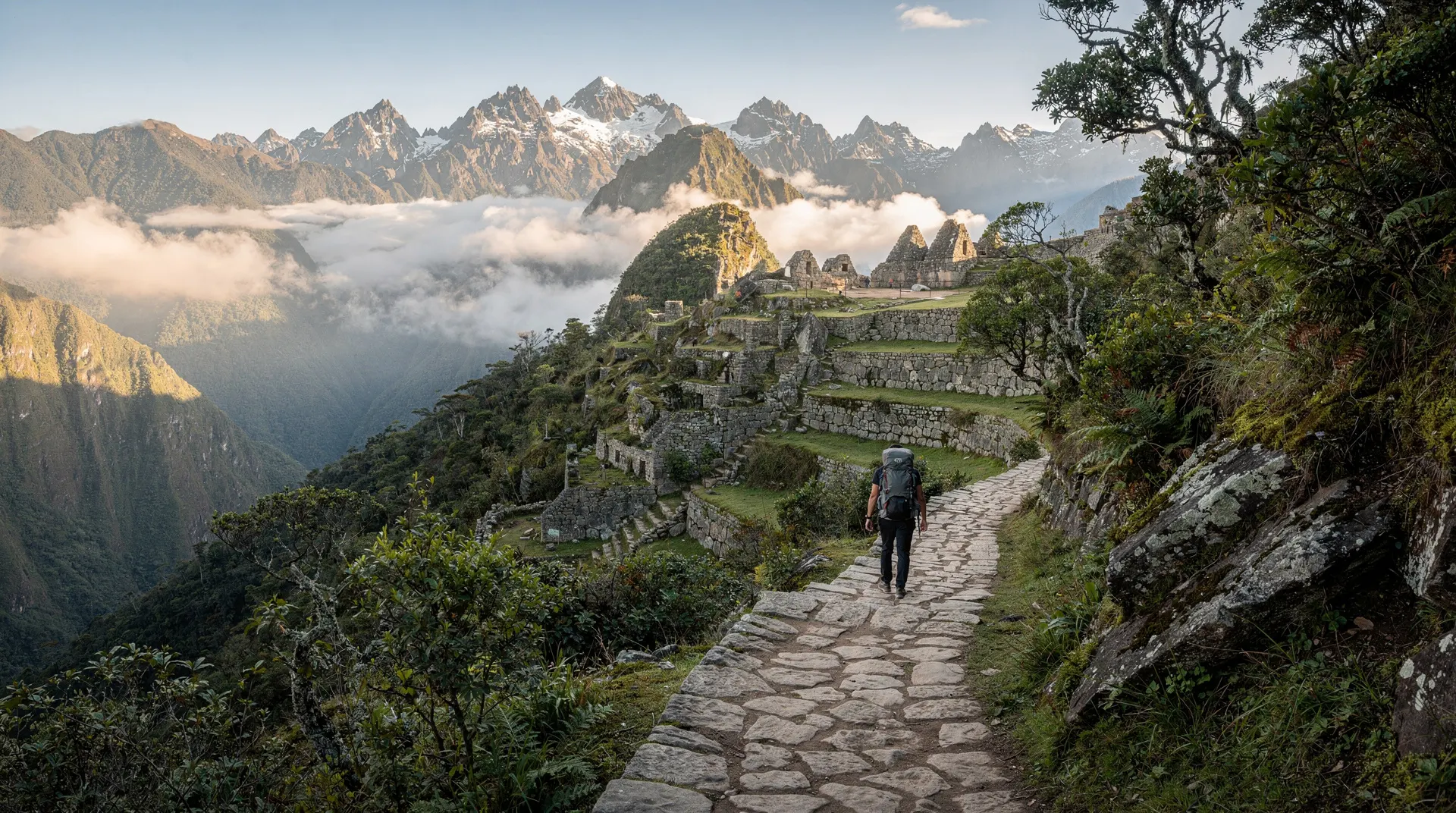
Day three is the archaeology day and, for most trekkers, the day they remember most clearly. From Pacaymayo, the trail passes the circular Runkurakay waypoint, climbs to Sayaqmarka — a ceremonial complex built dramatically on a narrow rock promontory above the cloud forest — and continues to Phuyupatamarka (“town in the clouds”), perched above the valley with panoramic views.
The descent from Phuyupatamarka drops through original Inca-paved stairway sections, steep and uneven, into the cloud forest. Trekking poles earn their place on this descent. The day ends at Wiñay Wayna camp, adjacent to one of the best-preserved Inca sites on the trail: ceremonial baths, terracing, and residential structures in a dramatic cloud forest setting at roughly 2,650 m.
Day four — Wiñay Wayna to Machu Picchu via the Sun Gate (6 km, ~2–3 hours)
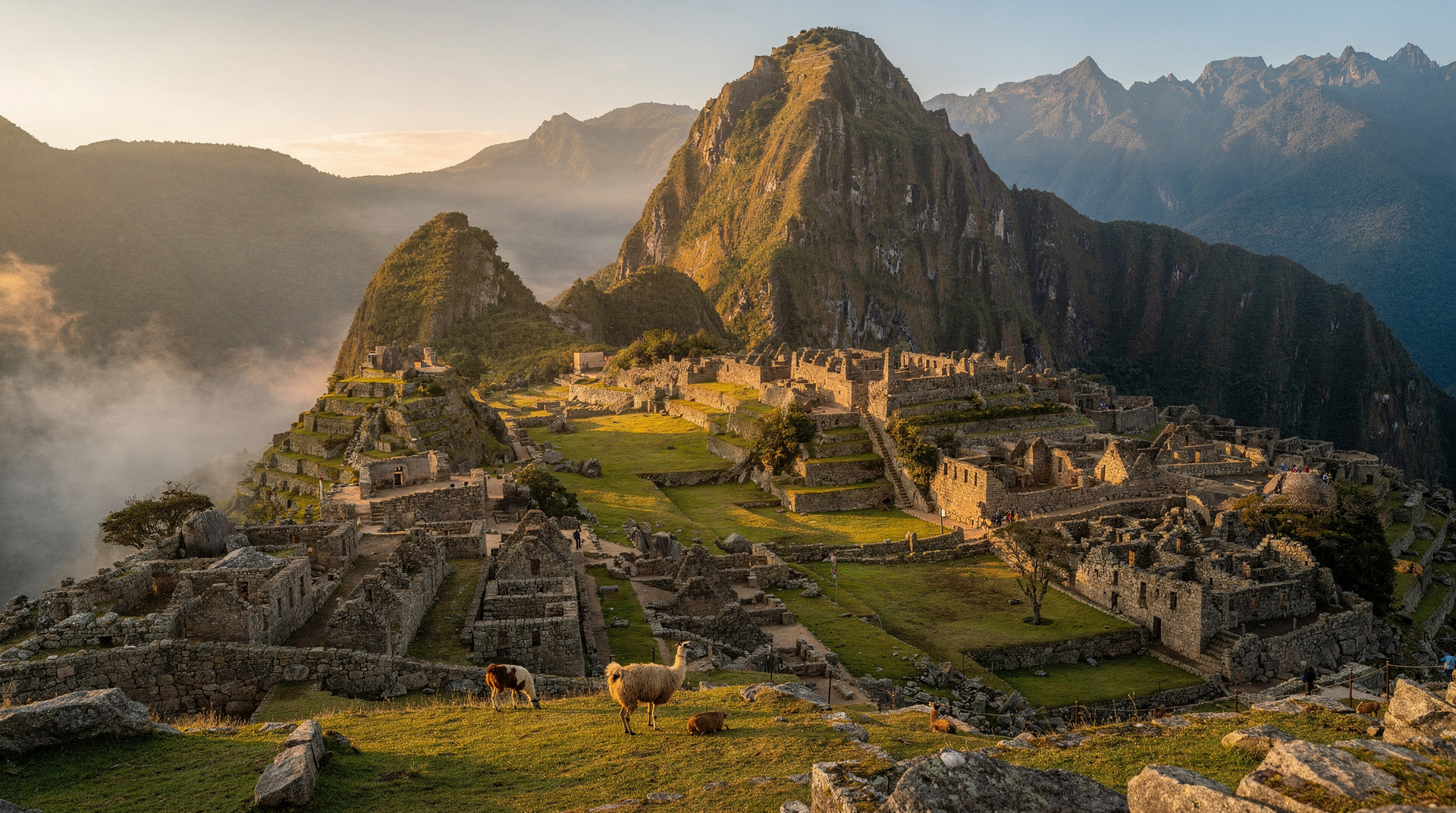
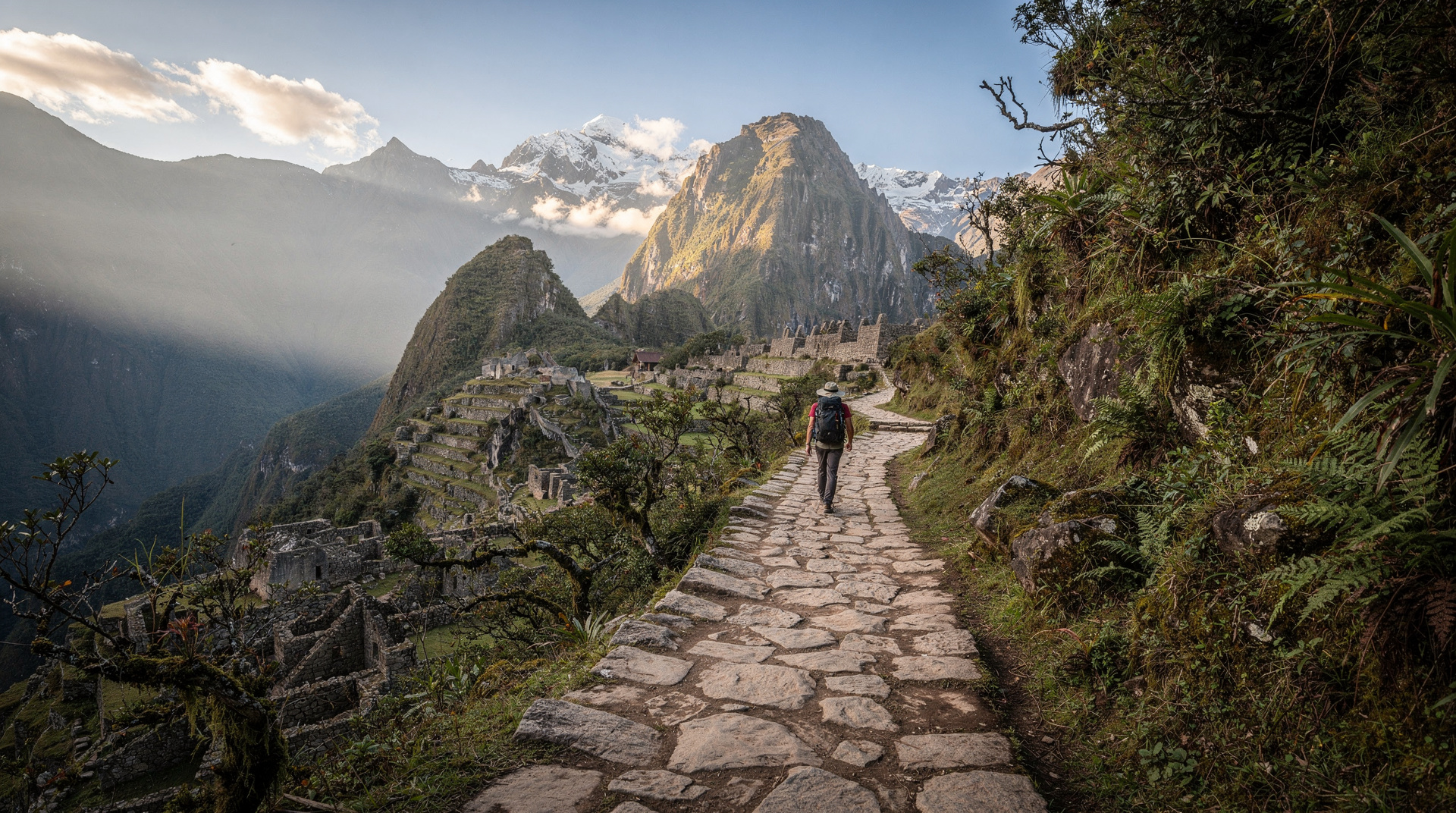
Camp rises before dawn. The final 6 km is walked by torch and early light, arriving at the Intipunku at approximately 6–7 am. On clear dry-season mornings, Machu Picchu is below you, lit by the first sun of the day, framed by Huayna Picchu behind it. The descent to the site takes 30–45 minutes. Entry uses the standard Machu Picchu timed-entry ticket (separate from the trail permit, must be booked in advance; the Machu Picchu ticket is paid immediately, with 15 minutes to complete payment, and issued in the visitor’s name).
The classic 4-day Inca Trail package manages permit coordination, guide and porter logistics, all camping and meals, transport to the trailhead, and the Machu Picchu ticket — removing the considerable administrative burden of organising the components independently.
The permit system in detail
Permits for the following year go on sale in autumn or early in the year (the 2026 permits opened on 17 November 2025): check the date on the official platform tuboleto.cultura.pe or with your operator. For the most popular June–August window, many dates sell out quickly once sales open. The booking process requires your passport number at the time of booking — which means every person in your group must have a confirmed travel document. Lost or expired passports mean lost permits; substitutions are not permitted after booking.
Booking through a licensed operator is mandatory. You cannot obtain an individual trekker permit without an operator attached to the booking. The operator manages the permit paperwork; your job is to confirm your details are correct, particularly passport numbers, and to be ready to book the moment the window opens.
For the full mechanics — the exact booking calendar, cancellation rules, and what happens if your passport details change — the Inca Trail permits guide covers the process step by step.
The trail is closed all of February without exception. Permits for the March reopening are sold in the same sales window as the rest of the year. If February is your only window, the Salkantay trek is the strongest alternative — no permit required, runs year-round, and passes a 4,630 m summit before descending to Machu Picchu.
Altitude: what to expect and how to prepare
Dead Woman’s Pass at 4,215 m is the altitude headline, but the sustained effort of climbing 1,200 m on a consecutive day at altitude is more demanding than the headline number suggests. The difference between acclimatised and unacclimatised trekkers on day two is significant.
The minimum preparation is three nights at altitude in Cusco or the Sacred Valley before starting the trail. Four nights is better. During those days: avoid alcohol, keep activity light on the first day (do not arrive in Cusco and immediately hike to Sacsayhuamán — that is a common mistake), and build gradually to longer walks at altitude. The Cusco acclimatisation plan covers the first four days in detail.
On the trail itself, altitude sickness symptoms — headache, nausea, loss of appetite — are common on day two. The distinction between expected discomfort and altitude sickness requiring descent is covered in the altitude sickness guide. The good news about the Inca Trail’s altitude pattern: the highest point comes on day two, and the remaining days descend steadily toward Machu Picchu at 2,430 m. You acclimatise progressively as you walk, which is easier on the body than many Cusco day trips that spike to high altitude and return to low in a single day.
Cost breakdown
The all-inclusive classic 4-day Inca Trail typically costs $650–800 per person. That covers:
- Government permit fee: approximately $200–250
- Licensed operator costs: guide salary, porter wages (regulated by Peruvian law with minimum wage and maximum load requirements), group camping equipment, meals on trail, transport from Cusco and return from Aguas Calientes
- Machu Picchu entry ticket: included by most operators
This is more expensive than any alternative Machu Picchu approach. The Salkantay trek costs $350–500. The difference reflects the government permit fee and the regulated porter infrastructure. If budget is the primary factor, the Salkantay comparison in Inca Trail vs Salkantay is worth reading before committing.
Tips for porters and guides are not included and are expected. Porters carry group equipment over Dead Woman’s Pass at altitude for four consecutive days. A S/50–80 (approximately $13–22) per porter per trip is a reasonable baseline; many travellers give more.
Short Inca Trail options
Two shorter formats use the Inca Trail permit system without the four-day commitment.
The 2-day short Inca Trail starts at Km 104 rather than Km 82, entering the trail system at the Chachabamba archaeological site and walking the final section from Wiñay Wayna to the Sun Gate and Machu Picchu in one long day. Permits are required but typically easier to secure than the 4-day variant. It includes Wiñay Wayna and the Sun Gate — the emotional core of the route — while skipping Dead Woman’s Pass and the high-altitude section. For the full short route detail, see the short Inca Trail 2-day guide.
The train-and-hike option — travelling by train to Aguas Calientes and hiking to the site from below — gives the Machu Picchu experience without any Inca Trail permit. It is a valid approach; it is not the Inca Trail experience.
Choosing an operator
All licensed operators are registered with the Ministry of Culture and can provide permit booking. The meaningful differences between operators are:
- Porter welfare record. The minimum wage and maximum load regulations are there; not all operators enforce them equally. Ask about porter pay rates above the minimum and the porter rest and food arrangements.
- Guide quality. A good guide on this route adds significant value — the archaeology on day three is fascinating with context, forgettable without it. Ask specifically about the lead guide’s experience with the route.
- Group size. Smaller groups (eight or fewer) move more flexibly and have better guide-to-trekker ratios. Large groups can be fine, but the Sun Gate is timed — arriving with 30 other people from the same group changes the experience.
The best treks to Machu Picchu guide compares the main alternatives if you want to evaluate whether the classic route is the right one for your priorities before committing to a permit booking.
When to go
May–September is the dry season and the best time for the Inca Trail. June–August are the most reliable for clear skies but the hardest to book. May and September are the sweet spot: good weather, slightly easier permit availability, and smaller crowds at Machu Picchu itself.
October and April are shoulder months — the trail is open, weather is variable, and the cloud forest sections can be beautiful in the mist. Wet season (November–January) means slippery Inca stone steps on day three’s descent and cold, wet camps. It is possible; it is not pleasant. February is closed entirely. There are no exceptions.
The 4-day Inca Trail run by a capable licensed operator is the most complete way to experience the route: guide expertise, porter support, and permit logistics managed as a package, so your energy goes into the walk rather than the administration around it.
For packing specifics — what layers, sleeping bag rating, trekking pole recommendations, and the gear that separates comfortable trekkers from cold, sore ones — the Inca Trail packing guide covers everything with a tested kit list.
Food and camp life on the trail
Meals on a well-run classic Inca Trail trek are one of the pleasant surprises for first-timers. A skilled trail cook, working from a portable kitchen tent carried by porters, produces three cooked meals a day plus hot drinks and snacks at each rest stop — soups, pasta, rice dishes, fresh fruit, and often a celebratory cake baked in a improvised camp oven on the final night. Dietary requirements (vegetarian, gluten-free, allergies) are generally accommodated if flagged to your operator well in advance of departure.
Camps are simple but functional: two-person tents, a communal dining tent, and basic toilet tents at each site. Sleeping mats are provided by most operators, though quality varies — asking specifically about mat thickness when booking is a reasonable question. The evenings are early: most groups are in their tents by 8–9 pm given the pre-dawn starts required on days two through four.
Porters and the human side of the trail
The Inca Trail’s regulated porter system is one of its most distinctive features compared with the alternative treks. Porters carry group equipment — tents, food, cooking gear, your main duffel up to an agreed weight limit — over the same passes trekkers walk, often overtaking groups on the ascent to have camp set up before trekkers arrive. Peruvian law caps porter loads at 25 kg (including their own gear) and sets a minimum daily wage, though enforcement varies between operators.
A good operator will introduce the porter team by name at the trailhead and again at the final celebratory dinner, where a tip pool is typically collected and distributed. Budgeting S/50–80 per porter and S/100–150 for the guide, per trekker for the full trek, is a reasonable baseline; many trekkers give more when the team has clearly gone beyond the minimum.
Frequently asked questions about Inca Trail complete guide: everything you need to know
How far in advance do I need to book the Inca Trail?
How much does the classic 4-day Inca Trail cost?
How fit do I need to be for the Inca Trail?
Is the Inca Trail closed in February?
What is Dead Woman's Pass and how hard is it?
Can I do the Inca Trail independently without a guide?
Top experiences
Bookable activities with verified prices and instant confirmation on GetYourGuide.