Aguas Calientes
Everything you need to know about Aguas Calientes: train arrivals, bus to Machu Picchu, hot springs, food, and where to stay the night.
Excursion to Machu Picchu + Huayna Picchu Mountain
Quick facts
- Country
- Peru
- Altitude
- 2,040 m / 6,690 ft
- Currency
- Peruvian sol (S/) — USD widely used
- Best for
- Overnight base for Machu Picchu, hot springs, jungle valley atmosphere
The town that exists because of one mountain
Aguas Calientes did not exist in any meaningful sense before the mid-20th century. There was no Inca settlement here. There is no broader urban logic to the place. A single-track railway was pushed up the canyon in the 1940s, and the town grew around it precisely because Machu Picchu is 6 km uphill and there was nowhere else to stay. Today it is a town of around 15,000 people, an international railway terminus, and the base for every visitor who wants to sleep near the citadel rather than commuting from Ollantaytambo or Cusco each day.
This is an honest description rather than a damning one. Aguas Calientes is functional, noisy at night, occasionally charming, and entirely oriented towards the business of getting people up the mountain and back down again. Its restaurants serve solid meals at tourist-elevated prices. Its hotels range from dormitory bunks to polished four-star properties. Its one genuine attraction beyond the mountain above — the thermal baths — is warm, slightly sulphurous, and genuinely pleasant after a long day on Machu Picchu’s stone paths.
Understanding what Aguas Calientes is, and is not, allows you to make a clear-eyed decision about whether to stay the night or commute as a day-tripper. Both approaches work. Both have real trade-offs.
| Where | Base of Machu Picchu mountain, train-only access, no roads |
| Cost to sleep here | Around S/60–1,200+ depending on tier |
| Time needed | Half a day to explore town; overnight if doing a two-day citadel visit |
| Getting there | Train from Ollantaytambo (~1.5 hrs) or Poroy/Cusco (~3.5 hrs) |
| Best time | May–September for dry mornings; book trains weeks ahead in July–August |
Getting there
There are no roads into Aguas Calientes accessible to private vehicles. The only ways in are by train or on foot along a trail.
By train from Ollantaytambo
The main route for most visitors. PeruRail and Inca Rail both operate services from Ollantaytambo station, a 1.5-hour journey through the narrowing Urubamba canyon as the vegetation shifts from highland grass to cloud forest. The ride is scenic enough that most passengers spend the journey watching through the panoramic roof windows.
Round-trip fares from Ollantaytambo to Aguas Calientes start at roughly $60 on the basic Expedition service and rise to $130 or more on Vistadome panoramic class. The Hiram Bingham luxury train, operated by Belmond and departing from Cusco’s Poroy station, costs around $500 per person return and includes a gourmet meal — a very different proposition from the standard services. Booking ahead is essential: in May to August trains sell out weeks ahead. The trains to Machu Picchu comparison covers all service tiers, booking windows and genuine differences between classes.
By train from Cusco (Poroy station)
Some PeruRail services originate at Poroy station, a 25-minute taxi from central Cusco. Journey time is approximately 3.5 hours total. This removes the need to organise separate transport to Ollantaytambo and suits travellers who prefer a single direct service over the multi-leg approach.
On foot via Hidroeléctrica
A budget alternative used by backpackers: take a minibus from Cusco via Abancay to Santa Teresa, then to Hidroeléctrica station, then walk the 8 km trail along the river to Aguas Calientes (roughly 2.5–3.5 hours, flat and straightforward but occasionally muddy in wet season). This adds a full extra travel day and is best suited to those on very tight budgets or who genuinely enjoy the approach on foot.
A combined train and entrance ticket books both the Ollantaytambo train and the Machu Picchu admission together, removing the complication of coordinating two separate booking platforms.
The bus from town to the citadel
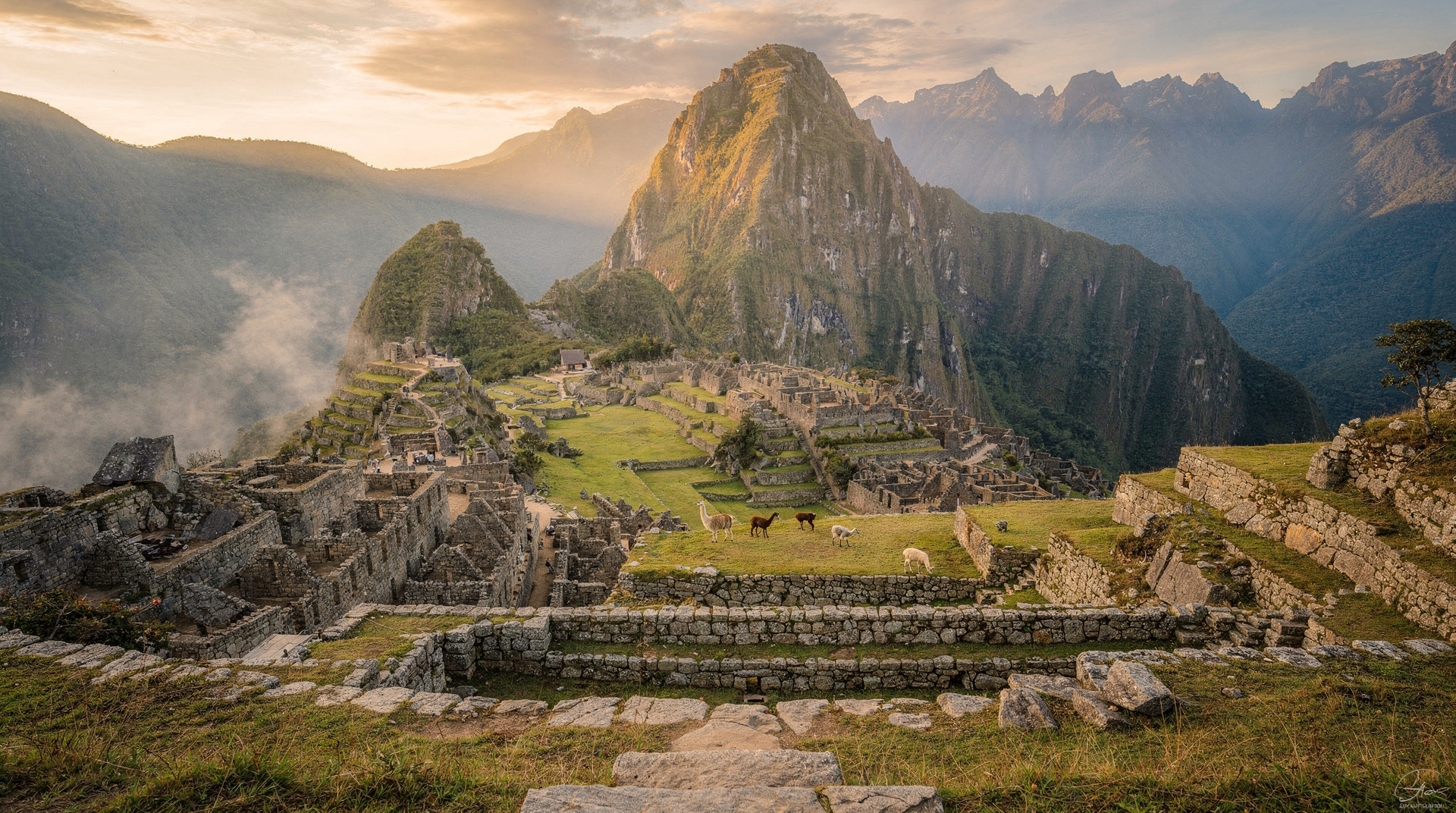
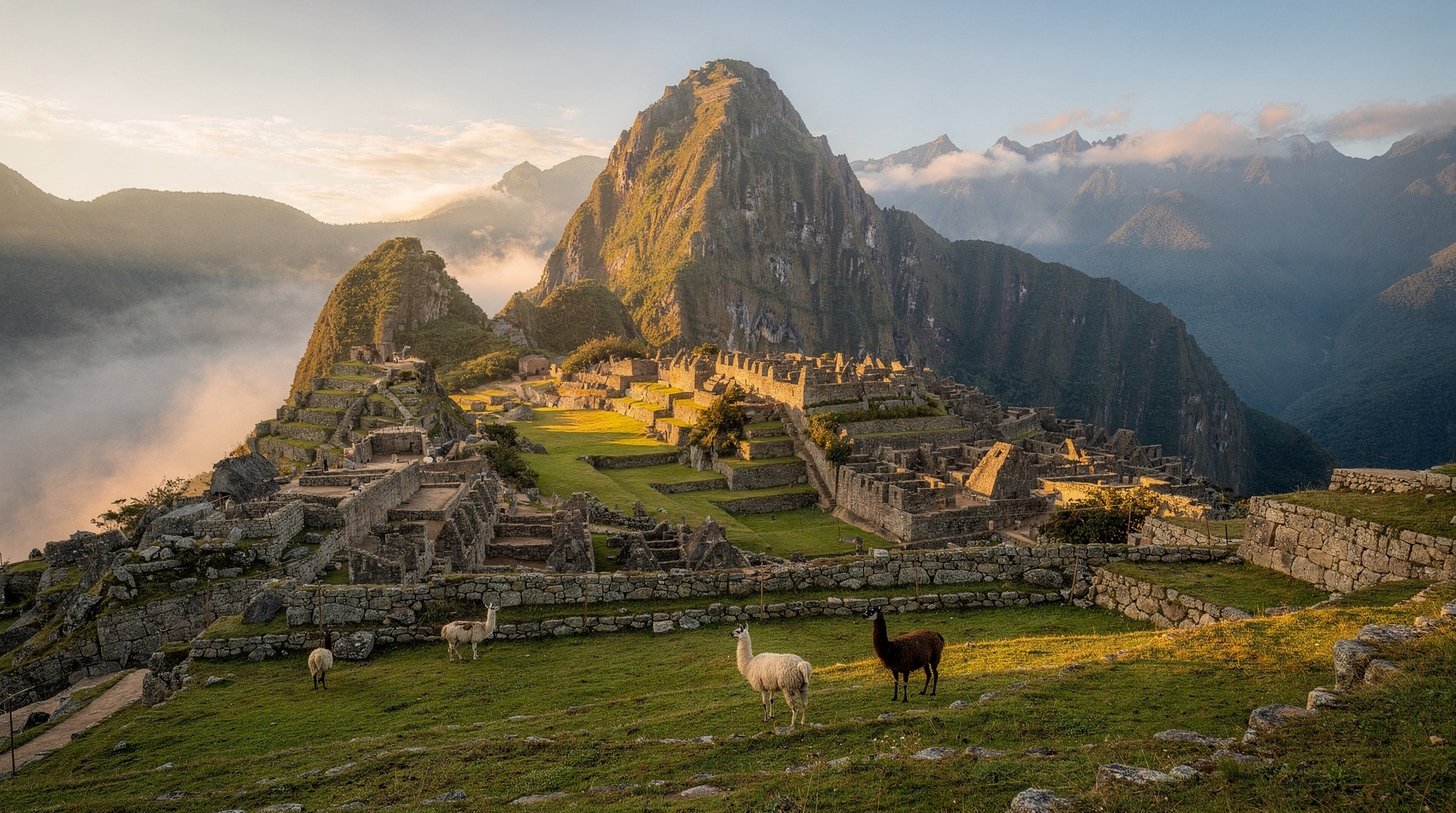
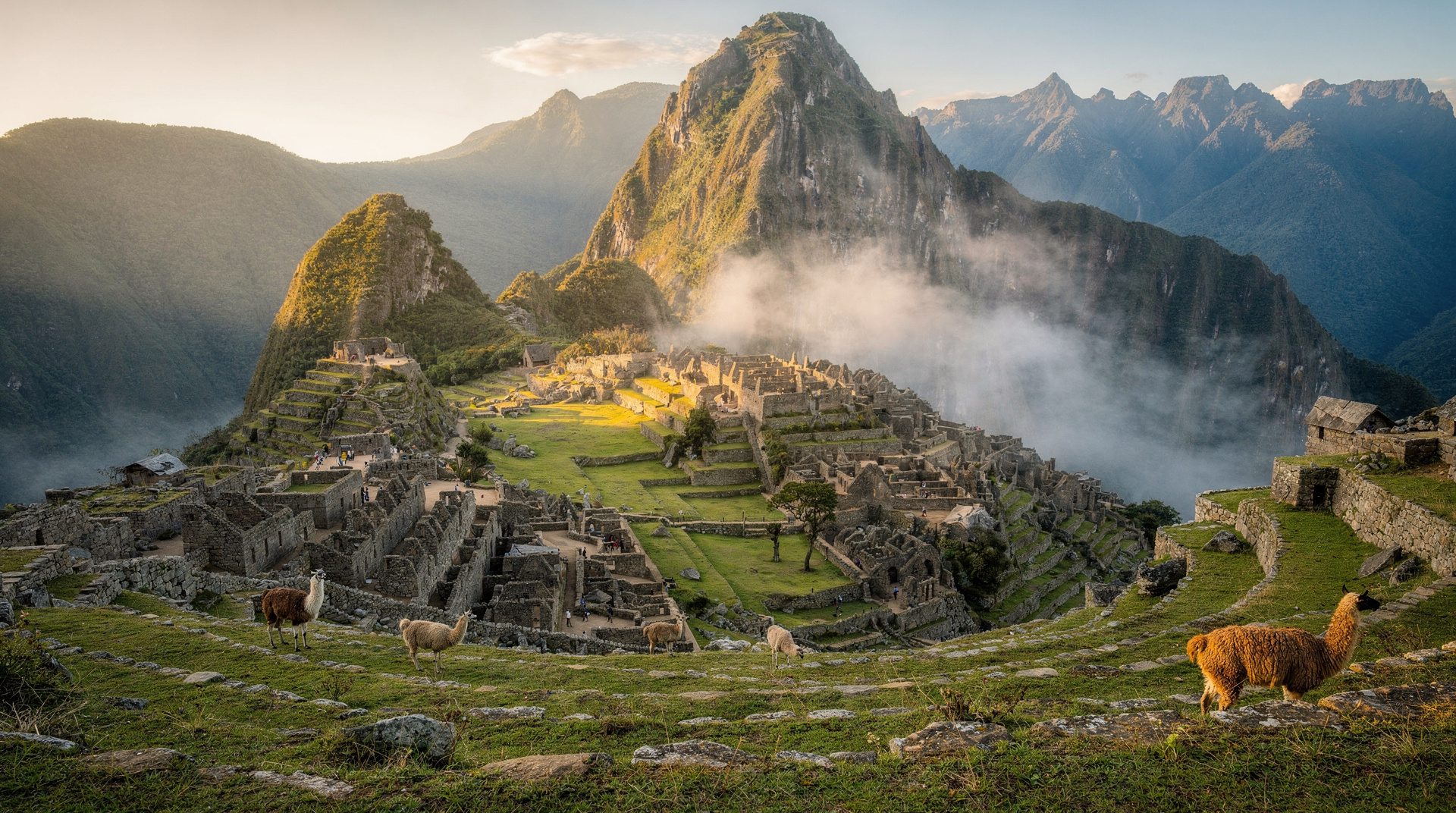
Green Consettur buses depart the Aguas Calientes terminal from around 5:30 am and run continuously until mid-afternoon. The road climbs 6 km of hairpin switchbacks through cloud forest to the citadel entrance gate.
The return fare is S/80 (~$24). It cannot be bought online in advance; you queue at the terminal and pay on the day. In July and August the queue begins forming before 5 am for the first buses. Arriving by 5:15 am is worth the disrupted sleep: the first 30–45 minutes after the citadel gates open are noticeably quieter than the mid-morning period.
Walking up is an alternative. The Camino Hiram Bingham path begins behind the market area and takes 45–60 minutes uphill. At 2,040 m the altitude is manageable for most visitors. Walking down is easy, takes around 40 minutes, and saves the S/40 downhill bus fare. A significant number of visitors walk down after a full day at the site.
Machu Picchu entry: what to arrange before you arrive
This is worth stating plainly because it catches visitors out every week. All Machu Picchu entrance tickets must be purchased in advance, are linked to a specific passport number, and cannot be bought at the gate or in Aguas Calientes on the day. The official booking platform is tuboleto.cultura.pe.
If you arrive in Aguas Calientes without a ticket, you cannot enter the citadel regardless of how early you board the bus or how long you queue. Tickets sell out weeks ahead for popular time slots in peak season, particularly July and August.
The timed circuits (1, 2 and 3, introduced in 2024) each cost approximately S/152 (~$45) per adult. Add-on tickets for Huayna Picchu Mountain and Machu Picchu Mountain (each S/100–120, with very limited daily slots) must be booked at the same time as your main entrance, not separately. The Machu Picchu tickets explained guide covers the full current pricing structure, which circuits to choose for a first visit, and the specific booking steps.
Eating and drinking in Aguas Calientes
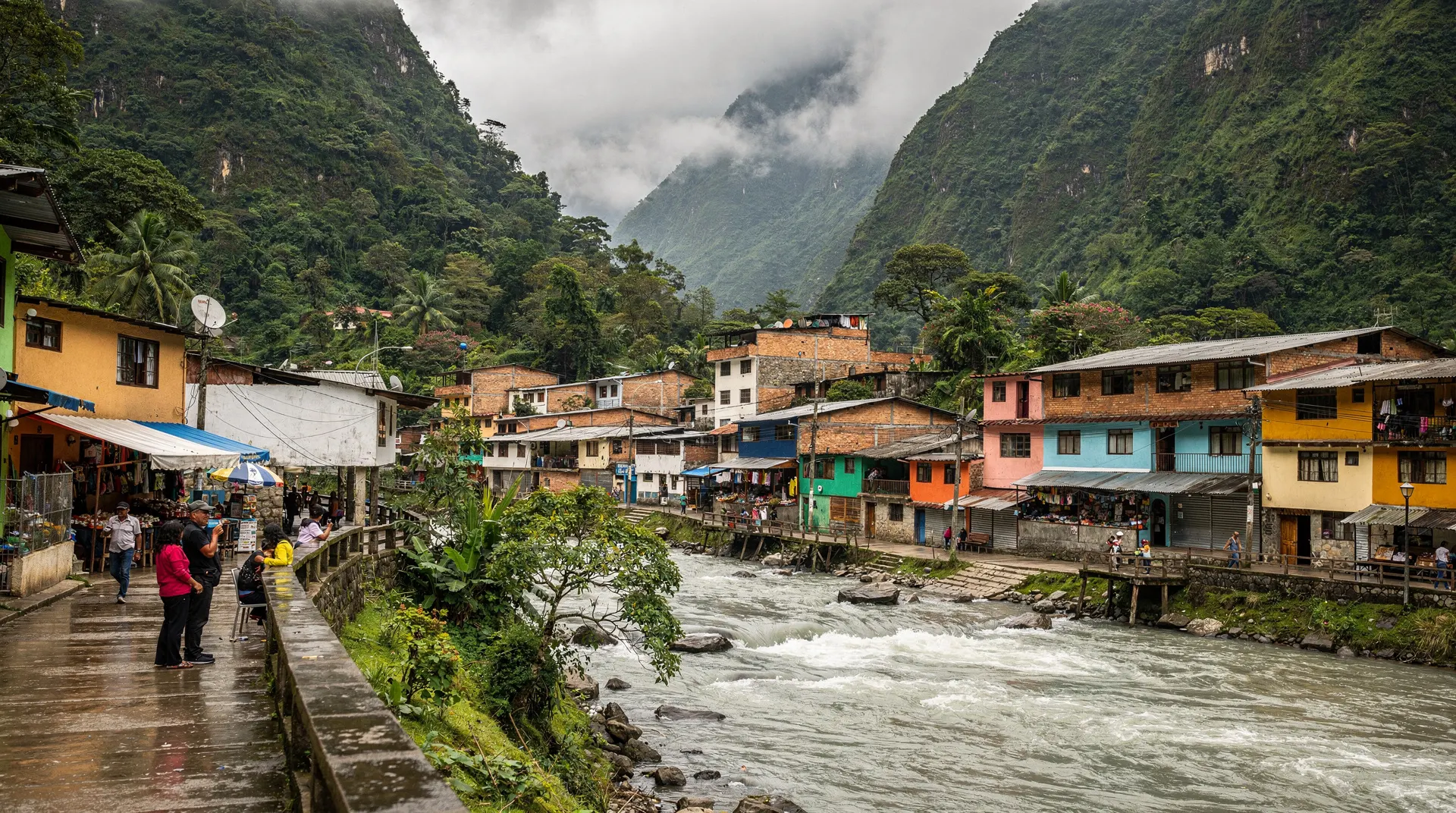
The restaurant strip runs along the Río Aguas Calientes and around the Plaza de Armas. Prices run roughly 50–80% higher than equivalent food in Cusco — this is a captive audience and restaurants price accordingly. A plate of lomo saltado costs S/30–45; pizza S/25–40; a set lunch at the few restaurants offering a menú del día is around S/18–25 and represents the best value in town.
The market building near the train station has the cheapest eating: fresh juice from S/4, simple chicken and rice plates around S/12–15, snacks. It is also the most concentrated collection of souvenir stalls if you want to shop before your return train.
One practical note: stock up on water and snacks here before boarding the morning bus to Machu Picchu. Inside the citadel, the only vendor is at the Sanctuary Lodge near the entrance, where bottled water runs S/10–15. Bringing two litres from Aguas Calientes costs a fraction of that.
The hot springs
The thermal baths at the upper end of the main street, a 15-minute walk from the railway station, give the town its name. The complex is modest — four outdoor pools at varying temperatures set in a functional municipal facility — but the water is genuinely warm (around 35–40°C), mineralised, and very welcome after a full day of stone-path walking.
Admission is around S/20. Opening hours start from 5 am. The pools are most pleasant in the early morning before the main tourist wave arrives, or in the late afternoon after 4 pm when day-trippers have begun heading for the train. Bring your own towel; rental towels are available but overpriced.
Luggage and day-trip logistics
If you are day-tripping from Ollantaytambo or Cusco rather than staying overnight, you still need somewhere to leave a bag while you are up at the citadel — Machu Picchu does not allow large backpacks inside the site (a strict small-bag policy applies at the entrance). Most train operators allow one small daypack plus a checked bag per passenger, and hotels in Aguas Calientes will hold luggage for day visitors for a small fee or free with a same-day booking. If you are not staying the night, arrange left-luggage at the train station itself, where several kiosks offer paid storage by the hour — useful if your train arrives well before your entry slot and you want to explore town first without hauling bags up the hill.
Where to stay
Aguas Calientes has accommodation at every price point, with the consistent caveat that rates here are meaningfully higher than equivalent rooms in Cusco.
Budget (S/60–120): Dormitory hostels and simple guesthouses near the train station. Clean and functional; rooms are small and street noise — trains pass at 5 am — is a reality.
Mid-range (S/150–350): The majority of the hotel stock. Comfortable en-suite rooms, some with river views. Properties like El Mapi, Hatun Inti and Inti Punku are well-reviewed and consistently deliver. Breakfast included at this tier is common.
Luxury (S/500–1,200+): Inkaterra Machu Picchu Pueblo Hotel, set in private cloud-forest grounds on the edge of town, is the most distinctive property — stone bungalows among orchid gardens, guided nature walks at dawn, an excellent restaurant. Belmond Sanctuary Lodge sits inside the archaeological park boundary at the citadel entrance itself and is the only hotel with that proximity; it commands prices to match, with rooms starting above $800 per night.
For most travellers, the mid-range tier offers fair value given what Aguas Calientes represents: a functional overnight stop with a clear single purpose. A 2-day Machu Picchu by train package bundles both train journeys, two nights of accommodation, and both days of entrance tickets into a single booking, which simplifies the logistics considerably and is particularly useful for first-time visitors.
Day visit versus overnight stay
The central question for most itineraries. Here is the honest version of each approach.
Day visit from Cusco or Ollantaytambo: You take an early train, arrive at Aguas Calientes around 6–7 am, take the bus up, spend 5–7 hours at the site, return to Aguas Calientes, and board an afternoon or evening train back. This is workable and most visitors do it this way. The constraint is that you are at the site during its busiest hours and you have no margin if the train is delayed or your morning entry slot runs long.
Overnight stay: You arrive the afternoon before, sleep reasonably well at low altitude (2,040 m is meaningfully easier than Cusco’s 3,400 m), board the very first bus at 5:30 am, enter the site before the first wave of day-trippers arrives, and leave on your own terms. The site in the first hour is a different experience from the midday period. If you are visiting during peak season, this approach is strongly worth the extra hotel night.
Two nights: Makes sense if you are doing both Huayna Picchu (morning tickets, first entry slot) on day one and a second full circuit on day two, or if you are combining Machu Picchu with the Salkantay trek arrival point. See the complete Machu Picchu guide for how to structure a two-day visit.
Best time to visit
Aguas Calientes is open year-round and can be reached at any time. The considerations are Machu Picchu’s seasonal patterns rather than anything specific to the town.
May–September is dry season. Mornings at the citadel are clear, the site is at its most photogenic, and trains are fully booked weeks ahead. July and August are the peak weeks; May and September have nearly identical weather with noticeably fewer crowds.
November–March is rainy season. Rain typically falls in the afternoon rather than all morning, so early entry to the site often beats the rain. Prices at Aguas Calientes hotels drop by 20–30%. The Inca Trail is at its muddiest and closes entirely in February for maintenance, but the site itself and the train access remain open throughout.
The best time to visit Machu Picchu covers the full month-by-month picture.
Aguas Calientes versus sleeping in Ollantaytambo
A question that comes up constantly: why not just stay in Ollantaytambo and skip a night in Aguas Calientes entirely? Both are valid bases, and the honest comparison depends on what your Machu Picchu morning looks like.
| Aguas Calientes | Ollantaytambo | |
|---|---|---|
| Distance to citadel bus | 6 km, 25 min by bus | Need the train first (1.5 hrs), then the bus |
| First-entry access | Realistic — first bus at 5:30 am | Only if your train arrives before dawn, which is rare |
| Altitude / sleep quality | 2,040 m, easiest sleep of the trip | 2,792 m, also comfortable |
| Atmosphere | Functional, tourist-oriented, noisy trains | Living Inca town, more character |
| Cost | Higher for equivalent quality | Generally better value |
If an early, uncrowded citadel entry matters to you, Aguas Calientes wins outright — there is no version of a same-day train from Ollantaytambo that beats sleeping at the base of the mountain. If you are prioritising atmosphere and budget over the first bus, basing yourself in Ollantaytambo the night before your train and simply accepting a mid-morning entry is a perfectly reasonable trade-off. Many travellers do both across a longer Sacred Valley itinerary: a night in Ollantaytambo first, then a night in Aguas Calientes for the Machu Picchu morning itself.
Nightlife and the evening scene
Aguas Calientes empties out considerably by 9 pm — most visitors are asleep early because of the 5 am start the next morning. What remains is a handful of bars along the river strip and around the Plaza de Armas offering pisco sours and live Andean music some nights, aimed squarely at travellers waiting out an evening train. It is pleasant rather than exciting: a beer with a view of the river and the illuminated hillside behind town is a fair way to close a Machu Picchu day, but nobody comes to Aguas Calientes for its nightlife. If you have an early citadel entry the next morning, treat the town’s evening offerings as optional rather than essential, and prioritise sleep.
Honest tips
The first bus queue forms before 5 am in peak season. If you want to be on the first bus to the gate, set your alarm for 4:45 am, dress in the dark, and join the queue. It sounds extreme until you see how few people are at the site when it opens at 6 am versus at 10 am.
Download offline maps before you lose signal. Phone data is limited in the canyon. Download Aguas Calientes and the Machu Picchu area on Google Maps or Maps.me the night before.
Return trains get crowded in early evening. The 5 pm to 8 pm window from Aguas Calientes carries the highest volume. Book your return train for a time you are confident you can make, allowing a full hour to get from the citadel entrance down to the train station (bus down + walk to station). Missing a pre-booked train and rebooking on the spot is possible but expensive and stressful in peak season.
ATMs in Aguas Calientes frequently run out of cash. Withdraw soles before you leave Cusco or Ollantaytambo. Carry enough cash for buses, meals, and the thermal baths entry.
Aguas Calientes will not make your top-ten list of Peruvian destinations independently. But it plays its role perfectly: a functional base in a dramatic canyon setting, at comfortable altitude, within easy reach of one of the world’s great archaeological sites. Approach it on those terms and it delivers everything it needs to.
Top experiences
Bookable activities with verified prices and instant confirmation on GetYourGuide.