Best time to visit Machu Picchu — month by month honest guide
From Cusco: Machu Picchu Day Trip with Train Tickets
When is the best time to visit Machu Picchu?
May and September are the best months — dry season weather with significantly fewer visitors and lower prices than the July–August peak. The full dry season (May–September) has reliable morning sunshine. Rainy season (November–March) is cheaper and less crowded but expect afternoon showers and muddy trails. Avoid July–August if crowd-sensitive; the site is at its most packed between 9 am and 2 pm in that period.
The short answer nobody actually gives you
The “best time to visit Machu Picchu” question gets a lot of oversimplified answers online: “go in dry season,” “avoid July–August,” “the rainy season is actually fine.” Each of these contains truth but none is complete. The best time for your visit depends on what you are optimising for — and those priorities are different for every traveller. Clear skies, low crowds, low prices, lush green scenery, specific trek availability, or a particular festival: each points to a different time window.
This guide goes through every month honestly, then synthesises the trade-offs. It assumes you are visiting from Cusco and have some flexibility over your travel dates.
| Where | Machu Picchu citadel, 2,430 m, Urubamba cloud forest |
| Best months | May and September |
| Avoid without booking ahead | July–August, 9 am–2 pm |
| Entry | Timed slots, book 6–8 weeks ahead in dry season |
| Getting there | Train from Cusco/Ollantaytambo to Aguas Calientes, then bus or hike up |
| Open | 365 days a year (Inca Trail closes all February) |
The two seasons: a factual overview
Machu Picchu sits at 2,430 m in the cloud forest of the Urubamba valley. Its weather is shaped by two distinct seasons:
Dry season (May–September): Clear mornings as the rule, not the exception. Cloud often builds over the ridges in the afternoon. Rain is infrequent and usually brief. Temperatures at the site: 10–25°C depending on sun and altitude. Cold at night in Aguas Calientes (8–14°C). This is the period of highest demand, highest prices and fullest trains.
Rainy season (November–March, peaking January–February): Afternoon rain is the norm, sometimes heavy. Mornings often begin clear or with dramatic mist before cloud builds around noon. The site is visibly greener, with waterfalls on the surrounding cliffs that are absent in dry season. Humidity increases. The Inca Trail becomes extremely muddy and the full trail closes entirely in February for maintenance.
Shoulder months (April and October): Transitional. April is particularly good — the rains are tapering off but the vegetation remains lush, and crowds have not yet reached dry season levels.
Month-by-month breakdown
January
Deep rainy season. Heavy afternoon showers are typical; occasional all-day rain events occur in prolonged wet spells. Vegetation at its most exuberant — vivid green terraces and waterfalls emerging on the surrounding canyon walls. Visitor numbers are relatively low following the Christmas rush. Accommodation and train prices are at or near annual lows.
The Inca Trail is extremely muddy and is closing toward the end of January for the February maintenance period. Hiking any mountain trail in January requires waterproofs, gaiters and a tolerance for mud.
Verdict: Fine for visitors comfortable with weather variability and preferring budget prices. Not suitable if Inca Trail trekking is your priority. Photography can be extraordinary on the rare clear mornings.
February
The Inca Trail closes entirely for the whole of February for government-mandated maintenance. This is absolute — no exceptions. The Machu Picchu citadel itself remains fully open.
Rain is at its most frequent. Mornings can still be clear and are sometimes excellent; the afternoon cloud and rain are reliable. Visitor numbers are the lowest of the year. Prices are the lowest of the year — trains and accommodation can be 30–40% below peak rates.
Verdict: The quietest and cheapest month. Some photographers specifically choose February for the misty, atmospheric conditions that are impossible to recreate in dry season. Not suitable for Inca Trail or Salkantay trekking. Requires flexibility about weather.
March
Rain begins to ease off notably from mid-March. The second half of March is often surprisingly good — cloud and some showers, but the extended heavy rain of January–February is less common. Vegetation remains lush. Visitor numbers start to increase from the February low but are still well below peak levels.
Verdict: Improving conditions, increasingly viable, still good value. The last ten days of March can be genuinely excellent.
April
Often outstanding and consistently underrated. The rain season has effectively ended (though sporadic showers still occur in the afternoons) and the vegetation remains intensely green from the wet months. Crowds are a fraction of peak season. Train prices are competitive. The morning air quality can be exceptional — clear views with dramatic cloud formations over the ridges.
April in particular has a quality of light that dry season cannot replicate: deep green terraces, clear blue sky and occasional cumulus clouds creating light and shadow across the site in ways that are photogenically striking.
Verdict: Excellent. Arguably the best shoulder month. Under-represented in most travel guides because it falls between the standard “rainy season” and “dry season” boxes.
May
The consensus optimal month. The wet season has ended and dry season is establishing itself. Morning mist is common in the first week or two, clearing by 9–10 am to leave reliably clear skies for the rest of the day. Vegetation is still green and lush — not the parched brown that some high-altitude zones take on by August. Crowds are meaningfully lighter than June–August. Train prices are below their summer peak. Verdict: Outstanding. The month that experienced Machu Picchu visitors most often recommend.
June
Fully dry season conditions. Excellent weather throughout most of the month. The exception: the week surrounding the Inti Raymi festival (Inca solstice celebration, centred on 24 June in Cusco). This week brings a large surge of visitors to the entire region — Cusco accommodation prices spike to peak levels and trains to Machu Picchu are fully booked. The rest of June — weeks one, two, and four — is excellent, with dry conditions and crowds noticeably below July–August levels.
Verdict: Excellent outside Inti Raymi week. If you want to attend Inti Raymi in Cusco and visit Machu Picchu in the same week, book everything (accommodation, trains, citadel entry) at least 8–10 weeks ahead.
July
Peak month. Schools and universities are on summer holiday across the UK, USA, and most of Europe. The site is at maximum capacity during the 9 am–2 pm window. Trains sell out weeks or months ahead. Aguas Calientes hotel prices reach their annual high. Weather is reliably excellent — the most consistently sunny and clear period of the year.
Verdict: Best weather, highest prices, most crowded. The timed-entry system has improved crowd management significantly compared to pre-2024, but July remains the month where arriving at the 6 am slot matters most. Still worth visiting if you have no date flexibility — just book everything as far ahead as possible and use the early entry window.
August
Essentially the same profile as July in terms of both crowds and weather. Some operators consider the first week of August slightly less intense than July as school holidays in some countries begin to end.
Verdict: Same assessment as July.
September
Crowds drop noticeably from August — the difference is apparent from the first week. Weather remains excellent. Prices for trains and accommodation begin to ease. Many experienced South America travellers consider September the best single month overall: dry-season conditions at prices and crowd levels closer to shoulder season.
Verdict: Excellent. Second only to May in terms of the balance of weather, crowds and value.
October
The transition back toward rainy season begins in earnest in the second half of October. The first two weeks are often still dry and excellent; the last two weeks become more unpredictable with occasional afternoon showers. Crowds are well below peak. Prices are competitive. The vegetation begins to green up from the first rains.
Verdict: Good, particularly early October. Increasing rain risk toward the end of the month.
November
Rainy season beginning in earnest. The mornings are often still clear — sometimes remarkably so — but afternoon downpours are becoming regular. Visitor numbers are low and prices reflect it. The site is noticeably greener than in dry season.
Verdict: Viable for flexible travellers comfortable with afternoon rain. Better in the first half of the month than the second.
December
Two distinct periods. Pre-Christmas (1–21 December): rainy season weather, relatively low visitor numbers, competitive prices. Christmas week (approximately 22–30 December): visitor numbers spike sharply, trains and accommodation sell out, prices approach peak season levels. Post-New Year (1–5 January): still busy. Mid-January onwards: quieter.
Verdict: Avoid 22–30 December or treat it as peak season with full advance booking requirements. Outside that window, December is decent value despite the rain.
Time of day: the overlooked variable
Whatever month you visit, the time of day you enter has more impact on your experience than the month itself. The difference between the 6 am entry slot and the 9 am slot is:
- 6 am: first light, minimal mist, near-empty site for 30–45 minutes, the site before the crowd builds
- 9 am: arriving into the peak crowd wave, the Hut of the Caretaker surrounded by visitors, queues at circuit transition points
Always book the earliest available entry slot regardless of season.
The honest summary
Best overall balance of weather, crowds and value: May and September.
Best weather without crowd compromise (if booked far ahead): June (avoiding Inti Raymi week) or early July with 6 am entry slot.
Best for experienced travellers, photographers, budget conscious: April and October (early).
Best for sheer atmosphere and budget: February (accepting no Inca Trail, maximum rain risk).
Avoid without very early booking: July–August 9 am–2 pm visits.
Book your Machu Picchu visit as soon as your dates are set — regardless of the month, early booking gives you the slot you want and the price that reflects your planning effort.
The Machu Picchu complete guide covers all the other planning essentials, and the tickets explained guide handles the booking process for any month you choose. For seasonal planning of your broader Cusco trip, see the best time to visit Cusco guide.
How weather affects the specific experience
Weather at Machu Picchu is worth understanding beyond the simple wet/dry framework, because the site is at 2,430 m in the cloud forest and can experience several distinct conditions even within a single day.
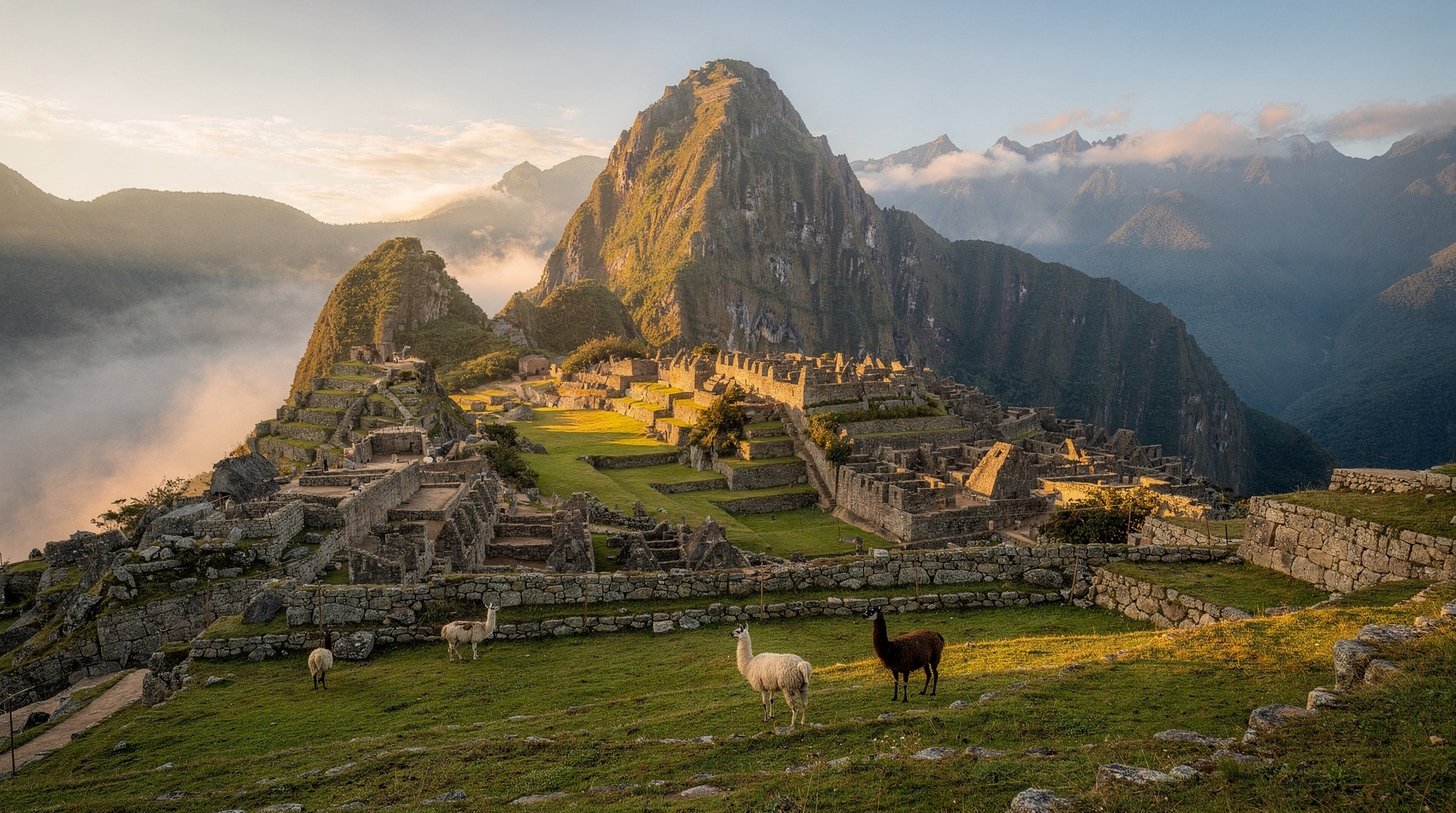
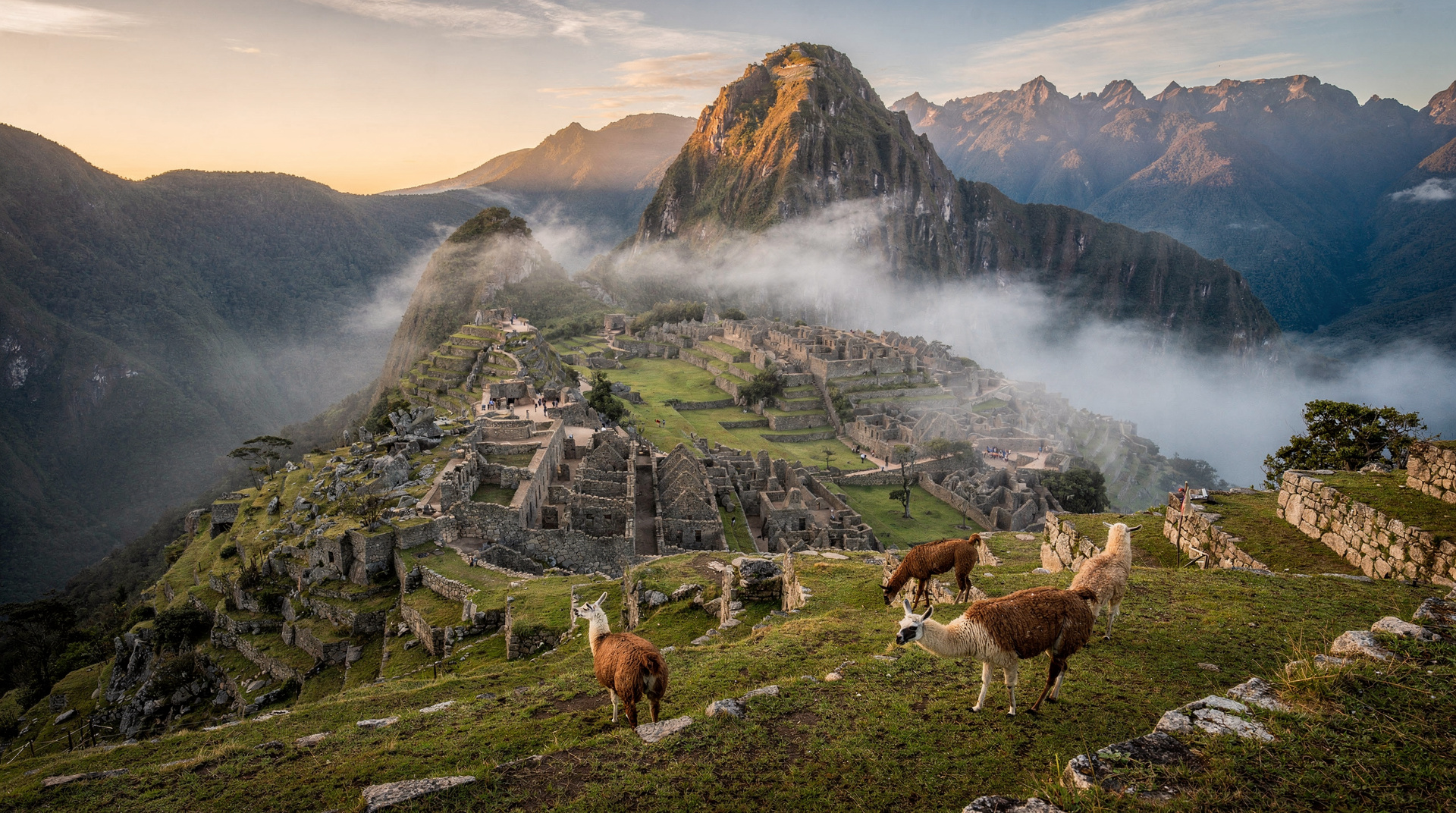
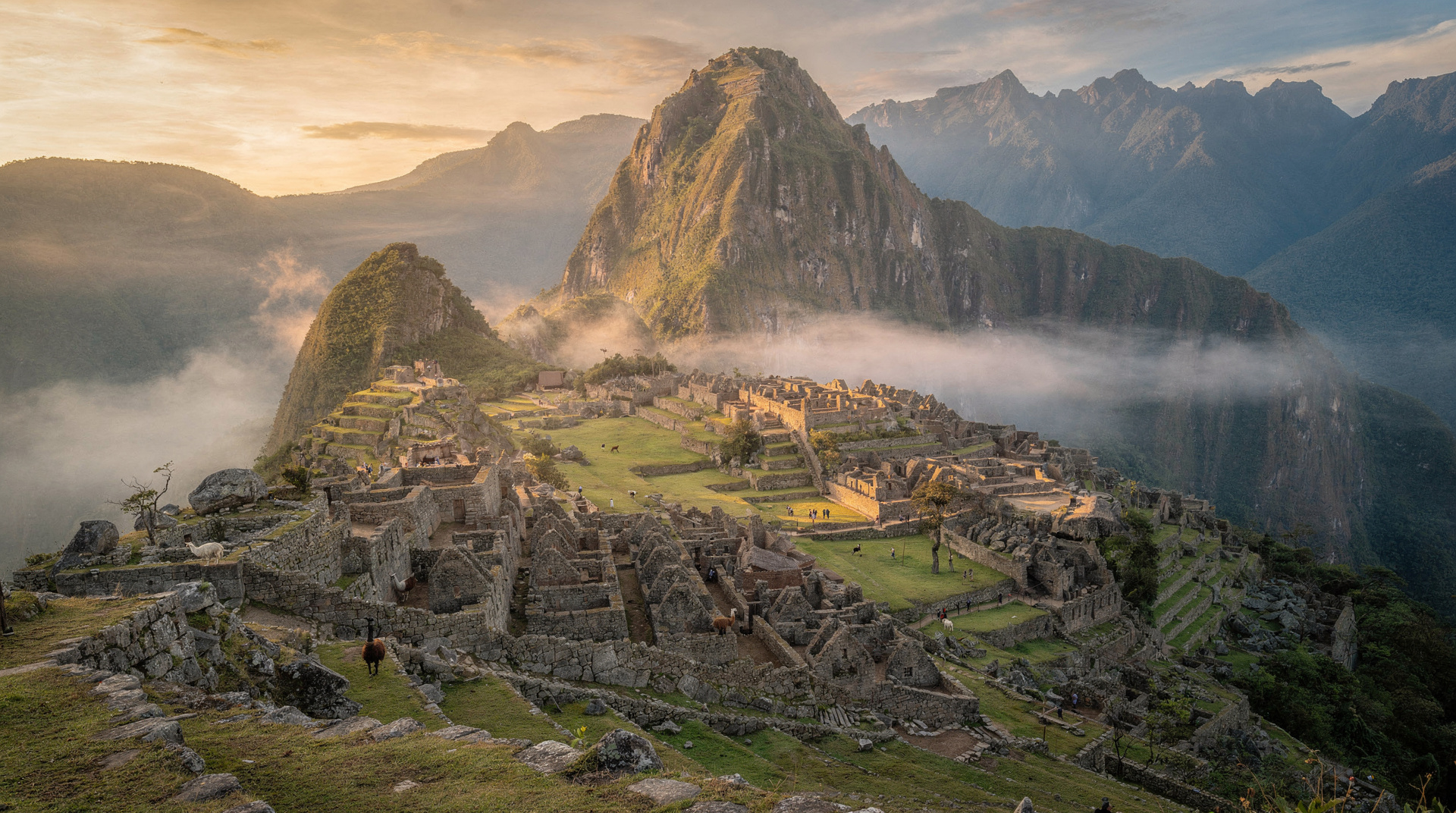
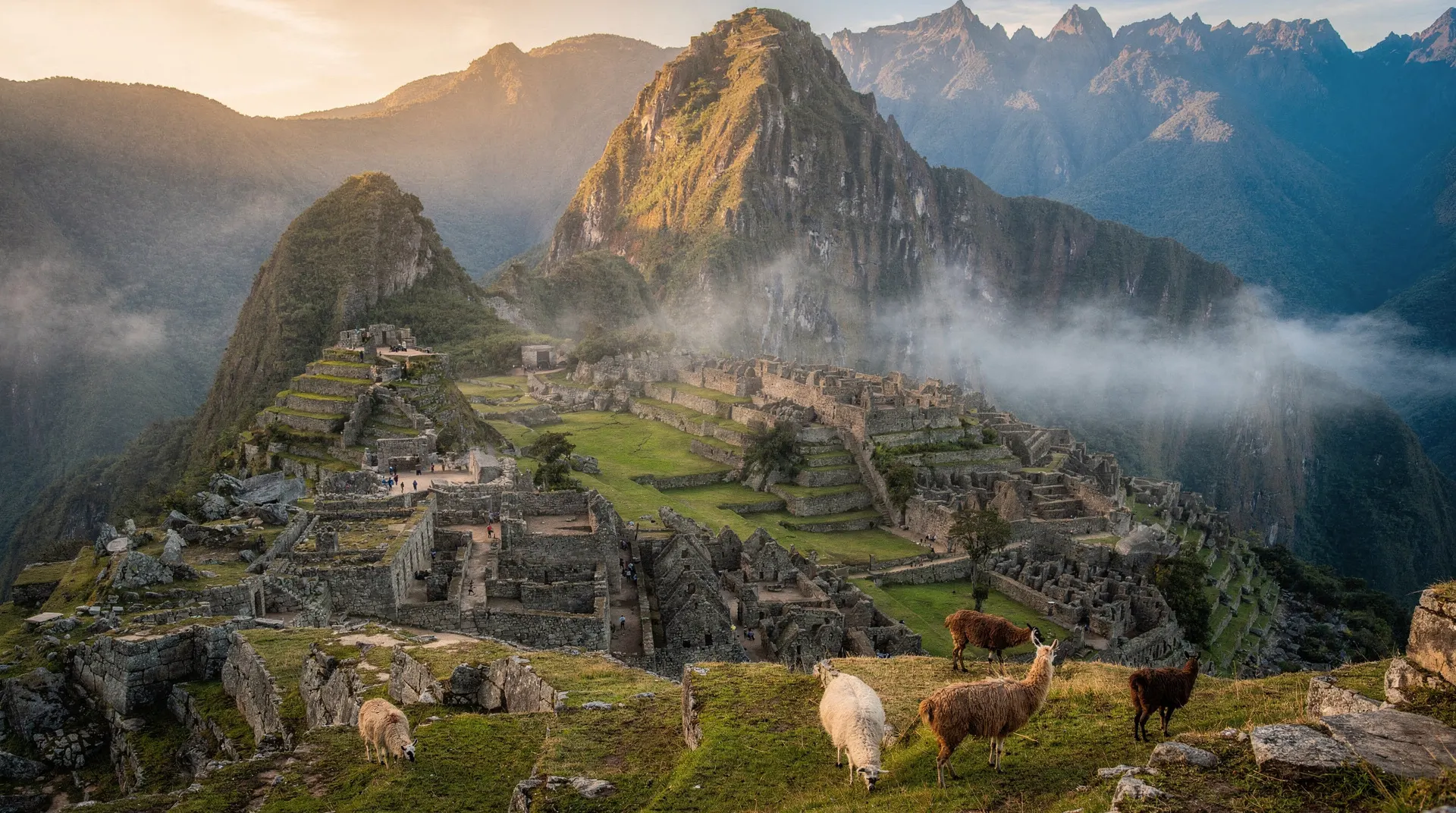
Morning mist and cloud: Common in May–June in dry season, and throughout the wet season. The mist that threads through the terraces in the first hour of the morning — visible in many famous photographs — is more common in these periods. If you specifically want the atmospheric, partly-obscured misty view, early dry season (May–June) delivers this more reliably than high dry season (July–August), when the skies are often completely clear. From an aesthetic standpoint, the morning mist is not a problem; it is an advantage.
Afternoon cloud build: Even in July–August, clouds often build over the surrounding ridges in the early afternoon. This does not mean rain — cloud formation at altitude is normal even in dry conditions — but it does mean the dramatic blue-sky backdrop for photographs is often gone by noon. This is another argument for the early morning entry slot: the first 2–3 hours of the day have the clearest skies.
Rain in the wet season: Wet season rain at Machu Picchu typically falls in the afternoon rather than continuously through the day. A pattern of clear or partly cloudy mornings followed by afternoon showers from 1–2 pm is the norm in January and February. Waterproof gear is essential; the stone paths become slippery in rain and the carved steps on the mountain trails are genuinely hazardous when wet.
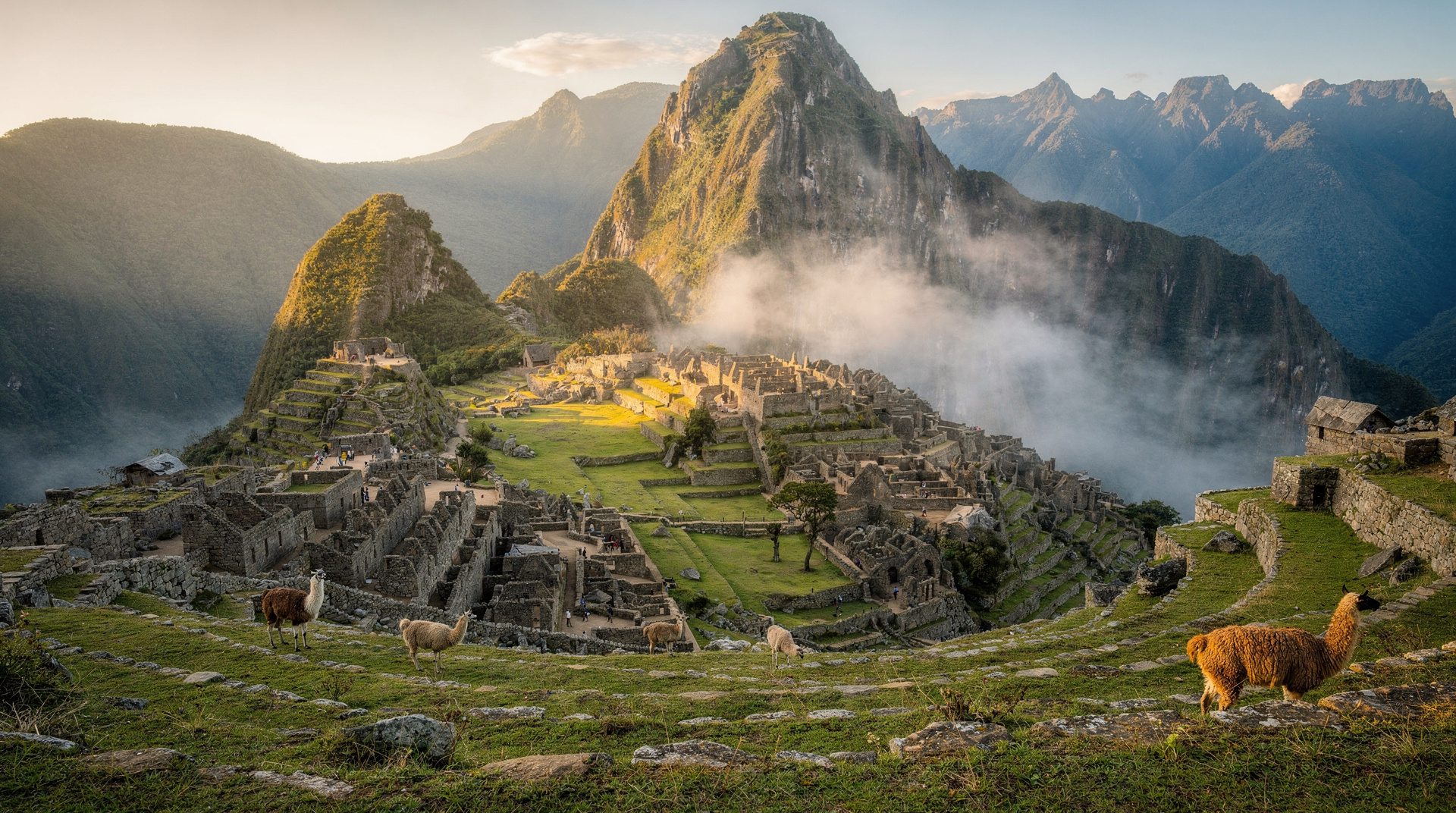
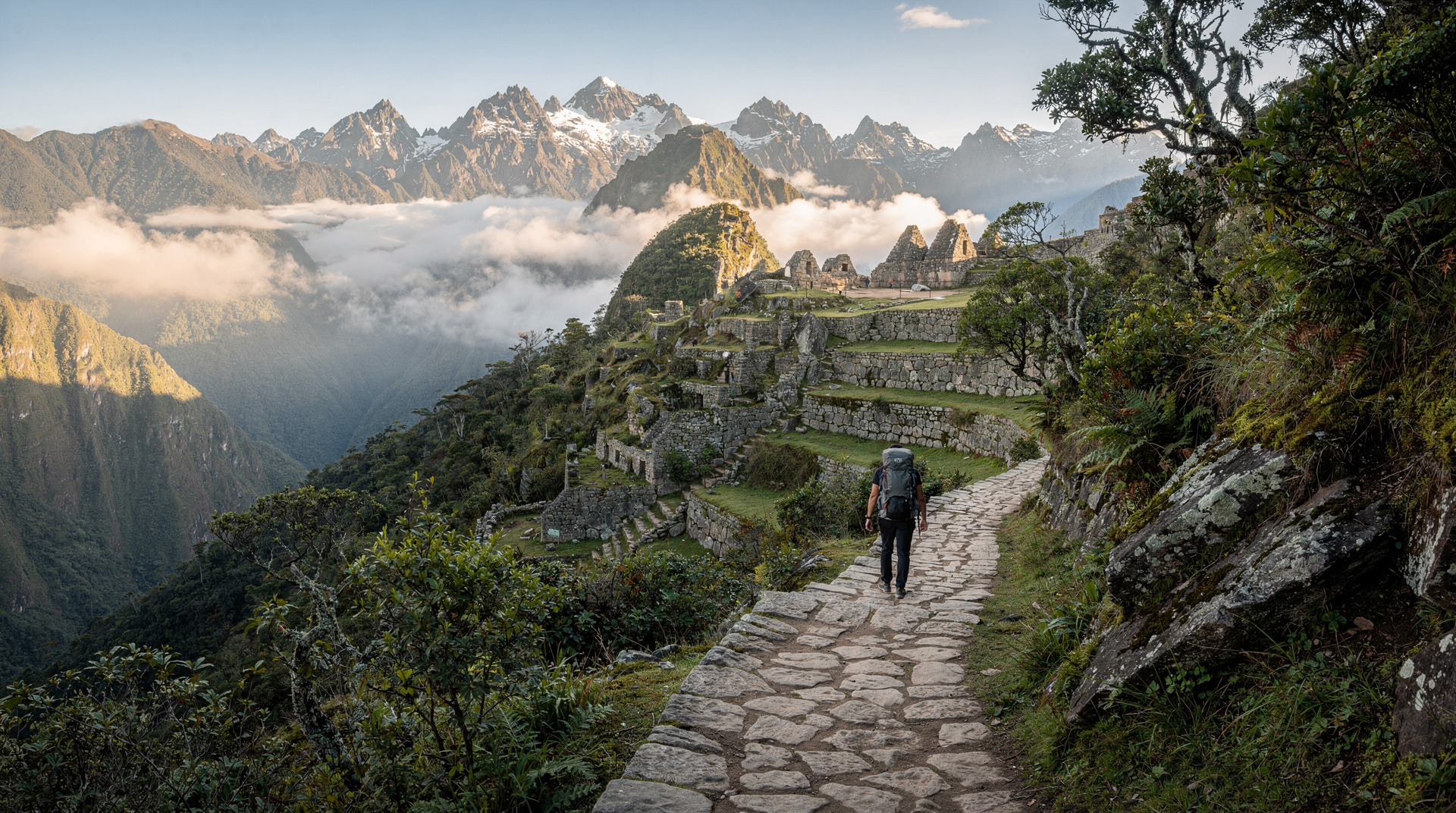
The green season: From November through April, the vegetation at the site is significantly more lush than in dry season. By August and September, the grasses on the terraces are visibly parched compared to the vivid green of an April morning. For those who prioritise the most photogenic version of the site — rich green terraces, the contrast of stone and vegetation — the shoulder months at either end of dry season deliver this better than the peak dry months.
Combining Machu Picchu timing with other sites
The timing of your Machu Picchu visit often needs to be coordinated with other elements of your southern Peru trip:
Inca Trail: The trail closes entirely in February. If the 4-day Inca Trail is your priority, this eliminates February immediately. Permits sell out for May–September months 4–6 months ahead, so if trekking matters, your itinerary planning starts with the trail dates.
Rainbow Mountain: Vinicunca at 5,200 m is best in dry season — the vivid mineral colours are less visible when the mountain is snow-covered or obscured by cloud. If both Rainbow Mountain and Machu Picchu are on your list, a May–September visit covers both optimally. See the Rainbow Mountain guide.
Inti Raymi (24 June): If seeing this extraordinary Inca sun festival in Cusco is a priority, plan your Machu Picchu visit in the same trip for the second or third week of June — before the festival week, when Cusco accommodation prices spike. Alternatively, visit Machu Picchu the week after Inti Raymi (late June) when the festival crowds have dispersed.
Lake Titicaca and Puno: No seasonal conflict with Machu Picchu timing — Lake Titicaca is accessible year-round and the Uros/Taquile experience is not weather-dependent in the same way. See the 10-day Cusco and Titicaca itinerary.
A practical note on Aguas Calientes weather
Aguas Calientes sits at 2,040 m in the river gorge below the citadel and has a slightly warmer, more humid microclimate than the site above. In dry season, evenings in Aguas Calientes are cool (10–15°C) but not cold; a fleece and light waterproof are adequate. In wet season, evenings are warm and humid after afternoon rain, with temperatures rarely dropping below 12–14°C. This is one of the warmer sleeping environments in the region — a relief after cold Cusco nights.
Quick month guide: at a glance
For visitors who need a fast reference before the full month-by-month detail:
| Month | Weather | Crowds | Prices | Verdict |
|---|---|---|---|---|
| January | Heavy rain pm | Low | Low | Budget/flexible only |
| February | Heavy rain; trail closed | Lowest | Lowest | Specialist month |
| March | Improving late month | Low | Low | Good from mid-March |
| April | Mixed to dry, lush green | Low-medium | Medium | Excellent |
| May | Dry, clear, lush | Medium | Medium | Outstanding |
| June | Dry (Inti Raymi spike) | Medium-high | Medium-high | Excellent (avoid Inti week) |
| July | Sunny, peak season | High | High | Book far ahead, go early |
| August | Sunny, peak season | High | High | Same as July |
| September | Sunny, easing crowds | Medium | Medium | Excellent |
| October | Mixed, early month good | Low-medium | Medium | Good early October |
| November | Rain returning | Low | Low-medium | Viable |
| December | Rain; Christmas peak | Low then high | Low then high | Avoid 22–30 Dec |
The Machu Picchu tickets guide handles all the booking logistics regardless of which month you choose. The complete guide ties everything together.
How the train experience changes by season
The train journey from Cusco or Ollantaytambo to Aguas Calientes is itself weather-dependent in ways that are easy to overlook when planning around citadel conditions alone. In the dry season, the Urubamba valley views from the train window are at their clearest, with snow-capped peaks visible in the distance on the Cusco–Ollantaytambo road section and dramatic canyon walls along the rail line itself.
In the wet season, low cloud and mist frequently roll into the valley, and while this produces its own atmospheric quality — many photographers specifically value the misty rail journey — it also means visibility from the train can be reduced, particularly on early morning departures. Trains run on a fixed schedule regardless of weather; delays for rain are rare, but landslide-related disruptions on the rail line, while uncommon, are somewhat more likely in the heaviest of the wet-season months (January–February) after sustained rainfall.
The shoulder-season sweet spot in practice
Combining everything above into a single practical recommendation: a traveller with genuine date flexibility should target the first two weeks of May or the first two weeks of September specifically, rather than treating “May” or “September” as uniform blocks. Early May still carries some residual wet-season lushness in the vegetation while the rain itself has essentially stopped; early September has the clearest, most reliably dry conditions of the entire dry season before the crowds of the following months build.
Late May and late September, by contrast, are transitional in their own right — late May edges toward June’s rising visitor numbers, and late September begins the shift toward October’s occasional afternoon showers. If your dates can move by even a week or two within these months, the first half of each is measurably the better choice.
A note on train pricing across the year
Train operators adjust pricing dynamically across the calendar, and the gap between the cheapest and most expensive fare on the same route can be substantial. July and August departures, particularly on convenient mid-morning schedules, command the highest fares of the year and sell out the earliest. Shoulder-month fares (April, May, September, October) sit meaningfully lower, and wet-season fares (November–March, outside the Christmas peak) are often the cheapest available all year. Booking your train ticket at the same time you settle on your travel month, rather than treating it as a separate later task, avoids the worst of the peak-season price climb.
What locals and long-term guides say
Guides who work the site year-round often give a different answer than the standard tourism-marketing line of “avoid rainy season entirely.” Many experienced Cusco-based guides privately prefer leading groups in April or late October precisely because the site feels less like a managed queue and more like the place they fell in love with when they started guiding.
Several have noted that the misty, partially-obscured views common in the shoulder months produce more memorable photographs for clients than the flat, uniformly blue-sky conditions of a July midday — the drama of cloud parting to reveal a terrace or a stone wall is, by most accounts, more visually striking than clear skies throughout. This is not an argument against dry season, which remains the safer choice for anyone who cannot tolerate weather uncertainty, but it is a useful counterweight to the assumption that “best weather” and “best experience” are always the same thing.
Circuit choice matters as much as month
The month you visit interacts with which circuit you book. There are three circuits (Panorámico, Clásico and Realeza), made up of ten routes. Circuit 2 Clásico, which crosses the urban sector, is the most photographed and the most crowded regardless of season — in July–August it can feel genuinely packed between 9 am and 2 pm. Circuit 1 Panorámico stays in the upper parts of the site without entering the urban sector, so it tends to feel calmer if you book the first available entry window. The mountain routes (including Huayna Picchu) have their own checkpoints with no lateness tolerance, so arrive early; check availability on tuboleto.cultura.pe. If your travel dates are fixed in high season, choosing a quieter circuit and an early time slot does more for your experience than waiting for a “better” week within the same month. See the circuits compared guide for how the routes differ.
If you would rather not juggle separate entries, a guided entry to the citadel gives you a fixed slot and someone who knows how the crowd moves through the site, which helps most in the busy months. Whichever month you choose, check what each ticket includes before you pay.
Turning the right month into a workable plan
Once you have a month in mind, the next step is to let it shape the rest of the trip. A few guides on this site help with each piece, and none of them changes the advice above: pick your window, book early, and enter at the first slot.
Getting there. The how to get to Machu Picchu guide explains the main routes, and the train guide goes deeper on the rail journey that most visitors take. If you are weighing the operators, PeruRail vs Inca Rail is the place to start, and trains to Machu Picchu compared lays the services side by side. Travellers on a tighter budget can read about the Hidroeléctrica route, which is worth considering in the quieter months.
Choosing a base. Many people sleep in Aguas Calientes the night before their entry slot so that the early start is easy. Others stay in the Sacred Valley first. The Ollantaytambo village guide and the Sacred Valley complete guide cover that option, and Sacred Valley vs Cusco as a base helps you decide.
Altitude and health. Your month does not change the altitude, so build in time to adjust. The Cusco acclimatization plan and the Machu Picchu altitude explained guide are both worth reading before you fix your dates.
Trekking instead of the train. If your month suits a multi-day walk, compare the best treks to Machu Picchu, the Salkantay trek guide and the Inca Trail permits guide. The train vs trek guide is a good tiebreaker when you cannot decide. For a dry-season window, a multi-day Salkantay trek ending at Machu Picchu is the usual alternative when Inca Trail permits are gone.
Month-specific reading. For a different take on the same question, the Machu Picchu in each month guide is a useful companion, while the Cusco dry season guide and the Cusco rainy season guide describe what the city itself feels like at either end of the year. Our trip planning guide for 2026 and the 4-day Cusco and Machu Picchu itinerary show how these choices fit into a real schedule.