Best time to visit Cusco — honest month-by-month guide
From Cusco: Machu Picchu Day Trip with Train Tickets
When is the best time to visit Cusco?
May through September is the dry season — clear skies, cold mornings, and reliable conditions for trekking. June, July and August are the most visited months; July is peak of peak, with crowds at Machu Picchu and a premium on accommodation. Inti Raymi (24 June) is extraordinary but brings Cusco's busiest week. The shoulder months — May and September — have nearly identical weather to July but fewer tourists and better prices. November through March is the wet season; January and February are the wettest months and the Inca Trail is closed all of February.
There is no bad time, but there is a clear better time
Cusco is a year-round destination. The archaeological sites operate every month, Machu Picchu is open 365 days a year, and the city’s restaurants, markets and cultural life do not pause for weather. But the experience changes significantly across the calendar, and the month you choose affects crowds, prices, trekking conditions, and how the landscape looks.
The honest summary: the dry season (May–September) is better in nearly every objective measure for trekking and outdoor activities. The wet season (November–March) offers lower prices, greener scenery, and — outside peak periods — a more relaxed visitor atmosphere. June–August are the most crowded months by a considerable margin. May and September are the best-kept secrets.
This guide goes month by month with specific detail on what each period offers and what you are trading away to visit it.
| Dry season | May–September, clear skies, cold nights |
| Wet season | November–March, afternoon showers, greener valleys |
| Busiest weeks | 20–28 June (Inti Raymi), 22–30 December |
| Cheapest months | January, February, November |
| Inca Trail closed | All of February (maintenance) |
| Book ahead | 6–8 weeks for July–August, 3–4 months for Inti Raymi week |
The two seasons
Dry season: May to September
The altiplano and Andes around Cusco experience a clear seasonal pattern driven by the circulation of the South American monsoon. The dry season, locally called verano (summer), runs May through September. During these months:
- Rainfall: minimal to absent, particularly June–August. Clear blue skies are the daily norm.
- Temperatures: cold nights (Cusco 2–8°C), warm days (15–20°C at altitude). The thin air at 3,400 m means solar radiation is intense during the day even when it is cold in the shade.
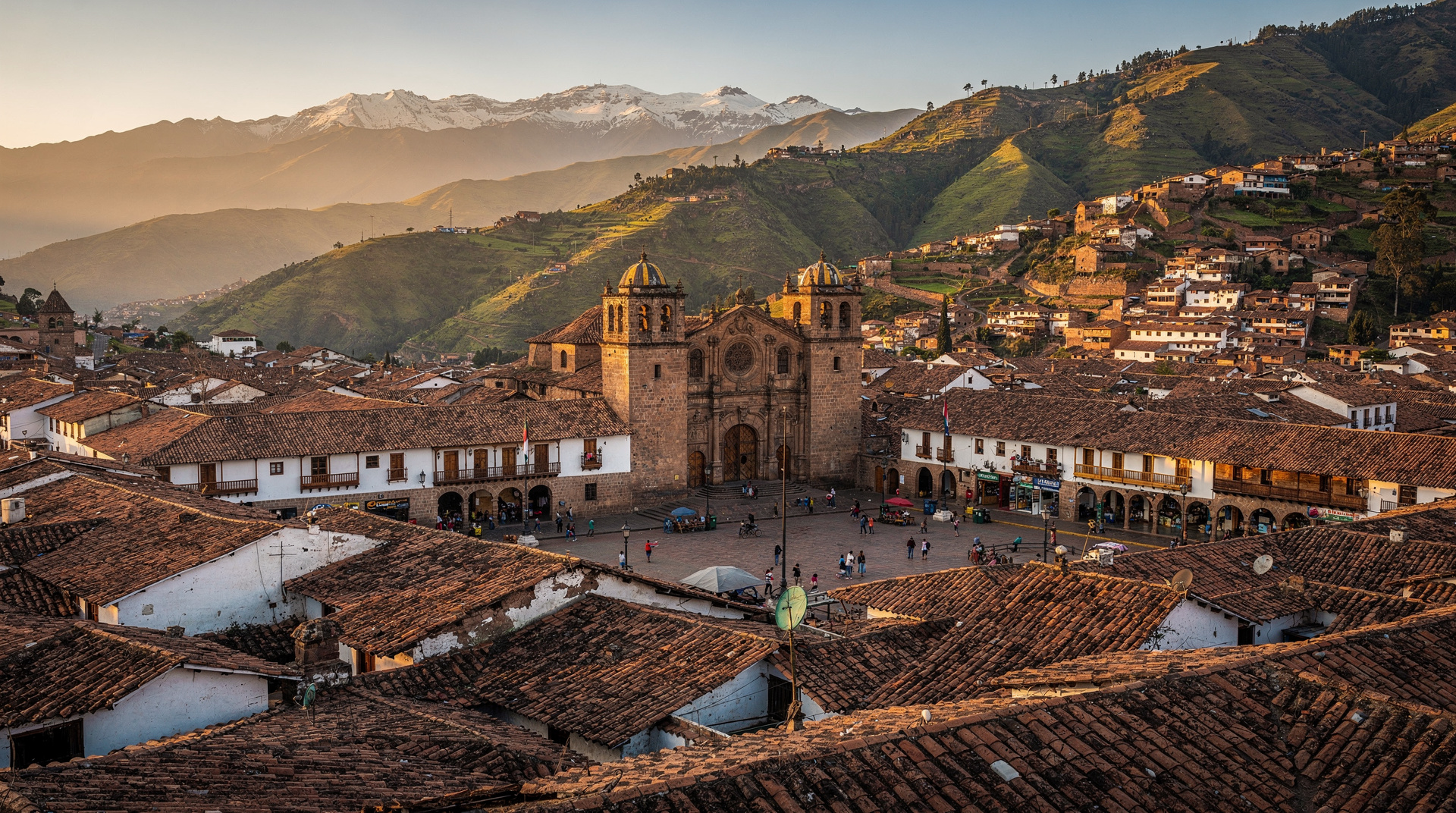
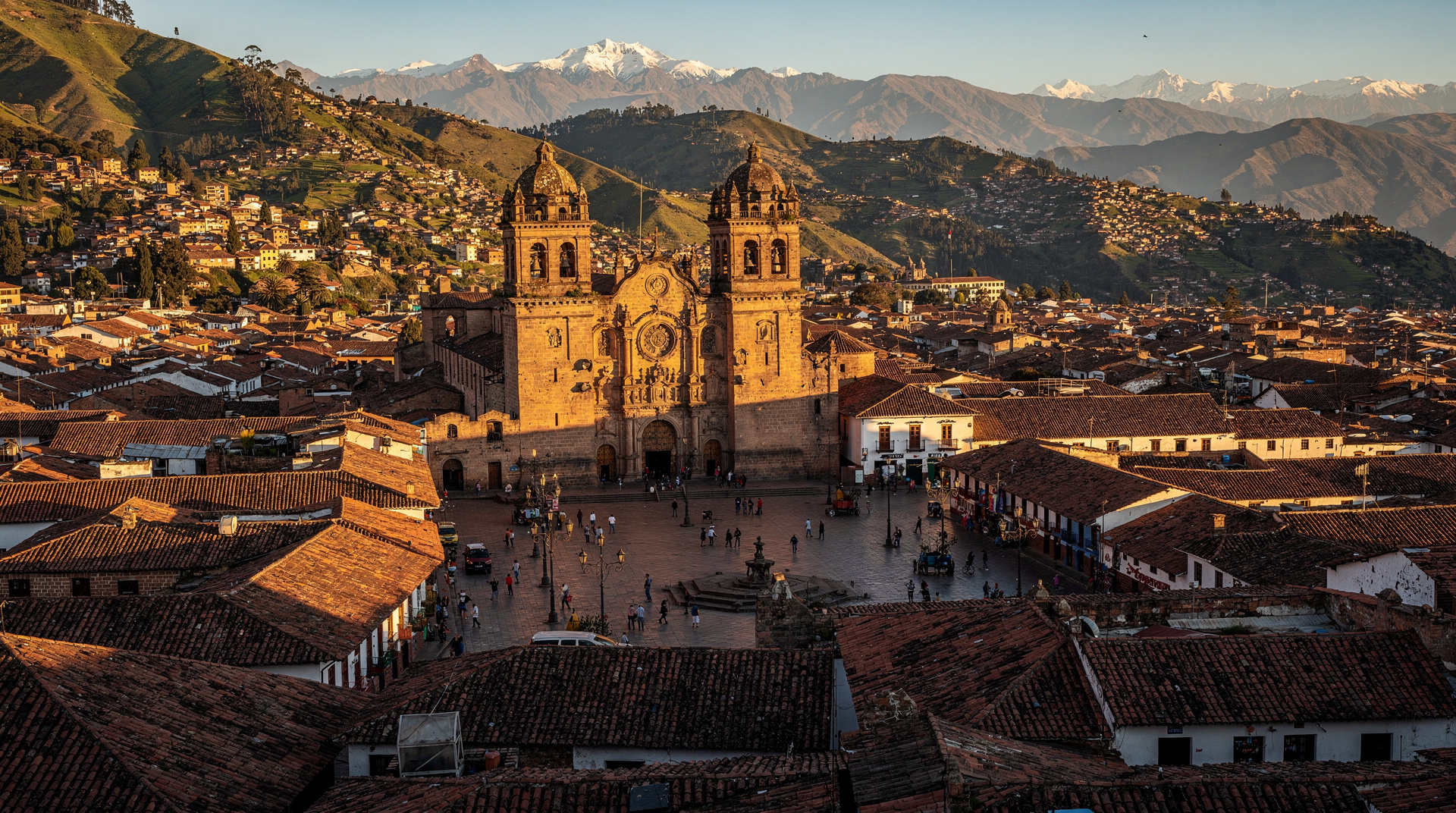
- Visibility: excellent. Snow-capped peaks are visible from the city and Sacred Valley. The altiplano below Puno shimmers. Rainbow Mountain’s colours are vivid without the muting effect of cloud.
- Trails: dry and firmly-graded. The Inca Trail, Salkantay Trek and Lares routes are all in optimal condition.
The trade-off: June, July and August attract the majority of visitors to the region. July at Machu Picchu is the busiest month of the year worldwide. Accommodation prices peak, timed entry slots require advance booking, and the citadel queues are real.
Wet season: November to March
The wet season, locally invierno (winter), runs November through March. Peak rainfall falls in January and February, with January–February being the wettest months. During these months:
- Rainfall: daily afternoon showers, sometimes heavy and sustained. Mornings are often clear or partly cloudy before the rain builds.
- Temperatures: slightly warmer than the dry season (nights 8–12°C, days 18–22°C in Cusco).
- Landscapes: intensely green. The Urubamba valley, Sacred Valley terraces and hillsides are vivid emerald after weeks of rain.
- Trails: muddy, sometimes flooded in sections. The Inca Trail closes in February entirely.
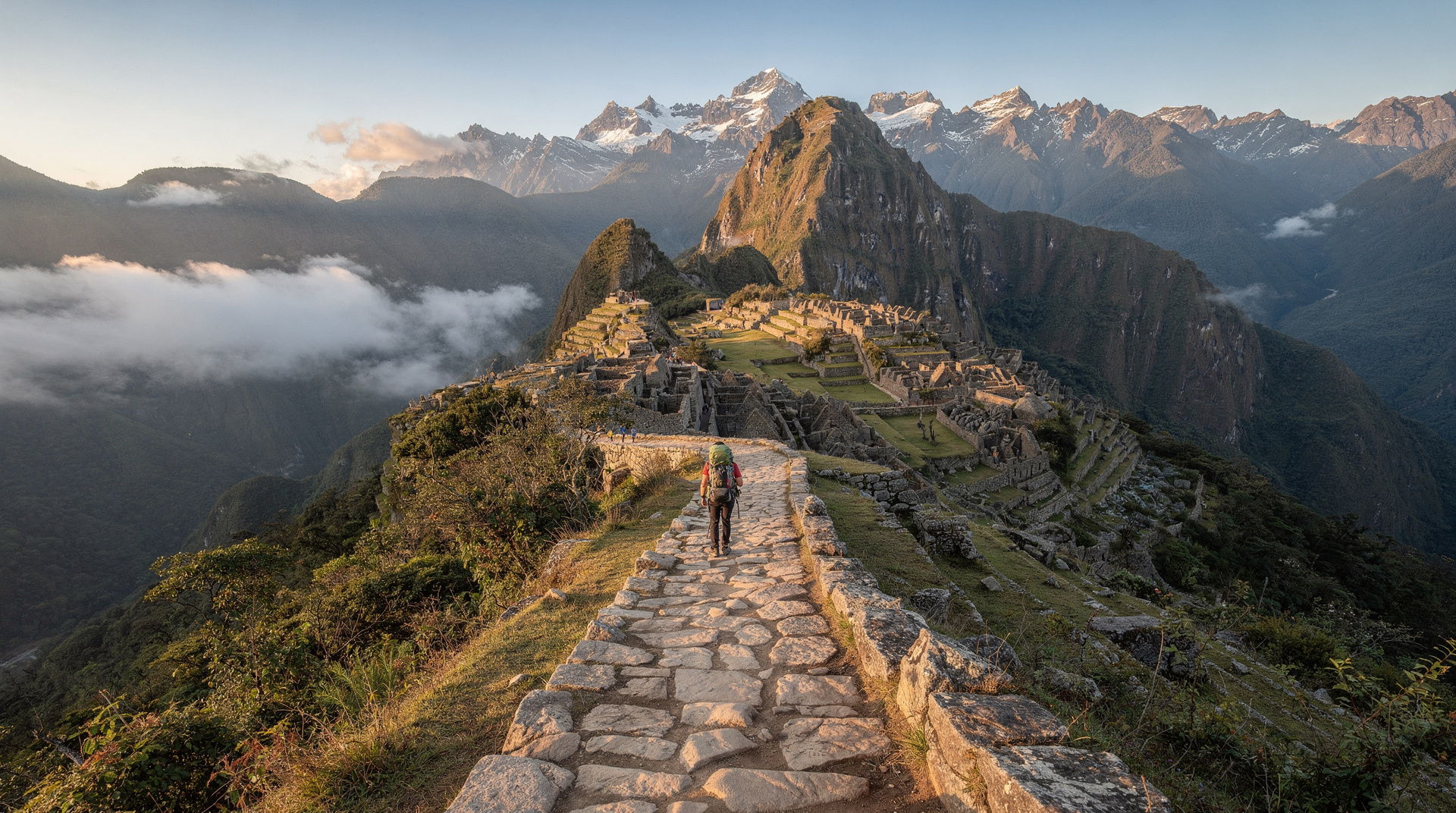
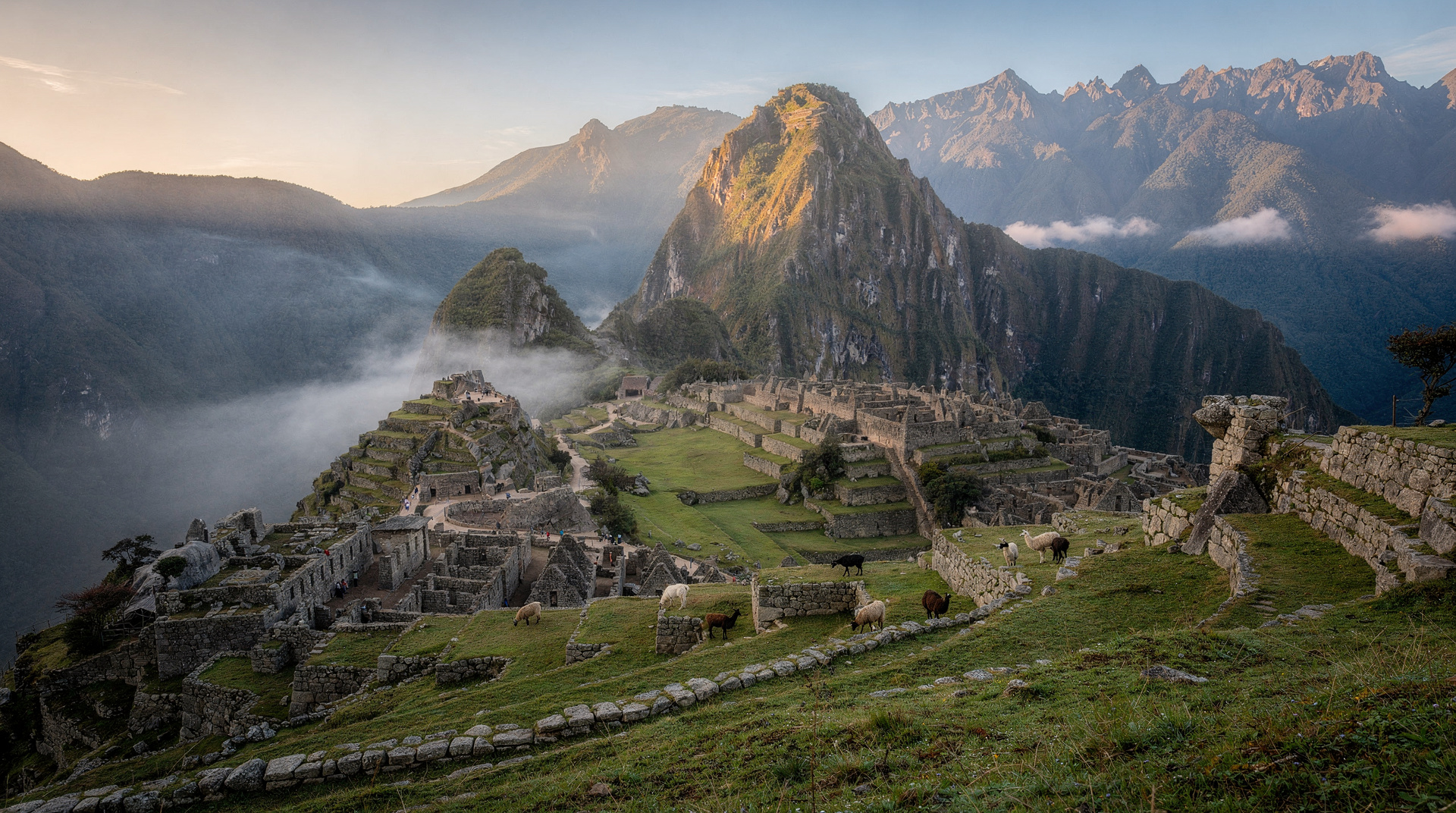
- Machu Picchu: operational year-round, though the cloud forest setting is mistier and more atmospheric in a wet-season way that many visitors find as beautiful as the clear-sky version.
The November–March period is when trekking agencies close their hiking programs, when Machu Picchu operates with more free entry slot availability, and when Cusco’s tourism-sector prices drop by 20–40%.
Month-by-month breakdown
January
Peak of the wet season. Daily rain, sometimes continuous in the afternoon and evening. The landscape is extraordinary — everything is green, rivers are full, the Andean flowers are blooming. Machu Picchu has a particular quality in low cloud and mist that photographers value. Tourist volumes are low (post-New Year lull), making this one of the quieter months to visit. The Inca Trail is closed. Budget travellers find the lowest accommodation prices of the year in January.
February
The wettest month and the most restricted. The Inca Trail is closed for the entire month. Machu Picchu operates normally via train. The Carnaval celebrations in Cusco are lively and genuine — a local festival with parades, water fights and dancing that is not put on for tourists. February is the best month for budget travel to Cusco if you have no interest in trekking. Crowds are at their lowest of the year.
March
Rain begins to ease. The landscape is still intensely green. Early March still sees significant wet-season weather; by late March the shoulder transition begins. The Inca Trail reopens after its February closure — the first March permits are snapped up quickly by those who specifically want the trail in its greenest post-rainy-season condition. A good month for visitors who want a mix of budget pricing, fewer crowds, and improving weather.
April
Transitional month. Rain is occasional rather than daily. Days are often clear and warm; afternoons may cloud over without necessarily raining. The landscape retains the green of the wet season. Easter week (Semana Santa) falls in March or April and is significant — Cusco’s religious processions during Holy Week, particularly the Señor de los Temblores procession on Maundy Thursday, are among the most impressive religious events in the Americas. Accommodation books up for Semana Santa; prices spike briefly.
May
The dry season properly begins. Clear skies arrive with consistency. Visitor numbers start increasing but June–August levels are still weeks away. May is an excellent month — the landscape retains some green from the wet season, temperatures are good, trails are in condition, and crowds are manageable. Machu Picchu timed slots are available with reasonable advance notice (3–4 weeks) rather than the months-ahead planning required in July.
June
June opens the high season. The days are reliably clear, mornings are cold, and visitor volumes climb week by week through the month. The highlight is Inti Raymi on 24 June — the Festival of the Sun, Cusco’s biggest annual event. The week surrounding Inti Raymi (roughly 20–28 June) is Cusco’s most crowded and expensive week of the year. Hotels must be booked 3–6 months in advance for this period. The ceremony itself — a full theatrical re-enactment at Sacsayhuaman with the fortress as backdrop — is spectacular. If you can manage the logistics and cost, this is when Cusco comes alive most vividly.
July
Peak season. The busiest month of the year at Machu Picchu — July operates at the higher 2026 daily quota (5,600 visitors) and timed slots must be booked weeks ahead. Inca Trail permits for July sold out as early as March–April. Cusco is full of visitors, prices are highest, and the Sacred Valley accommodations are at capacity on weekends. The weather is reliable and the days are perfect. For visitors who book well ahead and don’t mind crowds, July is completely enjoyable. For those who need spontaneity or find crowds exhausting, May or September are better choices.
August
Similar conditions to July. Slightly lower volumes than July peak but still fully in the high season. The last week of August sees a gentle beginning of the shoulder transition. Machu Picchu still requires well-ahead booking. Weather continues excellent.
September
The hidden gem of the Cusco calendar. The dry-season weather continues — clear mornings, blue skies, good conditions for trekking. But the July–August peak subsides. Visitor numbers drop noticeably. Machu Picchu timed slots become available with 3–4 weeks notice. Accommodation prices in Cusco and the Sacred Valley begin to ease. Inca Trail permits are more available. The landscape is dry (the wet season’s green has faded), but the clarity of the high-altitude light in September is extraordinary. September is the most consistently recommended month for visitors who want good weather without the crowds.
October
Transitional month, beginning of the shoulder period. The first rains may appear in late October. Still largely dry. Visitor volumes continue declining. A good month for those who want the end of trekking season with reduced prices and comfortable conditions.
November
The wet season begins. First reliable afternoon rains return. Landscapes start greening up. Visitor volumes at their lowest (pre-Christmas). One of the cheapest months for accommodation across the region.
December
Christmas week (22–30 December) sees a mid-season spike — Cusco’s plazas fill with holiday visitors, accommodation prices jump, and Machu Picchu operates near capacity for the Christmas–New Year period. Outside that window, early December is very quiet and late December (post-New Year) similarly so.
Inti Raymi: the 24 June festival in depth
Inti Raymi deserves specific attention because it fundamentally changes Cusco’s character for a week. The Festival of the Sun was the most important ceremony of the Inca calendar — the winter solstice celebration, marking the return of the sun after the shortest day. Suppressed by the Spanish in the colonial period, it was revived in the 20th century as a cultural performance based on historic chronicles.
The modern event involves three stages spread across 24 June: a morning ceremony at Qorikancha (the Temple of the Sun in Cusco), a midday procession through the historic centre to the Plaza de Armas, and a full afternoon theatrical performance at Sacsayhuaman fortress. The Sacsayhuaman finale involves hundreds of performers, elaborate Inca-style costumes, llamas, ritual fire and the delivery of elaborate speeches in Quechua. The fortress provides a genuinely extraordinary backdrop — the Inca stone walls, the panorama of Cusco below, and on a clear afternoon, the Andean peaks on the horizon.
Tickets for the Sacsayhuaman performance sell out months ahead. Standing space on the surrounding hillsides is free but crowded. The Plaza de Armas ceremony earlier in the day is viewable without a ticket.
For visitors who can plan 4–6 months ahead, the Inti Raymi week represents Cusco at its most culturally intense. For last-minute travellers, it is best avoided — not enough accommodation and impossibly expensive.
Rainbow Mountain and the seasons
Rainbow Mountain Vinicunca is accessible year-round but weather conditions matter enormously. The multicoloured mineral stripes that give the mountain its name are visible only when the slopes are snow-free. In the wet season (particularly January–February), snowfall can cover the colours entirely, and cloud frequently obscures the summit view. The dry season — particularly May through September — offers the best combination of clear skies and visible mineral colours. The Rainbow Mountain complete guide covers conditions in detail.
Book your Machu Picchu day trip from Cusco well ahead of your travel dates regardless of season — timed entry slots and train seats both require advance booking, and in the dry season the planning horizon stretches to 6–8 weeks ahead.
How altitude and season interact
Cusco sits at 3,400 m, and altitude affects your experience of every season differently. In the dry season, the thin air and clear skies mean intense UV during the day even when the shade temperature is cold — sunburn and dehydration are real risks in June and July despite the chilly mornings. In the wet season, the same altitude combined with damp clothing and rain makes hypothermia a more realistic concern on exposed sections of the Salkantay or Ausangate routes.
Whichever season you pick, build in 2–3 easy days in Cusco or the lower Sacred Valley before any strenuous trek — the acclimatization plan covers this in detail, and it matters more than the weather forecast for how your trip actually feels.
What locals actually do differently by season
Cusqueños themselves adjust their own calendars around the same seasonal patterns visitors face, and watching how the city behaves is a useful signal. Restaurant terraces around the historic centre extend their outdoor seating from May onward and retract it by late October. Local families plan their own Sacred Valley outings for May and September specifically, avoiding the June–August period when prices for everything — transport, guided visits, even market produce aimed at the tourist trade — rise in response to demand.
Cusco’s own festival calendar reinforces the June spike: beyond Inti Raymi itself, the entire month is informally known as the “Festival of Cusco,” with cultural events, dance competitions and civic celebrations scheduled throughout June to capitalise on the visitor influx. If you want to see Cusco function as a city rather than as a tourism backdrop, the shoulder months give you both — good weather and a city not yet (or no longer) fully absorbed into peak-season mode.
Regional weather differences worth knowing
Cusco’s own microclimate is not identical to the Sacred Valley’s or Machu Picchu’s, even though all three are commonly visited on the same trip. The Sacred Valley floor sits 600–700 m lower than Cusco and is correspondingly a few degrees warmer year-round — a useful fact if you are travelling in the coldest dry-season nights and want a milder base.
Machu Picchu, in the cloud forest at 2,430 m, has a distinctly different rainfall pattern from Cusco itself: afternoon cloud builds over the ridges there even on days when Cusco stays completely clear, because the cloud forest’s proximity to the Amazon basin’s moisture feeds local convection that the higher, drier altiplano around Cusco does not experience in the same way. Planning a multi-stop itinerary should account for this — a “dry season” day in Cusco does not guarantee the same conditions two hours away by train.
Easy days in Cusco, whatever the weather
Not every day of a trip needs to be a trek. In the dry season, a guided outing to the ruins above the city is best done in the clear morning light, and a half-day city tour taking in Sacsayhuaman and the nearby Inca sites is a gentle way to spend the first days while your body adjusts to the altitude. The Sacsayhuaman guide and the Cusco archaeological sites page help you decide how much to see on your own.
When the afternoon rain arrives in the wet season, shift the plan indoors rather than abandoning the day. a Peruvian cooking class that starts with a visit to the market fits that rhythm well: you shop in the morning, cook in the afternoon and eat what you made. The Cusco cooking classes compared guide and the San Pedro market food guide explain what to expect before you book.
Booking timelines by season
How far ahead you need to plan changes dramatically with the calendar. For a July or August trip, lock in Machu Picchu train tickets and any Inca Trail permit 6–8 weeks out at minimum — Inca Trail slots for those months are often gone by March. For Inti Raymi week specifically, hotels in the historic centre should be booked 3–6 months ahead, and even mid-range options fill up. For the wet season (November–March, excluding the Christmas spike), 2–3 weeks of lead time is usually enough, and prices reward the flexibility. The tourist ticket guide explains how the Boleto Turístico interacts with your date choice, since some sites on it require timed slots regardless of season.
Matching the season to your plans
The right month depends less on the weather in the abstract than on what you want to do once you arrive. If a multi-day trek is the centrepiece, the dry season is the natural fit, and the Inca Trail complete guide and permits guide explain why that route needs the most advance planning. If you would rather keep the calendar flexible, the Lares trek and the Salkantay trek guide give you alternatives that are less tied to a single permit window.
If your priority is the citadel itself, read the Machu Picchu best time guide alongside this one, and sort out your tickets early with the Machu Picchu tickets explained page. Travellers who prefer culture, food and slow days over big hikes can happily choose a wetter month, spending mornings at Qorikancha and the San Pedro market, then retreating indoors when the afternoon cloud builds. Festival lovers should also look at the Cusco festivals calendar and the Inti Raymi festival guide, since several celebrations beyond 24 June can shape the month you pick.
Families and first-timers often benefit from a gentler schedule: the how many days in Cusco guide and the Cusco with kids page help you decide how much slack to leave, whichever season you choose.
The honest conclusion
Visit May or September if you want excellent weather, manageable crowds, and good value. These months consistently receive the highest satisfaction scores from independent travellers comparing them to July visits.
Visit in June if Inti Raymi is specifically on your agenda — book 4–6 months ahead for accommodation and allocate a significant daily budget for the festival week.
Visit July or August if your dates are fixed, you have booked everything 6–8 weeks ahead, and crowds do not particularly bother you.
Visit in the wet season (November–March) if budget is the primary concern, you prefer quieter sites, or you specifically want to see the landscape in its greens rather than its drys. February is the most restricted (Inca Trail closed) but the cheapest and quietest month.
The cusco dry season guide and rainy season guide go deeper on each period. The Machu Picchu month-by-month guide covers conditions at the citadel specifically across the year.