Ausangate trek guide: circuit of the sacred mountain
From Cusco: Ausangate Lakes and Glaciers ATV Tour
What is the Ausangate trek?
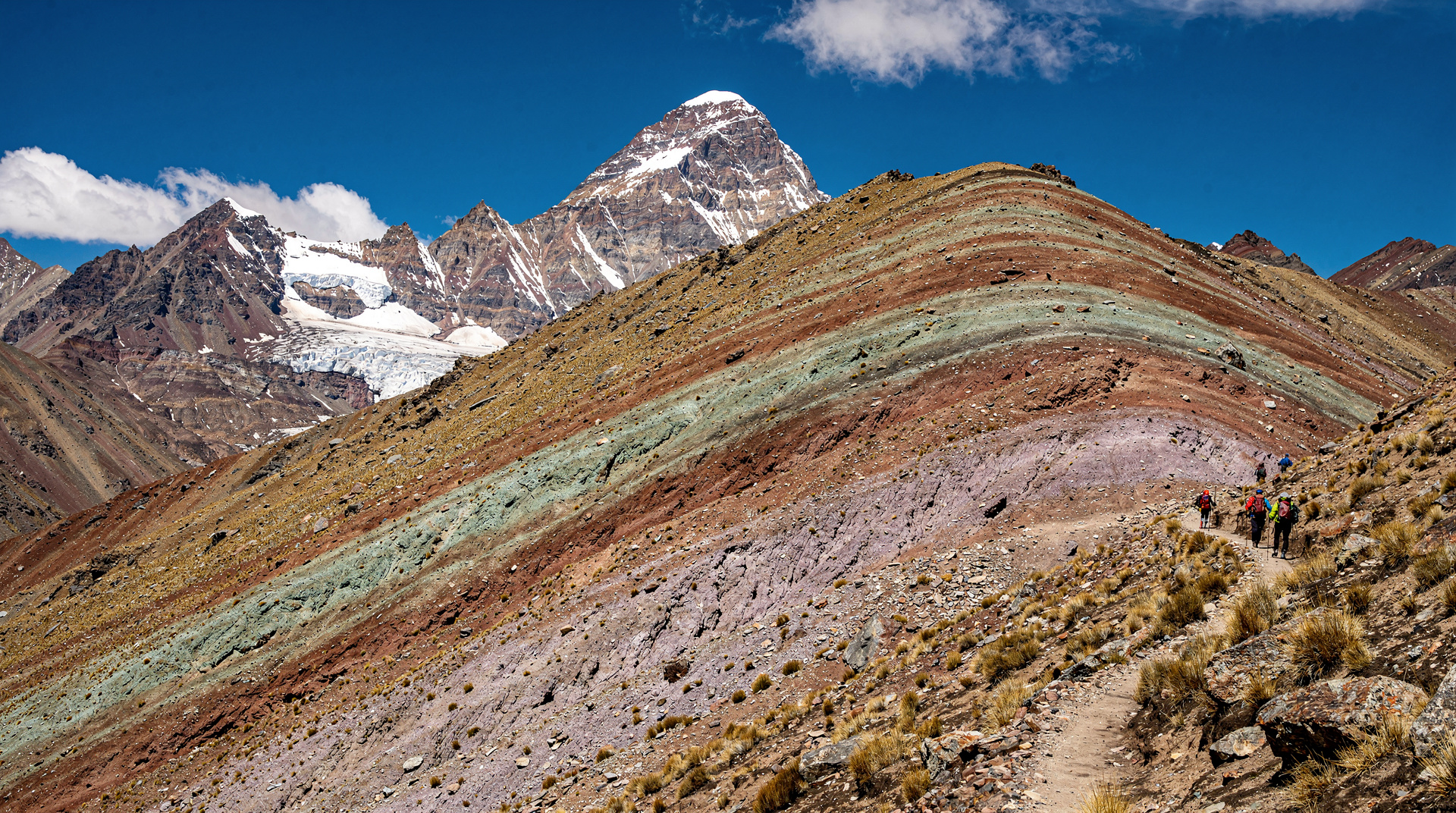
The Ausangate trek is a 4–5 day circuit around the sacred Ausangate mountain (6,372 m), crossing five high-altitude passes between 4,900 m and 5,200 m, passing glacial lakes and llama herds, and connecting to Rainbow Mountain (Vinicunca) at 5,200 m. No permit required. The highest-altitude multi-day trek in the Cusco circuit and one of the most demanding.
The trek that never drops below 4,500 m
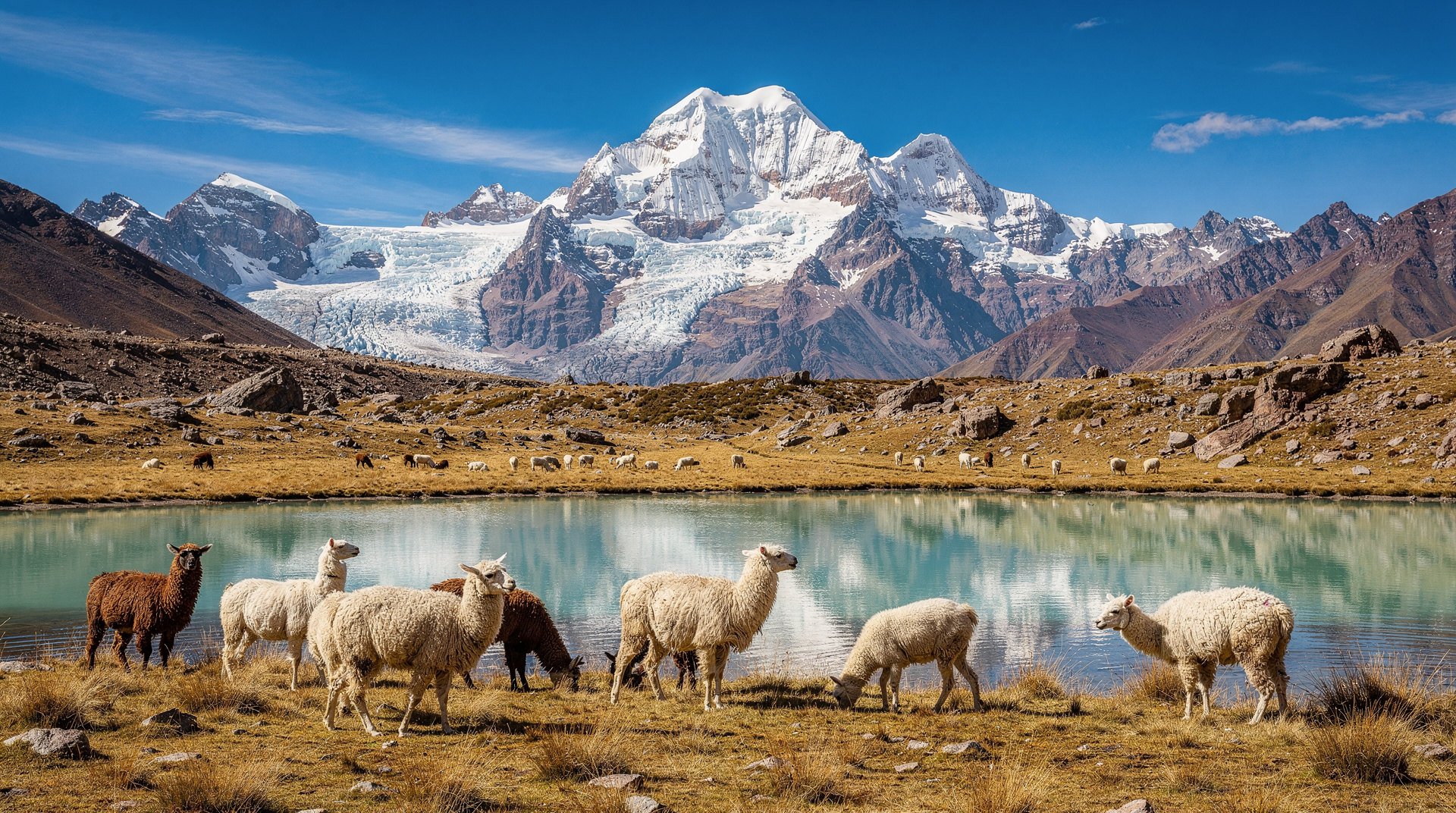
Most Cusco-area treks involve altitude as a single-day challenge — a high pass on day two, then a progressive descent. The Ausangate circuit is different. It circles a 6,372 m mountain over four to five days, spending the entirety of the route above 4,500 m and crossing five passes between 4,900 m and 5,200 m. There is no recovery day at low altitude. The circuit operates at permanently high altitude from start to finish, in the company of Ausangate’s glacier faces, glacial lakes of extraordinary colour, and the llama and alpaca herds of the Quechua communities who have called this landscape sacred for over a thousand years.
This is not a beginner’s route. The altitude demands are serious and sustained. Rainbow Mountain (Vinicunca), at 5,200 m, is visited as a side trip or on the final day of the circuit — a day that would be the altitude highlight of any other trek is simply the connector to the trailhead here.
For trekkers who have done the Inca Trail or Salkantay and want the Cusco circuit’s genuine high-altitude challenge — with glaciers, coloured mineral lakes, and Andean wildlife in a landscape that sees a fraction of the visitor numbers of either — the Ausangate is the natural progression.
| Where | Circles the Ausangate massif, southeast of Cusco |
| Cost | Around $350–550 per person (camping, 4–5 days) |
| Time needed | 4–5 days, five passes 4,900–5,200m |
| Getting there | Road transfer from Cusco to Tinki/Pacchanta |
| Best time | May–September (dry season) |
The mountain and its significance
Ausangate (Apu Ausangate) is the highest peak in the Cusco region at 6,372 m and is considered the most sacred of the Cusco Apus — the mountain deities venerated in Andean cosmology. The Q’oyllur Rit’i pilgrimage festival, held annually at a glacial lake on its slopes in the weeks before the June solstice, draws tens of thousands of pilgrims from across the Andes. The mountain’s glaciers have retreated significantly in recent decades due to climate change — visible on the circuit in the form of exposed rock where ice maps from 30 years ago show glacier cover.
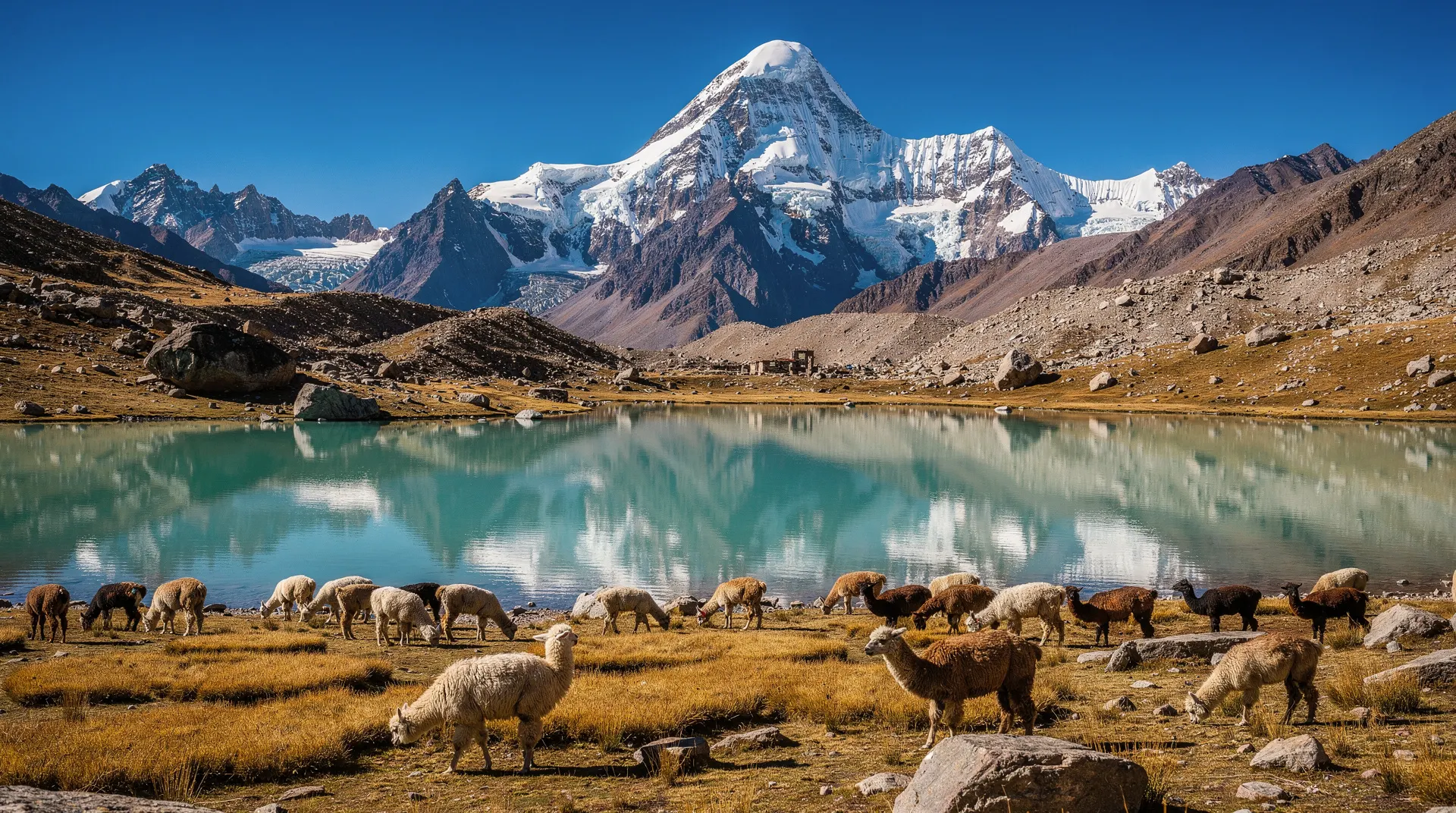
The trek circles the mountain through the traditional territory of Quechua herding communities. Llamas and alpacas are ubiquitous; vicuñas (the wild relative of the alpaca) can occasionally be spotted on the higher sections. The circuit is a working landscape as well as a trekking route.
The route: five passes, five days
Day one — Cusco to Tinki or Pacchanta (3,900–4,350 m)
Most circuits begin with a 3–4 hour road transfer from Cusco to Tinki (3,900 m) or Pacchanta (4,350 m) — a thermal spring settlement on the northern flank of Ausangate. The first evening allows acclimatisation at camp altitude and a visit to the Pacchanta hot springs, which sit open-air in the high puna with a direct view of the Ausangate glacier face.
Day one is logistical. The hot springs are the reward.
Day two — First passes and glacial lakes (camp around 4,600 m)
Day two begins the circuit proper, crossing the first pass (around 4,900 m) and descending to the first series of glacial lakes. The Ausangate glaciers are visible from the pass at close range — crevassed blue-white ice descending the mountain face, dramatically different in character from the views of the Salkantay glacier visible from that route’s pass.
The glacial lakes on the northern section of the circuit are the classic “7 lakes” of Ausangate’s reputation: Pucacocha, Azulcocha, and several others. Their colours are determined by the mineral content of the glacial meltwater and sediment — some are a vivid copper-oxide turquoise, others a deep blue-grey. The lake sequence is stunning in dry season morning light.
Camp at around 4,600 m. The cold here is serious — temperatures drop well below freezing at night on the high camp sites.
Day three — Second and third passes (highest section around 5,200 m)
Day three is the altitude peak of the circuit, crossing the highest pass at approximately 5,200 m. The ascent from a high camp to a 5,200 m pass is different from the Salkantay’s single high day: by day three, you have already spent two nights above 4,500 m and your body is acclimatised in a way that helps, but the altitude is genuinely harder here than anywhere on the Salkantay or Inca Trail.
The descent on the far side passes additional lakes and into the valley system on the eastern flank of the mountain — more remote, less visited by the short day-trip circuits, and with views of the Caracol and Jampa glaciers.
Day four — Fourth pass and approach to Rainbow Mountain area (camp 4,800 m)
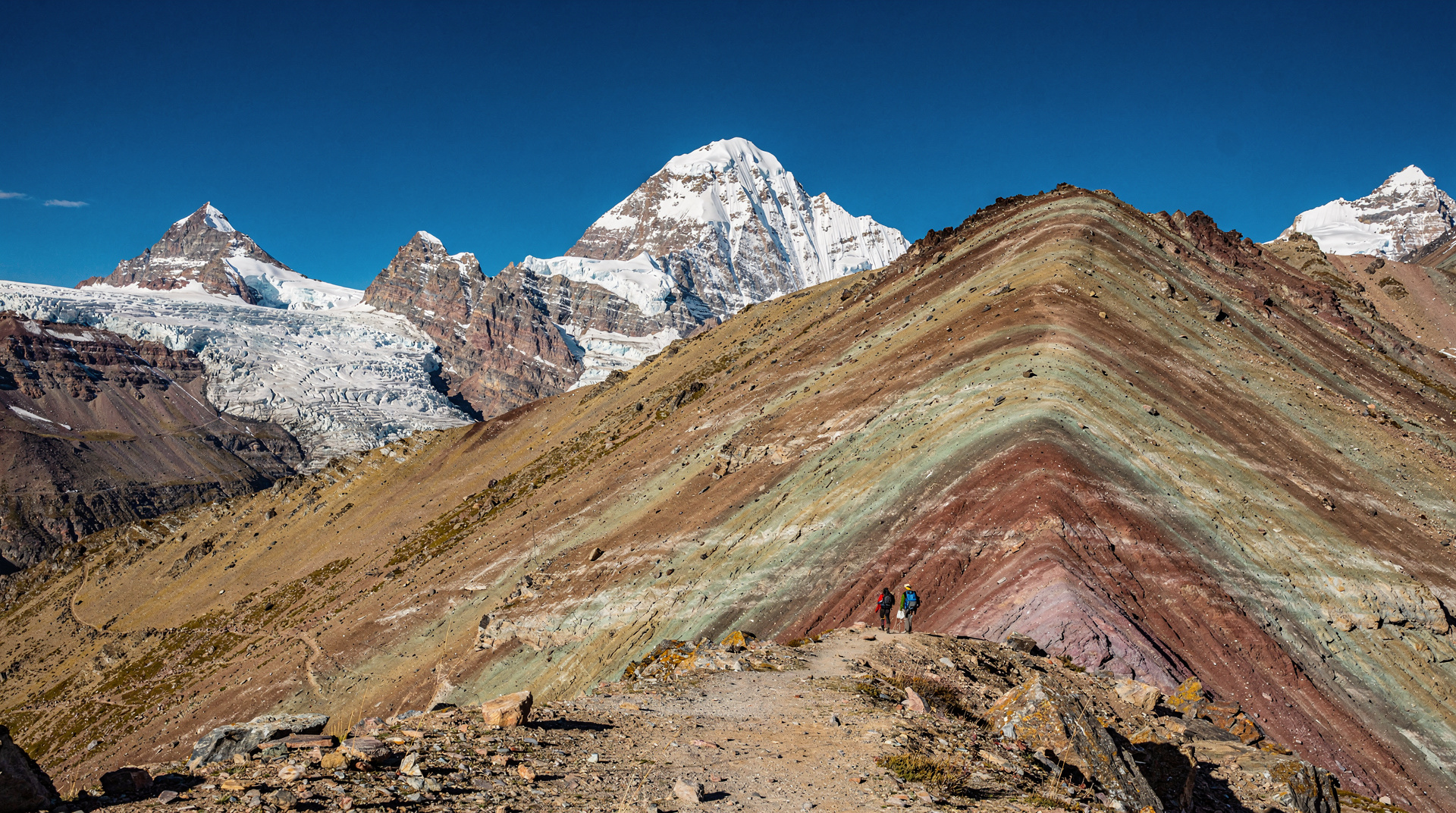
Day four rounds the southern end of the Ausangate massif, crossing the fourth pass and arriving at the camp that serves as the base for the Rainbow Mountain (Vinicunca) approach. The camp is at around 4,800 m — the altitude of Rainbow Mountain is 5,200 m, roughly a 2–3 hour walk from camp, accessible as an afternoon or early morning side trip.
For many circuit trekkers, seeing Vinicunca as part of the full circuit — arriving from the wilderness of the Ausangate western flanks rather than on the crowded day-trip trail from the road — is a qualitatively different experience. The mountain’s colours are the same; the context is not.
Day five — Fifth pass and return to trailhead
The final day crosses the fifth pass and descends to the trailhead for the bus return to Cusco. The fifth pass, at around 4,900 m, is easier after four days of altitude acclimatisation — most trekkers find the final day’s passes feel more manageable than the first. The descent to the road is gradual, and the return transfer reaches Cusco by evening.
For travellers who want a taste of the Ausangate area without the full circuit commitment, the Ausangate ATV and lakes day trip covers the glacial lake section of the northern circuit in a single day by ATV, giving access to the coloured lakes and the mountain views without the multi-day camping commitment.
Altitude: preparation requirements
The Ausangate is the most serious altitude commitment of any trek in the Cusco circuit. All camps are above 4,500 m. The highest pass is 5,200 m. Sustained living and moving at this altitude requires genuine prior acclimatisation — not the three-night minimum that applies to the Inca Trail, but ideally four to five nights at altitude with progressively increasing physical activity.
The recommended preparation:
- Arrive in Cusco (3,400 m) four to five days before starting the Ausangate
- Day one in Cusco: rest, minimal activity
- Days two and three: short walks at altitude, no major exertion
- Day four: half-day hike to around 4,000 m (the Cusco city and surrounding ruins circuit is suitable)
- Day five or later: start the Ausangate
The Cusco acclimatisation plan covers the preparation sequence in detail. The altitude sickness guide covers the specific symptoms to monitor at altitude above 4,500 m, where the risk profile is higher than on the lower Inca Trail section.
One important note: the Ausangate circuit has no easy descent route if symptoms become serious on days three or four. Descent from 5,000 m means retracing the passes in the other direction. This is a practical consideration in route planning, not a deterrent — but it underscores why adequate acclimatisation before starting matters more here than on other Cusco treks.
Wildlife and landscape
The Ausangate circuit passes through high-altitude wildlife habitat with limited human activity. Vicuñas — the smaller, wild relative of the alpaca — are regularly spotted on the more remote sections, particularly on the eastern and southern flanks. Andean geese, condors, and the occasional puma track are part of the landscape. The puna grass is a distinctive pale gold in dry season, contrasting with the blue of the sky and the glaciers.
The llama herds belong to the Quechua communities whose territory the circuit crosses. Unlike the Lares trek, the Ausangate does not pass through communities in a way that allows for extended cultural engagement — the circuit is more isolated, and the community contact is briefer and less central to the experience. The landscape and altitude are the primary draws here.
Cost
A guided 4–5 day Ausangate circuit costs $350–550 per person:
- Certified guide
- Mule or llama support for equipment
- Camping equipment and meals
- Transport Cusco to the trailhead and return
No government permit fee. Lodge-to-lodge options with permanent mountain lodges on the circuit exist at higher cost ($600–800). The lodges provide warmer sleeping conditions than camping but are simple in facilities.
When to go
May–September is essential for the Ausangate. The passes at 5,200 m can have snow and ice in wet season, making the crossings significantly more challenging and potentially dangerous without appropriate equipment. In dry season, the passes are typically snow-free by mid-morning even after overnight frost. Wet season visits to the circuit exist but should only be considered by experienced high-altitude trekkers with crampons and ice axe experience.
The Rainbow Mountain day trip crowd peaks from June to August. If you are doing the Ausangate circuit and approaching Vinicunca from the wilderness side, you bypass the main day-trip trail — but the mountain itself will have more visitors on its summit in high season than at other times.
For a full day-trip perspective on Rainbow Mountain without the multi-day circuit commitment, the Rainbow Mountain complete guide covers the standard day-trip approach and what to expect at the site.
The lodge option versus camping
The Ausangate circuit has a lodge infrastructure — three permanent mountain lodges positioned approximately one day’s walk apart on the circuit, providing simple heated rooms, hot showers, and proper meals. The lodge-to-lodge circuit costs significantly more ($600–800) than the camping version but removes the core physical hardship of sleeping at altitude in a cold tent.
Whether the lodge option is worth the extra cost depends on your priorities. The camping version is the more immersive experience — lying in a sleeping bag at 4,600 m with the Ausangate glacier outside your tent is part of the circuit’s character. The lodge version delivers the same passes and views without the cold-camp element, which is the right choice for travellers who want the trekking but are not comfortable with multi-night camping at extreme altitude.
One practical note on the lodges: they operate a strictly limited capacity. Book the lodge-to-lodge circuit well in advance (at least 6–8 weeks ahead) in peak season. The camping circuit is less capacity-constrained and can be booked with shorter lead times.
The Q’oyllur Rit’i pilgrimage connection
Ausangate is the sacred site of the Q’oyllur Rit’i festival — a major annual Andean pilgrimage held at the Sinakara glacier on the mountain’s slopes in the weeks before the June solstice (typically late May or early June). Tens of thousands of pilgrims from across Peru and Bolivia travel to the site on foot, dancing, praying, and making offerings to the mountain apu.
The pilgrimage and the trekking circuit are separate experiences — the Sinakara glacier site is accessible by road from Cusco during the festival and is not on the standard Ausangate circuit route. But if your travel falls near the Q’oyllur Rit’i dates, understanding the mountain’s religious significance changes how you perceive the circuit. The landscape you are walking through is not just scenery; it is an active sacred site for millions of Andean people.
For the cultural context of the pilgrimage and its place in the Andean festival calendar, the Q’oyllur Rit’i guide covers the event in detail.
Practical tips for the high camps
At 4,600 m overnight temperatures, some practical specifics matter more than on lower routes:
Sleeping bag: -10°C minimum for the Ausangate. The camp temperatures are colder than the Inca Trail’s Pacaymayo camp, and the circuit has no descent day to recover at lower altitude. The -5°C bag that is adequate for the Inca Trail is insufficient here.
Clothing: Full down or heavyweight synthetic insulation for the evenings at camp. The temperature swing between the effort of walking a pass at midday and the still, cold air at 4,600 m after sunset is dramatic.
Hydration: At sustained high altitude, dehydration is accelerated and affects both physical performance and altitude tolerance. Drinking 3–4 litres per day is the standard recommendation. The circuit’s water sources are glacial streams — filtered water is safe and preferable to carrying heavy bottles.
Sun protection: The UV index at 5,000 m is severe. Sunscreen, sunglasses (high UV protection), and lip balm with SPF are not optional. Glacier reflection adds to the UV exposure on the upper sections of the circuit.
The Ausangate ATV and lakes day trip offers a single-day introduction to the glacial lake section for travellers who cannot commit to the full circuit. It covers the northern lakes by ATV and gives the mountain views without the multi-day camping commitment — a reasonable way to assess whether the full circuit is the right fit before committing to five days at altitude.
The Ausangate circuit, done properly with adequate acclimatisation and in dry season, is one of the finest high-altitude treks in South America — not because it is famous (it is not, by Inca Trail standards), but because it takes you into one of the most extraordinary mountain landscapes in Peru with almost no crowds and a sense of genuine altitude commitment that the most famous routes in the region cannot match.
Choosing a guiding operator
Unlike the Inca Trail, the Ausangate circuit has no government permit system regulating operators, which means due diligence matters more here. Look for an operator who can specify: certified guides with wilderness first-aid training, a satellite phone or equivalent emergency communication (essential given the lack of easy descent routes), sufficient mule support so you are not asked to carry excessive weight, and a stated maximum group size. Ask directly how they would handle a medical evacuation from day three, well past the halfway point — a vague answer is a red flag.
Community fees paid by reputable operators fund trail access and local conservation; budget operators who skip these fees are not just cutting corners financially, they are undermining the relationship between tourism and the Quechua communities whose land the circuit crosses.