Q'oyllur Rit'i: the Andean mountain pilgrimage explained
Cusco: Full-Day Palccoyo Rainbow Mountain All-Inclusive Tour
What is Q'oyllur Rit'i?
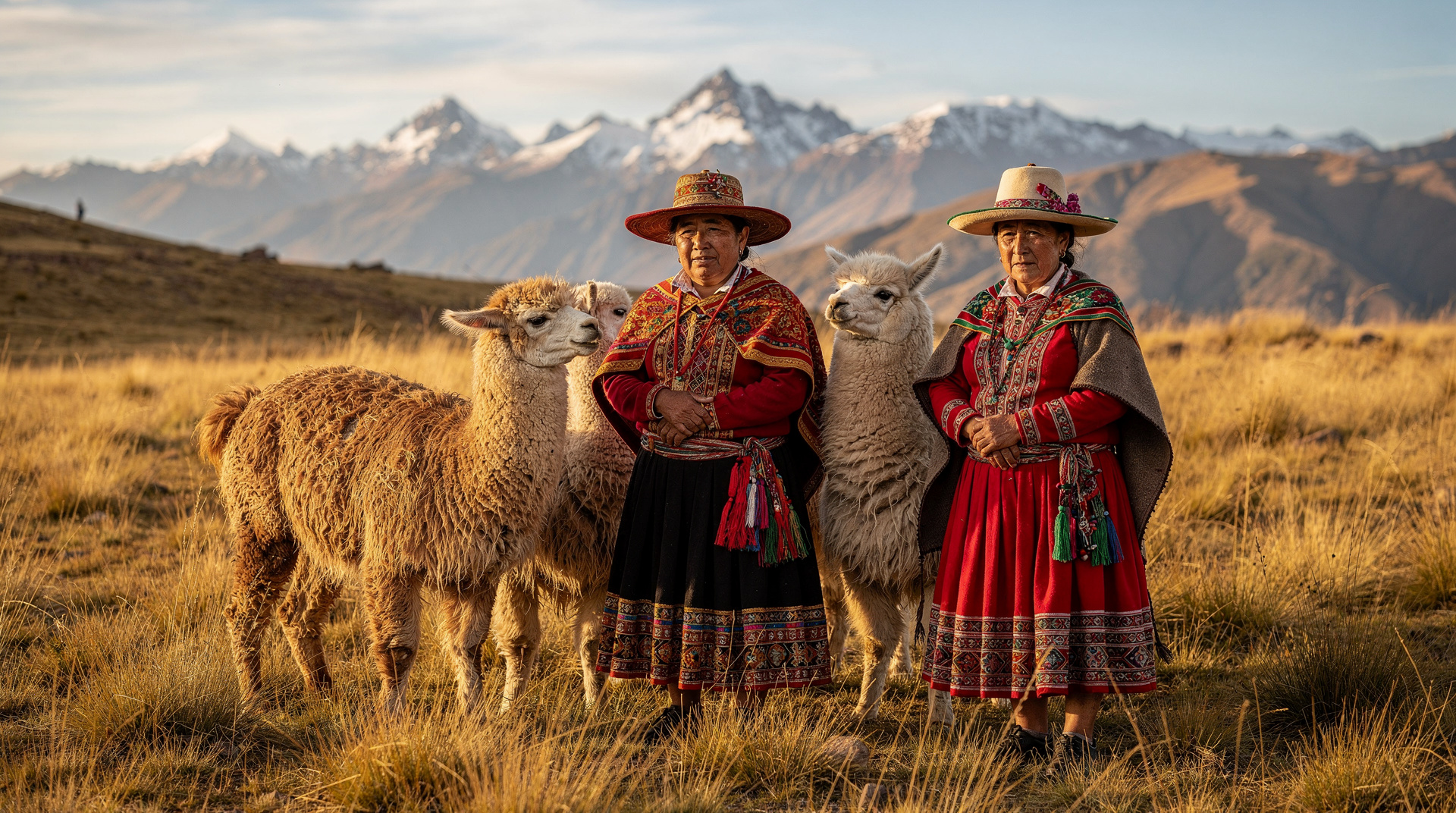
Q'oyllur Rit'i is an Andean pilgrimage held in May or June (date varies) at a high-altitude glacier near Ausangate, southeast of Cusco. Tens of thousands of pilgrims — many from communities across the Cusco and Puno regions — make a multi-day journey to a site at approximately 4,900 m to venerate a Christ apparition alongside explicitly Andean ritual practices. It is one of the most significant religious and cultural events in the Andes.
One of the largest pilgrimages in the Americas
Q’oyllur Rit’i is estimated to draw between 70,000 and 100,000 pilgrims annually — making it one of the largest religious pilgrimages in the Americas and one of the most significant gatherings of indigenous Andean people anywhere on the continent. The majority of participants are Quechua-speaking community members from the Cusco and Puno regions who walk multi-day routes to the sanctuary under their own community’s banner, in organised groups, in fulfilment of religious obligations that are passed through families and communities across generations.
For visitors from outside Peru, Q’oyllur Rit’i presents a genuinely unusual situation: a religious and cultural event of extraordinary significance, clearly accessible and documented, but one at which the “visitor” role requires particular care to occupy without becoming intrusive or disrespectful. This guide attempts to provide both the factual account of what the pilgrimage is and the context needed to attend it thoughtfully.
| Where | Sinakara sanctuary, ~4,900 m, near Ausangate |
| When | Late May or early June (moveable, before Corpus Christi) |
| Getting there | Cusco to Mawayani (3–4 hrs) then a 3–5 hr walk |
| Duration | Three-day gathering, central night is the peak |
| Best approach | With a Peruvian guide who has community ties to the pilgrimage |
What Q’oyllur Rit’i means
The name translates roughly from Quechua as “star of the snow” — qoyllur (star) and rit’i (snow). The astronomy embedded in the name is not decorative: the pilgrimage timing is calculated by the appearance of the Pleiades (qoyllur) above the Andean horizon before dawn, specifically their heliacal rising after the Pleiades have been invisible for approximately six weeks in April–May. In the Andean agricultural calendar, the Pleiades were used to predict frost risk and crop timing; their return signals the approach of the planting season. The pilgrimage occurs at this threshold.
The sanctuary is officially a Catholic site: the Basilica de Señor de Qoyllur Rit’i commemorates an apparition of Christ reported in 1780 by a young indigenous shepherd named Mariano, who encountered a mysterious boy (identified after Mariano’s death as Christ) near the glacier. The colonial ecclesiastical authorities eventually recognised the site as sacred and a church was built at approximately 4,900 m, making it one of the highest Catholic shrines in the world.
The ceremony at the site, however, is not straightforwardly Catholic. The pilgrimage combines Catholic veneration of the Christ apparition with Andean cosmological practices centred on the apus (sacred mountain spirits) of the Ausangate massif, with ritual dancing and music, with the ukuku figures who embody the boundary between human and supernatural worlds, and with community-level ceremonial obligations that have no direct Catholic theological content. The result is what scholars of Andean religion describe as sincretismo — not a comfortable fusion but a coexistence of two religious systems that have accommodated each other under historical pressure without fully merging.
The landscape and the glacier
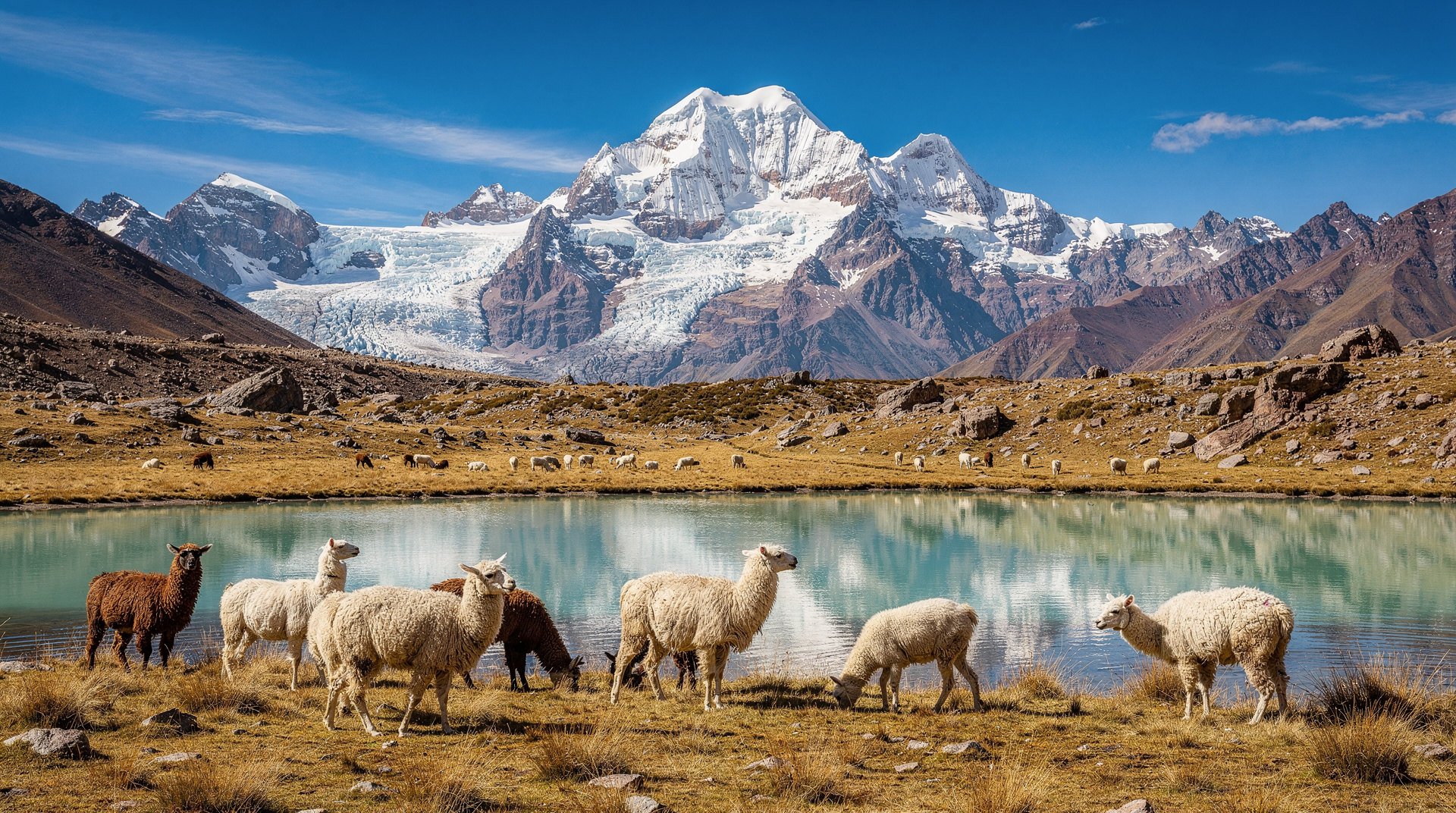
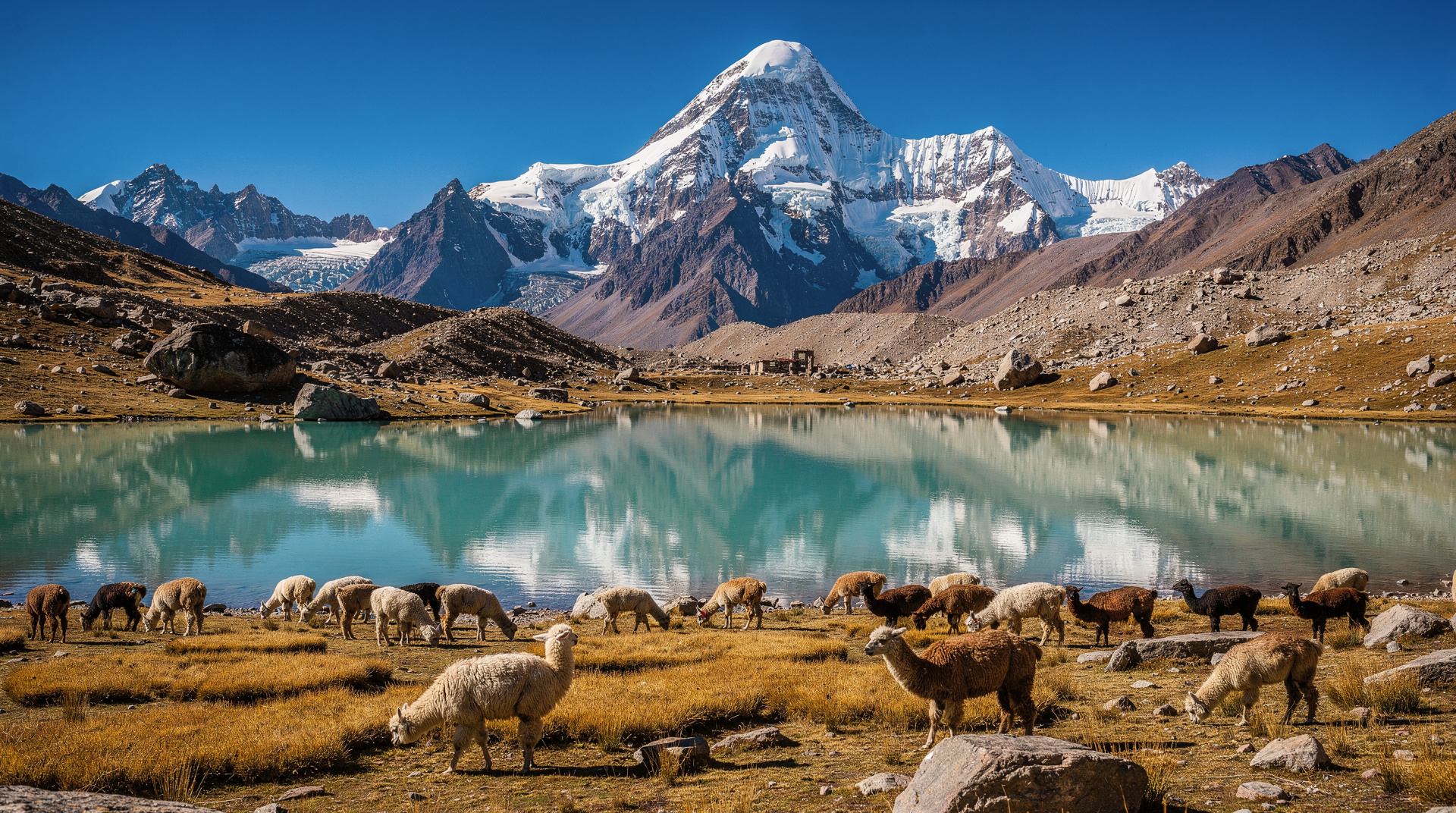
The Ausangate massif, at 6,372 m the highest peak in the Cusco region, is one of the most sacred apus in Andean cosmology. The Sinakara glacier, at the foot of which the sanctuary sits, is at approximately 4,900 m — a dramatic landscape of glacial moraine, rock and permanent snow, with the looming mass of Ausangate above.
The glacier has retreated significantly since the 1980s due to climate change. What was a substantial ice field 40 years ago is now considerably reduced. The ritual practice of the ukuku climbing to the glacier summit and bringing down ice has been restricted since approximately 2006, when the glacier’s state made it clear that continuing the practice would accelerate further damage. This change — a 500-year-old Andean ritual practice modified in response to climate reality — is one of the more striking contemporary examples of a living tradition adapting to changed conditions.
The landscape context matters for practical reasons: the journey to the sanctuary at 4,900 m is serious at any time of year. The Ausangate trek guide covers the high-altitude terrain around this massif in the context of hiking; the pilgrimage involves the same altitude challenges with the additional complexity of being in a very large crowd on steep terrain at night.
The pilgrimage structure
Getting to the site
Pilgrims travel from their home communities to Mawayani (also written Mahuayani), the road-head town approximately 80 km southeast of Cusco via Urcos and Ocongate. From Cusco, the journey to Mawayani by shared transport takes three to four hours. From Mawayani, the trail to the sanctuary climbs steeply to 4,900 m over approximately five to seven hours of walking for an acclimatised hiker; pilgrims travel at varying paces, some walking through the night.
The three-day gathering
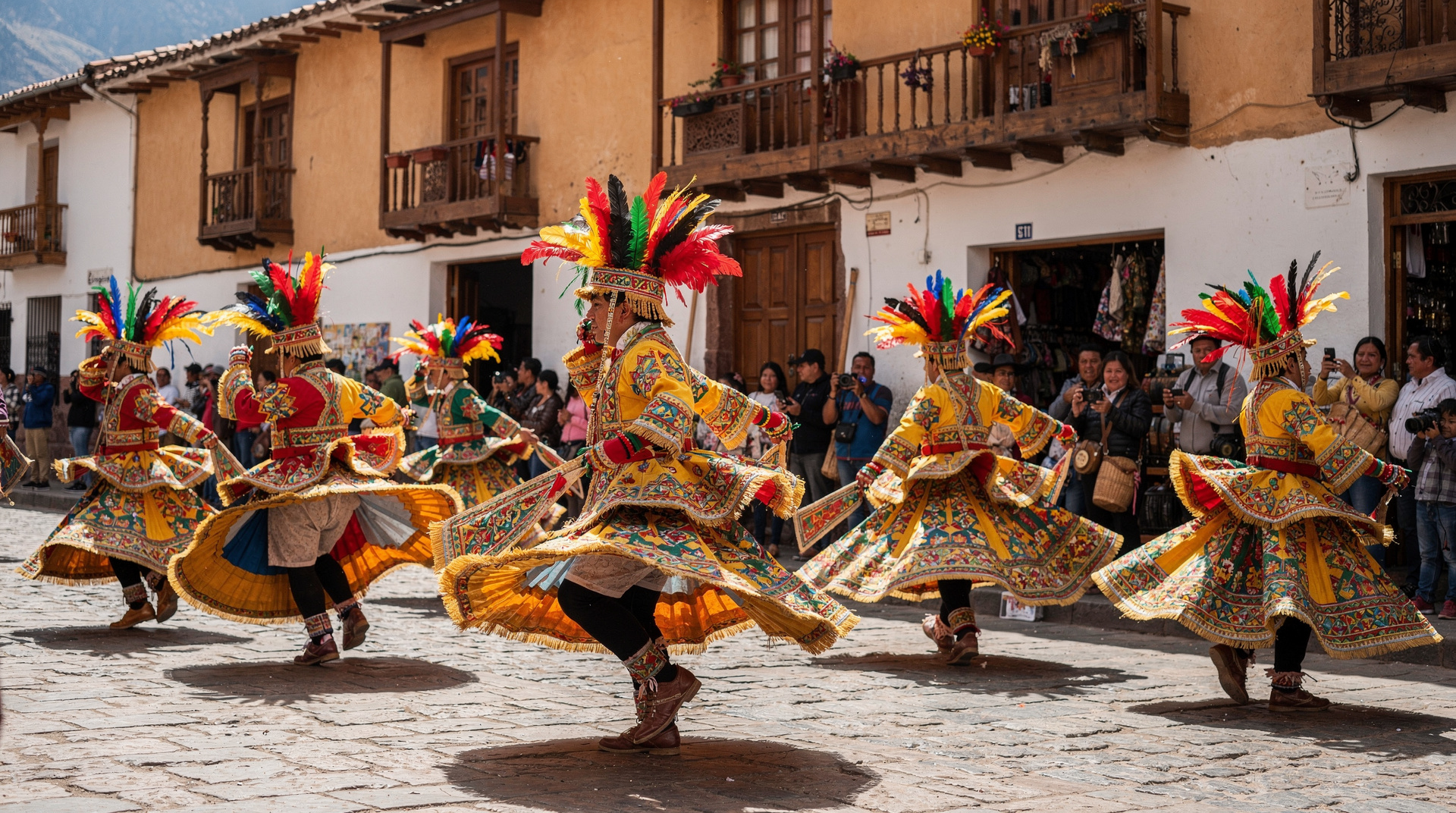
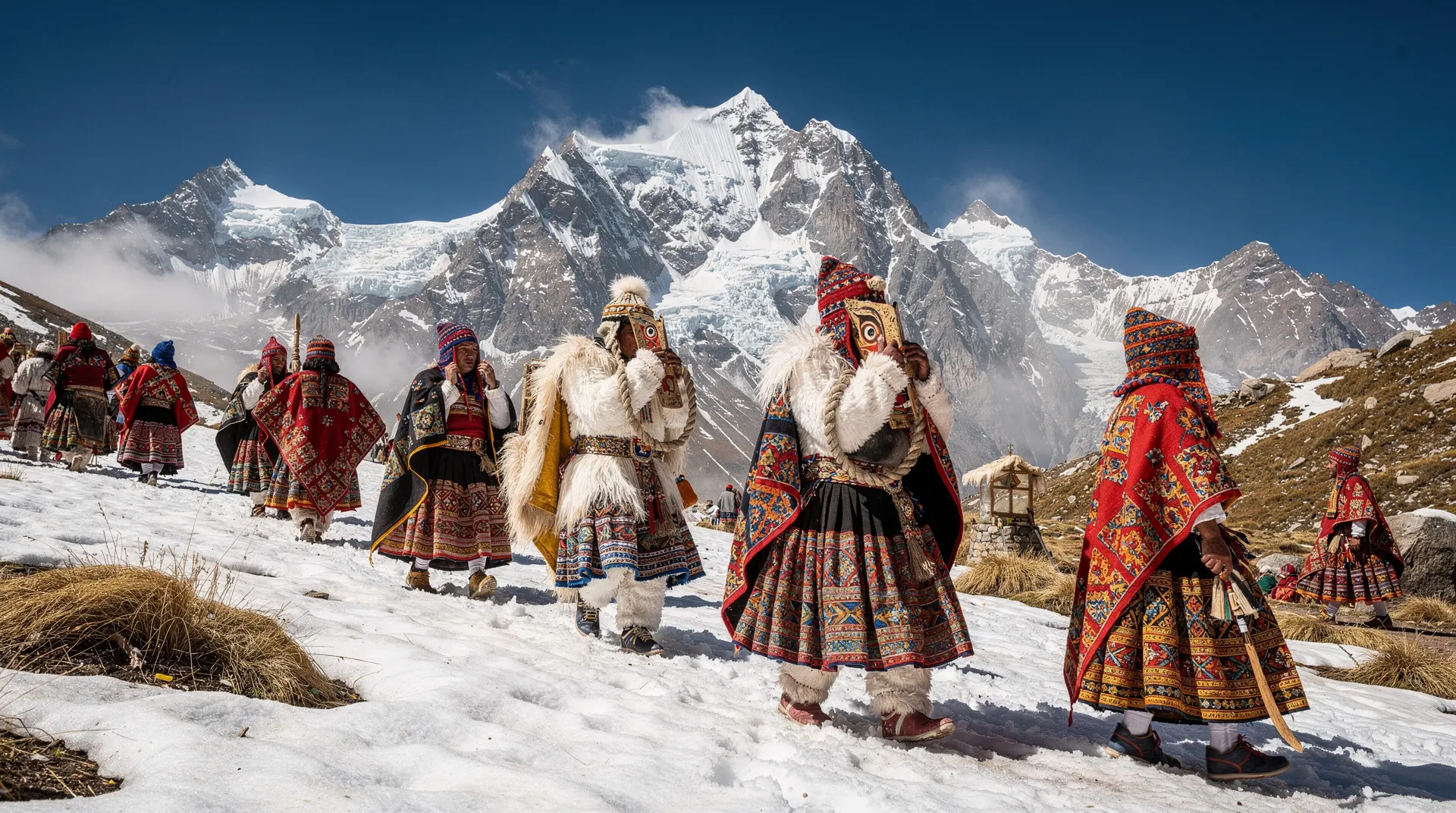
The pilgrimage runs for three days centred on the main night. Pilgrims typically arrive the day before the central ceremony, spend the night at or near the sanctuary, and then spend the following day returning to the valley. The central night involves continuous music and dance — dance groups from different communities (naciones) perform through the night with their own musicians, costumes and repertoire. The simultaneous presence of dozens of dance groups across the hillside, each with its own musical tradition, produces an extraordinary soundscape.
The ukuku
The ukuku figures — dancers dressed in knitted masks and shaggy bear-like costumes, who speak in falsetto and carry whips — move between the human social world and the sacred mountain world according to their own ceremonial logic. They serve as guardians and mediators: policing behaviour in the pilgrimage camp, conducting rituals at the sanctuary, and historically making the ascent to the glacier. Their role is specific to Andean cosmological tradition and does not have a Catholic equivalent. Understanding who they are makes the ceremony considerably more intelligible.
Attending as a visitor: practical and ethical considerations
Q’oyllur Rit’i is open to visitors. There is no formal ticket or entry restriction, and the pilgrimage site is on public land. However, several considerations apply:
Ethical: The pilgrimage is a genuine religious event for the participants, not a cultural performance. The appropriate role for a non-pilgrimage visitor is respectful observer. This means: not inserting yourself into ceremonies; asking permission before photographing individuals; following the guidance of any local guide you travel with; and accepting that some areas and moments are not for visitor access. Treating the event as an exotic spectacle is both disrespectful and practically alienating — the atmosphere of the pilgrimage draws from the collective faith of the participants, and visitors who observe respectfully are generally welcomed by pilgrims who are glad their tradition is being witnessed.
Physical: The site is at 4,900 m. Cusco, where you are probably acclimatising, is at 3,400 m. The difference is significant; the walk from Mawayani should not be attempted without at least three to four days of Cusco acclimatisation, and ideally more. Symptoms of altitude sickness at 4,900 m are more severe and faster-developing than at Cusco altitude. The altitude and health guide provides the framework for assessing whether you are ready for this altitude.
Logistical: The camp around the sanctuary provides basic services but not comfortable accommodation. Pilgrims sleep in tents or huddled around small fires; overnight temperatures are below zero. Bring layers, a sleeping bag rated to at least -5°C, waterproof gear and a headlamp. The crowd density on the central night is extreme; losing members of your group is easy. Arrange a meeting point in advance.
Guided attendance: The most responsible way for a visitor to attend Q’oyllur Rit’i is with a Peruvian guide who has community connections to the pilgrimage and who can provide context, navigate the etiquette and facilitate responsible observation. Several Cusco agencies offer guided Q’oyllur Rit’i excursions; ask about the guide’s community connections and their approach to visitor behaviour before booking.
Q’oyllur Rit’i and Corpus Christi
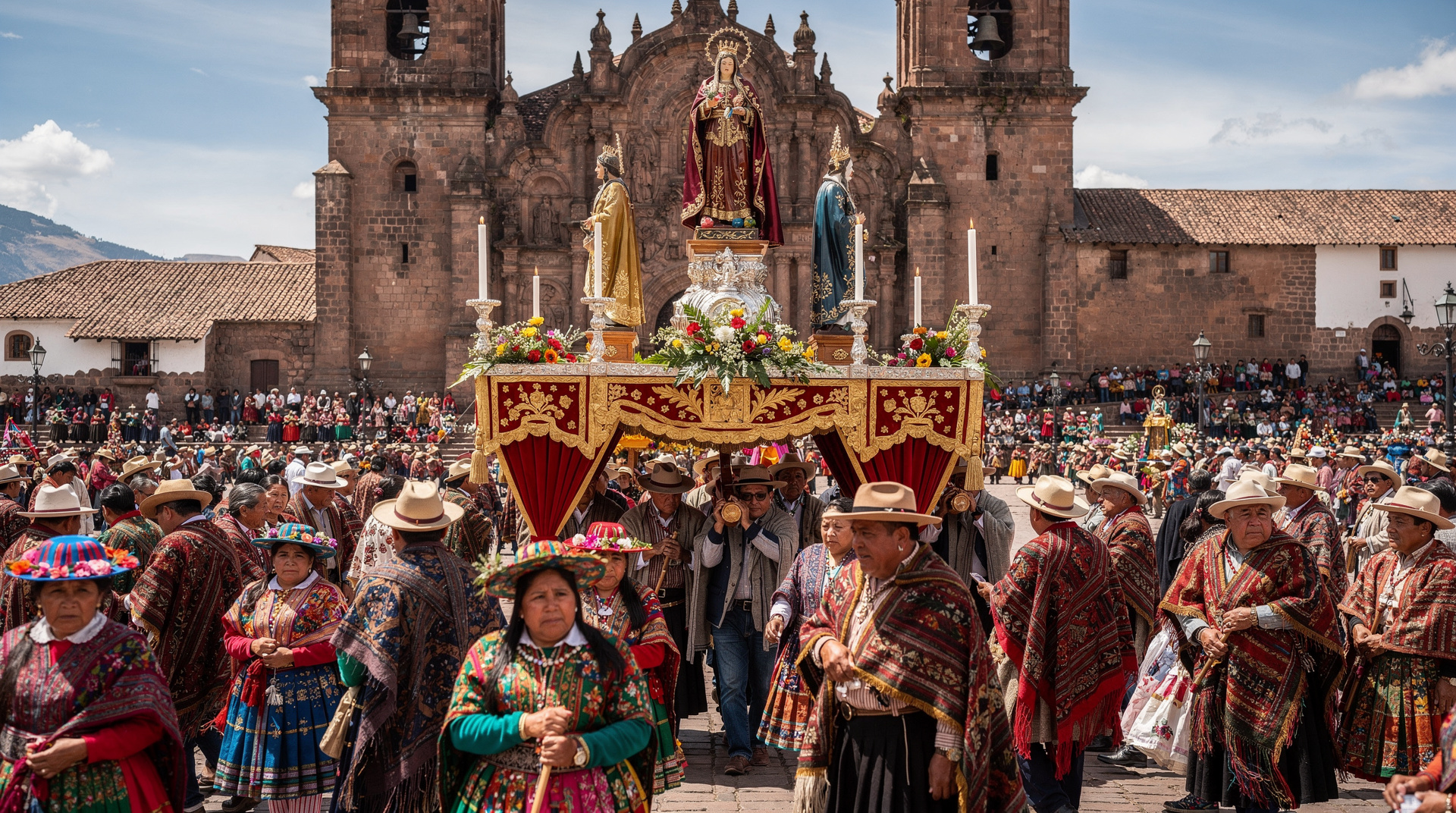
The two festivals are deliberately connected in the Andean religious calendar. Q’oyllur Rit’i falls in the weeks before Corpus Christi; the groups who attend Q’oyllur Rit’i typically also participate in the Corpus Christi processions in Cusco, carrying their anda (processional image) from their home parish. The pilgrimage is in this sense the rural and highland component of a ceremonial cycle that culminates in the city with the gathering of the saints.
The Corpus Christi guide and the Cusco festivals calendar provide the broader cycle context. Q’oyllur Rit’i and Corpus Christi attended in the same week — physically demanding but possible for an acclimatised visitor — represent the fullest available engagement with Cusco’s living ceremonial culture.
Weather and seasonal timing
Late May and early June, when the pilgrimage falls, sit at the tail end of Cusco’s dry season — generally the most stable weather window of the year. Days at the sanctuary are typically clear and intensely sunny, with strong UV exposure at 4,900 m that catches unprepared visitors with sunburn even in cold conditions. Nights are reliably below freezing, sometimes well below, regardless of how mild Cusco itself feels at 3,400 m at the same time of year.
Because the exact date shifts annually with the lunar and Pleiades calendar rather than a fixed calendar date, confirming the specific dates for the year you are travelling — through a Cusco tour operator or the regional tourism office — is essential; arriving a week early or late means missing the event entirely rather than experiencing a quieter version of it.
The broader significance
Q’oyllur Rit’i was inscribed on UNESCO’s Representative List of the Intangible Cultural Heritage of Humanity in 2011. This inscription reflects both the festival’s scale and its cultural significance as a living expression of Andean cosmological practice. The UNESCO recognition has increased international visibility; the pilgrimage was not obscure before, but the formal recognition has brought more non-Peruvian visitors and a sharper focus on the ethical questions of that attendance.
What the pilgrimage means for the communities
To understand Q’oyllur Rit’i fully, it helps to understand what it represents for the communities who participate in it. For pilgrims, this is not a cultural event or a heritage preservation exercise. It is a genuine religious obligation — a commitment that families and communities have maintained for generations, that carries real spiritual significance, and that involves real sacrifice: days of walking at high altitude in cold conditions, expense, time away from agricultural work, physical hardship.
The decision of a community to send its dance group to Q’oyllur Rit’i involves months of preparation: the costumes for the danzantes must be made and maintained; the music must be rehearsed; the ceremonial logistics must be organised; the cargueros who carry the community’s sacred image must be selected and prepared. The pilgrimage route from a remote community in the Chumbivilcas or Paruro provinces to the Sinakara sanctuary can take four or five days on foot. Arriving at the sanctuary after a multi-day journey and joining the assembled mass of 70,000-plus pilgrims from hundreds of communities is, for participants, an experience of collective identity and spiritual affirmation at a scale rarely available in secular modern life.
The visitor — whether Peruvian or international — who comes by minibus from Cusco to attend for two days occupies a fundamentally different position in the event. This is not a reason not to attend; it is a reason to attend with the right awareness of the difference, and with the genuine respect that the occasion deserves.
The glacier and climate change
The retreat of the Sinakara glacier is one of the most visible and direct demonstrations of climate change’s impact on a living cultural practice. The ukuku’s traditional ascent of the glacier — a night climb to retrieve ice as a ritual act of connection with the mountain spirit — has been restricted since approximately 2006 to protect what remains of the ice field. Satellite and comparative photography since the 1980s shows the dramatic reduction in glacier extent over four decades.
For the communities who participate in Q’oyllur Rit’i, the glacier is not a scenic backdrop but a living presence — the embodiment of the Ausangate apu, the source of the water that irrigates their fields and the ritual object of the ukuku’s most important act. Its disappearance is experienced as a loss with both practical (water availability) and spiritual dimensions. The Ausangate destination guide provides context for the broader significance of this glacial system in the region’s ecology and culture.
For visitors to Cusco with a genuine interest in Andean culture, Q’oyllur Rit’i is — with appropriate preparation and respect — one of the most extraordinary experiences available in South America. The scale, the altitude, the cosmological depth and the sheer human commitment of the participants make it unlike anything else that can be witnessed in the region. The Quechua culture guide provides the deeper cultural context that makes the pilgrimage legible rather than merely spectacular.
What to pack if you attend
Because the sanctuary sits at 4,900 m and the camp offers only basic services, packing correctly matters more here than at almost any other Cusco-region excursion. A four-season sleeping bag rated to at least -5°C is close to essential if you plan to sleep near the sanctuary rather than day-tripping. Layered clothing — a base layer, an insulating mid-layer and a windproof, ideally waterproof, outer shell — handles the swing from intense daytime sun to below-freezing overnight temperatures.
A reliable headlamp with spare batteries is necessary for the night walking that much of the pilgrimage involves. Trekking poles help considerably on the loose, uneven ground of the Mawayani trail. Cash in small soles denominations covers the basic food stalls that operate around the camp; there is no card payment infrastructure at this altitude. Finally, a printed or offline map and a pre-arranged meeting point with your group are worth more than they sound — mobile signal near the sanctuary is unreliable and the crowd density on the central night makes losing track of companions easy.
How this compares to other Cusco festivals
Visitors deciding whether Q’oyllur Rit’i fits their trip often want to know how it compares to Cusco’s other major festivals. Inti Raymi, the Inca sun festival held in June in Cusco itself, is a staged historical re-enactment at Sacsayhuamán — spectacular, accessible, and requiring no special altitude preparation or overnight camping. Corpus Christi, held in the city a couple of weeks after Q’oyllur Rit’i, is a Catholic procession through the historic centre involving the same rural communities but in an urban, low-altitude setting.
Q’oyllur Rit’i is categorically different from both: it is not staged for visitors, it requires genuine physical commitment at extreme altitude, and its cultural depth is correspondingly far greater. Visitors who want a memorable but low-effort cultural experience should prioritise Inti Raymi or Corpus Christi; visitors seeking the most authentic and demanding engagement with Andean religious life should consider Q’oyllur Rit’i, prepared accordingly.
Building a trip around the pilgrimage
Because the event asks so much of your body, it works best as the high point of a longer stay rather than an add-on squeezed into a short one. Spend your first days in Cusco following the Cusco acclimatisation plan, and consider the lower Sacred Valley first if you want to ease into the altitude, as explained in the Sacred Valley vs Cusco base comparison. The coca tea and altitude remedies guide covers the everyday habits that help, and the how many days in Cusco guide helps you leave enough slack for rest days before and after.
If the pilgrimage whets your appetite for the high country, the Ausangate lakes day trip and the Ausangate trek guide show the same landscape outside festival crowds, while Palccoyo offers a quieter high-altitude outing. For the cultural side, the Cusco festivals calendar places the pilgrimage within the wider year, and the blog diary of the Inti Raymi festival gives a first-hand feel for how a Cusco celebration unfolds from a visitor’s seat. Travellers wary of unlicensed operators should read about unlicensed tour agencies in Cusco before choosing who to travel with, and the what to pack for Cusco guide complements the packing advice above.
If the dates do not work: high-country alternatives
The pilgrimage is tied to a moving calendar, so some travellers will find their dates miss it. The same landscape of glaciers, high lakes and sacred peaks can be seen outside festival time. Around Ausangate, an ATV outing to the lakes and glaciers is a lower-effort way to see the massif that the pilgrims revere, with a guide handling the logistics. If you would rather keep to a quieter route, an all-inclusive full-day outing to Palccoyo shows coloured mountain slopes with fewer people than the best-known site.
For first-time visitors who want a classic high-altitude day after acclimatising, a guided day trip from Cusco to Vinicunca is the usual choice; our Vinicunca vs Palccoyo comparison helps you decide between them. Whichever you pick, treat it as a way to understand why the mountains matter in Andean life, not as a substitute for the pilgrimage itself. And if you want the ATV option specifically, a quad-bike tour of the Ausangate lakes and glaciers is worth comparing with walking the area on foot.