Cusco festivals calendar: what's on through the year
City Tour in Cusco: Qorikancha and Sacsayhuaman
What festivals happen in Cusco?
Cusco's major festivals are Inti Raymi (24 June, the biggest), Corpus Christi (May or June, date varies), Q'oyllur Rit'i (May–June, mountain pilgrimage), Carnival (February), and the Day of the Dead (1–2 November). June is the richest month overall, combining Inti Raymi, the Festival of Cusco, and Corpus Christi in a two-week window of extraordinary cultural density.
A city that marks time in ceremony
Cusco is one of the most festival-dense cities in South America. The convergence of three traditions — the Inca ceremonial calendar, the Spanish Catholic liturgical year, and the contemporary revival of Andean cultural identity — means that almost every month in Cusco has a significant public event, with the June–July window particularly rich.
Understanding the festival calendar is practically useful for trip planning — you may want to align your visit with a specific event, or you may prefer to visit outside the peak festival crowds. Both are valid choices, and this guide helps you make them with accurate information.
| Biggest single event | Inti Raymi, 24 June, Sacsayhuamán |
| Richest window | Late May through June (Q’oyllur Rit’i, Corpus Christi, Inti Raymi) |
| Cost to attend Inti Raymi | Free public areas; grandstand prices set each year by Emufec |
| Booking lead time | 3–6 months for accommodation around Inti Raymi week |
| Quietest festival months | January, August, October — few major public events |
January
Bajada de Reyes (Epiphany, 6 January)
The Catholic Feast of the Epiphany is celebrated in Cusco’s parishes with processions carrying the infant Jesus (niño) figures, which were displayed since Christmas and are now “returned” in public ceremony. A quiet, neighbourhood-level event rather than a citywide spectacle.
Takanakuy (January)
A traditional Quechua ritual from the Chumbivilcas region (south of Cusco) in which community members settle disputes through controlled ritual combat. Not centred in Cusco city but present in communities in the surrounding region. Increasingly visible at cultural fairs and described in travel writing about Andean customs.
February
Carnival
Cusco’s carnival in February is genuinely lively, with several days of water-throwing, foam, paint and general social mayhem centred on the Plaza de Armas and surrounding streets. Expect to get wet. Carry only what you are willing to get soaked and possibly stained. The carnival runs from the Saturday before Ash Wednesday through Shrove Tuesday; the specific dates change each year but fall in February.
Carnival week is one of the more chaotic travel periods in Cusco — good-natured chaos, but practically disruptive. Hotels fill with domestic tourists from Lima and Puno. If you are visiting specifically for a calm cultural experience, this is not the week for it.
April
Semana Santa (Holy Week)
Holy Week in Cusco is among the most visually impressive in South America. The processions through the historic centre’s cobbled streets — particularly the Good Friday Señor de los Temblores (Lord of the Earthquakes) procession, which carries the darkened Christ figure that survived the 1650 Cusco earthquake — attract large crowds of both local residents and visitors. The Señor de los Temblores procession stops at each of the churches in the historic centre; the figure is pelted with red ñucchu flowers as it passes, turning the procession path crimson. It is genuinely moving to witness.
Holy Week is a major tourist period — prices rise, accommodation books out early. The Cusco city section of this site covers the broader planning considerations.
May–June
Q’oyllur Rit’i (May–June, date varies)
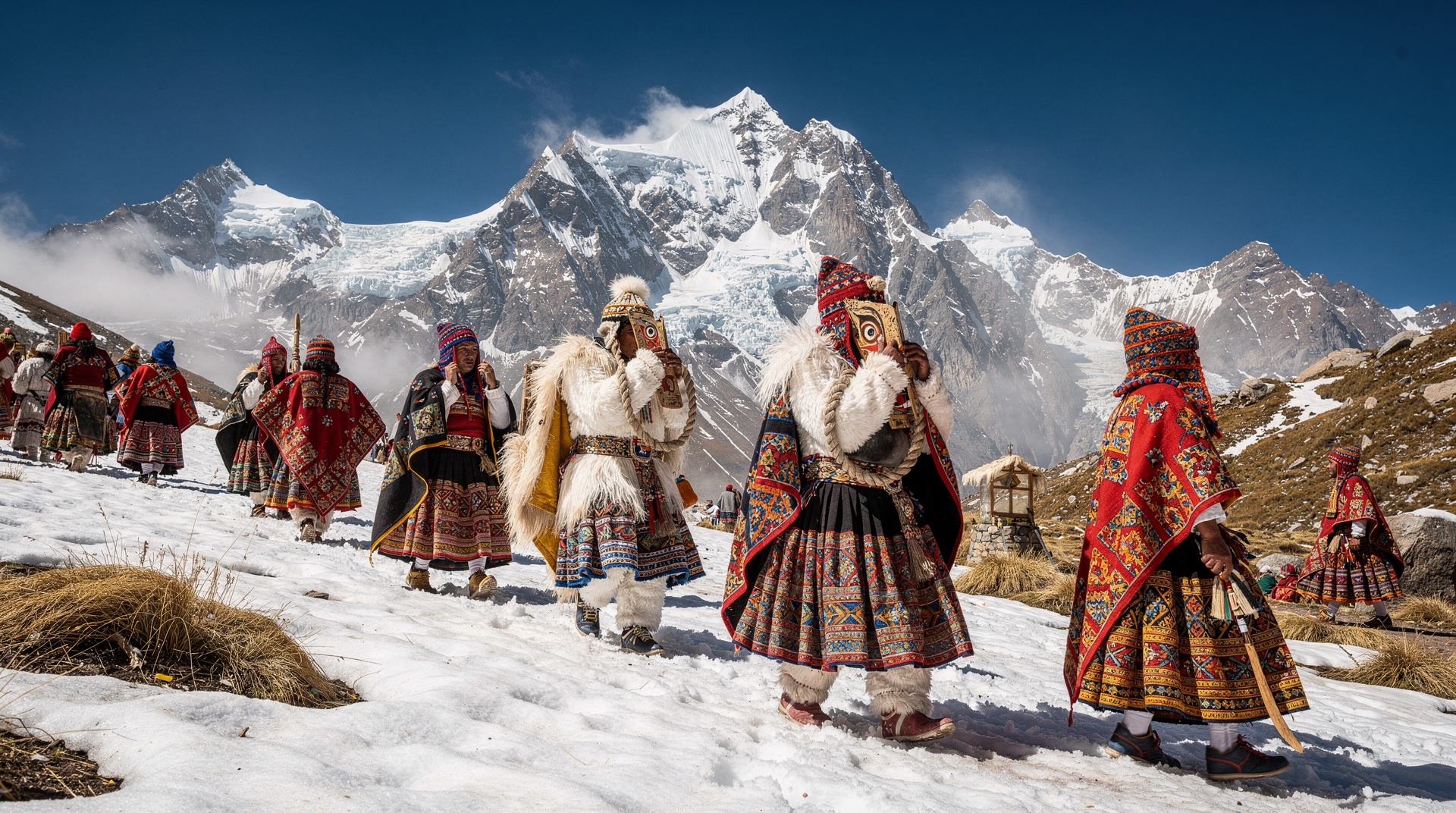
A major Andean pilgrimage to a glacier near Ausangate in the weeks before Corpus Christi. Tens of thousands of pilgrims — many from communities across the Cusco and Puno regions — make the multi-day journey to a ritual site at approximately 4,900 m, where an apparition of Christ is venerated alongside explicitly Andean and pre-Christian Andean ritual practices. See the full Q’oyllur Rit’i guide for detail.
Corpus Christi (May or June, date varies)
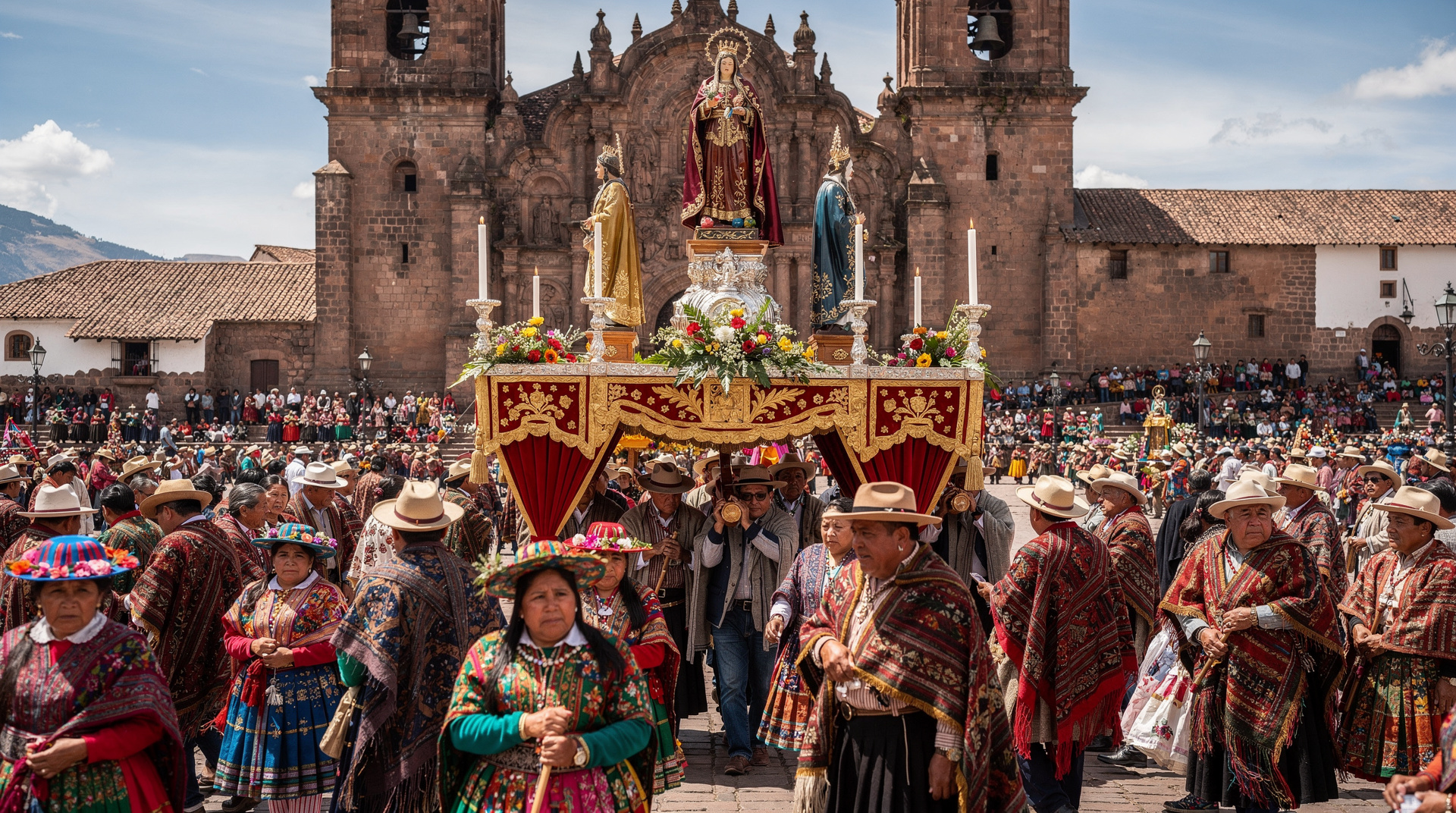
The Catholic feast of Corpus Christi, celebrated with a ceremony in Cusco that has deep Andean cultural layering. The fifteen saints and virgins of Cusco’s churches are processed through the city and housed in the Cathedral for a week. See the Corpus Christi guide for the significance of this convergence with Inca tradition.
June: the peak festival month
June is when Cusco’s ceremonial density peaks. The month begins with Q’oyllur Rit’i (if it has not already fallen in May), Corpus Christi falls in the first three weeks, and the Festival of Cusco fills the entire month leading to Inti Raymi on 24 June.
Festival of Cusco (throughout June)
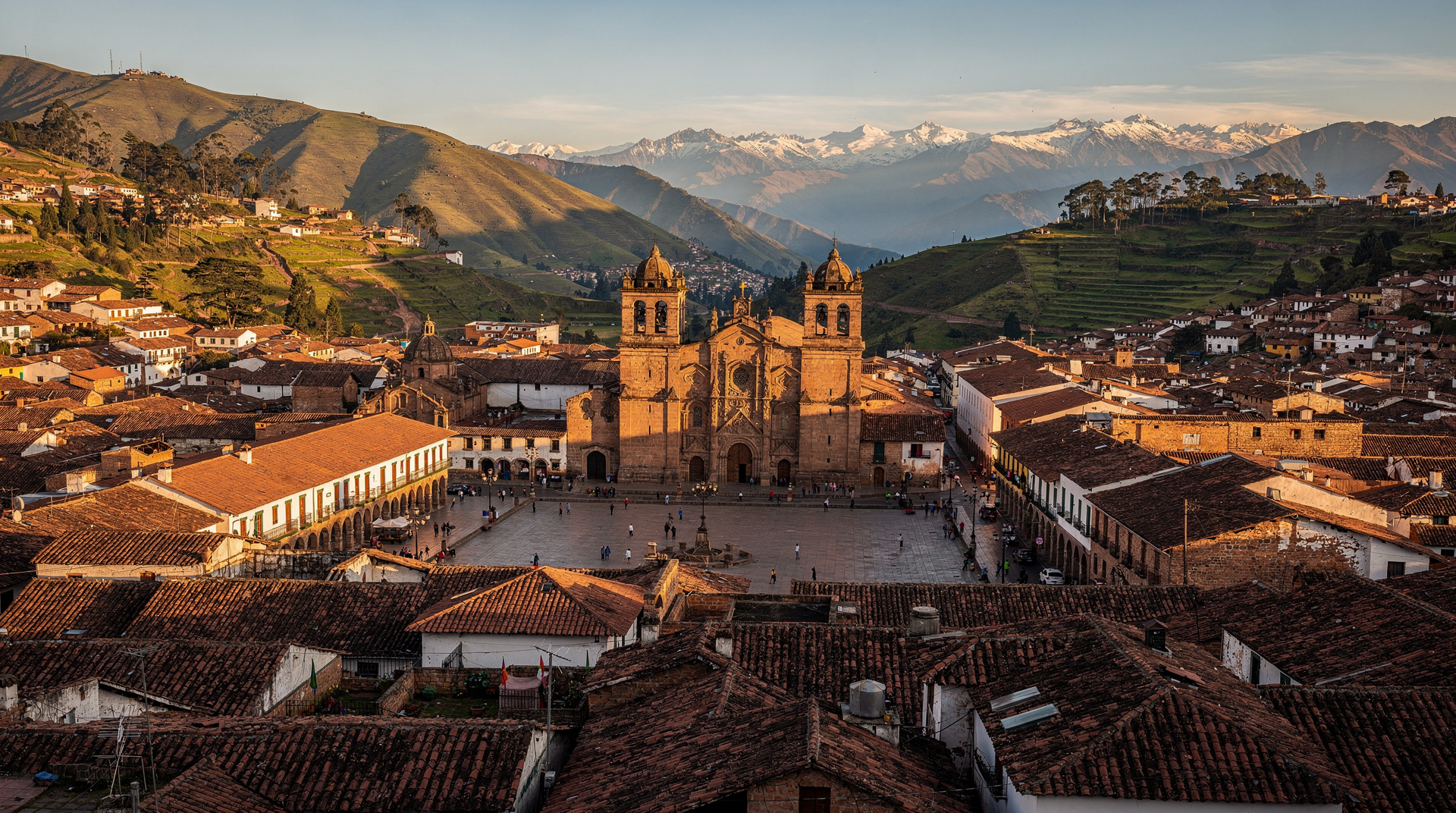
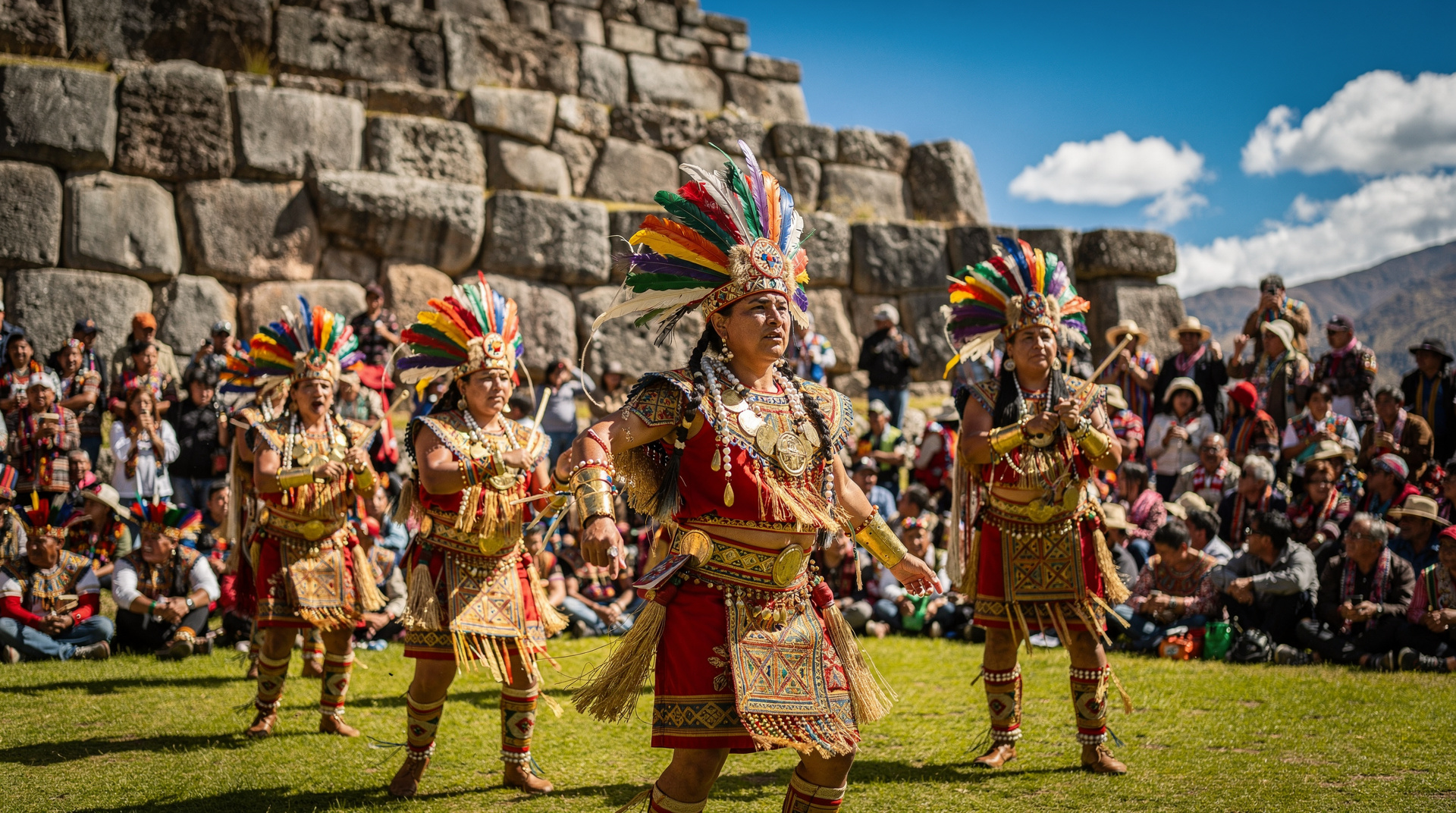
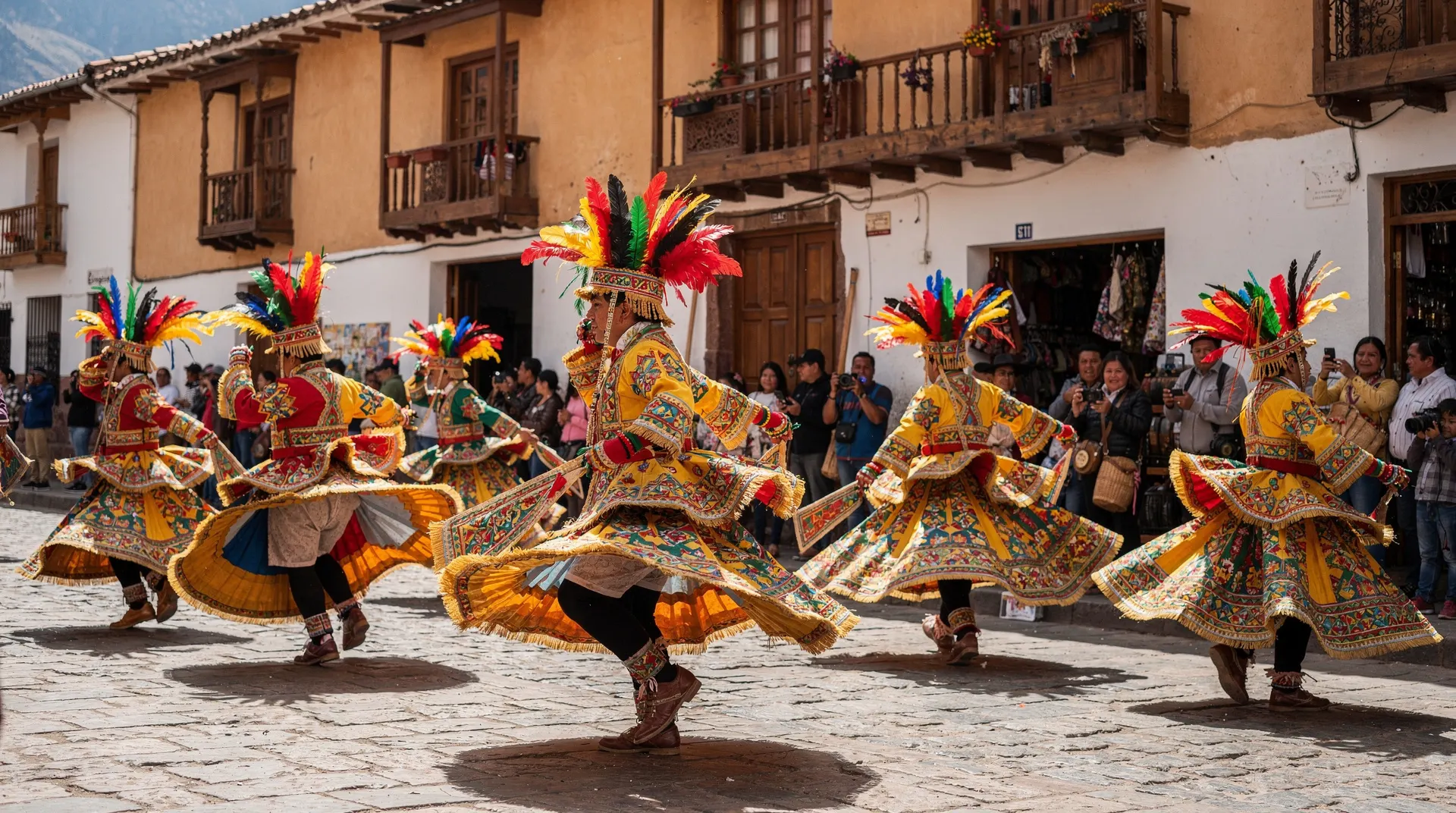
The broader festival of the city of Cusco spans the entire month. Events include: traditional Andean dance competitions (concurso de danzas) in which dance groups from communities across the Cusco region perform in traditional dress; artisan and food fairs; civic parades by schools, professional guilds and neighbourhood associations; concerts and theatre. The Plaza de Armas is the hub of most public events, with Sacsayhuamán hosting the largest gatherings.
Inti Raymi (24 June)
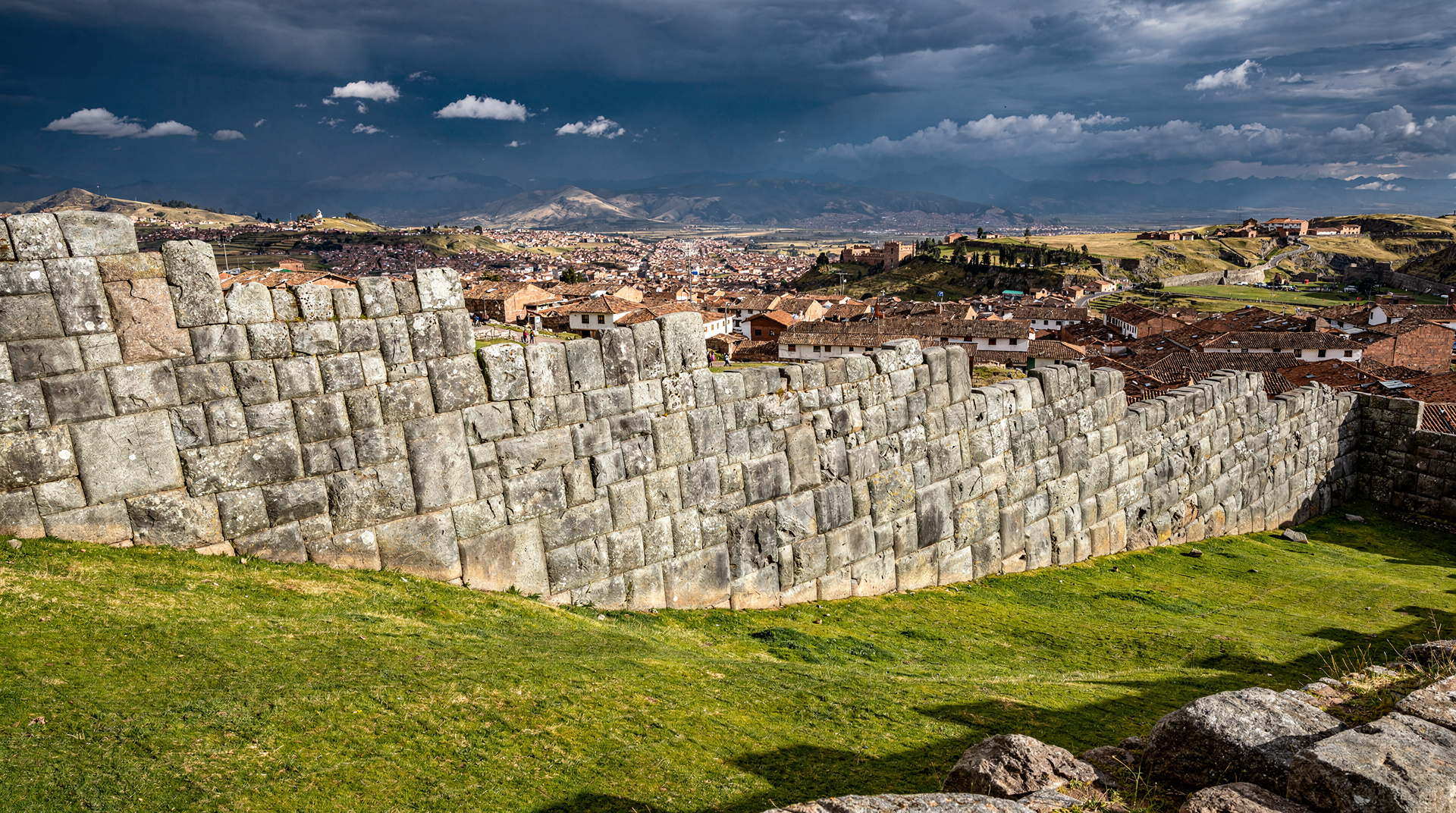
The centrepiece of the year. A detailed guide is at Inti Raymi festival guide. In brief: the city’s biggest single event, with a theatrical ceremony at Sacsayhuamán attended by tens of thousands, paid grandstand tickets sold under the municipal festival company Emufec (prices set each year), and extreme pressure on accommodation and transport. Plan at least six weeks in advance.
July
Día de la Virgen del Carmen (16 July)
The feast of the Virgin of Carmen is celebrated most spectacularly in Paucartambo, a remote village east of Cusco at the edge of the cloud forest, with four days of dancing, processions and community ritual that is among the most intense and authentic folk festivals in Peru. Paucartambo is a four-hour journey from Cusco on a difficult road; visiting requires either a tour with a Cusco agency or a private vehicle. The Mamacha Carmen festival in Paucartambo is worth serious consideration for visitors with a dedicated interest in Andean folk culture who are willing to make the journey.
August
Pachamama Day (1 August)
In communities throughout the Andean region, the first day of August is a ritual offering (pago) to Pachamama, the earth mother. Offerings are buried or burned: chicha, confites, llama fat, dried herbs and other symbolic items, in a ceremony conducted by an andino or ritual specialist. Not a public spectacle in Cusco city, but visible in communities and at some cultural tourism sites. The Quechua culture guide covers the broader spiritual and cosmological context.
October
Señor de los Temblores (Procession)
The Lord of the Earthquakes figure, already encountered at Holy Week, receives a second major procession in October. The Señor de los Temblores is Cusco’s most venerated image and its public appearances are important civic events.
November
Day of the Dead (1–2 November)
Día de los Muertos in Cusco follows the Catholic calendar (All Saints’ Day, All Souls’ Day) but with significant Andean practice around the food offered to the dead. Families bring food and drink to cemeteries, setting up temporary tables where the deceased’s favourite foods are laid out for the soul’s annual return. The General Cemetery in Cusco is the main location; the atmosphere is a genuine mixture of grief, celebration and family gathering. Less theatrical than the Mexican Día de los Muertos tradition but more intimate and more personally observed.
December
Santuranticuy fair (24 December)
On Christmas Eve, the Plaza de Armas hosts the Santuranticuy fair — an enormous artisan market specifically for religious figurines and nativity scene (nacimiento) components. Hundreds of artisans from across the Cusco region sell carved wooden and ceramic figures: saints, animals, Andean figures incorporated into the Christian nativity setting. It is one of the best artisan markets of the year for quality of craft, with specific Cusco-regional iconographic traditions visible in the figures that are not found elsewhere.
September and October
Día del Turismo (27 September)
World Tourism Day is marked in Cusco with free or reduced admission to several archaeological sites, including Sacsayhuamán and Qorikancha. Not a major street festival but a useful practical note for visitors whose trip coincides with late September — check which sites are participating in the year of your visit.
El Señor de Huanca (September)
A pilgrimage to the sanctuary of El Señor de Huanca near the Sacred Valley in September, smaller than Q’oyllur Rit’i but following a similar pattern — a Christ apparition venerated at a mountain location by Andean communities combining Catholic and pre-Christian practice. The approach from Cusco takes three to four hours. A less-documented event than the major festivals, worth knowing for visitors with a specific interest in Andean religious pilgrimage.
The festivals in relation to the seasons
One structural pattern in Cusco’s festival calendar is worth noting. The major festivals cluster in the dry season (May–September) rather than the wet season — not by coincidence. Agricultural societies schedule their major public ceremonies when travel is feasible, roads are passable and communities can actually assemble in large numbers. The Andean wet season (November–April) concentrated ceremonies at the community level; the dry season brought inter-community gatherings. The contemporary festival calendar preserves this structure.
Inti Raymi at the June solstice is the apex — the longest night, the most distant sun, the festival that required the largest ceremonial effort to bring the sun back. The festivals on either side (Q’oyllur Rit’i before, the Festival of Cusco after) are part of the same dry-season ceremonial arc. For a visitor, this means the richest cultural calendar and the most challenging travel conditions are the same period: June is expensive, crowded and exceptional.
What to wear and bring to a festival day
Festival days in Cusco involve long periods standing in crowds at 3,400 m, often in direct sun or sudden cold once the sun dips behind a building. Dress in layers regardless of the season — a t-shirt and light jacket combination that adapts as the day moves from bright midday to a chilly evening procession. Comfortable, closed shoes matter more than fashion; cobbled streets and hours of standing punish sandals and thin soles.
Carry cash in small denominations for street food and drinks (card payment is rare at festival stalls), a reusable water bottle, and sun protection even on a cool-looking day, since the UV at altitude does not care how cold the air feels. For Carnival specifically, wear clothes you are genuinely prepared to have soaked and stained — this is not a festival for anything you care about. Bringing a dry bag or waterproof phone pouch is a small precaution that saves a lot of regret.
A full-day Cusco city and Qorikancha tour is a good way to get your bearings before a major festival — understanding the layout of the Plaza de Armas, the cathedral, and the route up to Sacsayhuamán makes following a procession or finding a good viewing spot considerably easier.
Planning around the calendar
The most practically significant festivals for trip planning are:
- June (peak festival month): Highest prices, highest crowds, extraordinary cultural density. Book everything very early.
- February (carnival): Moderate disruption, lively but chaotic.
- Holy Week (April): Prices rise significantly; the Good Friday procession is one of the finest in South America.
- July 16 (Paucartambo): Worth a four-hour detour for the right visitor; no impact on Cusco city.
A Cusco city tour that covers the main historical sites also provides orientation to the ceremonial geography — knowing where Qorikancha, the Plaza de Armas and Sacsayhuamán are in relation to each other makes the festival procession routes comprehensible. Even outside festival periods, the sites themselves carry the ceremonial history that the festivals animate.
For the deepest exploration of the cultural and historical context behind Cusco’s festivals, the Quechua culture guide and the Inca history primer provide the background that makes the calendar meaningful rather than merely spectacular.
Reading the calendar as a whole
One of the most instructive ways to understand Cusco’s festival calendar is to observe how it integrates three distinct temporal frameworks simultaneously.
The first is the Catholic liturgical year, imposed by the Spanish colonial authorities from the 1530s onward: Advent, Christmas, Carnival, Lent, Holy Week, Easter, Corpus Christi, the feast days of saints and virgins. This calendar structured public religious life across Spanish colonial territories and remains the formal framework for most of Cusco’s official festivals.
The second is the Andean agricultural and astronomical calendar, which preceded the Spanish by millennia. Its key dates — the solstices, the equinoxes, the heliacal rising of the Pleiades, the onset of the rains — align with planting, harvest, frost-risk and the ceremonial obligations associated with each. Inti Raymi at the winter solstice, Q’oyllur Rit’i at the Pleiades rising, Pachamama day on 1 August: these events follow the Andean agricultural year’s rhythm, which the Catholic calendar only partially absorbed.
The third is the contemporary civic and national calendar of Peru: independence days, military parades, national cultural recognition days and the like, which layer over the other two.
In Cusco more than anywhere else in the Americas, these three calendars operate simultaneously and visibly. Corpus Christi is a Catholic feast that preserves Inca ceremonial logic. Inti Raymi is a mid-20th-century revival that reasserts a pre-Catholic Andean ceremony. Q’oyllur Rit’i combines a Catholic shrine with a pre-Christian astronomical event and indigenous ritual practice in a living syncretism that no one designed and that belongs to no single religious tradition.
For a visitor paying attention, the festival calendar is not just an events listing. It is a continuous argument about history, identity and cultural survival conducted in public, through ceremony, music, food and the annual assertion of practices that five centuries of colonial authority tried to suppress and did not entirely succeed in suppressing. Attending any of these festivals with this frame in mind turns a colourful spectacle into something considerably more interesting.
The Quechua culture guide explains the cultural and cosmological framework underlying these ceremonies. Individual guides for Inti Raymi, Corpus Christi and Q’oyllur Rit’i cover each major festival in depth.
Festival calendar at a glance
| Festival | Month | Impact on travel |
|---|---|---|
| Carnival | February | Moderate — water fights citywide, hotels fill with domestic tourists |
| Semana Santa | March/April | Significant — prices rise, book early |
| Q’oyllur Rit’i | May–June | Minimal on Cusco city, major on Ausangate-area logistics |
| Corpus Christi | May/June | Moderate — historic centre processions and closures |
| Festival of Cusco / Inti Raymi | June | Extreme — accommodation triples, book 3–6 months ahead |
| Virgen del Carmen (Paucartambo) | 16 July | Minimal on Cusco itself, requires a day trip |
| Pachamama Day | 1 August | Minimal — mostly community-level, not a public spectacle |
| Santuranticuy fair | 24 December | Moderate — Plaza de Armas closed to traffic, huge market |
If you want to avoid festival crowds entirely
Some travellers specifically prefer to skip the festival calendar rather than build around it — quieter streets, more availability, and a more predictable pace of sightseeing. January, August, and most of October are the calendar’s calmest stretches, with no major citywide event to compete with hotel bookings or transport.
Even within a festival-heavy month, staying outside the historic centre and focusing days trips on the Sacred Valley rather than the Plaza de Armas reduces exposure to the crowds without sacrificing your itinerary. If Inti Raymi week falls within an otherwise fixed travel window and attending isn’t a priority, shifting your Cusco city days to before or after 20–27 June and using that week for Machu Picchu or a trek is a practical workaround.