Ausangate
Ausangate is Peru's most sacred Andean peak at 6,384 m. The 7 Lagunas day trek and multi-day Ausangate circuit are remote, demanding, and extraordinary.
From Cusco: Ausangate Lakes and Glaciers ATV Tour
Quick facts
- Country
- Peru
- Altitude
- 4,800 m / 15,748 ft (trek high point)
- Currency
- Peruvian sol (S/) — USD widely used
- Best for
- Remote high-altitude trekking, glacial lakes, Andean sacred landscape, multi-day circuit
The mountain the Inca considered the highest deity
Ausangate — Apu Ausangate in Quechua, “the great lord” — is the highest peak in the Cusco region at 6,384 m and one of the most sacred mountains in the Andean world. For the Inca, and for the Quechua communities still living at its feet today, it is not merely a mountain. It is a living entity, a guardian of the region, and the focus of the Qoyllur Riti pilgrimage — one of the largest indigenous religious gatherings in South America — that draws tens of thousands of pilgrims to its glaciers every May or June.
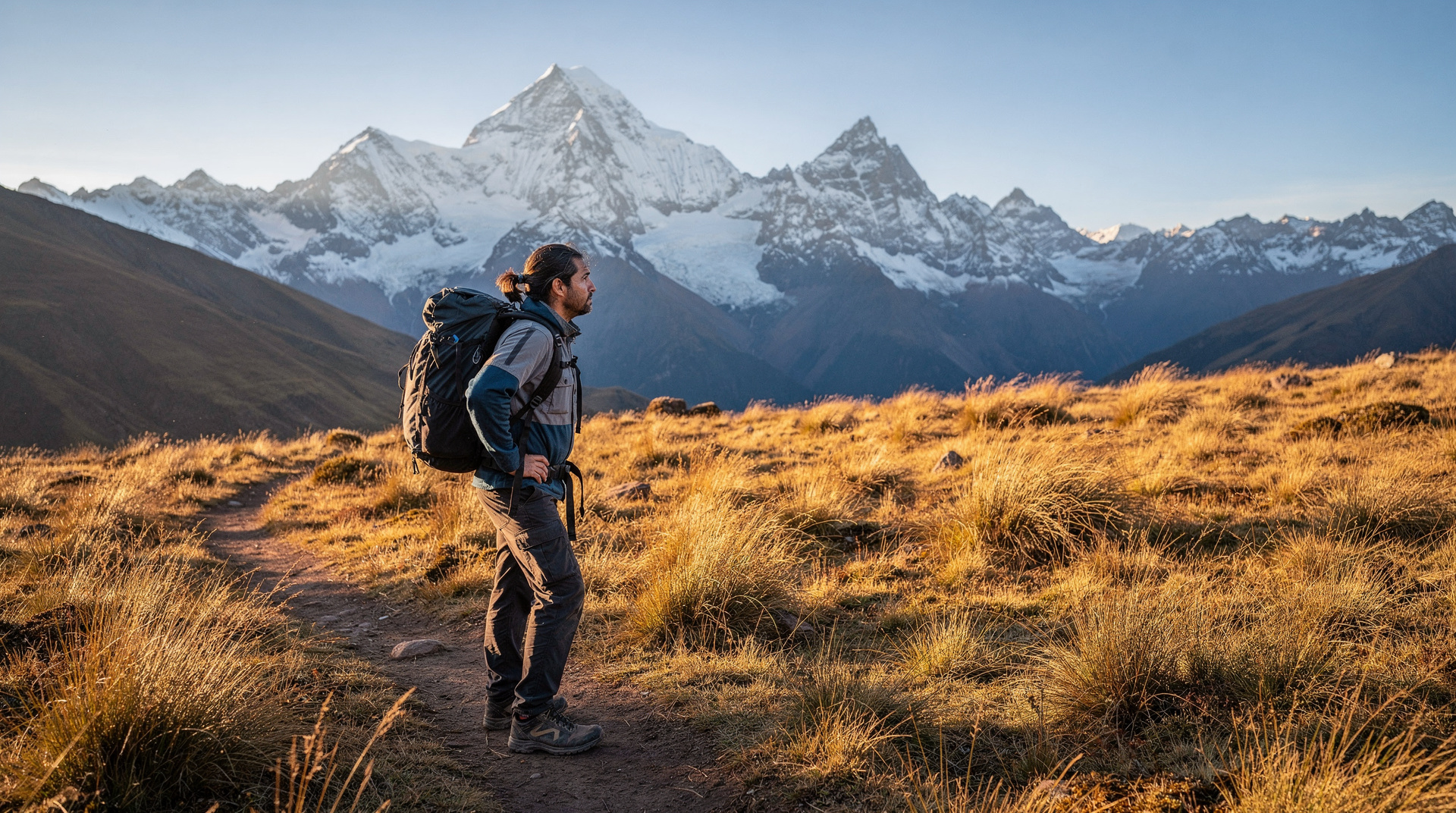
Most travellers who visit Cusco never reach Ausangate. It sits four hours south-east of the city on unpaved roads, its base communities are at 4,300–4,500 m, and the trekking routes that encircle or approach the peak operate between 4,600 m and over 5,000 m. The infrastructure is minimal. The solitude is total. The landscape — rings of turquoise and rust-red glacial lakes, flamingos at altitude, glaciers that press almost to the valley floors, ridge lines where vicuña graze at 5,000 m — is among the most extraordinary in Peru.
This is not a casual destination. It is one of the finest trekking landscapes in South America, and the investment required to reach it is exactly proportional to its rewards.
| Where | 4 hours southeast of Cusco, via Ocongate |
| Time needed | 1 day (7 Lagunas) or 4–5 days (full circuit) |
| Cost | Around S/180–300 day trip; $350–600 for the circuit |
| Altitude | 4,300–5,200 m depending on route |
| Best time | May–September (dry season) |
The two main ways to experience Ausangate
7 Lagunas day trek
The accessible entry point to the Ausangate world is the 7 Lagunas (Seven Lakes) trek, a full-day route from the village of Pacchanta (approximately 4,300 m) that traverses seven distinctly coloured glacial lakes on the lower slopes of the Ausangate massif. The lakes range in colour from deep blue to green to a reddish-brown caused by iron-rich sediments, and the route connecting them stays between 4,300 m and 4,800 m throughout.
The trail is clear and does not require technical skills, but the sustained altitude means it is appropriate only for visitors who have spent at least three full days acclimatising. Total walking time is 5–7 hours. The highest point of the day trek sits at approximately 4,800 m — lower than Vinicunca but still physiologically serious. An ATV option exists for part of the approach from Pacchanta, which reduces the walking demands on the lower sections. An Ausangate ATV and lakes day tour covers the main lakes circuit with motorised transport on the lower sections, which extends the range and reduces fatigue on an already demanding day.
The Ausangate circuit (4–5 days)
The full Ausangate circuit — known locally as the Willka Mayu route — encircles the massif over four to five days, crossing four mountain passes between 4,900 m and 5,200 m, visiting a rotating series of glacial lakes, and traversing some of the most remote high-altitude terrain in the southern Andes. The base camp hub is the thermal baths village of Pacchanta, where natural hot springs at 37–40°C offer remarkable recovery after each day’s demands.
The circuit does not require technical mountaineering skills, but it operates at sustained high altitude and involves genuine physical exertion over multiple consecutive days. Camping is the standard accommodation format; some operators offer hut-based itineraries with porter support, but the huts are rudimentary compared to mountain infrastructure in other parts of the world. Fitness should be good, acclimatisation should be thorough — five or more days at altitude before attempting the circuit — and self-sufficiency is important. The nearest medical facility capable of treating severe altitude sickness is in Cusco, four hours away.
Daily high points on the circuit are typically between 4,900 m and 5,200 m. The highest pass, Palomani, reaches approximately 5,200 m. At these elevations, the cold is serious even in dry season: morning temperatures at camp are frequently below freezing from May to September, and a sleeping bag rated to at least -10°C is necessary. The daytime temperature between 10 am and 3 pm can be comfortably warm in direct sun, then drop sharply as cloud builds in the afternoon.
The altitude: extreme and remote
The Ausangate region operates at elevations where the margin for error is smaller than anywhere else in this guide. At 4,800–5,200 m, altitude sickness is not a manageable inconvenience — it can escalate quickly to pulmonary or cerebral oedema if ignored, and those conditions require immediate descent and evacuation.
The honest altitude requirements are more demanding here than for the day hikes at Humantay Lake or Palccoyo. The Cusco acclimatisation plan covers the staged approach: ideally, arrive in Cusco (3,400 m), spend three nights, do a day hike to 3,900–4,200 m on day three, and consider a second preparatory day at 4,200–4,500 m before attempting anything in the Ausangate corridor. The altitude sickness guide covers what medications are appropriate and how to recognise the signs that indicate a descent is needed rather than a rest.
The remoteness of Ausangate amplifies the altitude risk. There is no easy retreat to a lower altitude town. Descent from the high points of the circuit takes hours on rough terrain. Any group going into the Ausangate circuit without an experienced local guide is taking a risk that is simply not worth it.
What the landscape delivers
Setting aside the logistical demands for a moment: the Ausangate landscape is genuinely unlike anywhere else in South America that most travellers reach.
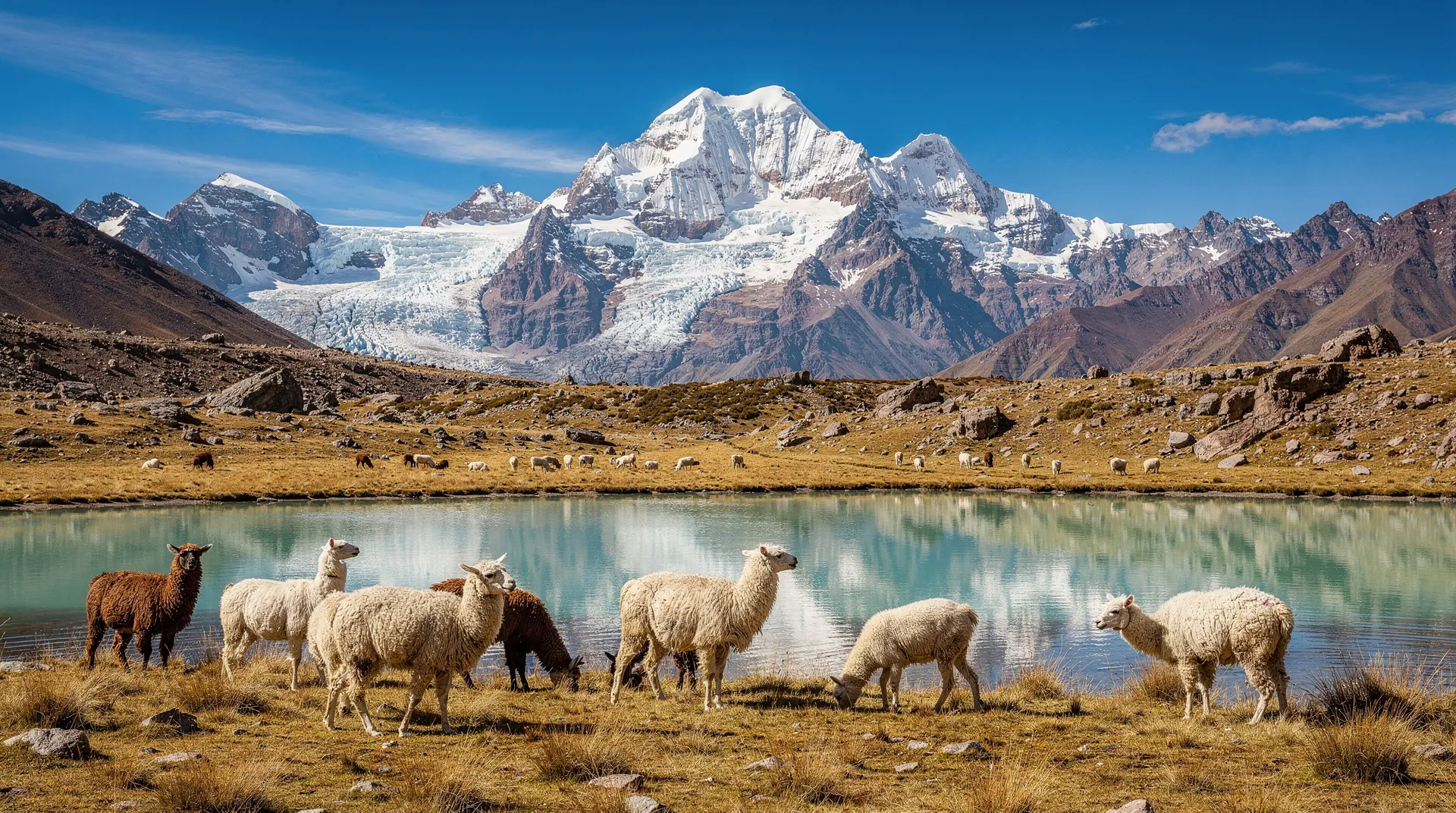
The glacial lakes are the headline. Seven distinct colours across the seven-lakes circuit, ranging from impossible turquoise to deep copper-red, all set against the dark rock and white ice of the massif. Flamingos — Andean flamingos and James’s flamingos — feed in the shallower red-mineral lakes at altitudes above 4,500 m, which requires a mental adjustment: flamingos are a coastal bird to most European travellers, and finding them in a snowfield landscape at high altitude feels absurd until you see it. It is real.
The vicuña are ubiquitous above 4,500 m — more plentiful here than at any point on the more-visited trekking routes near Cusco. The high passes give views that extend across 100 km or more of Andean range on clear days. The glaciers on Ausangate’s flanks descend to approximately 5,000 m and are visible in detail from the circuit trail; the ice is blue-white and deeply crevassed in the lower sections.
The Qoyllur Riti pilgrimage, held annually in May or June depending on the lunar calendar, brings pilgrims from across the Andean world to the glacier at 5,200 m for a ritual involving ice retrieval, music, and an all-night ceremony at high altitude. Witnessing it is extraordinary; joining it without an invitation from a local community is inappropriate. If you happen to be trekking in the Ausangate area during the pilgrimage period, ask your guide about the appropriate relationship between visitors and participants.
Ausangate versus Rainbow Mountain: not the same trip
Many travellers conflate Ausangate with a quick Rainbow Mountain (Vinicunca) day trip because both sit in the same general Andean sacred-mountain landscape southeast of Cusco. They are not interchangeable.
| Ausangate (7 Lagunas) | Rainbow Mountain (Vinicunca) | |
|---|---|---|
| Crowds | Light — a fraction of Vinicunca’s numbers | Heavy, especially 8–10 am |
| Altitude | Up to 4,800 m | 5,200 m |
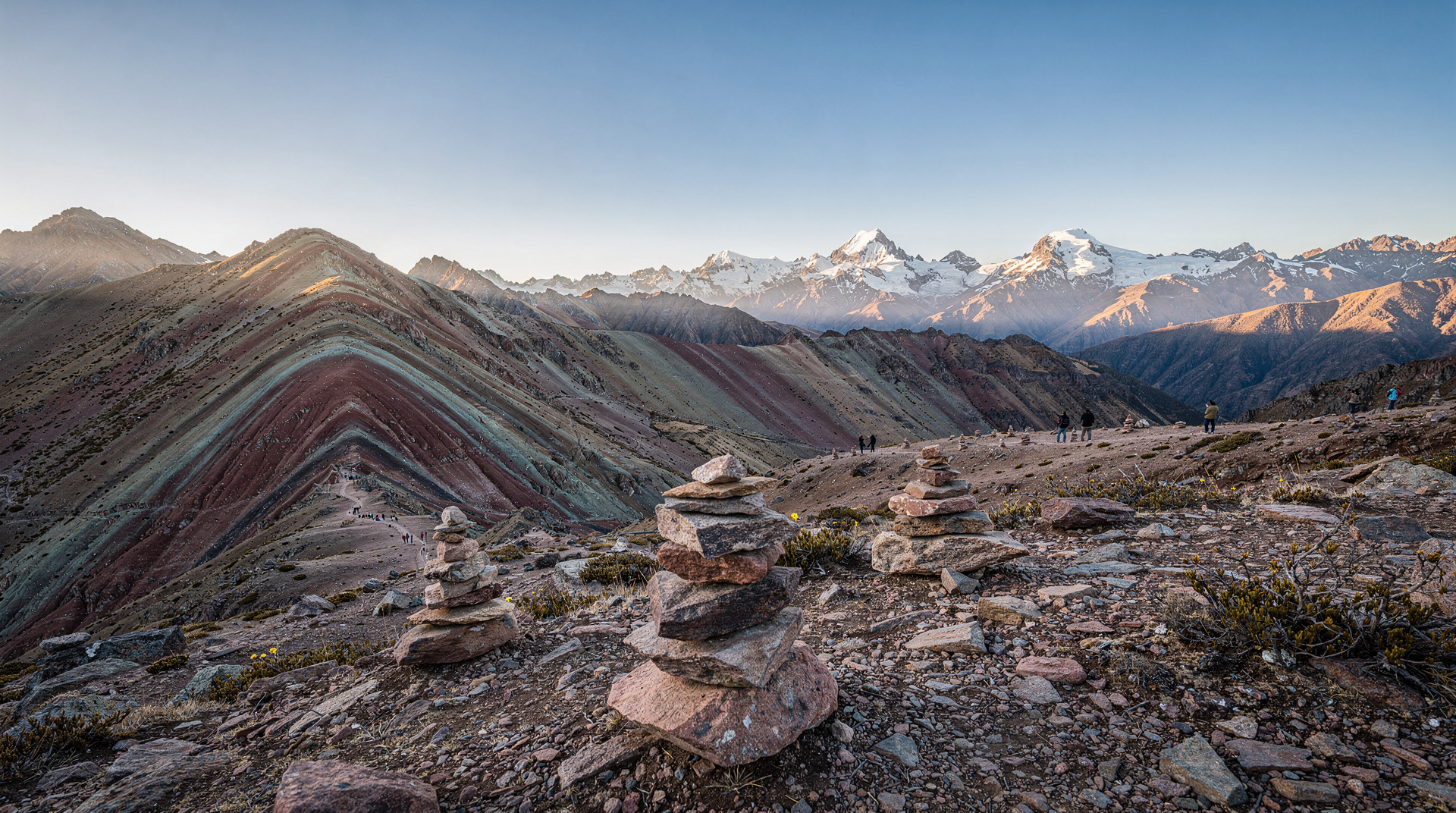
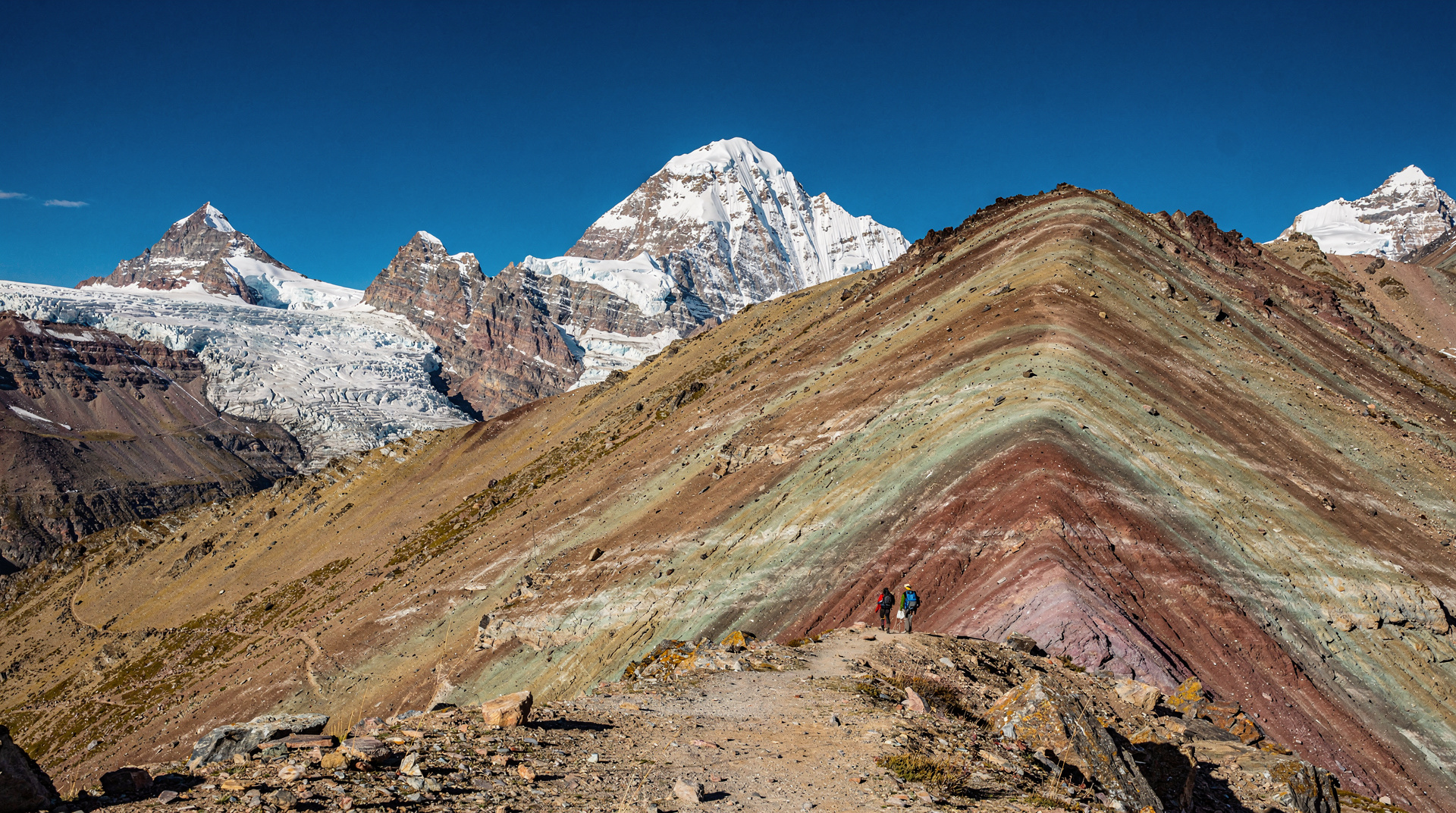
| Landscape | Glacial lakes, flamingos, vicuña | Striped mineral mountainside |
| Physical demand | Serious, sustained full day | Serious but shorter, more crowded trail |
| Photogenic factor | Extraordinary but less “Instagram famous” | Iconic single image, heavily marketed |
If your priority is the single famous photograph, Rainbow Mountain delivers it more efficiently. If you want a full day of extraordinary, uncrowded high-altitude scenery with genuine solitude, the 7 Lagunas trek at Ausangate is the better use of your time — provided your acclimatisation and fitness are up to it.
Where Ausangate fits in your itinerary
For the 7 Lagunas day trek: treat it as a full day from Cusco on day four or five of your stay, after solid acclimatisation. It pairs logically with a visit to Palccoyo in the same general direction — the Palccoyo circuit on day three, Ausangate 7 Lagunas on day five, with a rest day in between.
For the circuit: you are looking at a dedicated 4–5-day commitment, best positioned in the second half of a 10–14-day Cusco itinerary once your body has had a full week at altitude. It does not combine with the Inca Trail or Salkantay in the same trip for most ordinary fitness levels — each of those is a significant commitment in its own right.
The best treks to Machu Picchu guide does not position Ausangate as a Machu Picchu approach — it does not end there — but it provides useful context for understanding how Ausangate relates to the other major trekking options in the Cusco region and how to choose between them.
Photography and what to expect visually
The Ausangate landscape photographs differently depending on the time of day and the section of the route. Early morning light, before around 9 am, gives the clearest reflections in the glacial lakes and the sharpest contrast between the turquoise and copper-red waters and the surrounding rock. By midday, cloud typically builds over the massif itself, softening the light and sometimes obscuring the summit entirely — a pattern worth planning around if a clear shot of the peak matters to you. A polarising filter cuts glare on the lake surfaces and deepens the sky, and is worth carrying if you have one; batteries drain faster than usual in the cold, so keep spares in an inside pocket rather than an outer pack pocket.
The flamingos, when present, are most active and least skittish in the early hours before larger groups arrive at the lower lakes. A telephoto lens helps here, since approaching too closely disturbs them and is discouraged by guides in any case. Vicuña are generally more approachable and often graze close to the trail without fleeing, provided visitors stay reasonably quiet and do not approach directly.
Practical details
Getting there: Pacchanta is reached via Ocongate, approximately 4 hours from Cusco by private vehicle on partially paved roads. No public transport serves the trailhead area reliably. Organised day tours or multi-day trek operators handle the logistics.
Base camp: Pacchanta village (4,300 m) has the thermal bath facilities and basic guesthouse accommodation for day trippers and the first/last night of the circuit. The water in the thermal baths ranges from 37–40°C and is genuinely restorative after altitude trekking.
When to go: May–September only for reliable weather. June–August are the most stable but also see the most other trekkers on the circuit (which still means a fraction of the numbers on the Inca Trail). May and September give good weather with thinner crowds.
Equipment for the circuit: Sleeping bag rated to -10°C minimum, trekking poles, waterproof layers, gaiters, warm gloves, fleece hat, high-quality sunscreen. Most operators provide pack horses or porters for the heavy equipment. Tents and cooking equipment are provided by the operator.
Costs: The 7 Lagunas day trek runs S/180–300 ($50–80) per person from Cusco including transport and guide. The full circuit ranges from approximately $350–600 per person depending on group size, operator, and whether hut or camping accommodation is used.
The Palccoyo full-day tour is not Ausangate — but if you are on the fence about whether you are ready for the high-altitude Ausangate landscape, Palccoyo’s 4,900 m ridges give you a calibration point. Do Palccoyo first, assess your altitude response honestly, and then decide whether the Ausangate circuit is within reach for your current trip.
Ausangate rewards the effort proportionally. This is not a site that sells itself through marketing or Instagram aesthetics — it earns its reputation through a landscape that has been sacred to the people of the Andes for at least 1,000 years, and which remains, even now, largely unknown to the travellers passing through Cusco a few hours to the north-west.
Top experiences
Bookable activities with verified prices and instant confirmation on GetYourGuide.