Quechua culture guide: language, people and living traditions
Cusco: City Center and San Blas Walking Tour
Who are the Quechua people and where does their culture survive today?
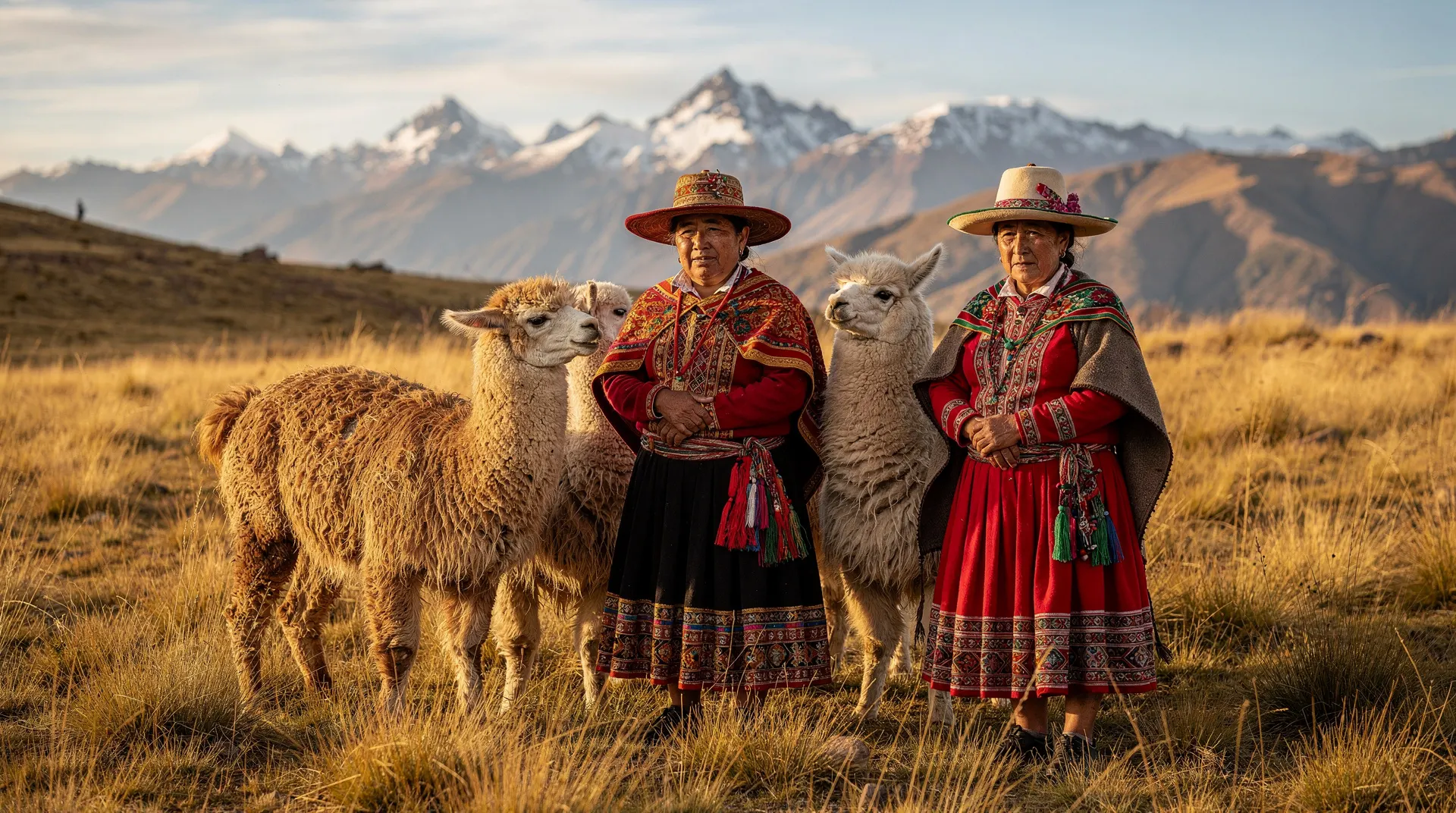
Quechua is the largest indigenous language group in the Americas, with approximately 8–10 million speakers across Peru, Bolivia, Ecuador, Colombia, Argentina and Chile. In the Cusco region, Quechua-speaking communities maintain living traditions in weaving, agriculture, ceremony and spiritual practice that have continued — with adaptations — since the Inca period. The language, the festivals and the agricultural knowledge are all active, not museum pieces.
The people behind the ruins
Cusco’s international identity is largely built on its Inca archaeological heritage — the stones of Sacsayhuamán, the Temple of the Sun, the trail to Machu Picchu. This is understandable and the heritage is extraordinary. But the Inca are not the only, or even the primary, cultural story available in Cusco for a visitor who looks beyond the ruins.
The Quechua-speaking communities of the Cusco region are not the Inca — that empire ended in 1533 — but they are the living heirs to the cultural traditions that the Inca institutionalised, elaborated and spread across the Andes. The weaving tradition, the agricultural knowledge, the ceremonial calendar, the language itself — these did not end when the Spanish conquistadors killed Atahualpa. They continued, adapted, were partially suppressed and partially preserved, and are active today in communities across the Cusco region.
This guide is an honest introduction to that continuity: who the Quechua people are, what their language and cultural practices look like in 2026, and how to engage with them as a visitor with curiosity and respect.
| Where to encounter it | San Pedro market, San Blas, Chinchero weaving cooperatives |
| Language status | Co-official with Spanish in Cusco region; ~8–10 million speakers regionally |
| Best access points | Weaving demonstrations, Quechua festivals, Sacred Valley communities |
| Cost | Free to observe; textile purchases directly support weavers |
| Etiquette essential | Always ask before photographing individuals |
The Quechua people and language
Quechua (also written Qhichwa or Runasimi — “the language of the people”) is a language family rather than a single language, comprising a cluster of closely related varieties spoken across six countries in South America. Total speaker population estimates range from 8 to 10 million, making it by far the largest indigenous language family in the Americas.
In Peru, the 2017 census recorded approximately 3.7 million Quechua speakers — roughly 13% of the population. The Cusco region has one of the highest concentrations of Quechua speakers in the country; in many rural communities, Quechua is the dominant or only language. The specific variety spoken in and around Cusco is Southern Quechua, sometimes called Cusco Quechua or Qusqu Qhichwa, which was the prestige variety during the Inca period and was the form spread across the empire as an administrative language.
Quechua is a co-official language alongside Spanish in several Peruvian regions including Cusco. Government services, schools, medical services and legal proceedings are legally required to be available in Quechua in these regions. The reality is imperfectly implemented — Spanish dominates in practice in most official contexts — but the legal status represents a significant shift from the 20th century’s Spanish-only policy.
The language today
Quechua is not a language in danger of extinction in the near term, but it is under sustained pressure. Spanish is the language of economic advancement, education and formal institutions across Peru; Quechua-speaking communities have strong practical incentives for Spanish acquisition. Urban migration transfers speakers to Spanish-dominant contexts. The transmission of Quechua to children is declining in towns and cities while remaining strong in more remote rural areas.
The Peruvian state has since the 1990s implemented policies aimed at maintaining Quechua: intercultural bilingual education in communities with significant Quechua populations, official recognition, media in Quechua (state broadcaster TV Perú has Quechua-language programming). Civil society organisations, universities and community groups run language revitalisation programmes. The net result is a language that is genuinely alive in a large population but that faces long-term structural pressures.
For a visitor, the most direct encounter with Quechua in Cusco is audible in San Pedro market (where market women converse in Quechua among themselves), in traditional communities across the Sacred Valley, and in festivals and ceremonies where Quechua is the ceremonial language even for participants who also speak Spanish.
Andean cosmology: Pachamama, apus, and the world model
Understanding Quechua culture requires at least a basic acquaintance with the Andean cosmological framework that underlies its practices. This is not a uniform or codified system — it varies across communities and has been significantly reshaped by 500 years of Catholic influence — but certain core elements recur widely enough to represent a broad Andean worldview.
Pachamama: The earth, conceived as a living, maternal presence who sustains all life. The relationship with Pachamama is one of reciprocity — she provides; humans offer back in thanks. The principal formal offering to Pachamama is the pago a la tierra (payment to the earth): a bundle of symbolic objects including coca leaves, llama fat, dried flowers, confites (sweets), incense and other items, assembled and burned by a pago specialist or ritual practitioner. The first day of August is the most important offering time in the annual cycle, when Pachamama is considered “hungry” and in need of propitiation. This practice continues in communities across the Cusco region.
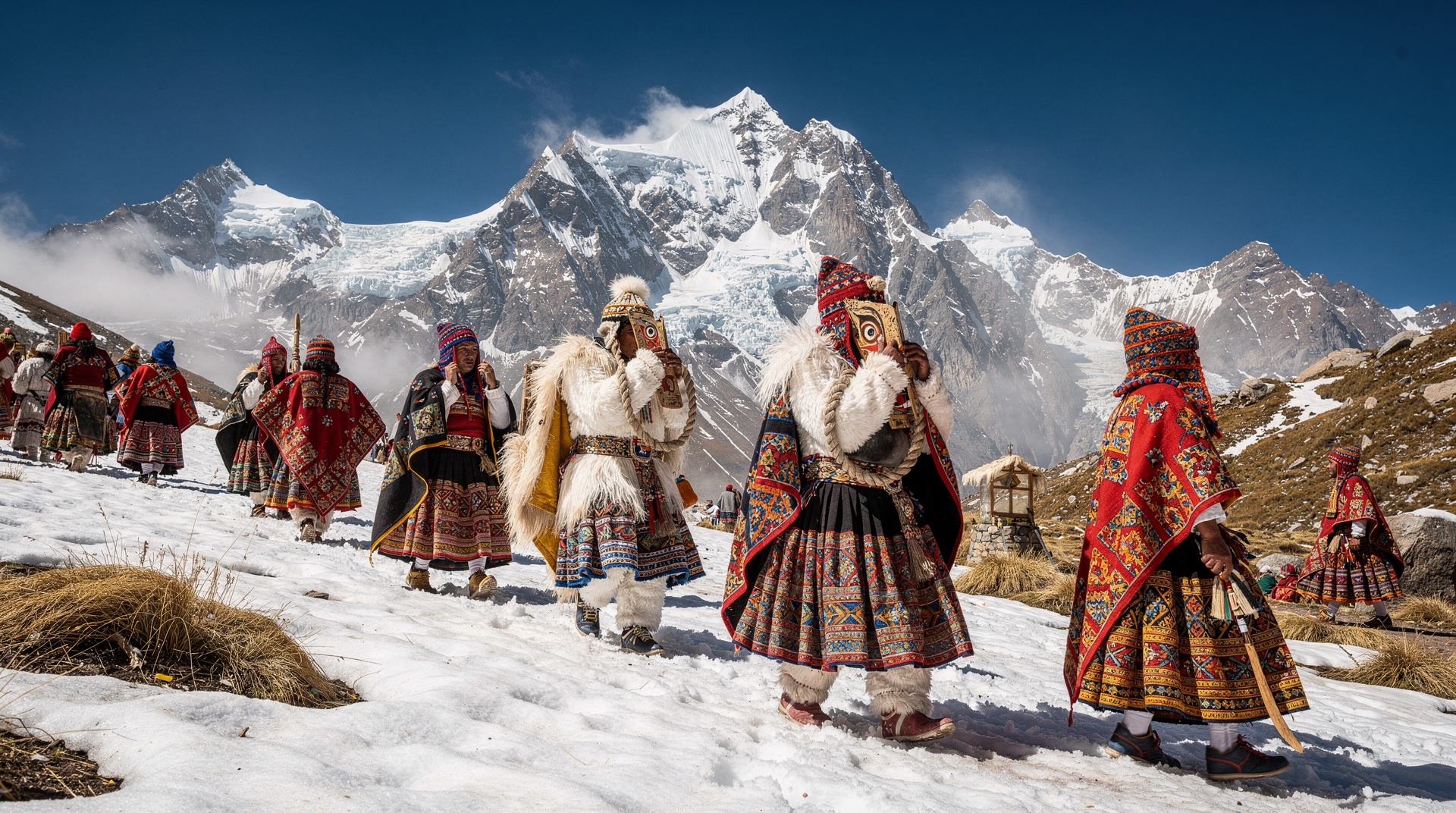
Apus: Sacred mountain spirits — not mountains as physical features but as living presences with agency and personality. The Ausangate massif (see the Q’oyllur Rit’i guide) is the most powerful apu in the Cusco region; Salkantay (see Salkantay trek guide) is another major apu with significant ceremonial importance. Smaller hills and peaks throughout the region have their own apu identities. The relationship with the apus — approached with offerings, respected in ritual contexts, invoked for protection and favour — is active in ceremonial practice.
Ayni: The principle of reciprocal exchange that underlies Andean social organisation. Ayni is the obligation to return in kind what you have received — labour, food, ceremony. The communal work parties (minkas) that maintain irrigation channels, build community structures and bring in harvests operate on the ayni principle: you give your labour today; when you need labour, the community gives it back. This ethic of reciprocal obligation extends to relationships with Pachamama and the apus.
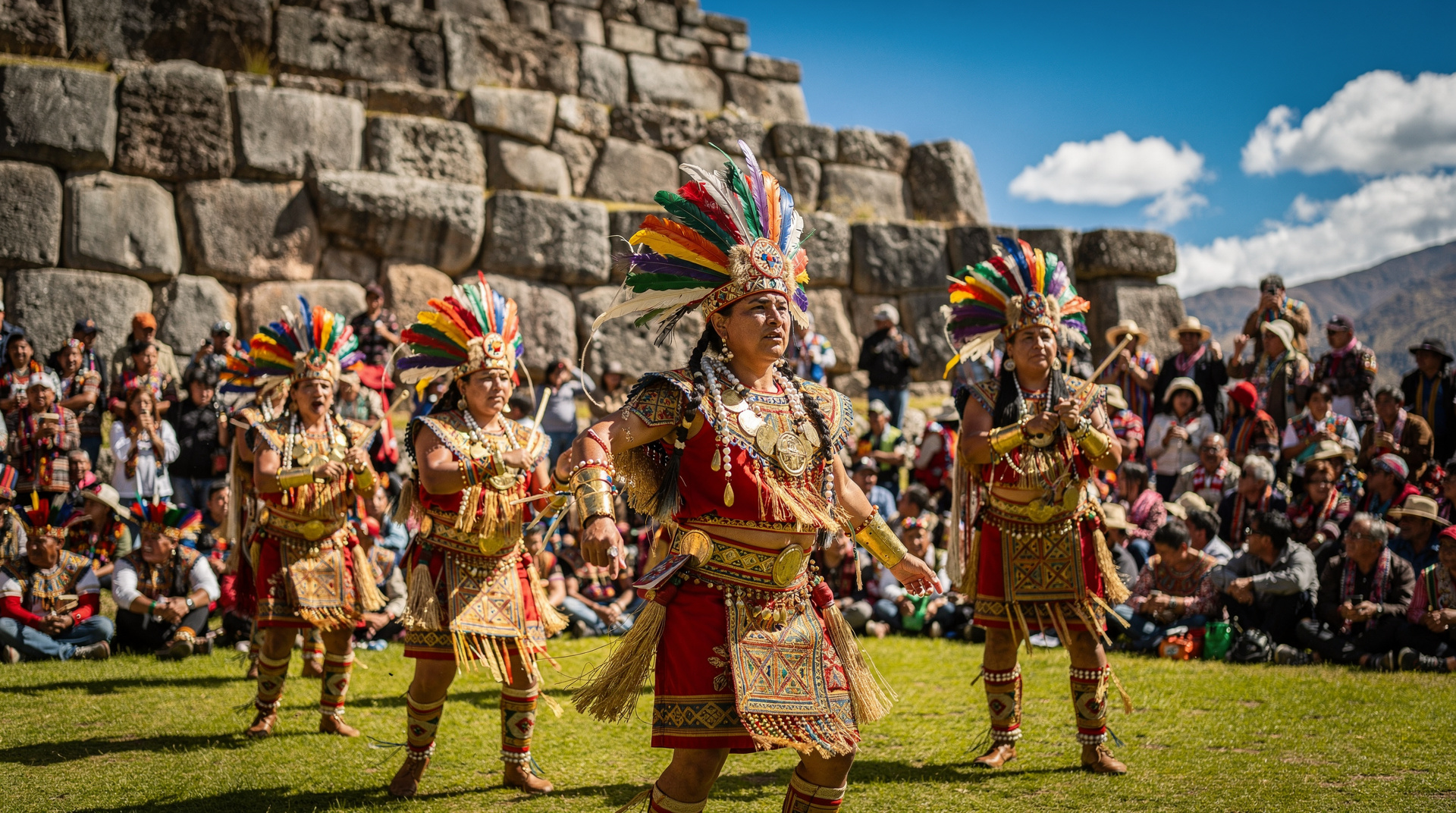
The Andean calendar: The Inca calendar was primarily agricultural and astronomical. The solstices and equinoxes, the rising and setting of key star clusters (the Pleiades, the Milky Way dark cloud constellations), and the patterns of frost, rain and drought all structured the ceremonial and agricultural year. Contemporary Andean communities in the Cusco region maintain agricultural practices calibrated to this calendar, and the major festivals (Inti Raymi, Q’oyllur Rit’i, the Pachamama offering of August) align with its structure.
The textile tradition as cultural carrier
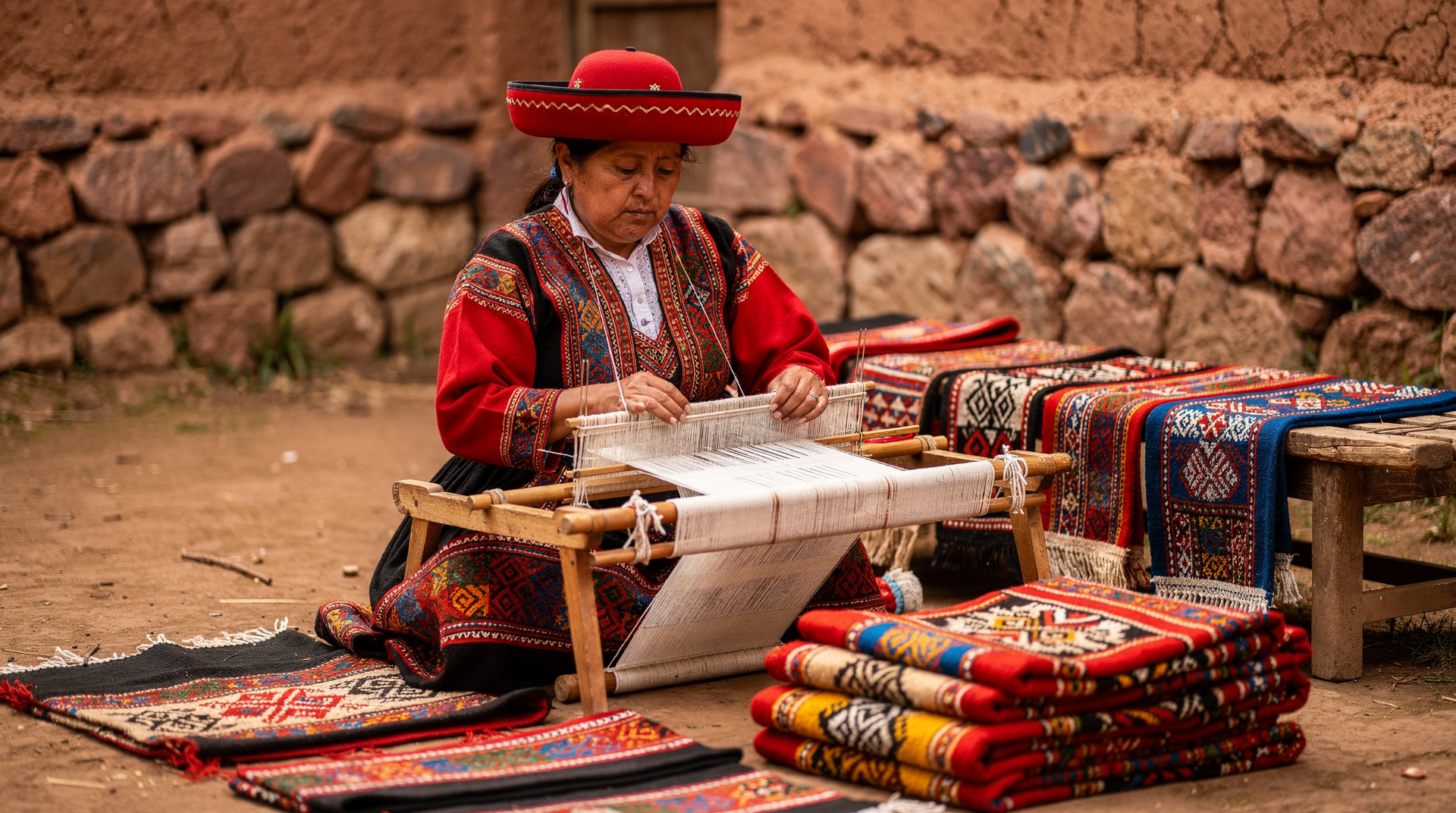
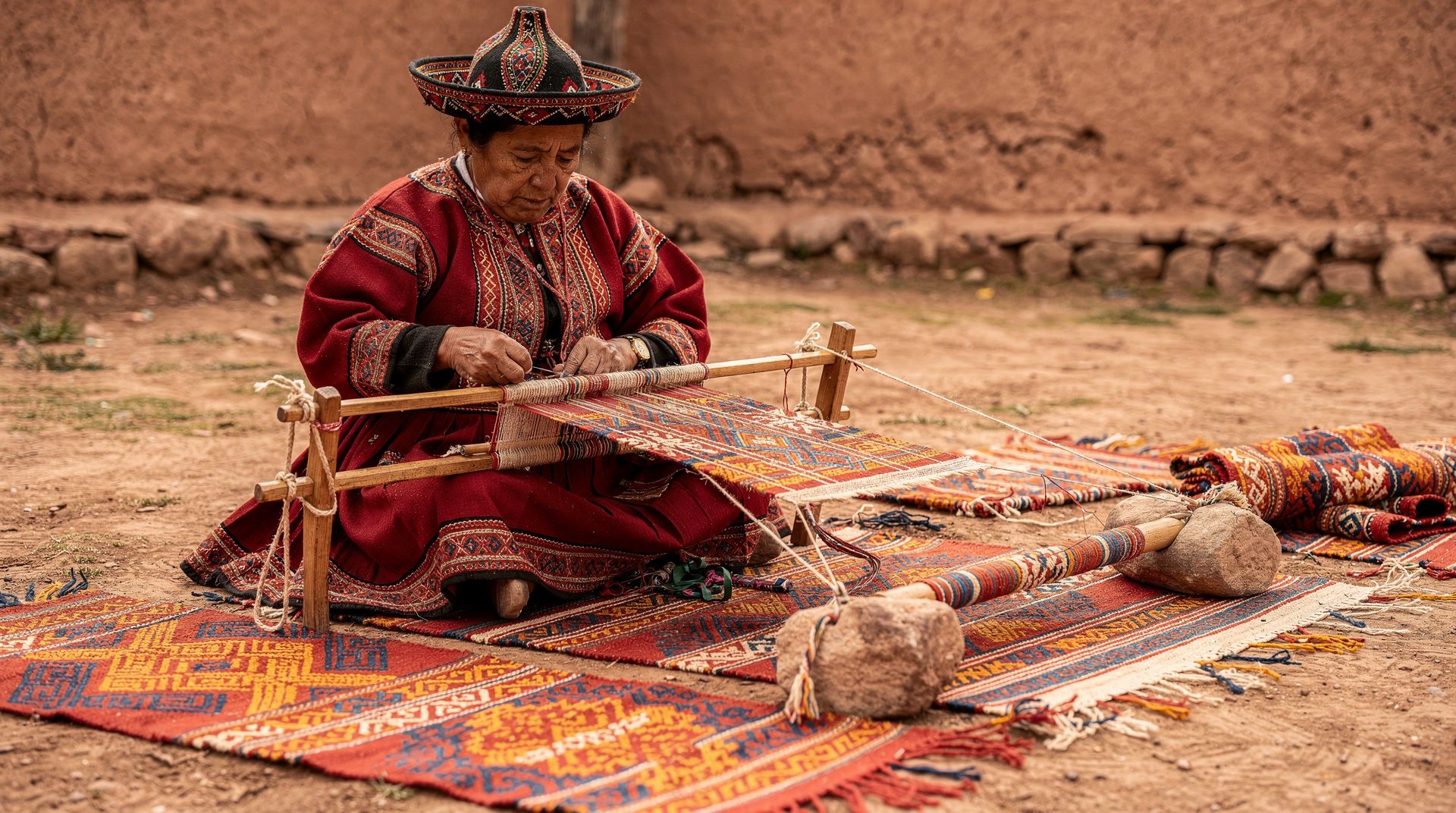
The weaving tradition in the Chinchero cooperatives and similar communities across the region is one of the most direct transmissions of pre-Columbian Andean cultural knowledge available to a visitor. The patterns encoded in the textiles are not decorative — they represent cosmological models, community identity and narrative elements that are taught verbally and practically from weaver to weaver, without written record. The continued production of these textiles is a form of cultural memory.
The Andean textiles guide covers the textile tradition in detail — what the weaving process involves, how to identify genuine work, and how to buy ethically. Understanding the cultural significance of textiles transforms the purchase from a souvenir acquisition into something closer to the ayni principle: you give money; the weaver sustains a tradition; the tradition continues.
Coca in Andean culture
Coca (Erythroxylum coca) occupies a central place in Andean cultural practice that has nothing to do with the cocaine extraction process it facilitates elsewhere. In Andean tradition, coca is sacred: it is the plant of Pachamama, used in ritual offerings, in social sharing (the acullico, or leaf-chewing exchange, is a form of greeting and social bonding), in divination, and in healing. The coca k’intu — three perfect leaves arranged point-upward — is the fundamental ritual object in most Andean ceremonies.
In Cusco, coca leaves are sold legally and openly at San Pedro market and at pharmacies. Mate de coca (coca leaf tea) is served everywhere as a standard beverage. The mildly stimulant effect of coca — which reduces hunger and altitude sensitivity at the doses consumed in tea and leaf-chewing — is genuine but modest. The appropriate attitude toward coca in Cusco is neither alarmed (it is not cocaine) nor glib (it is a culturally significant plant, not a tourist attraction).
Engaging respectfully
A few practical guidelines for cultural engagement in the Cusco region:
Ask before photographing individuals. This is universal politeness and particularly important in Andean contexts where many community members have cultural or personal objections to being photographed without consent.
Learn a few Quechua words. Allillanchu (hello), añay (thank you), sumaq (beautiful/good). The attempt demonstrates respect and is received positively.
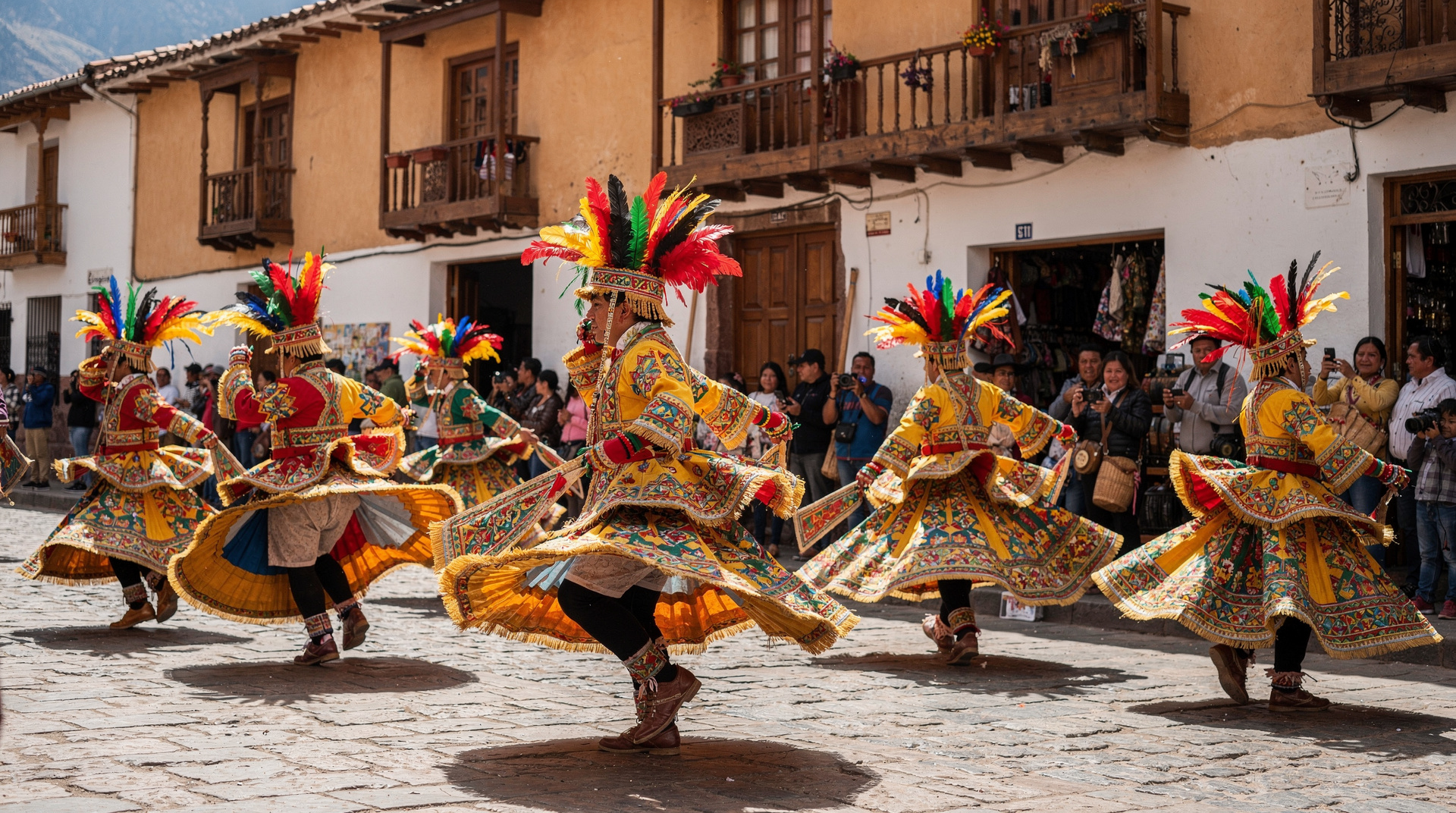
At ceremonies, observe without intruding. Festivals like Q’oyllur Rit’i and Corpus Christi are genuine religious events. The appropriate role for a visitor is respectful witness, not active participant (unless specifically invited into participation, which happens in some community tourism contexts).
Buy from producers, not intermediaries. Direct economic relationships with weaving cooperatives, artisan workshops and market vendors who produce their own goods support the continuation of the traditions rather than extracting value from them at a distance.
Understand the tourist economy’s effects. The Cusco region’s economy is heavily dependent on tourism, which creates genuine economic opportunities and genuine cultural pressures simultaneously. Ceremony, craft and traditional knowledge can be commodified in ways that hollow out their meaning over time. Choosing to engage thoughtfully — understanding what you are seeing, buying honestly, respecting boundaries — is a small contribution to a better version of that relationship.
Continuing the engagement
The ceremonies covered in this site’s culture-festivals guides — Inti Raymi, Corpus Christi, Q’oyllur Rit’i — are the most accessible entry points to living Andean ceremonial culture for a visitor on a typical Cusco itinerary. The textile cooperatives in Chinchero and the Sacred Valley are the best access point to Andean material culture.
The Inca history primer provides the historical framework for understanding the empire that organised and spread Quechua cultural practices, and the collapse that began the 500-year process of adaptation and resistance that continues today.
Cusco’s ruins are extraordinary. The living Quechua culture that surrounds them is no less so. Travelling between the two — from the stones of Sacsayhuamán to a morning at a weaving cooperative, from the Cathedral’s Corpus Christi display to an afternoon in San Pedro market listening to Quechua — gives the city its full depth. Neither dimension alone tells the whole story.
Music and instruments
Andean music is one of the most immediately audible expressions of Quechua culture in Cusco, heard in plazas, restaurants and at festivals throughout the city. The zampoña (panpipes, built from graduated bamboo tubes) and the quena (an end-blown flute, traditionally made from bone or bamboo) produce the haunting high-register melodies most associated with Andean music internationally. The charango, a small ten-string instrument traditionally built from an armadillo shell (now more commonly wood, for conservation reasons), provides rhythmic accompaniment with a bright, percussive tone unlike any guitar.
Street and restaurant performances in Cusco vary enormously in quality and authenticity — some are genuine folk musicians supplementing their income, others are more commercially oriented performances for a tourist audience. Both have a place, but visitors interested in hearing music in its ceremonial context are better served attending an actual festival such as Inti Raymi or Q’oyllur Rit’i, where the music functions as a living ritual practice rather than a performance for visitors.
Community tourism: a more direct engagement
Beyond observing weaving demonstrations or attending festivals as a visitor, several communities in the Cusco region and Sacred Valley now offer community tourism programmes — homestays, cooking sessions, and guided agricultural activities run directly by Quechua-speaking families rather than through an intermediary tour company.
These programmes vary in quality and genuineness, but the better ones provide a considerably more direct economic relationship and a richer, slower cultural exchange than a standard day-tour stop. Ask Cusco-based operators specifically about community tourism options if a homestay or an extended cultural exchange interests you more than a brief demonstration stop; the difference between a fifteen-minute weaving show and a half-day spent cooking and working alongside a family is substantial.
Food as cultural practice
Quechua food traditions in the Cusco region extend well beyond the dishes that appear on restaurant menus for visitors. Staple crops with pre-Columbian origins — quinoa, several dozen native potato varieties, maize in colours ranging from white to deep purple, and tarwi (an Andean lupin bean) — are grown using agricultural knowledge and calendar practices with direct continuity to the Inca period and likely earlier.
The pachamanca, an underground earth-oven cooking method using heated stones, is used in rural communities for ceremonial and celebratory meals and represents a cooking technology that predates the Inca empire itself. Visitors interested in Andean food beyond the standard cuy-and-lomo-saltado circuit should look for community-run cooking experiences in the Sacred Valley, where the connection between agricultural practice, ceremonial calendar and daily food is far more visible than in a Cusco city restaurant.
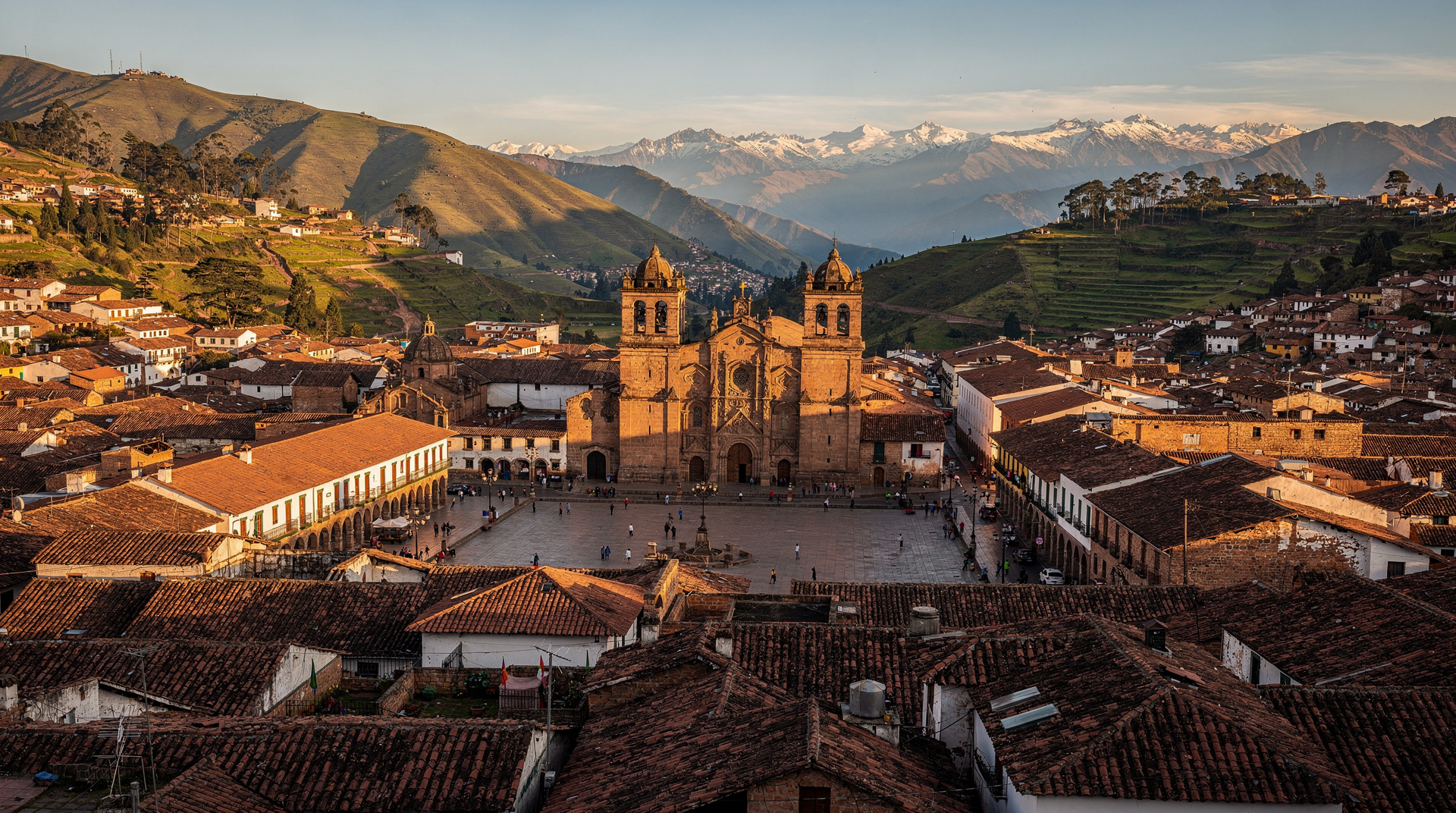
For visitors who want a guided way into the city’s older streets, a walking tour of the centre and San Blas is a gentle way to hear how Quechua and Spanish layers sit side by side in the same neighbourhood. Treat the guide as a conversation partner: ask what words and customs they grew up with.
Cooking is another accessible doorway: a market visit followed by a Peruvian cooking class lets you see native potatoes, maize and herbs being chosen and then used, which makes the agricultural continuity described above tangible. Come hungry and curious, and ask where the ingredients come from.
Where Quechua culture meets the landscape
Much of what makes Quechua culture legible to a visitor is tied to place. The terraces of Moray and the salt pans nearby (see the Maras salt mines guide) are archaeological and agricultural sites at once, and local guides who grew up in the area often explain them through the logic of the farming calendar rather than as ruins alone. The same is true in Pisac and Ollantaytambo, where living villages sit directly beside the stonework and daily life continues around the monuments.
The Qorikancha in Cusco shows another layer of the story: Inca stonework with a colonial church built on top of it. It is a useful reminder that Andean and Spanish traditions did not simply replace one another but overlapped, and that overlap is still visible in how festivals blend Catholic imagery with Andean ritual. If you want the full picture, read the Qorikancha guide before you go.
If you prefer a guide to connect the dots on site, a full day through the Sacred Valley passes through several of these villages and lets you ask a local guide how the farming calendar shapes life around the stonework.
Practical ways to listen and learn
You do not need a special tour to start paying attention. A slow morning in San Pedro market, a walk through San Blas, or a quiet hour in the village streets of the Sacred Valley will teach you more about daily Quechua life than a rushed stop. Our San Pedro market food guide and the Chinchero weaving guide both suggest ways to spend time there without treating people as scenery.
If you would like to go further, a guided day built around Chinchero and the villages nearby, or a longer stay following the Sacred Valley slow-travel diary, gives time for real conversation. A first-hand account of sitting down with weavers is in weaving with Chinchero women, and a homestay perspective on the highland lake communities is in the Lake Titicaca homestay diary.
Timing your visit around living traditions
Because so many practices follow the agricultural and ceremonial year, the season you travel in changes what you can witness. The Cusco festivals calendar lays out the main dates, and the best time to visit Cusco guide explains how weather shapes the rest of your plans. Travellers who build a trip around a festival should read the Inti Raymi diary for a candid sense of what the crowds and logistics are really like.
Remember that you will also be adjusting to altitude while you take all this in. The Cusco acclimatisation plan and the coca tea and altitude remedies guide connect directly to the cultural role of coca described above, and give practical context for the leaf you will be offered in every café.