Inti Raymi festival guide: Cusco's sun festival explained
Cusco: Half-Day City Tour with Sacsayhuaman and Q’enco
What is Inti Raymi and how do I attend?
Inti Raymi is the Inca sun festival, celebrated in Cusco on 24 June. The main ceremony takes place at Sacsayhuamán ruins above the city. Paid grandstand seats give the best view (prices are set each year by Cusco's municipal festival company, Emufec); free public areas exist but are very crowded. Book accommodation and flights weeks in advance — this is Cusco's busiest single day.
| When | 24 June (main ceremony), festival week 20–26 June |
| Where | Qorikancha → Plaza de Armas → Sacsayhuamán |
| Cost | Free public areas; grandstand prices set each year by Emufec |
| Getting there | 30–45 min uphill walk from Plaza de Armas (roads closed) |
| Book ahead | Accommodation 6–8 weeks; grandstand tickets only through the channels announced by Emufec |
The festival and what it represents
Inti Raymi — the Festival of the Sun, from the Quechua inti (sun) and raymi (feast or festival) — was one of the most important ceremonies in the Inca calendar. Held at the winter solstice in the Southern Hemisphere (approximately 21–24 June), it marked the point at which the sun, Inti, was at its most distant from the Earth and required ritual supplication to ensure its return. The Inca were sophisticated astronomers; the solstice was not metaphorical for them but an observed, measured celestial event whose predictive accuracy was essential for agricultural planning across an empire stretching from modern Colombia to Chile.
The original ceremony was elaborate and multi-day: fasting beforehand, ritual washing, the lighting of sacred fires using focused sunlight rather than flint or friction, animal sacrifices (llamas, not humans — the human sacrifice tradition associated with the Aztec empire is regularly and wrongly attributed to the Inca), offerings of chicha to the sun, and ceremonies involving the Sapa Inca (the emperor) and the high priests of the sun cult at Qorikancha in Cusco.
The Spanish authorities banned Inti Raymi in 1572 as part of the systematic suppression of Inca religious practices. The modern festival is a revival, first staged in 1944 by the Peruvian scholar and writer Humberto Vidal Unda with local actors, musicians and historical research. It has been held annually since then, growing in scale and national significance with each decade. The Peruvian state now recognises Inti Raymi as part of the nation’s cultural patrimony.
This context is important for visitors to understand: what you are watching at Sacsayhuamán on 24 June is a historically informed revival performance rather than a continuous surviving ceremony. This does not diminish its significance — the revival was itself an act of cultural assertion in the mid-20th century when Andean cultural traditions were systematically marginalised — but it means approaching it as a major theatrical and cultural event rather than as an unbroken ritual.
The day of Inti Raymi: the three ceremonies
The festival’s structure across 24 June involves three ceremonies at three locations, building in scale through the day.
Morning: Qorikancha ceremony
The day begins at the Temple of the Sun, Qorikancha, in the early morning, typically starting around 9–10am. A smaller ceremony here represents the departure of the Sapa Inca from the sacred precinct. Actors playing Inca court figures — the emperor, his consort, priests, court attendants — process through the temple courtyard. This ceremony is brief (20–30 minutes) and visible to visitors watching from outside; the temple and convent interior admission requires a separate ticket.
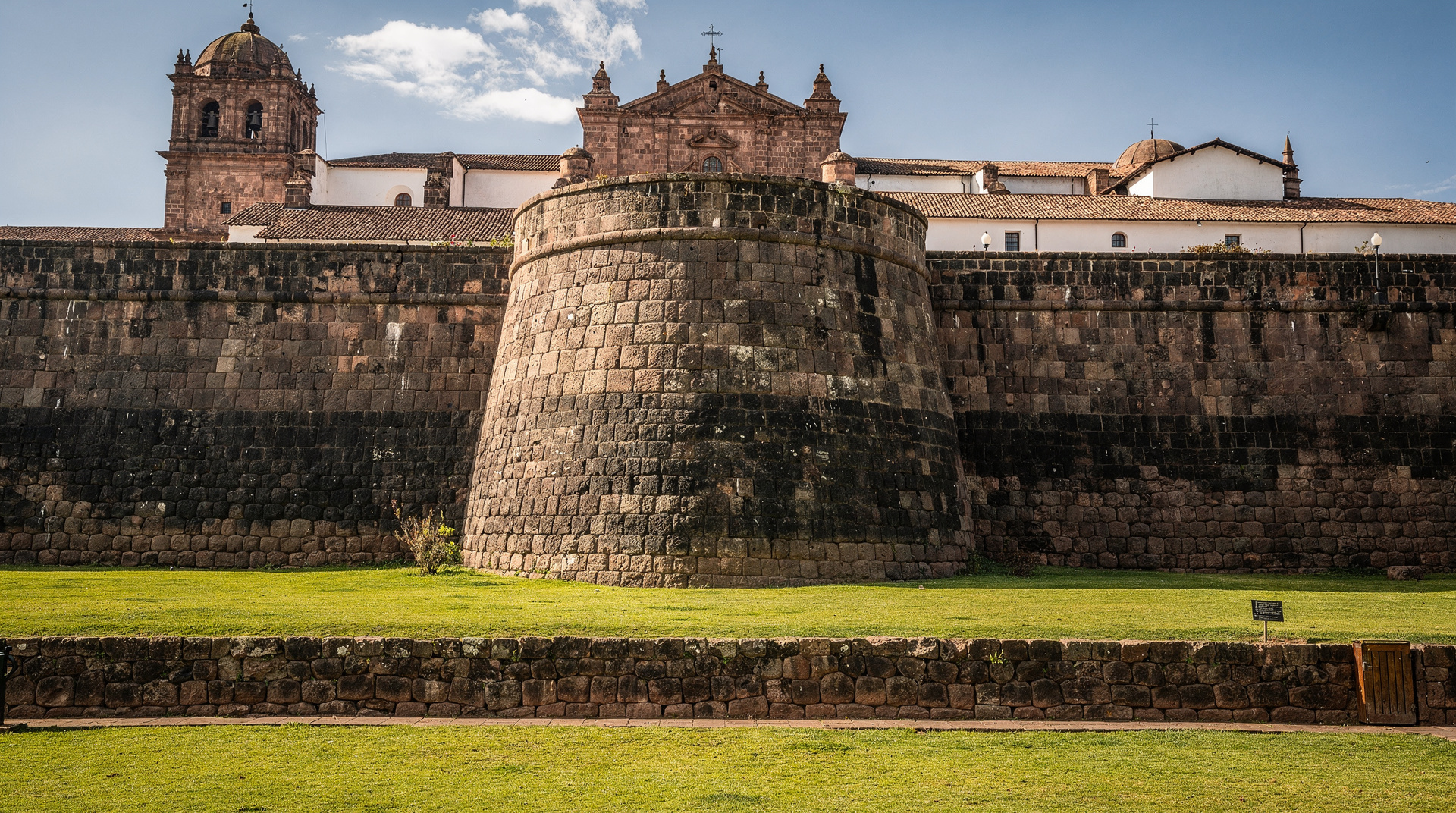
The Qorikancha setting — the original Inca Temple of the Sun, with the Spanish Convent of Santo Domingo built directly on top — gives this ceremony a particular historical resonance that the Sacsayhuamán event cannot replicate. The collision of the colonial and the indigenous is literally visible in the stonework as the ceremony unfolds.
A Cusco city tour including Qorikancha booked for a day before the festival lets you see the temple’s interior properly, without the festival-day crowds pressing against the courtyard railings.
Mid-morning: Plaza de Armas ceremony
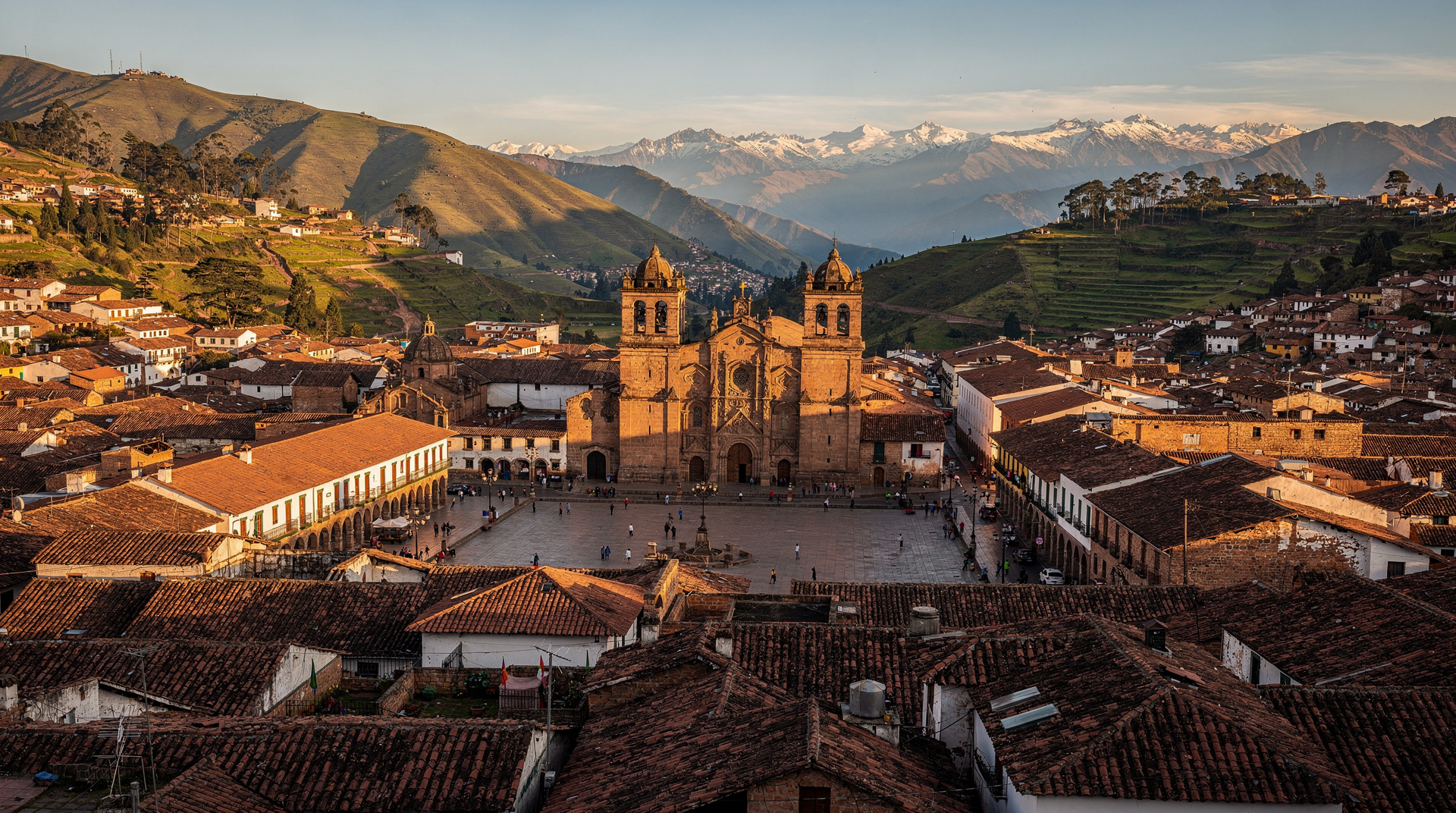
The procession moves to the Plaza de Armas by late morning for a second ceremony in the city’s main square. The scale here is larger than at Qorikancha, with more performers and the full civic presence of Cusco’s authorities. The Plaza is open to the public, with viewing areas along the perimeter. This is the most crowded section of the day — arrive early if you want a reasonable viewing position.
Security is tight around the ceremonial zone in the centre of the Plaza; spectators are kept to the perimeter streets and the balconies of the surrounding buildings (these can be rented privately in advance at considerable cost).
Afternoon: Sacsayhuamán main ceremony
The main event begins at Sacsayhuamán in the early to mid-afternoon (typically starting around 2–3pm, though the procession from the Plaza means the amphitheatre settles around 1–2pm for those with grandstand tickets who want to be seated before the ceremony begins).
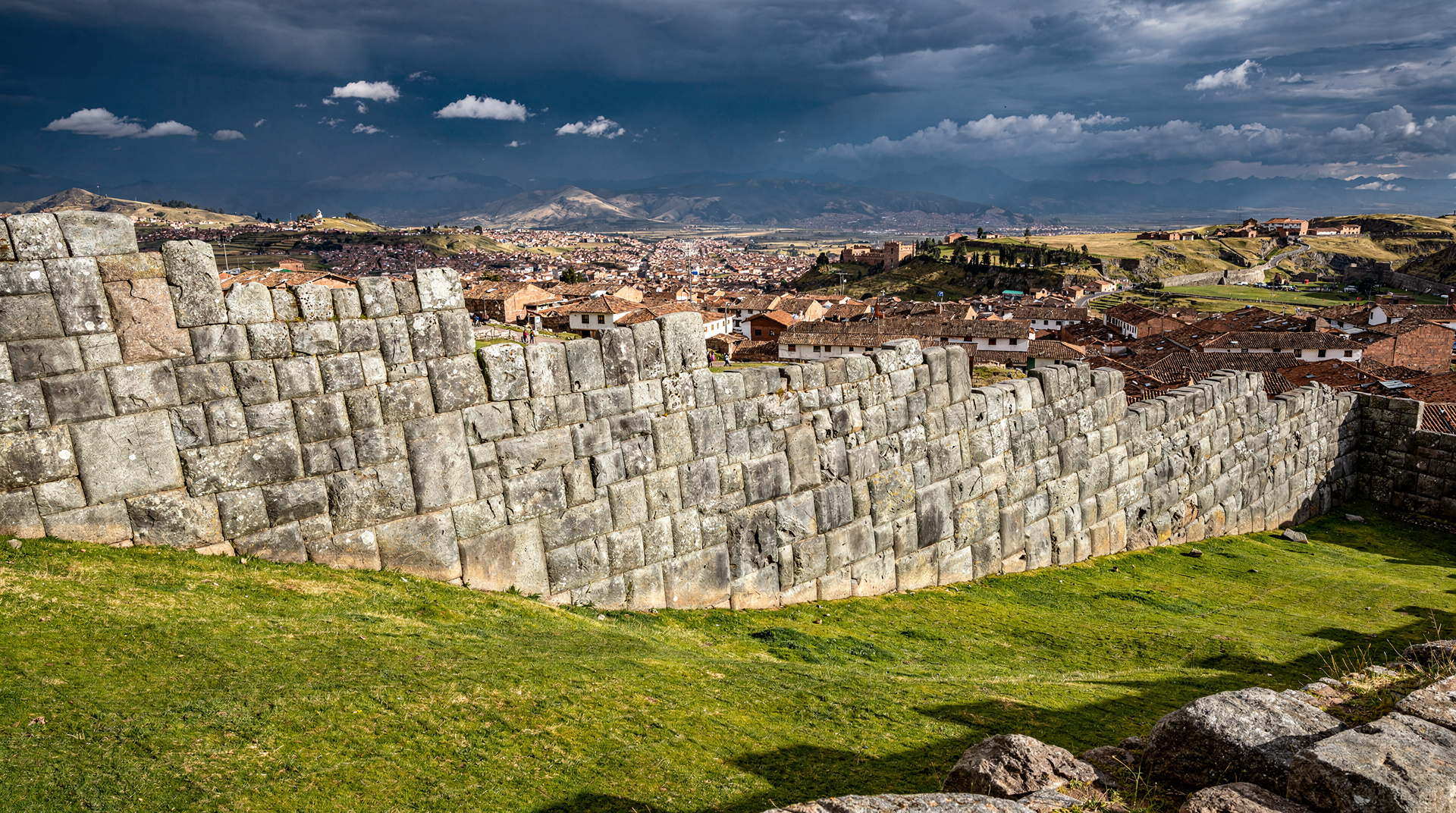
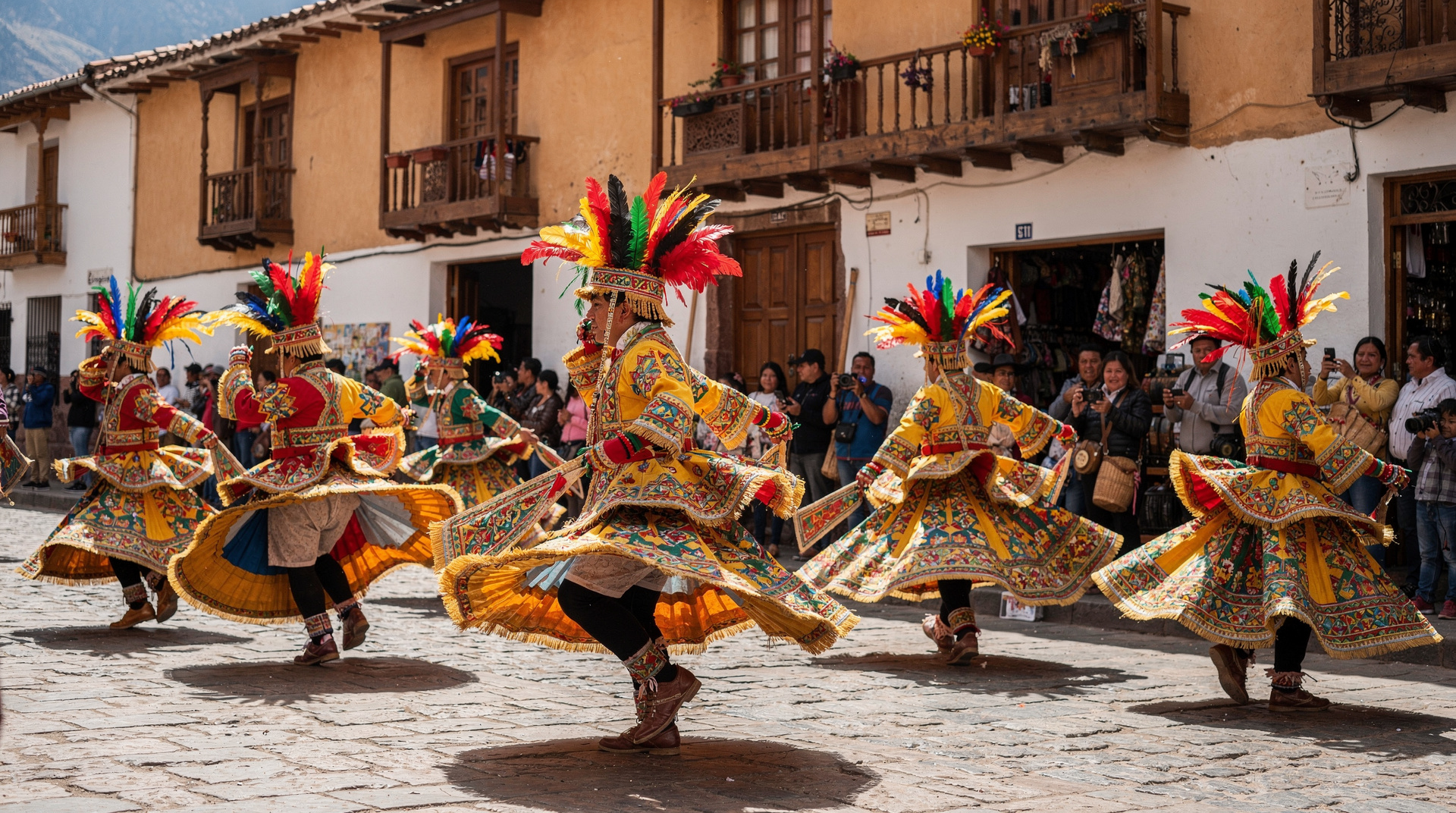
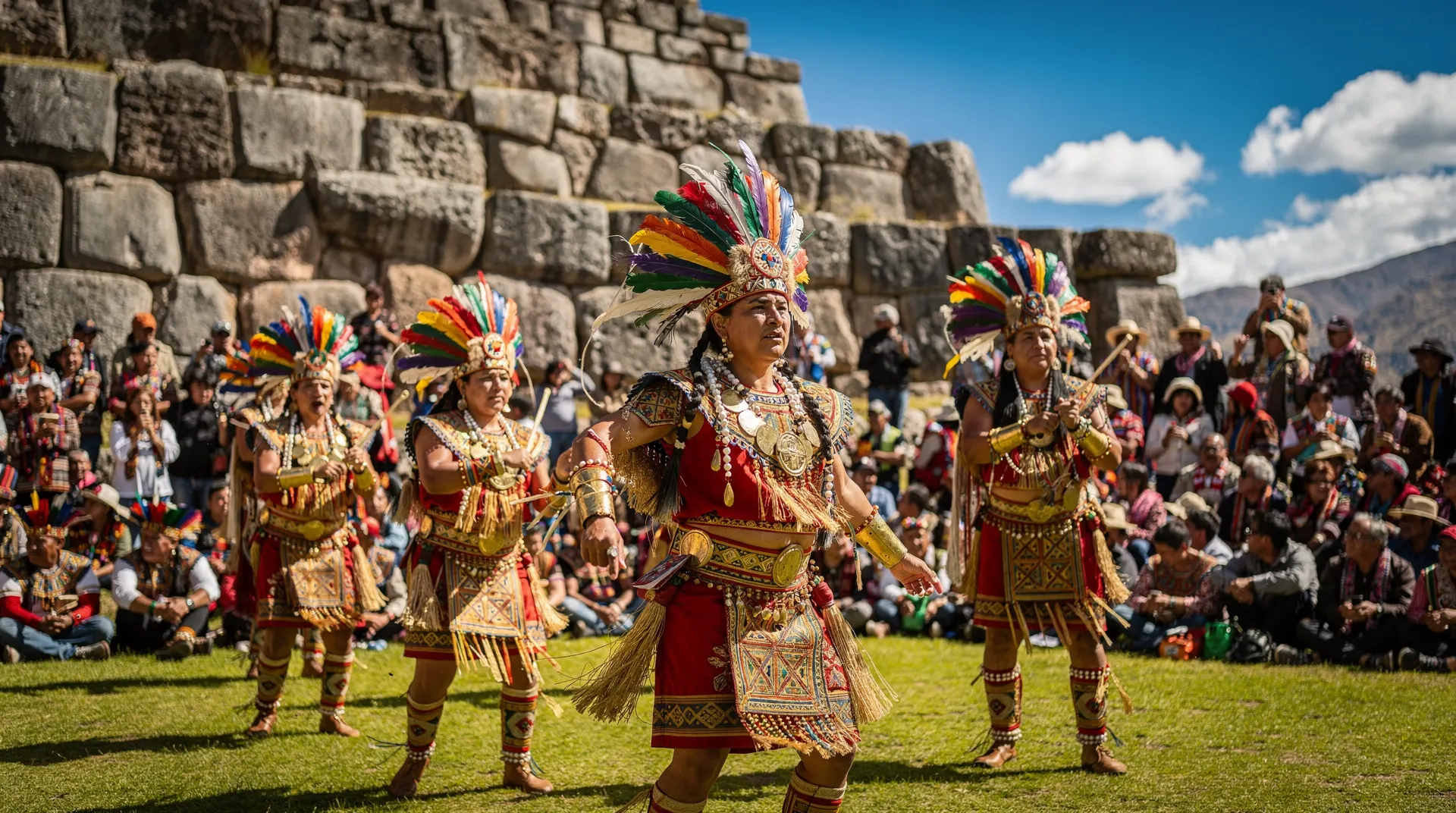
Sacsayhuamán — the monumental Inca fortress with its three zigzagging terraced walls of enormous limestone blocks above Cusco — provides a theatre of scale that no other setting in Peru can match. A cast of around 400 actors, musicians and dancers performs the reconstruction of the Inca ceremony against the backdrop of the massive stone walls. The ceremony includes the arrival of the Sapa Inca on a litter carried by retainers, the ritual addressed to the sun, the symbolic lighting of the sacred fire, chicha offerings poured from golden vessels, and dances by regional Andean dance groups in traditional dress.
The performance runs approximately 90 minutes and is professionally staged. The setting makes it visually extraordinary — the afternoon light on the Inca walls, the scale of the terraces, the mountains behind, the assembled crowd of tens of thousands. It is genuinely impressive as a theatrical event and as a cultural one.
Attending the Sacsayhuamán ceremony: practical options
Paid grandstand tickets
Sections of the hillside around the main ceremony area are cordoned into ticketed grandstand zones. Prices are set each year by Emufec and vary by sector, with the best views close to the ceremony stage costing most. Seats can sell out well before 24 June; check the official Emufec announcements for the current year’s prices and where tickets are sold.
A Cusco city tour with Sacsayhuamán in advance of the festival allows you to see the site without the Inti Raymi crowds and understand the layout before the ceremony day — useful for knowing which viewing positions are best.
Do not buy Inti Raymi grandstand tickets from street touts; fake and resold tickets are common. Use only the sales channel announced by Emufec. Confirm what sector and row you are purchasing.
Free public areas
A significant portion of the hillside around Sacsayhuamán is open to the public without tickets. These areas fill from midday onward, are standing-only, have obstructed views in places and are very crowded by the time the ceremony begins. The atmosphere in the public areas is excellent — they contain the most local, most festive part of the crowd — but the view of the ceremony depends entirely on where you manage to position yourself.
If you attend the public area, arrive at Sacsayhuamán by 11am to claim a position with a sightline to the ceremony stage. Bring water, sunscreen and food — vendors operate in the area but prices are elevated and queues are long during the ceremony.
Getting to Sacsayhuamán on the day
The road from Cusco to Sacsayhuamán is closed to private vehicles on Inti Raymi. The standard route is the 30–45 minute uphill walk from the Plaza de Armas via Suecia and Pumacurco streets. It is a steep climb at 3,400 m — take it slowly and allow plenty of extra time. Acclimatised visitors find it manageable; those in their first 48 hours in Cusco will struggle more.
Start walking by noon at the latest if you have paid grandstand tickets; by 11am if you are targeting a good position in the public areas.
Managing the crowds and practical safety
Inti Raymi is Cusco’s highest-footfall single day of the year. Pickpocketing peaks during the ceremony — the crowds are dense, attention is focused on the performance, and experienced thieves are present. Keep phones in front inner pockets, use a money belt for anything valuable, and leave passports and excess cash at your hotel.
The festival and the week around it sees Cusco accommodation and restaurant prices increase by 50–150%. Book your hotel at least six to eight weeks in advance for the 20–26 June window, and confirm your room rate in writing. Some hotels do not accept single-night bookings during this period.
Beyond the main ceremony: the broader festival week
Inti Raymi falls within the broader Festival of Cusco, which runs through most of June with daily events: traditional dance competitions (danzas folklóricas) in the Plaza de Armas and at Sacsayhuamán, artisan fairs, civic parades, concerts and regional food stalls. The nights surrounding 24 June have fireworks over the Plaza.
This makes the week around Inti Raymi the most concentrated period of Andean cultural performance available anywhere. The Cusco festivals calendar covers the other events in June and across the year.
Inti Raymi and the Inca calendar
The winter solstice ceremony in the Inca calendar was not simply a religious event — it was the pivot of the agricultural year. The Inca’s extraordinarily sophisticated agricultural system, which fed millions of people across a 4,000-km empire in some of the most challenging terrain in the world, depended on precise astronomical and meteorological observation. Inti, the sun deity, was not a metaphor for agricultural productivity; the sun’s position in the sky was the direct regulator of the Inca’s planting schedules, frost-risk calculations and irrigation decisions across dozens of distinct ecological zones from sea level to above 4,000 m.
The solstice ceremony was the moment when the sun reached its greatest distance from the Earth in the Southern Hemisphere — the moment of maximum risk in the agricultural cycle, when the sun’s absence was most prolonged. The ceremony was addressed to this risk directly: the ritual act of calling the sun back, of making offerings large enough to ensure its return, was not theatrical but practical in the Inca worldview. Understanding this makes the modern Inti Raymi ceremony legible as something more than spectacle: it is a re-enactment of an act of civilisational survival.
The destruction of the ceremony by the Spanish colonial authorities in 1572 — and its revival by Peruvian scholars in 1944 — both make more sense in this frame. What the Spanish authorities understood and wanted to suppress was not merely a religious ceremony but the most visible expression of a cosmological and political system that competed with Catholic hegemony. What the 1944 revival asserted was not merely cultural nostalgia but a claim of continuity and legitimacy by Andean communities whose civilisational knowledge had been systematically suppressed for four centuries.
This history is part of what you are watching at Sacsayhuamán on 24 June. The Inca history primer for travellers and the cusco archaeological sites guide provide the full context for Cusco’s Inca history before you attend.
Preparing before festival week
The climb to Sacsayhuamán and a long afternoon standing or sitting on an open hillside both ask more of your body than a normal sightseeing day. Give yourself time to adjust to the altitude before the festival: the Cusco acclimatisation plan sets out a sensible order for your first days, and the altitude sickness guide explains the symptoms to watch for. Many visitors also find it easier to sleep first at lower elevation, which is the logic behind comparing the Sacred Valley with Cusco as a base.
Festival week is also when crowd-driven scams are most active. Read the Cusco tourist traps guide and the notes on fake and resold tickets so you recognise the pattern before someone offers you a “special” seat, and keep the taxi and money tips in mind for the days when streets near the centre are closed.
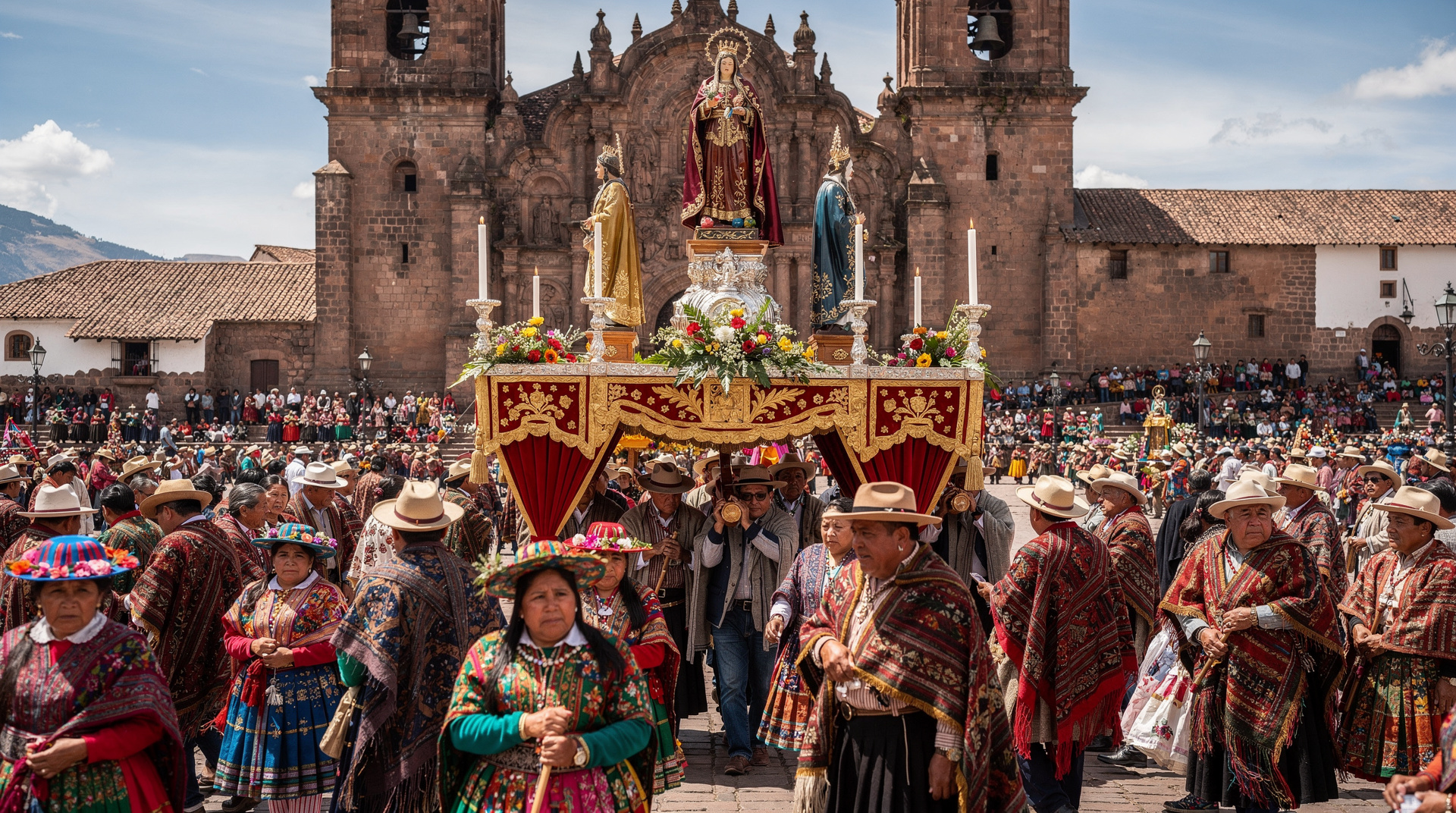
If you are weighing the date against the rest of your trip, the best time to visit Cusco and the dry season guide explain what the weather and the crowds are like around the solstice. Another Cusco celebration with a very different feel is described in the Corpus Christi guide, and for a first-person account of the day itself, the Inti Raymi festival diary is a good companion read.
Is it worth the effort?
For visitors who have acclimatised fully and who have a genuine interest in Andean culture and in large-scale ceremonial performance, Inti Raymi at Sacsayhuamán with good paid seats is an exceptional experience. The setting, the scale and the cultural significance are real, and the atmosphere — tens of thousands of people watching a ceremony that references a 500-year-old suppression and its 80-year-old revival — is not something you will encounter elsewhere.
For visitors primarily focused on Machu Picchu, the Inca Trail or the Sacred Valley, the crowds and prices of festival week are a significant downside. Visiting in late May or mid-July gives better conditions for those activities with only the festival experience as the trade-off.
The cusco archaeological sites guide and the Sacsayhuamán guide cover the setting itself — visiting in festival week without the ceremony is still worthwhile for the ruins alone.
Photographing the ceremony
Photography at Inti Raymi is genuinely rewarding but has real constraints. From paid grandstand seating, a mid-range zoom (70–200mm equivalent) captures the performers at Sacsayhuamán reasonably well; from the free public areas, expect to be further back and shooting over heads for much of the ceremony, so a longer lens or a monopod to shoot above the crowd helps considerably.
The best light for photographs at the Sacsayhuamán ceremony is the low afternoon sun on the terraced walls in the last hour before the performance ends — arrive with your camera settings already decided, since fumbling with a bag in a dense crowd is both impractical and a pickpocketing risk. At the Plaza de Armas ceremony earlier in the day, the balconies of buildings around the square (rentable in advance) give a genuinely different, elevated vantage that most ground-level visitors never get.
If you can only attend one of the three ceremonies
Not every visitor has a full day free for all three stages. If forced to choose one: the Sacsayhuamán ceremony in the afternoon is the clear priority — it is by far the largest in scale, the setting is unmatched, and it is the ceremony most people mean when they say they “went to Inti Raymi.” The Qorikancha morning ceremony is the best second choice for anyone with a specific interest in the historical layering of Inca and colonial Cusco, since the temple setting itself does most of the storytelling. The Plaza de Armas ceremony, while civic and lively, is the most crowded and least visually distinctive of the three if your time is genuinely limited.
Frequently asked questions about Inti Raymi festival guide: Cusco's sun festival explained
What happens during Inti Raymi?
Is Inti Raymi an authentic Inca ceremony?
How much do tickets cost for Inti Raymi?
How crowded does Cusco get during Inti Raymi?
Is it worth visiting Cusco specifically for Inti Raymi?
Top experiences
Bookable activities with verified prices and instant confirmation on GetYourGuide.