Inca sites around Cusco: the complete circuit guide
Cusco: Half-Day City Tour with Sacsayhuaman and Q’enco
Inca sites around Cusco
The four outlying Inca sites north of Cusco — Sacsayhuamán, Q'enqo, Puca Pucará, and Tambomachay — are all covered by the Circuit I Boleto Turístico (S/70 standalone, S/130 full). Allow 3–4 hours for all four. Sacsayhuamán is the most dramatic; Q'enqo is the most mysterious; the other two are short but worthwhile stops along the same road.
Four sites, one circuit, half a day
North of Cusco, following the old Inca road toward the Sacred Valley, four archaeological sites sit within 10 km of the city and are all covered by the same Boleto Turístico Circuit I ticket. They are typically visited in a single half-day morning that begins before most tour groups arrive and returns in time for lunch. The combination of the four — each different in character, each illuminating a distinct aspect of Inca religion, engineering, and territorial control — is one of the most rewarding mornings you can spend in the Cusco region.
This guide covers what each site actually is, how long to allow, and how to string them together efficiently. For the full background on why the Inca built what they built, the Inca Empire primer for travellers provides context that makes every site more legible.
| Where | North of Cusco: Sacsayhuamán, Q’enqo, Puca Pucará, Tambomachay |
| Cost | Circuit I ticket, around S/70 (~$19) |
| Time needed | 3–4 hours for all four, including transport |
| Getting there | Taxi between sites, or a half-day guided tour |
| Best time | Early morning, gates open 7 a.m., before tour groups arrive |
The ticket and logistics
All four sites are covered by:
- Circuit I (outlying ruins): S/70 (~$19) — covers Sacsayhuamán, Q’enqo, Puca Pucará, Tambomachay only.
- Full Boleto Turístico: S/130 (~$35) — all 16 sites in all three circuits.
If you are only visiting these four sites, Circuit I is sufficient. If you also plan to visit Qorikancha (Circuit II) and Sacred Valley sites like Pisac or Ollantaytambo (Circuit II), the full Boleto saves money. Buy it at the COSITUC office on Av. El Sol 103 in Cusco, at the Sacsayhuamán entrance, or through an authorised tour operator.
A half-day guided circuit tour includes all four sites with transport and a guide, covering them in the standard sequence with interpretation at each. This is the most efficient approach if you want to understand what you are seeing rather than simply arrive at each gate, take photographs, and leave.
The standard sequence runs from the city outward: Sacsayhuamán, then Q’enqo, Puca Pucará, and Tambomachay.
Sacsayhuamán
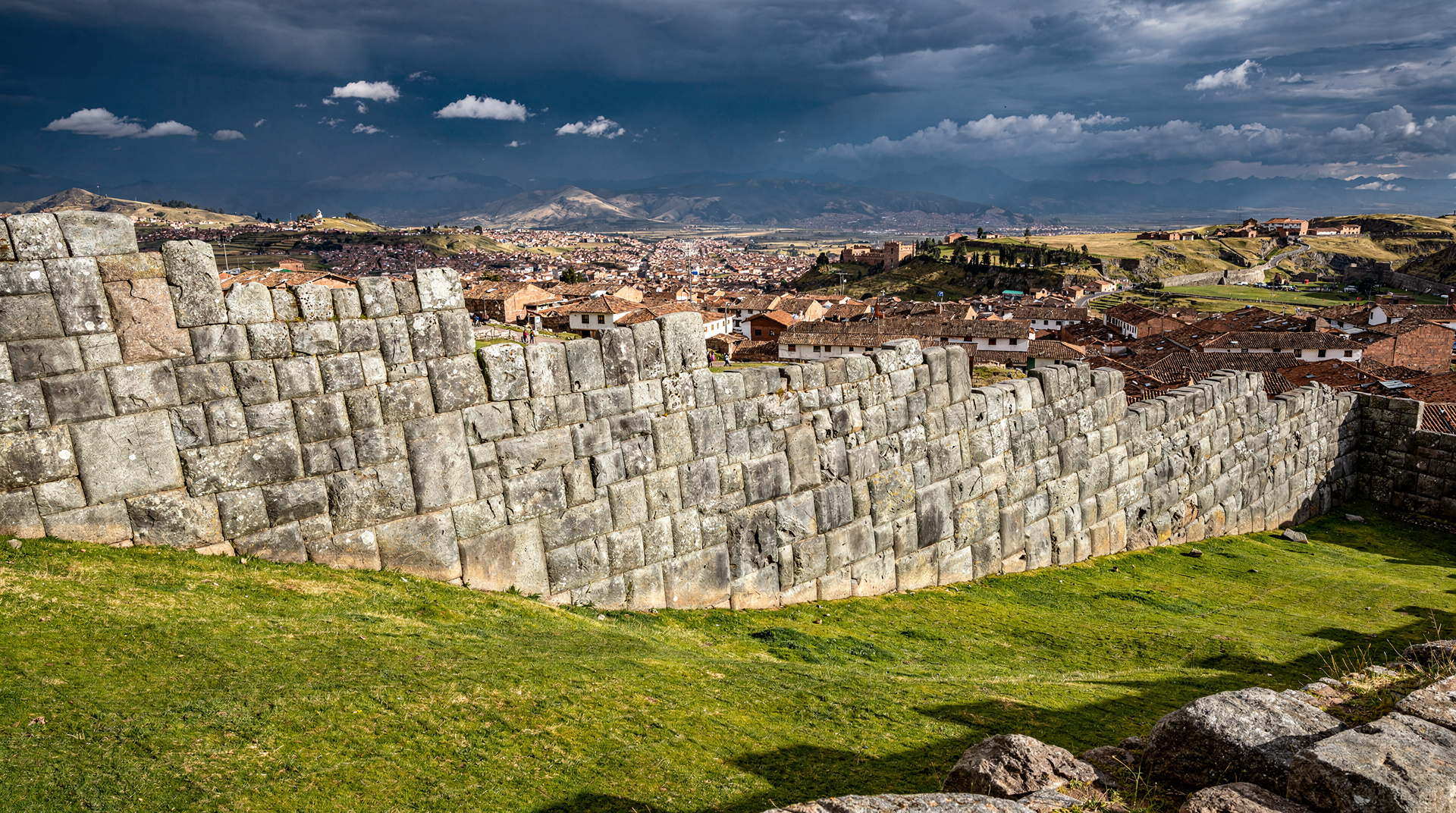
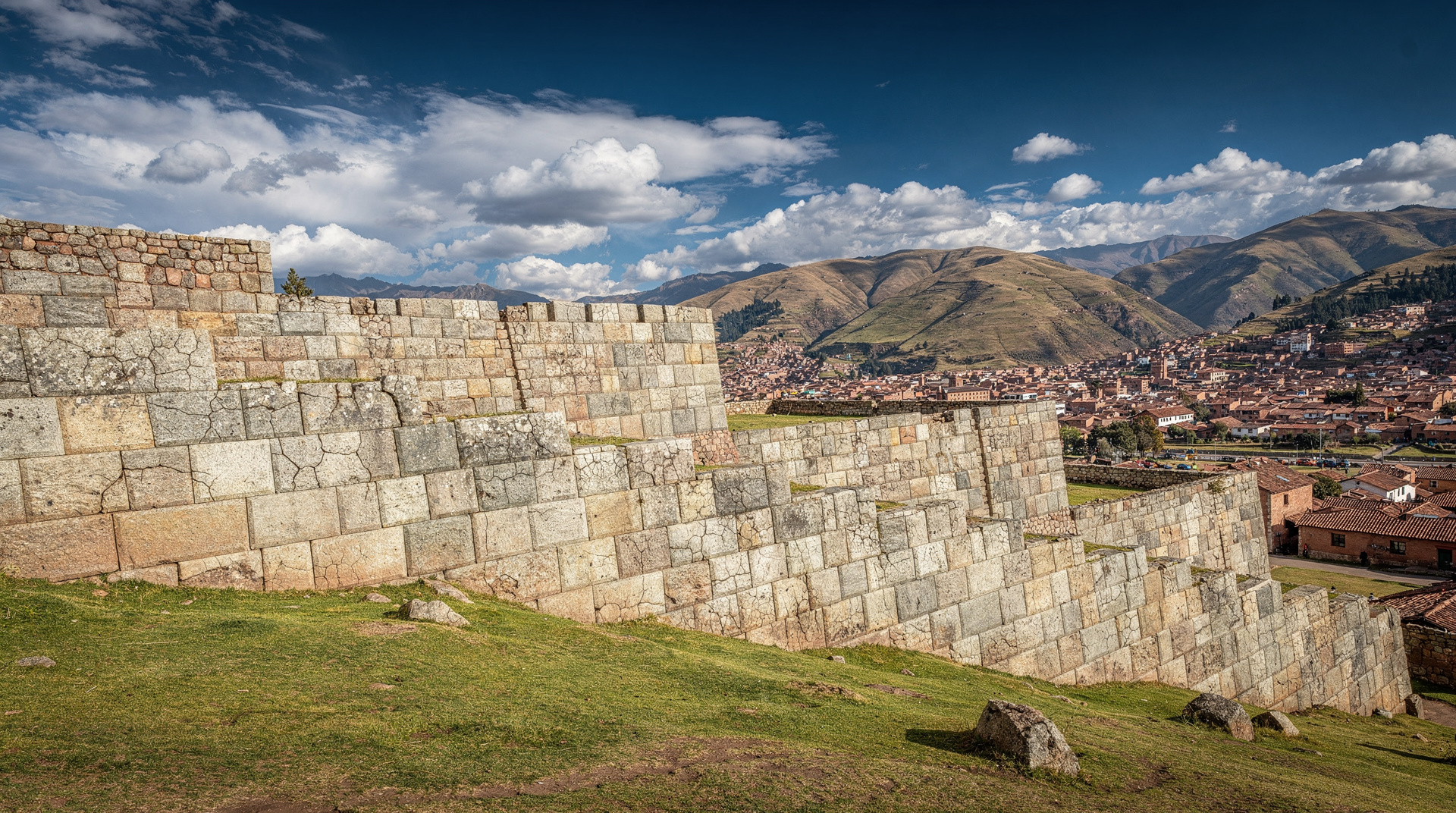
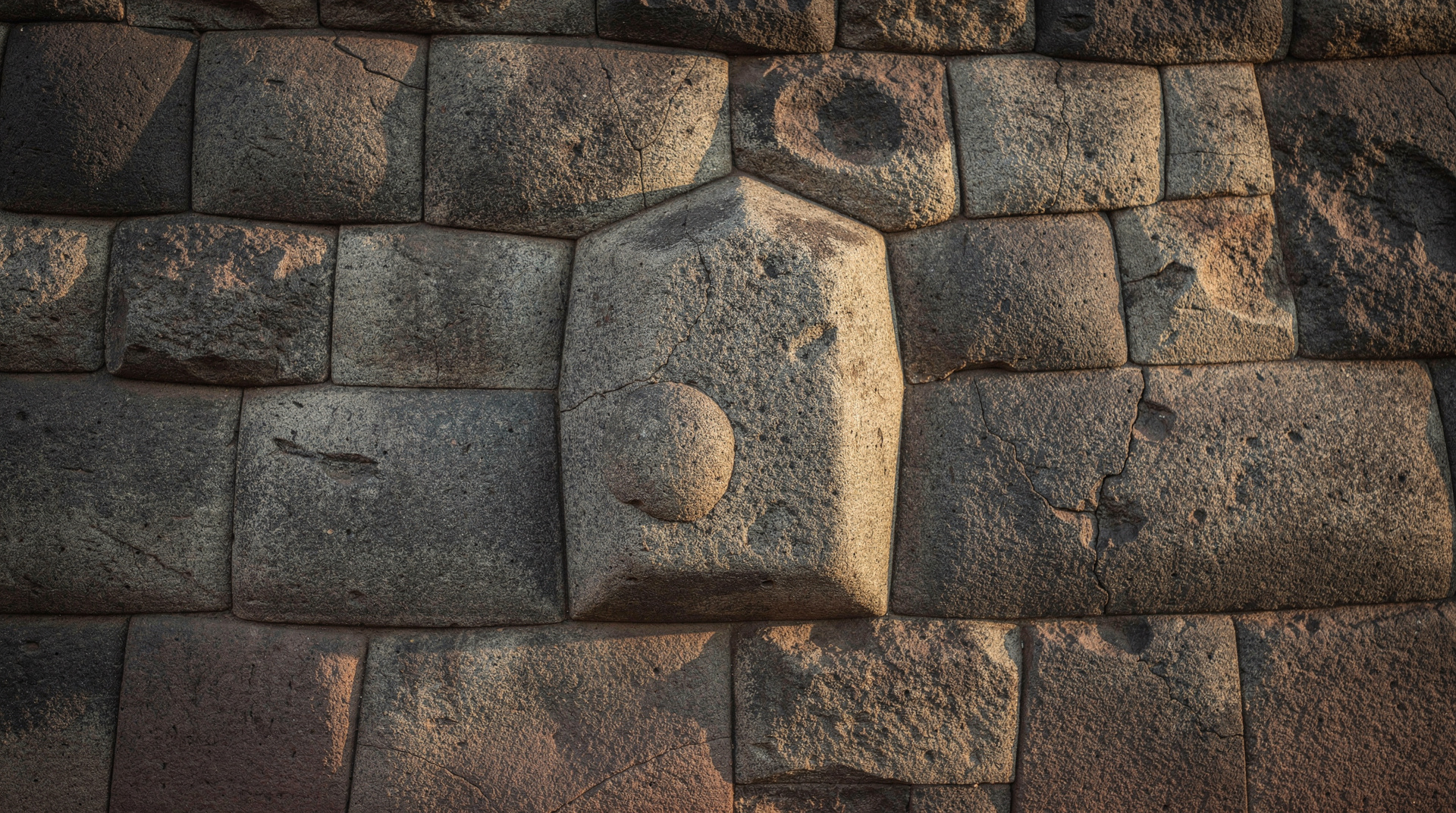
The most dramatic site on the circuit and the most demanding. The three zigzagging terraced walls of polygonal limestone blocks, some weighing 125 tonnes, extend approximately 360 m across the hillside 300 m above the city. The largest stones are the most technically impressive examples of Inca masonry in the Cusco area.
What to focus on: The scale only becomes apparent when you walk the length of the walls from end to end and turn back to look from the esplanade. Most visitors spend too much time directly in front of the central section and miss the full horizontal extent. Budget 20 minutes just for this walk before ascending the terraces.
The tower foundations: At the summit, the circular foundations of three towers — Muyuqmarka, Sallaqmarka, and Paucamarca — are visible at ground level. The towers have been entirely removed; what remains is the ring plan of the central tower (Muyuqmarka), which was the largest circular Inca structure on record.
The Rodadero: The area of carved rock to the east of the main walls, with polished channels, carved thrones, and smooth slides. Ceremonial or astronomical function, or both — scholarly debate is active.
Time needed: 1.5–2 hours. Full Sacsayhuamán guide for site-specific detail.
Q’enqo
Three kilometres along the Cusco–Pisac road from Sacsayhuamán, Q’enqo is the most atmospherically strange site on the circuit and the most underrated. A large natural limestone outcrop has been sculpted by Inca artisans into a complex that includes: an open amphitheatre with stone seating; carved zig-zag channels on the top surface of the rock through which ritual liquids (chicha or blood) were poured and their path used for divination; an underground chamber accessible through a narrow passage; and inside that chamber, a flat carved stone surface believed to have been used for the preparation and curation of mummified bodies.
The carved zig-zag channels are on the upper surface of the main rock and are best seen in morning light when the shadows define the carving. The underground chamber requires ducking through a passage about 60 cm wide and 1.2 m tall — not recommended for claustrophobics, but the chamber inside is large enough to stand in and has a carved stone altar still in situ.
The name Q’enqo means “zig-zag” or “labyrinth” in Quechua. There is also a smaller adjacent site called Q’enqo Chico (little Q’enqo) with additional carved rock features. Together they take 30–45 minutes to explore properly.
What to focus on: The underground passage and chamber — this is the most unusual physical space on the circuit and communicates something direct about Inca ancestor worship and mummification practice that the above-ground sites do not. The carved zig-zag channels on the rock surface are also worth taking time with: they are not immediately obvious unless pointed out.
Puca Pucará
Directly across the road from Tambomachay (and sometimes visited in reverse order), Puca Pucará is a compact structure of Inca walls, platforms, and passages on a hill commanding the road below. The name translates as “red fortress” — the local limestone has an ochre tint — and the site does have a defensive logic: multiple enclosures, limited access points, and a clear sightline to the road leading to and from Cusco.
Whether Puca Pucará was primarily a military installation, a tambo (waystation providing accommodation and supplies for official Inca travellers on the road system), a hunting lodge associated with the nearby royal estates, or some combination of all three is unresolved. What is clear is that it is Inca state construction of reasonable quality and that it takes about 20–30 minutes to walk through completely.
What to focus on: The view from the upper platform over the valley and road is the main payoff. The construction quality is not in the same league as Sacsayhuamán or Q’enqo, but the strategic position is evident and the site gives you the clearest sense of the Inca road system and the waystations that maintained it.
Tambomachay
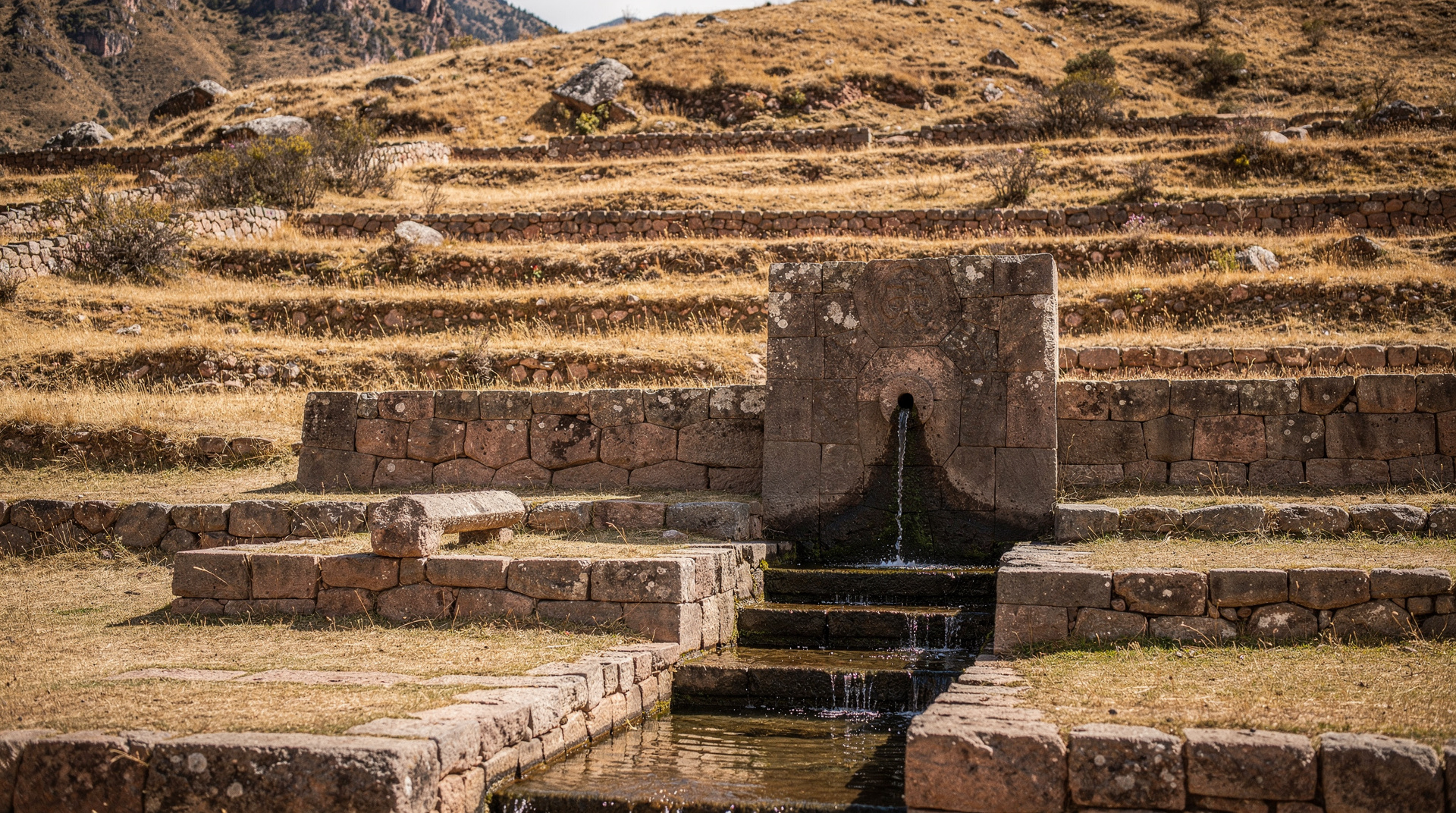
Tambomachay sits about 1 km past Puca Pucará along the same road, on the opposite side. It is the smallest and most architecturally refined site on the circuit — a series of three tiered platforms with perfectly calibrated water channels running through niched walls and emerging as a fountain that still flows. The water is drawn from natural springs somewhere above and arrives at precisely even pressure through a hydraulic system that has not been fully explained.
The site has been attributed variously to ceremonial bathing, to a royal bath or rest house associated with a nearby estate, and to a religious huaca focused on water as a sacred element. The Inca relationship with water was profoundly ceremonial — springs, rivers, and rainfall were divine manifestations, managed and venerated as such — and Tambomachay’s flowing fountain in a precisely built ceremonial enclosure fits this pattern clearly.
What to focus on: The water flow itself is the remarkable thing. Stand at the lower level and watch the even, continuous stream emerging from the cut stone. This system has been functioning, with minimal maintenance, for over 500 years in a seismically active environment. The engineering involved is not monumental in scale but is precise in a way that communicates a great deal about Inca hydraulic knowledge.
Time needed: 20–25 minutes.
Altitude notes for the circuit
Sacsayhuamán sits at 3,700 m — 300 m above Cusco’s 3,400 m. Q’enqo, Puca Pucará, and Tambomachay are all on the plateau above the city at similar or slightly lower elevations, around 3,500–3,600 m. The circuit involves uphill climbing at Sacsayhuamán and moderate walking at the other sites.
Visit on your second or third day in Cusco after beginning acclimatisation. Bring water for the full morning — the circuit covers enough time and physical effort to cause dehydration symptoms at altitude if you are not drinking regularly. Sunscreen and a hat are essential; the plateau above Cusco has almost no shade and the UV is extreme. Full altitude sickness guidance explains the physiology and what to watch for.
Making the most of the morning
Early start makes a measurable difference. Arrive at Sacsayhuamán when it opens at 7 am and you will have the site nearly to yourself for the first 90 minutes. By 10 am, tour groups from Cusco hotels begin arriving and the esplanade becomes busy. Q’enqo and the smaller sites remain quieter throughout the day, but the early start at Sacsayhuamán is worth it.
If you prefer a structured experience rather than self-guided exploration, a half-day guided city tour that includes the circuit will cover all four sites with a guide who can explain what you are looking at. The better operators spend 15–20 minutes per site offering interpretation rather than simply walking through. The gap in understanding between a good guided visit and a self-guided one with no background reading is substantial at these sites.
For a full-day tour that pairs Qorikancha with the outlying circuit, the day typically begins at Qorikancha in the city centre, then travels to Sacsayhuamán and the outlying sites in the afternoon. This sequence connects the spiritual and administrative centre of the empire (Qorikancha) with the military and ceremonial hilltop (Sacsayhuamán) in a single day — and the two sites together make considerably more sense as a pair than either does in isolation.
After the circuit
The four sites of Circuit I represent Inca sacred geography immediately around Cusco — the sites that defined the spiritual landscape of the capital. The next layer outward is the Sacred Valley, which extends the same story to the provincial administrative centres at Pisac, Ollantaytambo, and Maras-Moray. The 4-day Cusco and Machu Picchu itinerary places the outlying ruins circuit on day three after two days building up the necessary historical context — a sequence that makes the circuit more meaningful than visiting it on day one before you know what you are looking at.
Photography and light through the day
Sacsayhuamán’s zigzag walls photograph best in the low, raking light of early morning or late afternoon, when the deep joints between the polygonal blocks throw long shadows and the scale of the largest stones becomes obvious. Midday sun flattens the walls into a uniform grey and washes out the texture that makes the masonry impressive in the first place.
Q’enqo’s carved channels are similarly light-dependent — the zig-zag grooves on the upper rock surface only read clearly with a low sun angle, which is one more reason to visit early rather than mid-afternoon. Puca Pucará and Tambomachay are less sensitive to light since their appeal is structural and hydraulic rather than carved detail, so they work fine as the later stops on the circuit even once the sun is high.
What guides rarely mention: the astronomical alignments
Several researchers have proposed that elements of Sacsayhuamán and Q’enqo align with solstice sunrises and key points in the Inca ceremonial calendar, particularly around the June solstice tied to Inti Raymi.
The evidence is debated among archaeologists — some alignments are compelling, others may be coincidental given how many features a large site offers to test against — but the underlying point is uncontroversial: Inca site placement was rarely arbitrary, and the outlying circuit sits directly on the ceremonial road used for Inti Raymi processions from Qorikancha to Sacsayhuamán. If your visit coincides with the Inti Raymi festival in June, the circuit takes on an additional layer of relevance beyond an ordinary sightseeing morning.
Combining the circuit with a Sacred Valley day
Some visitors fold the outlying ruins circuit into the start of a longer day that continues to the Sacred Valley, since the same road north from Cusco continues on toward Pisac. This works logistically if you start very early (Sacsayhuamán at 7 a.m.) and keep the four-site circuit brisk, but it makes for a long day at altitude — most visitors are better served treating the circuit as its own half-day and saving the Sacred Valley for a separate, unhurried excursion. If you do combine them, prioritise rest and hydration breaks, since you’ll be moving between 3,500–3,700 m sites for most of the day.
Frequently asked questions about Inca sites around Cusco: the complete circuit
How do I visit all four outlying ruins in one day?
Do I need separate tickets for each site?
Can I walk between all four sites?
What is Q'enqo and why is it interesting?
What is Tambomachay and is it worth the trip?
Is Puca Pucará a real Inca fortress?
Top experiences
Bookable activities with verified prices and instant confirmation on GetYourGuide.