Pisac
Pisac combines Peru's liveliest Andean market with hilltop Inca ruins overlooking the Sacred Valley. Best on Sundays, Tuesdays and Thursdays.
Cusco: Pisac, Maras, Moray, Ollantaytambo Small Group Tour
Quick facts
- Country
- Peru
- Altitude
- 2,970 m / 9,744 ft
- Currency
- Peruvian sol (S/) — USD widely used
- Best for
- Andean crafts market, Inca citadel, ridge hiking, Sacred Valley day trips
Two destinations stacked on the same hillside
Most visitors to the Sacred Valley arrive in Pisac and head straight for the market in the Plaza de Armas. That is a perfectly reasonable instinct — the market is genuinely excellent. But above the town, strung along a ridge at nearly 3,400 m, sits one of the largest and most varied Inca citadels in Peru, and the majority of day-trippers never make it up there. The result is a place that rewards visitors who plan for both levels: the lively valley floor and the silent hilltop ruins above.
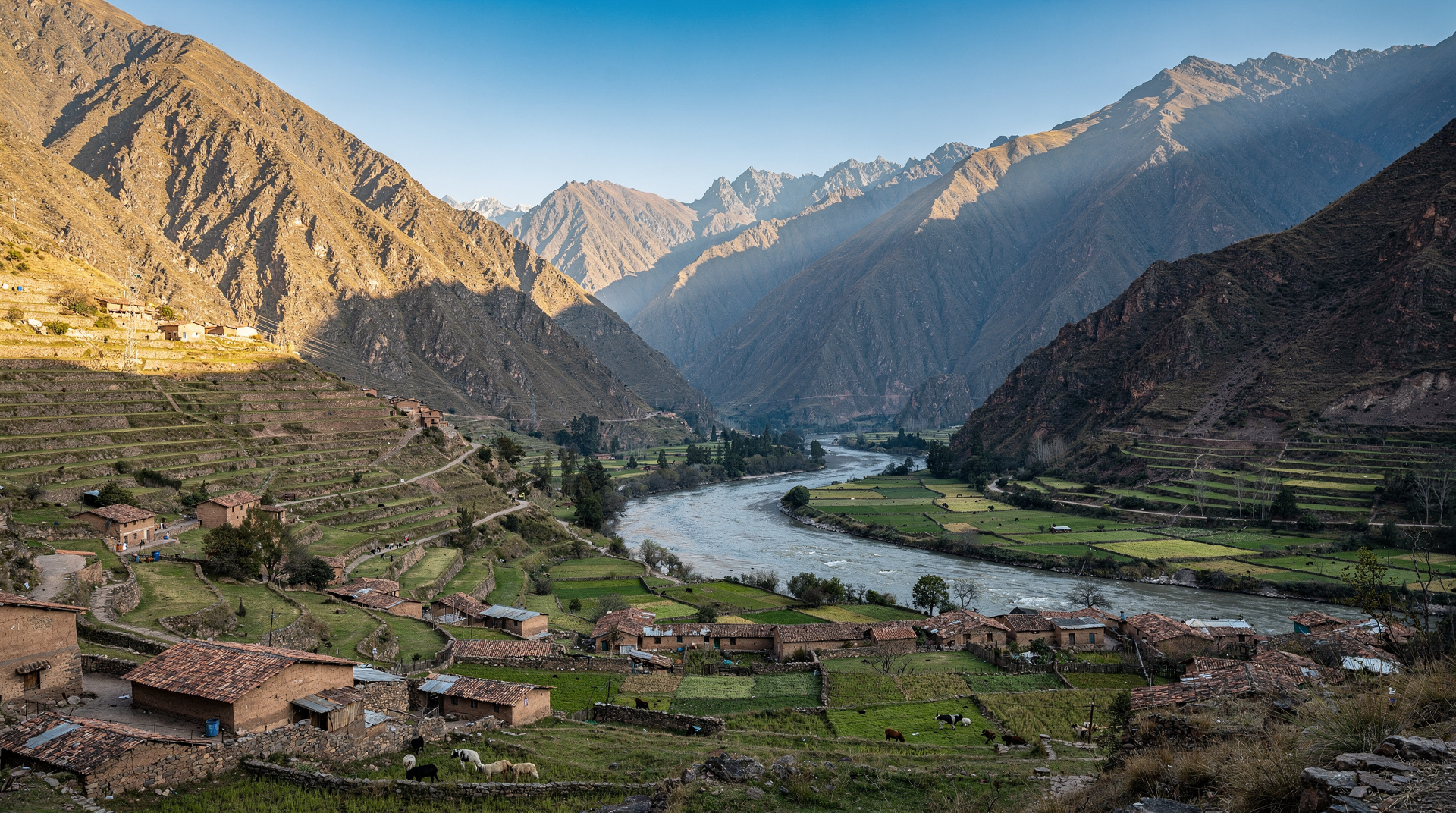
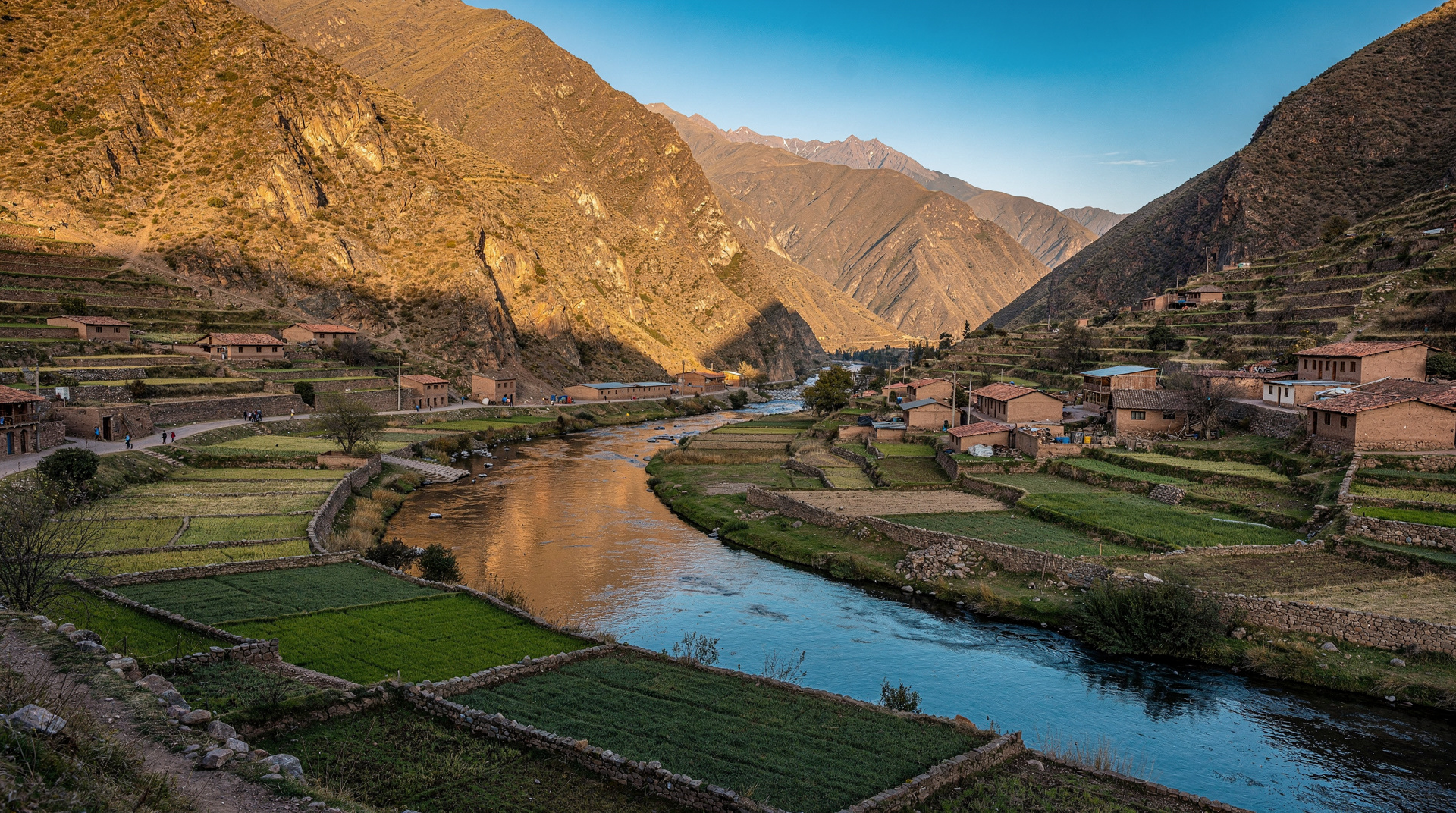
Pisac sits 33 km northeast of Cusco at 2,970 m, at the eastern end of the Sacred Valley. The altitude is noticeably gentler than Cusco’s 3,400 m — your breathing is easier, your sleep is deeper, and the temperature runs a few degrees warmer. For travellers who have just arrived from sea level, even half a day in Pisac before returning to Cusco can make a tangible difference to how the first night goes. The altitude sickness guide has practical advice on sequencing your arrival if altitude is a concern.
| Where | Sacred Valley, 33 km from Cusco — 2,970 m |
| Cost | Market free to browse; ruins covered by Boleto Turístico (~S/130) |
| Time needed | Half-day to a full day (market morning + ruins afternoon) |
| Getting there | Collectivo (~S/5) or taxi (~S/50–80) from Cusco, 45–60 min |
| Best time | Sunday, Tuesday or Thursday before 10am for the full market |
The market: what to know before you go
Pisac’s market operates every day of the week, but the full version — with vendors from outlying Quechua villages bringing produce, livestock and handmade goods alongside the permanent craft stalls — runs on Sundays, Tuesdays and Thursdays. Of these, Sunday is the largest and most atmospheric.
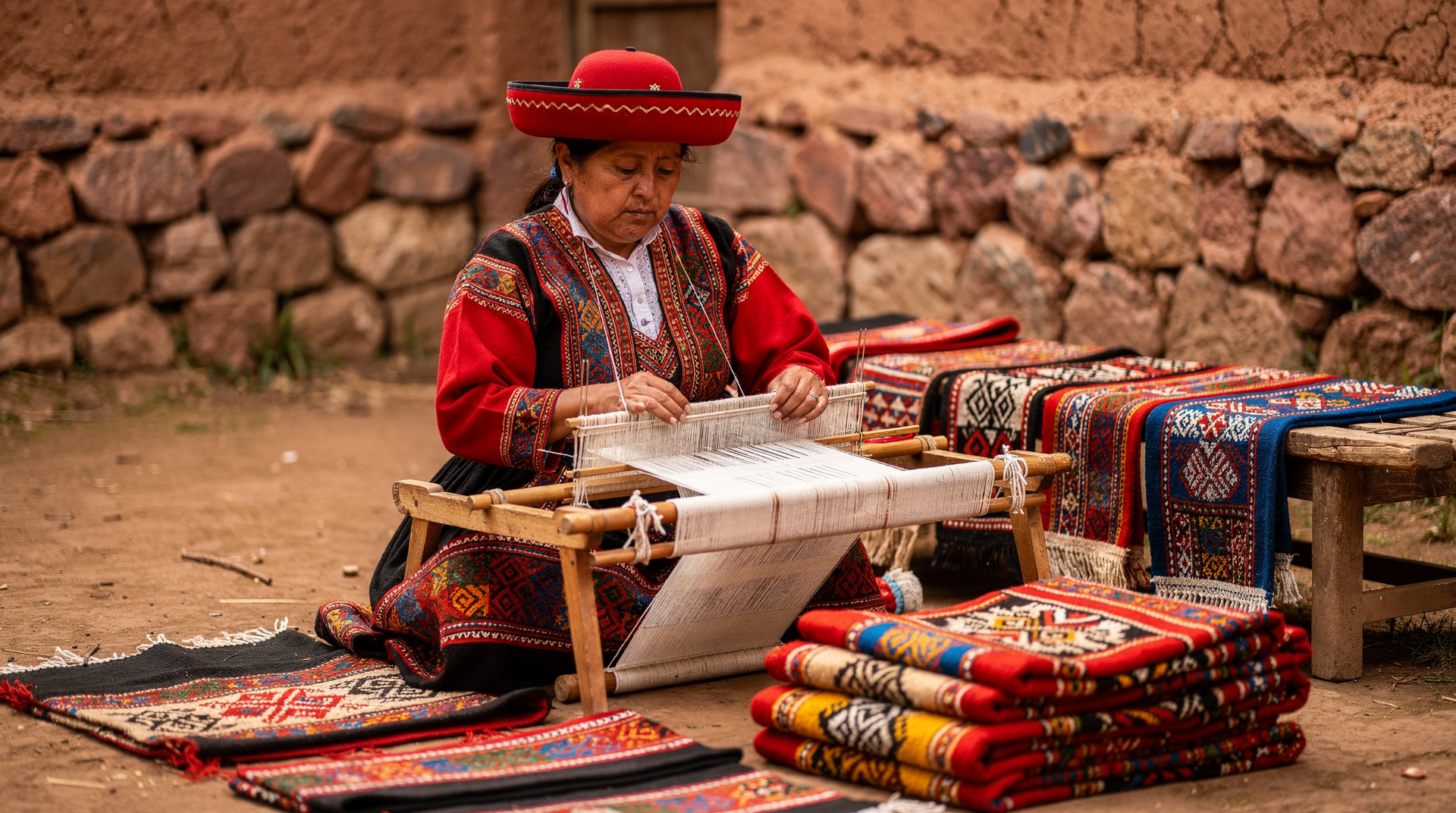
The Plaza de Armas and the streets radiating from it fill from around 7 am. The craft section occupies most of the stalls: woven textiles, alpaca jumpers and shawls, hand-painted ceramics, carved gourds, silver and semi-precious stone jewellery, and replica Inca calendar stones. Quality is uneven but higher on average than in Cusco’s central market, and prices before bargaining are substantially lower. A genuinely hand-woven table runner that might cost S/120 in Cusco’s tourist shops can be had here for S/50–70 after polite negotiation. Opening prices are typically 30–50 percent above where sellers are comfortable landing, and the process is expected to be good-humoured rather than combative.
The produce market — separate from the craft stalls and concentrated towards the edge of the plaza — sells varieties of Andean potato, maize, dried chilli and beans that you will not find in European supermarkets. Even if you are not buying, it is worth walking through for the sheer variety: Peru has over 3,000 registered potato varieties, and the highland markets display perhaps a hundred of them.
Arrive before 10 am on a market day. By 11 am the first coach groups have arrived from Cusco and the plaza becomes significantly more crowded. By noon the atmosphere shifts from local market to tourist shopping. Those first two hours — when vendors are still arranging their goods, the light is warm and low, and the pace is unhurried — are the ones worth getting up early for.
The detailed Pisac market and ruins guide covers specific stall areas, what to look for in hand-woven versus machine-made textiles, and how the market changes between the three weekly days.
Market days compared
| Day | Atmosphere | Crowds | Arrive by |
|---|---|---|---|
| Sunday | Largest, most atmospheric, full village turnout | Heaviest — coach groups from 11am | 8am |
| Tuesday | Full market, calmer than Sunday | Moderate | 9am |
| Thursday | Full market, calmer than Sunday | Moderate | 9am |
| Other days | Craft stalls only, no produce/livestock market | Light | Any time |
Choosing Tuesday or Thursday over Sunday is a reasonable trade-off if you would rather have a calmer visit than the single biggest market day.
Telling genuine handwoven textiles from machine-made
Pisac’s craft stalls mix genuine handwoven pieces with machine-made imports, and the difference matters both for authenticity and for value. Handwoven textiles show slight irregularities in the weave, natural (sometimes uneven) dye tones, and a distinctive rougher hand-feel from alpaca or sheep wool; machine-made pieces are perfectly uniform, often acrylic rather than wool, and noticeably lighter. Asking a vendor directly whether a piece is handwoven and watching their response — genuine sellers are usually happy to explain the technique and time involved — is a reliable filter. The andean textiles guide goes deeper on what to look for and roughly what a genuine hand-woven piece should cost.
The ruins: a citadel most visitors miss
The Pisac Archaeological Complex occupies a long ridge above the town, accessible by a steep trail from the valley floor (approximately 90 minutes on foot, gaining 400+ m of elevation) or by taxi along a winding road that deposits you at the upper car park in about 15 minutes. The road option costs S/15–20 from the plaza and is sensible if you have already done the market on the same day and do not want to arrive at the ruins already tired.
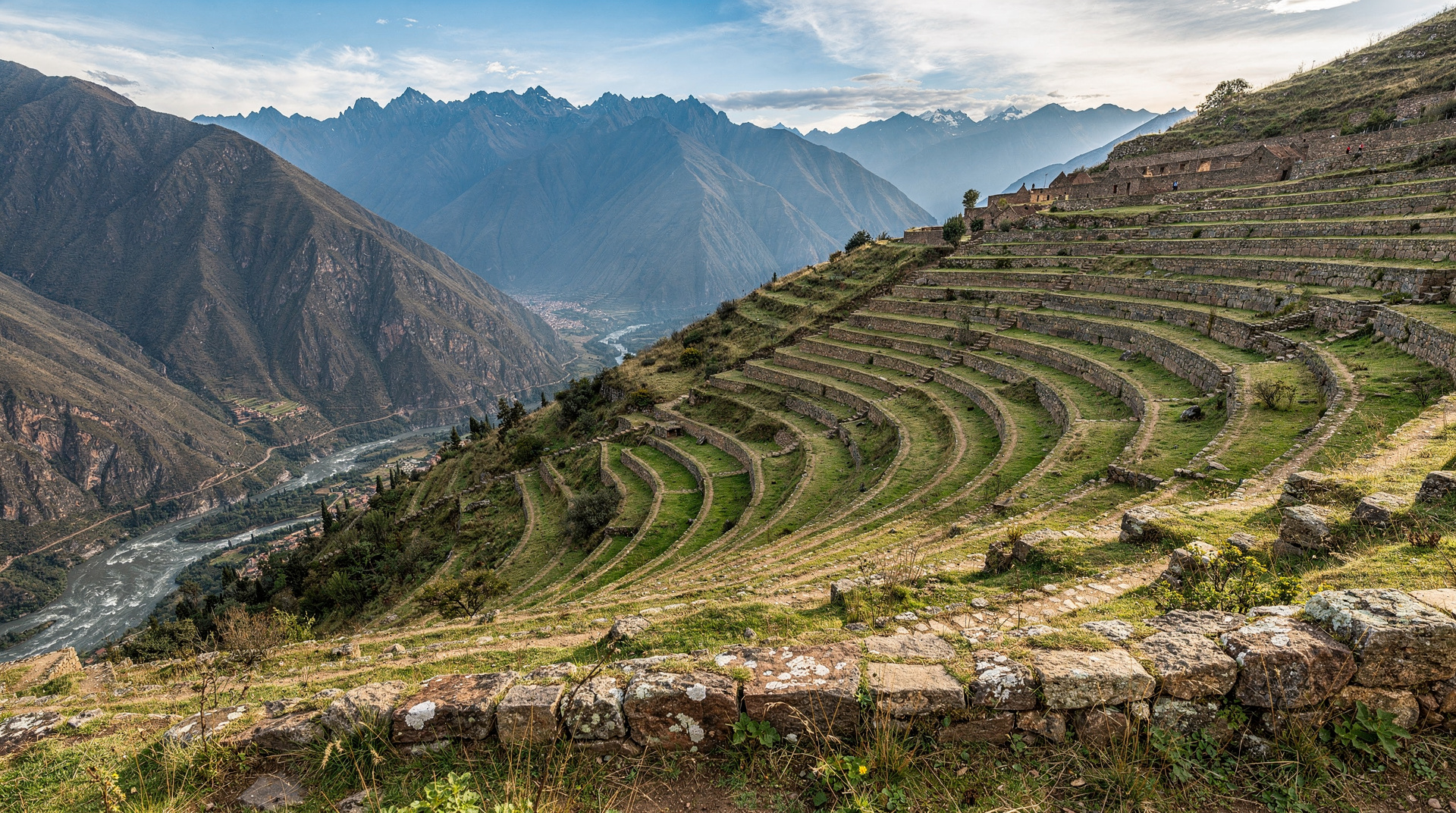
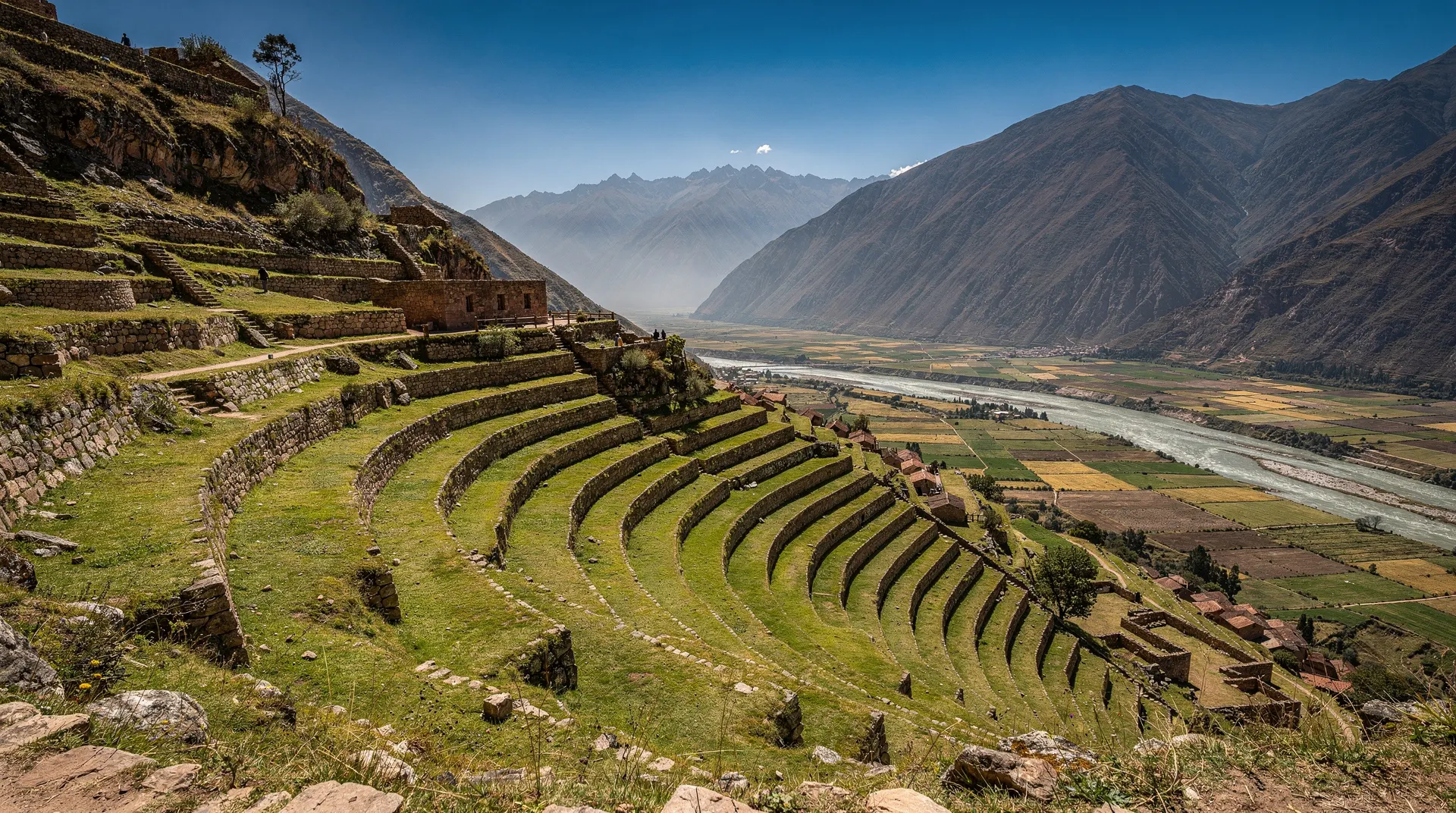
The site is large and varied in a way that few descriptions adequately convey. Unlike Ollantaytambo — which is effectively a single large fortress — the Pisac complex contains distinct zones spread across several ridges: military platforms, agricultural terraces, water management systems, elite residential compounds, a sun temple, and a vast burial ground that the Spanish largely cleared of mummies in the colonial period. The individual masonry is outstanding: precision-cut stone fitted without mortar, walls plumbing vertical despite the dramatic topography, water channels still occasionally running.
The Intihuatana zone at the highest point is the ceremonial heart. The sun temple here is comparable in quality to Qorikancha in Cusco, and the setting — with a sheer drop on three sides and views stretching the full length of the valley in both directions — is extraordinary. On a clear morning the light on the stone is golden and the valley floor far below looks impossibly green and fertile.
Admission is covered by the Cusco Boleto Turístico (approximately S/130 for the full multi-site circuit). If you have not yet purchased the Boleto, tickets are sold at the site entrance. Allow two hours minimum to walk the main circuit without rushing; three hours is comfortable if you want to stop and take in the different zones properly.
How to get to Pisac
From Cusco by collectivo: Shared minibuses leave from Calle Puputi near the Tullumayu bridge throughout the morning (approximately S/5, 45–60 minutes). This is the most economical option and perfectly manageable if you are travelling light and have time flexibility.
From Cusco by taxi: A private taxi from Cusco to Pisac costs S/50–80 depending on negotiation and time of day. If you plan to visit the ruins by road taxi and then continue to Urubamba or Ollantaytambo, a full-day taxi hire (~S/180–220 for a loop) can be good value.
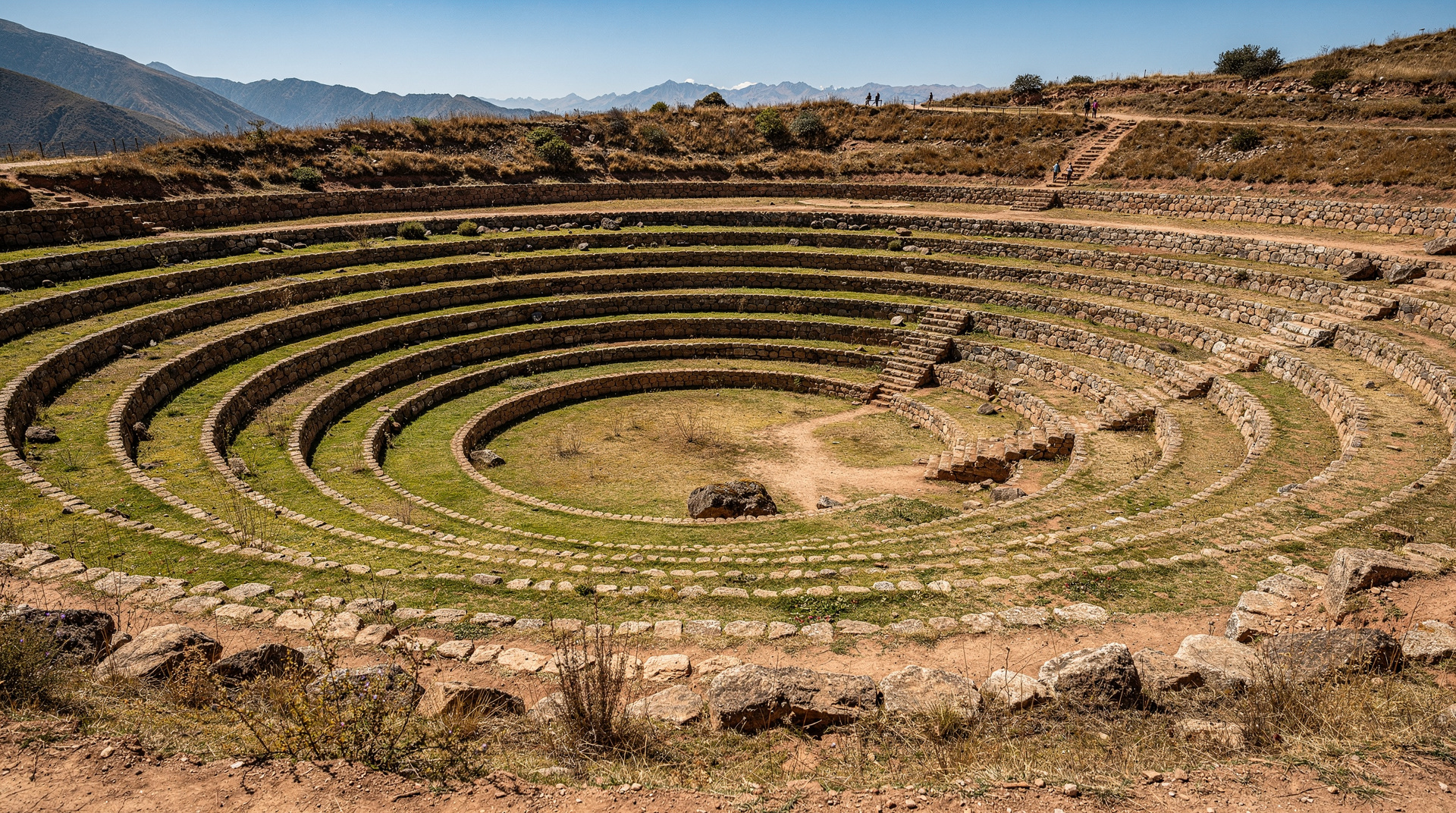
On a guided tour: A Pisac, Maras and Moray combination tour picks you up from Cusco, covers the market and ruins, continues to the salt pans at Maras and the circular terraces at Moray, and returns you to Cusco in the evening. This is the most efficient way to see all three sites in a single day without worrying about transport between them. A full-day Sacred Valley group tour extends this circuit to include Ollantaytambo as well.
Pairing Pisac with other valley sites
Pisac works well as the first stop on a longer Sacred Valley day, since it sits at the eastern end of the valley and the logical direction of travel is westward. From Pisac the natural sequence runs through Urubamba — the valley’s main hub, a good lunch stop — then Chinchero on the plateau above, then Maras and Moray, finishing in Ollantaytambo at the western end.
If you are doing the valley over two days, Pisac works well on its own on day one: market in the morning, ruins in the afternoon, overnight in a valley guesthouse. This is slower and more satisfying than squeezing everything into a single loop.
Eating and staying overnight
The town has several restaurants around the plaza serving standard Peruvian and tourist menus at S/20–40 for a main course. Cuy (roasted guinea pig, a highland Andean speciality) is on most menus and worth trying at least once if you have the appetite for it. Better meals tend to be found in the slightly uphill neighbourhood beyond the plaza rather than directly on it.
For accommodation, Pisac has a handful of boutique guesthouses on the valley edge: expect to pay S/100–200 for a simple en-suite room with views. It is quieter and more pleasant than sleeping in Cusco on your first night at altitude, and the morning market is on your doorstep rather than an hour’s drive away.
Honest tips
Market day sequence matters. On Sunday, arrive by 8 am. On a Tuesday or Thursday, 9 am is fine as the market never reaches the same intensity. On a non-market day, the town is calm and the ruins are nearly empty — the ruins are equally good on any day of the week.
The ruined terraces visible from the valley road are not the main site. The large agricultural terraces carved into the hillside below the ridge are dramatic from the road and often photographed as if they were the entire complex. They are the outer edge. The temples, compounds and best stonework are much higher up.
Sun protection is non-negotiable at altitude. At 2,970–3,400 m, UV exposure is significantly higher than at sea level. A factor 50 sunscreen and a brimmed hat are not optional in the Sacred Valley.
Combine the ruins visit with a guide. The terracing, water management systems and astronomical alignments at Pisac make more sense with context, and the Intihuatana zone in particular benefits from explanation. The Pisac, Maras and Moray tour includes a bilingual guide throughout, which transforms what might otherwise be a walk through impressive-but-puzzling stonework into a coherent story about how the Inca actually used this ridge.
Watch your step on the high sections. Several viewpoints above the Intihuatana zone have no barriers and sheer drops. The path is clearly marked and not technical, but it demands attention, particularly in wet weather when the stones are slippery.
The 7-day Sacred Valley and Machu Picchu itinerary shows one way to fit Pisac into a longer Cusco region trip, including how to combine market morning with ruins afternoon and still reach the lower valley for an overnight before continuing to Machu Picchu.
Pisac has been popular with travellers since the 1990s, and in one sense the market has adapted to that — the craft vendors know exactly what foreign visitors want to buy. But the ruins remain genuinely overlooked, the produce market is entirely unperformed, and the ridge views at the Intihuatana are among the finest in the Sacred Valley. The town rewards a little more time than most itineraries give it.
Frequently asked questions about Pisac
Can I do just the market and skip the ruins? You can, but you would be missing the better half of Pisac. The citadel above town is genuinely one of the largest and most varied Inca complexes in the region, and most day-trippers who only do the market never realise what they skipped.
Is Pisac worth visiting on a non-market day? Yes, particularly for the ruins, which are equally impressive any day of the week and considerably quieter without the market crowds. The craft stalls remain open daily in reduced form, so you can still browse textiles even outside the main market days.
Top experiences
Bookable activities with verified prices and instant confirmation on GetYourGuide.