Maras and Moray
Maras salt pans (3,000+ pools, active since Inca times) and Moray's circular agricultural terraces are two of the Sacred Valley's most visually striking
Sacred Valley: Pisac, Ollantaytambo, Chinchero with Lunch
Quick facts
- Country
- Peru
- Altitude
- 3,380 m / 11,089 ft
- Currency
- Peruvian sol (S/) — USD widely used
- Best for
- Salt pan photography, Inca agricultural engineering, plateau scenery, combined half-day from Cusco
Salt and circles on the plateau above the valley
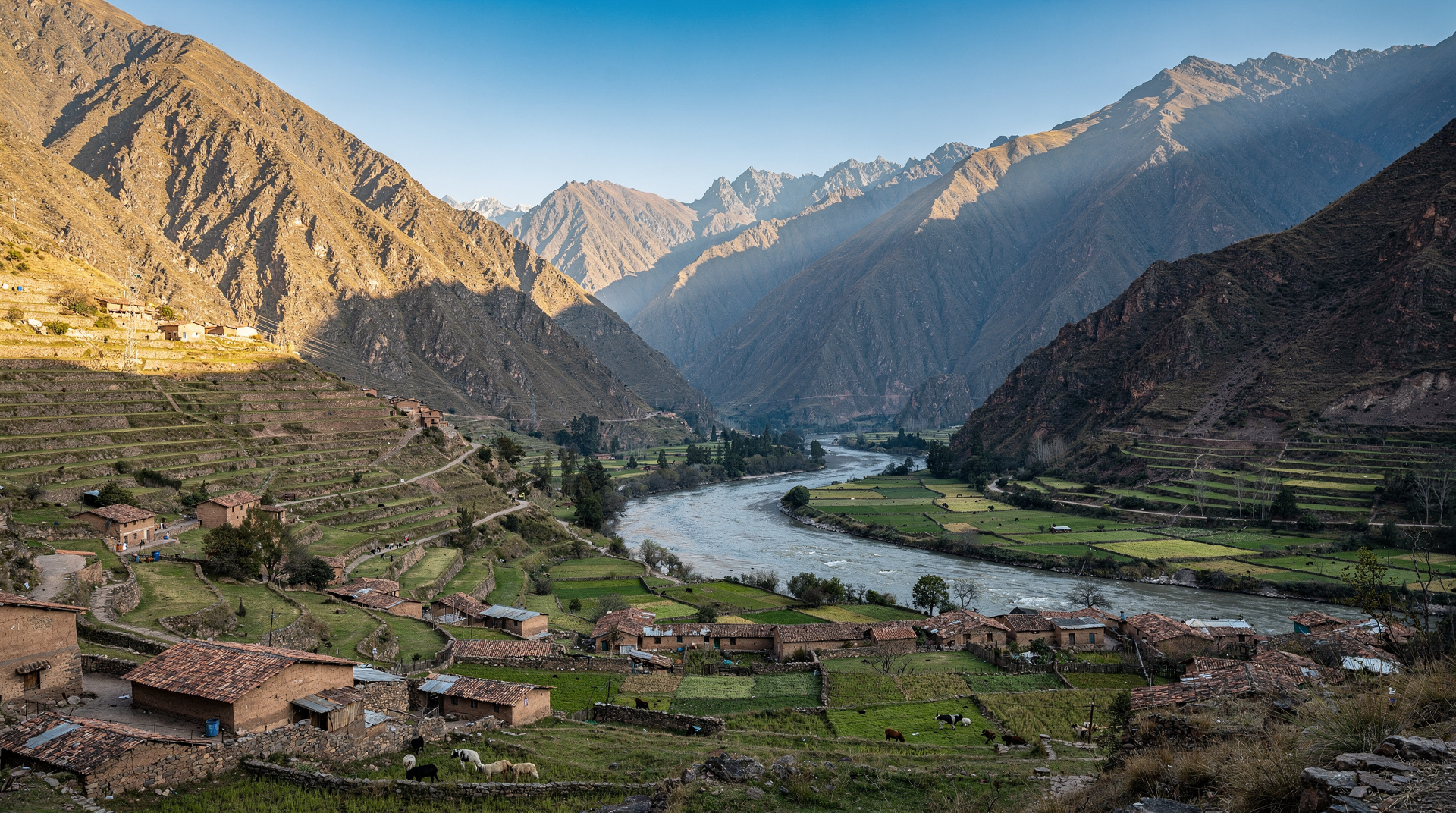
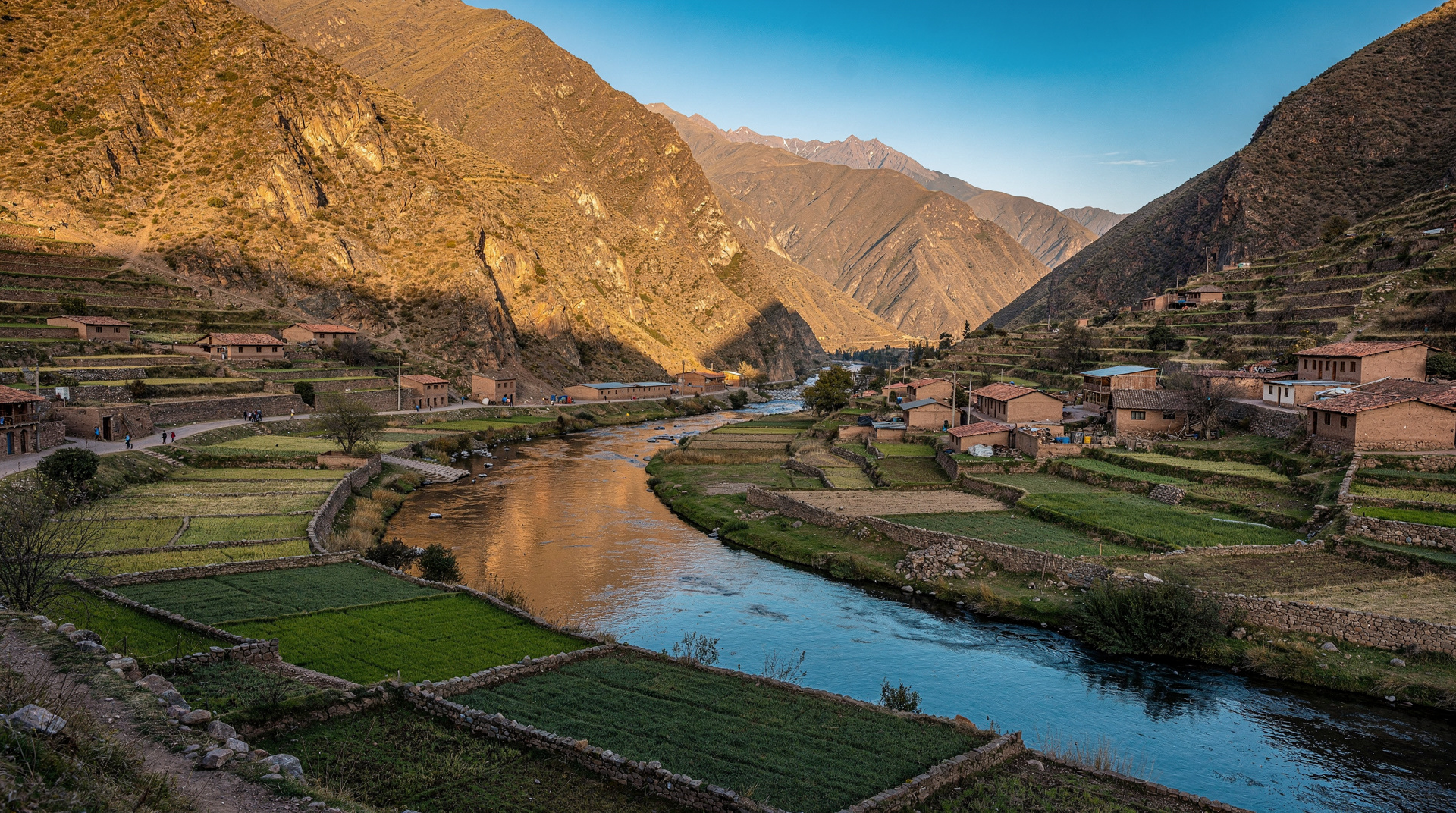
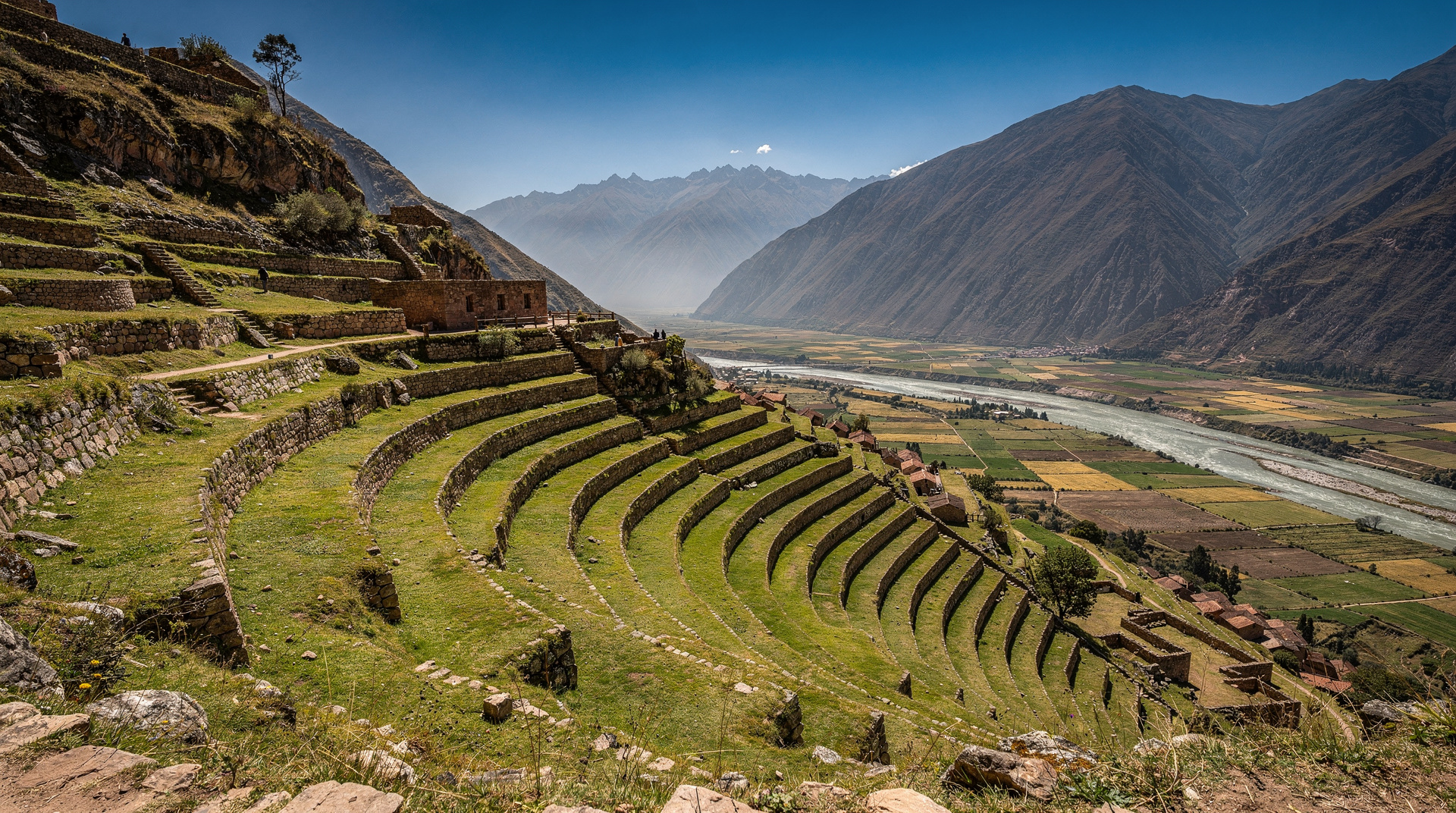
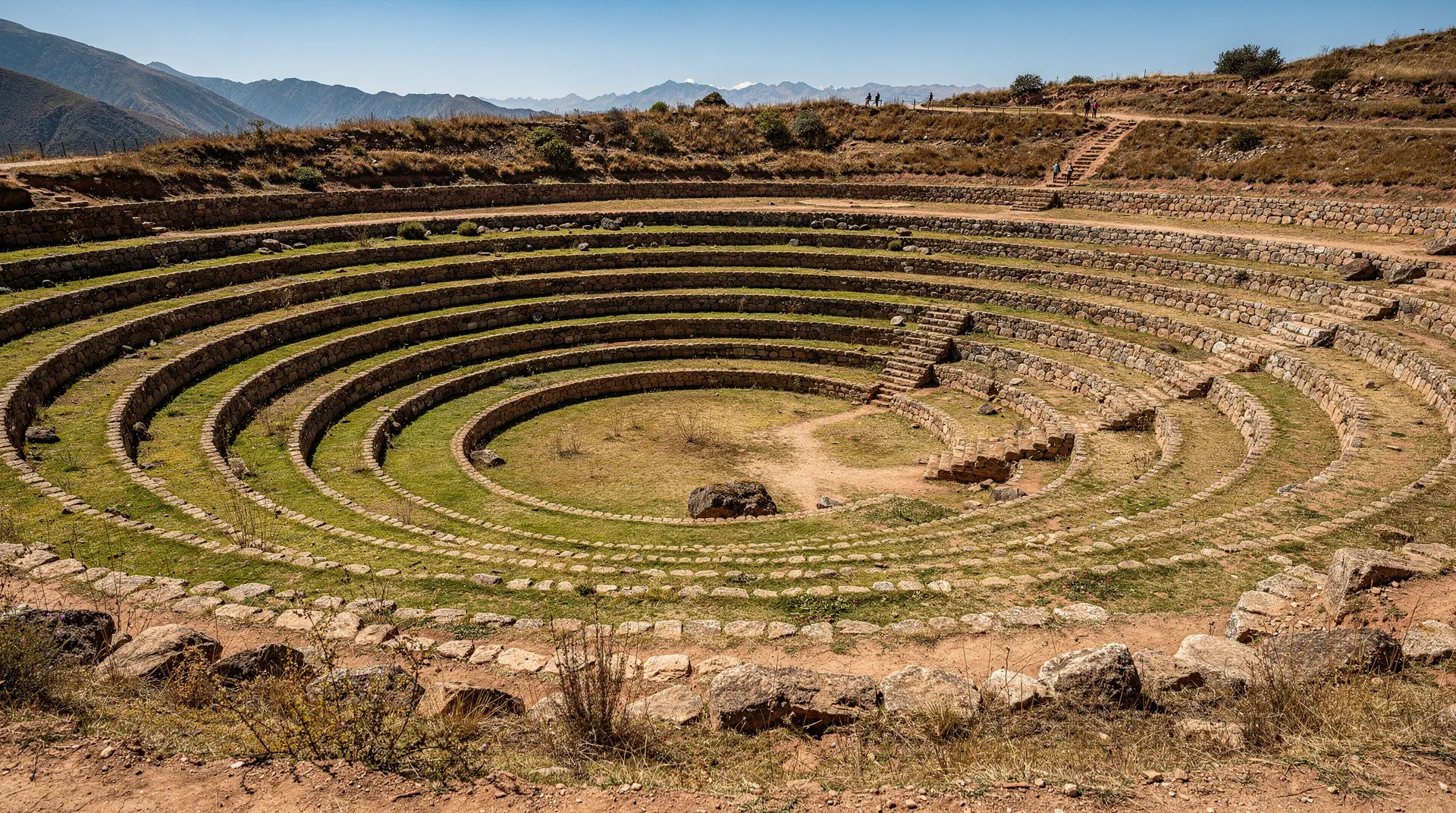
Between Chinchero and the valley floor below Urubamba, a plateau stretches across the western end of the Sacred Valley at around 3,380 m. Two of the Sacred Valley’s most visually distinctive sites sit up here, within a few kilometres of each other: the Maras salt pans — thousands of individual crystallisation pools terrace down a steep hillside like a shattered mosaic — and the Moray agricultural terraces, three sets of concentric rings cut into natural depressions in the earth like something between an amphitheatre and a planetary diagram.
Neither site is a military fortress or a sun temple. Both are, in different ways, about the Inca relationship with the landscape itself: the extraction of resources from it, the manipulation of its natural properties, the engineering of microclimates for agricultural advantage. Visiting them back-to-back gives you a very different picture of Inca civilisation from what Ollantaytambo or Pisac’s citadel provides.
| Where | Sacred Valley plateau, between Chinchero and Urubamba — 3,380 m |
| Cost | Maras entrance ~S/10; Moray covered by Boleto Turístico (~S/130) |
| Time needed | Half-day (60–90 min at Maras, 45–60 min at Moray) |
| Getting there | Taxi from Cusco or Urubamba; no direct public transport |
| Best time | May–September (dry season); early morning or late afternoon light at Maras |
Maras: the living salt pans
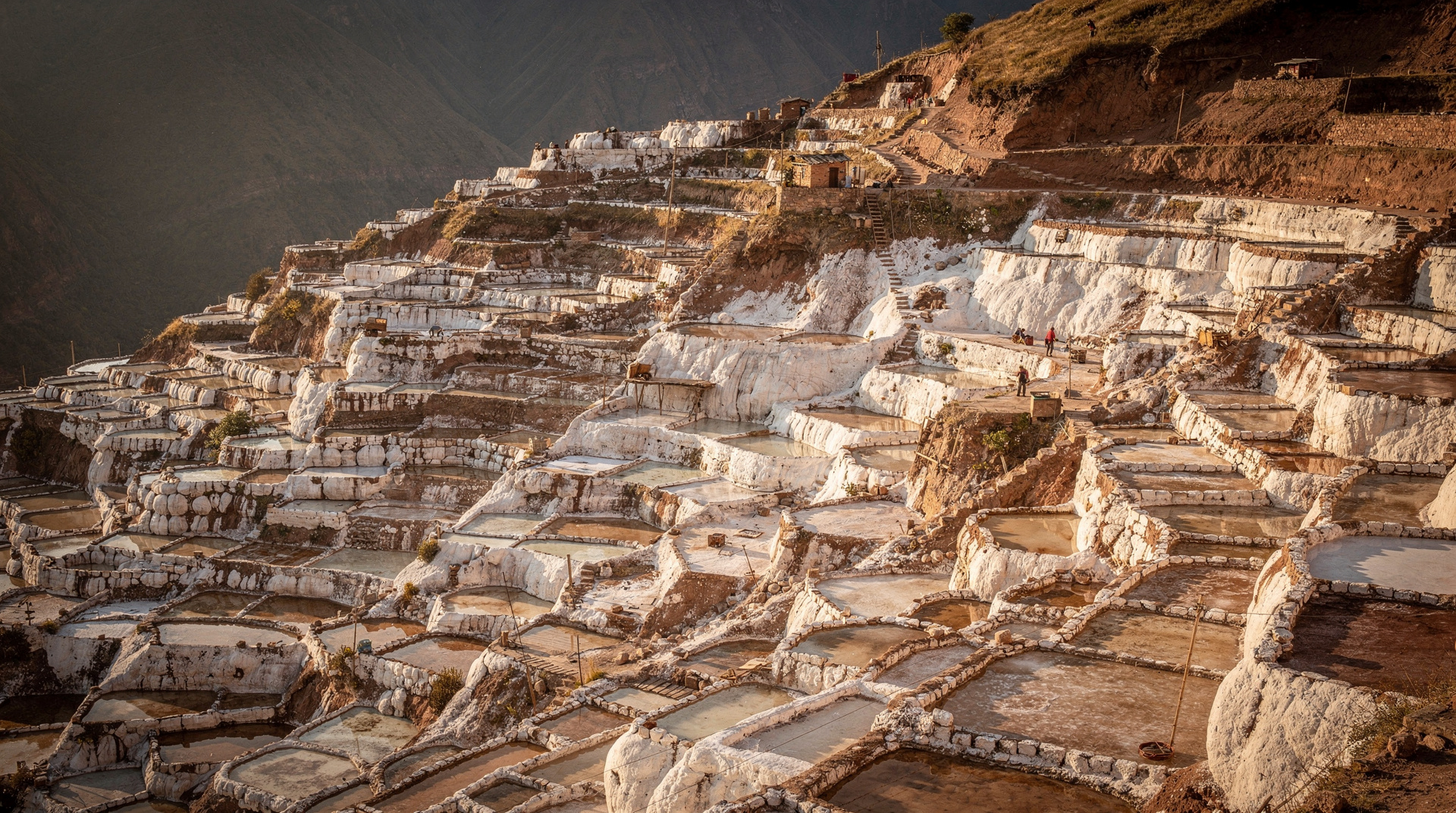
The Salineras de Maras have been in continuous operation since before the Inca empire. A natural brine spring — highly saline water rising from an underground source — emerges at the top of a steep ravine several kilometres from the village of Maras. Over centuries, perhaps millennia, the hillside below the spring has been shaped into more than 3,000 individual evaporation pans, each roughly the size of a dining table, stepping down the slope in interconnected terraces fed by a network of channels that divide and subdivide from the main flow at the top.
The brine flows into each pan and then evaporates in the dry season sun, leaving a crust of salt that the owner rakes up and bags by hand. The system is remarkably low-tech: gravity moves the water; sun provides the energy; human labour harvests the result. Local families own individual pans — some have held the same pans for generations — and sell their salt production independently. What this means in practice is that the Salineras are a working agricultural site, not a preserved monument. Pans are added, repaired, occasionally abandoned. The edges blur between active production, maintenance work and the natural geology of the hillside.
The visual effect is extraordinary: from the viewing path along the top edge, the pans fall away in a cascade of white, cream, pale pink and terracotta. The colouration varies depending on the mineral content of the brine, the stage of evaporation in each pan, and the season. In the dry months from May to September, when production is at its peak and the pans are fuller, the gradients of colour are most dramatic. In the wet season many pans are flushed with rain and appear greyer, though the site remains open and the green of the surrounding hills makes for a different kind of photogenic scene.
Practical details: The Salineras are open daily. Admission is approximately S/10 per person (around USD 2.70), paid at the entrance gate and not covered by the Cusco Boleto Turístico — it is a community-managed fee that goes directly to the families who own the pans. The main viewing path runs along the upper edge of the site and takes about 45–60 minutes to walk at a comfortable pace. A lower path gets you closer to the pans but involves more uneven terrain. Photography is unrestricted. There is a small cafe at the entrance selling drinks and snacks; beyond that, facilities are minimal.
Best light: Early morning (7–9 am) and late afternoon (3–5 pm) produce the warmest tones on the salt. Midday light is flat and slightly washed out. If your schedule allows, plan accordingly.
The Maras salt mines guide covers the site in more detail, including the history of the brine spring, the ownership structure, and the best positions along the viewing path for photography.
Moray: the Inca laboratory
Moray is harder to categorise than Maras. Three sets of concentric circular terraces have been excavated into natural bowl-shaped depressions in the plateau, the largest — the Qechuyoq depression — dropping roughly 30 m from the outer rim to the lowest central ring. The rings are precisely constructed in Inca stonework, each one retaining the next, with drainage channels preventing waterlogging.
The most widely accepted interpretation is that Moray was an agricultural research station: a facility where Andean crops were tested under controlled conditions at different effective altitudes, allowing the Inca to experiment with growing varieties outside their natural elevation ranges. Research has found temperature differentials of up to 15°C between the outermost ring of the main depression and the lowest central platform — a difference equivalent to descending hundreds of metres in elevation. By controlling which crops grew at which ring, the Inca could observe how temperature, moisture and solar exposure affected yields and disease resistance.
Whether or not this is the complete explanation — and some researchers have proposed additional ceremonial functions — the site demonstrates a level of systematic agricultural thought that was genuinely innovative. The Inca empire fed a population of 10–12 million people across some of the most challenging topography on earth, with no wheeled transport and no written records. Sites like Moray help explain how they managed it.
Visiting Moray: The site is open daily; admission is covered by the Cusco Boleto Turístico (~S/130 for the full circuit). There is a car park above the main depression, and the path from it to the rim takes about five minutes on foot. The site itself can be walked — and descended into — in about an hour. The central platform of the main depression is accessible by steps cut into the terracing. On a clear day the views from the rim across the plateau and towards the Urubamba valley below are expansive.
Moray sees significantly fewer visitors than Pisac or Ollantaytambo, and outside the peak July–August period, you can often have the site nearly to yourself. The near-silence on a clear morning, with the concentric rings spiralling down beneath you and the plateau stretching to the horizon, is one of the more quietly powerful experiences in the Sacred Valley.
Maras versus Moray at a glance
| Maras | Moray | |
|---|---|---|
| What it is | 3,000+ working salt pans | Concentric agricultural terraces |
| Time needed | 60–90 min | 45–60 min |
| Entry | ~S/10 (community fee) | Covered by Boleto Turístico |
| Best for | Photography, colour, texture | Quiet, intellectual curiosity, views |
| Crowds | Moderate, busier midday | Lighter, especially outside July–August |
Neither site alone justifies the full half-day trip from Cusco; together, and ideally paired with Chinchero on the same loop, they form one of the most visually varied half-days in the Sacred Valley.
How to combine Maras and Moray
The two sites are approximately 9 km apart by road. They are almost always visited together, and the most common sequence is Maras first (salt pans, 60–90 minutes), then Moray (45–60 minutes). The road between them is paved and in good condition.
There is also a walking trail — the Maras-Moray trek — that covers around 6 km across the plateau between the two sites and offers excellent views. If you are combining both sites with a guided group, you will almost certainly travel by vehicle. If you have your own taxi hire for the day, walking one direction and riding the other is possible.
A guided Maras and Moray tour from Cusco covers both sites with transport and a guide who explains the historical context and salt harvesting process at Maras — the latter is especially worthwhile since the visible pan-working makes more sense once someone has explained the brine spring system. Alternatively, a Pisac, Maras and Moray combination tour links these plateau sites with Pisac market and ruins in a full-day circuit, which is the most efficient way to see the main highlights of the upper Sacred Valley without your own vehicle.
For those doing a complete valley day, a full-day Sacred Valley tour extends the circuit to include Ollantaytambo at the western end of the valley.
Getting there independently
From Cusco: There is no direct public transport to either Maras or Moray. The options are a taxi from Cusco (approximately S/120–160 for a return trip covering both sites, or more if you are adding Chinchero), a taxi from Urubamba (S/60–90 for the circuit), or a bicycle hire from the valley floor.
From Urubamba: Urubamba is the closest valley hub, about 15 km below Maras on the road. Several operators in Urubamba rent bicycles for the plateau circuit; the climb from the valley to the salt pans takes 45–60 minutes by bike and is strenuous at altitude, but the descent back down is exceptional.
From Chinchero: Chinchero is 20 km from Maras by the main road. If you are doing the plateau circuit by taxi, Chinchero–Maras–Moray–descent to Urubamba is a logical sequence that avoids retracing the same road.
Pairing with Chinchero’s weaving villages
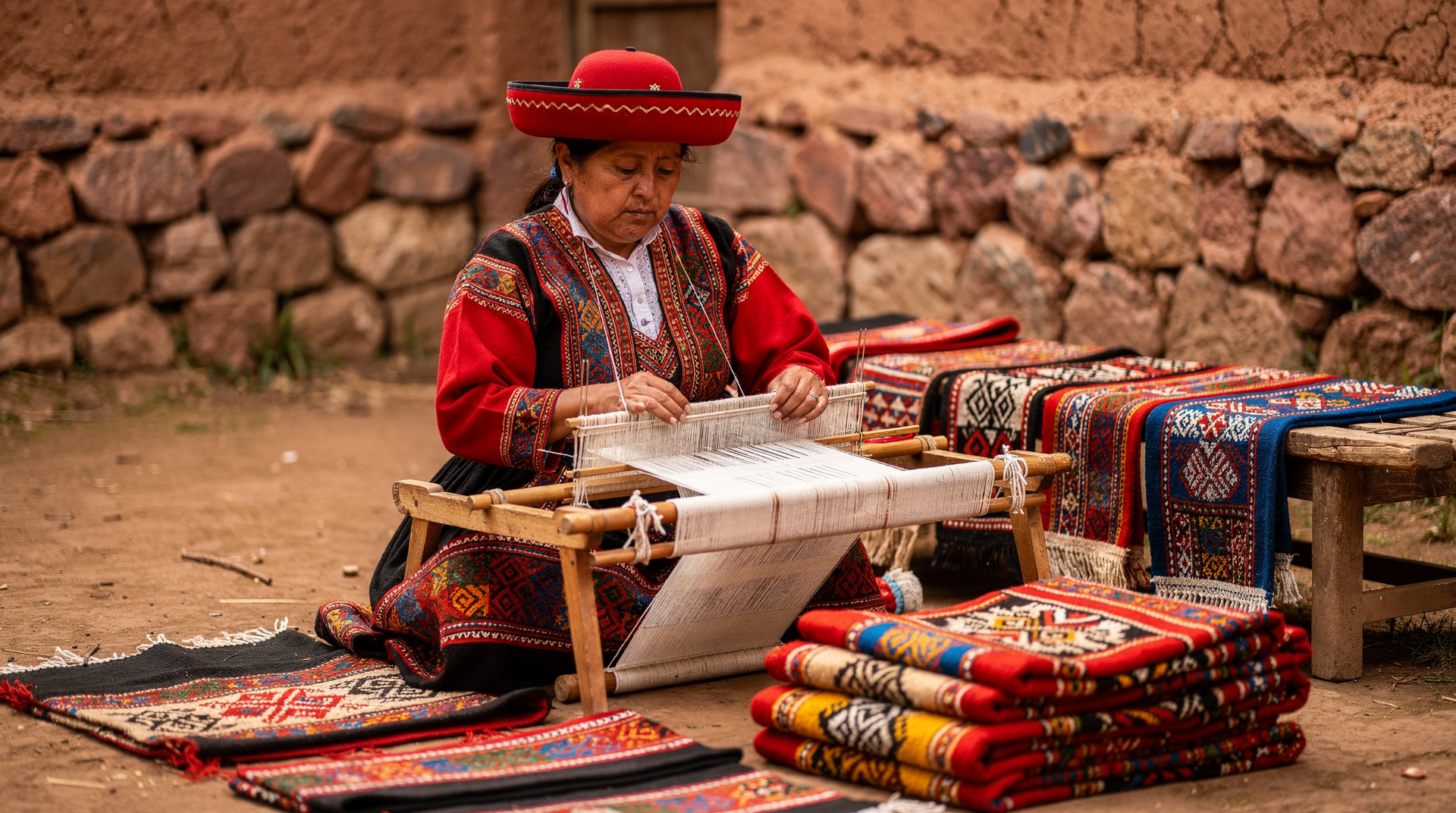
Chinchero, the plateau town closest to Maras, is home to several weaving cooperatives where women demonstrate the full process of Andean textile production — washing raw alpaca wool, dyeing it with natural pigments from cochineal insects, plants and minerals, and weaving on traditional backstrap looms. The Chinchero weaving guide covers what a cooperative visit involves and how to buy directly from the weavers rather than resellers. Since Chinchero sits directly on the road between Cusco and Maras, adding a weaving demonstration to the same day’s plateau circuit costs very little extra time and rounds out the Inca-engineering focus of Maras and Moray with a living-culture counterpoint.
Honest tips
Pay the community fee at Maras without complaint. The S/10 entry fee is low and goes directly to the families who own and work the salt pans. It is not a tourist extraction; it is a community management system. Attempting to avoid it is both futile and disrespectful.
Bring water. At 3,380 m, the sun is intense and there is little shade on either site. The small cafe at Maras sells bottled water; Moray has no facilities beyond a car park.
Moray in the wet season has its own appeal. November to March, when rain falls and the surrounding plateau turns green, the terraces are less dramatically photographed but more beautiful in a different way. The green rings against wet stonework are striking, and the site is quieter.
Altitude at this elevation matters. Both sites sit at approximately 3,380 m — higher than the valley floor and similar to Cusco. If you are in your first two or three days in the region, take both sites at a slow pace and sit down if you feel dizzy. The altitude sickness guide covers the early warning signs.
Do not underestimate the midday heat. Even in the dry season, the plateau at midday can be very warm in full sun. The salt pan heat reflection at Maras amplifies this. Factor 50 sunscreen applied before you get out of the vehicle is sensible.
The 7-day Sacred Valley and Machu Picchu itinerary shows how to fit the plateau circuit into a week-long trip, including how to combine it with a morning at Pisac’s market and an afternoon in Ollantaytambo.
Maras and Moray are frequently listed as secondary stops — things to see after Pisac and before Ollantaytambo — and that undervalues both of them. The salt pans are unlike anything else in Peru, and the quiet intellectual curiosity that Moray provokes is unlike the more obvious grandeur of fortress temples. Give them the full half-day they deserve.
Where to go next from the plateau
The plateau fits neatly between other stops in the valley. The Moray terraces guide goes deeper into the agricultural-research reading of the site, and the Maras and Moray day trip lays out how the half-day usually runs. If you want to stretch the outing into a full day, the one-day Sacred Valley itinerary shows how these sites sit alongside Pisac and Ollantaytambo.
Choosing where to sleep affects how fresh you feel on the plateau. The Cusco versus Sacred Valley base comparison explains the trade-offs, and getting around the Sacred Valley covers the practical side of moving between towns. Travellers who want the bigger picture of the region can start from the Cusco destination page.
Frequently asked questions about Maras and Moray
Can I visit Maras and Moray without a guide? Yes, by hiring a taxi from Cusco or Urubamba for the day, but a guide adds real value at Moray in particular — the agricultural-research interpretation of the terraces is far more meaningful with someone explaining the temperature differentials and Inca farming logic than it is as an unexplained visual curiosity.
Is Moray worth visiting if I’ve already seen Maras? Yes — the two sites are entirely different in character. Maras is a working, colourful, slightly theatrical site; Moray is quiet, geometric, and intellectually rather than visually striking. Most visitors who do only one regret skipping the other.
Top experiences
Bookable activities with verified prices and instant confirmation on GetYourGuide.