Urubamba
Urubamba is the lowest, warmest Sacred Valley town at 2,870 m — an ideal acclimatisation base near Pisac, Maras, Moray and Ollantaytambo.
From Cusco: Sacred Valley of the Incas Full-Day Tour
Quick facts
- Country
- Peru
- Altitude
- 2,870 m / 9,416 ft
- Currency
- Peruvian sol (S/) — USD widely used
- Best for
- Acclimatisation base, valley hub, day trips to Pisac/Maras/Moray/Ollantaytambo
The valley’s quiet centre
Urubamba does not have a famous ruin. It does not have a market that fills travel magazines. It does not have a train station or an airport-adjacent visitor trail. What it has is the lowest altitude of any town in the main Sacred Valley — 2,870 m, some 530 m below Cusco — the Urubamba River running along its southern edge, and a position at the geographic centre of the valley that makes it a short drive from virtually every site worth visiting. These are underrated qualities, and travellers who base themselves in Urubamba for a night or two typically find the difference in how they feel at altitude to be noticeable and meaningful.
The town itself is a working Andean market town rather than a tourist destination. The central market sells produce, hardware and textiles to local residents; the restaurants lining the main street serve straightforward Peruvian food to a mix of local families and travellers; the churches and plaza have provincial dignity rather than dramatic heritage. It is pleasant without being remarkable, and that is appropriate: Urubamba’s value is as a base and a hub, not as a monument.
| Where | Sacred Valley, Peru — 2,870 m, around 530 m below Cusco |
| Days needed | 1–2 nights, used as a base rather than a standalone stop |
| Getting there | Around 1–1.5 hours by road from Cusco, or via Chinchero/Pisac |
| Cost to stay | Around S/50–90/night budget, S/150–300 mid-range, $400–700+ luxury |
| Best time | May–September (dry season, warmer nights than Cusco) |
Why altitude matters here
Altitude sickness (soroche) is a real concern for travellers arriving in the Cusco region from sea level, and the single most effective practical intervention — more reliable than medication alone — is to spend your first nights at a lower elevation. Urubamba at 2,870 m is meaningfully lower than Cusco at 3,400 m, and the difference translates into measurably better sleep, less headache on waking, and a quicker start to the acclimatisation process that every visitor to the high Andes needs to go through.
The effect is not dramatic or immediate — you are still at nearly 3,000 m, which is well above the threshold at which altitude affects the body — but the progression from Urubamba to Cusco, undertaken over two to three days, is significantly gentler than landing in Cusco and spending your first two nights there. If your itinerary includes Machu Picchu at 2,430 m early in your trip, starting in Urubamba and proceeding to Machu Picchu before going up to Cusco is actually the most altitude-sensible sequence of all.
The altitude sickness guide covers the full range of prevention and treatment options, including the role of acetazolamide (Diamox), coca leaf tea, hydration, and the value of a slow ascent schedule.
Urubamba as a valley base
The town’s central location makes it the most practical overnight base for day-tripping to the valley’s main sites without a car.
East towards Pisac: Collectivos (shared minibuses) leave from the main bus terminal in Urubamba to Pisac throughout the morning, costing approximately S/3–4 for the 30-minute ride. On Sundays, Tuesdays and Thursdays the service is more frequent to accommodate market visitors. The return journey is equally straightforward. A day trip from Urubamba to Pisac — market in the morning, ruins in the afternoon — is entirely feasible without a private vehicle.
West towards Ollantaytambo: Collectivos also run from Urubamba to Ollantaytambo (~S/3–4, 45 minutes) throughout the day. Ollantaytambo is the departure point for trains to Aguas Calientes and Machu Picchu, making Urubamba a logical base for travellers who want to avoid the longer Cusco-to-Ollantaytambo journey on train day.
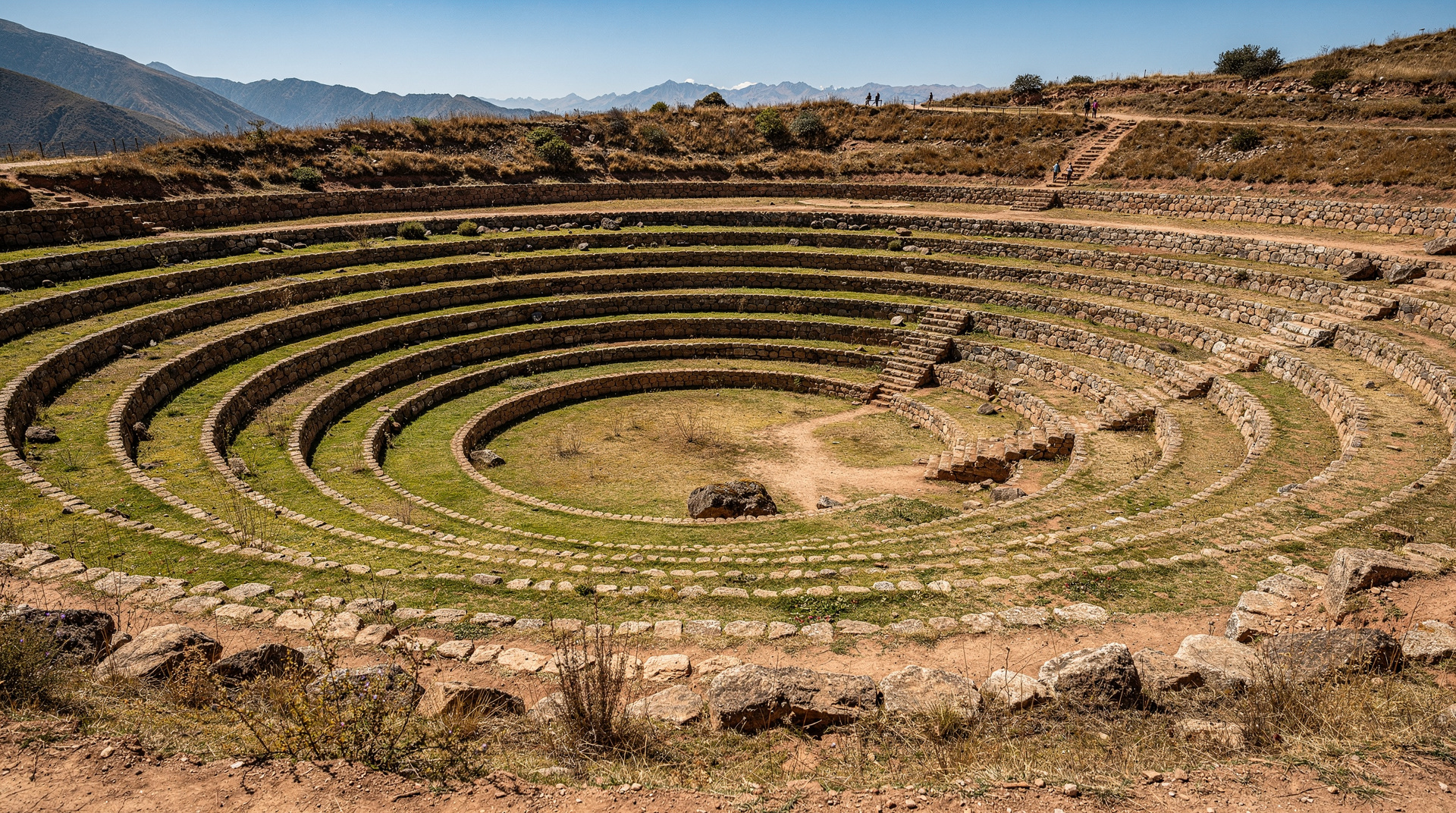
Up to the plateau (Maras and Moray): This is the one journey from Urubamba that benefits from a taxi rather than public transport. A taxi hired from Urubamba for the Maras and Moray circuit costs approximately S/60–90 and covers both sites in a half-day, with the descent back to the valley as a pleasant bonus. The 12 km climb from Urubamba to the Maras salt pans — also feasible by bicycle for those who enjoy a workout at altitude — is a popular cycling route.
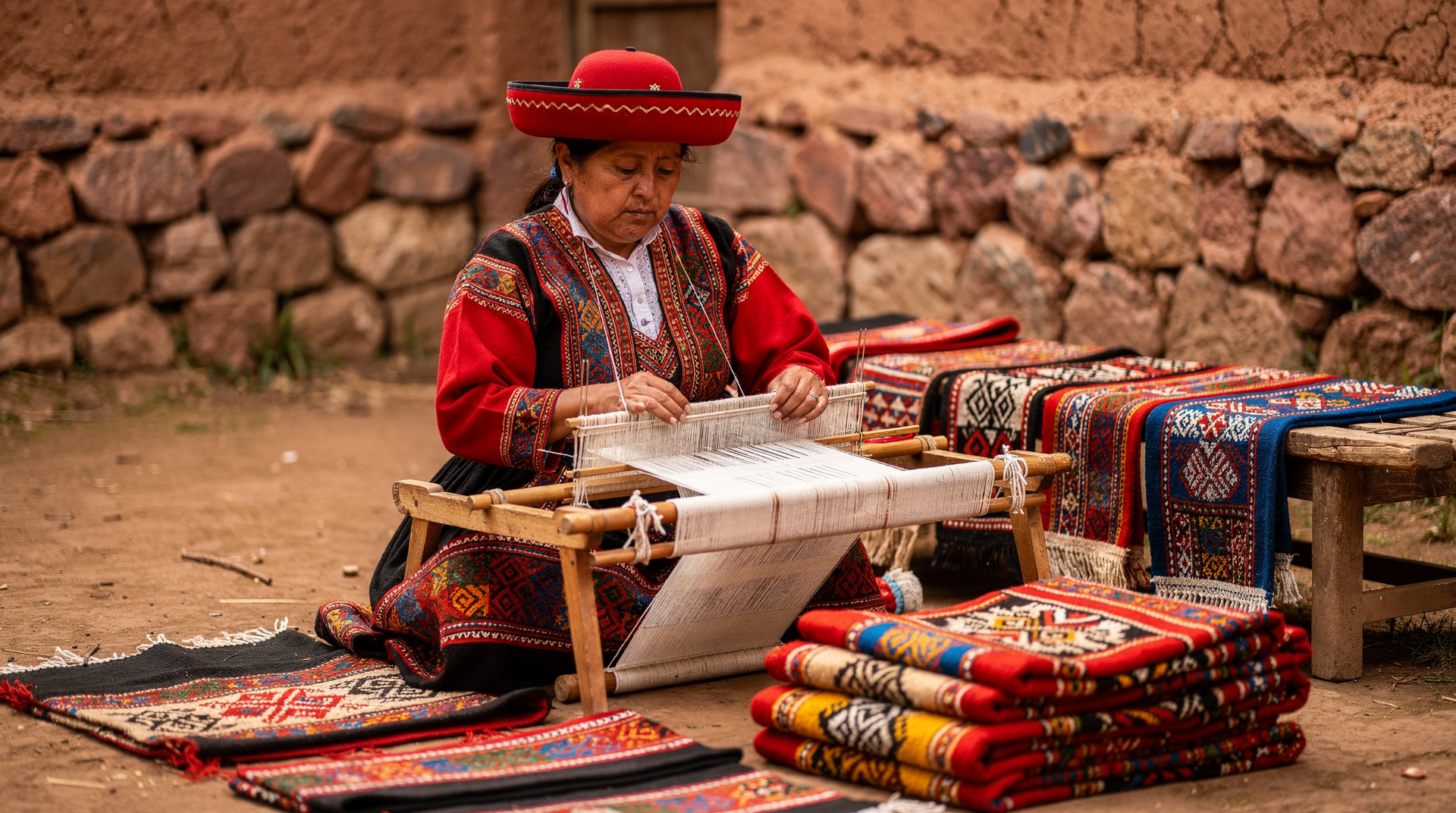
To Chinchero: Chinchero sits on the plateau above the valley, accessible from Urubamba by a winding road that climbs 900 m in about 20 km. A collectivo to Chinchero from Urubamba costs approximately S/5–7; alternatively, a taxi is S/50–70. Chinchero is particularly worth visiting on a Sunday for the market and weaving demonstrations.
What to do in and around Urubamba
The town itself rewards an evening walk more than a day of sightseeing. The riverside path along the Urubamba River to the east of town is pleasant in the late afternoon, with good bird life including Andean condors occasionally visible riding thermals above the valley walls. The town market, open daily but liveliest in the mornings, is a practical working market rather than a tourist attraction — bring cash and expect to navigate by gesture if your Spanish is limited.
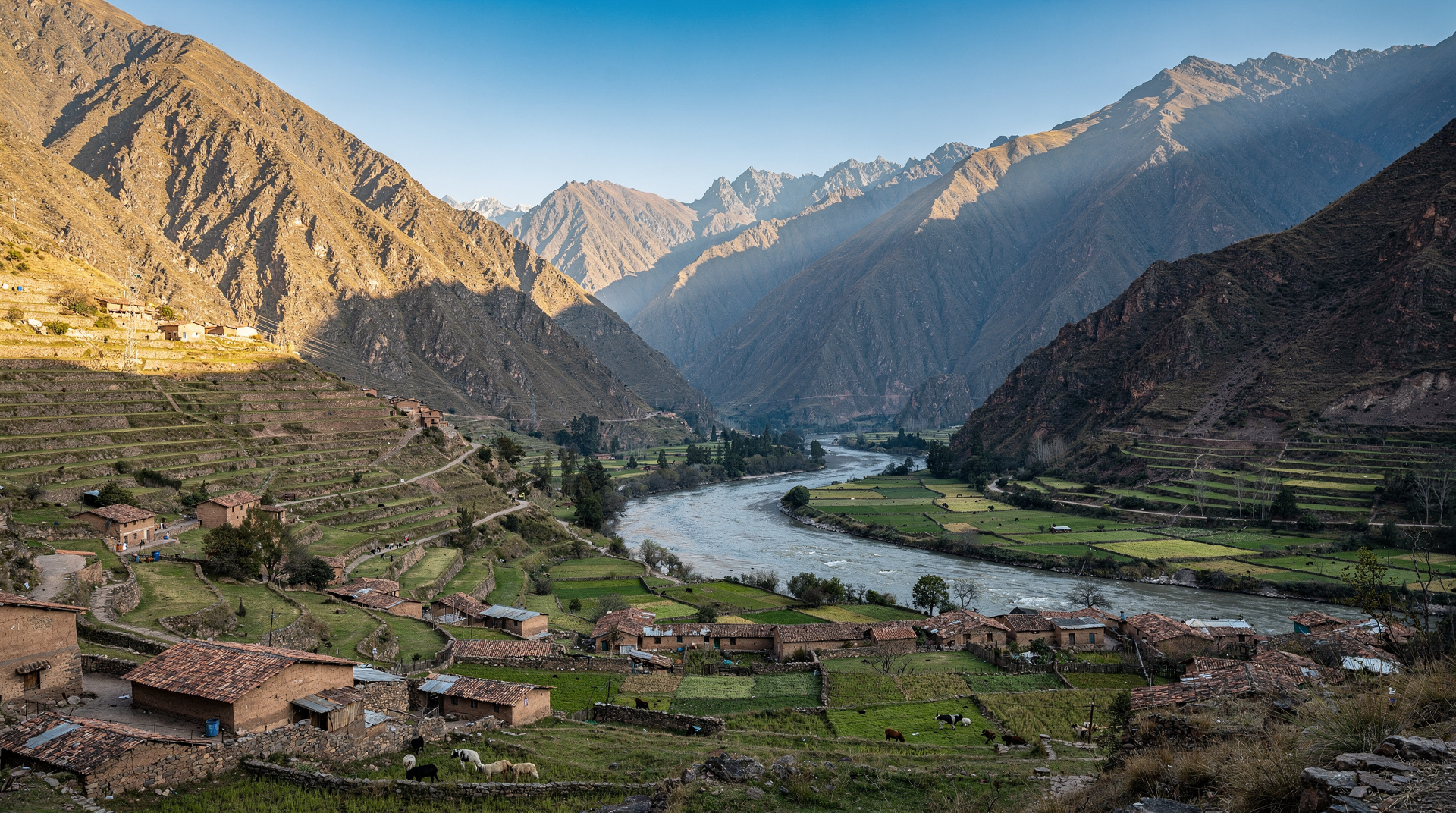
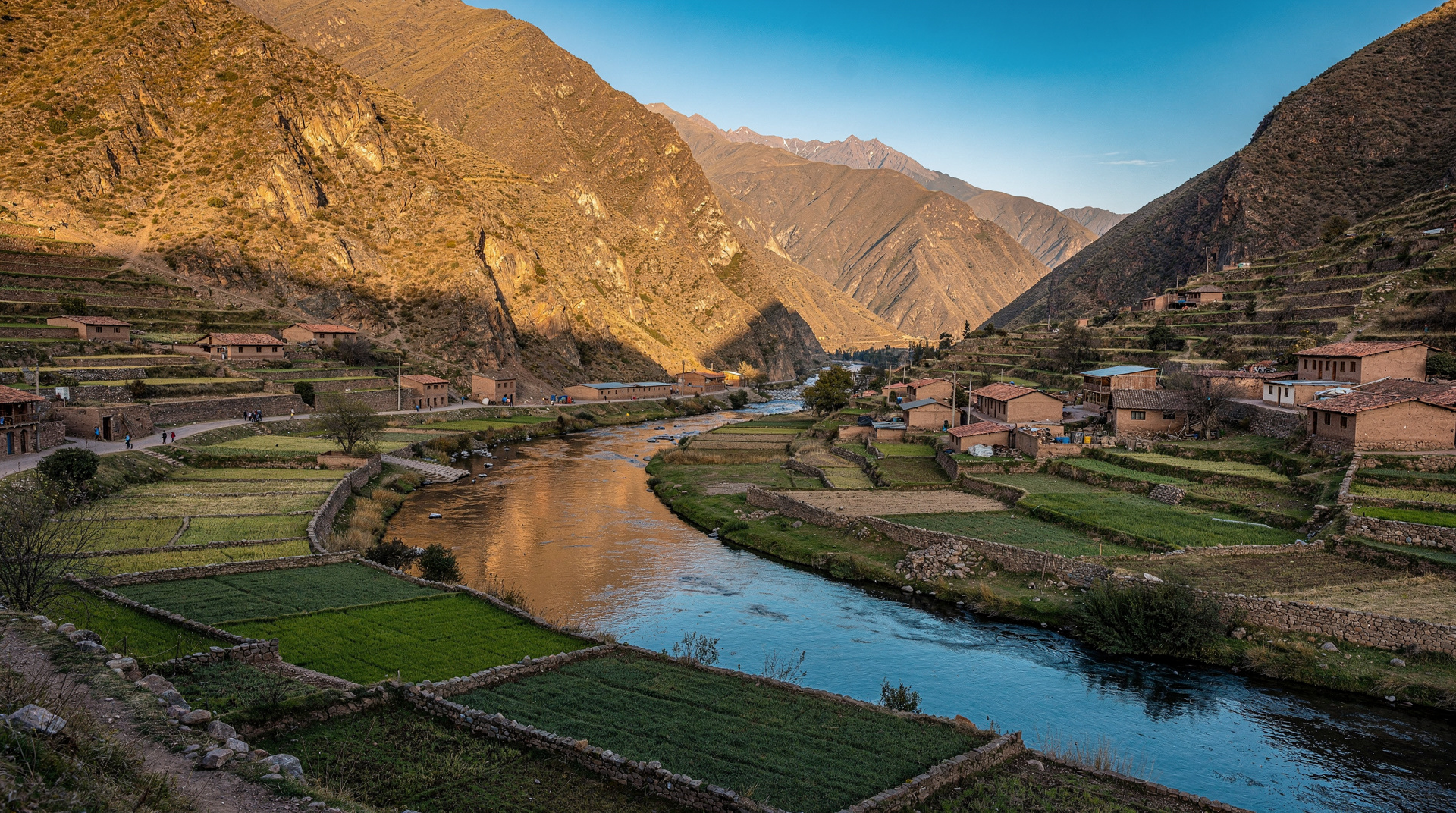
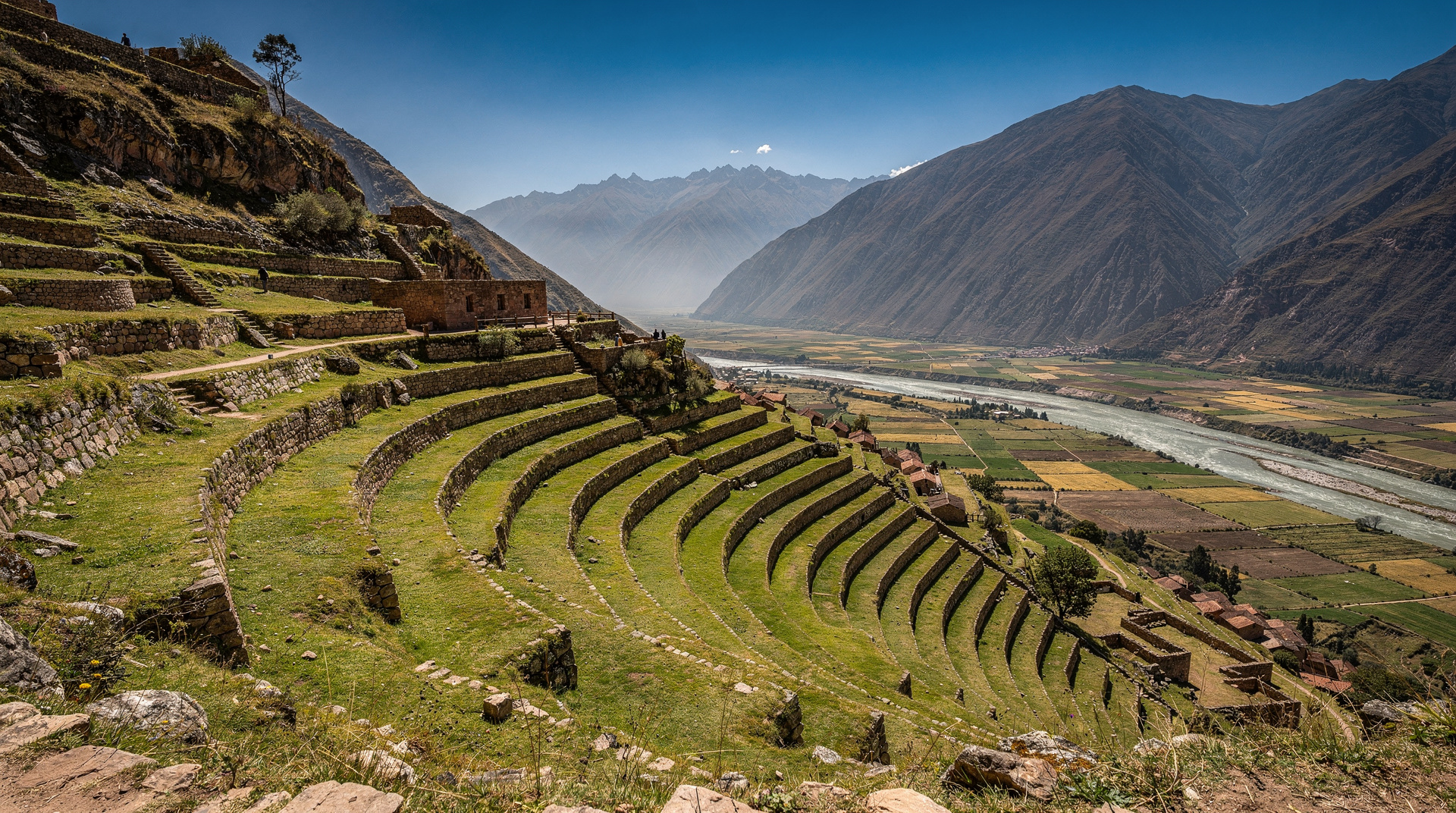
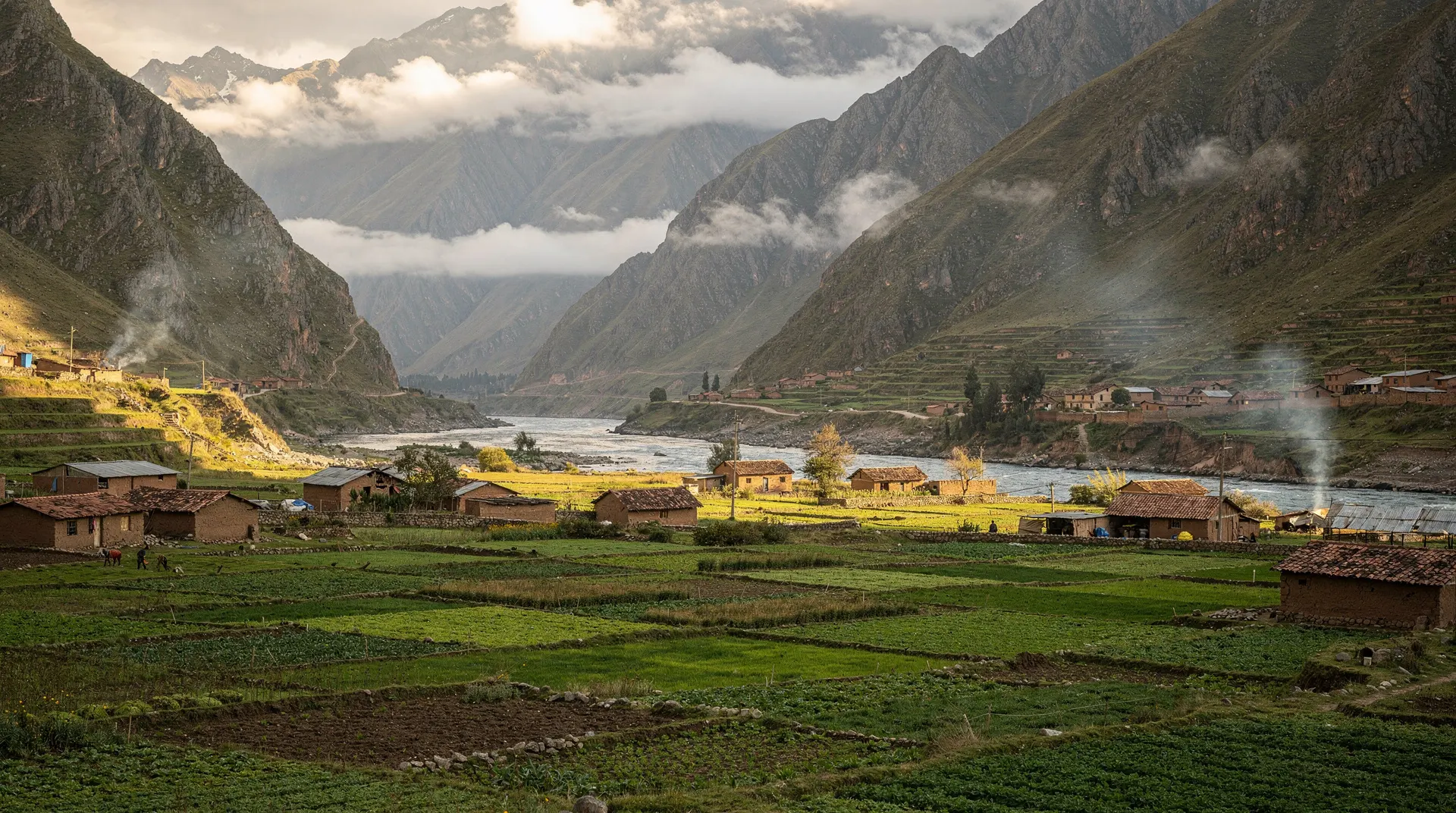
The surrounding farmland is visually beautiful in the dry season: green irrigated fields in the valley bottom, terraced slopes above, and the jagged snow-capped peaks of the Urubamba range closing the northern horizon. This is the same landscape that the Inca chose for their agricultural heartland, and sitting with it over a slow lunch gives you a visceral sense of why.
Several outdoor operators in Urubamba offer half-day activities suited to the valley’s terrain: white-water rafting on the Urubamba River (Class II–III, suitable for beginners, approximately $30–50 per person), mountain biking on the plateau tracks to Maras and beyond, and horseback riding through the valley floor farmland. These are not world-class adventure activities, but they are a pleasant way to see the valley from a different angle on a rest day between sites.
The Cusco rafting guide and the Cusco mountain biking guide cover operators, safety standards and pricing in more depth if either activity is a priority rather than an afterthought, and the horseback riding guide does the same for the valley-floor rides on offer from several Urubamba stables.
Getting to and around Urubamba
Most travellers reach Urubamba directly from Cusco, either as part of an organised Sacred Valley tour or independently. Collectivos to Urubamba leave from Cusco’s Pavitos terminal throughout the day (around S/8–10, roughly 1.5 hours) via the Chinchero road, which is the fastest route but climbs above 3,800 m before descending — worth knowing if you are still acclimatising.
Private taxis cost more (around S/80–120) but run door to door and can stop at Chinchero en route. The getting around the Sacred Valley guide has the fuller breakdown of collectivo routes, taxi fares and which combinations work best for a valley-wide loop, and the Cusco taxi and money tips guide is useful background if you are new to negotiating fares in the region.
If you are flying in, the Cusco airport guide covers transfer options; most visitors overnight in Cusco first and travel down to Urubamba the following day rather than heading straight to the valley from the airport, which helps spread out the altitude adjustment.
When to visit Urubamba
Urubamba’s lower altitude makes its climate slightly gentler than Cusco’s year-round, but the same wet-and-dry pattern applies to both.
| Season | Months | Conditions in Urubamba | Crowds |
|---|---|---|---|
| Dry season | May–September | Sunny days, cold-to-cool nights (around 7–9°C), little rain | Peak — book accommodation ahead |
| Shoulder | April, October | Mild, occasional showers, greener landscape | Moderate |
| Wet season | November–March | Warmer nights, frequent afternoon rain, lush valley scenery | Quieter, some rural roads affected |
The best time to visit Cusco guide and the Cusco dry season guide go into month-by-month detail that applies equally well to planning a Sacred Valley stay, since the two regions share the same broad weather pattern with Urubamba running a few degrees warmer at night throughout the year.
Where to eat and stay
Eating: Restaurant El Huacatay on Calle Arica is consistently recommended for its creative Peruvian cooking using local ingredients; expect to pay S/45–80 for a main course. The market area has cheaper lunch spots (S/12–20 for a set menu) that serve straightforward stews and soups using local produce. Chicha — fermented maize beer — is available from informal picanterías near the market; look for the pole with a red plastic bag hung outside, the traditional signal that chicha is on tap.
Budget accommodation: Guesthouses around the main plaza and the streets leading to the market charge S/50–90 for a basic double room with private bathroom. Hot water is typically available from mid-morning.
Mid-range hotels: Several small hotels in the S/150–300 range offer better rooms with valley views, reliable hot water and a simple breakfast included. The neighbourhood east of the plaza is quieter and has more options in this category.
Luxury: Urubamba is home to two of the most upmarket rural hotels in the Cusco region: Explora Valle Sagrado and Hacienda del Valle, both at $400–700+ per night. These are destination properties rather than transit hotels, aimed at guests spending several nights in the valley on an organised itinerary. Both have exceptional spa facilities and arrange guided excursions to all valley sites.
Tours from Urubamba
Most guided Sacred Valley tours operate from Cusco, but some can be arranged from or through Urubamba-based operators if you are already staying in the valley. A full-day Sacred Valley group tour typically picks up from Cusco hotels in the morning; if you are based in Urubamba, a taxi to a Cusco-based pick-up point or arranging a valley-pickup directly with the operator is usually possible.
For a more flexible private experience, a private VIP Sacred Valley tour can be structured to start and end in Urubamba and to focus on whichever combination of sites interests you most — useful if you have already seen Pisac independently and want to spend more time at Moray or in Ollantaytambo.
Honest tips
Urubamba is a real town, not a resort village. The market streets are not particularly photogenic, the traffic can be noisy, and the pizza-and-pasta restaurants near the plaza are ordinary. If you want a polished tourist-town experience, Ollantaytambo offers better street aesthetics and a more atmospheric centre. Urubamba offers practicality and lower altitude.
The temperature difference from Cusco is real. At 2,870 m, Urubamba nights are typically 3–5°C warmer than Cusco nights in the same season. In June and July, when Cusco nights can drop to 2–4°C, sleeping in Urubamba at 7–9°C is a noticeably more comfortable experience.
Book the train from Ollantaytambo, not from Cusco, if you are already in the valley. If you are using Urubamba as your base and Machu Picchu is next, take a collectivo or taxi to Ollantaytambo (45 minutes) the day before and stay the night there, then board the morning train. Both PeruRail and Inca Rail run services from Ollantaytambo; round-trip tickets to Aguas Calientes cost approximately $60–130 depending on service class. Book well in advance in the May–August peak season.
Use the valley road rather than the Cusco bypass when approaching from Cusco. The direct Cusco-to-Urubamba road via Chinchero is faster but climbs above 3,800 m before descending. If altitude is a concern, the longer route via Pisac — descending into the valley at the eastern end and following the river west — keeps you at lower elevation throughout.
The 7-day Sacred Valley and Machu Picchu itinerary places one or two nights in Urubamba early in the sequence, using the town as a low-altitude anchor before ascending to Cusco and then continuing to Machu Picchu. It is a sound structure, and one that makes the altitude transition considerably more manageable.
Urubamba will not make it into your Instagram highlights. It will, however, make you feel better for having been there, and that is arguably a more valuable contribution to a high-altitude Andean itinerary than any number of dramatic ruins.
Frequently asked questions about Urubamba
Is Urubamba worth staying in, or should I just base myself in Cusco or Ollantaytambo? If altitude acclimatisation matters to you at all, yes — Urubamba’s lower elevation genuinely improves sleep and reduces headaches in the first days at altitude, which neither Cusco nor Ollantaytambo (both higher) can match. If altitude is not a concern for you, Ollantaytambo offers a more atmospheric centre for the same practical benefits.
Can I see Urubamba’s own sights in an afternoon, or do I need a full day? An afternoon or evening is enough for the town itself — the market, the plaza and a riverside walk. Urubamba’s real value is as a base for day trips to Pisac, Maras and Moray, Chinchero and Ollantaytambo, so plan your time around those rather than the town.
Top experiences
Bookable activities with verified prices and instant confirmation on GetYourGuide.