Cusco taxis, ATMs and money — what you need to know
Cusco: Half-Day City Tour with Sacsayhuaman and Q’enco
What are the best ways to get around and handle money in Cusco?
For taxis: use inDrive or Uber for upfront pricing and registered drivers. For money: use ATMs at BCP, Interbank, or Scotiabank on Av. El Sol — avoid street money changers near Plaza de Armas who use sleight-of-hand techniques to short-change. The Peruvian sol (PEN) is the local currency; USD is widely accepted for major purchases but at rates less favourable than withdrawing soles directly.
The transport and money landscape in Cusco
Cusco’s historic centre is compact enough to walk for most purposes — the Plaza de Armas to San Blas is a ten-minute stroll uphill, and the main market at San Pedro is fifteen minutes walking from the main square. For most tourist purposes on flat or gently sloping ground, walking is the primary mode. But for the airport run, for excursions with luggage, for reaching Poroy train station, for getting back late at night — you need transport. And for transport, the pricing landscape is unregulated enough that knowing the correct fare range in advance saves real money.
The money side of Cusco is similarly navigable once you know the main risk points. Street exchangers near Plaza de Armas are a well-established hazard. ATM skimming at poorly monitored machines is documented. And the Peruvian sol is the currency you need — knowing where to get a fair rate without excessive bank fees makes a material difference over a 7–10 day trip.
| Best taxi option | inDrive or Uber, upfront pricing |
| Airport fare | Around S/20–35 by app; avoid S/60–80 verbal quotes |
| Safest ATMs | Branded bank machines (BCP, Interbank, Scotiabank) on Av. El Sol |
| Currency | Peruvian sol (PEN); USD accepted but at a worse rate |
| Avoid | Street money changers near Plaza de Armas |
Taxi basics: how the system (doesn’t) work
Cusco does not have a city-wide metered taxi system in the conventional sense. Most taxis operating in the city are informal — vehicles owned by individuals who have obtained a basic permit but operate without a fixed fare structure. This is legal in Peru but creates a pricing environment where the fare you pay as a tourist has very little relationship to what a local would pay for the same journey.
The practical consequence: a taxi driver approaching you at the airport, at the bus terminal, or near a popular tourist site will quote a price calibrated to what they think you’ll accept, not to the distance and time of the journey. Quotes of S/60–80 for airport-to-centre runs (a journey that costs S/25–35 with app-based drivers) are common. There is no mechanism for you to dispute a verbally agreed price mid-journey.
The solution is straightforward and works well: use apps.
A fixed fare from Cusco airport
Landing in Cusco tired, with bags, is exactly the moment an informal driver quotes you a figure based on what you look willing to pay. With no meter and no way to dispute a price agreed by word of mouth, the first ride of the trip is where you are most exposed.
The simplest fix is to settle the fare before you arrive. Note your flight number, the name of your hotel in the centre and the number of people and bags, so the price covers the whole journey. Compare that fixed figure with the S/25–35 that app-based drivers charge for the same airport-to-centre run, and decide whether paying in advance is worth the certainty after a long flight. If it is, you can arrange a pre-booked pick-up with Kiwitaxi and have a driver waiting for you in Cusco.
inDrive and Uber in Cusco
inDrive has higher driver participation in Cusco than Uber and is the first app to check. It operates on a bidding model: you set your price, drivers accept or counter-offer, and you confirm. For city journeys, inDrive typically prices S/8–15 for central rides and S/20–30 for the airport run. The app requires a Peruvian phone number or your existing account from elsewhere.
Uber is present in Cusco but with lower driver density than in Lima. It works reliably in the main tourist zones during daytime hours. Pricing is automatic and shown upfront. For airport runs, Uber is often the more reliable option because it has more consistent coverage at the airport terminal.
Hotel radio taxis: For late-night returns or early-morning airport departures, ask your hotel for their recommended radio taxi company. Hotels consistently work with a small number of trusted drivers at fixed rates, and these are reliable even when apps struggle for drivers.
For the airport specifically: inDrive and Uber work in the pickup zone of Alejandro Velasco Astete airport. If connectivity is poor on arrival, walk to the official taxi rank immediately outside arrivals. These are slightly more expensive than apps but significantly cheaper than accepting the first offer from any driver who approaches you inside the terminal.
What to pay for common journeys (2026 benchmarks)
These are approximate legitimate fares for journeys in or near Cusco:
- Airport to historic centre (Cusco): S/20–35 (15–25 minutes)
- Historic centre to Poroy station (for Machu Picchu trains): S/30–45 (30–45 minutes)
- Historic centre to Sacsayhuamán entrance: S/12–18 (15 minutes)
- Historic centre to San Pedro market: S/8–12 (walking is usually faster)
- Historic centre to Wanchaq (bus terminal): S/10–15
These are guide prices only and vary with traffic, time of day, and whether you are using an app. Prices confirmed via app pricing are reliable; prices quoted verbally by an unmarked taxi require negotiation.
ATMs in Cusco: where to go and what to avoid
The safest ATMs in Cusco are in the main branches of Peru’s major commercial banks on Av. El Sol — the main commercial street running south from Plaza de Armas. BCP (Banco de Crédito del Perú), Interbank, and Scotiabank all have full-service branches with ATMs on this street. These machines are:
- Regularly serviced and monitored by bank security during opening hours
- Inside bank lobbies or well-lit exterior vestibules
- Less likely to have skimming devices installed than unmanned machines
Withdrawal limits: Most Peruvian ATMs limit withdrawals to S/600–1,000 per transaction, sometimes S/400–500 at smaller machines. If you need to withdraw larger amounts, use the BCP or Interbank main branch machines, which tend to have higher per-transaction limits (up to S/1,500 sometimes).
Bank fees: Your home bank will charge international withdrawal fees. Compare this cost against exchange rate conversion fees for using USD. As a rough guide: ATM withdrawal in soles at a good machine beats USD-to-soles exchange at most hotels and shops for amounts above approximately S/200.
Avoid: ATMs in small convenience shops, unstaffed kiosks near Plaza de Armas, and machines in obscure street corners. Card skimming is documented in Cusco — the risk is not theoretical. Card skimmers are installed at poorly monitored locations and removed before bank staff detect them.
Currency: soles, USD, and what to use when
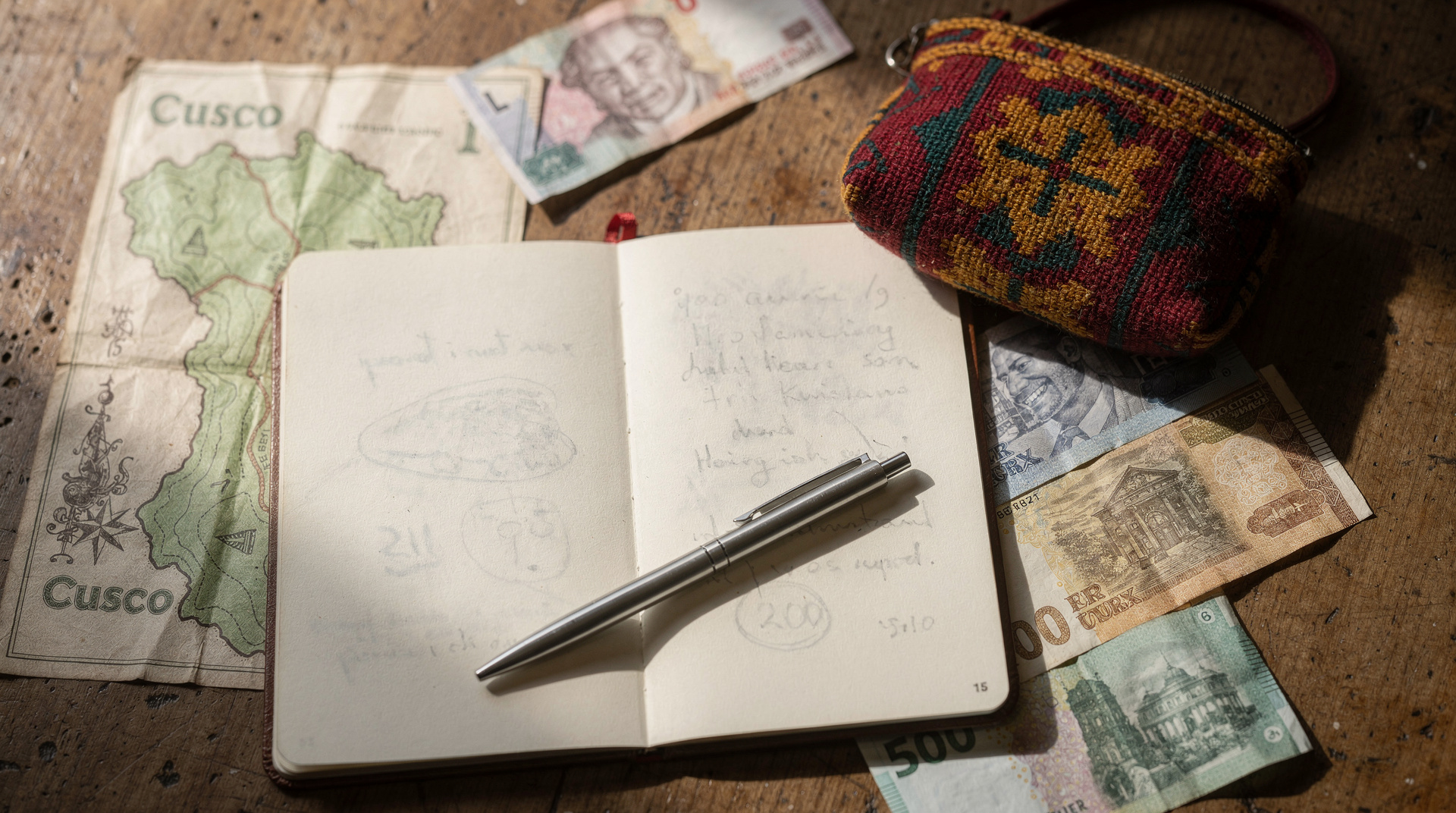
The Peruvian sol (abbreviated PEN, symbol S/) is the national currency and what you should primarily use in Cusco. USD is widely accepted for:
- Tour and activity bookings (many operators quote in USD)
- Hotel accommodation
- Machu Picchu-related costs (trains, tour packages)
- Upmarket restaurants
However, the exchange rate applied by hotels and businesses when accepting USD is typically several per cent below the interbank rate — you will lose S/3–5 on every S/100 compared to withdrawing soles at an ATM. For smaller purchases (meals, markets, local transport, pharmacies), soles are always correct and sometimes the only currency accepted.
Small denomination soles matter. Cusco’s markets, taxis, and small restaurants often cannot change large bills (S/50 or S/100). When you withdraw from an ATM, ask for the S/20 and S/10 denomination option if available, or break large bills at a supermarket or larger restaurant before heading to markets.
USD note quality: If you’re bringing USD cash from home, bring new-condition notes. Peruvian banks and exchange houses often refuse older, worn, or marked USD bills, particularly S/50 and S/100 denominations. This is an official policy across most of Peru’s financial institutions, not a scam.
Street money changers: the definitive answer
Do not use them. The short explanation: street changers near Plaza de Armas consistently short-change through sleight of hand (flipping bills, palming notes, miscounting), pass counterfeit S/50 and S/100 soles notes, and quote rates they do not apply to the actual transaction.
The marginally better rate they advertise versus the bank is the mechanism — it provides enough incentive for visitors to engage, at which point the short-change technique captures the rate difference and more. You will not catch the sleight of hand in real time if you are unfamiliar with Peruvian currency. Some travellers discover the problem only hours later.
Licensed exchange houses (casas de cambio) on Av. El Sol are a different matter. These are registered businesses with rate boards, receipts, and currency-counting machines. They offer slightly better rates than bank ATMs and are legitimate. Several are operated adjacent to bank branches on Av. El Sol. The distinction: fixed business premises with a rate board, not a person approaching you on the street.
Paying for tours: cash vs card
For larger tour payments — multi-day treks, Machu Picchu packages, organised day trips — paying by card rather than cash is preferable for two reasons: the transaction is documented and disputable if the service is not delivered, and you avoid carrying large amounts of cash.
Licensed operators in Cusco accept card payments. An operator that insists on cash only and provides no receipt is operating without proper business registration. This is not a minor administrative point — it is a meaningful signal about their regulatory status.
For street-level purchases, markets, and small restaurants, cash is necessary. Keeping S/200–300 in small denominations (S/10 and S/20 notes) for daily walking-around cash eliminates the small-change problem that affects markets and local transport.
Bank card fees: what to expect
Most international bank cards charge 1.5–3.5% for foreign currency transactions and a flat fee of S/5–15 per ATM withdrawal at Peruvian machines (Peruvian ATMs also sometimes add their own fee, typically S/10–15 for foreign cards). This adds up over a 7-10 day trip.
Mitigation strategies:
- Use a card specifically designed for international travel with lower foreign transaction fees (Revolut, Wise, Charles Schwab debit, certain credit unions). Some of these cards offer free ATM withdrawals internationally.
- Withdraw larger amounts less frequently rather than small amounts daily, reducing the flat-fee impact.
- Bring some USD cash for major purchases where USD is accepted — avoids ATM fees for those transactions.
Late-night and early-morning transport
Cusco’s app coverage thins noticeably late at night, particularly after 10 or 11 p.m., when fewer drivers are active and wait times stretch. If you have a late dinner or a night out planned, ask your hotel or restaurant to call a trusted radio taxi in advance rather than relying on an app pulling up at short notice on a quiet street. The same applies in reverse for very early departures — a 4 a.m.
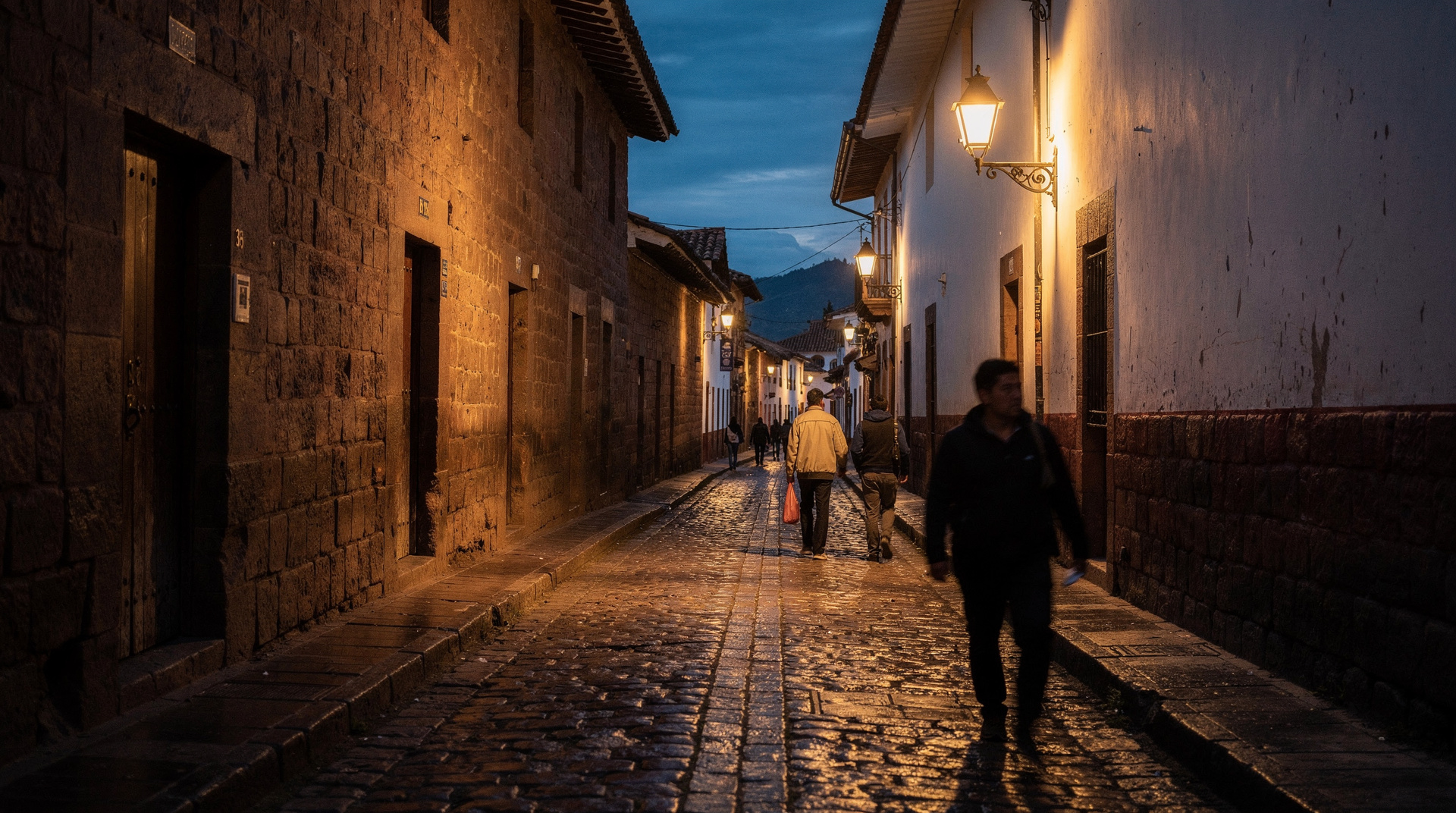
Rainbow Mountain or Machu Picchu pickup is far more reliable when pre-arranged the night before with a named driver than when hailed live at that hour, when app coverage is at its thinnest and street lighting in the historic centre is limited. Most hotels and hostels are used to arranging these early pickups and it typically costs no more than the equivalent app fare.
Early departures matter most on days built around a big sight. If you are heading out for the Rainbow Mountain day trip from Cusco or catching a train for Machu Picchu by train, the pickup is usually arranged by the operator, so check the night before whether transport is included. For the station itself, the Machu Picchu train tickets guide explains what to have ready before you leave the hotel.
Mobile payments: what works in Cusco
Peruvian interbank transfers use the Plin and Yape apps — these are widely used by locals but require a Peruvian bank account or phone number. As a visitor, you will not typically use these. Standard contactless card payment (Visa, Mastercard, Amex) works at mid-range and upmarket establishments. Basic street food, market stalls, and transport are cash-only.
Day-to-day money management in Cusco
Bring a combination of ATM access (your usual debit/credit card that works internationally — notify your bank before travelling), some USD cash for emergencies and major purchases, and local soles withdrawn in Cusco for daily use.
A typical daily cash budget for independent travel: S/120–200 covers three meals (eating well at mid-range restaurants), local transport, a small souvenir, and incidentals. Tours, Machu Picchu costs, and accommodation are typically booked separately.
For a guided Cusco half-day city tour that covers the main Inca sites with a licensed guide, booking in advance via GetYourGuide allows card payment without the small-denomination cash problem — the tour cost is settled before you arrive and no street cash exchange is required.
The cusco airport guide covers what to do immediately on arrival, including the official taxi rank and the best approach to first-day transport. The getting to Cusco guide covers the Lima–Cusco flight and what to expect at the airport before you land.
Money habits and scam awareness go together. The same logic that makes a street changer’s “better rate” suspicious applies to ticket sellers and agencies, so it is worth reading the Cusco tourist traps guide, the piece on unlicensed tour agencies in Cusco and the warning about fake Machu Picchu tickets before you hand over any cash. If you plan to buy entry tickets locally, where to buy tickets in Cusco lists the sensible channels, and the Boleto Turístico explained covers the multi-site pass that touts like to upsell.
Budget planning also helps you decide how much cash to carry. The Peru trip cost guide puts the daily spending categories in context, and Cusco on a budget shows where a tighter spender can save on transport. Arriving at altitude is tiring, so a pre-arranged ride on day one is a gentle start; the Cusco acclimatization plan explains why you should take it slowly in the first days, and walking short distances rather than rushing between taxis fits that approach.
Taxis to the Sacred Valley and further afield
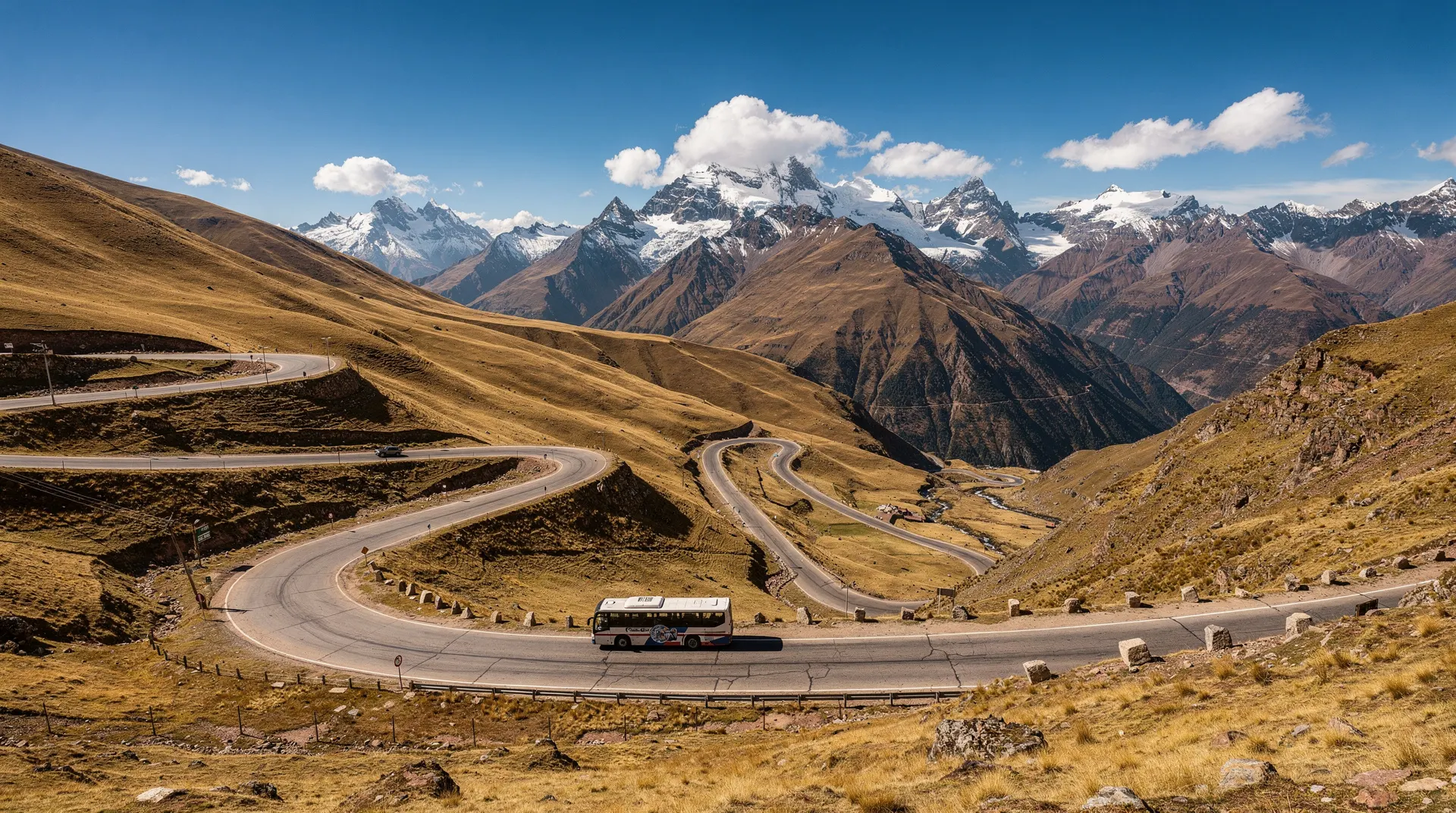
For trips beyond the city — Pisac, Ollantaytambo, or Chinchero — inDrive and Uber generally do not cover the full journey reliably once you’re outside city limits, so negotiated private taxis or shared colectivos are the norm. A private taxi from Cusco to Ollantaytambo runs approximately S/80–100 one way, negotiated in advance; colectivos from Avenida Grau cost a fraction of this (S/8–10 per person to most valley towns) but require waiting for the vehicle to fill and offer no flexibility on stops.
For a full-day Sacred Valley excursion with multiple stops, hiring a taxi for the day (S/150–220 depending on the driver and the exact itinerary) is often more practical than trying to string together colectivos between Pisac, Maras-Moray and Ollantaytambo. If you would rather not negotiate at all, a full-day guided tour of the Sacred Valley bundles transport, stops and payment by card into one booking. Otherwise, agree the full-day rate and the stops included before setting off, in writing via a messaging app if possible. The getting around the Sacred Valley guide compares the options in more depth, and the one-day Sacred Valley itinerary gives a realistic sequence of stops to agree with your driver.
What to do if you’re overcharged or scammed
If a taxi driver tries to change an agreed price on arrival, the calmest and most effective response is to pay only the agreed amount and exit the vehicle — physical confrontation is unnecessary and unwise, and drivers rarely escalate once it’s clear you know the correct fare. For a more serious dispute or a safety concern, the tourist police (Policía de Turismo, with a station near the Plaza de Armas) handle visitor-specific complaints and are used to this exact scenario.
For counterfeit currency received from a street changer, there’s typically no practical recourse — this is precisely why avoiding street changers entirely is the better strategy rather than hoping to spot a fake note in the moment. Keep a mental note of a driver’s plate number or vehicle description if an interaction feels off, in case you need to report it.
Frequently asked questions about Cusco taxis, ATMs and money — what you need to know
How much should a taxi from Cusco airport to the city cost?
Is Uber or inDrive available throughout Cusco?
Which ATMs in Cusco are safest to use?
Should I bring USD or just use ATMs?
Are street money changers dangerous?
Is tipping expected in Cusco?
Top experiences
Bookable activities with verified prices and instant confirmation on GetYourGuide.