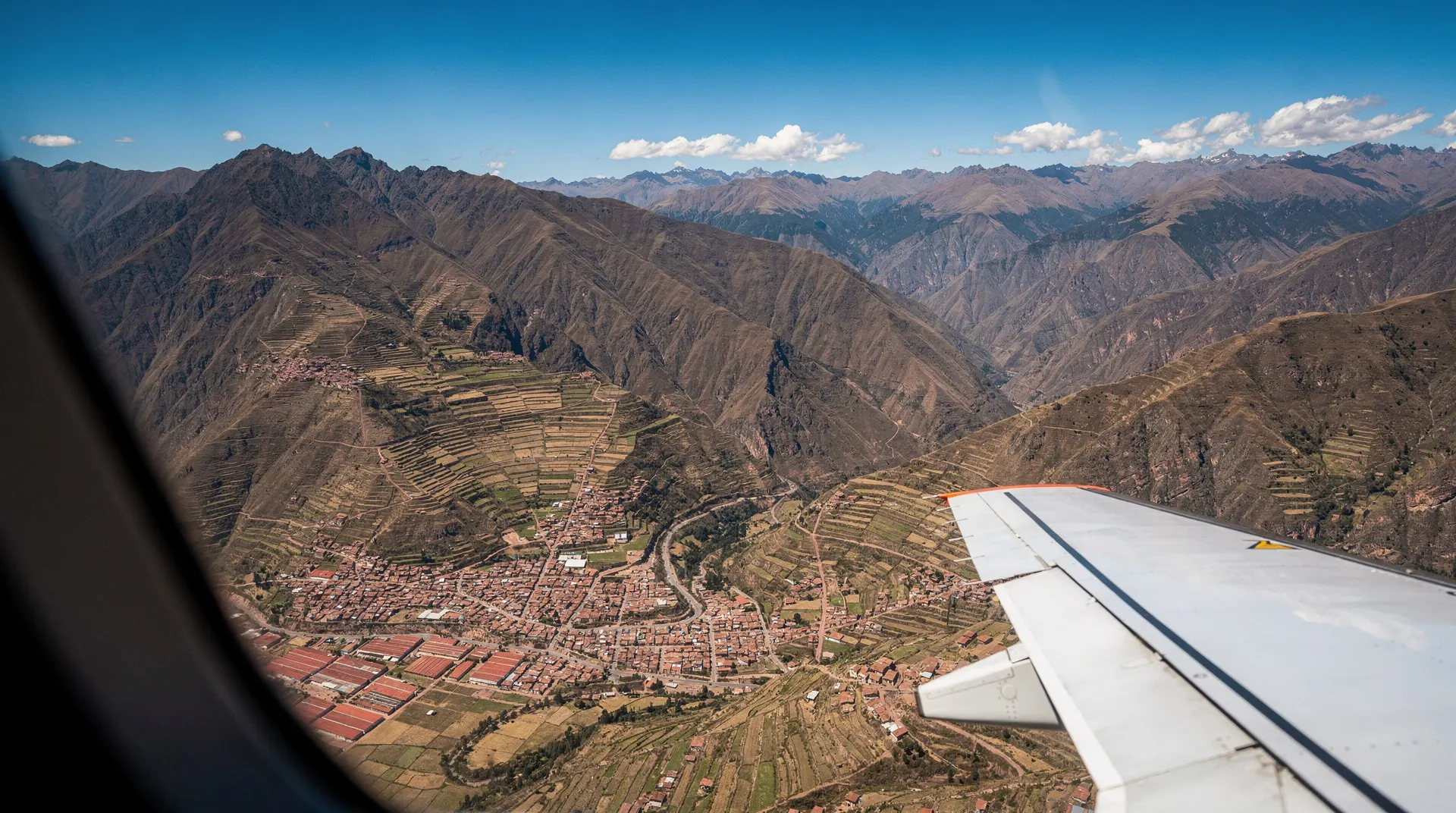
Getting to Cusco — flights, routes and what to expect on arrival
Lima: Historical, Colonial, and Modern City Tour
How do I get to Cusco?
Fly. There are no passenger trains to Cusco from Lima or the coast, and overland journeys from Lima take 20-plus hours. From Lima, flights to Cusco (CUZ) take approximately 1 hour 20 minutes. LATAM, Sky Airline, Avianca and JetSmart operate multiple daily services. Connecting passengers from international hubs typically transit Lima. Book early — seats on morning departures fill fast, particularly May through August.
The single most important logistical decision of your Peru trip
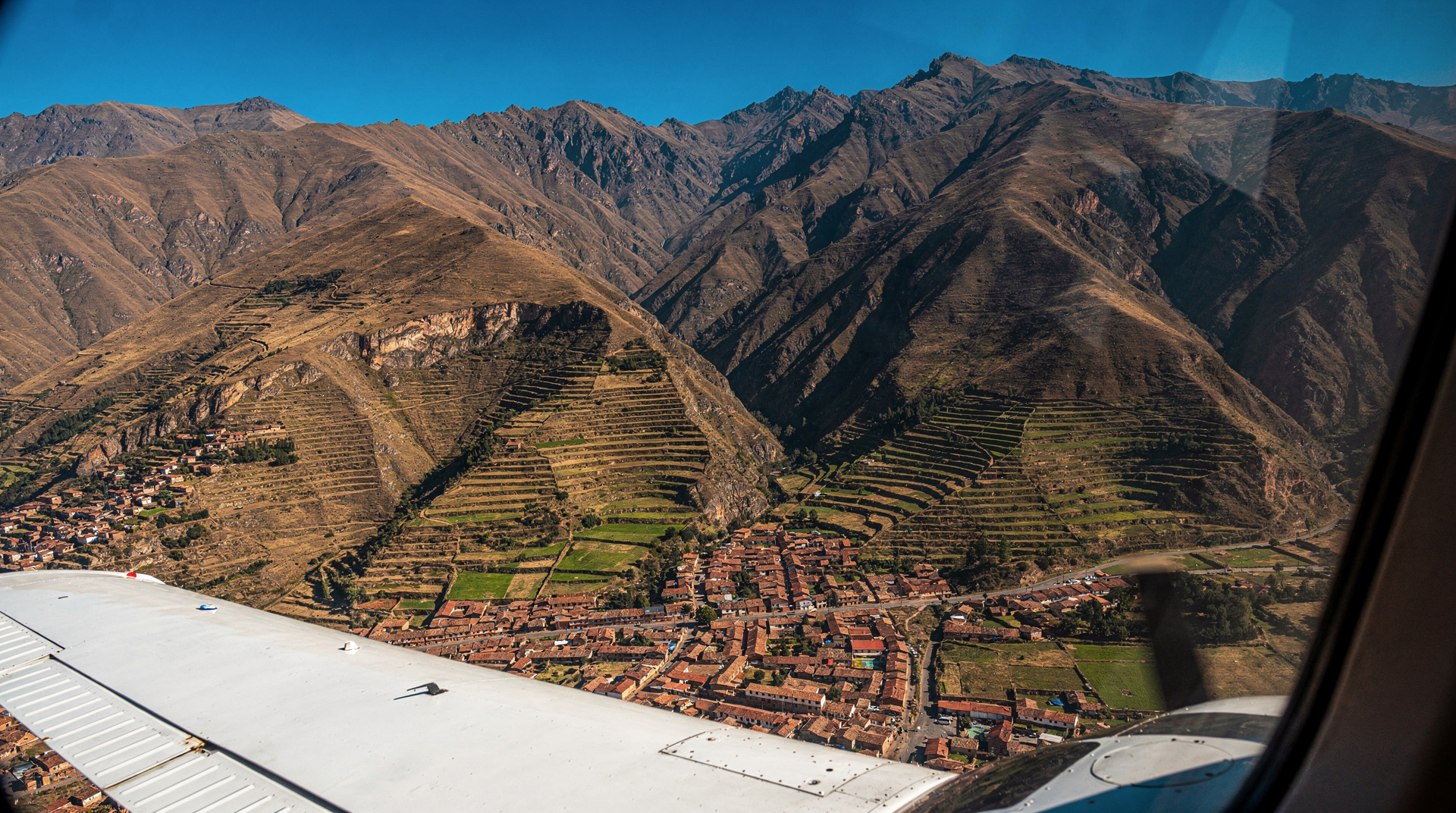
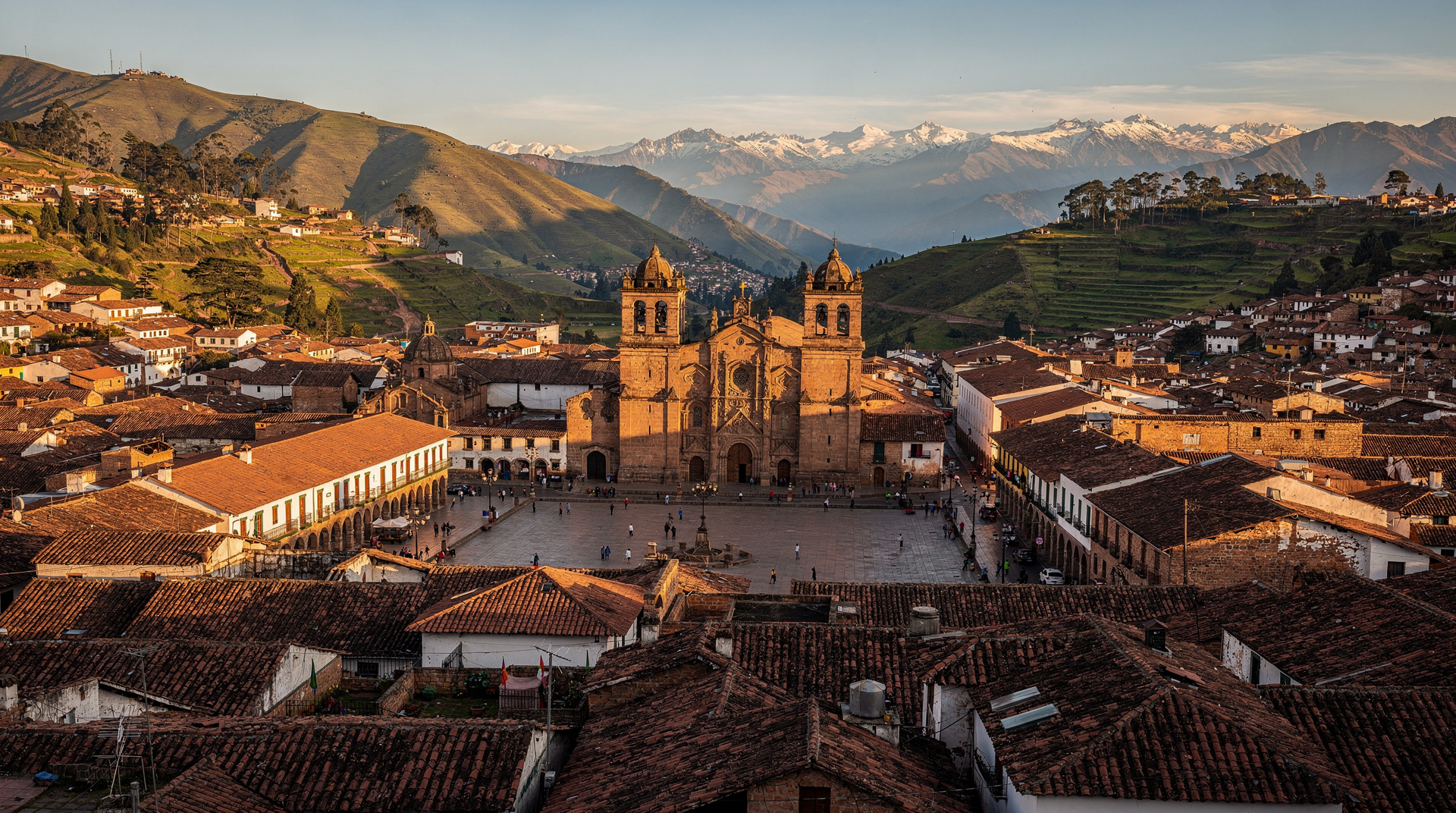
Getting to Cusco is simple in concept and occasionally maddening in execution. The city sits at 3,400 m in the Peruvian Andes, accessible by air, by a very long overland bus, or — in theory — by some creative combination of road and rail that no sensible traveller uses. In practice: you fly.
| Flight time | Around 1h20 from Lima (LIM) to Cusco (CUZ) |
| Cost | Around S/180–450 economy, one-way |
| Best time to fly | Morning departures, before 11 am arrival |
| Overland alternative | 22–25 hours by bus (not recommended for most) |
| On arrival | Rest 2–3 hours, hydrate, no strenuous activity |
The Lima–Cusco air corridor is one of South America’s busiest domestic routes. Multiple airlines operate dozens of flights per day, prices are reasonable by international standards, and the journey takes 1 hour 20 minutes door to door from Jorge Chavez International in Lima to Alejandro Velasco Astete International in Cusco (IATA code: CUZ). Understanding the nuances of that route — which flights to book, when to travel, what to expect on arrival — makes the difference between a smooth start and a frantic, altitude-sickened scramble.
This guide covers everything: airlines, booking strategy, the best arrival tactics, alternative overland routes for those who want them, and the critical first hours after landing.
Lima as the gateway: the geography explained
Lima sits on Peru’s Pacific coast at sea level. Cusco is inland, separated from the coast by the full width of the Andes, at an elevation that makes it one of the highest-altitude cities in South America. There is no practical overland route that doesn’t involve crossing the mountain range — and no passenger rail service connecting the two cities.
For international travellers, this means virtually every journey to Cusco begins at Lima’s Jorge Chavez International Airport (LIM). Lima is well connected to North American hubs (Miami, New York, Los Angeles, Atlanta), European cities (Madrid, Amsterdam, Paris, Frankfurt), and other South American capitals. Flying time from Miami is approximately 6 hours; from Madrid, approximately 12 hours.
Most travellers arrive in Lima late evening, overnight in an airport hotel or Miraflores, and catch an early morning flight to Cusco the following day. This is the standard pattern and it works well.
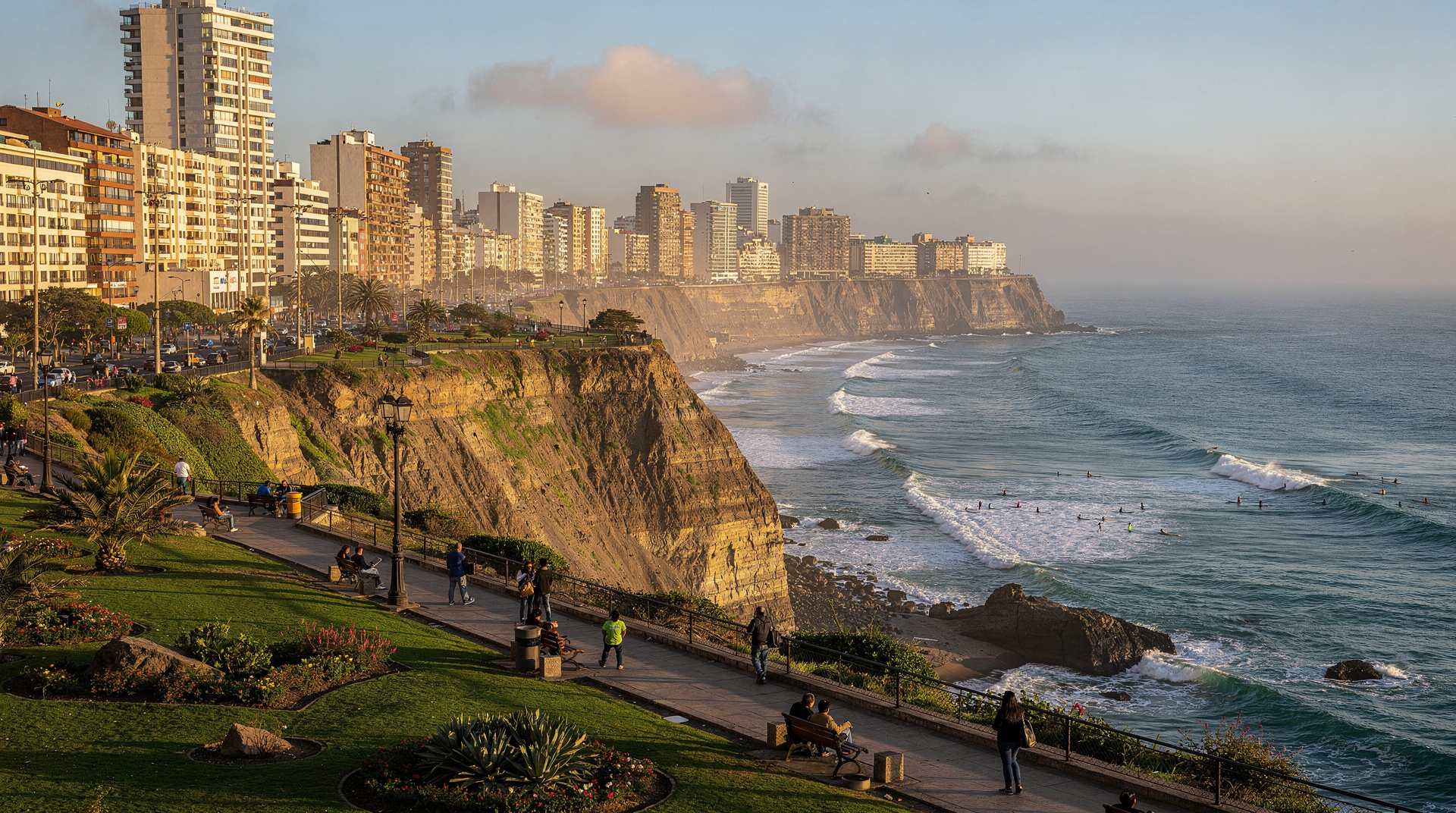
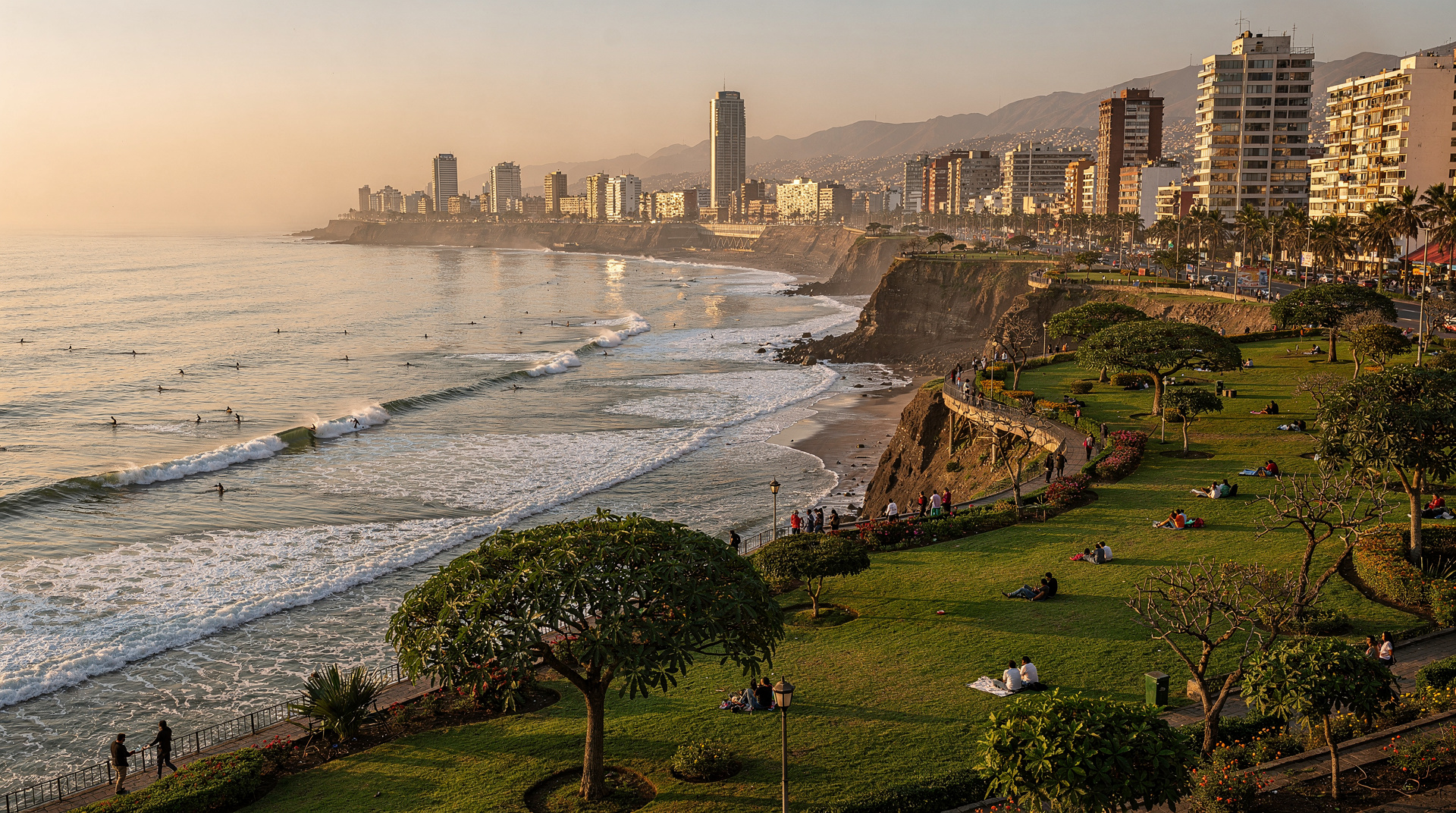
For the overnight, two approaches dominate. The first is staying at one of the airport hotels within a 10-minute shuttle of Jorge Chavez — the simplest option if your international flight lands very late and your Cusco departure is early the next morning, since it minimises transfer time and risk. The second is heading into Miraflores, roughly 45 minutes to an hour from the airport depending on traffic, for a proper night’s sleep and, if the schedule allows, dinner along the Malecón or a walk through Parque Kennedy. Miraflores is worth the transfer if you have more than about 10 hours between landing and your Cusco flight; if it is tighter than that, an airport hotel is the safer, less stressful choice.
See Lima properly before flying to Cusco — a half-day city tour from Jorge Chavez area is manageable if you have an afternoon before your connection. Lima’s historic centre (a UNESCO World Heritage Site), the Larco Museum, and the Miraflores cliffside neighbourhood are all worth the layover time. The city has an undeserved reputation for being a mere transit point; spend even five hours in it and your opinion will change.
Airlines on the Lima–Cusco route
LATAM Peru
The dominant carrier on this route and the most reliable for scheduling purposes. LATAM operates 8–10 daily departures from Lima (LIM) to Cusco (CUZ), with the first flights departing around 5:30–6:00 am. Morning departures are consistently the most popular and should be booked earliest. LATAM is a full-service carrier at a mid-range price point: fares typically run S/280–450 (approximately $75–120 USD) for economy class, depending on booking lead time.
LATAM has a strong record for Cusco operations, experienced pilots on high-altitude approaches, and a reasonable baggage allowance. For most international travellers connecting through Lima, LATAM is the default choice.
Sky Airline
Chilean low-cost carrier Sky operates the Lima–Cusco route with competitive fares: economy from S/180–250 (approximately $48–67 USD) with advance booking. Baggage fees apply — factor these in when comparing costs with LATAM. Schedule is reliable but slightly fewer departure times than LATAM.
Avianca Peru
Avianca (formerly TACA) operates on this route with fares comparable to LATAM. A useful alternative when LATAM’s preferred departure times are sold out.
JetSmart
Ultra-low-cost carrier with aggressive base fares but strict carry-on limitations. Good option for budget-conscious travellers who pack light and book far ahead.
Morning flights: why this matters more than usual
The standard advice for Andean aviation is to book the earliest available morning departure. At Cusco airport, this is not superstition — it is meteorology.
Cusco’s mountain topography and afternoon thermal patterns reliably generate cumulus build-up by early afternoon, particularly in the wet season (November–March) but also in transitional months. The airport’s approach is challenging even in clear conditions. By 2–3 pm, the combination of cloud cover, turbulence, and reduced visibility frequently causes diversions to Juliaca (the nearest alternate airport, approximately 3 hours from Cusco by road) or cancellations.
Flights departing Lima at 6:00–8:00 am and arriving in Cusco before 10:00 am have an excellent punctuality record across the year. Flights arriving in Cusco at 2:00–5:00 pm in the wet season have significant disruption rates.
If you can only book an afternoon flight: purchase travel insurance that covers accommodation costs in the event of a diversion to Juliaca. If your flight diverts, you will spend the night in Juliaca and buses run to Cusco the following morning.
Booking: practicalities and common errors
Where to buy tickets
Direct on the airline websites (latamairlines.com, skyairline.com, avianca.com, jetsmartairlines.com) or through a reputable OTA such as Expedia or Google Flights. Peruvian domestic booking sites (like Despegar.com, the local version of Expedia) sometimes show different pricing.
Comparing prices across at least two of these channels before booking is worthwhile — the same LATAM seat can show a noticeably different price on the airline’s own site versus an aggregator, depending on currency settings and promotional fares. Set the currency to soles (PEN) where possible; some sites default to a USD price with a poor conversion rate baked in.
How far ahead to book
- July–August (peak): 6–8 weeks minimum. The 6:00–7:00 am LATAM departures can sell out months ahead.
- May–June, September: 4–6 weeks ahead is typically sufficient.
- October–April: 2–4 weeks ahead for most departures. Christmas week (22–30 December) is an exception — book as early as peak season.
Luggage: the under-checked detail
Most international visitors arrive in Lima with checked luggage from intercontinental flights. Lima’s Jorge Chavez airport allows through-checked bags only for certain alliance partnerships. Verify before your trip whether your international carrier (say, Iberia or American) will through-check bags to Cusco via Lima. If not — and this is common — you will need to collect and recheck your bags in Lima. Allow at least 3 hours between international arrival and the Lima–Cusco domestic departure for this reason.
Overland to Cusco: the bus option
The overland journey from Lima to Cusco by bus takes 22–25 hours on a good road without disruptions. A handful of routes exist: most travel Lima → Ica → Nazca → Abancay → Cusco, climbing from sea level to 3,400 m across the Andes. The road through Abancay is winding, the altitude gain is dramatic, and altitude sickness can be an issue even for passengers who are not prone to motion sickness.
Several reputable companies operate this service (Cruz del Sur, Oltursa) with reclining seats and reasonable onboard standards. Prices are lower than flights — approximately S/120–200 (approximately $32–54 USD) for a full-cama (fully reclining seat) overnight service.
Who should consider this: backpackers with unlimited time, travellers who genuinely cannot fly due to medical reasons, and those who want to experience the Andes landscape at ground level. For everyone else, flying is correct — 25 hours on a mountain road is not a meaningful saving of time when the flight is 1 hour 20 minutes.
Comfort levels on the overland service vary noticeably by operator and seat class. The fully reclining full-cama seats on Cruz del Sur and Oltursa are genuinely comfortable for an overnight journey and include onboard meals and blankets, but the road itself involves sustained winding sections through the Andes that some passengers find uncomfortable regardless of seat quality — motion sickness medication is worth carrying even for those who do not normally need it.
From Arequipa, Cusco is accessible by a 10-hour bus journey (covered in the Cusco to Arequipa transport guide). This route via Juliaca and Puno is a reasonable overland option within Peru for those already in the south.
From Puno on Lake Titicaca, Cusco is 6–7 hours by bus via the Ruta del Sol — one of the more scenic overland journeys in the region, covered in the Cusco to Puno transport guide.
Arriving at Cusco airport (CUZ)
The altitude hits immediately
Cusco Alejandro Velasco Astete International Airport sits at 3,399 m above sea level. Walking off the plane and into the arrivals hall at this altitude when you have been at sea level in Lima 80 minutes earlier is a notable physical experience for most people. Your heart rate will elevate doing nothing more than collecting your bags. This is normal. Breathe slowly, move without rushing, and drink water.
The Cusco airport guide covers the arrivals hall, taxi options, and the journey to the centre in detail.
Taxis from the airport
Official taxis and authorised transfer desks operate in arrivals. The standard fare to the Cusco city centre (Plaza de Armas area) is S/25–35 (approximately $7–9 USD) and the journey takes 15–20 minutes depending on traffic. Agree on the price before getting in the vehicle. Uber operates in Cusco and typically charges less than street taxis — it works from the airport, though response times can be slightly longer than in the terminal taxi rank.
What not to do on arrival day
The most common mistake made by first-time arrivals is treating day one as a full sightseeing day. You have just travelled to 3,400 m. Cusco is not an emergency — it will wait. Rest at your accommodation for 2–3 hours after arrival, eat a light lunch, drink coca tea (it is served everywhere and it genuinely helps), and take a short, flat walk in the afternoon at most. Save the steep climbs — Sacsayhuaman, Qorikancha, the hilltop barrios — for days two and three when your body has adjusted.
If you have a full day in Lima before flying to Cusco, a guided tour of the historic centre and Miraflores is a productive and enjoyable way to spend it — far better than waiting in the airport for a morning departure.
Connecting from the Sacred Valley, not Cusco
One increasingly popular strategy is to fly into Cusco, transfer immediately to the Sacred Valley — specifically to Ollantaytambo or Urubamba — and spend the first 1–2 nights there rather than in Cusco itself.
The Sacred Valley sits at 2,600–2,900 m, which is 500–800 m lower than Cusco. This lower altitude significantly reduces acclimatisation difficulty for most people. After 1–2 nights in the valley, a return to Cusco at 3,400 m is much more comfortable. This strategy is recommended in the acclimatisation guide and is endorsed by most altitude-medicine practitioners.
The transfer from Cusco airport to the Sacred Valley takes approximately 1.5 hours to Urubamba, 2 hours to Ollantaytambo. Private transfers cost approximately S/120–160 (about $32–43 USD) for a vehicle; colectivos (shared minibuses) from Cusco’s Pavitos terminal serve the valley for S/15–20 per person.
Altitude and the first 48 hours
The altitude sickness guide is required reading for any first-time visitor to Cusco. The key points: acclimatise before exerting yourself; avoid alcohol on arrival day; stay hydrated; sleep at the same or lower altitude whenever possible; and do not push through severe symptoms — persistent headache, nausea and dizziness that does not improve after rest and water are signals to descend, not to take more paracetamol and continue.
Machu Picchu itself sits at approximately 2,430 m — significantly lower than Cusco. Many visitors actually feel physically better at the citadel than they do in the city. The Sacred Valley towns are similarly lower than Cusco, which is why the acclimatise-in-the-valley-first strategy works as well as it does.
Internal connections from Cusco
Once in Cusco, the network of routes to key destinations:
- Machu Picchu: bus or taxi to Ollantaytambo (1.5 hours), then train to Aguas Calientes (1.5 hours). No road or flight connection. Full details in the how to get to Machu Picchu guide.
- Puno and Lake Titicaca: 6–7 hours by bus via the Ruta del Sol, or 45 minutes by flight to Juliaca (then 1 hour by bus to Puno). The bus journey is scenically rewarding; flying saves 5 hours but misses the stops at Andahuaylillas, Raqchi, La Raya pass and Pukará.
- Arequipa: approximately 10 hours by bus or 1 hour by flight. The bus route traverses dramatic high-altitude landscape; flying is faster but purely functional.
- Amazon (Puerto Maldonado): 30-minute flight from Cusco, no practical road alternative for most visitors.
Planning your overall Peru itinerary
A typical first Peru trip allocates 2–3 days in Lima (historic centre, Miraflores, a day trip to Paracas), 5–8 days in the Cusco region (city, Sacred Valley, Machu Picchu), and optionally 2–3 days at Lake Titicaca or Colca Canyon. This structure works with early morning Lima–Cusco flights and afternoon Cusco–Lima returns to international connections.
The travel tips hub covers itinerary planning, budget, and the most common logistical questions in full. The things to do hub organises activities by type for those still assembling their Cusco itinerary. The Peru trip cost guide breaks down what a full itinerary like this costs in practice, including the domestic flights covered here.
Booking flights alongside the rest of the trip
Because the Lima–Cusco flight is a domestic leg rather than part of an international itinerary, it is usually booked separately from the intercontinental ticket — sometimes on a different airline entirely. This has one practical consequence worth planning around: if the domestic flight is delayed or cancelled and it is on a different booking, the airline has no obligation to protect a connecting international flight.
Building in a buffer day in Lima before an international departure, rather than flying in from Cusco the same day as an intercontinental flight, removes this risk. The Lima to Cusco flights guide goes into more detail on fare classes, baggage allowances between the two legs, and how to compare the low-cost carriers against LATAM.
For travellers extending beyond the Cusco region, the same Lima gateway serves onward domestic connections — Arequipa, Puno/Juliaca, and Puerto Maldonado for the Amazon all connect most easily via Lima or directly from Cusco rather than from each other.
Getting to Cusco is the easy part. The 1-hour-20-minute flight from Lima is so routine that you may be surprised by how quickly the Andes arrive below the wings. The altitude that awaits you there is the part worth preparing for — and the reason the journey, short as it is, marks the transition from one world to another.