Arequipa
Arequipa is Peru's most liveable city: white sillar stone, Santa Catalina monastery, great food and the gateway to Colca Canyon. Plan your visit.
Full-Day Colca Canyon Tour from Arequipa
Quick facts
- Country
- Peru
- Altitude
- 2,335 m / 7,661 ft
- Currency
- Peruvian sol (S/) — USD widely used
- Best for
- Colonial architecture, Santa Catalina monastery, Colca Canyon gateway, food scene
The White City, Peru’s most liveable
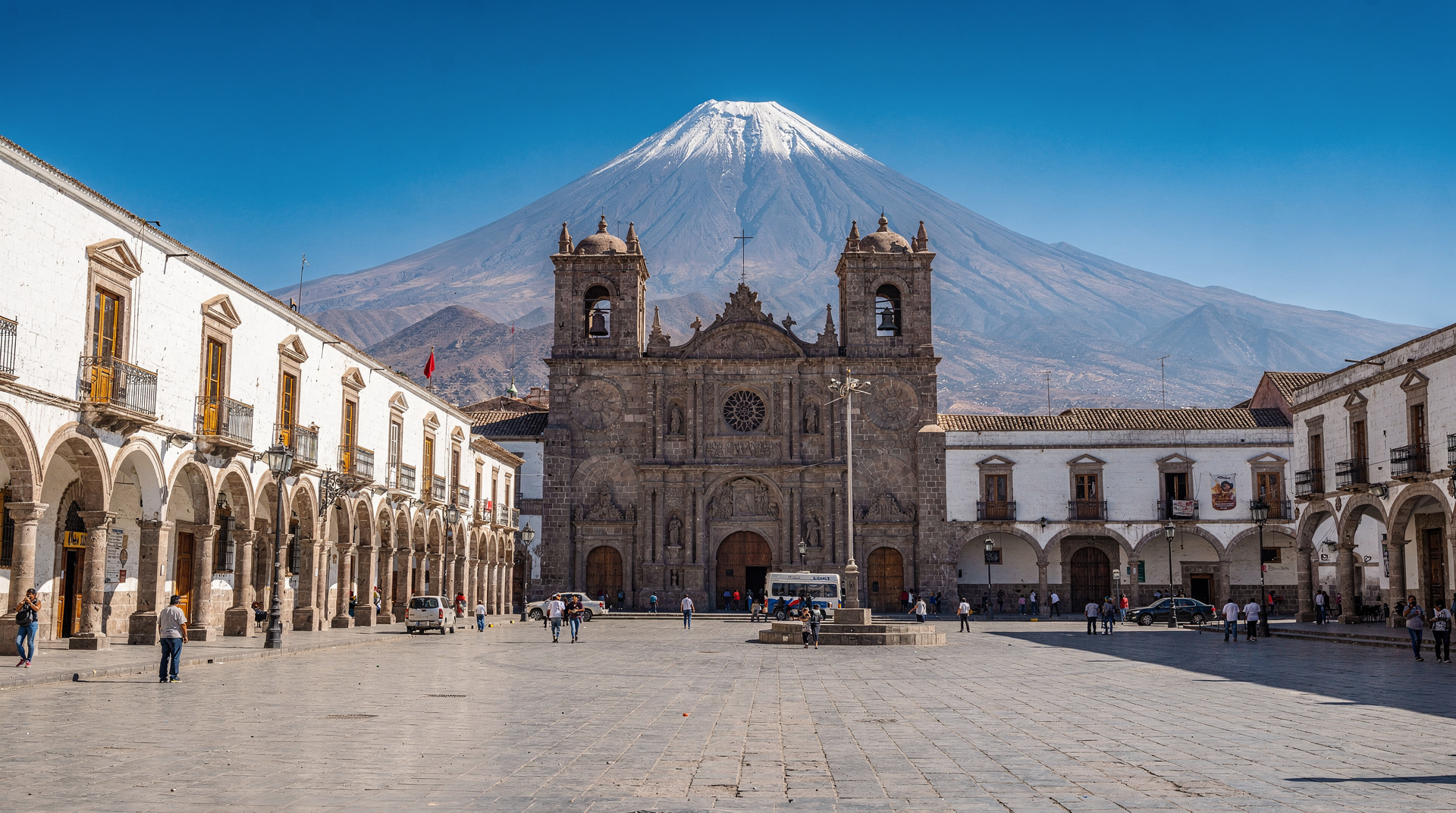
Arequipa carries the nickname La Ciudad Blanca — the White City — because its historic centre was built almost entirely from sillar, a pale volcanic stone cut from the surrounding lava flows and used since colonial times as both building material and architectural canvas. Under the equatorial sun, the stone glows. The Cathedral, the churches, the courtyard mansions (casonas), and the convent walls all share this luminous quality that gives the centro histórico a visual coherence rare among South American cities of its age and complexity.
At 2,335 m, Arequipa sits about 1,000 m below Cusco and nearly 1,500 m below Puno. That altitude difference is real in physiological terms: Arequipa is more comfortable on arrival for visitors coming from the coast, and it is easier to sleep well here on your first night. For travellers doing the Peru circuit from Lima toward Cusco, stopping in Arequipa before going higher is excellent acclimatisation strategy. For those coming down from Cusco or Puno heading toward the coast, Arequipa is the natural decompression point.
Three volcanoes frame the city’s eastern skyline: El Misti (5,822 m), Chachani (6,057 m), and Pichu Pichu (5,664 m). El Misti is perfectly conical and visible from everywhere in the city on clear mornings, producing a backdrop that no other Peruvian city can match. Whether or not you intend to climb any of them, their presence is part of every Arequipa day.
| Where | Southern Peru, 520 km southwest of Cusco |
| Time needed | 2–3 days, more with Colca Canyon |
| Getting there | ~1hr flight from Cusco, or ~10hr bus |
| Cost level | Noticeably cheaper than Cusco for food and lodging |
| Best time | May–November (dry season) |
Santa Catalina Monastery: a city within the city
The single most important thing to do in Arequipa is visit the Monastery of Santa Catalina (Monasterio de Santa Catalina), and it should be allocated a full half-day minimum. This is not an exaggeration made for effect — the monastery occupies an entire city block (20,000 square metres) and operated as a completely self-contained walled community for three centuries, invisible to the outside city, until it opened to the public in 1970.
Inside, the monastery is organised as a series of colour-coded streets and claustros (cloisters). The residential compounds are painted in deep terracotta, ochre, cobalt, and burgundy; narrow lanes between them open suddenly into sunlit garden courtyards. The effect is that of walking through a miniature city that has been hermetically preserved since the 17th century. The nuns who entered Santa Catalina in the colonial period brought their servants with them; they lived in individual apartments rather than dormitories; some compounds contained kitchens, gardens, and private dining rooms. The archaeology of daily life here is extraordinary.
Admission is approximately S/45 for adults, and guided tours in English are available for an additional S/30–40. Evening tours with candlelight (available a few nights per week) are atmospheric and less crowded than daytime visits. Allow three to four hours if you go without a time constraint.
The historic centre and its churches
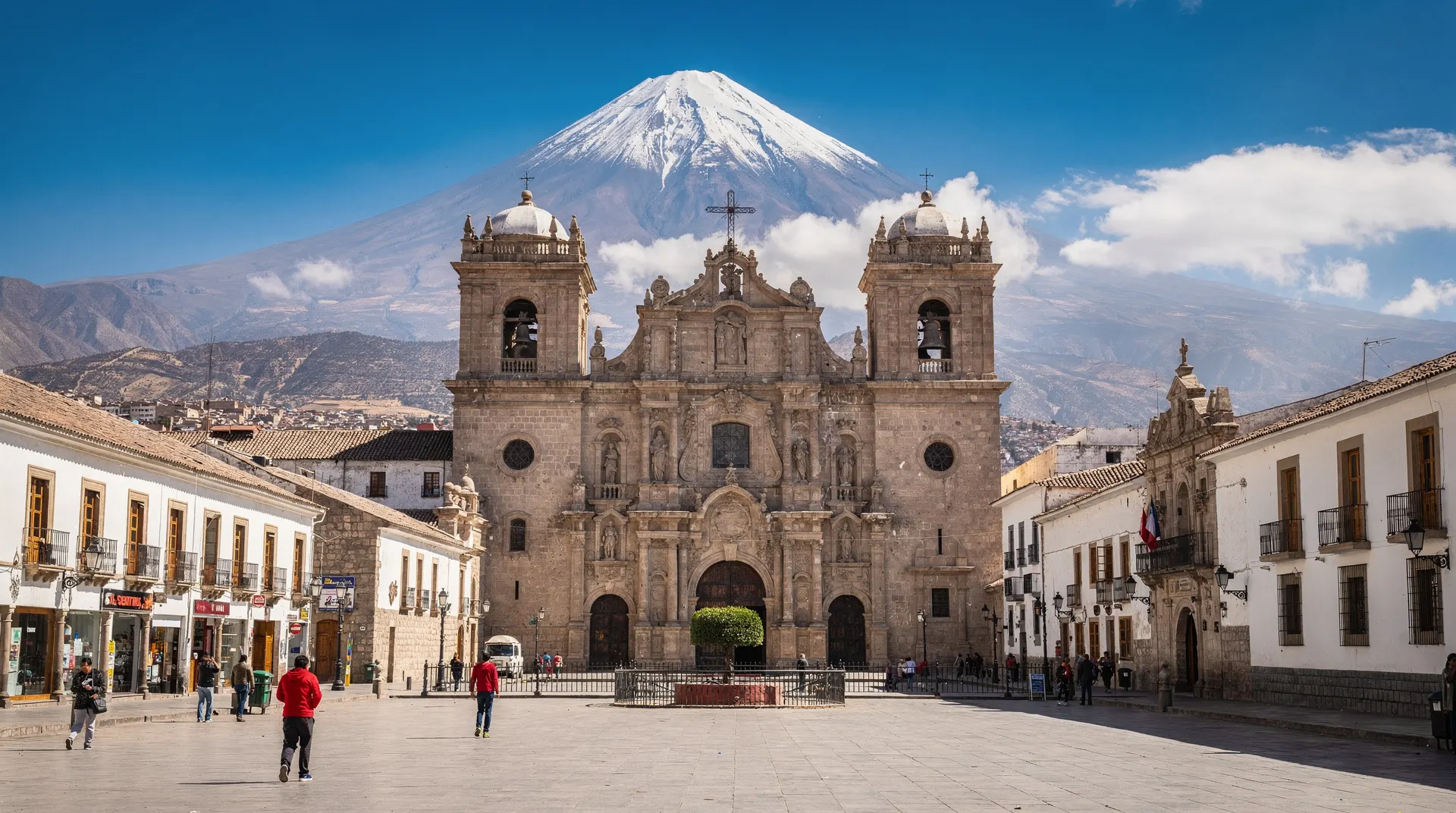
Beyond Santa Catalina, the Plaza de Armas is architecturally the finest in Peru — arguably. The Cathedral dominates the north side of the square in a way that the Cusco Cathedral does not, spreading the full width of the block in a long, low baroque façade with twin bell towers. The sillar stone glows particularly well in the late afternoon light. The interior is unusually spacious for a colonial Andean church; the Belgian organ is one of the largest in South America.
The surrounding streets — particularly Calle San Francisco and the area around the Iglesia de San Francisco — hold clusters of churches, museums, and converted mansions that justify several hours of aimless walking. The church facades in Arequipa are renowned for the mestizo baroque style that blends Spanish colonial architectural vocabulary with Andean decorative motifs: llamas, papayas, and indigenous faces appearing in the stone carvings alongside European acanthus leaves and saints.
The MACA (Museo de Arte Contemporáneo Arequipa) and the Goyeneche Palace courtyard are both free or low-cost additions worth including in a half-day walking circuit.
Arequipa’s food: Peru’s most distinctive regional cuisine
Every region of Peru claims a food heritage. Arequipa’s claim is among the strongest. The city’s cuisine developed in relative isolation in the deep valley, drawing on local ingredients — the rocoto chilli pepper (extremely hot, red-skinned, shaped like a bell pepper), potatoes from the Andean highlands, alpaca meat, river shrimp from the Río Chili — and producing a canon of dishes that are unlike anything served in Lima or Cusco.
Rocoto relleno — the rocoto pepper stuffed with spiced minced meat and cheese, baked — is the city’s signature dish. Chupe de camarones is a thick river shrimp stew that constitutes a complete meal. Adobo arequipeño is a slow-braised pork in chilli and vinegar marinade, traditionally served on Sunday mornings. The picanterías — the traditional restaurants that serve these dishes — are typically open for lunch only, unlicensed looking from the outside, and produce some of the most flavourful food in Peru. Ask your hotel for a current recommendation.
A guided food tour of Arequipa is one of the best ways to navigate both the food and the neighbourhood context simultaneously, particularly for a half-day when you also want some orientation.
Museo Santuarios Andinos and Juanita the Ice Maiden
One of the most remarkable museums in Peru is housed in a relatively modest building two blocks from Arequipa’s Plaza de Armas. The Museo Santuarios Andinos holds the remains of capacocha sacrificial offerings recovered from the summit of Nevado Ampato (6,380 m) in 1995 — most famously, a 12 to 14-year-old Inca girl known as Juanita, found frozen and extraordinarily well preserved on the summit. The discovery by American archaeologist Johan Reinhard produced one of the most significant Inca finds of the late 20th century.
Juanita herself is displayed in a refrigerated case at -20°C, viewable in a darkened room as part of the guided tour. The experience is unusual and powerful. The museum also displays the textiles, ceramics, and food offerings found with her. Admission is approximately S/30 including the guided tour in English, which takes about 45 minutes. The ethics of displaying the remains are genuinely complex and acknowledged in the museum’s presentation; regardless, the find’s historical significance is beyond dispute.
Colca Canyon: the main reason most visitors come
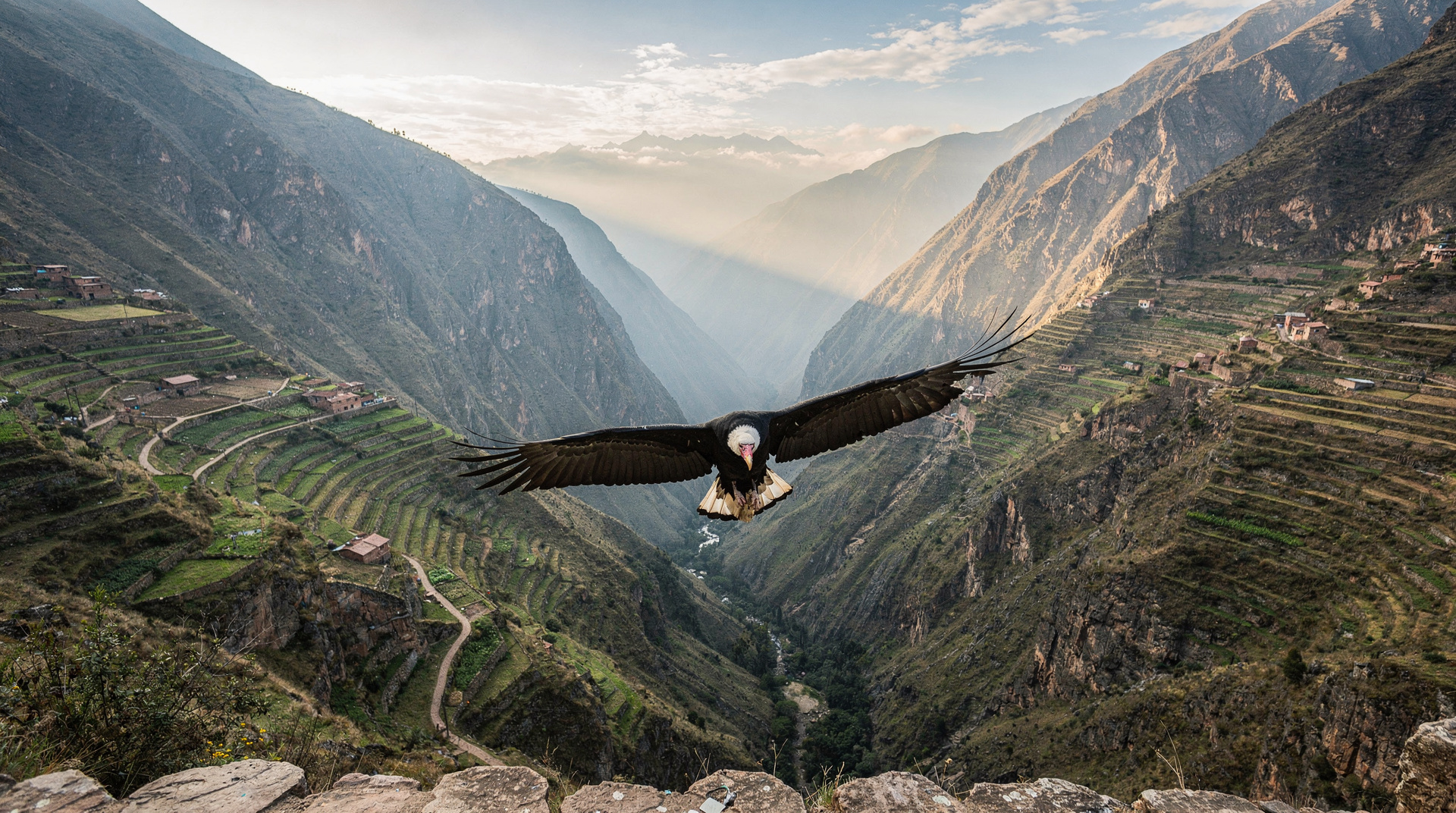
Colca Canyon is the primary excursion from Arequipa and the main reason the city appears in most southern Peru itineraries. The canyon starts approximately four hours by road northwest of Arequipa, involves an overnight in the canyon village of Chivay, and centres on the Cruz del Cóndor viewpoint where Andean condors are reliably seen riding thermals at close range from a cliff-edge observation point.
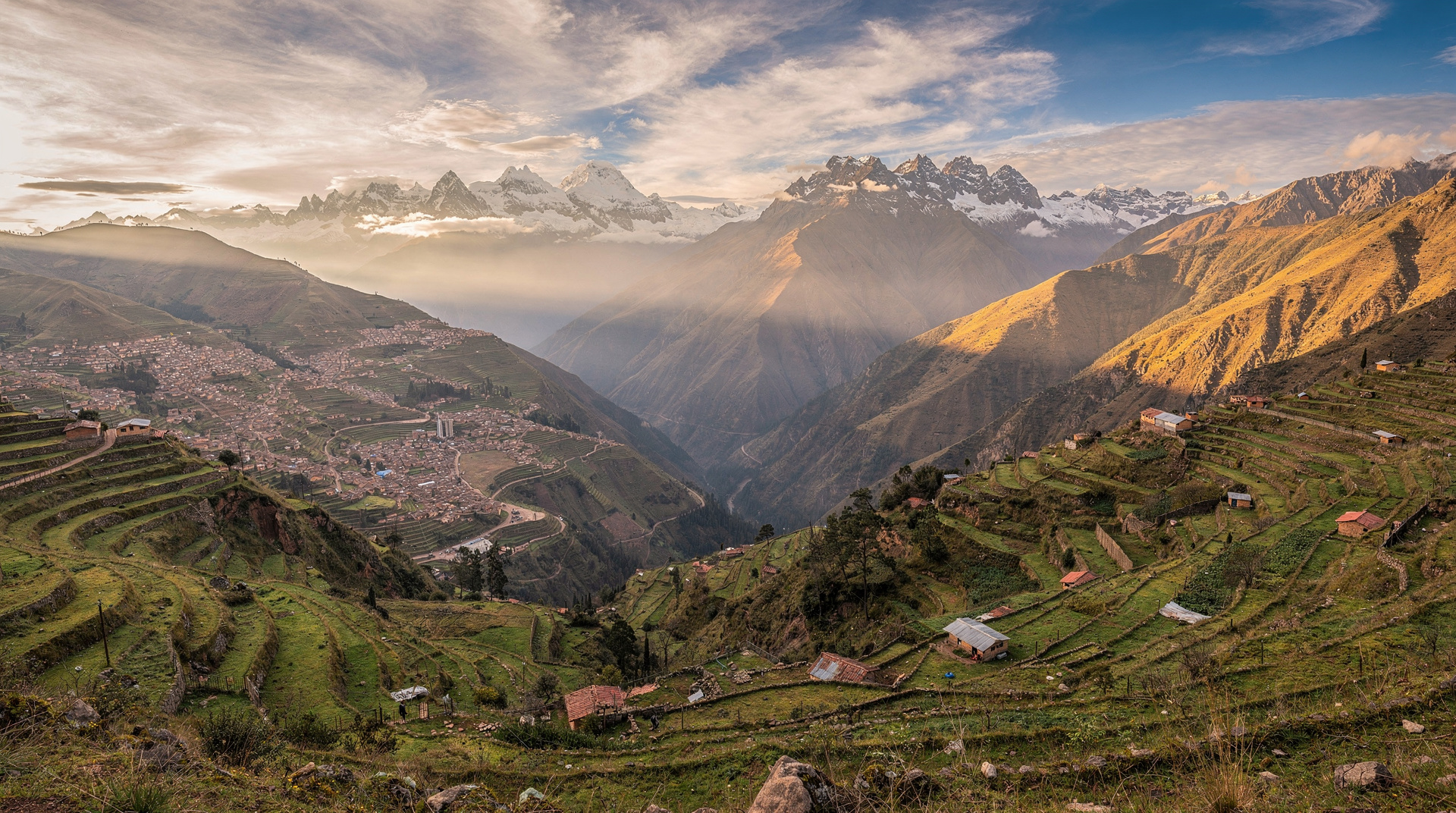
A full-day Colca Canyon tour from Arequipa visits the canyon’s main viewpoints including Cruz del Cóndor and returns to Arequipa in the evening. This format covers the key sight but does not include trekking into the canyon itself, which requires the two-day version. A two-day Colca Canyon tour adds the overnight in Chivay, a morning condor sighting at Cruz del Cóndor, and a descent into the canyon for trekking through the terraced villages of Cabanaconde and Sangalle.
The Colca Canyon destination guide covers the canyon in detail including trekking routes, what to expect at Cruz del Cóndor, and the altitude considerations specific to the canyon (which at its observation points reaches over 4,000 m — higher than Arequipa itself).
Arequipa versus Cusco: an honest comparison
Travellers doing a Peru circuit often ask whether Arequipa deserves the same time allocation as Cusco. It does not need to, but it earns more than the one-night stopover many itineraries give it.
| Arequipa | Cusco | |
|---|---|---|
| Altitude | 2,335 m — easier on arrival | 3,400 m — noticeable acclimatisation needed |
| Main draw | Colonial architecture, food, Colca gateway | Inca sites, Machu Picchu gateway |
| Cost level | Generally cheaper across food and lodging | Higher, especially in peak season |
| Pace | Relaxed, fewer tour groups | Busier, more organised-tour traffic |
| Typical stay | 2–3 days | 3–4 days |
Neither city replaces the other — most itineraries need both, since Cusco is the Machu Picchu gateway and Arequipa is the Colca Canyon gateway. But if you are trying to decide where to spend a spare day, Arequipa’s lower altitude and food scene make it a genuinely pleasant place to slow down rather than a box to tick.
A day beyond the centre: Yanahuara and Sabandía
Most visitors never leave Arequipa’s historic core, which means they miss two worthwhile half-day additions. The Yanahuara district, a short taxi ride or 25-minute walk across the Río Chili, has its own smaller plaza and a colonial-era mirador (viewpoint) framed by sillar stone arches that lines up almost perfectly with El Misti behind it — one of the best free photo opportunities in the city, particularly at sunset. A handful of picanterías in Yanahuara serve excellent, less touristy versions of the classic Arequipeño dishes.
Sabandía, about 30 minutes outside the centre, holds a restored 18th-century stone watermill (Molino de Sabandía) still capable of grinding grain, set in green countryside with El Misti as a backdrop. It is a quiet, unhurried counterpoint to the historic centre’s crowds and pairs well with a countryside lunch at one of the surrounding countryside restaurants that specialise in Sunday-only rocoto relleno and adobo.
Getting to Arequipa from Cusco and beyond
Arequipa sits approximately 520 km southwest of Cusco by road, with a bus journey of around ten hours on semi-cama services (S/60–120 on reputable operators like Cruz del Sur or Oltursa). LATAM and Sky Airline operate daily flights from Cusco to Arequipa in approximately one hour (typically S/80–150 one-way), which is the faster option for those short on time. The Cusco to Arequipa transport guide compares both in detail.
From Puno and Lake Titicaca, Arequipa is five to six hours by bus (S/40–80), making it a natural next stop on the standard southern Peru circuit after lake days. One particularly useful tour option is the two-day Colca Canyon tour that ends in Puno rather than returning to Arequipa — this route crosses the Altiplano via the canyon village of Cabanaconde and arrives in Puno, covering both Colca and the transit between the two cities in a single organised tour. It is an efficient option for travellers doing the Cusco–Arequipa–Colca–Puno–Titicaca circuit.
From Arequipa, onward buses to Lima take approximately 12–16 hours by overnight cama service (S/80–150). Several operators including TEPSA and Cruz del Sur serve this route, and the overnight bus makes reasonable use of the time if you have comfortable cama (full-flat) seats.
Practical information
Altitude: At 2,335 m Arequipa is high by most global standards but significantly lower than the main Andean tourist cities. Most visitors from sea level feel only mild altitude effects here; headaches are possible on the first evening but typically gone by day two. Do not dismiss them — rest, hydrate, and avoid alcohol on day one.
Safety: Arequipa’s historic centre and the main tourist districts are broadly safe during the day. The area around the Terminal Terrestre (bus station) requires the standard vigilance around large bus stations anywhere in Peru — petty theft is the main concern. Taxis: use apps (InDriver is active in Arequipa) or book through the hotel rather than flagging street taxis.
Where to stay: The blocks around the Plaza de Armas and Santa Catalina offer the most atmospheric accommodation — converted casonas with central courtyards. Mid-range options run from around S/130–250 per night. The Casa Andina Select and Libertador Arequipa are reliable upmarket choices. For budget travellers, guesthouses in the streets behind Santa Catalina offer clean rooms from S/60–100.
Weather: Arequipa has one of the sunniest climates in Peru — the dry season (May to November) sees almost no rain and abundant sunshine. The rainy season (December to April) brings afternoon downpours but is significantly drier than the Cusco region. Nights are cool year-round at this altitude (8–14°C in dry season).
The two-week southern Peru grand tour itinerary maps out how Arequipa fits into a broader circuit that connects Lima, the coast, Arequipa, Colca, Puno, Lake Titicaca, and Cusco.
Top experiences
Bookable activities with verified prices and instant confirmation on GetYourGuide.