Puno
Plan your visit to Puno, gateway to Lake Titicaca, with honest advice on altitude, the Uros floating islands, Taquile, and getting there from Cusco.
Puno: Full-Day Tour of Lake Titicaca and Uros & Taquile
Quick facts
- Country
- Peru
- Altitude
- 3,830 m / 12,566 ft
- Currency
- Peruvian sol (S/) — USD widely used
- Best for
- Lake Titicaca access, Uros islands, Andean culture, Taquile textiles
Puno and the altitude question you need to answer first
At 3,830 m above sea level, Puno is higher than Cusco by a meaningful margin — nearly 430 m more of thin air. That fact should shape every decision you make about your visit, starting with how long you stay and what you plan to do on day one. Most travellers arrive from Cusco by bus or the Ruta del Sol tourist service and feel the altitude shift within hours of arrival. A headache, sluggish energy, and poor sleep are normal responses. The correct strategy is to arrive, check in, drink coca leaf tea, eat lightly, and postpone the lake until the following morning.
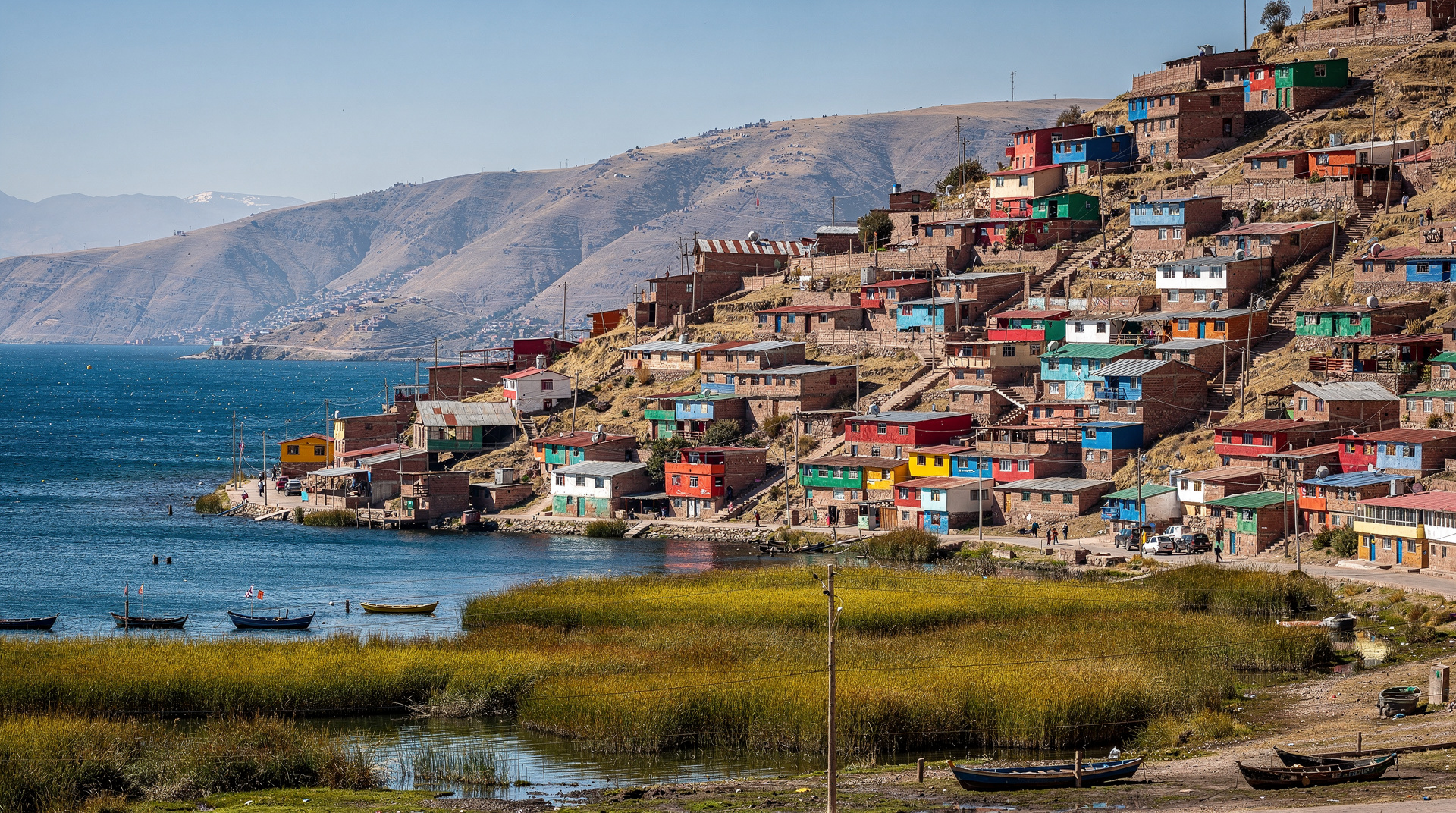
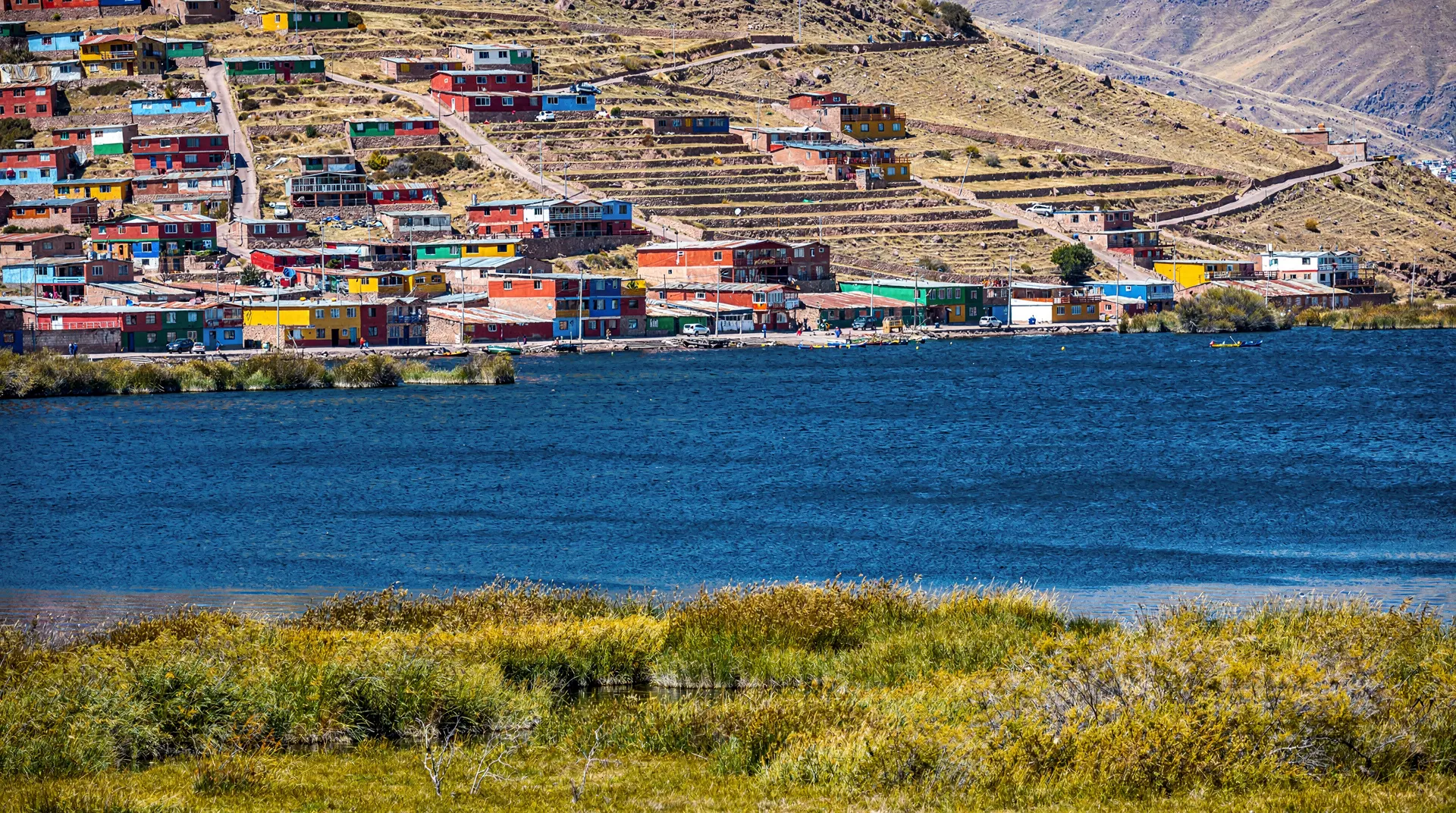
Puno itself is a working Andean city, not a polished tourist town. The streets around the central market hum with commerce, the Plaza de Armas is functional rather than beautiful, and the local population of Aymara and Quechua speakers go about their business largely regardless of the tourists passing through. That authenticity is part of the appeal. Puno is not trying to be Cusco, and it does not need to be. Its entire value proposition rests on what lies immediately outside it: the largest high-altitude lake in the world, and the communities that have lived on and beside it for centuries.
| Where | Altiplano, southern Peru — gateway to Lake Titicaca, 3,830 m |
| Cost | Full-day Uros/Taquile tour ~S/90–130; homestay add-on ~S/130–180 |
| Time needed | 2–3 days (1 lake day plus acclimatisation buffer) |
| Getting there | Bus/tourist coach from Cusco, 6–9 hours overland |
| Best time | May–October (dry season) |
Getting to Puno from Cusco
The journey from Cusco to Puno is itself worth planning carefully. Three main options exist, and the choice between them affects both your budget and your experience considerably.
The most atmospheric option is the Ruta del Sol tourist bus, a full-day overland service that covers the roughly 390 km with multiple stops at archaeological sites including Andahuaylillas church (known as the “Sistine Chapel of the Americas”), Raqchi, Pukara, and La Raya pass. Departures are typically early morning and arrive in Puno by late afternoon. The cost runs from around S/80–140 per person depending on the operator. This is the recommended option for first-time visitors who are not in a rush, because the stops provide natural acclimatisation breaks and the journey itself is genuinely scenic.
Direct tourist buses also operate the route non-stop in around six to seven hours for S/40–80. They are faster and cheaper but you miss the stops. Standard public buses exist for budget travellers at around S/25–40, though they run on less predictable schedules.
A full overview of timing, operators and what each includes is in the Cusco to Puno transport guide.
| Option | Duration | Cost | Best for |
|---|---|---|---|
| Ruta del Sol tourist bus | Full day, multiple stops | ~S/80–140 | First-timers, scenic stops, natural acclimatisation breaks |
| Direct tourist bus | 6–7 hrs, non-stop | ~S/40–80 | Travellers who’ve seen the sites or want speed |
| Standard public bus | Variable, no set stops | ~S/25–40 | Budget travellers with flexible schedules |
The Uros floating islands
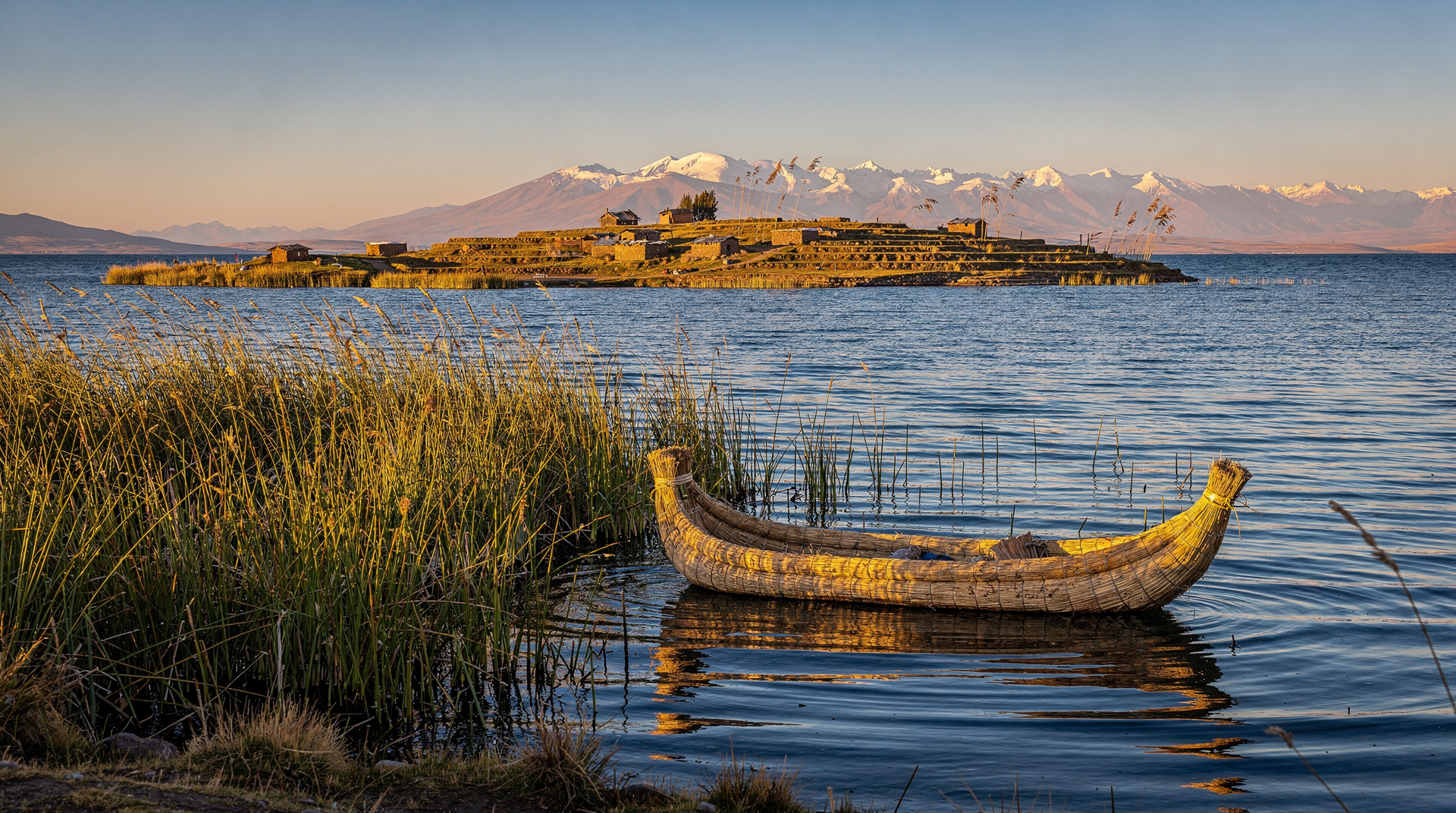
The reed islands of the Uros people are the single most iconic sight on Lake Titicaca and they are genuinely extraordinary in person — though they require some honest framing before you visit. The islands float in the bay about 5 km from Puno’s harbour and are constructed entirely from totora reeds, the same plant that forms the base of the Uros boats and their traditional housing. The reed platforms are constantly replenished as the bottom layers rot; the largest islands support multiple families and small solar panels, satellite dishes, and basic schools.
The Uros experience has become a tourist circuit, which means the visits are organised, brief, and include a sales pitch for handicrafts. That does not invalidate the experience — the engineering and history are remarkable, and the community receives meaningful income from visitors — but you should not expect an unvarnished glimpse of daily life.
A full-day tour combining Uros and Taquile Island typically departs at 07:30 from Puno harbour, stops for around 90 minutes on the reed islands, and then continues to Taquile, returning to Puno by late afternoon. Cost is approximately S/90–130 per person including boat and guide, excluding the S/5 port fee and Taquile entrance of around S/10.
For those who prefer a faster pace, the speedboat version of the Uros and Taquile tour cuts crossing times significantly and suits travellers with a tight schedule.
Taquile Island and its living textile tradition
Taquile Island sits about 45 km from Puno across open lake water, its terraced hillsides rising 150 m above the surface. The island is home to roughly 2,000 Quechua-speaking residents who maintain a social cooperative system rooted in the Inca concept of ayni — reciprocal community work. The textile tradition of Taquile was inscribed by UNESCO on its intangible cultural heritage list in 2005, specifically because it is the men who knit. Taquile men knit constantly — on the path to the market, during conversations, after meals — and the complexity and quality of their work is exceptional.
A visit typically includes a walk along the central path to the main plaza, a meal of fresh trout with quinoa, and time to browse the cooperative market where textiles are sold at fixed communal prices. The hike uphill from the boat landing at sea level is genuinely taxing at nearly 4,000 m and takes about 30–40 minutes at a slow pace. Altitude affects even fit walkers here, so stopping frequently and drinking water is not optional advice.
Taquile is best visited as part of a full-day lake tour departing from Puno, combined with the Uros islands in the morning. The 10-day Cusco and Lake Titicaca itinerary shows how to sequence both within a broader southern Peru trip.
Amantani Island and overnight homestays
Amantani is less visited than Taquile, larger, and offers something that the standard day trips do not: genuine homestay accommodation with island families. The two-day Amantani tour, which typically includes an afternoon on Uros, an overnight with a family on Amantani, and a morning on Taquile before returning to Puno, is widely considered the most rewarding Lake Titicaca experience available from Puno. A two-day Uros, Amantani and Taquile tour costs approximately S/130–180 per person all-in, including the homestay and two meals.
The homestays are basic — cold water, no central heating, and the altitude at night (around 3,950 m on the island) means very cold conditions from about 20:00 onwards. Pack warm layers regardless of what the weather looks like in the afternoon. The family experience, with shared meals of quinoa soup, potatoes and lake fish, and often an evening of traditional music and dance, is understated but memorable in a way that a hotel stay simply is not.
Food in Puno
Puno’s food scene is more modest than Cusco’s or Lima’s, but the lake fish — trout in particular, farmed in Titicaca’s cold waters — is consistently good and appears on nearly every menu, typically grilled or fried with rice and salad for S/20–30. Quinoa soup, alpaca dishes, and the Andean staple of stuffed peppers (rocoto relleno, milder at this altitude than in Arequipa’s version) round out the standard menu. Restaurants around the Plaza de Armas cater heavily to tourists with multilingual menus; walking a few blocks further tends to find better value and more authentic cooking aimed at locals rather than passing visitors.
Puno itself: what is worth your time
Beyond the lake excursions, Puno holds a handful of worthwhile things. The Yavari ship, a 19th-century iron gunboat assembled on the lake after being carried in pieces over the Andes by mule, is moored near the yacht club and operates as a museum. Admission is a few soles and it takes about an hour. The main market behind the central plaza is a genuine working market rather than a tourist market — produce, hardware, clothing, and food stalls where a complete lunch costs S/8–12. Worth a half-hour wander before or after a lake excursion.
The Puno Week festival in the first week of November is the most important cultural event in the region and one of the most spectacular in Peru, featuring the parade of Virgen de la Candelaria’s pre-festival dances. But the major Candelaria festival in early February is the one that genuinely fills Puno to capacity with tens of thousands of people, when the city hosts what is often described as the largest religious festival in South America. Accommodation prices triple and availability disappears weeks ahead — plan accordingly or avoid the city entirely during those dates unless you are there specifically for the festival.
Sillustani: an easy afternoon outside the lake circuit
Beyond the island tours, Sillustani is a pre-Inca burial site around 30 km northwest of Puno on the shores of Lake Umayo, notable for its cylindrical funerary towers (chullpas) built by the Qolla culture and later adapted by the Inca. Some towers reach over 12 m in height and are constructed from precisely fitted stone blocks, comparable in quality to Inca architecture in Cusco despite predating it. A half-day excursion to Sillustani costs approximately S/40–60 including transport and a guide, and works well as an alternative or addition to a lake day for travellers who want to see a different side of the region’s pre-Columbian history without committing to a full-day island tour.
Where to stay in Puno
Puno’s accommodation is functional rather than exceptional. The best options cluster in the streets between the Plaza de Armas and the waterfront along Avenida Titicaca. Mid-range hotels in the S/120–250 per night range offer clean rooms and reliable hot water — important at this altitude. The Casa Andina Standard and Intiqa Hotel are consistently reviewed well for their price bracket.
Budget options (S/40–80) are plentiful and entirely adequate for the one or two nights most visitors spend here. Avoid booking the cheapest rooms in the wettest months (November–March) as heating and hot water reliability drops.
A practical note: Puno is cold. Even in the dry season, temperatures at night routinely fall to 0–5°C. Bring a proper down jacket or fleece regardless of where you are in your Peru trip, and confirm your hotel has functioning heating before you check in.
Practical tips for visiting Puno
Money: ATMs are available on the main streets near the Plaza de Armas and dispense soles. The S/12–18 per-transaction fee common across Peru applies here. The lake tours and most accommodation accept cash only. Withdraw enough before you go to the harbour.
Safety: Puno is broadly safe but petty theft in the bus station area and around the market has been reported. Keep bags close and avoid displaying expensive electronics at the harbour while boarding boats.
Getting to Bolivia: Puno is the standard gateway to Copacabana and La Paz in Bolivia. Tourist buses depart daily (approximately 5–6 hours to Copacabana, S/40–60). The border at Desaguadero is the faster but less scenic option used by local buses. If you are doing the southern Peru two-week grand tour, the Bolivia connection from Puno is a logical next step after your lake days.
Timing your trip: Two nights in Puno is the realistic minimum — one full day on the lake, and a buffer day for acclimatisation and city exploration. Three nights allows the Amantani overnight and a rest day. Most travellers arriving from Cusco by the morning Ruta del Sol bus arrive in Puno by around 17:00–18:00 and spend the evening settling in before a 07:00 harbour departure the following morning.
The Lake Titicaca destination page covers the broader geographic and ecological context of the lake itself. The Taquile Island page has detailed guidance on the textile heritage and what to expect on the island.
How Puno connects to the rest of southern Peru
Puno sits naturally on the overland route between Cusco and Arequipa. After your lake days, buses to Arequipa take around five to six hours (S/40–80) and cross high puna grasslands past small Aymara villages. The route via Juliaca is less scenic but faster. The Arequipa page covers onward connections including the Colca Canyon.
From Cusco, Puno also connects downward to the coast via Arequipa and eventually to Paracas and the Nazca Lines, making it a central node in any comprehensive southern Peru itinerary. The 10-day Cusco and Lake Titicaca itinerary and the two-week grand tour of southern Peru both use Puno as a key overnight stop between the highlands and the coast.
Frequently asked questions about Puno
How many nights should I spend in Puno? Two nights is the realistic minimum — one full day for the lake, plus a buffer for acclimatisation. Three nights allows the Amantani homestay overnight in addition to a standard Uros/Taquile day.
Is Puno itself worth exploring, or is it purely a gateway to the lake? Puno is primarily a gateway, and most travellers treat it that way. That said, the Yavari ship museum, the working central market, and Sillustani’s pre-Inca funerary towers give it enough of its own character to fill a spare half-day beyond the lake excursions.
Top experiences
Bookable activities with verified prices and instant confirmation on GetYourGuide.