Cusco to Puno — every transport option compared
Puno: Full-Day Tour of Lake Titicaca and Uros & Taquile
How do I get from Cusco to Puno?
The most popular option is the Ruta del Sol tourist bus, which takes 9–10 hours with stops at Andahuaylillas church, Raqchi temple, La Raya high pass (4,335 m) and Pukará. Direct overnight buses take 6–7 hours. PeruRail's luxury Andean Explorer train (weekly departures, S/1,500+ per person) is the premium scenic option. Budget travellers use direct minibus services or colectivos for around S/25–40. Flying to Juliaca airport (45 minutes) plus 1-hour transfer is fastest but misses the landscape entirely.
The altiplano crossing
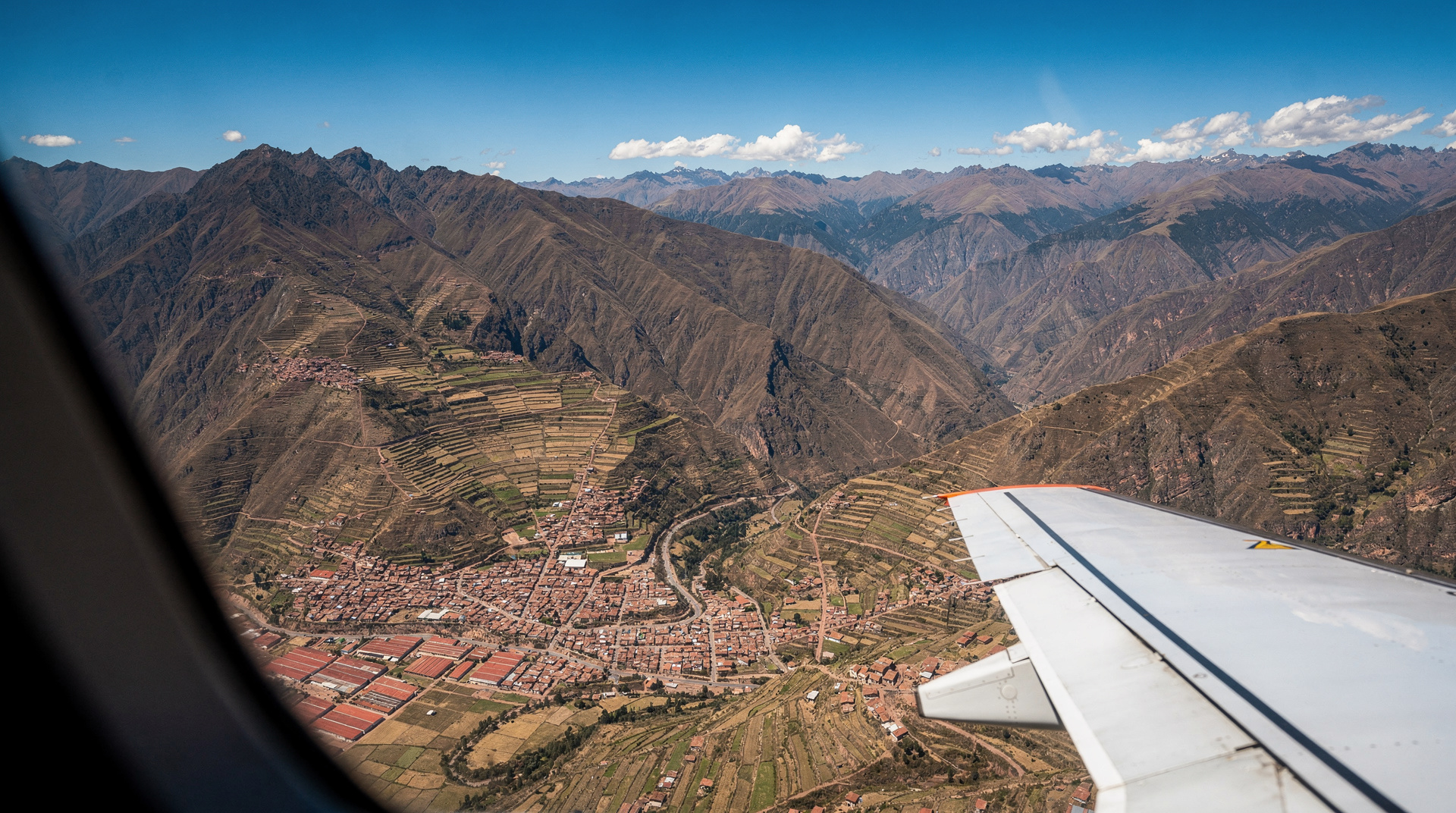
The 389 km between Cusco and Puno is not merely a transport corridor — it is one of the most significant landscape transitions in South America. Leaving Cusco’s Andean valley, the route climbs over La Raya pass at 4,335 m and descends onto the Bolivian altiplano, the vast high-altitude plateau where Lake Titicaca sits at 3,827 m. The landscape transforms from terraced Inca agriculture to open bofedal wetlands, from forested hillsides to the endless treeless horizon of the puna grasslands.
How you make this crossing — which transport option, how many hours, with what stops — shapes significantly what you experience and remember of the journey. This guide covers every option from the budget colectivo to the Belmond luxury train, with honest assessments of what each delivers.
| Where | Cusco (3,400 m) to Puno (3,827 m) via La Raya pass (4,335 m) |
| Cost | Roughly S/25 (colectivo) to S/1,500+ (Andean Explorer) |
| Time needed | 6–7 hours direct; 9–10 hours with Ruta del Sol stops |
| Getting there | Terminal Terrestre, Av. Velasco Astete, Cusco |
| Best time to book | 24–48 hours ahead; months ahead for the Andean Explorer |
Option 1: Ruta del Sol tourist bus (recommended for most visitors)
The Ruta del Sol is a daytime tourist bus service specifically designed to make the Cusco–Puno journey an experience rather than just transport. The bus departs Cusco in the early morning and arrives in Puno by late afternoon or early evening, with guided stops at four significant sites along the route.
The stops in order
Andahuaylillas — A small colonial village about 1 hour from Cusco, home to the San Pedro Apóstol church, known as the “Sistine Chapel of the Americas” for its extraordinarily elaborate interior — Baroque murals, carved ceilings, gold-leaf altarpieces. The village itself is tranquil and the church visit typically 30–45 minutes. This is genuinely one of the more remarkable colonial interiors in Peru and well worth the time.
Raqchi — A substantial Inca site approximately 3 hours from Cusco. The Temple of Viracocha here contains what was once the largest known Inca structure, with an extraordinary section of tall adobe wall still standing above its stone base. The surrounding complex includes Inca granaries and a ceremonial area. Allow 60–75 minutes. Admission is included in the Boleto Turístico (the tourist ticket) if you have one.
La Raya pass — The highest point of the journey at 4,335 m. Informal market stalls sell alpaca goods, weavings and snacks. The view is purely Andean: a broad mountain valley, snow-capped peaks in clear weather, and the peculiar yellow-green of the ichu grass covering the puna. Stop duration approximately 30 minutes. At this altitude, a short brisk walk restores circulation after hours in the bus.
Pukará — A pre-Inca culture site and town, approximately 1.5 hours before Puno. The Pukará people predated the Inca by centuries and are known for distinctive ceramic traditions — bull-shaped pottery (toros) that you will see throughout Puno region homes and markets. There is a small museum here; the site and collection are worth 45 minutes.
Booking and prices
Several operators run Ruta del Sol services, including Peru Hop (backpacker-oriented, hop-on-hop-off format), Inka Express (traditional guided bus), and several smaller Cusco tour agencies. Prices: S/90–150 (approximately $24–40 USD) including guide and stops. Some services include lunch; check before booking.
The operators pick up from your accommodation or from a central meeting point in Cusco. Check the exact departure time — most services leave between 7:00–8:00 am to arrive in Puno by 6:00–7:00 pm.
Visit Lake Titicaca’s floating Uros islands and Taquile — the iconic experience once you reach Puno. Book this full-day boat tour in advance for peak season visits (June–August) as morning departures fill up.
Option 2: Direct bus (fastest overland)
For travellers who have already seen the Ruta del Sol sites, or who simply want efficient transport, direct buses cover Cusco to Puno in 6–7 hours without stops.
Operators and prices
Cruz del Sur — The premium operator on this corridor, with modern coaches, reclining seats, and reliable schedules. Semi-cama fares (reclining, not full flat) approximately S/65–95 (about $17–25 USD); full-cama (fully reclining bed seat) on overnight services approximately S/100–140 (about $27–38 USD). Departs from Terminal Terrestre, Av. Velasco Astete in Cusco.
Civa — Similar service level to Cruz del Sur at slightly lower prices. S/55–85 for semi-cama services.
Oltursa — Another reputable operator with similar pricing to Cruz del Sur.
The direct bus departs morning or overnight (arriving Puno around 1:00–2:00 am if overnight) and is the straightforward choice for travellers who want reliable, comfortable transport at S/65–140 depending on service class.
Budget colectivos
Shared minibuses (colectivos) run from Cusco’s Av. Huáscar area to Juliaca (and on to Puno) for approximately S/25–40 per person. These are the cheapest option and take a similar time to direct buses, but with less comfort, no luggage security, and a more cramped experience. Used primarily by local travellers and budget backpackers.
Option 3: Andean Explorer luxury train
PeruRail’s Andean Explorer is a different category of experience entirely. This Belmond-operated luxury train runs the Cusco–Puno route (and extended Cusco–Arequipa route via Puno) with full dining service, open observation platforms and a quality level comparable to the Venice Simplon-Orient-Express or Rocky Mountaineer.
The experience
The train departs Cusco on scheduled weekly days and arrives in Puno the same day (approximately 10 hours including the altitude of La Raya). The observation cars allow passengers to stand or sit on open-air platforms as the altiplano passes — the light on the bofedal wetlands in the afternoon is extraordinary, particularly in the dry season. Dinner is served in the dining car; a pianist plays in the bar car. The service level is impeccable.
Price: Starting approximately S/1,500 per person one-way for a day journey (S/4,000+ for overnight cabin services). Book via perurail.com months in advance — the Andean Explorer sells out far ahead in peak season.
Who is this for: travellers celebrating a milestone, couples wanting the most cinematic version of the altiplano crossing, and anyone who regards rail journeys as experiences rather than transport. For everyone else, the Ruta del Sol tourist bus delivers the same sites at 1% of the cost.
Option 4: Fly to Juliaca (fastest overall)
Juliaca Airport (JUL) is the nearest commercial airport to Puno, approximately 45 minutes by bus or taxi from the centre. LATAM and Sky Airline operate Lima–Juliaca and occasionally Cusco–Juliaca services.
The practical problem: flying Cusco to Juliaca often involves routing through Lima, which means Cusco → Lima (1 hour 20 minutes) → Juliaca (1 hour), plus airport time at both ends — a total journey of 5–7 hours from city centre to city centre, more than the direct bus. Direct Cusco–Juliaca services exist but are infrequent.
For visitors flying from Lima to Puno directly (without stopping in Cusco first), the Lima–Juliaca route makes sense. For those already in Cusco, the bus is almost always the practical choice unless time is severely constrained.
Getting from Juliaca Airport into Puno
On arrival at Juliaca, colectivo minibuses and shared taxis to Puno line up outside the terminal and take roughly 45 minutes, costing around S/15–20 per person; a private taxi runs closer to S/60–80 for the same transfer. Few travellers stay in Juliaca itself — it functions purely as the airport town, with Puno the actual destination for Lake Titicaca visits.
What to expect in Puno and on Lake Titicaca
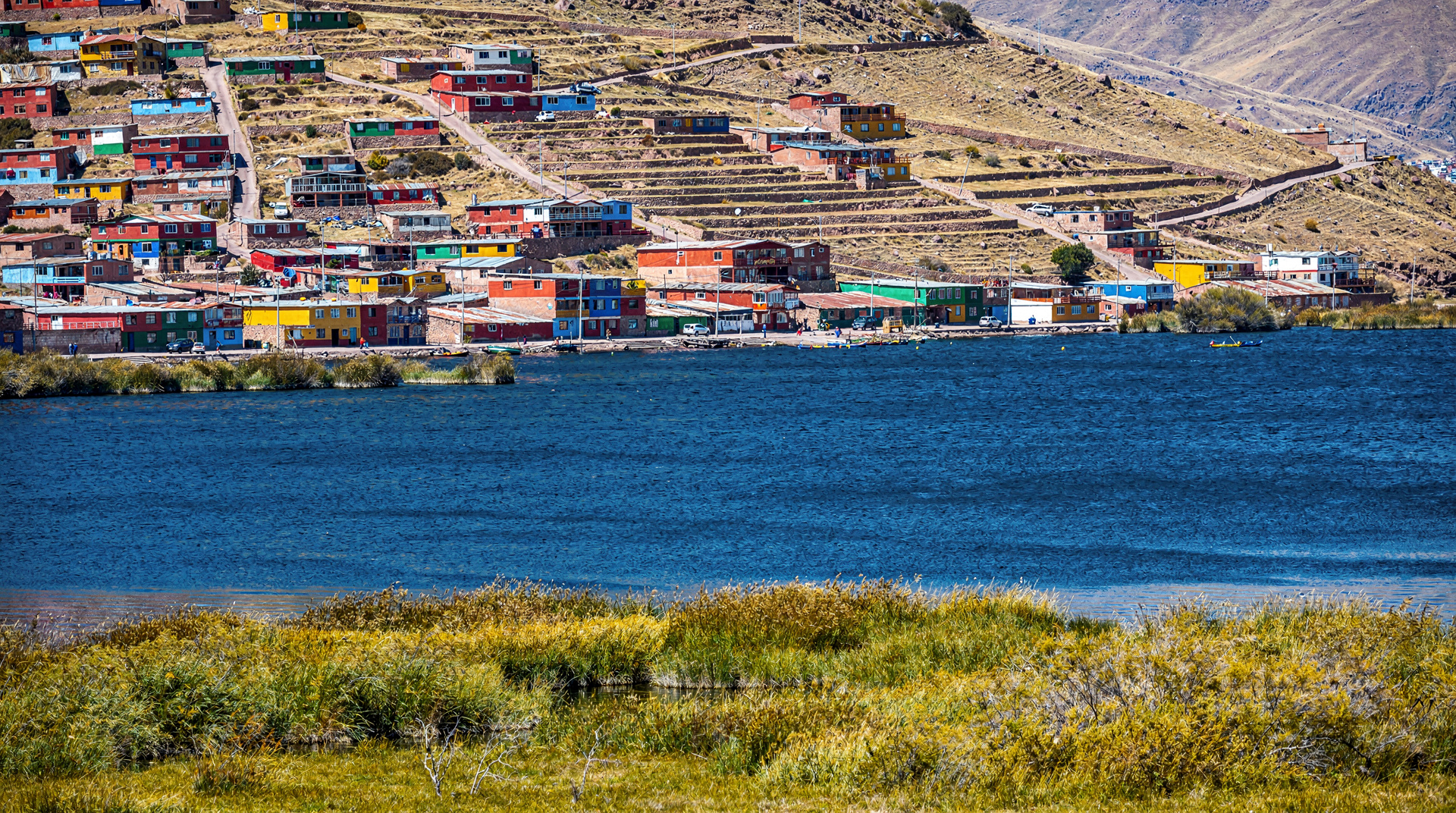
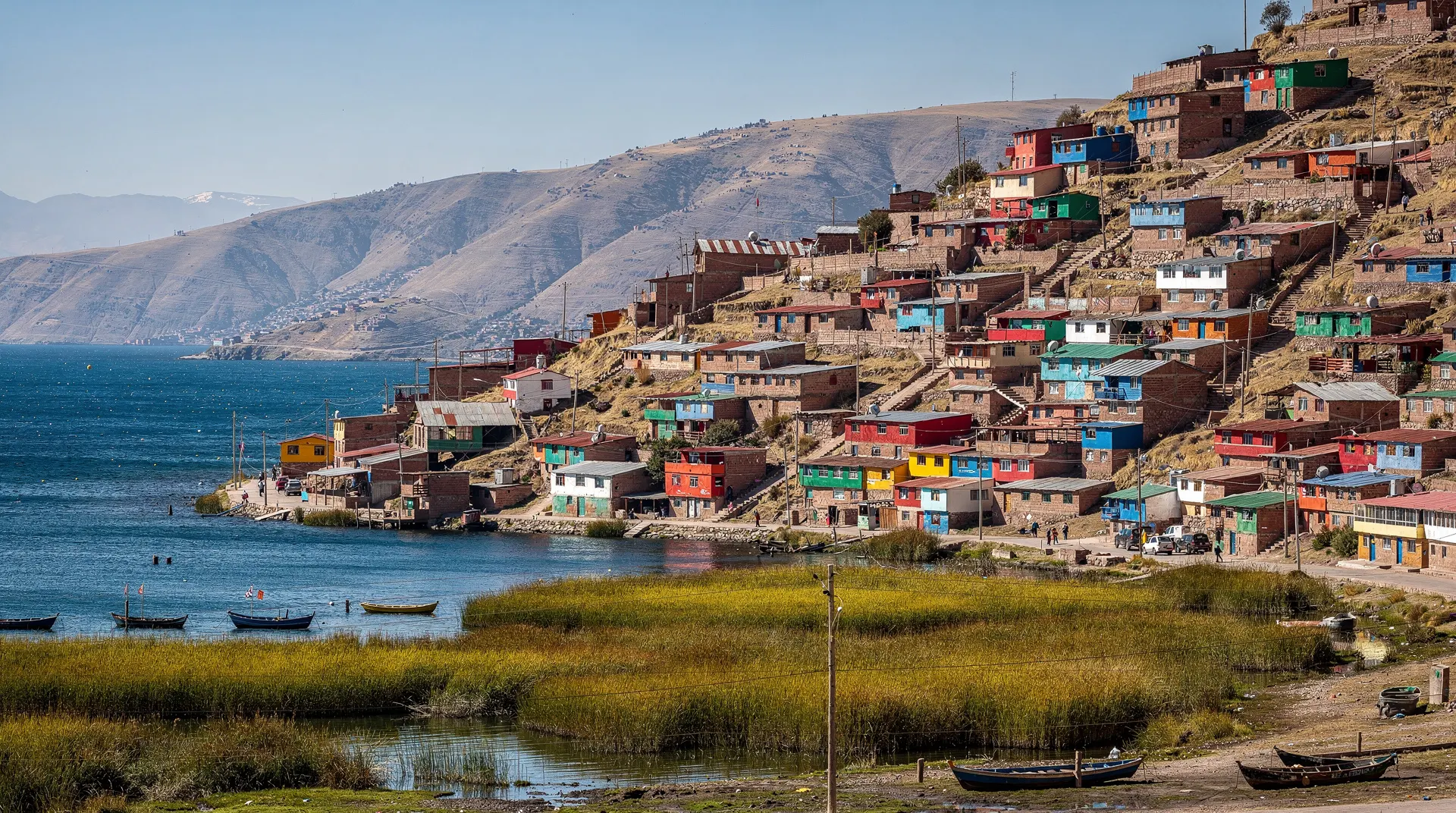
Puno is the gateway to Lake Titicaca, the highest navigable lake in the world at 3,827 m. The town itself is functional rather than beautiful — a busy Andean city with a strong Aymara cultural heritage. The reason to come is the lake.
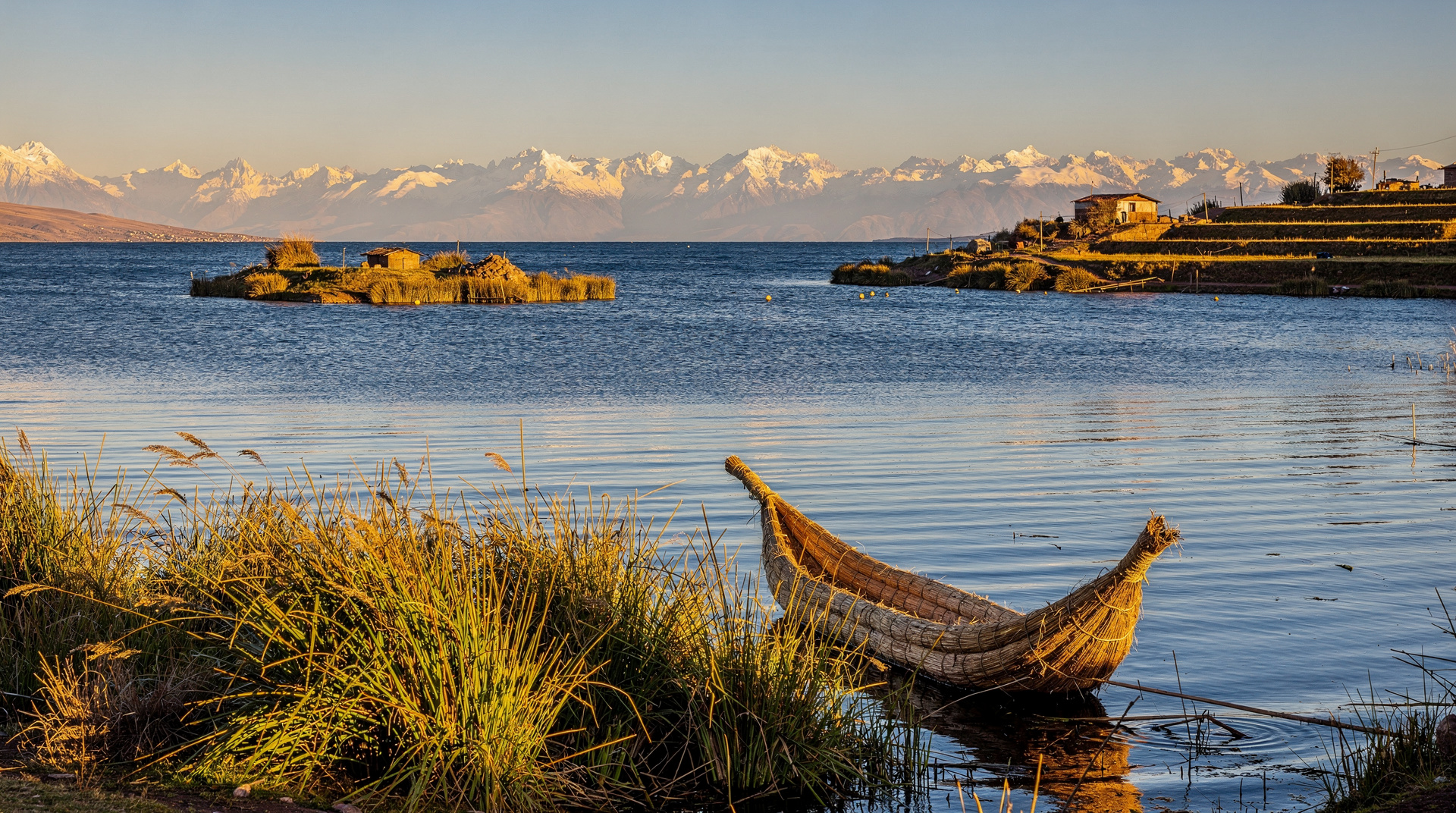
The Uros floating islands are artificial islands constructed from totora reeds by the Uros people, who retreated onto the lake as a defence strategy in pre-Inca times. They are inhabited today, maintained by island communities who live in reed houses, travel in reed boats and receive visitors. This is not a re-enactment — people actually live here year-round. The islands move, flex slightly underfoot, and have a peculiar warmth underfoot from decomposing reed layers.
Taquile Island is a 2-hour boat ride into the lake — a Quechua-speaking community with extraordinary textile traditions (their weaving was recognised by UNESCO as Intangible Cultural Heritage in 2005). The island’s hilltop plaza, reached by a 500-step climb from the dock, has some of the most striking lake views available from any land position.
The full-day Uros and Taquile boat tour covers both islands in a single day from Puno — the standard format for most visitors and the most time-efficient way to see both.
Practical planning: altitude at Puno
Puno sits at 3,827 m — 427 m higher than Cusco. Travellers who have spent several days in Cusco are partially acclimatised before arriving in Puno. Those arriving directly from Lima via Juliaca have had no prior altitude exposure and will likely feel the effects strongly.
If you are flying from Lima to Juliaca without time in Cusco first: plan a rest day on arrival in Puno before boat trips. The boat tours on Lake Titicaca involve a morning on the water at 3,827 m — manageable once acclimatised, potentially uncomfortable if you have been at sea level 24 hours before. The altitude sickness in Cusco guide covers the same principles that apply to Puno’s even higher elevation.
What to pack for the journey
Whichever option you choose, the temperature swings between Cusco, La Raya pass and Puno are significant — warm during midday sun, cold as soon as the sun drops or the bus air conditioning runs. Layering matters more than any single heavy item: a base layer, a fleece, and a windproof outer shell cover the range from the bus interior to a chilly stop at La Raya. The what to pack for Cusco guide has a fuller packing list that also suits this route. Bring snacks and a refillable water bottle — stops on the direct bus and colectivo routes are infrequent and not always well stocked.
Combining this leg with the wider itinerary
Most travellers doing this crossing are partway through a longer southern Peru loop. If Lake Titicaca is a highlight rather than a stopover, consider building in an extra night in Puno rather than a same-day boat tour after a 9–10 hour bus ride — arriving tired reduces how much you get out of the Uros and Taquile visit. The Peru 10-day Cusco–Titicaca itinerary and the southern Peru 2-week grand tour both build in that buffer and show how this transport leg fits into a realistic overall pace.
Comparing options: the decision framework
| Option | Time | Price | Best for |
|---|---|---|---|
| Ruta del Sol bus | 9–10 hours | S/90–150 ($24–40) | First visit, want to see the sites |
| Direct bus (Cruz del Sur) | 6–7 hours | S/65–140 ($17–38) | Returning travellers or efficiency |
| Andean Explorer train | 10 hours | From S/1,500 ($400+) | Luxury/celebration |
| Fly to Juliaca | 5–7 hours total | S/200–350+ ($54–94) | Time-critical itineraries |
| Budget colectivo | 6–7 hours | S/25–40 ($7–11) | Budget backpackers |
The Ruta del Sol wins for first-time visitors to this region. The four stops — Andahuaylillas, Raqchi, La Raya, Pukará — are genuinely interesting and would otherwise require dedicated excursions. Turning the necessary transport journey into a half-day cultural programme is efficient and good value.
Booking and logistics
For the Ruta del Sol, book through tour agencies in Cusco’s historic centre or through your accommodation. Inka Express is the most established operator; Peru Hop is the best option for backpackers wanting flexible hop-on-hop-off passes.
For Cruz del Sur direct buses, book online (cruzdelsur.com.pe) or at Terminal Terrestre at least 24–48 hours ahead in peak season. The morning service (typically 8:00 am departure) is more popular than evening options for non-overnight journeys.
The Cusco to Arequipa transport guide covers the southern extension for travellers continuing from Puno to Arequipa and the Colca Canyon. The full Lake Titicaca experience — islands, communities, border crossing to Bolivia — is in the destinations hub.