Cusco to Arequipa — bus, flight and everything in between
Arequipa: 2-Day Classic Colca Canyon Tour
How do I get from Cusco to Arequipa?
Two options: overnight bus (approximately 10 hours, S/80–180 depending on class) or a 1-hour flight with LATAM or Sky Airline (S/180–350 depending on lead time). The bus is a popular choice — reputable companies like Cruz del Sur and Oltursa run full-reclining overnight services that arrive in Arequipa by morning. Flying is faster but the route between the two cities traverses dramatic high-altitude terrain that is worth seeing from ground level at least once.
Two cities, one journey
Cusco and Arequipa are the two most visited cities in southern Peru, and most itineraries connect them at some point. The distance is approximately 520 km as the road runs, though the route crosses high Andean terrain — including a pass above 4,500 m on some routes — before descending to Arequipa at 2,335 m.
There are two practical options: overnight bus (the choice of most overland travellers, approximately 10 hours) and a 1-hour flight. Both are entirely viable. The choice depends on your time, your tolerance for overnight travel, and whether you want the journey to double as a landscape experience.
| Where | Cusco (3,400 m) to Arequipa (2,335 m), southern Peru |
| Cost | Bus around S/80–180; flight around S/180–350 |
| Time needed | Bus approximately 10 hours overnight; flight approximately 1 hour direct |
| Getting there | Terminal Terrestre (Cusco) or Rodríguez Ballón Airport (AQP) |
| Best time to book | 48–72 hours ahead in the dry season (May–September) |
Option 1: Overnight bus
This is the most popular way for independent travellers to make this journey, and it is completely sensible. Reputable Peruvian bus companies operate modern coaches with reclining seats, entertainment, and reasonable onboard standards. You depart Cusco in the evening, sleep (or attempt to), and wake up in Arequipa — saving both a day of travel time and a night’s accommodation cost.
The operators
Cruz del Sur is the benchmark for quality on this route. Modern fleet, reliable schedules, English-language online booking, strong safety record. Prices: S/90–120 for semi-cama (reclining but not flat), S/140–180 for suites (fully flat, often with privacy screen). Departs from Terminal Terrestre in Cusco, arrives at Cruz del Sur’s own terminal in Arequipa.
Oltursa is another strong performer with similar service standards to Cruz del Sur. Prices slightly lower: S/80–110 semi-cama.
Civa and Flores offer budget-tier services at S/50–80 for semi-cama. Standards are lower but the buses are functional. Used extensively by Peruvian travellers.
Departure and arrival
Most overnight services depart Cusco between 7:00 pm and 10:00 pm. Arrivals in Arequipa typically fall between 5:00 am and 9:00 am depending on the specific service. The most popular Cruz del Sur night services target arrival around 6:00–7:00 am — early enough to check in to accommodation and have a full day in Arequipa.
The route goes via Juliaca on most services. Some premium options take alternate routes; the scenery in either case is high-altitude Andean terrain — largely invisible on an overnight journey but occasionally visible when the bus passes through a lit town or the pre-dawn sky begins to lighten on the altiplano.
What the bus is actually like
Full-cama (Cruz del Sur, Oltursa premium class): the seat fully reclines to roughly 160–170 degrees, equivalent to a generous business-class airline seat. There are footrests, a small blanket provided, and usually a snack or meal for the departure. A film or two plays on overhead screens in the early evening. Once the film ends and the overhead lights dim, most people sleep.
Semi-cama: a standard reclining seat at 120–140 degrees. Manageable for a 10-hour overnight if you are flexible. Not comfortable for tall travellers. For anything under 1.75 m height, semi-cama is fine; above that, consider the full-cama upgrade.
Option 2: Flying Cusco to Arequipa
The 1-hour flight saves approximately 9 hours of travel time against the bus. LATAM and Sky Airline operate the route. Some services are direct (approximately 1 hour); many connect via Lima, making the total journey 3+ hours.
Direct Cusco–Arequipa (CUZ–AQP): When available, this is the fast option. Check both LATAM and Sky Airline schedules as direct frequency varies. Fares on direct services: S/180–300 (about $48–80 USD) economy depending on lead time.
Via Lima: Routing Cusco → Lima → Arequipa is common and often similarly priced to the direct flight. Total journey time with connection approximately 3–4 hours. Not a meaningful saving over the overnight bus in terms of overall elapsed time.
Arequipa’s Rodríguez Ballón International Airport (AQP) is approximately 8 km northwest of the city centre. Taxi to the centre costs S/25–35 (about $7–9 USD).
Private transfer or hired driver
A private car or minivan transfer is a third, less-used option — typically arranged through a Cusco or Arequipa travel agency rather than booked online. It costs considerably more than the bus (often S/600–1,200 for the vehicle, split between the group) but allows stops at your own pace, useful if you want to photograph the altiplano scenery or break the 10-hour drive at Puno without committing to an overnight stay. This only makes sense for small groups of 3–4 sharing the cost, or travellers with mobility needs who cannot manage an overnight bus seat.
When flying makes sense
Flying is the right choice when: you are on a tight schedule with specific dates; you dislike overnight bus travel; you are travelling with children who won’t sleep on a bus; or the price difference (often S/80–120 more than bus) is small relative to the value of the time saved.
For most independent travellers on a longer Peru itinerary, the overnight bus is the practical default — it saves a hotel night, costs less, and deposits you in Arequipa in the morning ready for a full day.
Bus vs flight at a glance
| Overnight bus | 1-hour flight | |
|---|---|---|
| Time | ~10 hours (overnight) | ~1 hour direct, 3+ hours via Lima |
| Price | S/80–180 | S/180–350 |
| Comfort | Full-cama close to lie-flat; semi-cama basic | Standard economy seat |
| Extra cost saved | Saves a hotel night | None |
| Best for | Budget travellers, flexible schedules | Tight itineraries, families with young kids |
If you are combining this leg with a wider southern Peru trip, it is worth reading how this route compares in cost and pacing against staying based in one city — the Cusco on a budget guide and the Peru trip cost guide both help set realistic expectations before you commit to bus or flight.
The scenic loop via Puno
Many visitors structure the Cusco–Puno–Arequipa journey as a multi-day overland itinerary rather than a direct transfer:
Day 1: Cusco to Puno via Ruta del Sol (9–10 hours with stops at Andahuaylillas, Raqchi, La Raya pass and Pukará). Overnight in Puno.
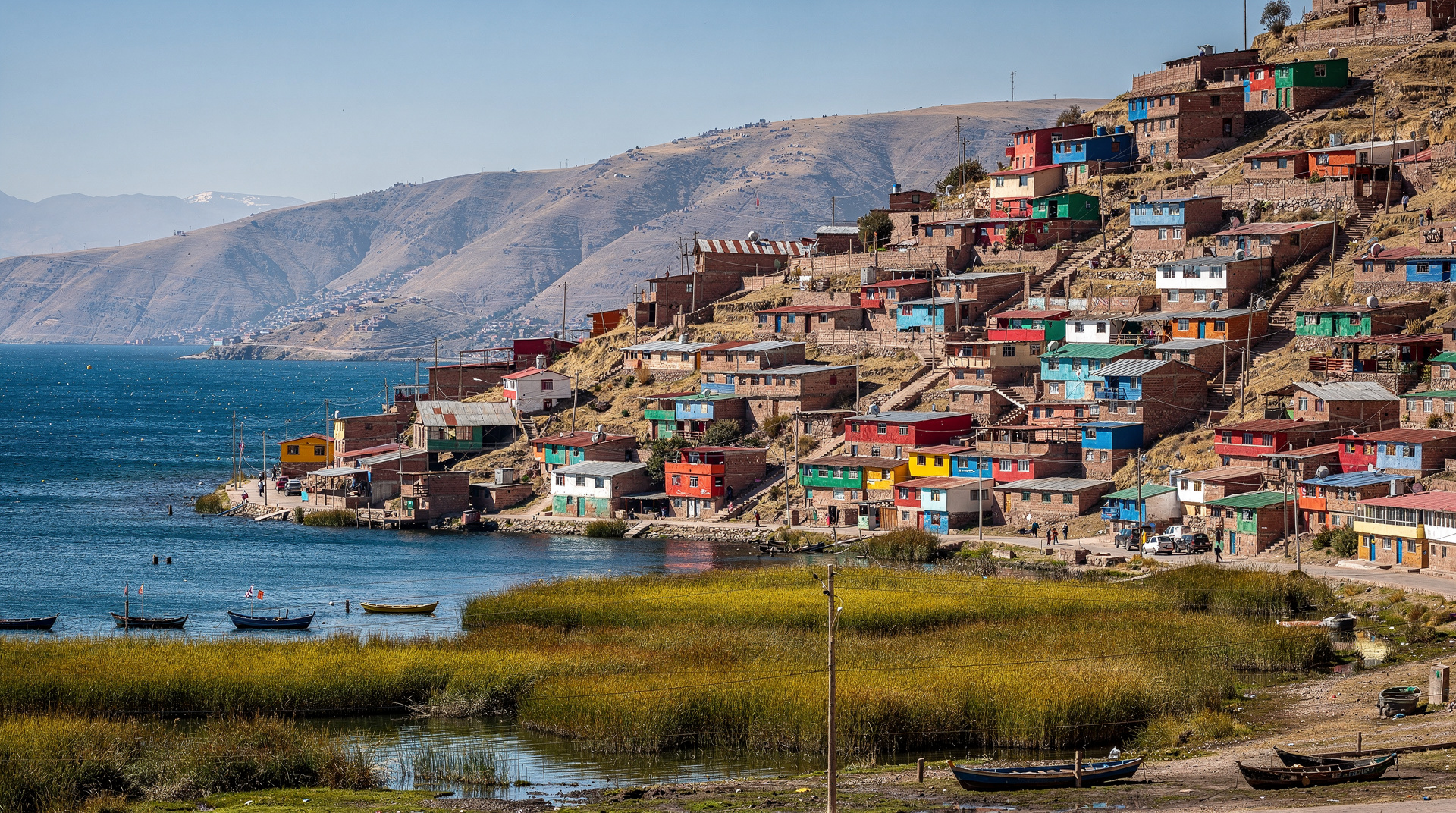
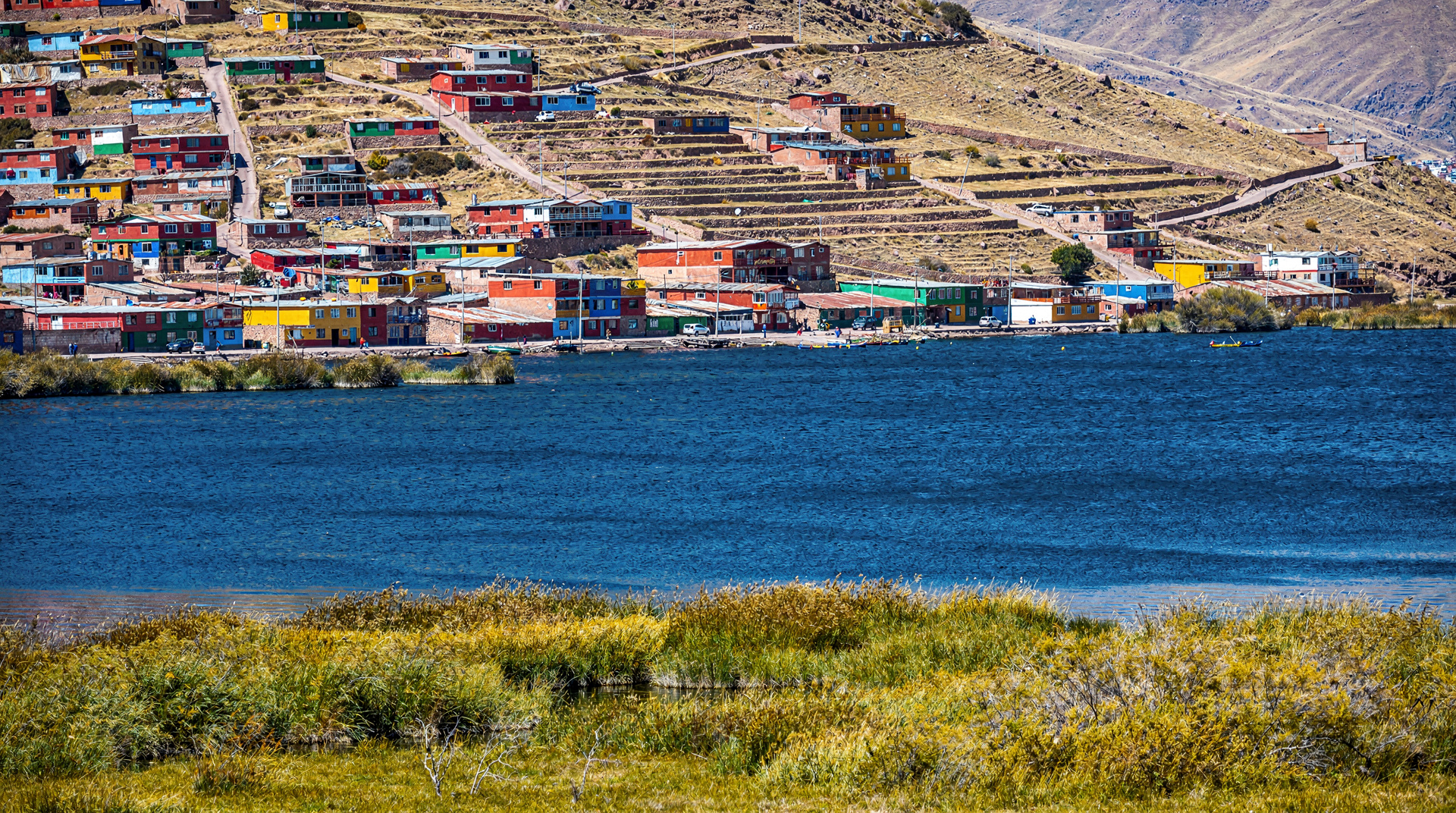
Day 2: Full-day boat tour to Uros floating islands and Taquile Island on Lake Titicaca.
Day 3: Puno to Arequipa by bus (approximately 5–6 hours through the altiplano).
This structure is excellent and recommended. It breaks a long journey into manageable stages, adds a Lake Titicaca experience, and traverses the full range of Andean scenery from Cusco at 3,400 m to the altiplano at 3,800 m and down to Arequipa at 2,335 m. The Cusco to Puno transport guide covers the first leg in full.
The Puno to Arequipa bus takes approximately 5–6 hours and is well-served by the same operators (Cruz del Sur, Oltursa). The route crosses the altiplano through the Lagunillas wetlands area — flamingo habitat at altitude — and climbs into the Andes before descending to Arequipa.
Book the 2-day Colca Canyon tour from Arequipa as soon as you have your dates confirmed. This is one of the most popular tours in southern Peru and morning condor-viewing departures (6:30 am buses from Cruz del Cóndor viewpoint) fill up weeks ahead in the dry season.
Arequipa on arrival
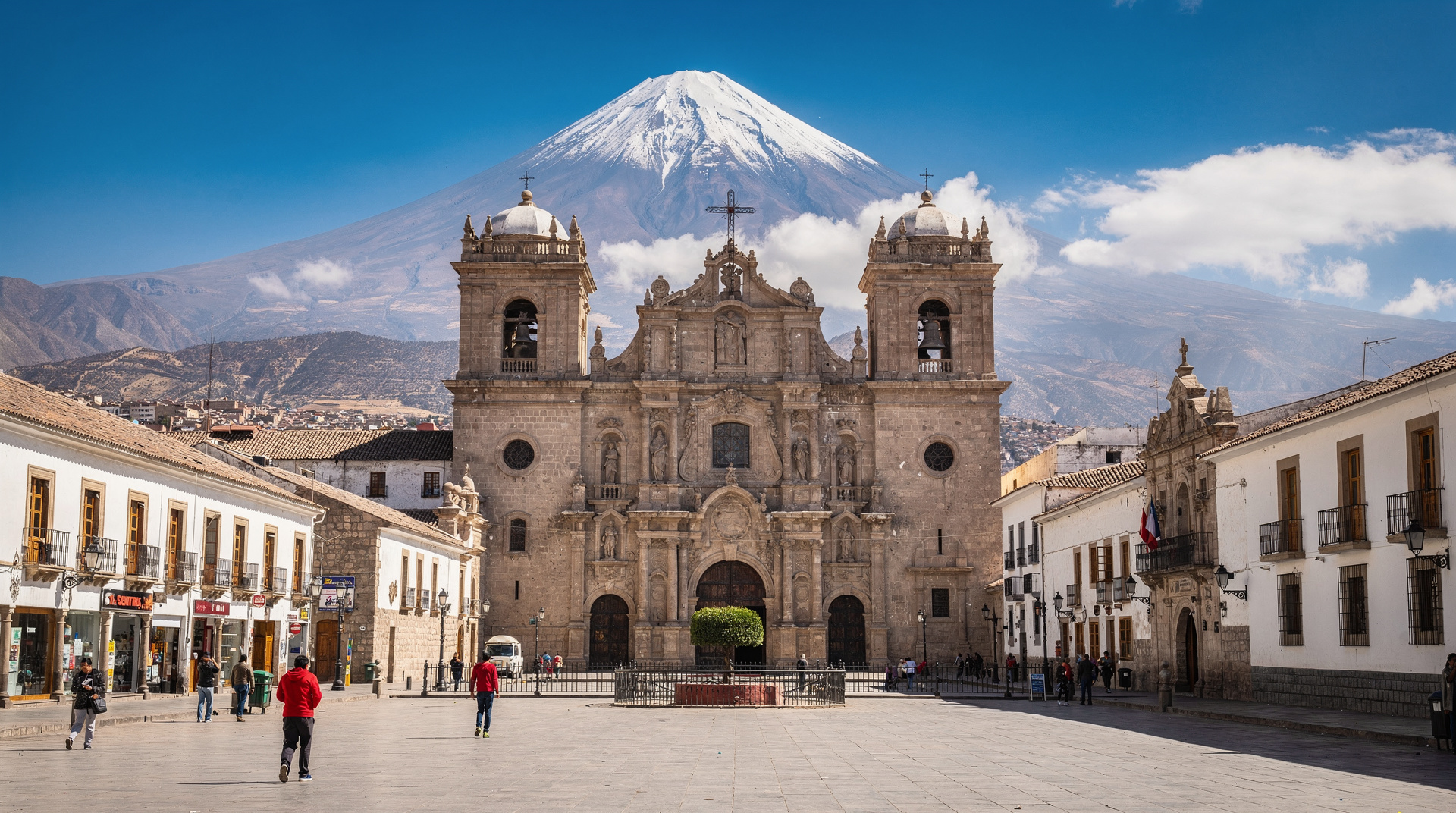
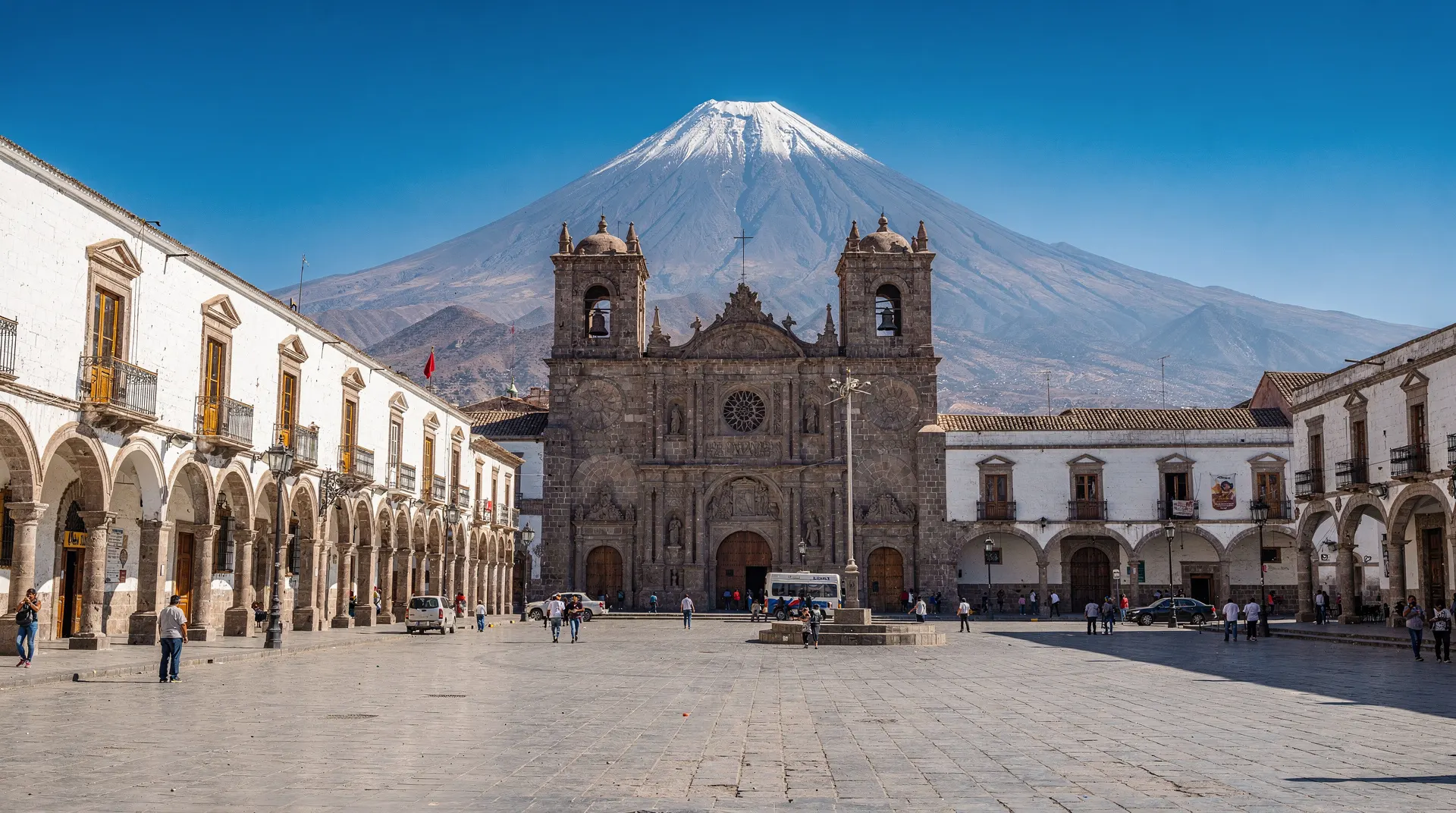
Arequipa at 2,335 m is noticeably more oxygenated than Cusco (3,400 m) or Puno (3,827 m). Most travellers arriving from Cusco find Arequipa’s altitude genuinely comfortable — a relief after several days above 3,000 m. The city nicknamed the “White City” (Ciudad Blanca) for its sillar volcanic-stone architecture is immediately arresting: an orderly colonial grid dominated by the enormous Cathedral that spans the full north side of the Plaza de Armas, flanked by the volcanic cones of El Misti (5,822 m), Chachani (6,075 m) and Pichu Pichu (5,664 m).
The Santa Catalina Monastery is the unmissable experience in the city — a self-contained religious city of cobblestone streets, cloistered plazas and painted walls, covering 20,000 sq m in the heart of Arequipa. Allow 2–3 hours. Other priorities: the Yanahuara viewpoint for the volcano framing, the San Camilo market, and a ceviche or chupe de camarones (prawn chowder, the regional specialty) at one of the central market restaurants.
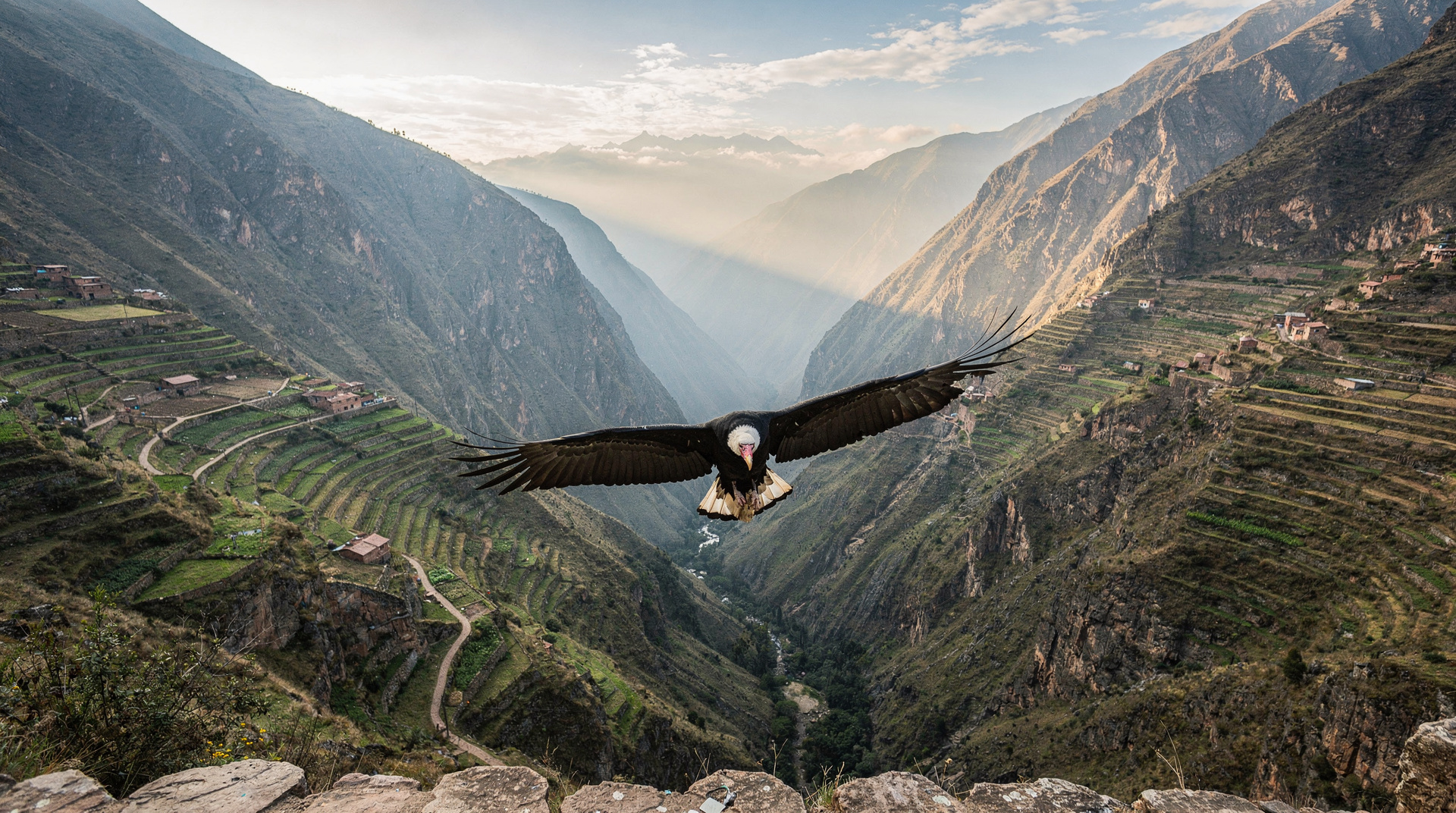
Arequipa is the base for Colca Canyon, one of the deepest canyons in the world at approximately 3,400 m depth (roughly twice the depth of the Grand Canyon). The condor population at Cruz del Cóndor viewpoint is the main draw — Andean condors with 3-metre wingspans ride the thermal currents above the canyon in the morning hours between 8:00–10:00 am. The two-day tour format (night in Chivay, condors on day two morning) is the correct approach.
The standard 2-day Colca Canyon tour from Arequipa covers transport, accommodation in Chivay, guided visits to the canyon viewpoints and Cruz del Cóndor, and is widely available through Arequipa agencies. Book in advance for July–August.
Practical considerations
Altitude change on arrival in Arequipa
If you are arriving in Arequipa from Cusco or Puno, you are descending in altitude — Arequipa at 2,335 m feels significantly more comfortable than Cusco at 3,400 m or Puno at 3,827 m. This transition is almost universally pleasant. Travellers who have been suffering mild altitude symptoms in Cusco find Arequipa noticeably easier.
Note, however, that Colca Canyon village bases (Chivay at 3,633 m, Cabanaconde at 3,287 m) are higher than Arequipa. If you head directly from Cusco into the Colca region without spending time at Arequipa’s intermediate altitude, be aware that you are going up again.
Booking bus tickets
Cruz del Sur’s website (cruzdelsur.com.pe) accepts international credit cards and has English language options. Book 48–72 hours ahead in the dry season (May–September) as popular overnight departures sell out. Terminal Terrestre in Cusco (Av. Velasco Astete) is the main departure point; arrive 30 minutes before your scheduled departure.
Night bus security
Keep your carry-on bag on your person or under the seat rather than in the overhead compartment during overnight journeys. Valuables — passport, cards, phone — should remain with you, not in checked luggage in the hold. This is standard common sense for overnight buses anywhere in South America.
Packing for the overnight leg
A full-cama seat gets genuinely cold once the air conditioning kicks in overnight, even though the blanket provided is thin. Bring a light fleece or extra layer, an eye mask, and earplugs if you are a light sleeper — the terminal announcements and other passengers boarding partway through the route can be noisy. The what to pack for Cusco guide covers the layering system that works for both the overnight bus and the temperature swings in Arequipa itself.
If you are still acclimatising
Travellers who fly straight into Cusco and take this bus within a day or two are still adjusting to altitude, and a 10-hour overnight journey is more tiring than usual under those conditions. The Cusco acclimatization plan and the broader altitude sickness guide both recommend at least 2–3 days in Cusco before a long travel day like this one — the descent to Arequipa itself is comfortable, but the departure day in Cusco is not the time to also be fighting a headache.
What to see in Arequipa: a planning outline
Two days is the minimum to do Arequipa justice. Three days allows a Colca Canyon excursion on top of the city sights. The key priorities:
Santa Catalina Monastery: A walled city within the city — 20,000 sq m of cobblestone lanes, coloured plaster walls (the famous orange, blue and terracotta of the monastery photography), and a cloistered quiet that is extraordinary given the busy city outside. Open daily; allow 2–3 hours minimum. One of the most impressive colonial complexes in South America. Budget approximately S/55 (about $15 USD) entrance.
Plaza de Armas and Cathedral: Arequipa’s Cathedral spans the entire north side of the plaza — a massive baroque facade in white sillar stone, the volcanic rock that gives the city its White City nickname. The plaza itself is one of the best-proportioned in Peru, with the volcanic triple-peak backdrop of El Misti, Chachani and Pichu Pichu behind the Cathedral on clear mornings.
Yanahuara mirador: A walkable viewpoint northwest of the centre, with a row of stone arches framing El Misti volcano and the city below. The classic Arequipa photograph. Best in the early morning (8:00–10:00 am) before heat haze develops.
Food: Arequipa has a strong regional culinary tradition. Chupe de camarones (prawn chowder with fresh river prawns from the Colca River valley) is the signature dish. Rocoto relleno (stuffed hot peppers, spicier than it looks) is another regional speciality. The Mercado San Camilo and the restaurants around the Plaza de Armas are good starting points.
The Colca Canyon from Arequipa
Colca Canyon is approximately 160 km from Arequipa by road — a 3.5–4 hour drive that climbs through the high reserve (passing through the Pampa Cañahuas wildlife reserve where vicuñas graze at 4,500 m) before descending into the canyon system. The two-day tour format (overnight in Chivay, condors at Cruz del Cóndor on day two morning) is the overwhelming standard for visiting tourists and works well.
Cruz del Cóndor viewpoint is the primary attraction: Andean condors (with wingspans of 3.0–3.3 m) catch the thermal currents rising from the canyon each morning between approximately 8:00–10:00 am. The viewing is best in the dry season (May–September) when condors are more active and thermals stronger, but condors are present year-round and visible on most mornings at this site. The canyon walls dropping approximately 3,400 m below to the Colca River provide the dramatic backdrop.
Book the standard 2-day Colca Canyon tour from Arequipa — all transport, overnight accommodation in Chivay and the Cruz del Cóndor morning visit included. Peak season (July–August) departures fill up 2–4 weeks ahead; book early.
The case for the scenic loop
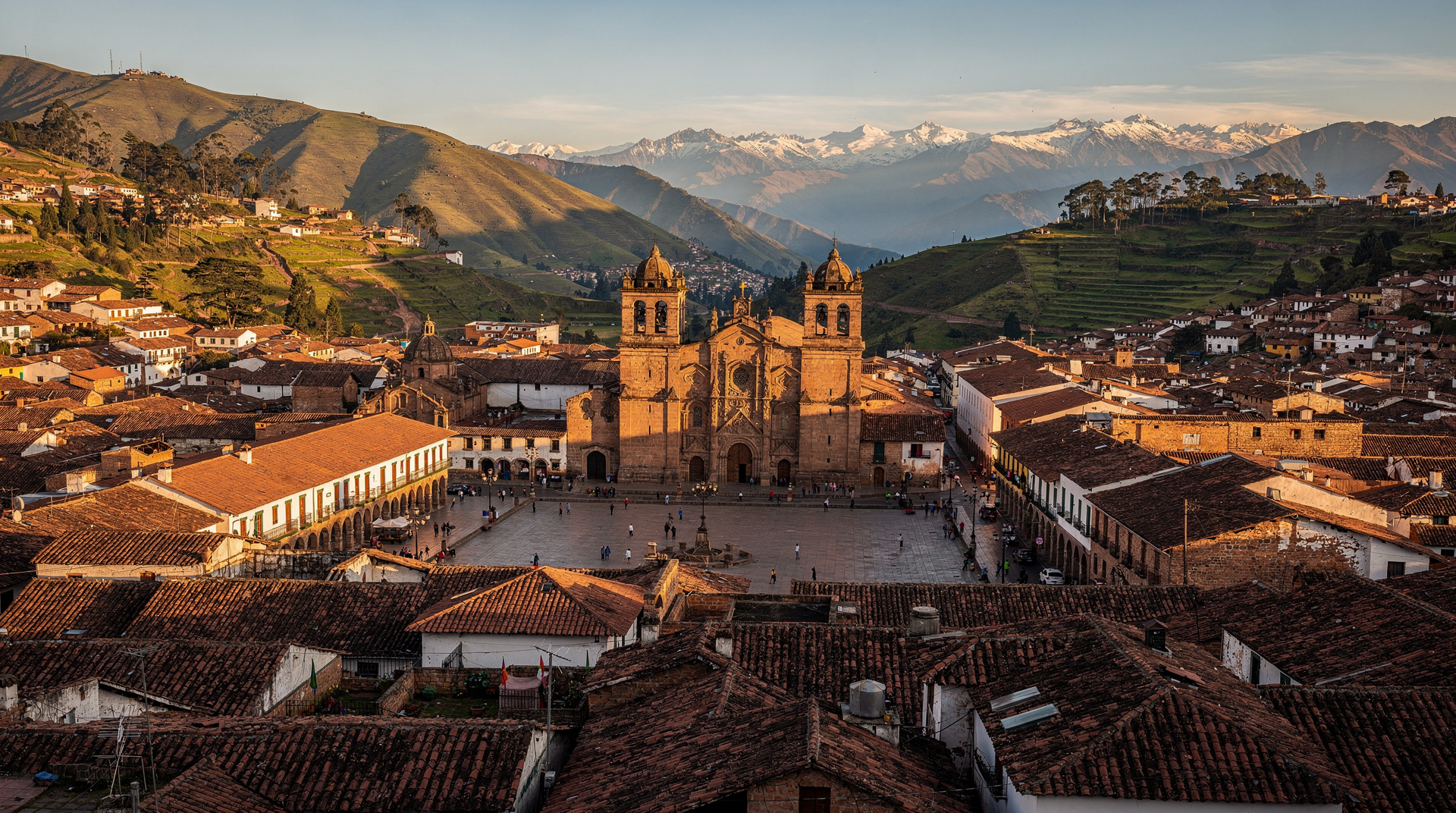
If time allows, the Cusco → Puno (Ruta del Sol) → Lake Titicaca → Arequipa structure is one of the best land-based itinerary loops in all of South America. The sequence takes you through extraordinary transitions: the Inca agricultural terraces of the southern Andean villages, the immensity of La Raya pass at 4,335 m, the world’s highest navigable lake, the reed islands of the Uros people, and the descent into Arequipa with its volcanic backdrop and Spanish colonial architecture.
The things to do hub organises activities across this region for travellers building a multi-city southern Peru itinerary. The destinations hub profiles each city in depth for planning time allocations. Getting from Cusco to Arequipa is not just logistics — the journey itself is part of what southern Peru offers.