How to get to Machu Picchu — every route explained
From Cusco: Machu Picchu Day Trip with Train Tickets
How do I get to Machu Picchu?
The standard route: drive or bus from Cusco to Ollantaytambo (1.5 hours), take a PeruRail or Inca Rail train to Aguas Calientes (1.5–2 hours), then the bus up to the citadel gate (20 minutes). The budget alternative replaces the train with a shared van to Hidroeléctrica and a 10 km walk. Trekkers arrive via the Inca Trail, Salkantay or other routes. There is no public road to Aguas Calientes or the citadel.
The logistics that confuse everyone
Getting to Machu Picchu involves more moving parts than any other major heritage site in South America. There is no road to the town of Aguas Calientes or to the citadel itself. Depending on your budget and the time you have, you could arrive by train in 1.5 hours from Ollantaytambo, walk 10 km along the railway from Hidroeléctrica for roughly half the train cost, or trek for four days on the Inca Trail. Each approach has a different cost profile, a different experience quality, and a different level of advance planning required.
| Standard route | Cusco → Ollantaytambo → train → Aguas Calientes → bus |
| Fastest option | Around 3.5–4 hours door to citadel gate |
| Cheapest option | Hidroeléctrica van + 10km walk, around S/130–180 |
| Cost (standard, all-in) | Around $200–270 per person |
| Book first | Citadel entry ticket, then trains to match |
This guide covers every realistic option, with honest assessments of cost, time, comfort and suitability. It assumes you are starting from Cusco, which is where the overwhelming majority of Machu Picchu visitors are based.
Route overview: the final leg from Aguas Calientes to the gate
Regardless of which route you take to reach Aguas Calientes, the final section is the same for almost everyone: a bus from the Aguas Calientes bus terminal up the switchback road to the citadel entrance, costing S/80 (~$24) round trip. Buses begin running at approximately 5:30 am. The journey takes 20 minutes.
The alternative to the bus is the Camino Hiram Bingham walking path from Aguas Calientes to the gate — approximately 45–60 minutes uphill, well maintained, and free. Many visitors walk up and take the bus down; others walk both ways. The descent on foot takes 30–40 minutes and is a pleasant cloud-forest path. Either direction on foot saves S/40 (one way of the bus).
The routes below all describe how to reach Aguas Calientes.
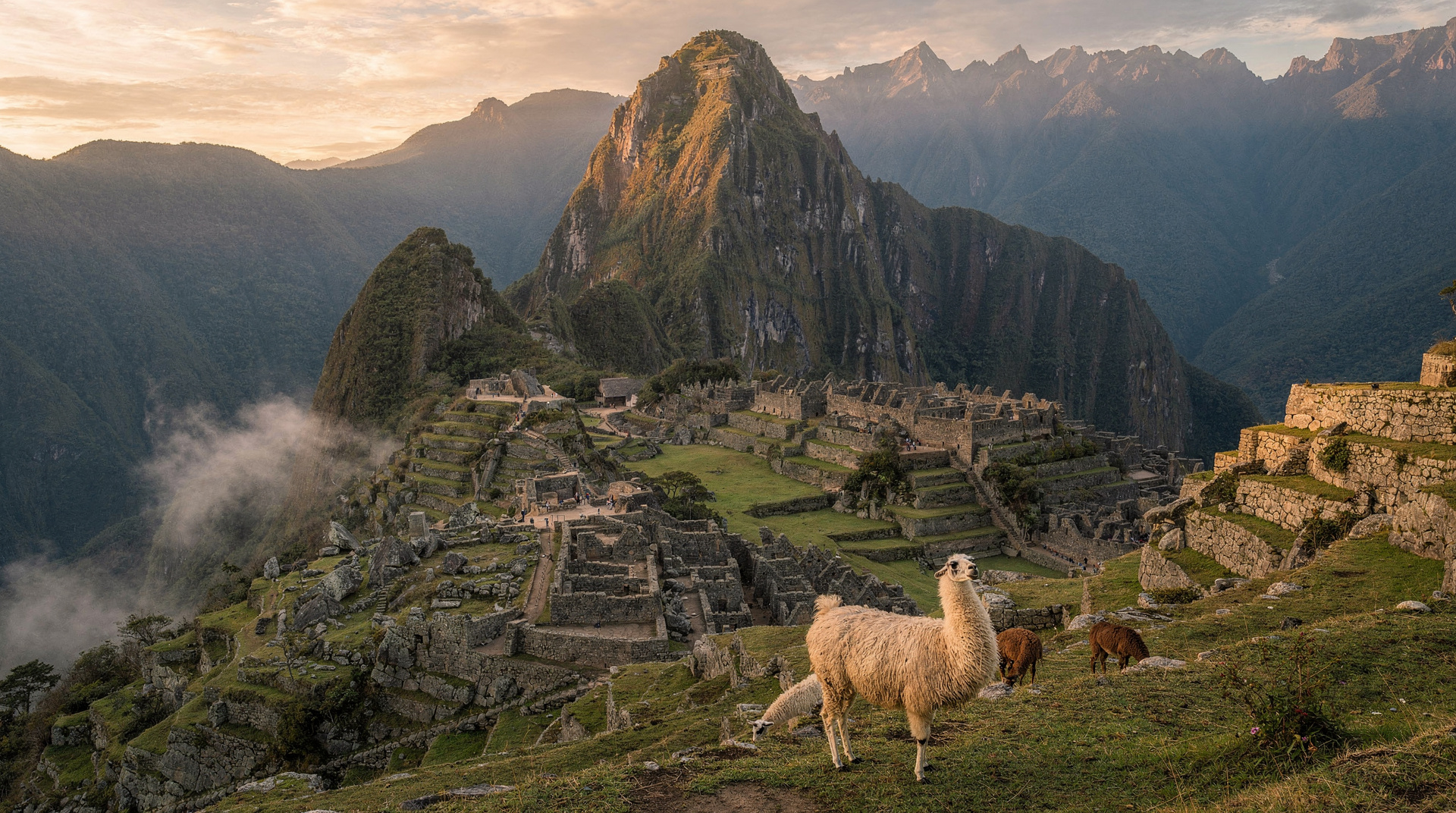
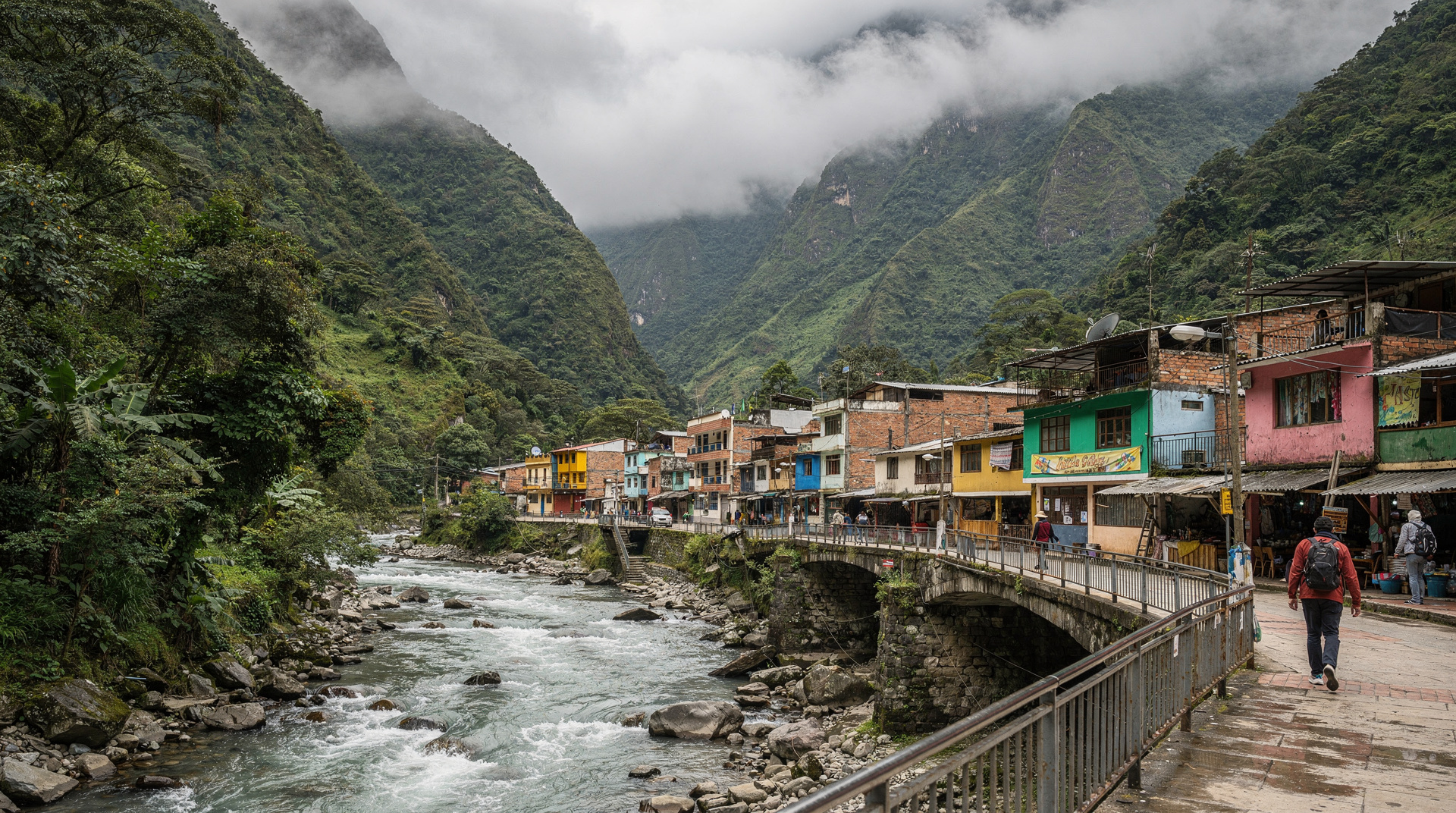
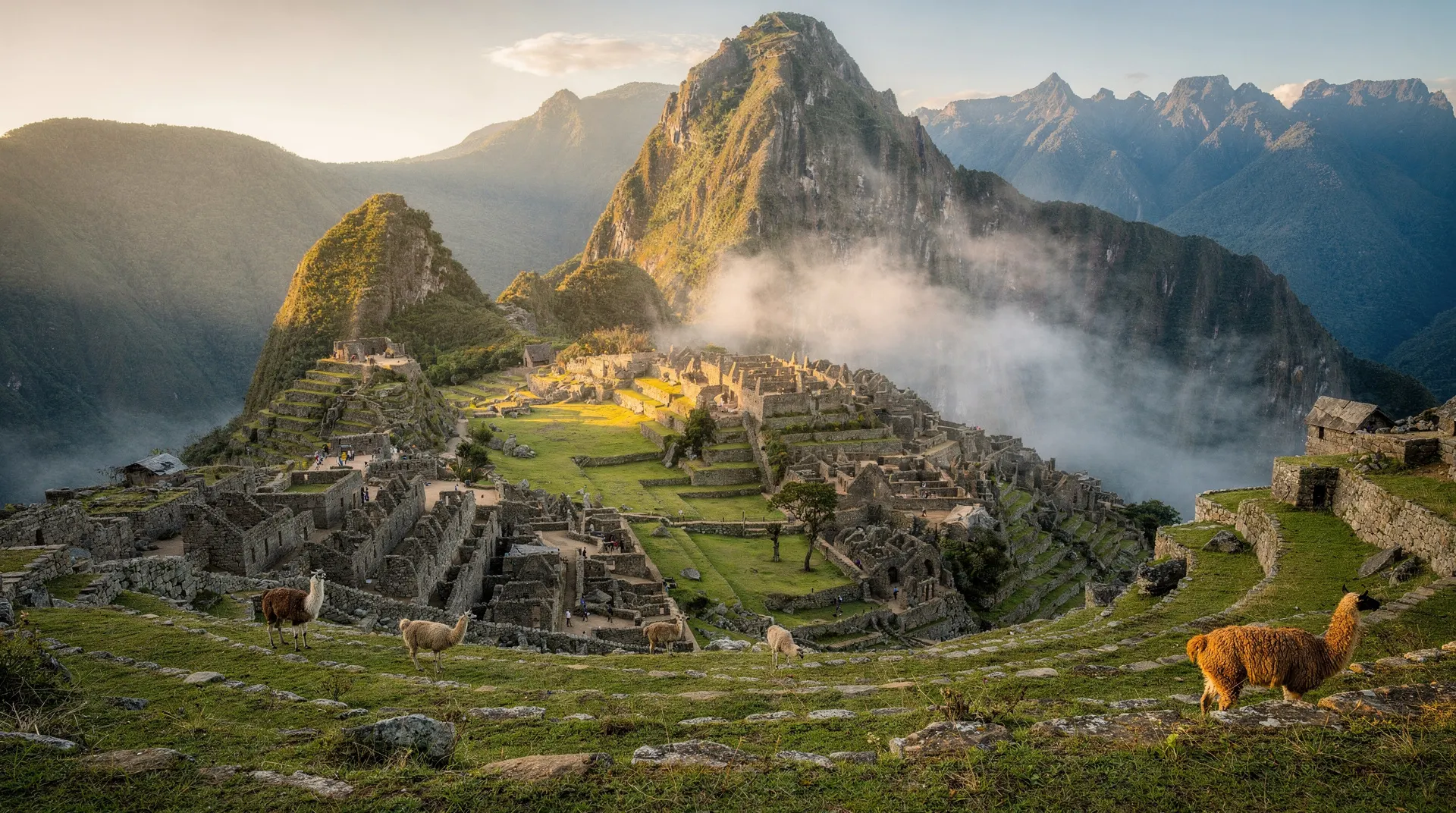
A quick note on nomenclature that trips up many first-time visitors: “Machu Picchu” refers to the ancient citadel itself, sitting on the mountain saddle above the valley. “Machu Picchu Pueblo” and “Aguas Calientes” both refer to the same modern town in the valley below, where the trains arrive and where most visitors stay overnight if not day-tripping. Train tickets, hotel listings and bus schedules use these names somewhat interchangeably, which can be confusing when booking for the first time — if a listing says “Machu Picchu station,” it means the train station in the town, not the citadel entrance.
Option 1: Cusco to Ollantaytambo to Aguas Calientes (standard train route)
This is the route used by the majority of independent travellers and by virtually all organised tours.
Step 1: Cusco to Ollantaytambo
The route covers approximately 75 km of the Sacred Valley highway. Options:
Colectivo (shared taxi or minivan): The cheapest and most commonly used option by independent travellers. Colectivos to Ollantaytambo depart from the area around Avenida Grau in Cusco, running regularly throughout the day from early morning. Cost: approximately S/20–30 (~$6–9) per person. Journey time: 1.5–2 hours depending on traffic and how many stops the driver makes. Reliable and safe — this is a well-established route used by locals daily.
Private taxi: S/60–100 (~$18–30) for the entire car, shareable across up to four passengers. Faster, more comfortable, and available for early morning departures when colectivos may not yet be running. Negotiate the price before getting in. Ask your hotel to help arrange a reputable driver.
Organised transfer: Most tour operators include the Cusco–Ollantaytambo transfer in their Machu Picchu packages. If booking a full day trip, this is already handled.
Arriving in Ollantaytambo 30–45 minutes before your train departure is adequate. The train station is a short walk from the main plaza and is well signed.
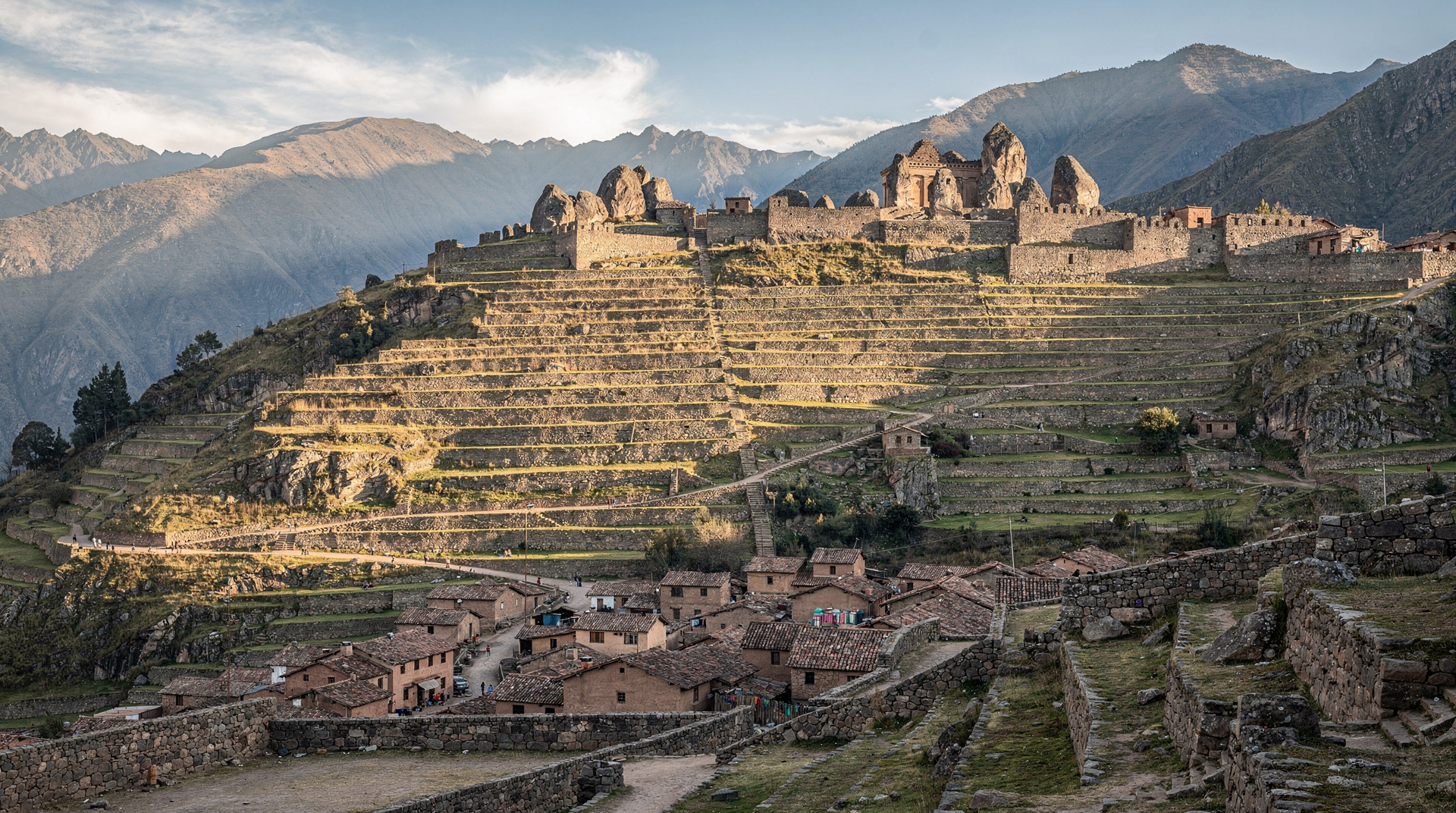
A side note: Ollantaytambo is genuinely worth visiting in its own right — one of the best-preserved Inca towns in Peru, with a formidable fortress that rivals anything in Cusco. If your schedule allows, arriving an hour before your train gives you time to walk the main street and see the agricultural terraces from the plaza.
Step 2: Ollantaytambo to Aguas Calientes by train
Two operators run scheduled services: PeruRail and Inca Rail. Both are safe, legitimate, and comfortable. The route descends from Ollantaytambo at around 2,800 m through the Urubamba valley, entering the cloud forest in the final section and arriving in Aguas Calientes at around 2,040 m.
Main service classes:
PeruRail Expedition (standard class): clean and comfortable with panoramic windows. Return approximately $60–90. PeruRail Vistadome: glass-ceiling panoramic windows, wider seats, enhanced snack service. Return approximately $90–130. Inca Rail Explorer/First Class: comparable range to PeruRail at equivalent tiers. Return approximately $55–125.
The Vistadome upgrade is worth considering — the final 30–40 km of the route into Aguas Calientes is the most scenic section, as the valley narrows dramatically and the cloud forest closes in. A panoramic roof makes this noticeably more enjoyable.
Journey time: approximately 1.5 hours on express/Vistadome services, around 2 hours on standard Expedition/Explorer class.
Book train tickets well in advance. For July–August, book simultaneously with your citadel ticket — 6–8 weeks ahead minimum. Both PeruRail (perurail.com) and Inca Rail (incarail.com) offer online booking with English-language interfaces.
A full day trip from Cusco with train, bus and citadel entry bundled eliminates the multi-step independent booking process — the simplest option if you are visiting for the first time.
What this route costs (independent, 2026)
- Cusco to Ollantaytambo (colectivo): S/20–30 (~$6–9)
- Return train Ollantaytambo–Aguas Calientes: $60–130
- Bus to citadel (return): S/80 (~$24)
- Citadel entry (one circuit, adult): S/152 (~$45)
- Total per person approximately: $100–175, excluding meals, tips and optional guide
Option 2: the Hidroeléctrica budget route
The lowest-cost land route replaces the train with a shared van and a 10 km walk. Total each-way transport is roughly S/60–90, compared with $60–130 for the train. Full detail is in the Hidroeléctrica guide; the summary:
Van from Cusco to Hidroeléctrica: Shared vans depart from the Avenida Grau/Pavitos area of Cusco from around 5–7 am. Route goes via Urubamba, Ollantaytambo, and Santa Teresa to Hidroeléctrica station. Journey time: 4–5 hours including a food stop in Santa Teresa. Cost: approximately S/60–90 per person each way.
Walk from Hidroeléctrica to Aguas Calientes: 10 km along a flat path beside the Urubamba River. Duration: 2.5–3 hours. The path is clear and used regularly. Carry water, snacks, sun protection.
Total transport cost per person: approximately S/130–180 each way, or about half the train cost.
Trade-offs: This route requires a full travel day, an early departure from Cusco, and the physical capacity to walk 10 km after a 4–5 hour van journey. It is not practical as a day trip from Cusco — plan to stay at least one night in Aguas Calientes. The mountain road via Santa Teresa can be affected by weather in rainy season. It is a genuine budget option for fit travellers with time and flexibility; it is not ideal for first-time visitors with limited days.
Option 3: bus via Ollantaytambo with private car or minivan to Santa Teresa
Some operators offer private or small-group transfers that drive further into the valley, connecting to Aguas Calientes via a shorter train segment or via the Santa Teresa route. This is a middle ground between the standard train route (more expensive, less time) and the full Hidroeléctrica walk (cheapest, most time). It adds comfort without necessarily adding significant cost versus the train.
This option is useful for groups, families with young children or limited walkers, or visitors with luggage who find the standard colectivo-train combination inconvenient. It is generally arranged through a tour operator rather than booked independently leg-by-leg, since the value is in the operator handling the coordination between the road segment and the shorter train or connecting transport — ask specifically what each leg involves before booking, since “private transfer to Machu Picchu” can describe several different combinations of road and rail depending on the company.
Option 4: trekking routes
The 4-day Inca Trail
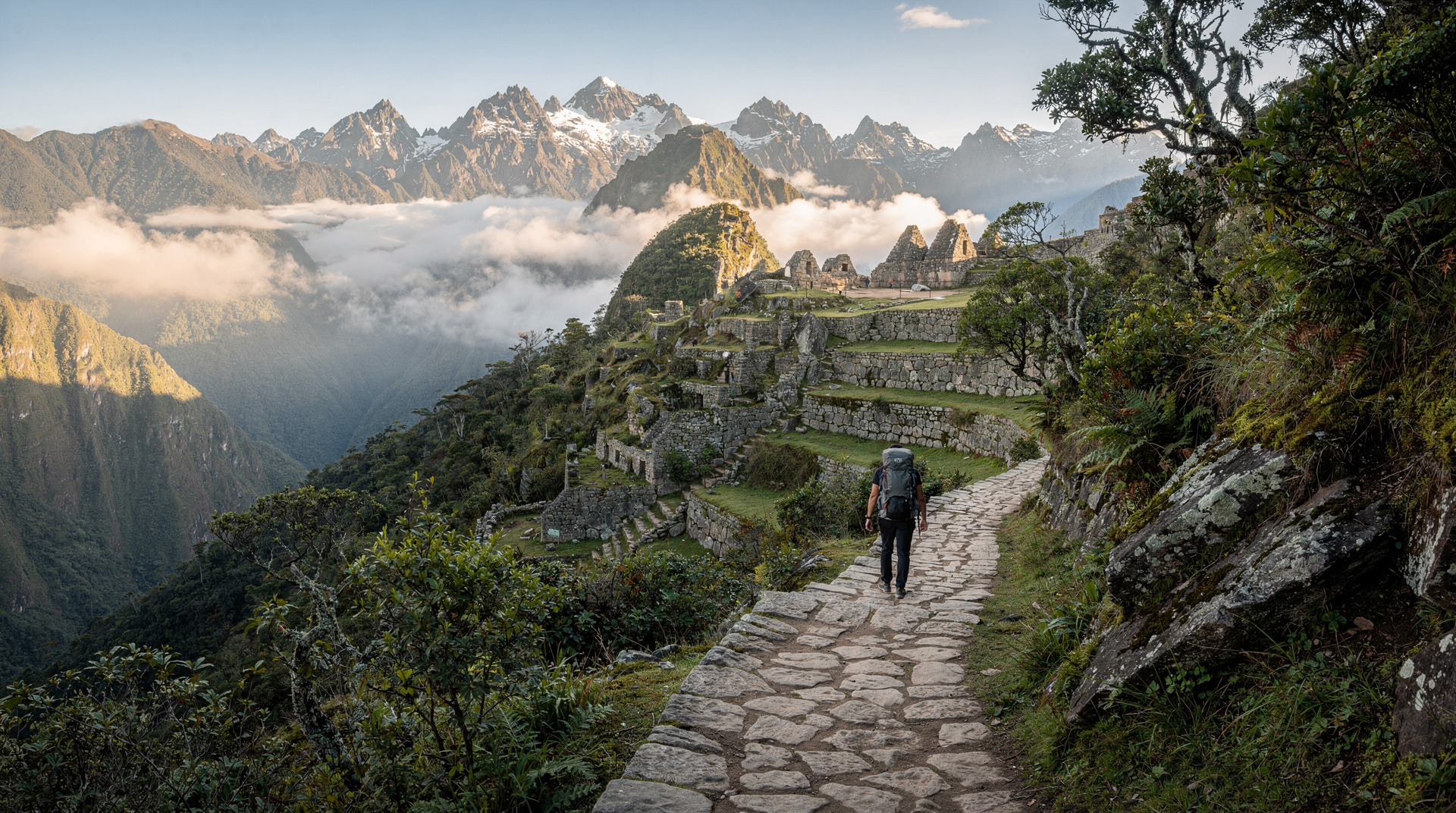
The most famous approach. The classic route starts at Kilometre 82 near Ollantaytambo, follows a 43 km section of original Inca paving through mountain passes (including the 4,215 m Dead Woman’s Pass on day two), and arrives at dawn on day four at the Sun Gate (Inti Punku). Walking down from the Sun Gate to find Machu Picchu below you is consistently rated among the most memorable arrival experiences in Peru.
Entry to the citadel is included in the Inca Trail permit. Permits are sold through licensed agencies only — not independently — limited to 500 people per day (guides, porters and trekkers combined), and sell out months ahead for the popular dry season months. The trail closes entirely in February for maintenance. Full detail in the Inca Trail complete guide.
The Salkantay trek (5 days)
The most popular non-permit alternative. The route crosses the Salkantay pass at 4,600 m, descends through cloud forest to the Urubamba valley, and ends in Aguas Calientes on day five, allowing independent entry to Machu Picchu on the final morning. No permit required; physically more demanding than the Inca Trail in terms of elevation; generally cheaper. Full detail in the Salkantay trek guide.
Other trek options
The Lares trek (3–4 days), Inca Jungle trek (4 days, involves cycling and a zip line), and Choquequirao trek (4–6 days, very remote) all connect to the Machu Picchu area via different routes. Each has different distances, difficulty levels, and transport to Aguas Calientes for the final section.
Getting back to Cusco: timing matters
Reverse your outbound route. The critical point: book your return train at the same time as your outbound train. Afternoon trains from Aguas Calientes to Ollantaytambo are heavily booked in dry season and the number of services is limited. Missing your return train typically means an overnight in Aguas Calientes you had not planned.
Last buses from Aguas Calientes depart for the citadel gate until approximately 3:30–4 pm. Main-gate entry slots run hourly from 6:00 am to 3:00 pm, so your slot is fixed by your ticket. Plan your descent from the site accordingly, allowing 30–45 minutes travel time from gate to Aguas Calientes bus terminal.
If you are using the Hidroeléctrica route on the return, coordinate your van pickup in Cusco before you leave. Leaving Aguas Calientes by noon to walk back to Hidroeléctrica in the afternoon works, but confirm van timing in advance.
Staying overnight versus day-tripping
The choice between a Machu Picchu day trip from Cusco and an overnight in Aguas Calientes significantly affects the quality of the experience. See the day trip guide and the Aguas Calientes guide for the full comparison. The short version: staying overnight in Aguas Calientes eliminates the 3:30 am departure from Cusco, gives you two early-morning entry opportunities, and allows mountain add-ons or extended circuit time without time pressure.
Booking a train and citadel entry package handles the core logistics in a single transaction and is the clearest path for first-time independent visitors.
The Machu Picchu complete guide covers the full planning picture — tickets, circuits, mountain add-ons and the best timing — once you have sorted the transport.
Getting to Machu Picchu from Lima
Visitors arriving in Peru via Lima have an additional first leg. Lima to Cusco is most efficiently covered by domestic flight — approximately 1 hour 15 minutes. Several airlines operate multiple daily services including LATAM, Avianca and Sky Airline. Prices vary significantly with booking lead time: S/200–800+ (~$60–240) each way. Book 4–6 weeks ahead in peak season. The Lima to Cusco flights guide covers airlines, booking timing and the Lima stopover option.
Getting there from other Peruvian cities
From Puno (Lake Titicaca): Bus to Cusco takes approximately 6–7 hours via the altiplano highway, or the Andean Explorer luxury scenic train service (PeruRail, approximately 10 hours). Once in Cusco, the standard Machu Picchu logistics apply. See the Cusco to Puno transport guide.
From Arequipa: Bus to Cusco takes approximately 10–12 hours, or connecting flight. See the Cusco to Arequipa transport guide.
In both cases, factor the connecting leg into your overall Machu Picchu timing rather than treating Cusco arrival as day zero of the logistics — a traveller arriving into Cusco on an overnight bus from Puno, for instance, should plan at least a half-day of rest before tackling the Ollantaytambo–Aguas Calientes leg, since the tiredness of the overland journey compounds with Cusco’s altitude in a way that a short domestic flight does not.
The honest cost summary for the full trip
For a Machu Picchu visit starting and ending in Cusco, all-in per person:
Standard independent visit (Vistadome train, mid-range overnight in Aguas Calientes):
- Colectivo Cusco–Ollantaytambo return: S/50–60
- Vistadome train return: approximately $100–130
- Bus to citadel return: S/80
- Citadel entry, adult (one circuit): S/152
- Accommodation, 1 night mid-range: S/250–350
- Meals for 2 days: S/80–120
- Total approximately: $200–270 per person
Budget visit (Hidroeléctrica van + walk, budget guesthouse):
- Van Cusco–Hidroeléctrica return: S/130–180
- Bus to citadel (one way only, walk down): S/40
- Citadel entry, adult: S/152
- Accommodation 1 night, budget: S/100–150
- Meals: S/60–80
- Total approximately: $120–155 per person
The saving is real. Whether it is worth the extra day of travel and physical effort is the question only you can answer based on your budget and how much time you have.
Common mistakes with Machu Picchu transport logistics
Booking transport without a citadel ticket: The most important thing to book is the citadel entry ticket, not the train. Available trains do not guarantee available citadel entry slots. Always book the citadel ticket first (via tuboleto.cultura.pe), then book trains to match your time slot — not the other way around.
Booking a train that arrives in Aguas Calientes after your entry slot: Entry slots are hourly, with a limited late-arrival tolerance at the main gate (none at the mountain checkpoints). If your train arrives at 7:15 am and your entry slot is 7:00 am, you may make it with time for the bus — but there is no buffer if the train is 15 minutes late. Book your entry slot for at least 90 minutes after your expected train arrival in Aguas Calientes.
Buying train tickets from third-party websites: Several websites appear in search results for “train to Machu Picchu” and charge 20–40% above face value while appearing to be official booking platforms. Always use perurail.com or incarail.com directly. The train ticket scams guide documents the known problem operators.
Not booking the return train at all: Arriving at Machu Picchu with no confirmed return train is a significant logistical mistake. Afternoon departures from Aguas Calientes in peak season sell out days in advance. Book the return simultaneously with the outbound.
Relying on same-day colectivos from Cusco at 3:30 am: Standard public colectivos from Cusco to Ollantaytambo typically start running from around 5–6 am. For an early morning departure for a day trip, arrange a private taxi the evening before and agree the pickup time explicitly.
Getting around the Sacred Valley on the way
Many visitors combine their Machu Picchu trip with a Sacred Valley day — visiting Pisac, Chinchero, or Moray and Maras en route to or from Ollantaytambo. The Sacred Valley is well served by colectivos between towns, with Pisac, Urubamba and Ollantaytambo all connected.
A well-organised Sacred Valley day combined with an evening arrival in Ollantaytambo (staying overnight, then taking the early morning train to Aguas Calientes the following day) is an excellent use of two days and eliminates the 1.5-hour pre-dawn drive from Cusco. See the Sacred Valley complete guide and the one-day Sacred Valley itinerary for route planning. The getting around the Sacred Valley guide covers the colectivo and taxi logistics in detail.
Staying overnight in Ollantaytambo also has an altitude advantage: at 2,800 m it is lower than Cusco at 3,400 m, which means a night in Ollantaytambo before the Machu Picchu trip is often better for acclimatisation than staying in the city. The Cusco altitude vs Sacred Valley guide makes the case for this approach in full. For visitors who have had altitude symptoms in Cusco, starting their Machu Picchu travel day from Ollantaytambo rather than Cusco is a practical and well-tested mitigation.
Route comparison at a glance
| Route | Time (one way) | Cost (one way, approx.) | Best for |
|---|---|---|---|
| Standard train | 3–3.5 hrs from Cusco | $60–130 train + S/20–30 transfer | First-timers, limited time |
| Hidroeléctrica van + walk | 7–8 hrs from Cusco | S/60–90 van + free walk | Budget travellers with time |
| Private car/minivan hybrid | Similar to train, more comfort | Comparable to train, sometimes more | Families, groups, limited walkers |
| Inca Trail (4 days) | 4 days | Included in permit package | Trekkers who booked months ahead |
| Salkantay trek (5 days) | 5 days | Included in trek package | Trekkers without an Inca Trail permit |
Booking sequence that avoids most mistakes
The order matters more than the individual bookings. Book the citadel entry ticket first, since it is the genuinely scarce resource — trains and transport can usually be adjusted around a fixed entry slot, but entry slots cannot be adjusted around a fixed train. Once the entry slot is set, book the train (or Hidroeléctrica transport) to arrive with at least 90 minutes of buffer before the slot opens. Only after both of those are confirmed should you book accommodation in Aguas Calientes or Ollantaytambo, since the accommodation dates depend entirely on the transport and entry decisions already locked in.
Frequently asked questions about How to get to Machu Picchu — every route explained
Is there a road to Machu Picchu?
How long does it take to get to Machu Picchu from Cusco?
How do I get from Ollantaytambo to Aguas Calientes?
Can I get to Machu Picchu without a tour?
What is the Hidroeléctrica route and is it safe?
Is the Inca Trail the best way to arrive?
Top experiences
Bookable activities with verified prices and instant confirmation on GetYourGuide.