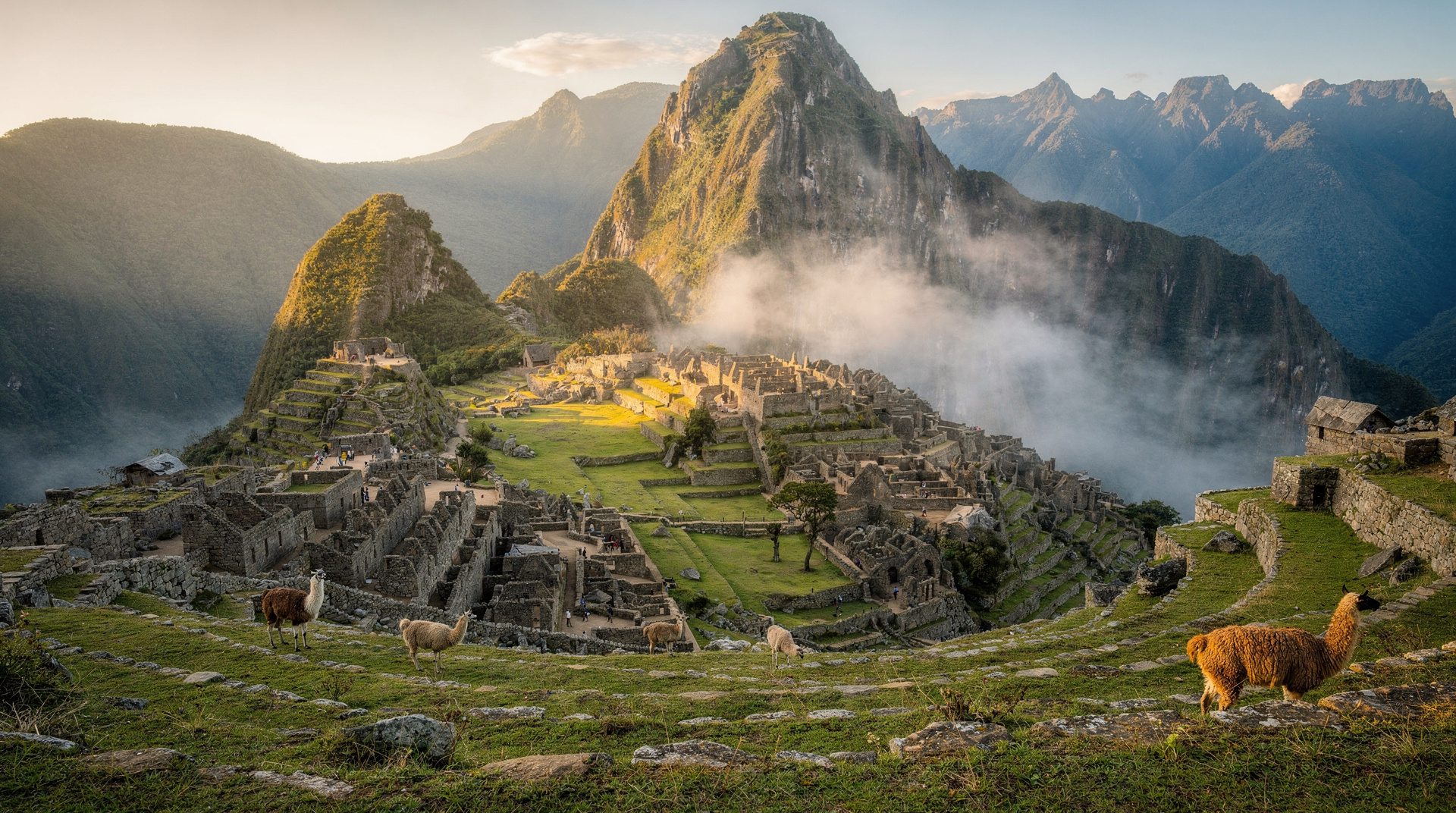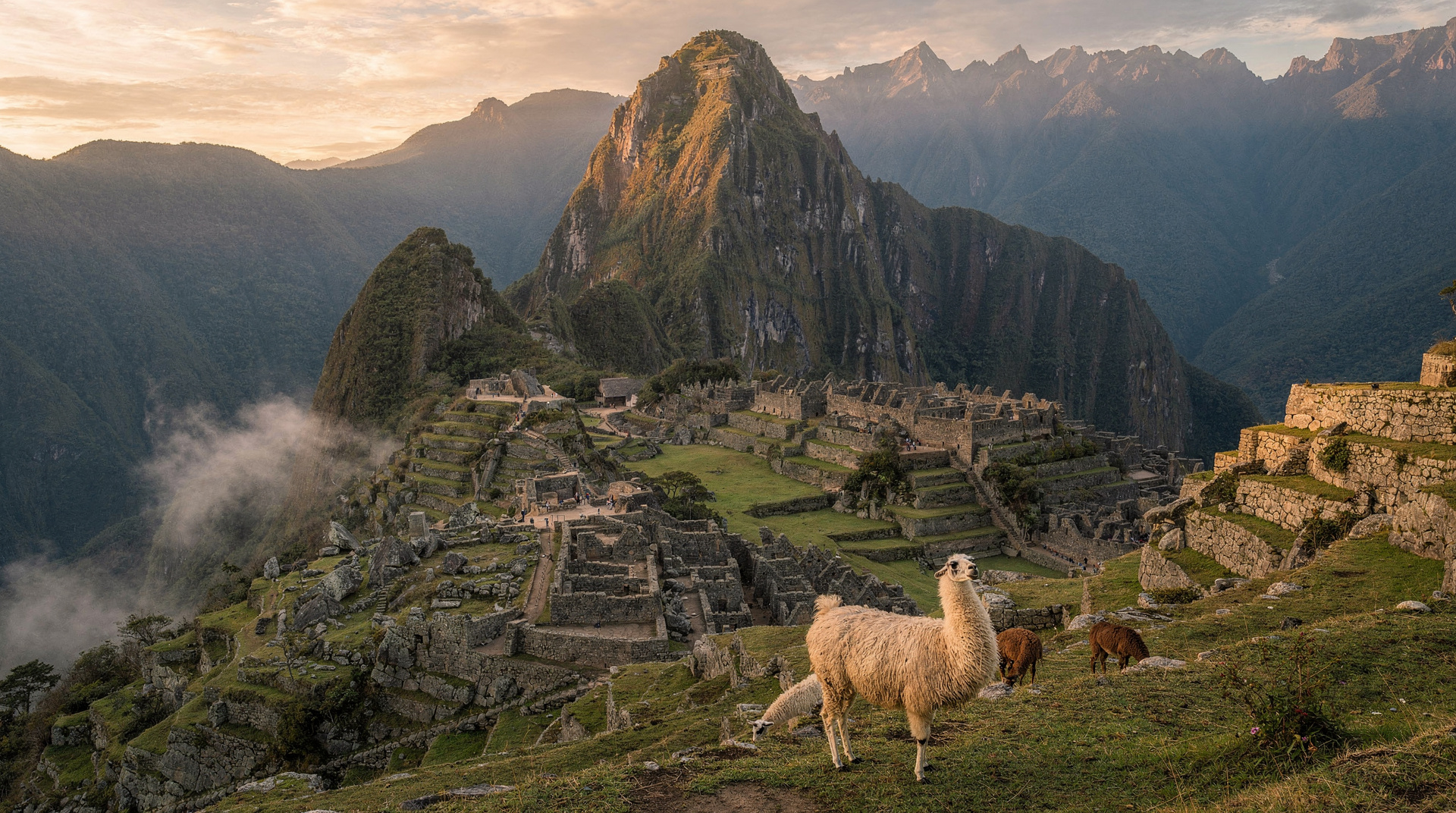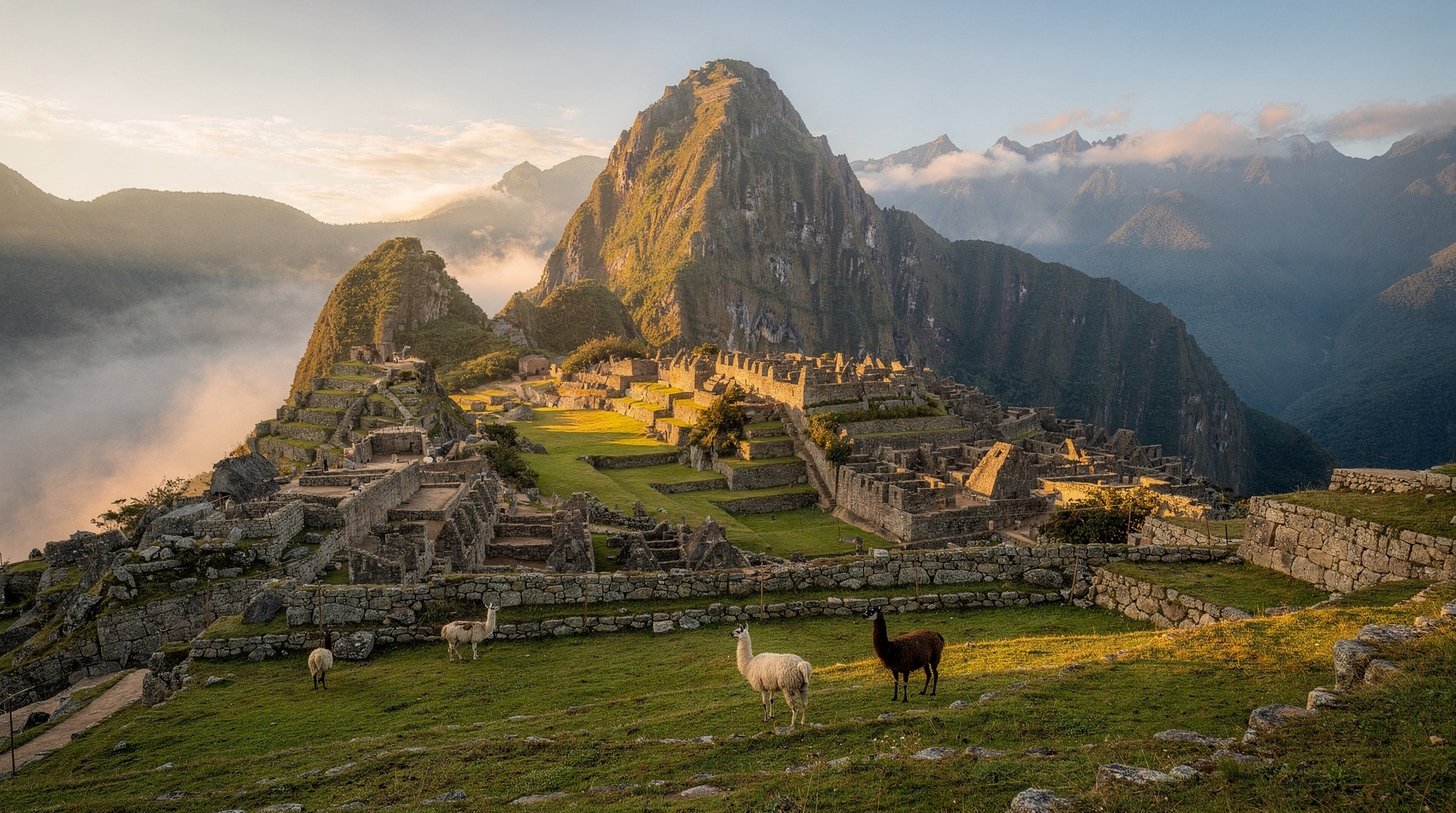
Machu Picchu by the budget Hidroeléctrica route — the honest guide
From Cusco: Machu Picchu Day Trip with Train Tickets
How do I reach Machu Picchu cheaply via Hidroeléctrica?
Take a shared van from Cusco to Hidroeléctrica station (4–5 hours, roughly S/60–90 each way), then walk 10 km along the flat riverside path to Aguas Calientes (2.5–3 hours). Total transport is around $25–35 each way versus $60–130 for the train. The trade-off: a very long travel day, early start required, and you must arrive in Aguas Calientes before dark. Plan to stay overnight rather than attempt this as a day trip.
The route that cuts your transport cost in half
The Hidroeléctrica route exists because there is an alternative ground connection to Aguas Calientes that bypasses the train entirely. A hydroelectric power station — hence the name — sits at the end of a road that runs through the Santa Teresa valley and reaches the Urubamba riverbed within 10 km of Aguas Calientes. That 10 km is flat, walkable, and essentially free.
This makes it possible to reach Machu Picchu for a fraction of the train cost: roughly S/150–200 (~$45–60) total transport round trip versus S/350–600+ for the standard train-plus-colectivo combination. That saving is significant on a budget. For a solo traveller, it often covers a night’s accommodation in Aguas Calientes with money left over. For a couple, it can pay for a good dinner.
The trade-off is time, an early start from Cusco, and a physically demanding travel day. This guide is honest about all of it, including what other guides frequently omit: the road quality in rainy season, the van reliability spectrum, and the practical question of whether this route actually saves enough to justify the day you spend getting there.
| Where | Cusco → Hidroeléctrica (by van) → Aguas Calientes (10 km on foot) |
| Cost | Around $25–35 each way in transport, roughly half the train price |
| Time needed | A full travel day each way — plan for at least 2 days, 1 night |
| Getting there | Shared van (4–5 hrs) from Avenida Grau/Pavitos in Cusco, then a 2.5–3 hr riverside walk |
| Best time | Dry season (May–September); rainy season adds landslide risk |
Who this route suits (and who it does not)
Good match for:
- Independent budget travellers with an extra day to absorb the travel time
- Physically fit travellers comfortable with 10 km of flat walking
- Those visiting on a second or subsequent trip who want a different experience
- Travellers who find the train scenery less important than the cost saving
- Backpackers and independent travellers already comfortable with Andean transport conditions
Not a good match for:
- Visitors with limited time who cannot afford a full travel day each way
- Those with mobility concerns or who would find 10 km of uneven terrain difficult
- Families with young children needing predictable logistics
- Travellers in a hurry to tick Machu Picchu and move on
If any of those second-category points apply, the standard train route is the better choice. The time and energy cost of the Hidroeléctrica route is real, and it is not worth it if it leaves you arriving in Aguas Calientes too tired to enjoy the next day at the site.
The van from Cusco to Hidroeléctrica: what to expect
Finding the van
Vans and shared minibuses for the Hidroeléctrica route depart from the area around Avenida Grau and the Pavitos street junction in central Cusco. This is the informal hub for budget transport out of the city in multiple directions. Ask at your accommodation the evening before — local staff know which operators are reliable and which have poor punctuality records. This is worth doing rather than just showing up in the morning.
Departure times: most vans leave between 5 am and 7 am. An earlier departure (5–5:30 am) gives you more time in Aguas Calientes that day and reduces the pressure of the walk timing. A later departure is more comfortable but means arriving in Aguas Calientes in the afternoon — still fine for checking in and relaxing before the next day’s citadel visit.
What the van journey involves
The route from Cusco to Hidroeléctrica takes approximately 4–5 hours, with a customary stop for food in Santa Teresa around the midpoint. Santa Teresa is a small town where you will find basic restaurants (set lunch for S/10–15), toilets, and an opportunity to buy snacks for the walk. Use it.
The journey leaves Cusco heading northwest toward the Sacred Valley, then branches south via the Limatambo pass and drops into the lower Apurímac and Santa Teresa valleys before reaching the Urubamba riverbed. The road quality is Andean mountain driving: stretches of paved highway alternating with unpaved switchbacks above river gorges. This is entirely normal for rural Peru and not exceptional in terms of risk. But it is worth knowing in advance — if you find mountain road driving stressful, this may not be the right route.
Rainy season (November–March): This road is more susceptible to damage in heavy rain. Landslides occasionally block sections temporarily. Delays of 1–2 hours are possible in severe weather. During dry season (May–September) the road is generally reliable.
Van quality and cost
Cost: approximately S/60–90 (~$18–27) per person each way. The spread reflects significant differences in operator reliability, van condition, and whether the price includes the Santa Teresa food stop. Prices below S/50 should be viewed skeptically — the difference in cost rarely improves the experience.
Vans are typically 8–15 passenger shared minibuses. They are basic but functional. Bring something to rest your head against for the mountain road sections. Luggage goes in the back or on top under a tarpaulin. Lock zips on your main bag; opportunistic theft from roof luggage is rare but has been reported.
The walk from Hidroeléctrica to Aguas Calientes
This is the section that makes the route. Ten kilometres of flat terrain along the Urubamba valley, following the railway line with increasing cloud-forest density, arriving in Aguas Calientes having earned your entry to Machu Picchu in a more tangible way than most visitors.
Starting point
The hydroelectric station has a small cluster of food stalls, a few basic guesthouses, and an informal transport area where vans arrive and depart. This is where the walk begins. Fill your water bottle here if there is a vendor — there are no reliable water sources along the path.
The route itself
The first kilometre or so from the station is unpaved road. After this, the path narrows to a trail that alternates between walking directly on or beside the railway tracks and a parallel dirt path that runs alongside when the terrain allows. There are no difficult terrain features — no river crossings, no significant hills — but the surface is uneven in places and proper footwear (closed-toe shoes with grip) makes a material difference.
Trains pass on the active railway. Both PeruRail and Inca Rail run services on this line throughout the day. When you hear a train approaching — the whistle carries well — step well clear of the track and stand still until the train has passed fully. This happens several times during the walk and is routine; the path is well used and train drivers are accustomed to walkers. Do not attempt to walk on the track through any tunnel.
What changes as you walk: The scenery evolves significantly over 10 km. The first third of the walk is relatively open, with the river visible below. The middle section is where the cloud forest begins in earnest — bromeliads and ferns increasing on the slopes, the air becoming noticeably more humid and cooler. In the final 2–3 km, the forest is dense, orchids appear on the cliff faces above, and the Urubamba has narrowed into a faster, more turbulent channel. Arriving in Aguas Calientes through this increasingly lush corridor is a genuinely pleasant end to the walk.
Timing and what to carry
- Duration: 2.5–3 hours at a normal walking pace. Faster walkers can do it in 2–2.5 hours.
- Water: Minimum 1.5 litres. There is nothing available on the path between Hidroeléctrica and the outskirts of Aguas Calientes.
- Food: Pack snacks from the Santa Teresa stop — the walk is longer than it looks and energy levels tend to dip in the final hour.
- Sun protection: The first half of the walk has exposed sections. Sun cream and a hat matter.
- Rain gear: The cloud forest creates unpredictable afternoon showers in all seasons. A waterproof layer is worth carrying regardless of the morning forecast.
Departure timing: Leave Hidroeléctrica by 1 pm at the latest to arrive in Aguas Calientes by 4 pm with reasonable comfort. Arriving before dark is the non-negotiable rule. An earlier departure (11 am from Hidroeléctrica, arriving by 2 pm) gives you time to shower, eat and relax before dark.
Arriving in Aguas Calientes
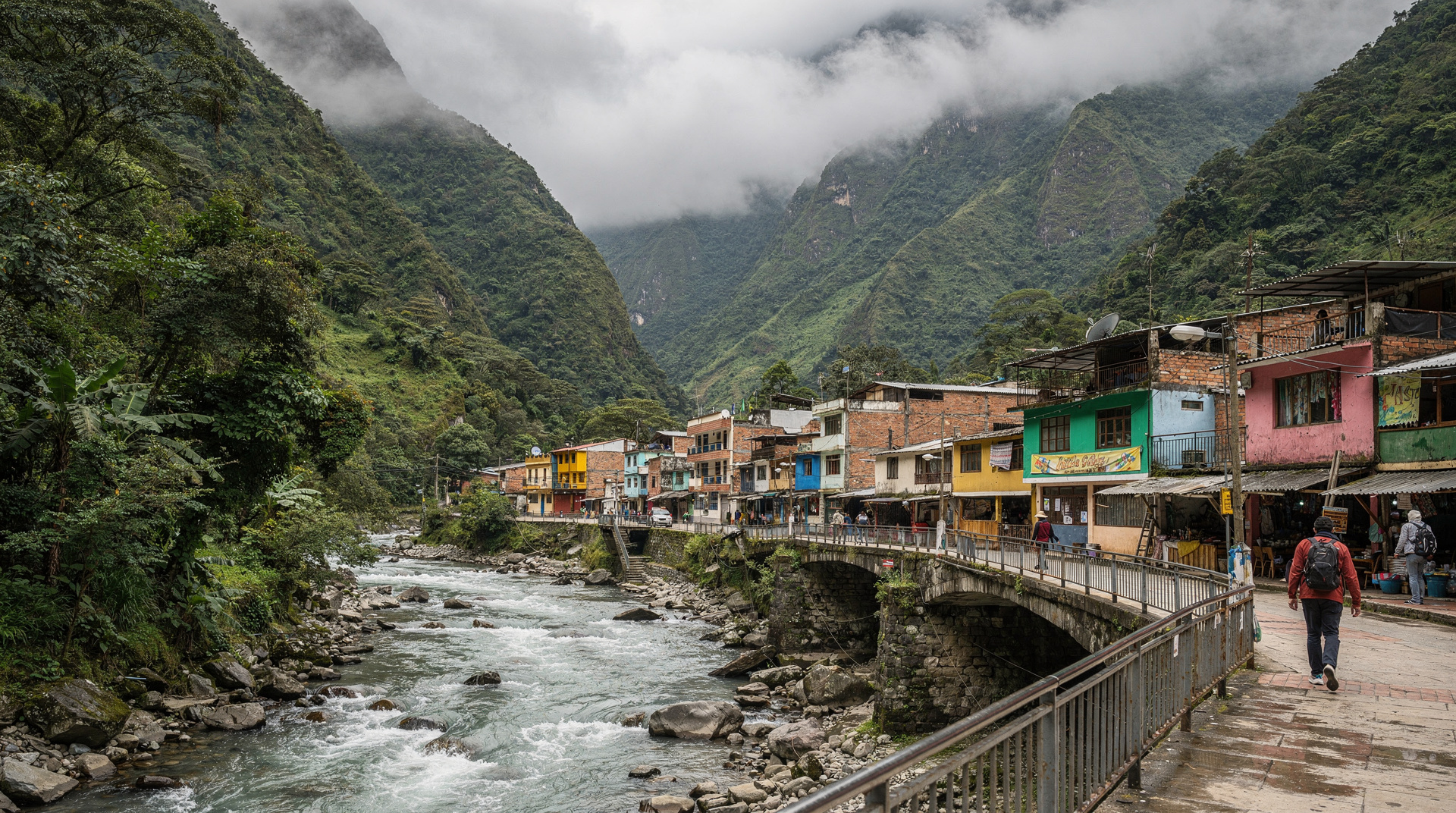
The path deposits you at the northern end of town. You will know you are there when the railway track becomes the main street and the restaurant strip appears on both sides. The Aguas Calientes guide covers accommodation, food and how to plan your morning visit to the citadel.
After a 10 km walk and a 4–5 hour van journey, the priorities are: accommodation, shower, food, sleep. If budget allows, the thermal baths (baños termales) at the top of the commercial street are an excellent evening option — a soak after the walk is genuinely restorative. Entry costs approximately S/25.
Booking your citadel entry
The Hidroeléctrica route covers only the transport to Aguas Calientes. Your Machu Picchu entry ticket is entirely separate — booked through tuboleto.cultura.pe in the same way as for all other visitors. Book your citadel ticket before leaving Cusco. Do not arrive in Aguas Calientes counting on a ticket there — the DDC Cusco office in the town sells in person only a limited daily number of tickets, and a ticket bought there is valid for entry the next day, so popular time slots are best secured online in advance. Full detail in the tickets guide.
If the Hidroeléctrica logistics seem too complicated for your trip, a guided day trip from Cusco with train, entrance and guide all included is the simplest alternative — everything handled in one booking.
The two-day budget itinerary in practice
The cleanest way to use the Hidroeléctrica route:
Day one (travel day): Van from Cusco departing 5–6 am. Arrive Hidroeléctrica around 10–11 am. Walk to Aguas Calientes (arrive 1–2 pm). Check in to accommodation. Thermal baths in the afternoon. Early dinner. Sleep by 9 pm.
Day two (Machu Picchu): Bus terminal at 5 am. First bus to the citadel gate. Visit the site on the circuit and entry time printed on your ticket, ideally with a guide for Circuit 2. Return to Aguas Calientes by midday.
Return: Either walk back to Hidroeléctrica (leaving Aguas Calientes no later than noon to arrive by 3 pm, then wait for your pre-arranged van pickup), or buy a standalone train ticket from Aguas Calientes to Ollantaytambo ($25–50 one way) and take a colectivo back to Cusco from there.
Budget accommodation in Aguas Calientes: approximately S/80–120 (~$25–35) per person per night for a basic guesthouse with private bathroom.
The two-day budget itinerary gives a complete schedule. The Machu Picchu complete guide covers everything that happens once you reach the citadel itself.
What to do on the walk: practical tips and observations
The Hidroeléctrica walk is not just transport — for many travellers who use it, it becomes a highlight of the Machu Picchu experience. Three hours walking beside the Urubamba River through progressively wilder cloud forest is a meaningful transition from the tourist infrastructure of Cusco to the extraordinary site at the end. A few observations:
Wildlife: The cloud forest on both sides of the river supports birds, insects and occasionally mammals that you will not see on the standard train route. Common sightings on the walk include Andean cock-of-the-rock (look on cliff faces in the middle section), various hummingbird species, torrent ducks on the faster river sections, and blue-grey tanagers in the forest canopy. Bring binoculars if birdwatching matters to you.
The railway trains: Both PeruRail and Inca Rail services pass on the line during your walk. These are not slow freight trains — they move at reasonable speed and the horn carries. Move well clear when you hear the whistle and stay clear until the complete train has passed. The trains are not a hazard if you are attentive; they are a hazard if you are wearing headphones and not paying attention to your surroundings.
Pacing: Walk at your own pace, not at the van operator’s suggested pace. Some operators try to bundle the walk as a semi-guided group experience. It is almost universally more enjoyable to walk at your own speed, stop when you want, and arrive in Aguas Calientes when you arrive. The path is impossible to get lost on — follow the railway track.
The final kilometre: The path arrives at the outskirts of Aguas Calientes from the north, along the railway track. The transition from cloud forest to tourist town happens quickly — one moment you are in the trees, the next you are in the restaurant strip. The thermal baths are about 10 minutes’ walk uphill from where the path delivers you.
Rainy season: does the route still work?
The short answer: yes, but with caveats. The walk itself is manageable in light to moderate rain — the path is flat and the river is picturesque under grey skies. The problems are: the mountain road to Hidroeléctrica can be blocked by landslides in heavy rain (this is relatively rare but genuinely possible), and the walk becomes uncomfortable in sustained heavy rain rather than light showers.
If visiting between November and March, check the weather forecast for the Santa Teresa area (not just Cusco — the valley microclimate is different). If a significant rain event is forecast for your departure day, consider postponing by 24–48 hours. The van operators in Cusco will know if the road is passable.
Dry season (May–September) is the strongly preferred window for the Hidroeléctrica route. The walk is pleasant in dry conditions; the road is reliable; and the return logistics are straightforward.
Is this route only for young travellers?
No. The walk requires fitness and appropriate footwear, not youth. The 10 km on flat terrain is well within the capability of most adults of any age who walk regularly and are prepared for the conditions. The van journey is the more physically uncomfortable part for those with back issues — the mountain roads involve significant vibration and occasional pothole jolts.
Key considerations for older or less-fit travellers: the total day (van + walk) is 7–8 hours of travel before you even reach your accommodation. Rest is genuinely required the evening before your citadel visit. Build in adequate recovery time and do not underestimate the cumulative fatigue.
The honest comparison: Hidroeléctrica vs train
For a straightforward total-cost comparison assuming a two-day visit (travel day + citadel day) starting and ending in Cusco:
Standard train route (Vistadome, mid-range hotel):
- Colectivo Cusco–Ollantaytambo return: S/50–60
- Vistadome train return: approximately $100–130
- Bus to citadel return: S/80
- Citadel entry: S/152
- Hotel (1 night Aguas Calientes, mid-range): S/300–400
- Meals: S/80–120
- Total per person approximately: $230–290
Hidroeléctrica route (van, walk, budget hotel, same citadel entry):
- Van Cusco–Hidroeléctrica return: S/130–180
- Bus to citadel one way (or walk): S/40–80
- Citadel entry: S/152
- Hotel (1 night Aguas Calientes, budget): S/100–150
- Meals: S/60–90
- Total per person approximately: $135–175
The saving of $80–120 per person is meaningful. Multiplied across a couple or a small group, it pays for a significant portion of the accommodation upgrade or an extra day elsewhere in Peru. The question is whether the extra 5+ hours of travel and physical exertion of the Hidroeléctrica approach is the right trade for your trip. For many budget travellers, it is. For those with limited days in Peru, it typically is not. If keeping your whole trip lean matters more than this one route, the Cusco on a budget guide and the wider Peru trip cost guide put this saving in context against everything else you’ll spend.
When a packaged budget tour makes more sense
Some travellers like the savings of the budget route but not the work of organising vans, timings and a bed in Aguas Calientes. For them, a two-day budget tour by minivan bundles the ground transport and the overnight into one booking, and a similar two-day budget tour by car is worth comparing if you prefer a smaller group. Neither replaces the independent walk, but both remove the uncertainty of finding a reliable van on the morning. Check what is and is not included before you book, especially the citadel entry, and compare the total against the figures above.
If you would rather earn Machu Picchu on foot over several days, the Salkantay trek guide and the Inca Trail vs Salkantay comparison show the alternatives, and the train versus trek guide helps you choose between all three styles.
Travelling this route with older kids
Families sometimes ask whether the walk is realistic with children. The flat 10 km is physically achievable for most kids aged 10+ who already walk regularly, but the total day — a 4–5 hour van ride plus a 2.5–3 hour walk — is a genuinely long day for a family, and there is no easy bail-out point once you’re past Hidroeléctrica. The Machu Picchu with kids guide leans toward the train for families with younger children specifically because of this lack of a mid-route exit; Hidroeléctrica is a better fit for families with older, enthusiastic hikers who see the walk itself as part of the adventure rather than a hurdle.
What to pack specifically for this route
Beyond the general what to pack for Cusco list, the Hidroeléctrica route has its own priorities: closed-toe shoes with real grip (not sandals — the track ballast and riverside path are uneven), a headlamp or phone torch as backup in case your van is delayed and you finish the walk closer to dusk than planned, a dry bag or ziplock for your phone and documents (afternoon showers arrive with little warning in the cloud forest), and cash in small soles notes — there are no ATMs between Cusco and Aguas Calientes. Pack the night before; the early departure from Avenida Grau does not leave time for last-minute shopping.
Solo travellers and this route
The Hidroeléctrica route is a genuinely good fit for solo travellers: vans are shared, so you will likely have company for the drive, and the walk itself is safe to do alone in daylight since it is well used by other tourists heading the same direction. The solo travel Cusco guide covers the wider safety picture, but the specific point for this route is to avoid starting the walk after 2 pm alone — not because of danger, but because an unexpected slow patch (blister, fatigue, a longer food stop) leaves less daylight buffer than it would for a group.
An alternative worth knowing about: staying in Ollantaytambo first
Some budget travellers combine a night in Ollantaytambo with the Hidroeléctrica route the next morning, since vans and colectivos also depart from the Sacred Valley toward Santa Teresa, cutting an hour or so off the Cusco departure and avoiding the earliest 5 am starts. The Ollantaytambo village guide covers accommodation and how to arrange onward transport from there. It is a reasonable variation if you are already spending time in the Sacred Valley rather than staying in Cusco itself.
Rainy season and dry season, side by side
If you have flexibility on dates, the season genuinely changes how comfortable this route is. The Cusco dry season guide and Cusco rainy season guide cover the broader travel implications, but for Hidroeléctrica specifically: dry season means a reliable road and a dusty but predictable walk; rainy season means real (if infrequent) risk of a blocked road and a muddier, slower walk with more mosquitoes in the cloud-forest sections. Neither makes the route impossible, but dry season removes one layer of uncertainty from an already long day.