Staying in Ollantaytambo: the village guide for 2026
Cusco: Pisac, Maras, Moray, Ollantaytambo Small Group Tour
Is it worth staying overnight in Ollantaytambo?
Yes, especially the night before your Machu Picchu train. Sleeping in Ollantaytambo (~2,800 m) is more comfortable than Cusco (3,400 m) and puts you five minutes from the train station. Morning trains from Ollantaytambo are calmer than the pre-dawn dash from Cusco. The fortress and living Inca town are worth the visit regardless of your onward plans.
The town that refused the Spanish
| Where | Sacred Valley, ~72 km from Cusco, 2,792 m |
| Best for | the night before your Machu Picchu train |
| Cost | guesthouses from S/50–80; mid-range S/120–200 |
| Getting there | collectivo ~S/8–12 (~2 hrs) or taxi S/70–100 (~1.5 hrs) |
| Ticket needed | Boleto Turístico for the fortress (buy in Cusco, not on-site) |
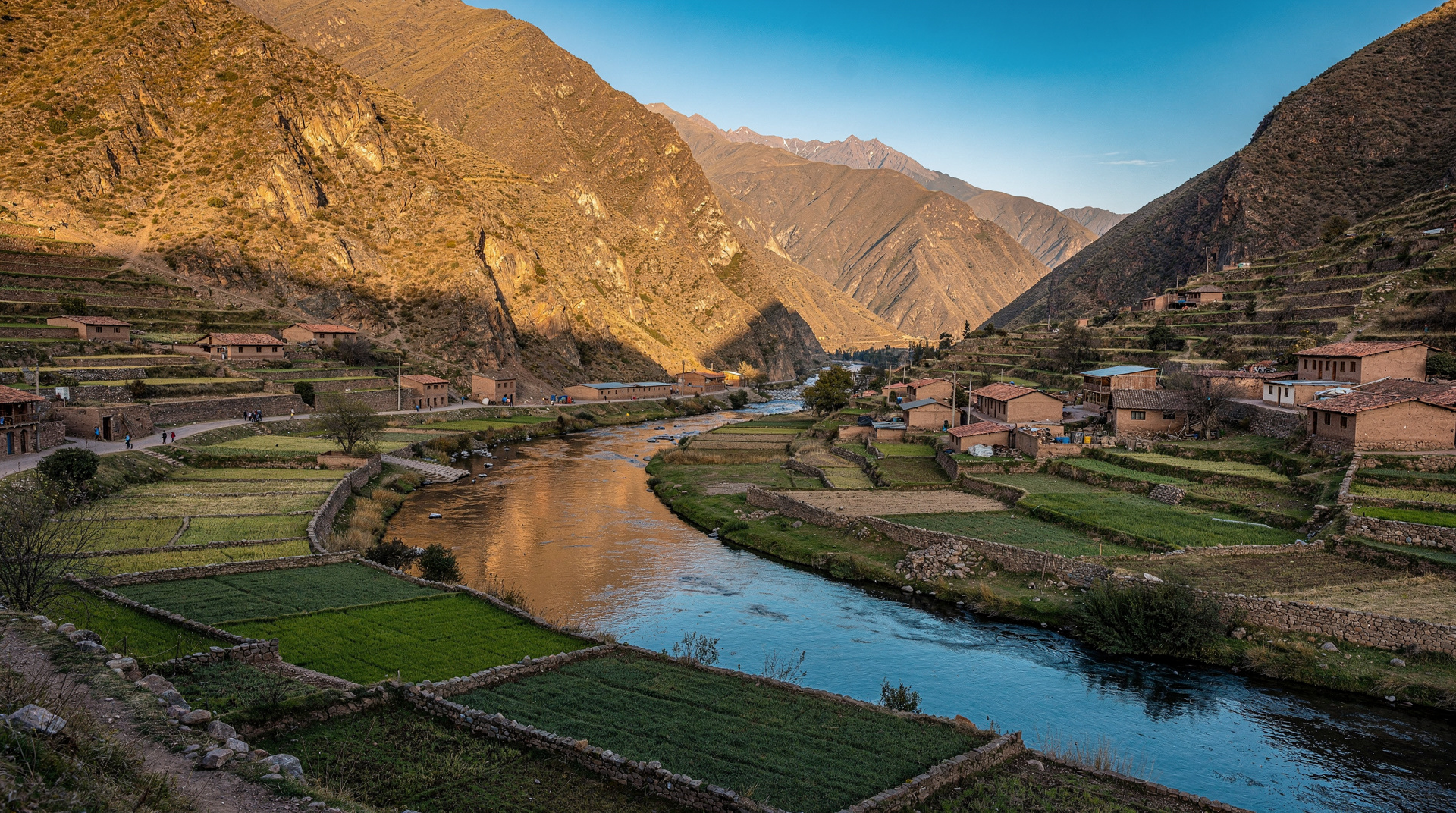
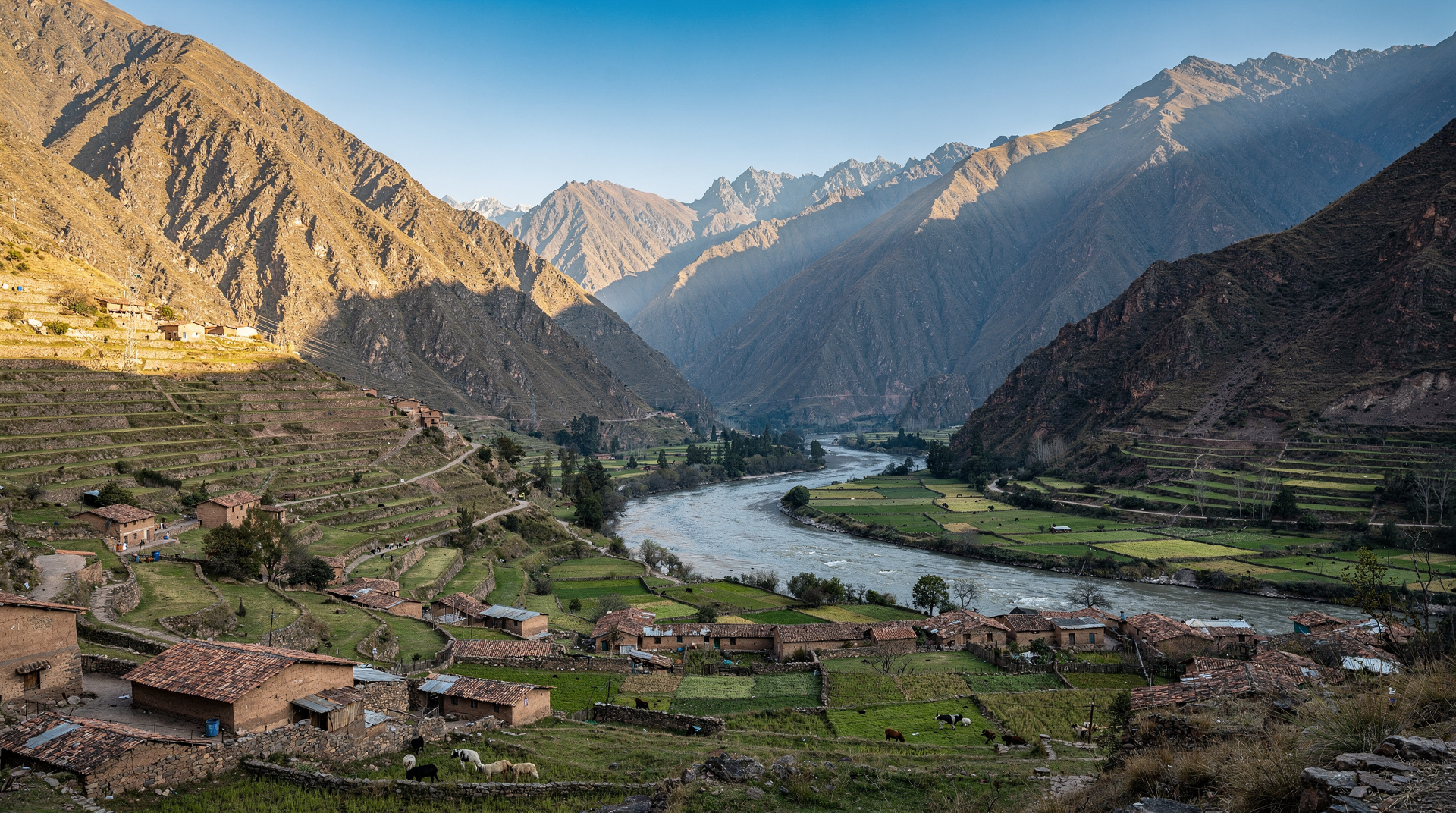
Ollantaytambo sits at the western end of the Sacred Valley where the Urubamba River narrows and the surrounding mountains begin their long descent toward the cloud forest below. At 2,792 m it is one of the lowest settlements in the valley — a detail that matters more than it sounds if you are arriving from Cusco (3,400 m) with an altitude-sensitive first night ahead of you.
The town has two claims to historical distinction that are worth understanding before you arrive. The fortress above it is the one Inca stronghold that successfully held off a Spanish assault: in 1537, Hernando Pizarro’s cavalry force was driven back down the hillside by Manco Inca’s defenders, who used a combination of the gorge’s natural geography and the terraced platforms of the fortress to repel a military machine that had proved unstoppable almost everywhere else in Peru.
It was one of the very few Spanish military defeats in the entire conquest. And the streets below the fortress preserve the original Inca town plan so completely and continuously that the 15th-century layout is still legible in the arrangement of every residential compound and alleyway — not as a museum reconstruction but as a functioning neighbourhood where people live today in buildings that trace an unbroken line to the Inca period.
The fortress: what you are looking at
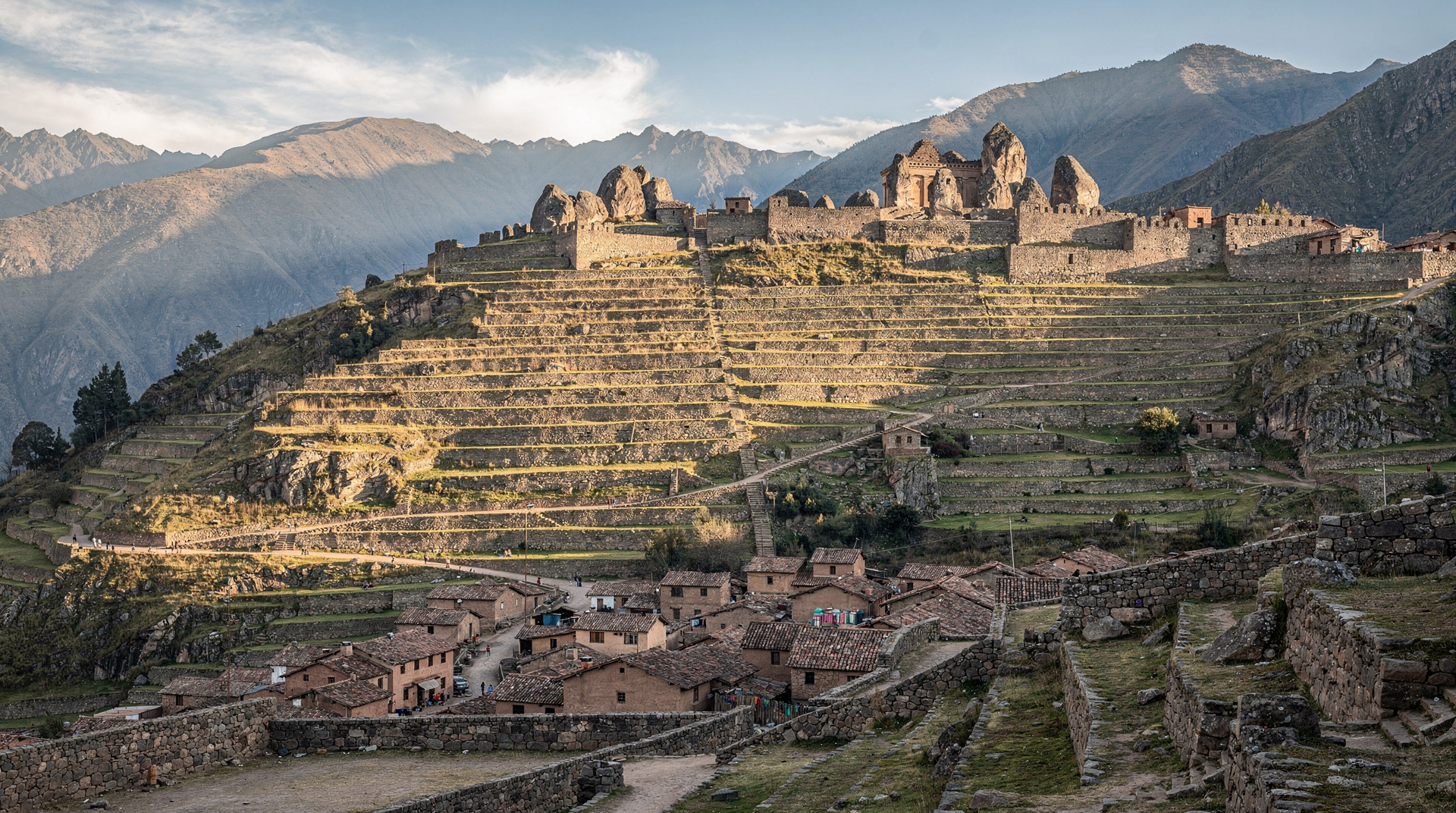
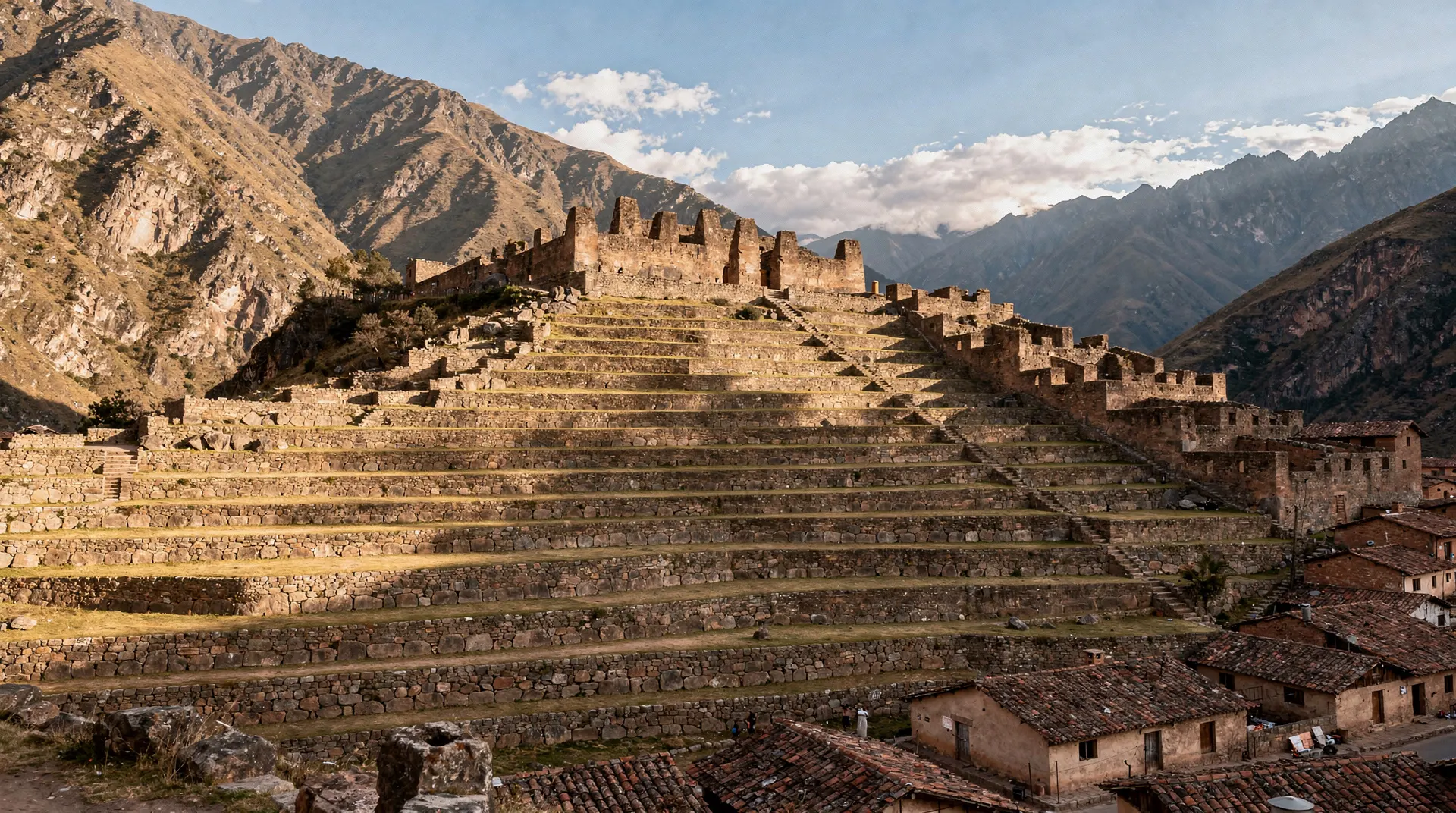
The archaeological site rises steeply above the town on a series of terraced platforms. From the entrance — a short walk from the Plaza de Armas — the path climbs through the lower ceremonial terraces to the Sun Temple platform above, then continues to a series of storehouses and granary buildings (qollqas) visible on the hillside from the town below.
The six monolithic pink granite blocks of the Temple of the Sun, assembled on the upper platform, represent one of the most impressive acts of Inca construction in the entire region. Each block is estimated to weigh approximately 50 tonnes and has been cut, transported and fitted with the interlocking precision that characterises the finest Inca stonework. The quarry from which the stone came — the Kachiqhata quarry — is visible across the gorge on the opposite hillside, a straight line of sight across the river with a vertical height difference of several hundred metres.
The question of how these blocks were moved across the river and up the fortress slope is one that archaeologists have not fully resolved. Experimental archaeology using the rope-and-ramp methods documented in colonial accounts explains the physics; the organisational scale required — thousands of workers coordinating over months or years — is harder to fully grasp.
The defensive layering of the site is also worth attention. The fortress was not simply a walled hilltop. The approach from the valley required passing through a series of controlled gateways, each overlooked by defensive positions. The terraces themselves are as high as a man and were documented by the Spanish as having been flooded from above during the 1537 battle — turning the lower approaches into obstacles that prevented the cavalry from operating effectively. The site was designed as much for control of the valley below as for display of Inca power.
Admission requires the Cusco Boleto Turístico (full circuit ~S/130; Sacred Valley partial ~S/70). Buy it at COSITUC on Av. El Sol 103 in Cusco or at the covered sites. Allow 2–2.5 hours to walk the full site including the upper platform, the qollqas viewpoint and the Inca ceremonial baths near the entrance.
A guided Sacred Valley day tour typically ends at Ollantaytambo with a guided explanation of the fortress history and the Temple of the Sun construction. The guide commentary at this site is among the most valuable in the valley — the engineering context and military history are both difficult to reconstruct independently from the physical remains alone.
The living Inca town plan
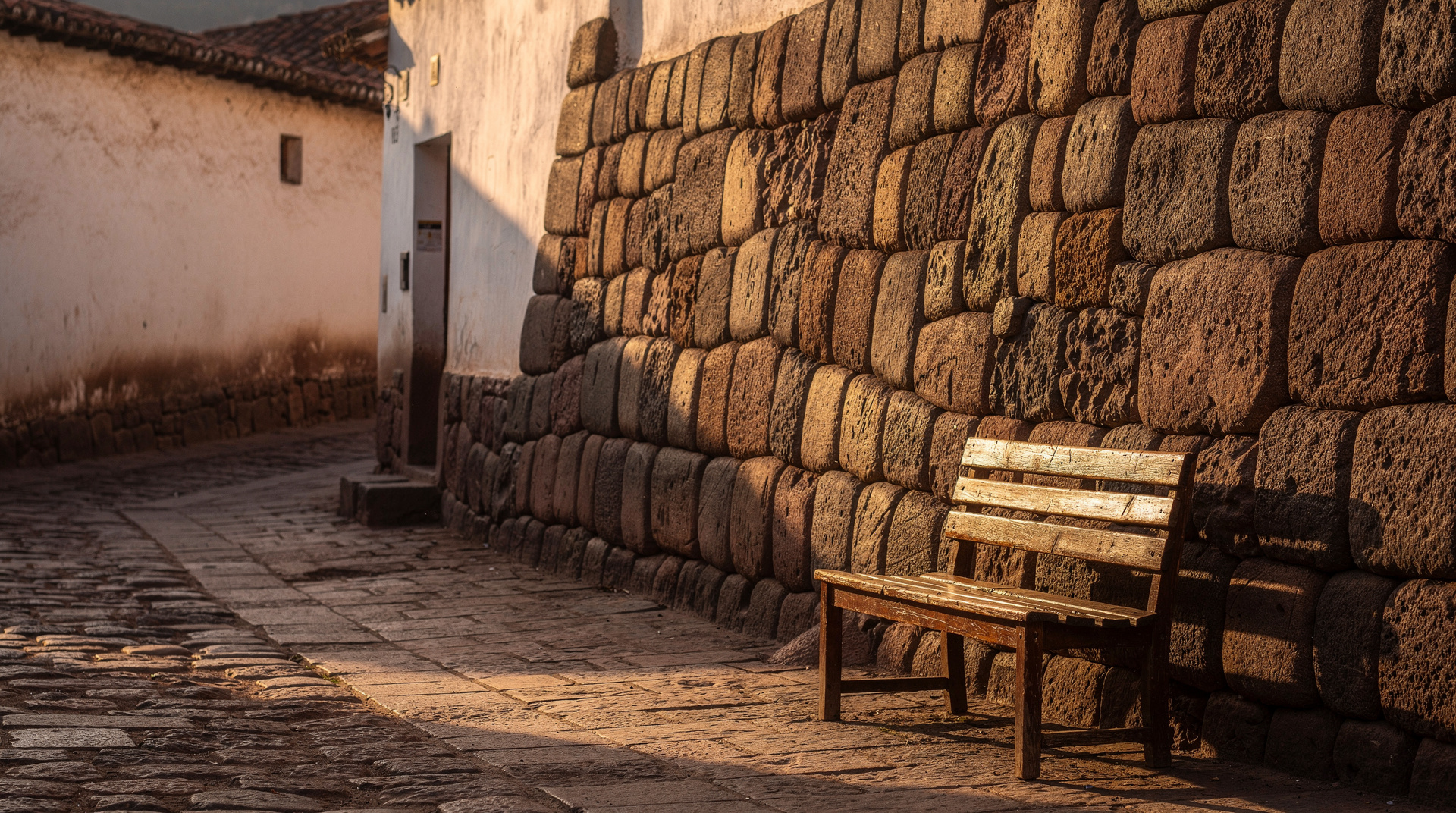
Below the fortress, the residential area of Ollantaytambo is laid out in canchas: rectangular compounds each containing several houses arranged around a central shared courtyard, entered from the street through a single narrow trapezoidal gateway. This plan — an Inca residential standard replicated across the empire — is normally found only in archaeological ruins. In Ollantaytambo, it is found in the streets where people live.
Walking from the main square toward the fortress, you enter the oldest continuously inhabited Inca settlement in Peru. The stonework in doorways and lower walls is original; the water channel running along the central street has flowed continuously since the 15th century; the proportions of alleyways and gateways are those the Inca engineers specified. Some canchas have been converted into guesthouses, restaurants or small shops; many remain family residences. The effect is of inhabiting rather than visiting: you are walking through a working neighbourhood that happens to be 600 years old.
The residential grid takes 20–30 minutes to walk without stopping, and considerably longer if you pause at doorways and water channels. The fortress is always visible above as orientation. Evening, when the tourist traffic has cleared and residents are out in the streets before dinner, is the best time for this walk.
Sleeping in Ollantaytambo: why it makes sense
The practical argument for an overnight stop is straightforward. Sleeping at 2,792 m rather than Cusco’s 3,400 m gives your body a calmer first night, particularly in the first days at altitude. Breathing is easier, sleep is deeper, and headaches are less common at valley altitude. The physiological benefit is most significant on your first one or two nights in the region. The Sacred Valley versus Cusco base comparison explains this in full.
The train-logistics argument is equally compelling. The fastest morning trains from Ollantaytambo to Aguas Calientes depart from around 5:45 am. Catching one from Ollantaytambo requires a five-minute walk to the station and a 5:15 am alarm. Catching the same train from Cusco requires a 1.5-hour drive through the dark on a mountain road, typically in a shared taxi, departing the hotel at 3:30–4 am. The Ollantaytambo option is substantially more comfortable.
Accommodation runs from S/50–80 for basic guesthouses in the town centre (several occupy converted Inca-period buildings with original stonework walls still intact — uneven floors, low doorways and all) through mid-range properties at S/120–200 that offer hot showers and Wi-Fi to a handful of boutique hotels at S/300–450 with valley views and more contemporary facilities. Budget travellers can find dormitory beds from S/30–40 in a handful of hostels near the plaza.
Most restaurants in Ollantaytambo are on or near the Plaza de Armas and stay open until 9–10 pm. The menus are straightforward Peruvian and international — trout from the valley rivers, alpaca dishes, pizza and pasta for those who have reached the end of their appetite for rice-and-potato menus. Quality is reliable rather than exciting.
The train station
The railway station is a flat 10-minute walk from the Plaza de Armas, through the town and past the road to the fortress entrance. It is well signposted and easy to find even in the dark. Both PeruRail and Inca Rail run services from here to Aguas Calientes, the base town for Machu Picchu.
Journey time on the standard Vistadome service is approximately 1 hour 50 minutes; the basic Expedition service takes around 2 hours 10 minutes. The journey descends from valley altitude into increasingly lush cloud-forest vegetation as the Urubamba gorge narrows — visually one of the most dramatic train journeys in South America. Round-trip fares from Ollantaytambo to Aguas Calientes run approximately $60–130 per person depending on service class and season.
June–August is the peak booking period; trains sell out several weeks ahead. Book immediately once your travel dates are confirmed. The Machu Picchu train tickets guide covers booking platforms, price tiers by service class and what to do if trains show as sold out.
A second night: what it unlocks
Most itineraries allow one night in Ollantaytambo, but a second night opens options that a single overnight cannot accommodate. With two nights, you have a full day free for a plateau excursion to Chinchero and Maras without the pressure of an evening train departure, or simply time to walk the fortress and the residential grid at a genuinely unhurried pace across two separate visits — once in the cooler early morning and once in the golden evening light.
Travellers who have found Cusco’s altitude taxing often report that a second night at Ollantaytambo’s lower elevation noticeably improves how they feel before returning to the city or continuing to Machu Picchu. The trade-off is straightforward: one additional night’s accommodation against a materially calmer, better-paced few days in the valley.
The Inca water channels and a detail worth noticing
One feature of Ollantaytambo that most visitors walk past without comment is the water channel running along the central street of the residential quarter. This is a functioning Inca-period water management system: a narrow channel cut into the stone paving of the street carries clean water from a spring on the hillside through the residential grid and into the lower town. It has flowed continuously, with maintenance rather than reconstruction, since the 15th century.
Inca water engineering is easy to appreciate in the abstract — every site guide will tell you the Inca were skilled hydraulic engineers. Ollantaytambo’s street canal makes the abstract concrete: here is the actual channel, still carrying water, still functional as the Inca designed it 600 years ago. Run your hand along the cut stone above the water flow and the precision of the carving is apparent — it is not rough fieldwork but finished masonry, made to a specification, as is every other engineering element in the town.
The canal is most visible in the residential alleys between the main street and the fortress access road. Follow the sound of flowing water to find the best section.
What to eat and drink
A two-course set lunch in Ollantaytambo (soup and a main of rice, potato and a protein, sometimes with fresh juice) costs S/15–25 at the restaurants around the plaza. It is exactly the right refuelling stop before an afternoon at the fortress. For dinner, the same establishments shift to à la carte menus; alpaca lomo saltado — the Peruvian wok-stir-fry dish — and fresh trout are the items that travel well from the local supply chain.
Coffee is instant in the budget places; two or three café-style spots near the plaza have espresso machines. Bring cash — the two ATMs in Ollantaytambo sometimes run out of notes in the tourist season, and card readers at restaurants are unreliable.
Practical notes for a smooth stay
Book your train ticket before you arrive in Ollantaytambo. The station ticket window does not hold significant inventory for walk-in purchase. In June and July the on-the-day queue will often be turned away entirely.
Walk the residential alleyways before dinner, not after. Street lighting in the Inca grid is minimal and the original cobblestones are genuinely uneven.
The altitude is lower but real. At 2,792 m you will still feel a fast uphill walk differently than at sea level. The fortress stairways are steep; take them at two-thirds of your normal pace on your first day in the valley.
Check your Boleto Turístico stamping sequence. If you have already used the Boleto at Pisac and Moray earlier in the day, the Ollantaytambo stamp is the fourth of the day on a full valley circuit. Make sure the ticket is not already completely filled from a previous visit.
The 4-day Cusco and Machu Picchu itinerary places one night in Ollantaytambo on day two — arriving after a valley tour from Cusco and departing on an early train the next morning. The 7-day itinerary allows two nights, which is enough time to walk the fortress and the town at leisure, visit the market and make a short excursion toward Chinchero.
Day trips from Ollantaytambo
With a two-night base in Ollantaytambo you have time for excursions beyond the town. The most practical:
Chinchero and Maras: The Chinchero plateau is 30–40 km east of Ollantaytambo by road, passing through Urubamba. A taxi hired from Ollantaytambo for a half-day — covering Chinchero’s weaving cooperatives and church, the Maras salt pans and the Moray circular terraces — costs approximately S/120–160 for the vehicle. This allows you to do the plateau circuit at leisure rather than as part of a rushed day-tour loop from Cusco.
Urubamba town: Fifteen kilometres east of Ollantaytambo, Urubamba is the valley’s main service town. It has ATMs (more reliably stocked than Ollantaytambo’s), a wider range of restaurants and a good Sunday market. Collectivos run between Ollantaytambo and Urubamba throughout the day (~S/3–4, 20 minutes).
Inca trail trailhead at km 82: For trekking groups, the four-day Inca Trail begins at the km 82 trailhead — accessible by a short taxi or collectivo from Ollantaytambo. Travellers not undertaking the full trek can walk a short section of the trail toward the first Inca site at Llactapata for a day hike.
Getting to Ollantaytambo from Cusco
By collectivo from Calle Puputi in Cusco: change at Pisac or Urubamba, total journey approximately 2 hours and S/8–12. The scenic route via Pisac adds 30 minutes compared to the direct road through Chinchero but gives you the valley road alongside the river.
By private taxi from Cusco: S/70–100 direct, approximately 1.5–2 hours. Worth it for groups or with luggage. Most taxi drivers who do this route know both the Pisac valley road and the direct Chinchero road — specify which you want.
By Sacred Valley tour that ends in Ollantaytambo: the most common arrival method, dropping you at the fortress after a full day covering all the main valley sites. Most valley-day tours include this option as the final stop.
Fitting Ollantaytambo into the bigger picture
Ollantaytambo works best as a hinge between the valley and Machu Picchu rather than a stop in its own right. If you are still deciding how to split your time, the Sacred Valley complete guide and the one-day Sacred Valley itinerary show how the other villages and sites line up along the river, and getting around the Sacred Valley explains the collectivo and taxi options between them.
The ruins themselves have their own companion page: the Ollantaytambo ruins guide goes deeper into the terraces and the Temple of the Sun than this village-focused overview. Nearby, Pisac offers a very different atmosphere with its market and hilltop ruins, while Chinchero and Maras and Moray are the natural add-ons if you have a spare half-day.
Travellers who are nervous about altitude will find the Cusco acclimatization plan a useful companion, and the altitude comparison between Cusco and the Sacred Valley spells out why a valley first night is so often recommended. For the onward journey, the guide to Machu Picchu by train and the comparison of PeruRail and Inca Rail help you choose a service before you book, and the how to get to Machu Picchu overview covers the alternatives. Be wary of resellers by reading about Machu Picchu train ticket scams first.
For a first-hand, less formal account of the valley pace, the slow travel in the Sacred Valley diary is a good read before you commit to an itinerary.
Choosing between a tour and doing it yourself
Ollantaytambo is easy to reach independently, so a tour is a question of taste rather than necessity. If you would rather not juggle collectivos, a Sacred Valley day tour taking in Pisac and Ollantaytambo links the main sites in one go, with the guide’s commentary at the fortress as the main benefit. If your plan is to continue to Machu Picchu anyway, a two-day Machu Picchu tour starting from Ollantaytambo packages the train, the night in Aguas Calientes and the citadel visit, which removes most of the booking work described above.
Doing it yourself costs less and gives you control over the pace, but you take on the train booking and ticket timing. The Inca Trail complete guide and the train versus trek comparison help if you are still weighing how to reach the citadel. For a wider view of the region, the best day trips from Cusco and the Pisac market and ruins page show what sits along the same road, and the Maras and Moray day trip covers the plateau in more detail.
Markets and shopping in Ollantaytambo
A small produce and crafts market operates near the Plaza de Armas, busiest in the early morning when locals shop for the day’s vegetables, cheese and bread alongside the smaller tourist-facing stalls selling textiles and souvenirs. It is a fraction of the size of the Pisac Sunday market but has the advantage of feeling genuinely local rather than staged for visitors. Textile quality varies considerably; look for tightly woven pieces with natural dye colours (softer, less uniform tones) if you are buying alpaca or wool goods, and expect to negotiate modestly on price — 10–15% off the initial asking figure is normal and not considered rude.
Wi-Fi, connectivity and staying in touch
Mobile signal in Ollantaytambo is generally reliable for calls and basic data on Peruvian networks, noticeably better than in Aguas Calientes further down the line. Most guesthouses and restaurants offer Wi-Fi, though speed varies and can slow significantly in the evening when demand peaks. If you need to confirm a booking or check train status, do so before boarding — connectivity at Machu Picchu itself and en route is unreliable to non-existent.
After the Machu Picchu train: continuing to Cusco
If you are returning from Machu Picchu and heading back to Cusco rather than spending a second night in Ollantaytambo, trains from Aguas Calientes typically arrive in Ollantaytambo between 4:30 and 9 pm depending on which return train you booked. Taxis and shared collectivos from the Ollantaytambo station area back to Cusco run throughout the evening until approximately 9–10 pm. Cost by shared collectivo: S/8–12; private taxi: S/70–100.
It is also entirely feasible to spend a night in Ollantaytambo on arrival from Machu Picchu before continuing to Cusco the following morning. After a full day at Machu Picchu followed by the train journey, arriving in Ollantaytambo at 6 pm and sitting down to dinner in the town is considerably more pleasant than rushing 72 km back to Cusco that evening. The fortress lit up in the evening is worth seeing from the town below.