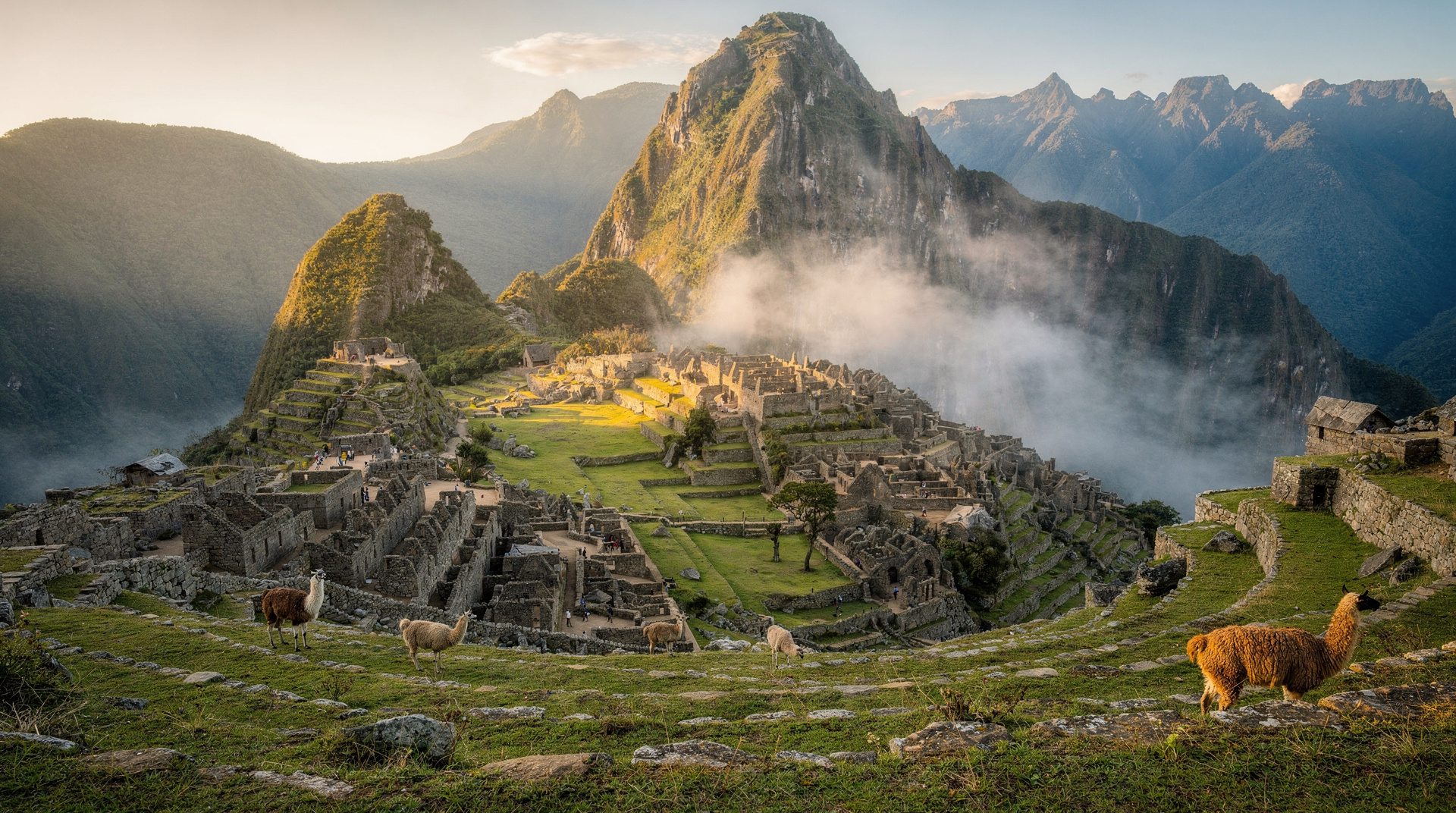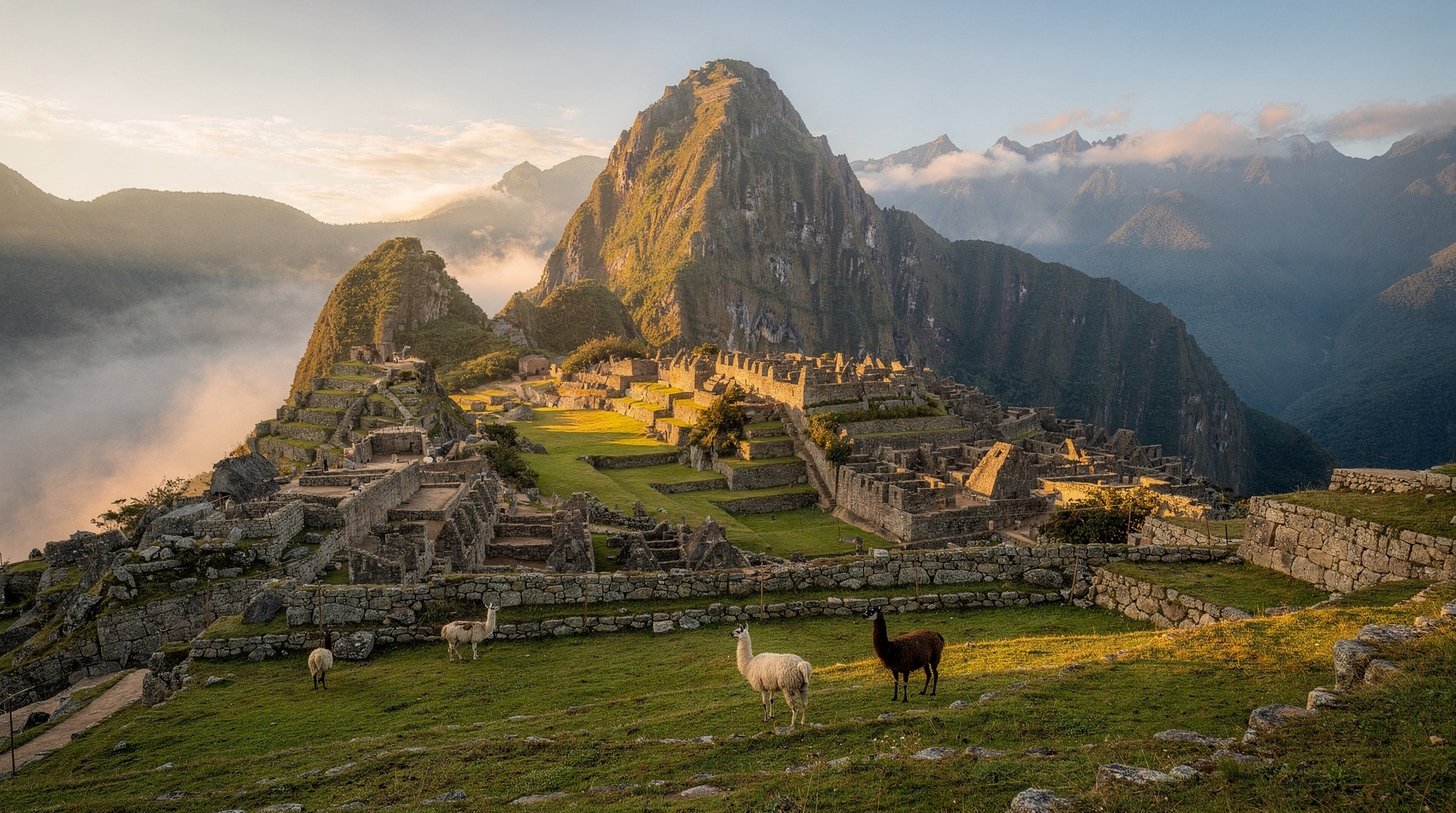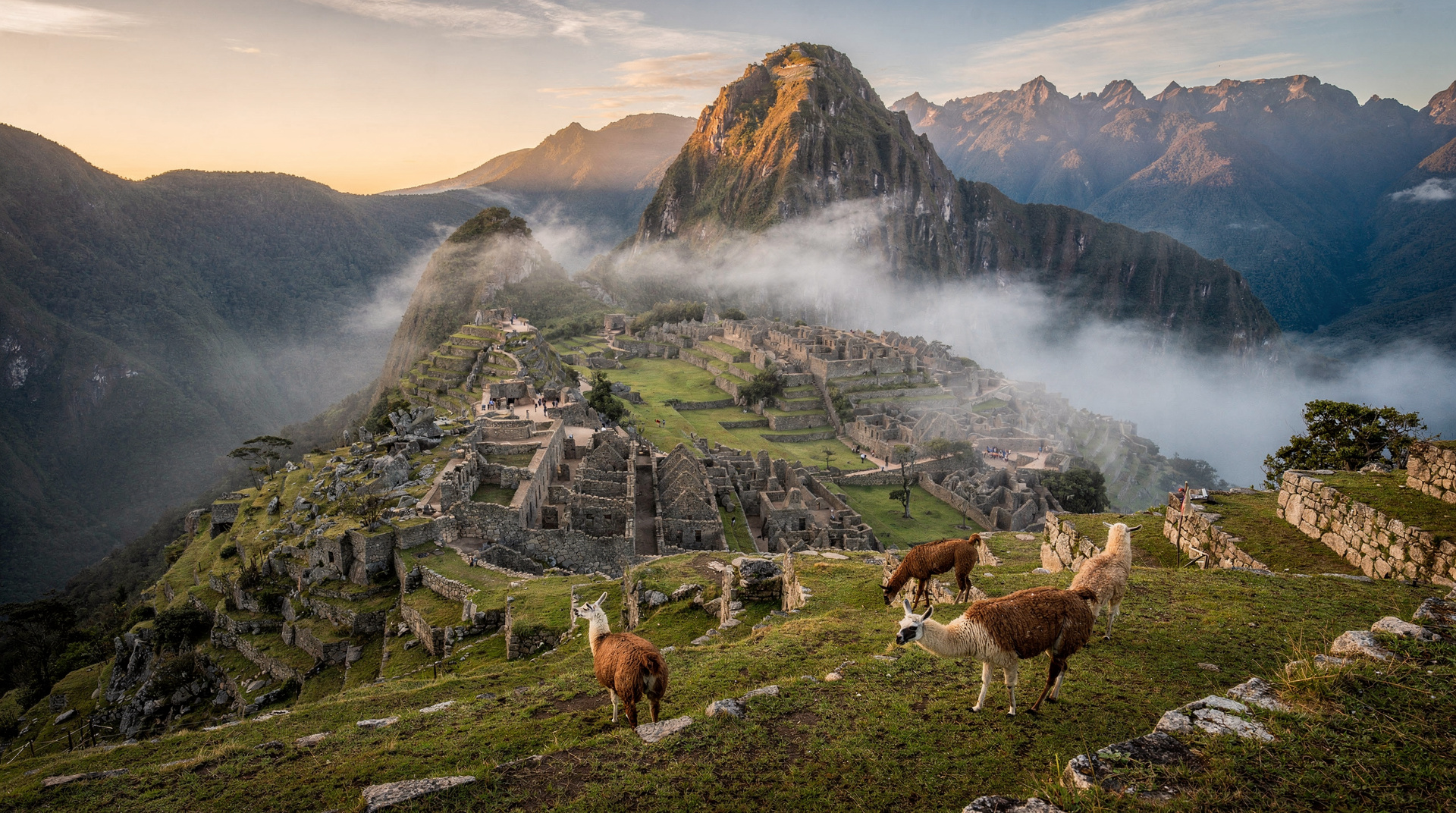
Machu Picchu day trip from Cusco — is it worth it?
From Cusco: Machu Picchu Day Trip with Train Tickets
Can I do Machu Picchu as a day trip from Cusco?
Yes — a Machu Picchu day trip from Cusco is entirely possible and done by thousands of visitors daily. Expect a 3:30–4 am start, 3–4 hours at the citadel, and a late evening return to Cusco. It is a long day but manageable. Staying overnight in Aguas Calientes gives you significantly more time at the site, a far less exhausting experience, and two early-morning entry opportunities — worth the extra cost for most travellers.
The most common Machu Picchu question — answered honestly
Every visitor to Cusco asks the same question at some point: can I see Machu Picchu in a day? The honest answer is yes — but with specific conditions attached. This guide tells you exactly what a day trip from Cusco involves, what you get for it, what you sacrifice, and how to make the right call for your situation.
| Where | Cusco → Ollantaytambo → Aguas Calientes → citadel, and back |
| Cost | Around $120–200 per person independent to fully guided |
| Time needed | 14–16 hours door to door; 3.5–4 hours at the site |
| Getting there | Taxi/colectivo to Ollantaytambo, train, bus up to the gate |
| Best for | Tight schedules; overnight in Aguas Calientes is better for everyone else |
What a Machu Picchu day trip actually involves
A day trip from Cusco to Machu Picchu and back is approximately a 14–16 hour round trip on the standard train route. The logistics are sequential and each stage connects directly to the next. Here is the realistic timeline for the most common format:
3:30–4:00 am — Departure from Cusco. At this hour, colectivos from Avenida Grau may not yet be running reliably, so a pre-arranged private taxi to Ollantaytambo (S/80–100) is the practical choice for independent travellers. Organised tours typically include the transfer.
5:00–5:30 am — Train from Ollantaytambo. The earliest services depart around 5:00–5:15 am from Ollantaytambo.
6:30–7:00 am — Arrive Aguas Calientes. Queue for and board the bus to the citadel gate.
7:00–7:30 am — Arrive at the citadel gate for the morning entry slot.
7:30 am–11:30 am — Time at the site. Approximately 3.5–4 hours.
11:30–12:00 pm — Board the bus back down to Aguas Calientes. Lunch.
1:00–2:00 pm — Train from Aguas Calientes back toward Ollantaytambo.
2:30–3:30 pm — Arrive Ollantaytambo. Transfer back to Cusco (colectivo S/20–30 or taxi).
5:00–6:00 pm — Back in Cusco.
That is 3.5–4 hours at the site after roughly five hours of travel each way. The logistics work. The day is exhausting. Most visitors who do it are glad they went; many wish they had stayed overnight.
What you can realistically see in a day trip
With 3.5–4 hours at the site, a focused visitor can complete one circuit comfortably. Circuit 2 (Clásico) crosses the urban sector, while Circuit 1 (Panorámico) stays on the upper parts and does not enter it. Check the official Machu Picchu website or tuboleto.cultura.pe for the current routes and whether they can be combined. A day-trip visit through the urban sector covers:
- The panoramic ridge viewpoint at the Hut of the Caretaker (Circuit 1 area)
- The Temple of the Sun
- The Intihuatana stone
- The Sacred Plaza and Temple of the Three Windows
- The Royal Tomb
- The agricultural terrace overview
This is a substantial visit. It covers all of the headline structures and leaves most visitors feeling satisfied. A licensed guide for the first 90 minutes adds enormously to the experience, particularly for Circuit 2.
What a day trip does not accommodate:
- Huayna Picchu (route 3-A of Circuit 3, adds substantial time and has no late-entry tolerance)
- Machu Picchu Mountain (route 1-A of Circuit 1, also adds substantial time with no late-entry tolerance)
- Circuit 3 (Realeza) with its Gran Caverna and Huchuy Picchu routes, which are high-season only
- A genuinely relaxed pace in the quieter zones
- A second visit the following morning with a fresh perspective
If any of those matter to you, a day trip is the wrong format. The overnight solution solves all of them at the cost of one night’s accommodation in Aguas Calientes.
Booking a day trip: options
Option A: fully organised guided day trip
A guided day trip from Cusco including train, entrance and guide is the most convenient choice for first-time visitors. The operator handles the 3:30 am pickup, the Cusco-to-Ollantaytambo transfer, train tickets, bus to the citadel gate, entrance ticket, and a licensed English-speaking guide for the site.
The advantages: no logistics juggling at 3 am, guaranteed guide availability, and a single booking covering all components. The limitation: you follow the operator’s schedule and time slots rather than fully choosing your own.
Typical cost: $130–200 per person including all transport, entrance and guide. Varies by operator and season.
A standalone guided citadel experience can also be added if you have booked transport and entry independently — a worthwhile addition for first-time visitors who want knowledgeable interpretation of what they are seeing.
Option B: fully independent
Each component booked separately:
- Private taxi or transfer, Cusco to Ollantaytambo: S/80–100 for the car (shareable)
- Return train Ollantaytambo–Aguas Calientes: $60–130 depending on class (perurail.com or incarail.com)
- Bus to citadel gate, Aguas Calientes: S/80 (~$24) round trip (buy at terminal)
- Citadel entry ticket: S/152 (~$45) via tuboleto.cultura.pe
Total per person (independent): approximately S/400–600 (~$120–175)
At-gate guide: approximately S/120–150 for 2 hours in English, if desired.
The how to get to Machu Picchu guide and the trains guide cover the independent booking logistics for each component. The tickets guide covers entry tickets.
Day trip vs overnight: the honest comparison
The key question is whether the extra cost of an overnight stay is worth it for your situation. Here is a direct comparison:
Day trip from Cusco:
- Start time: 3:30–4:00 am
- Arrival at citadel: 7:00–7:30 am (first slot possible)
- Total site time: 3.5–4 hours
- Mountain add-ons: not practical
- Physical intensity: very high (14–16 hour day, most of it travel)
- Extra cost above day trip: nil
- Best for: visitors with tight schedules, those who cannot extend their stay
Overnight in Aguas Calientes:
- Start time from Cusco: flexible (travel day 1, visit day 2)
- Arrival at citadel: 6:30–7:00 am both mornings (if staying two nights)
- Total site time: up to 8–10 hours across two days
- Mountain add-ons: fully possible
- Physical intensity: moderate (travel split across two days)
- Extra cost: approximately S/200–400 (~$60–120) for hotel, plus potential additional train leg
- Best for: first-time visitors with any flexibility, those wanting mountain add-ons
The extra S/200–400 for an overnight in Aguas Calientes is the price of a dramatically better experience. For most visitors travelling specifically to see Machu Picchu, this is excellent value. The Aguas Calientes guide covers accommodation at every budget level.
Making the most of a day trip
If a day trip is your only option, these decisions maximise your time at the site:
Book the 6 am or 7 am entry slot. The first 30–45 minutes on site are the quietest part of any day, regardless of season. This is where the day-trip advantage is sharpest — arriving before the later trains disgorge visitors in quantity.
Pre-book a licensed guide. Having a guide for at least Circuit 2 transforms what you take away. On a time-limited visit, guided interpretation means you don’t waste your finite hours reading information panels or standing puzzled in front of structures you don’t understand.
Pack all food and water. The only food inside the site is at the Sanctuary Lodge at extreme prices — sandwiches run S/60+. Pack at least 1.5 litres of water and a proper lunch before boarding the bus from Aguas Calientes. This is one of the most reliably overlooked points in pre-trip planning.
Walk down from the citadel, take the bus up. The uphill bus from Aguas Calientes saves 45–60 minutes of stiff climbing before your visit — worth it. The descent on foot (Camino Hiram Bingham, 30–40 minutes, a pleasant forest path) saves S/40 of the return bus fare and is easier on the knees than the downhill stone path.
Leave the site by noon. If your return train is at 1–2 pm from Aguas Calientes, be at the bus queue by 11:30 am. Missing the train in peak season typically means a minimum 3–4 hour wait for the next available service — or overnight in Aguas Calientes at unplanned hotel rates.
The broader Cusco itinerary context
A Machu Picchu day trip works best embedded in a longer Cusco visit where you have already spent 1–2 days acclimatising, seeing the city’s Inca sites, and exploring the Sacred Valley. The 4-day Cusco and Machu Picchu itinerary is the most popular format for first-time visitors and builds the day trip into a structured plan that covers the most important sites at a sensible pace.
If you have fewer than four days: the 3-day Cusco itinerary shows how to prioritise when time is tight.
The Machu Picchu complete guide is the master reference for the visit itself. The tickets guide covers all booking logistics. And the Aguas Calientes guide makes the case for the overnight stay in full, including what to do with your evening in the town below the citadel.
What happens at the site on a day trip: a realistic narrative
To give a sense of what the day actually looks like in practice, here is a realistic account of a well-managed day trip using the early entry slot:
3:30 am, Cusco: Your hotel reception has arranged a taxi the night before. You leave on time, slightly bleary, with a packed bag containing your water, snacks, passport and ticket QR code. The streets of Cusco are empty.
5:00 am, Ollantaytambo train station: You have arrived with 15 minutes to spare. The platform is already busy — other tourists, a handful of local workers. The Expedition service is clean and comfortable. You find your assigned seats and watch Ollantaytambo’s fortress glow faintly in the pre-dawn light as the train pulls away.
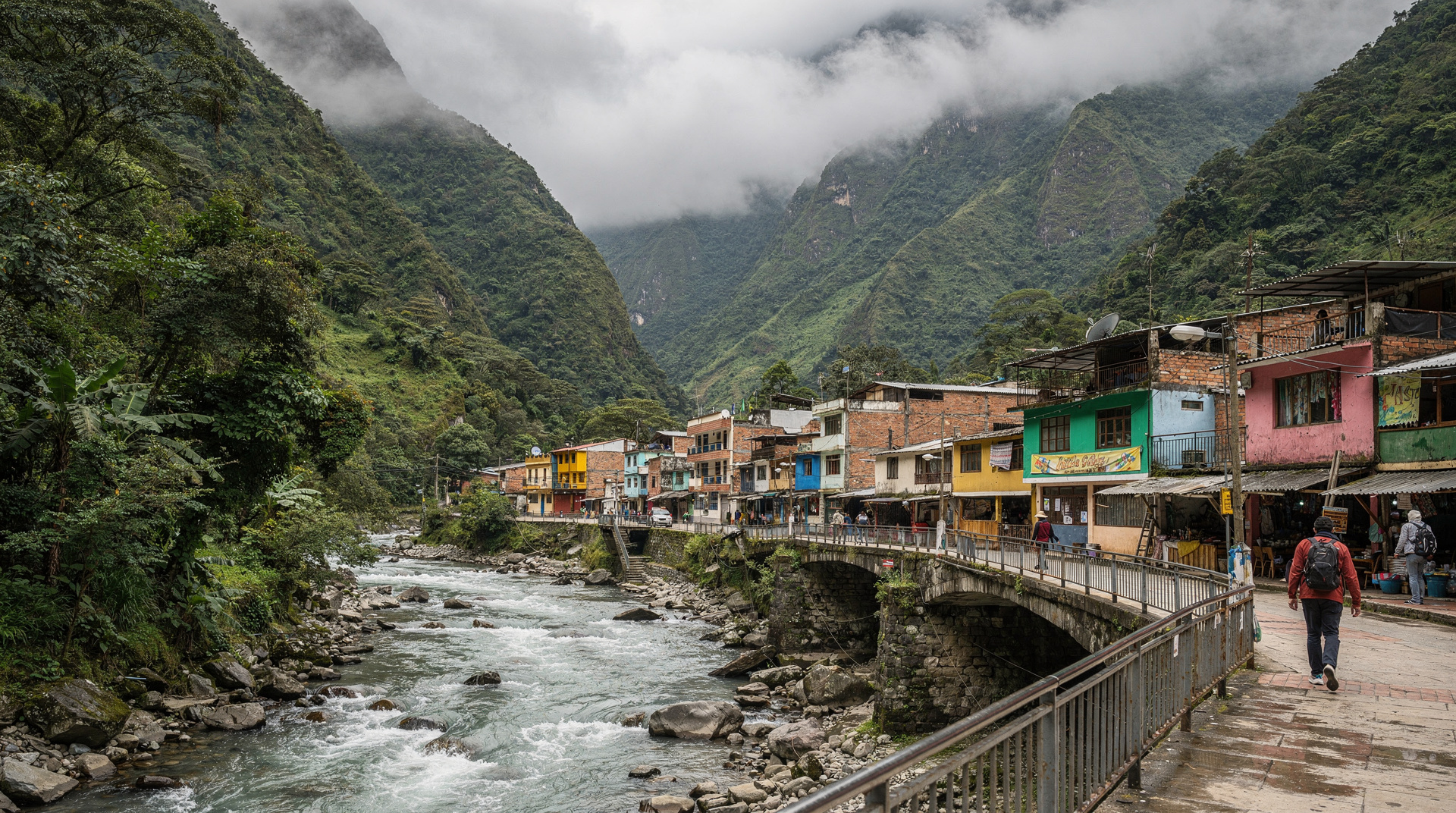
6:40 am, Aguas Calientes: The train arrives at what appears to be the main street of a small town — because it is. You follow the flow of passengers north toward the bus terminal, joining a queue that is already 40 people long. You wait 20 minutes. The bus takes 20 minutes to reach the gate.
7:30 am, the citadel gate: QR code scanned, passport checked, you are in. The mist is still on the ridges above the site. The terraces are virtually empty. The first 30 minutes are extraordinary.
9:00 am: The site is visibly busier. The Hut of the Caretaker viewpoint has a crowd; the Temple of the Sun is being explained to a dozen different groups simultaneously. You move through Circuit 2 with your guide — the Intihuatana stone, the Sacred Plaza, the Royal Tomb. The guided 90 minutes have been worth every sol.
11:30 am: You are at the lower terraces now, quieter and peaceful. You eat your packed lunch sitting on a terrace with a view of the Urubamba canyon. A llama is grazing 10 metres away without interest in you.
12:30 pm: You decide you have covered what you want. The bus back to Aguas Calientes takes 20 minutes. You eat a proper meal at a restaurant near the station.
2:00 pm: Train from Aguas Calientes back to Ollantaytambo.
5:30 pm: Back in Cusco.
The day is long. The early start is real. The site delivered.
Is the early start actually as hard as it sounds?
Most visitors who have done early starts for dawn activities (airport departures, dawn wildlife watches, sunrise hikes) find the 3:30 am start for Machu Picchu manageable. The adrenalin of arriving at one of the world’s great sites in the early morning light tends to override the sleepiness. The return journey is where the exhaustion hits — most day-trippers are notably quiet on the afternoon train back.
The practical mitigations: go to bed by 9–10 pm the night before; eat a light dinner; lay out everything you need the evening before so the departure is frictionless; and keep caffeine minimal (altitude and caffeine interact uncomfortably for some people).
Day trip options at different budget levels
Budget day trip: Independent booking with colectivo to Ollantaytambo (S/20–30), Expedition class train (approximately $60–70 return), bus to citadel (S/80 return), and citadel entry (S/152). Total approximately S/400–450 (~$120–135) per person. No guide; use the signage and do your reading before you go.
Standard day trip: As above but with Vistadome train (approximately $90–110 return) and an at-gate licensed guide for Circuit 2 (S/130). Total approximately S/550–650 ($165–195) per person.
Comfortable organised day trip: A full guided day trip from Cusco including pickup, transfer, Vistadome train, guide and entrance typically costs $150–200 per person and removes all the early-morning logistics pressure. Worth the premium for first-timers who do not want to juggle bookings at 3:30 am.
Why acclimatisation matters before the day trip
Most visitors to Machu Picchu approach it after several days in Cusco (3,400 m) or the Sacred Valley (2,800–3,000 m). Since Machu Picchu is at 2,430 m, most people feel better at the citadel than at their base altitude — it is genuinely lower. The altitude concern for day trippers is the exertion factor: the climb to the Hut of the Caretaker on Circuit 1 involves 100 m of rapid ascent on steep stone steps. This is manageable for anyone who has acclimatised for 2–3 days in Cusco. It can cause headaches and breathlessness in visitors who have just flown in.
The altitude sickness guide covers acclimatisation in detail. The critical advice: do not attempt Machu Picchu on your first or second day in Peru. Spend at least 2 nights in Cusco first, or start in the Sacred Valley at a lower altitude. See the altitude vs Sacred Valley guide for the sleep-low strategy that most experienced Peru guides recommend.
Combining the day trip with a Sacred Valley stop
Many organised day trips and some independent itineraries combine the Machu Picchu day trip with a half-day in the Sacred Valley — stopping at Ollantaytambo before the train, or visiting Pisac market on the return. Ollantaytambo is particularly worth the stop: the Inca fortress above the town is one of the finest sites in southern Peru and takes about an hour to explore. Arriving at the train station 90 minutes before your departure gives adequate time for the fortress and a meal in the plaza.
The Ollantaytambo guide and the Pisac market and ruins guide cover both sites in detail.
Day trip vs the 4-day itinerary: where Machu Picchu fits
A Machu Picchu day trip is most successful when embedded in a longer Cusco trip that includes at least one full day in the Sacred Valley. The classic structure used by the majority of first-time visitors is:
Day 1: Arrive Cusco. Easy acclimatisation walk, Qorikancha and San Blas neighbourhood. Light dinner. Early bed.
Day 2: Sacred Valley full day — Pisac ruins and market, Chinchero or Moray and Maras. Sleep in Cusco or Ollantaytambo.
Day 3: Machu Picchu (day trip format, or travel to Aguas Calientes and visit on Day 4 morning).
Day 4: Return to Cusco. Optional: Sacsayhuamán fortress afternoon.
This four-day structure is the basis of the 4-day Cusco and Machu Picchu itinerary. The 5-day itinerary adds Rainbow Mountain. Both are built around the day trip as the centrepiece, with adequate acclimatisation time built in before the citadel visit.
If you have only two or three days in Peru and Machu Picchu is the priority: the 3-day short Cusco itinerary compresses the essentials without cutting the acclimatisation that makes the day trip comfortable rather than gruelling.
What altitude specifically feels like on the day itself
Because the day trip compresses everything into a single push, the altitude sensations you feel are less about the citadel (2,430 m, genuinely lower than Cusco) and more about the transitions — the taxi ride through Cusco’s outskirts at 3,400 m before dawn, the brief stop at Ollantaytambo station at 2,800 m, and then the steady descent by train. The Machu Picchu altitude explained guide breaks down this exact sequence in detail, which is useful reassurance if you’re nervous about tackling Machu Picchu on the same trip as acclimatising to Cusco.
A shorter version of this day, if 3.5 hours is more than you need
Not every day-tripper wants the full visit described above. If your priority is simply seeing the citadel without maximising time on site, the Machu Picchu day trip guide covers a leaner version of the same logistics, useful for travellers on a very tight overall Peru schedule who still want the essential experience.
Weather variables that can disrupt the tight schedule
A day trip has almost no slack built in, which means weather-related delays hit it harder than an overnight stay. Heavy rain in the Santa Teresa valley or track maintenance can push train departures back by 30–60 minutes; on a day trip that eats directly into your citadel time rather than into a buffer. If you’re travelling in the rainy season (November–March) specifically because of flights or budget, build in a mental expectation that your actual site time might land closer to 3 hours than 4, and treat the itinerary above as the best case rather than the guaranteed case.
Circuit choice on a day trip
With only 3.5–4 hours at the site, circuit choice matters more on a day trip than on any other visit format. The circuits explained guide and the ticket types compared guide both help you choose; within this time budget a single urban-sector route such as Circuit 2 is the sensible choice — any mountain add-on genuinely does not fit inside a single-day format without cutting the ceremonial core short.
Day trips for families and solo travellers
Families should think twice before committing to the 3:30 am day-trip format — the Machu Picchu with kids guide leans firmly toward the overnight option for exactly the reasons covered above: an exhausting 14–16 hour day is a harder sell for children than for adults, and the lack of a second morning entry removes the flexibility to slow down if a child needs it. Solo travellers, on the other hand, tend to find the day trip more manageable — the solo travel Cusco guide notes that organised day trips are also a good way to meet other travellers on the long train legs, if that’s part of what you’re looking for.
Frequently asked questions about Machu Picchu day trip from Cusco — is it worth it?
How early do I need to leave Cusco for a Machu Picchu day trip?
How much does a Machu Picchu day trip from Cusco cost?
Is a day trip enough time at Machu Picchu?
What are the advantages of an organised day trip versus independent?
Can I do a Machu Picchu day trip at a more civilised hour?
Is altitude a problem on a Machu Picchu day trip from Cusco?
Top experiences
Bookable activities with verified prices and instant confirmation on GetYourGuide.