Machu Picchu in a day: the complete day trip guide
From Cusco: Machu Picchu Day Trip with Train Tickets
Can you do Machu Picchu as a day trip from Cusco?
Yes. A Machu Picchu day trip from Cusco is long but entirely doable: take an early train from Ollantaytambo (~80 minutes by road from Cusco), bus up from Aguas Calientes, spend 3–4 hours at the citadel, bus down, train back. Total door-to-door: 12–16 hours. All-in cost: S/550–800 ($148–216 USD) per person.
Machu Picchu in a day: realistic expectations
The day trip to Machu Picchu from Cusco is the single most-attempted excursion in South America, and it is genuinely excellent — but only if you understand what it involves and plan it properly. Done well, it is one of the most satisfying days you will have anywhere on the continent. Done poorly, with missed trains, wrong tickets or a 3 pm arrival at a site that closes at 5 pm, it can be an expensive disappointment.
This guide is the honest version: what the day actually involves, what it costs, what to book in advance, and what a single day at Machu Picchu can and cannot deliver.
| Where | Cusco → Ollantaytambo → Aguas Calientes → citadel, and back |
| Cost | Around S/550–800 ($148–216) per person all-in |
| Time needed | 14–16 hours door to door; 3–4 hours at the site |
| Getting there | Road to Ollantaytambo, train to Aguas Calientes, bus up |
| Best time to book | As early as your dates are fixed for June–August entry slots |
The day trip logistics
Machu Picchu sits at 2,430 m in the cloud forest, 112 km northwest of Cusco. There is no road access; the only options are train from Ollantaytambo or Cusco Poroy station, or multi-day trek. The train to Aguas Calientes (the town at the base of the mountain) takes 1.5–2 hours from Ollantaytambo. From Aguas Calientes, a bus up the mountain road takes 25 minutes.
Standard day trip sequence:
- 4:00–5:00 am: Depart Cusco by road to Ollantaytambo (80 km, ~80 minutes)
- 6:30–7:30 am: Board train at Ollantaytambo
- 9:00–10:00 am: Arrive Aguas Calientes
- 9:30–10:30 am: Bus up to Machu Picchu entrance
- 10:00–11:00 am: Enter at your timed ticket slot
- 10:00 am–2:00 pm: Visit the citadel (3–4 hours)
- 2:00–3:00 pm: Bus back to Aguas Calientes, lunch
- 4:00–5:00 pm: Return train to Ollantaytambo
- 6:00–7:00 pm: Drive back to Cusco
- Return to Cusco hotel: 7:00–8:00 pm
This is a legitimate 14–16 hour day. It is long and tiring, but most visitors find it worth every minute.
What to book and what it costs
Machu Picchu entrance ticket: Booked at tuboleto.cultura.pe. Cost: S/152 per adult (~$41 USD). You must select a specific circuit and route (there are three circuits) and an hourly entry time, with entry on the hour from 6:00 to 15:00. Do this well in advance — June through August sees the most popular slots sell out early.
Train: Operated by PeruRail (Vistadome, Expedition) or Inca Rail. The most practical departure point is Ollantaytambo rather than Cusco Poroy — the Ollantaytambo trains are better scheduled for day trips. Return fares: PeruRail Expedition from S/180–220 ($49–60 USD) per person return; Vistadome from S/250–320 ($67–86 USD). Book at perurail.com or incarail.pe. See the full train comparison guide.
Bus in Aguas Calientes: Buses run continuously from the bus terminal (2 blocks from the train station) up the mountain road. Round trip: S/55 ($15 USD). Buy tickets at the terminal. Allow 20 minutes in the queue in peak season.
Guide at Machu Picchu: Groups of up to 16 visitors must be accompanied by a licensed guide inside the citadel. Your tour will include one. Independent visitors can hire guides at the entrance for S/80–150 per person (group tour) or S/300–500 for a private guide. A good guide makes a meaningful difference to understanding what you are looking at.
Package tours: A Machu Picchu day trip from Cusco covering train, bus, entrance, guide and transfers costs S/550–800 ($148–216 USD) per person. This is the all-in price; the convenience of having someone else manage the logistics is worthwhile for most day-trippers, especially given the early morning start.
What to see at Machu Picchu
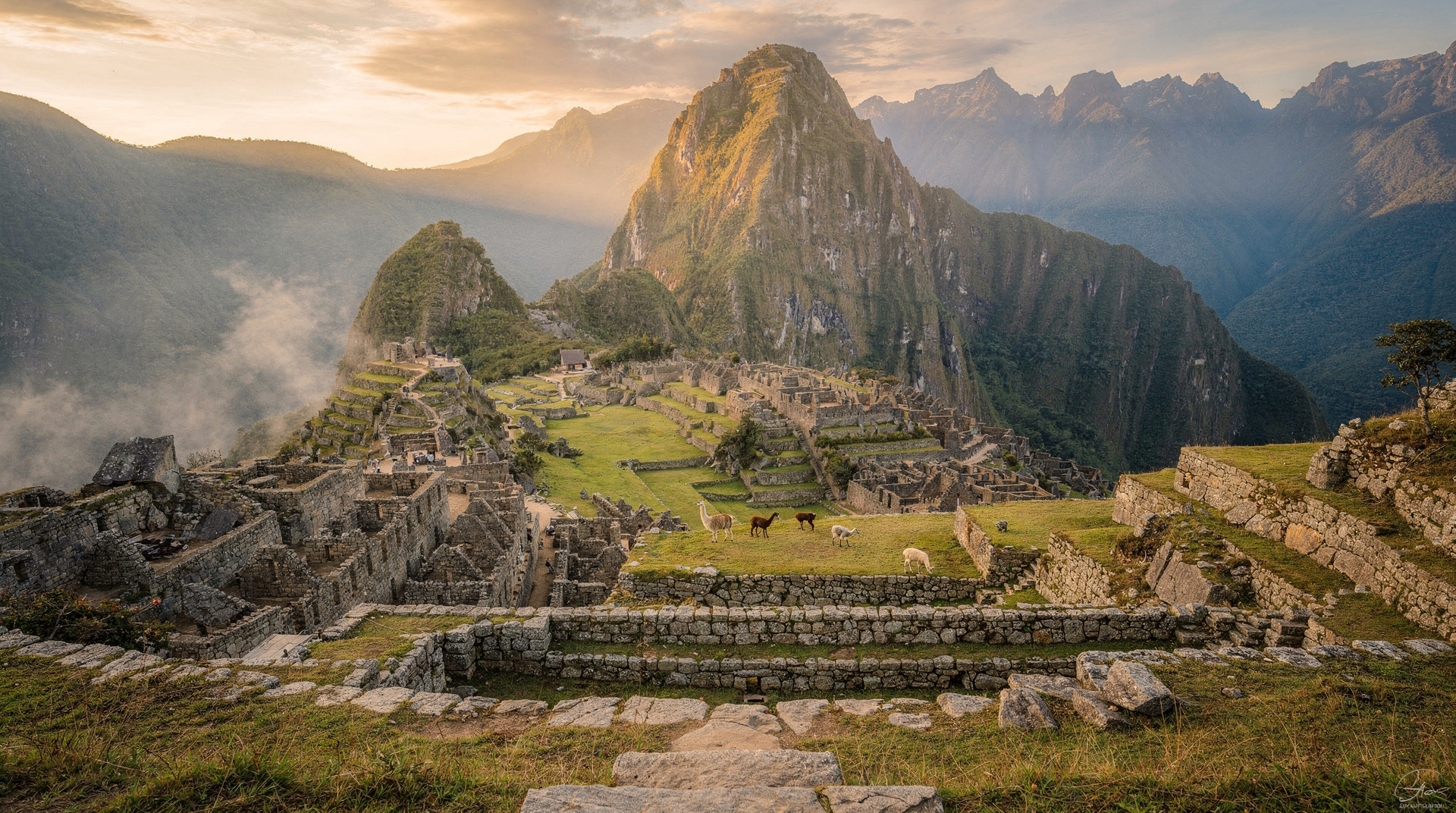
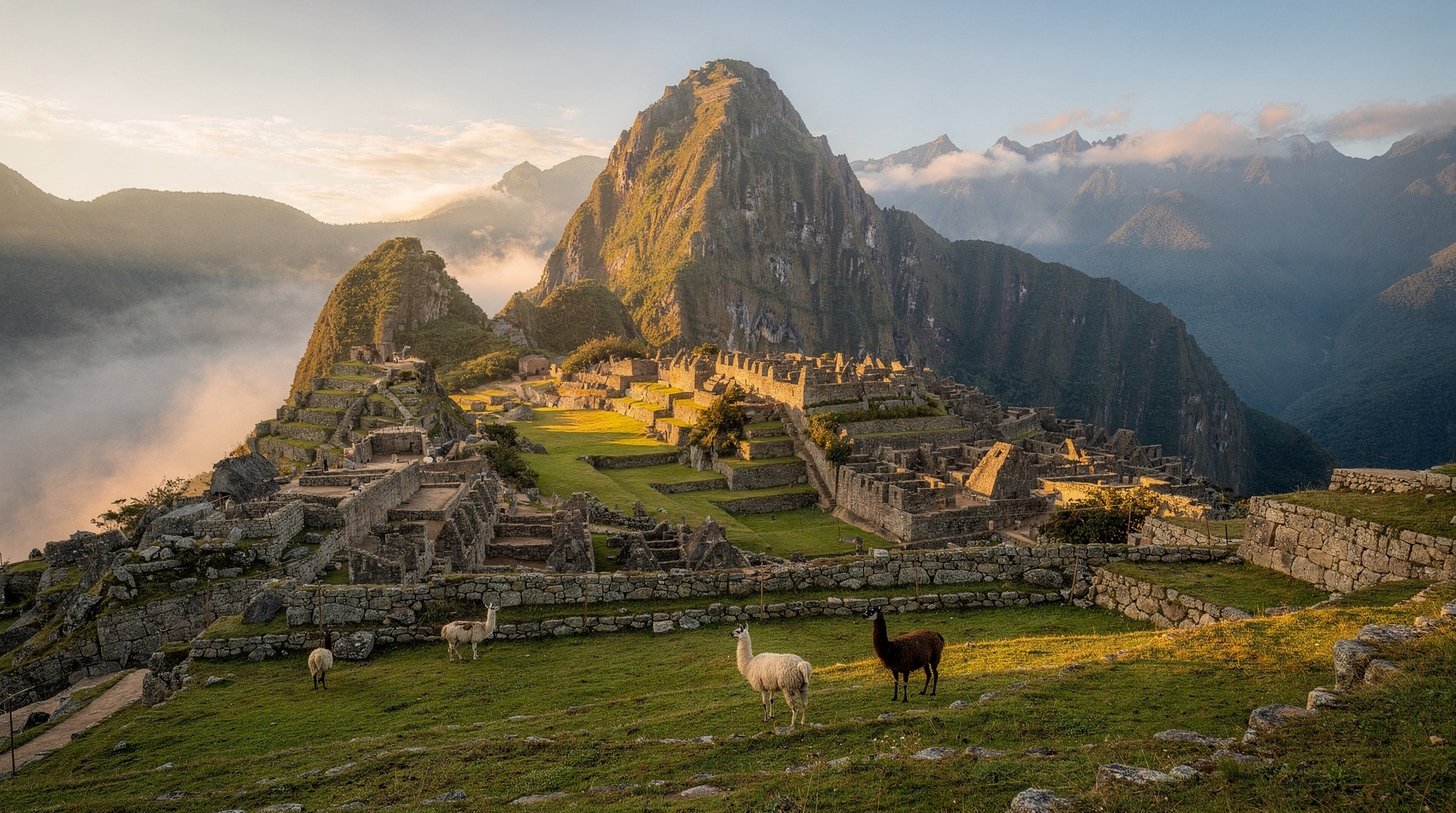
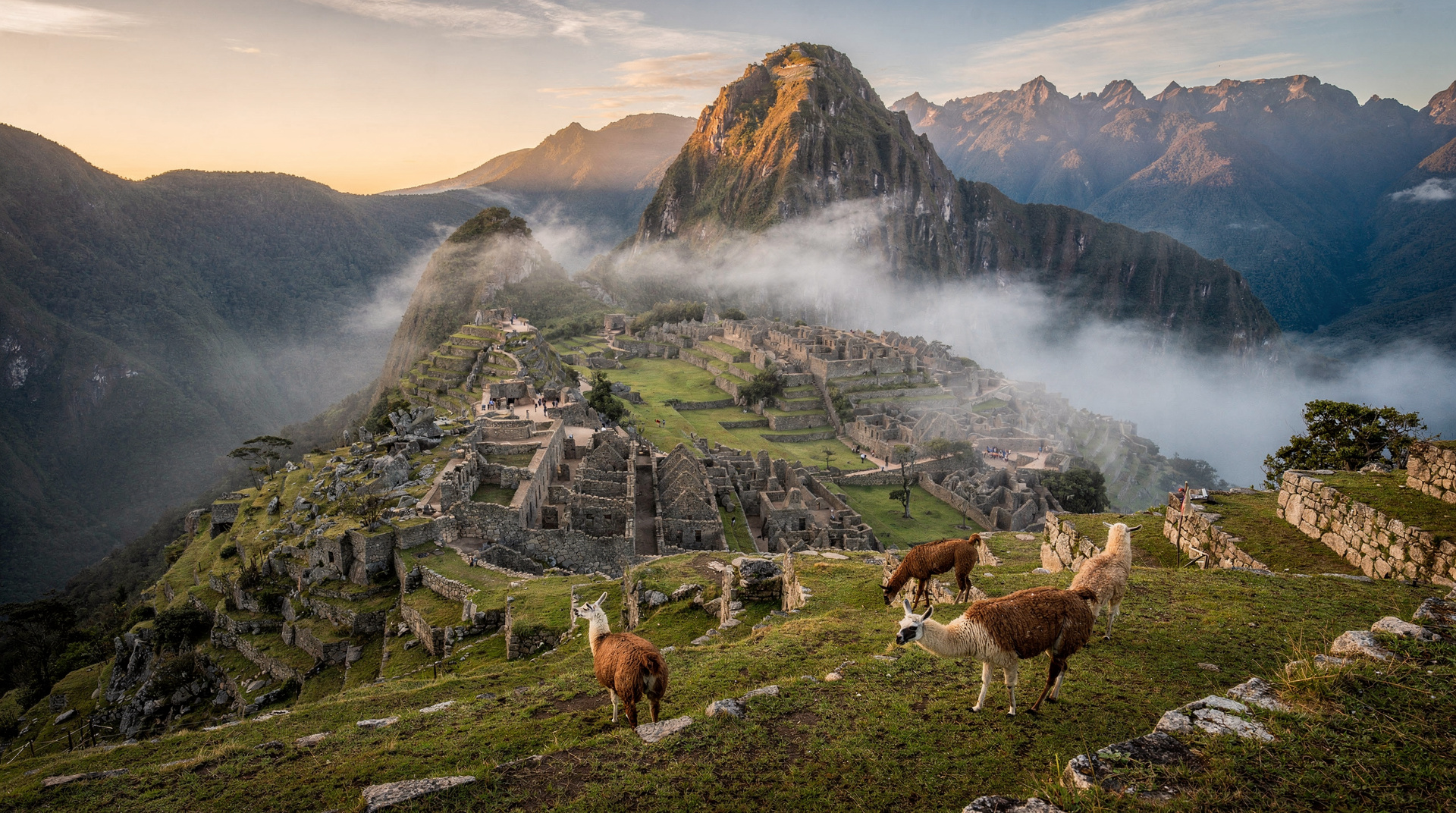
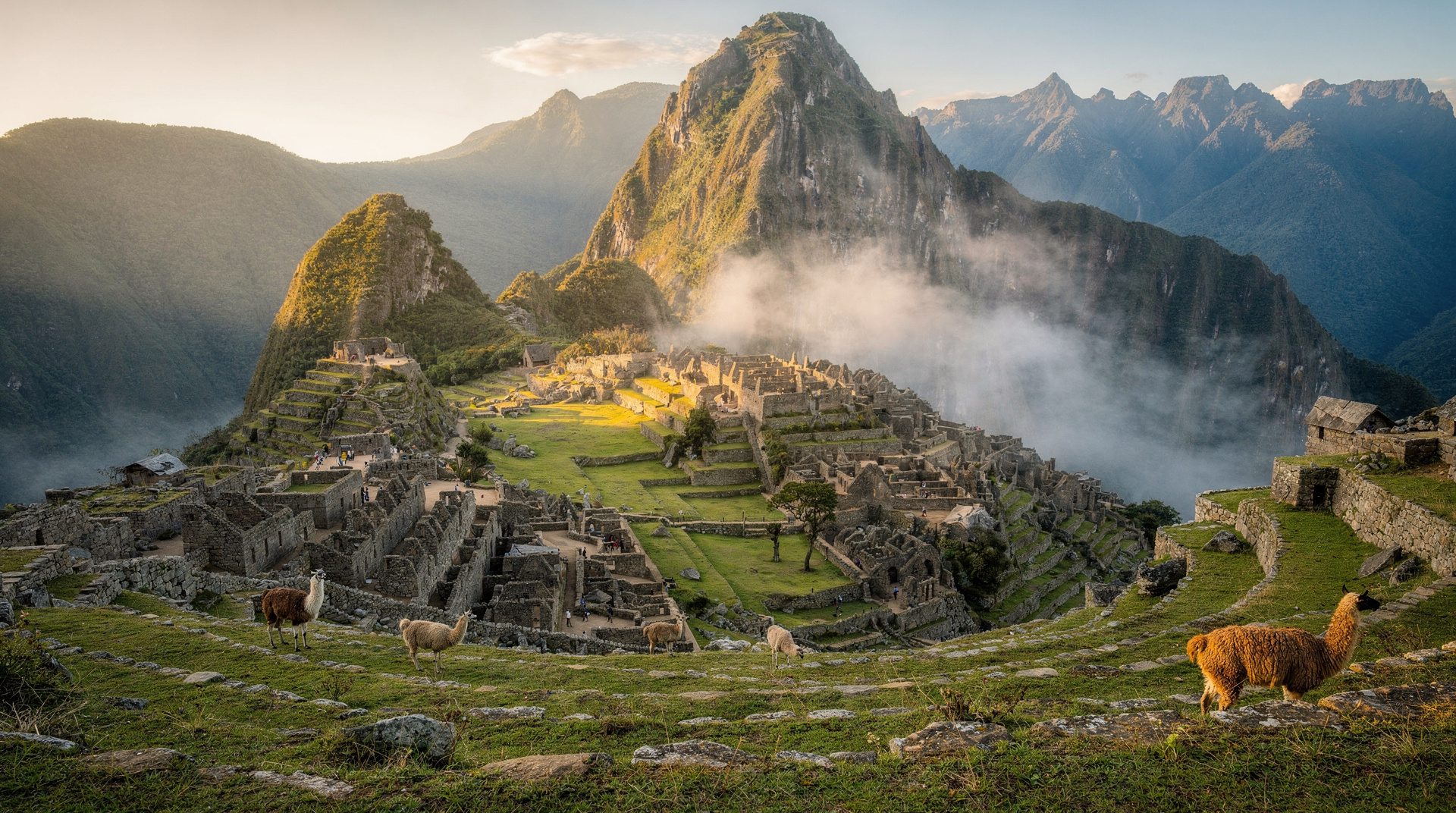
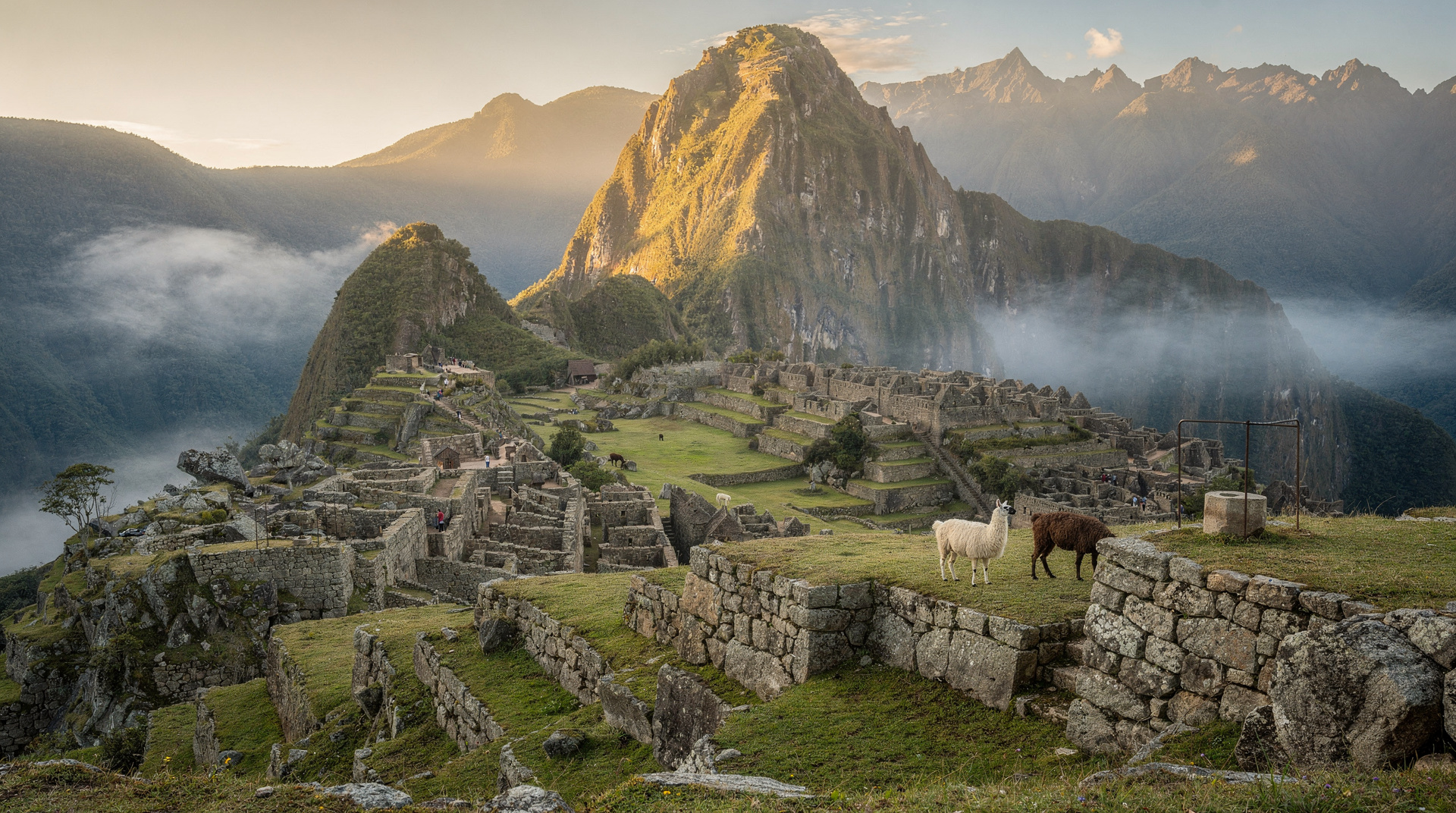
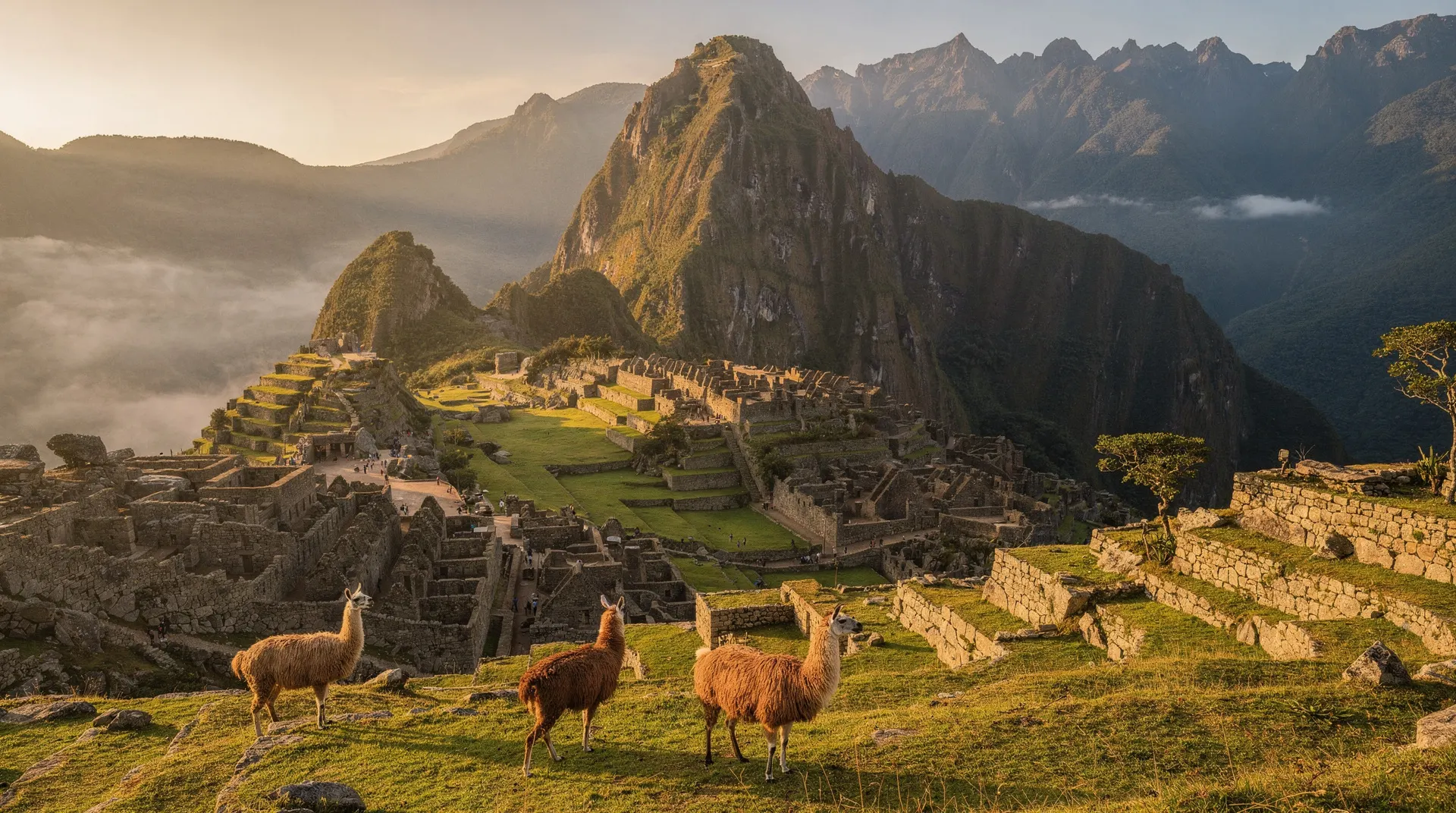
Since June 2024 the site has three circuits grouping ten routes. Circuit 1 (Panorámico) covers the upper parts, including the Hut of the Caretaker (the classic postcard viewpoint, with the entire citadel below and the peak of Huayna Picchu behind) and the upper terraces, but it does not enter the urban sector. Circuit 2 (Clásico) is the one that walks through the urban sector, with the Temple of the Sun viewpoint, the Intihuatana stone and the other main buildings. Circuit 3 (Realeza) is another route through the urban sector and includes Huayna Picchu. Choose according to what matters most to you: the postcard view (Circuit 1) or the heart of the citadel (Circuit 2).
The routes through the urban sector and the upper terraces have a maximum stay of 2 hours 30 minutes. Rushing through in 90 minutes to catch an early return train wastes the experience. If you genuinely only have 90 minutes, consider whether a two-day visit (overnight in Aguas Calientes) would be more satisfying.
The Sun Gate (Intipunku) and the Inca Bridge are routes 1-C and 1-D of Circuit 1, available in high season only. They add extra walking and are excellent if you have the time and energy. Check the exact options at tuboleto.cultura.pe. See the Machu Picchu circuits guide for full circuit descriptions.
The honest answer: is one day enough?
One day is enough to see the citadel thoroughly and have a memorable, meaningful experience. It is not enough to also climb Huayna Picchu or Machu Picchu Mountain, walk to the Sun Gate, explore the lower sector, and spend a leisurely hour at the Intihuatana. If you want any of the mountain hikes, plan two days and stay overnight in Aguas Calientes.
For a classic visit with a good guide and 3–4 hours on site, one day delivers. The majority of visitors who do this day trip rate it as the highlight of their Peru trip.
The budget alternative: Hidroeléctrica
If cost is a significant constraint, the budget route to Machu Picchu via Hidroeléctrica avoids the train entirely: a bus or shared taxi from Cusco to Santa Teresa (S/35–50 per person) and then a 12 km walk along the railway to Aguas Calientes. This takes longer and is more complicated, but saves S/150–200 on train fares. As a day trip from Cusco it is impractical (too many hours); it works better as a two-day budget excursion.
Common mistakes to avoid
Booking the wrong circuit: Read the Machu Picchu tickets guide carefully. Circuit 1 gives the postcard view but does not enter the urban sector, while Circuit 2 does; the circuits are not the same experience.
Not booking in advance: Assuming tickets will be available at the gate. They will not be. Book online at the official site, tuboleto.cultura.pe. A limited number of tickets is also sold in person at the Cusco Culture Directorate office in Machu Picchu Pueblo, but they are valid for entry the next day, which does not work for a day trip.
Arriving in the afternoon: Entry slots in the afternoon (the last is at 15:00) mean you have only a few hours before the 5 pm closure. This is enough time to walk around but not to fully absorb the site. Book a morning entry.
Underestimating the early start: The drive to Ollantaytambo at 4–5 am is not optional; it is built into the logistics of the train schedule. Do not book a late dinner in Cusco the night before.
The fake Machu Picchu tickets guide covers the important warning about booking from unofficial resellers — always use tuboleto.cultura.pe or directly through your licensed tour operator.
Reaching Ollantaytambo
The drive from Cusco to Ollantaytambo covers 77 km through the Sacred Valley. Tour operators provide their own transport and collect from central Cusco hotels. Independent travellers can take a shared colectivo from Cusco’s Avenida Grau terminal for around S/10–15 per person or hire a private taxi for S/100–150 for the vehicle.
Many visitors choose to stay overnight in Ollantaytambo the night before Machu Picchu, avoiding the 4 am Cusco departure entirely. The 4-day Cusco and Machu Picchu itinerary uses this structure with a Sacred Valley day and overnight in Ollantaytambo before the train.
What makes Machu Picchu different from other Inca sites
Visitors who have already seen Sacsayhuamán, Ollantaytambo or Pisac sometimes worry that Machu Picchu will feel like more of the same. It does not. The difference is threefold.
Scale and completeness: Machu Picchu is the only large Inca site that was never sacked by the Spanish. The Spanish knew nothing of its existence during the conquest period; by the time the colonial administration extended into the area, the city had been abandoned (possibly due to smallpox reaching the population before the Spanish arrived physically). As a result, the stonework is not cannibalised for construction materials, the urban layout is intact, and the site reads as a functioning city rather than a fragment.
Setting: The position of Machu Picchu on a saddle between Huayna Picchu and Machu Picchu Mountain, above a river bend in the Urubamba valley, with cloud forest and snowcapped peaks visible on multiple sides, is extraordinary. No photograph adequately conveys the three-dimensional drama of the setting: you are simultaneously looking up at mountains and down at jungle, the clouds moving through the ruins rather than above them.
The engineering in context: Having seen Ollantaytambo’s quarrying and transport logistics, and Qorikancha’s inner walls, the same techniques applied at the scale of a complete city at Machu Picchu produces a qualitatively different impression. The Intihuatana stone — the carved granite sundial at the highest point of the spiritual sector — sits precisely aligned with cardinal directions and the movements of key astronomical events. It is the work of people who thought carefully and planned for centuries.
Photography at Machu Picchu
The classic postcard shot — citadel below, Huayna Picchu behind, mountains in the distance — is taken from the Hut of the Caretaker at the upper terrace. This view belongs to Circuit 1, which is why many first-timers book it. The view is genuinely as spectacular as the photographs suggest; the challenge is that 300–500 people are often trying to stand in the same spot.
Arrive at your entry time, walk directly to the Hut of the Caretaker before joining the guided tour, and take the shots before your guide proceeds. In the first 30 minutes of your entry slot you will have a significantly less crowded viewpoint than after 10 am.
Later in the visit, the interior spaces of the urban sector (Circuit 2 or 3) and the agricultural terraces on the city margin offer quieter photography opportunities. The llamas that graze the agricultural terraces are genuinely resident (they are maintained there specifically) and are accustomed to proximity; they make excellent subjects.
What children experience at Machu Picchu
Machu Picchu with children is a separate and detailed guide. The short version: children aged 7 and up who have had appropriate acclimatisation generally respond very well to Machu Picchu. The site has a quality of drama and mystery that children recognise without needing to understand the history. The llamas are an immediate hit. The mountain setting and the scale of the stonework produce genuine wonder.
Children under 7 can visit but may find the pace tiring — the visit involves significant walking on uneven ground. Prams/strollers are not permitted inside the citadel. For young families, a guided tour that paces the visit correctly is particularly useful.
Aguas Calientes: the town below the mountain
Aguas Calientes is a small, tourist-dependent town with decent restaurants, thermal baths (a good post-Machu Picchu soak for S/20–25), and accommodation. On a day trip you will pass through it twice — arriving and departing — and potentially stop for lunch between the citadel descent and your return train. A ceviche or lomo saltado at one of the market restaurants along the river costs S/25–40.
The Aguas Calientes guide covers the town in more detail for those considering an overnight stay.
How this compares to staying overnight
This guide covers the tightest single-day version of the trip; the Machu Picchu day trip from Cusco guide walks through a very similar day in more granular detail, including a full hour-by-hour narrative and a direct cost comparison against staying overnight. If you’re on the fence about whether to add a night in Aguas Calientes, that comparison is worth reading before you commit to train times.
Circuit and ticket type, side by side
Choosing Circuit 1 for the postcard viewpoint or Circuit 2 for the urban sector depends on your priorities, and it’s worth confirming exactly what’s included in the ticket you book — the Machu Picchu circuits compared guide and the ticket types compared guide cover the options sold through tuboleto.cultura.pe; check the site for what can be combined.
Altitude on a compressed schedule
Because a day trip touches several different altitudes in a single push — Cusco at 3,400 m before dawn, Ollantaytambo at 2,800 m, and the citadel itself at a comparatively gentle 2,430 m — it’s worth understanding how that sequence actually feels before you commit to the early start. The Machu Picchu altitude explained guide breaks down exactly why the citadel tends to feel easier than Cusco, and the Cusco acclimatisation plan is worth following for the two to three days before your day trip regardless of how experienced a traveller you are.
Timing your visit around crowds, not just trains
The circuit and train logistics above are only half the picture — when you enter also depends on the time of year. The best time to visit Machu Picchu guide covers month-by-month crowd and weather patterns that affect how busy the Hut of the Caretaker viewpoint is at any given hour, useful if you have some flexibility on which week to travel even though your day-trip format is fixed.
Doing this trip solo
A Machu Picchu day trip is a common first solo booking for independent travellers in Cusco, since group tours provide built-in company for the long train legs. The solo travel Cusco guide covers the practical side of booking alone, including how to find a reliable operator for the early pickup without needing to coordinate with anyone else’s schedule.
If one day feels too tight
Some travellers read the schedule above and decide the 4 am start is not for them. The usual fix is to turn the trip into two days with a night near the mountain, which gives you a calmer morning at the citadel and no rush for the return train. A two-day Sacred Valley and Machu Picchu tour by train packages that structure, with the logistics handled for you. If budget matters more than comfort, a two-day budget tour by car trades the train for a longer road journey. Compare what each includes before booking, and check the details on the booking page rather than assuming.
Before and after the day trip
A day at the citadel pairs well with what you do around it. If you have not yet seen the other Inca sites near the city, the Cusco archaeological sites guide and the Sacsayhuamán guide make good warm-ups on a rest day, and the Inca Empire for travelers primer gives context that makes the stonework at the citadel easier to read.
If you are weighing other ways to reach the site, the how to get to Machu Picchu guide and the train versus trek comparison lay out the alternatives, while the Machu Picchu complete guide covers the site itself in depth. Travellers who would rather turn this into a longer trip can look at the 5-day Cusco and Machu Picchu itinerary.