Machu Picchu circuits explained — which one to choose
Machu Picchu: Circuit 3 Entry Ticket
Which Machu Picchu circuit should I choose?
For a first visit, Circuit 2 (Machu Picchu Clásico) is the one that crosses the urban sector: the Temple of the Sun viewpoint, the Intihuatana pyramid and the main plazas. Circuit 1 (Panorámico) is the panoramic route over the upper terrace, and Circuit 3 (Realeza) is another urban route that can include the Huayna Picchu mountain. Since 1 June 2024 there are three circuits and ten routes in total; check which combinations are sold on tuboleto.cultura.pe.
Why the circuit system exists and how it works
Before 2024, visitors to Machu Picchu could move relatively freely across the site, clustering at the most photogenic spots and creating severe pressure on the stones, terraces and paths at peak times. Visitor density at the Hut of the Caretaker viewpoint during July mornings had become problematic — queue for a clear photograph, visitors standing on or near the walls, and the site feeling less like a place of contemplation and more like a theme park.
The timed-circuit system, in force since 1 June 2024, addresses this by dividing the site into three circuits made up of ten routes, with one-directional flow, hourly entry slots and a daily visitor cap. Each circuit covers different sections of the citadel. You must choose your circuit and route when booking your ticket and cannot change it on arrival. (The older 2021 to May 2024 system had four or five circuits and is no longer current; there is no “Circuit 4”.)
The result is a more predictable and better-distributed experience. The trade-off is that arriving without understanding the circuit system can leave you missing things you cared about — or spending your entire visit on a route that does not include the section you most wanted to see. This guide eliminates that problem.
| Circuits | 1 Panorámico (upper terrace, mountain, Sun Gate), 2 Clásico (urban sector, lower terrace), 3 Realeza (urban route, Huayna Picchu, Great Cavern) |
| Time needed | Up to 2 h 30 on routes 1-B, 2-A and 3-B |
| Best for first visit | Circuit 2, morning slot |
| Entry slots | One per hour, 6 am to 3 pm |
| Booking | tuboleto.cultura.pe, non-transferable, fixed time slot |
Circuit 1: the panoramic overview route
What Circuit 1 covers
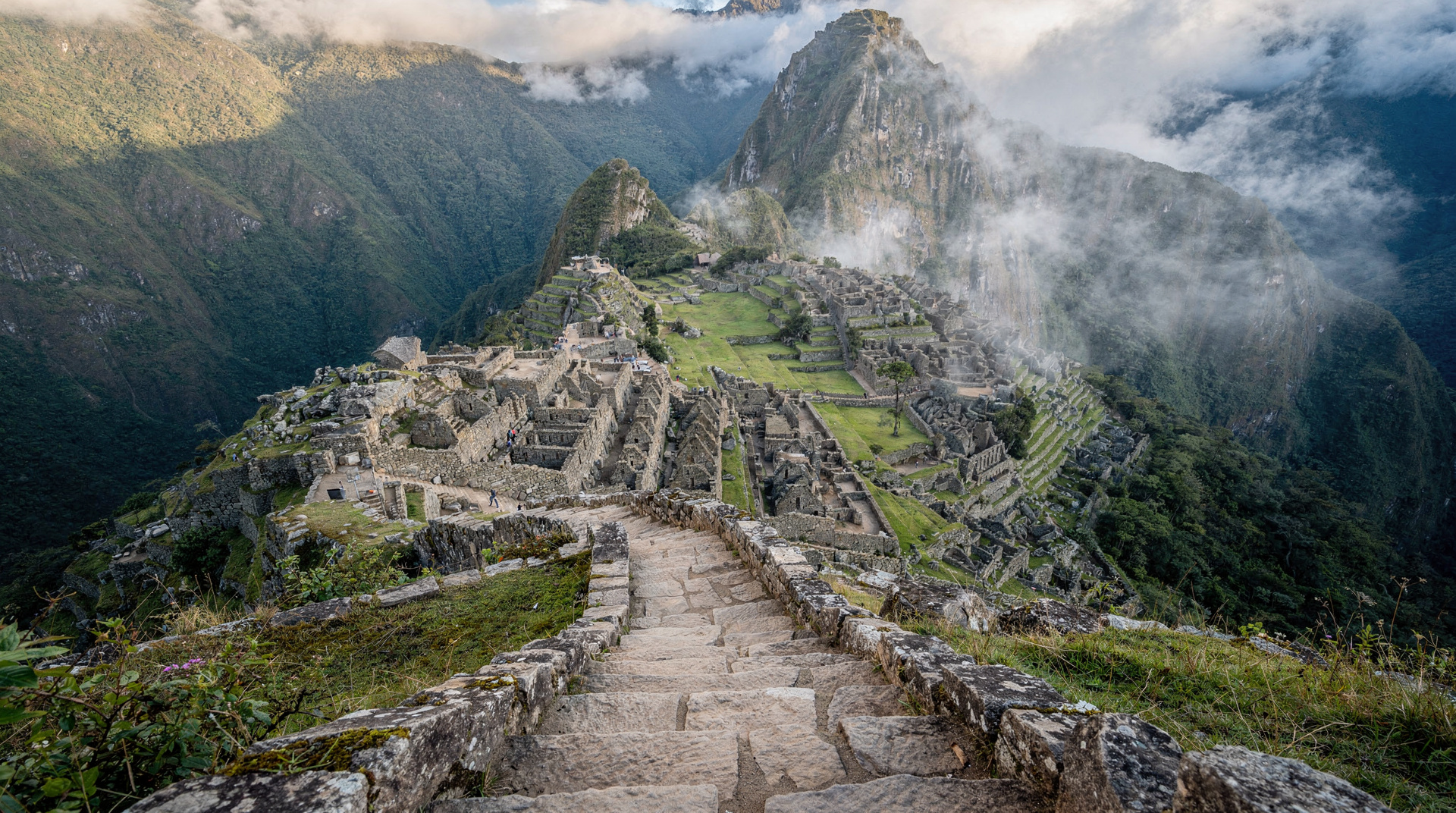
Circuit 1 (Panorámico) has four routes: 1-A Machu Picchu Mountain, 1-B upper terrace, 1-C Sun Gate (Intipunku) and 1-D Inca Bridge. Routes 1-C and 1-D are available only in high season. This section describes the upper-terrace ridge route (1-B). After entering the main gate, the path climbs toward the upper agricultural zone, ascending a series of well-maintained stone steps that gain roughly 100 m of elevation over about 20 minutes. The destination is the prominent ridge above the site where the Hut of the Caretaker (Cabaña del Guardián) stands.
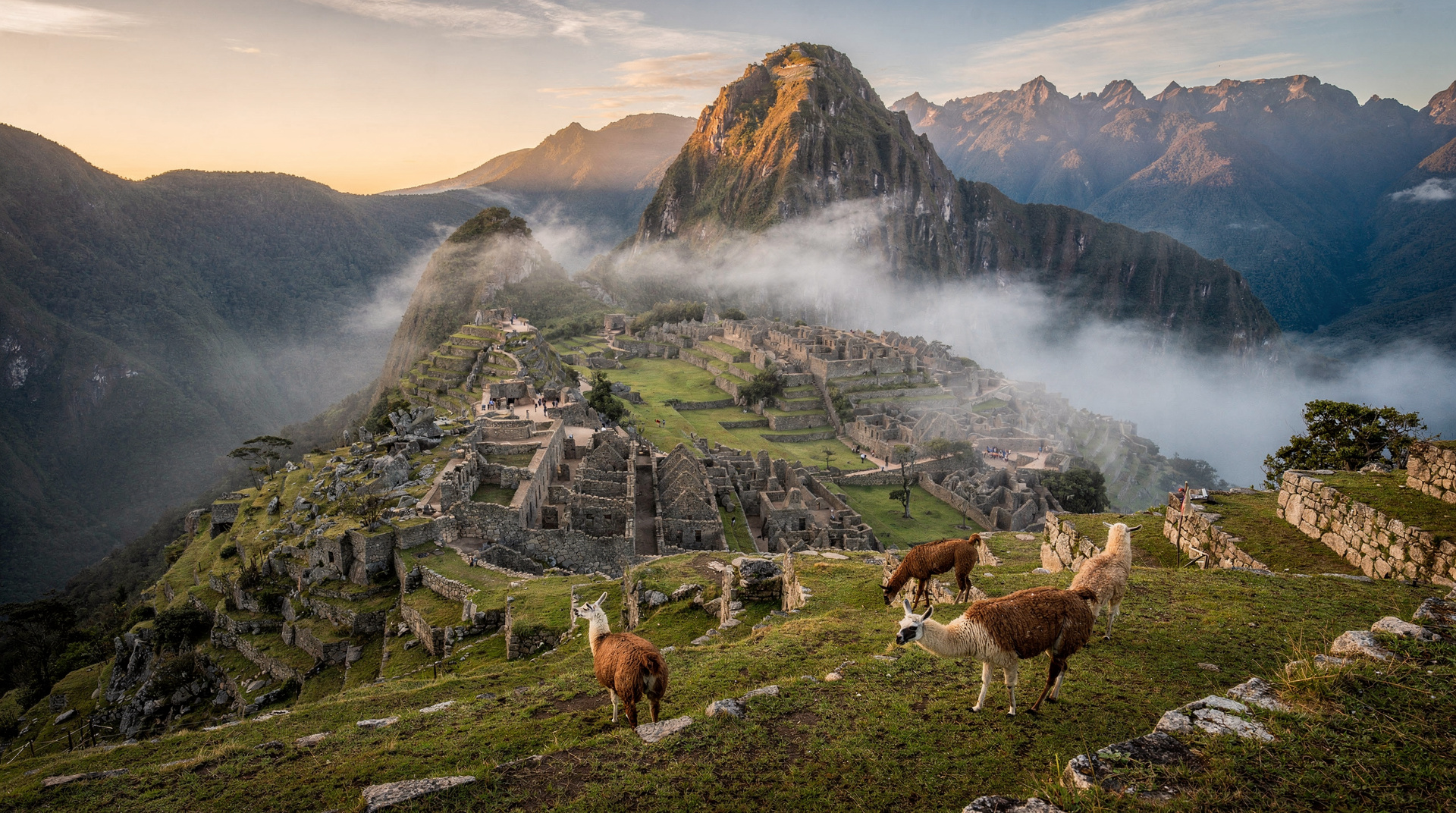
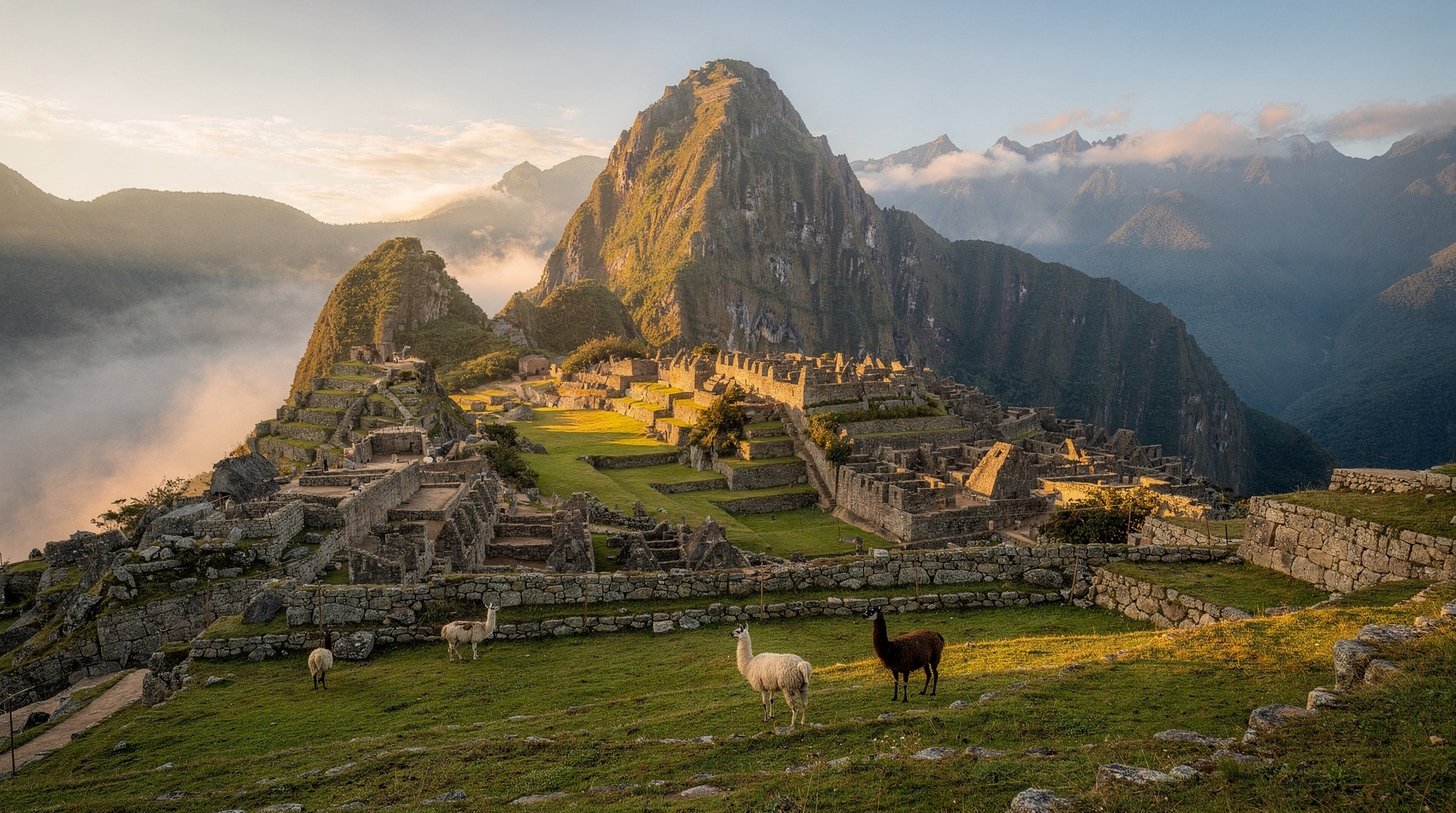
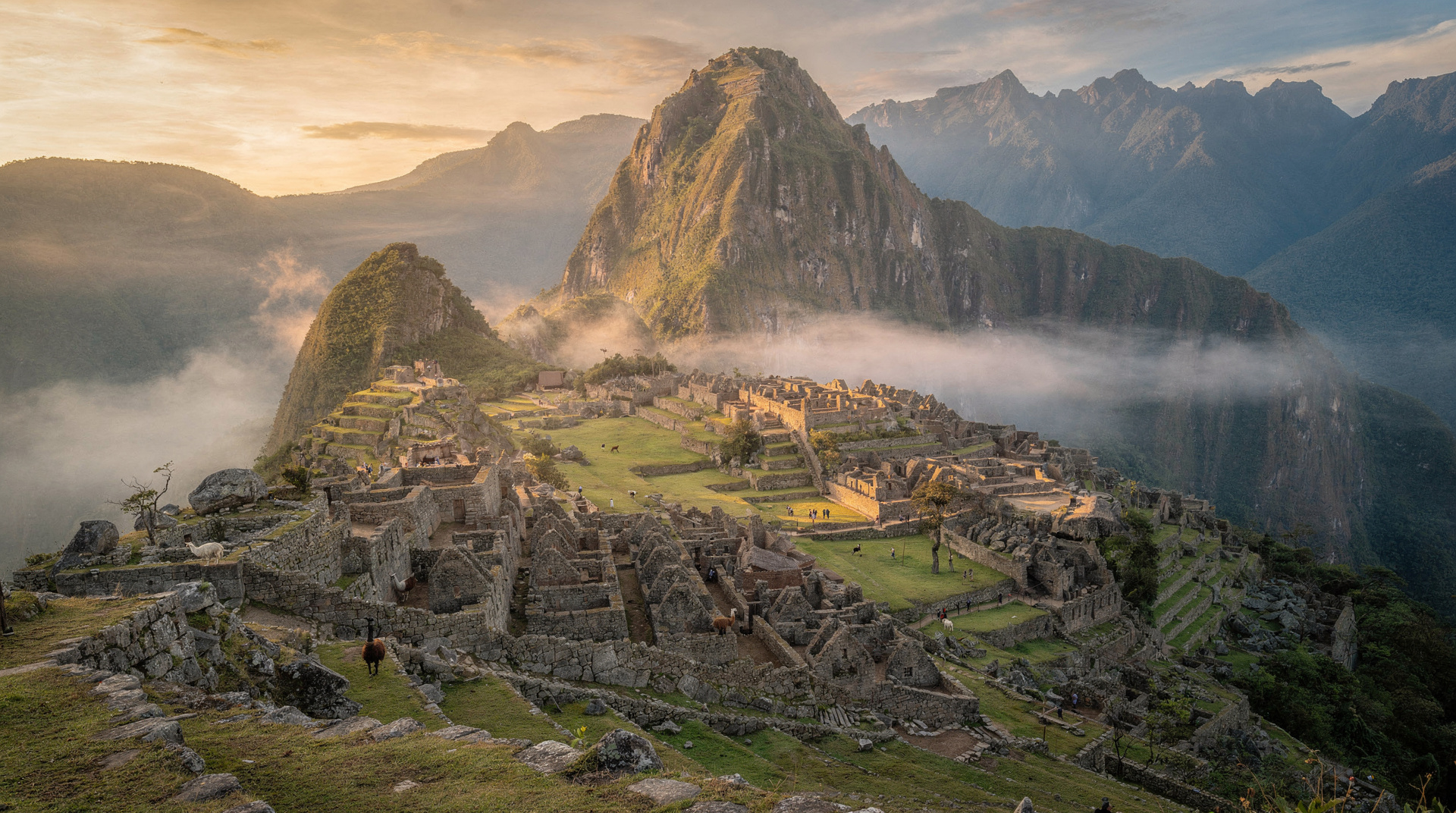
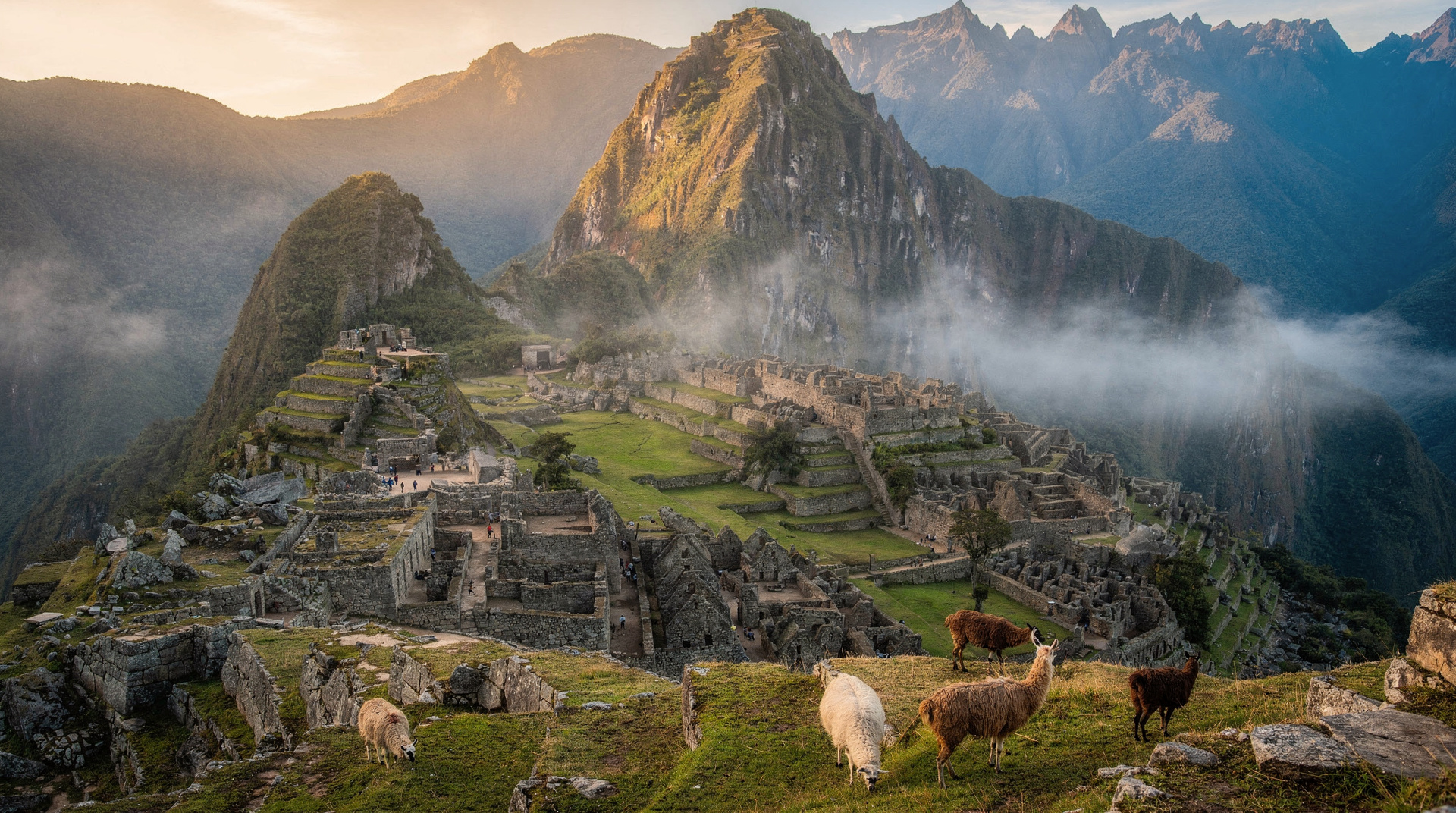
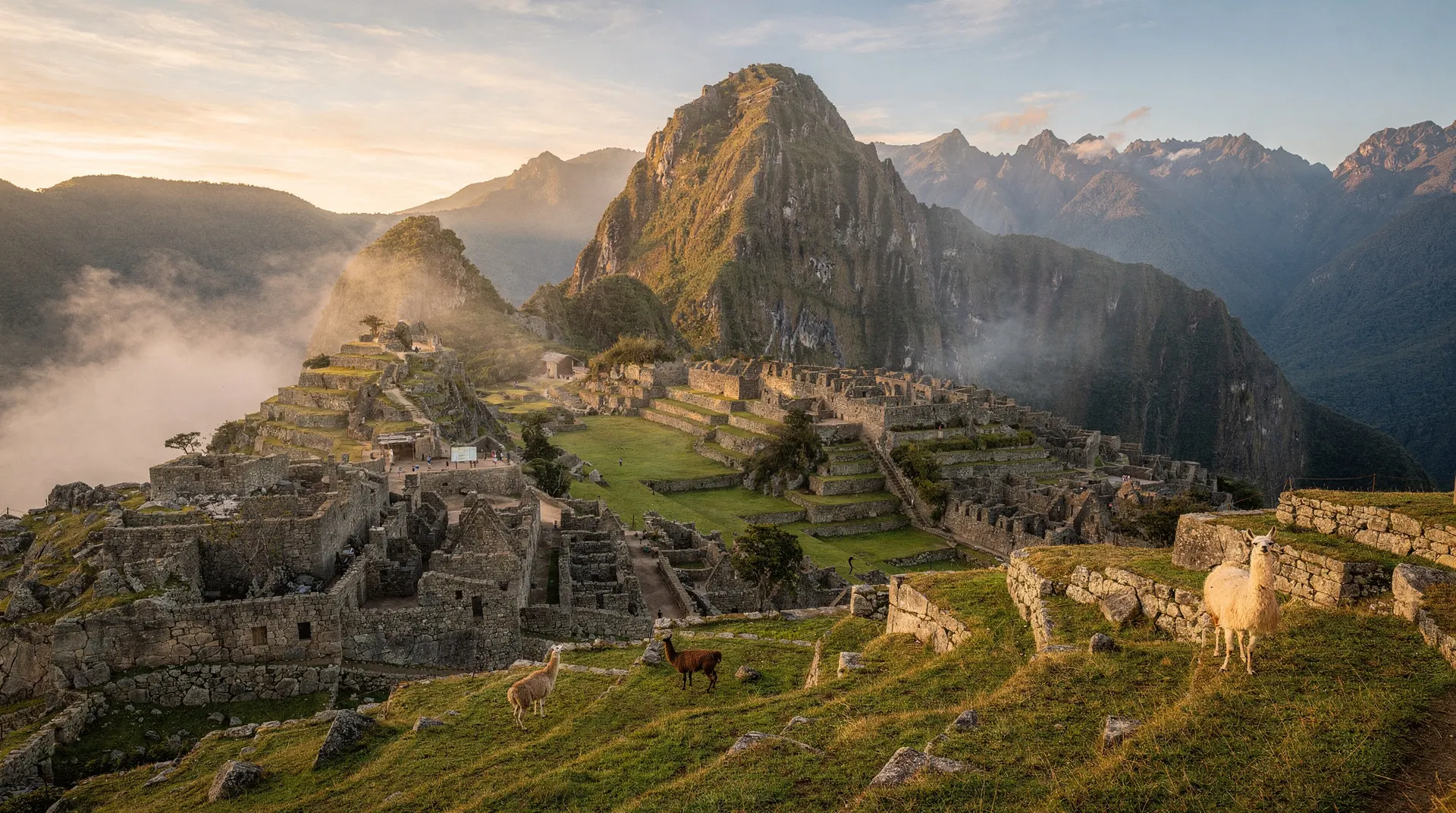
This is the location of the classic Machu Picchu photograph — the full sweep of terraces falling away below, Huayna Picchu’s pointed summit rising in the background, the jungle-covered ridges on either side, sometimes with mist threading through. It is accurate to the photographs you have seen; the experience of standing there is better.
From the Hut of the Caretaker the route descends back through the agricultural terraces, giving broad views across the entire citadel from above before the path returns to the main entrance zone.
Duration and physical demand
The maximum stay on route 1-B is 2 hours 30 minutes, so you can stop at every viewpoint (which you should). The initial climb is the most demanding physical section — steep stone steps for about 20 minutes. After the ridge, the terrain is more gradual. Overall physical demand: moderate, accessible to most visitors including those with limited hiking experience.
What Circuit 1 does not include
Route 1-B climbs to the upper part of the site and does not enter the urban sector. The Temple of the Sun, the Intihuatana stone, the Royal Tomb, the Sacred Plaza, and the detailed stonework of the residential and temple zones are not on this route. You will see these structures at a distance from the ridge, but you will not walk among them. If this matters to you — and for many visitors it is the most important section — choose a route that crosses the urban sector, such as 2-A in Circuit 2.
Who Circuit 1 is best for
First-time visitors who want the iconic panoramic experience and the classic photograph. Those with mobility considerations who want to assess the terrain before booking a more extended route. Circuit 1 is the panorama; Circuit 2 is where you walk among the structures, so many visitors want both across their stay.
Honest tip on the Hut of the Caretaker: This viewpoint sees the highest concentration of visitors on the entire site between 8 am and 11 am. Arriving with the 6 am entry slot gives you 20–30 minutes at this viewpoint before the first significant crowd builds. The experience between 6 am and 6:30 am, with morning mist, a near-empty site, and the light just coming up, is categorically different from arriving at 9 am. If photographing this viewpoint matters to you, book the earliest possible slot.
Circuit 2: the ceremonial core
What Circuit 2 covers
Circuit 2 (Machu Picchu Clásico, also called the circuit of the Inca city) is the archaeological heart of Machu Picchu. It has two routes: 2-A, the designed route through the urban sector, and 2-B, the lower terrace. Route 2-A takes you into the urban sector and the temple zone — the areas that most justify calling the site one of the great achievements of pre-Columbian architecture.
Route 2-A moves through the urban sector. Key structures:
The Temple of the Sun: Possibly the finest piece of Inca construction at the site. Built with stones fitted so precisely that not even a credit card can slide between them — a level of craftsmanship achieved without metal tools, without mortar, and at high altitude. During the June solstice, a shaft of light enters a trapezoidal window and illuminates a specific stone with exact astronomical precision. The Spanish attempted to convert similar structures to churches elsewhere in Peru; they never found Machu Picchu. Standing in front of this temple knowing that gives it a different quality.
The Royal Tomb: Carved into the natural bedrock directly below the Temple of the Sun, with niches cut for offerings and mummies. The interplay between the worked stone above and the natural granite formation below is a characteristic Inca technique — incorporating the mountain itself into the architecture.
The Intihuatana stone: Carved granite block at the highest point of the urban sector, serving as an astronomical calendar and ritual focus. The name translates roughly as “hitching post of the sun” — Inca priests metaphorically “tied” the sun to this point at the solstices. Machu Picchu’s Intihuatana is one of the very few not destroyed by the Spanish, who systematically smashed or defaced these stones across the Inca empire as part of suppressing indigenous religious practice. Its survival is due entirely to the site having been unknown to the Spanish for the entire colonial period.
The Sacred Plaza: A broad open area flanked by the Temple of the Three Windows and the Principal Temple. The Three Windows are among the most photographed structures at the site after the Hut of the Caretaker viewpoint.
Duration and physical demand
The maximum stay on route 2-A is 2 hours 30 minutes. The route involves more stairs and uneven stone paths than Circuit 1, though nothing technically demanding. Overall physical demand: moderate.
Where a guide adds most value
Circuit 2 is where a licensed guide transforms the experience most dramatically. The astronomical alignments, the construction logic, the social hierarchy encoded in the building quality, the stories attached to each structure — none of this is legible from the information panels. Half a day with a knowledgeable guide on Circuit 2 is one of the better investments you can make for your Peru trip. At-gate guides charge approximately S/120–150 for 2 hours; English-speaking guides are available.
Booking a guided Circuit 3 experience through an authorised operator can include Circuit 2 interpretation as part of a full guided visit — check the package details when booking.
Circuit 3: the Realeza route and the mountains
What Circuit 3 covers
Circuit 3 (Machu Picchu Realeza, “of the Royalty”) has four routes: 3-A Huayna Picchu mountain, 3-B a designed route through the urban sector (a different path from 2-A), 3-C the Great Cavern and 3-D Huchuy Picchu. Routes 3-C and 3-D are available only in high season. The maximum stay on route 3-B is 2 hours 30 minutes.
The lower terrace is not part of Circuit 3: it is route 2-B of Circuit 2, and it gives a different perspective, with the citadel rising above you rather than the usual view from the ridge looking down across it.
Mountain rules
The mountain routes (Machu Picchu Mountain, Huayna Picchu and Huchuy Picchu) have no late-arrival tolerance at their checkpoints. Quotas and time slots for the mountains are not officially verified here; check them on tuboleto.cultura.pe before planning.
Who Circuit 3 is best for
Repeat visitors, and those who want to add Huayna Picchu or, in high season, the Great Cavern or Huchuy Picchu to their visit. Anyone who wants a second, different urban-sector route after doing route 2-A on an earlier visit.
Circuit combinations: what to book for different situations
First-time visitor, one day
Book: Circuit 2, morning entry slot (6–8 am). Route 2-A covers the ceremonial core and the headline structures. If the panorama matters most to you, Circuit 1 is the alternative. Hire or pre-book a guide for the urban-sector route specifically. Check on tuboleto.cultura.pe which combinations are offered as a single ticket.
Two-day visit with mountain add-on
Day one: Circuit 2 in the morning. Day two: a mountain route, either Machu Picchu Mountain (route 1-A, Circuit 1) or Huayna Picchu (route 3-A, Circuit 3). The mountain checkpoints have no late-arrival tolerance, so arrive early and confirm your slot on tuboleto.cultura.pe.
Short visit
Book Circuit 1 or Circuit 2. Both have a maximum stay of 2 hours 30 minutes on their main routes (1-B and 2-A), which is enough to get a clear sense of the site’s scale.
Second visit
Try a different route. After route 2-A, consider route 3-B (another urban-sector path), the lower terrace (2-B), or in high season the Great Cavern (3-C) or Huchuy Picchu (3-D).
The Sun Gate: the extension worth knowing about
The Sun Gate (Intipunku) is route 1-C of Circuit 1 and is available only in high season, as is the Inca Bridge (route 1-D). This is where Inca Trail trekkers arrive at dawn on day four of the classic route. The view looking back down over the citadel from the Sun Gate is entirely different from the standard viewpoint — you see Machu Picchu below you as if from the perspective of an arriving trekker. On clear days in dry season the composition is extraordinary.
Because 1-C is a separate route, check on tuboleto.cultura.pe that it is on sale for your dates before counting on it.
Managing the crowds within circuits
The circuit system reduces the worst congestion but does not eliminate it. The three most crowded spots at any time of day are: the Hut of the Caretaker on Circuit 1 (peak 9–11 am), the Temple of the Sun on Circuit 2 (peak 10 am–1 pm), and the main entrance plaza where circuits converge (morning, throughout).
Strategies:
- Book the 6 am or 7 am entry slot — the first hour is consistently the quietest
- If peak season travel is unavoidable, visit in May or September rather than July–August
- Move through the main viewpoints quickly on first pass; return to quieter sections after the first crowd wave has moved on
The best time to visit Machu Picchu guide covers seasonal and daily crowd patterns in more detail.
The site structures you should not walk past quickly
Many visitors move efficiently through the circuits and walk past structures they would have found remarkable if they had stopped. A guide prevents this; reading the following before your visit also helps.
The Temple of the Sun (Circuit 2): Stand in front of the main trapezoidal window at the Sunrise Solstice angle and consider that the Inca engineers, working without metal tools or wheeled vehicles, built a window alignment precise enough to function as an astronomical instrument. The stones beneath the window are differently carved — worked to reflect rather than absorb — and the sacred stone directly illuminated during solstice is still visible. This is not decorative; it is functional.
The Royal Tomb (Circuit 2): Directly below the Temple of the Sun, carved into the natural bedrock of the mountain with precision niches cut to receive mummies and offerings. The combination of natural rock and worked stone in this section is one of the clearest illustrations of Inca architectural philosophy: the mountain is not a raw material to be quarried away, it is a partner in the construction.
The Intihuatana stone (Circuit 2): Most visitors spend 90 seconds at this stone and move on. It rewards five minutes. The carved angles are not random — they correspond to the cardinal directions and to the angles of sunrise and sunset at the solstices and equinoxes. The full four-pointed shape is a three-dimensional astronomical instrument. Touching it is prohibited (the oil from fingerprints accelerates deterioration); looking at it carefully is free.
The agricultural terraces (Circuits 1 and 2): The terracing at Machu Picchu served multiple functions beyond farming. The terraces are layered with different soils at different depths — topsoil over subsoil over sand over gravel — creating both a drainage system and a microclimate management system. Frost damage, which kills high-altitude crops, is significantly reduced by this design. These are not crude agricultural earthworks; they are sophisticated engineering.
The llamas: The herd on the terraces is a living part of the conservation programme. Their grazing manages vegetation on the terraces in a way that mechanical tools cannot replicate without causing damage. They have been at Machu Picchu since the site’s first restoration phases. Do not feed them or try to position them for photographs by approaching closely.
Comparing circuits to other major Inca sites
Visitors who have seen other Inca sites before arriving at Machu Picchu occasionally find the circuit structure constraining — they are used to being able to move freely around Sacsayhuamán or the Ollantaytambo fortress. The circuit system at Machu Picchu is more restrictive, but the complexity of the site justifies it. With over 200 distinct structures across the citadel, free movement would simply result in most visitors seeing 15% of the site repeatedly. The circuits are designed to give a complete experience within a fixed route.
Visitors who have not yet seen other Inca sites: Machu Picchu is an excellent first experience but the circuit format means you see it in a structured sequence. Combining your Peru trip with time at Pisac, Ollantaytambo and the Cusco historic center gives you context that makes the individual structures at Machu Picchu significantly more legible.
Booking logistics
All circuits require advance booking through tuboleto.cultura.pe or an authorised agency. Tickets are non-transferable, linked to a specific passport, and fixed to a specific entry time. You cannot change your circuit choice on the day. Full booking instructions, price details and the anti-scam guide are in the tickets explained guide.
For the complete visit planning picture — transport, mountain add-ons and timing — the Machu Picchu complete guide is the master reference.
How this circuit breakdown relates to the numbered ticket system
This guide describes the three circuits by what you actually see and feel walking them; the Machu Picchu circuits compared guide maps the same routes against the official numbered ticket categories, which is the version worth cross-checking at the actual booking stage. The Huayna Picchu vs Machu Picchu Mountain guide is essential reading if either mountain climb is part of your plan — they are routes 3-A and 1-A, chosen at booking, and places should be booked well ahead.
Where to sleep the night before, and how it affects your circuit start time
Staying overnight in Aguas Calientes rather than day-tripping from Cusco is what makes the earliest 6 am entry slot realistic without an absurdly early wake-up — the bus terminal is a five-minute walk from most accommodation in town, versus the multi-hour train and bus combination required from Cusco or Ollantaytambo. If your priority is the quiet, mist-filled version of Circuit 1 described above, an overnight in Aguas Calientes is close to a prerequisite; a same-day arrival from Cusco rarely gets you through the gate before 8 or 9 am once transfers are accounted for.
Altitude and physical demand across the three circuits
None of the three circuits requires serious altitude adaptation beyond what a couple of days in Cusco or the Sacred Valley already provides — the Machu Picchu altitude explained guide covers why the site itself, at 2,430 m, is one of the least physically demanding altitudes in the region. What varies between circuits is stairs and distance, not oxygen: Circuit 1’s initial climb to the Hut of the Caretaker is the steepest short stretch of the urban and terrace routes, while the lower terrace (route 2-B) is gentler on the legs. The mountain routes are the most demanding.
Doing this with children or a mixed-ability group
Circuits 1 and 2 (routes 1-B and 2-A) are the best fit for families, since both stay on well-maintained stone paths without the steeper mountain routes. The Machu Picchu with kids guide has specific pacing advice for the Hut of the Caretaker climb, which is the one section on any of these circuits where a young child or a grandparent may need extra time and a rest stop. If your group has mixed fitness levels, splitting: some of the party do Circuit 1’s climb while others wait at a lower viewpoint and everyone reconvenes afterwards, is a reasonable way to keep the day enjoyable for everyone.
Planning your entry ticket type alongside the circuit
Once you’ve picked which circuit story matches what you want from your visit, the next step is matching it to an actual bookable product — the Machu Picchu ticket types compared guide walks through the ticket options, but confirm on tuboleto.cultura.pe which routes and combinations are actually on sale for your dates, since the platform’s naming does not always map cleanly onto the circuit descriptions above.
Getting to the gate and choosing how to book
The circuit you pick is only one piece of the day. Most visitors reach the site by train, and the how to get to Machu Picchu guide lays out every route, while the Machu Picchu by train guide and the PeRU Rail vs Inca Rail comparison help you choose a service that fits your entry slot. Travellers watching their budget can read about the Hidroeléctrica route, though it makes an early slot harder to reach. If you would rather have someone handle ticket, interpretation and logistics together, an entry ticket bundled with a guided visit of the citadel is a sensible option, especially for Circuit 2 where explanation matters most.
If a mountain climb is part of your plan, remember that it is a route you choose at booking. a separate entry for the Huayna Picchu climb has to match an available time window, so read the Huayna Picchu destination page before you commit. For the wider picture of the area, the Machu Picchu destination page and the Aguas Calientes destination page give useful context.
Putting the circuits into a wider Cusco trip
Machu Picchu rarely stands alone. Many travellers build the visit into a longer route, and the Cusco and Machu Picchu 4-day itinerary or the 5-day version show how to fit a circuit slot around acclimatisation and train times. The Machu Picchu day trip guide is the better reference if you are short on time. Trekkers arriving on foot should look at the Inca Trail complete guide, since the trail’s final morning shapes which circuit you can reasonably start with. To avoid paying more than you should or buying something invalid, the fake Machu Picchu tickets guide is worth a quick read before you book. Finally, the Machu Picchu in each month guide helps you pick the season that suits the circuit you have chosen, and the Machu Picchu bucket list reflection offers a personal view of how the visit feels in practice.