Machu Picchu altitude explained: is it high enough to cause problems?
From Cusco: Machu Picchu Day Trip with Train Tickets
Is Machu Picchu high altitude?
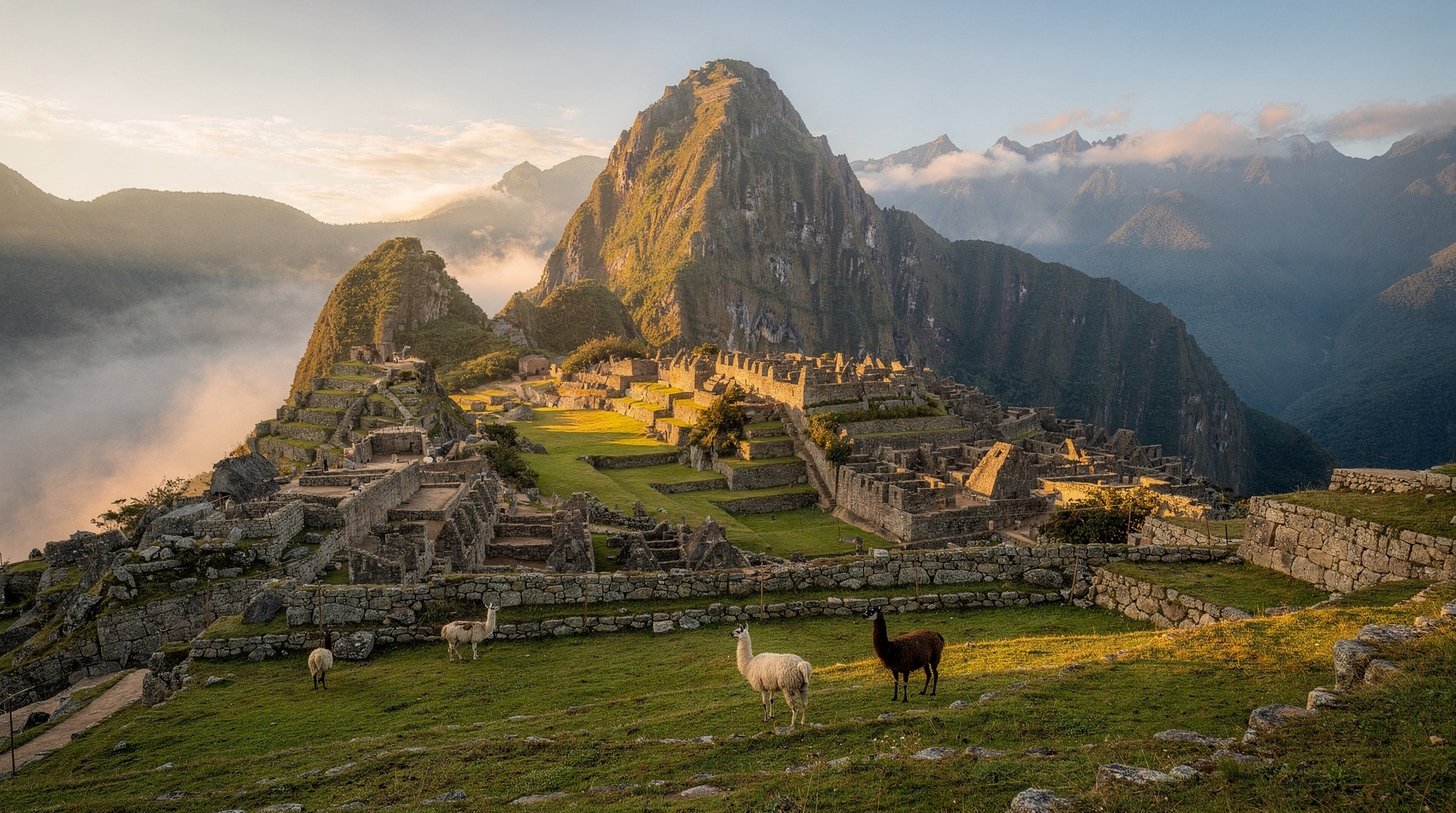
Machu Picchu citadel sits at 2,430 m — lower than Cusco (3,400 m) and lower than the Sacred Valley towns. Most people who are already acclimatised to Cusco feel noticeably better at Machu Picchu. Altitude sickness at the site itself is uncommon for visitors coming from Cusco. However, Aguas Calientes (the access town) is at 2,040 m, and Huayna Picchu peak (optional climb within the site) reaches 2,720 m.
Machu Picchu is lower than you think — and that changes everything
One of the most common pieces of mis-set expectations for Peru travel is this: visitors brace themselves for severe altitude sickness at Machu Picchu, having read about the challenges of altitude in Cusco, and then arrive at the site feeling better than they have in days.
Machu Picchu citadel sits at 2,430 m above sea level. Cusco sits at 3,400 m. The difference — nearly 1,000 m — is physiologically significant. Descending from Cusco to Machu Picchu, you are not climbing to altitude; you are descending nearly a kilometre in elevation. The air is measurably richer in oxygen. Most visitors notice it within the first hour at the site.
This does not mean Machu Picchu is a sea-level experience. At 2,430 m, people who have never been at altitude before will feel some reduction in aerobic capacity — climbing the internal stone steps may leave you more breathless than usual. But it does mean that for the typical Cusco-based visitor who has spent two or three days adjusting to 3,400 m, a day at Machu Picchu is often a genuine physical relief.
| Altitude | 2,430 m (citadel) — around 970 m lower than Cusco |
| Getting there | Train from Ollantaytambo or Poroy, then a 25-minute bus up from Aguas Calientes |
| AMS risk here | Low for anyone with 2+ nights in Cusco or the Sacred Valley first |
| Best for | Families, seniors, and anyone still shaking off Cusco’s altitude |
| Watch for | The quick 390 m bus ascent, and the optional Huayna Picchu / Machu Picchu Mountain climbs |
The altitude map from Lima to Cusco to Machu Picchu
Understanding the altitude numbers across your entire Peru journey puts Machu Picchu in accurate context:
| Location | Altitude |
|---|---|
| Lima (arrival gateway) | 154 m |
| Aguas Calientes (Machu Picchu town) | 2,040 m |
| Machu Picchu citadel entrance | 2,430 m |
| Huayna Picchu peak | 2,720 m |
| Sacred Valley towns (Pisac, Ollantaytambo) | 2,792–2,972 m |
| Machu Picchu Mountain peak | 3,082 m |
| Cusco | 3,400 m |
| Puno / Lake Titicaca | 3,830 m |
| Inca Trail highest pass (Dead Woman’s Pass) | 4,215 m |
| Salkantay Pass | 4,630 m |
| Rainbow Mountain (Vinicunca) | 5,200 m |
Machu Picchu is the lowest named destination in the entire circuit — lower than Cusco, lower than the Sacred Valley, lower than Puno. This is why it is often described as the accessible, altitude-friendly highlight of the region.
Why Machu Picchu is lower: the geographical reality
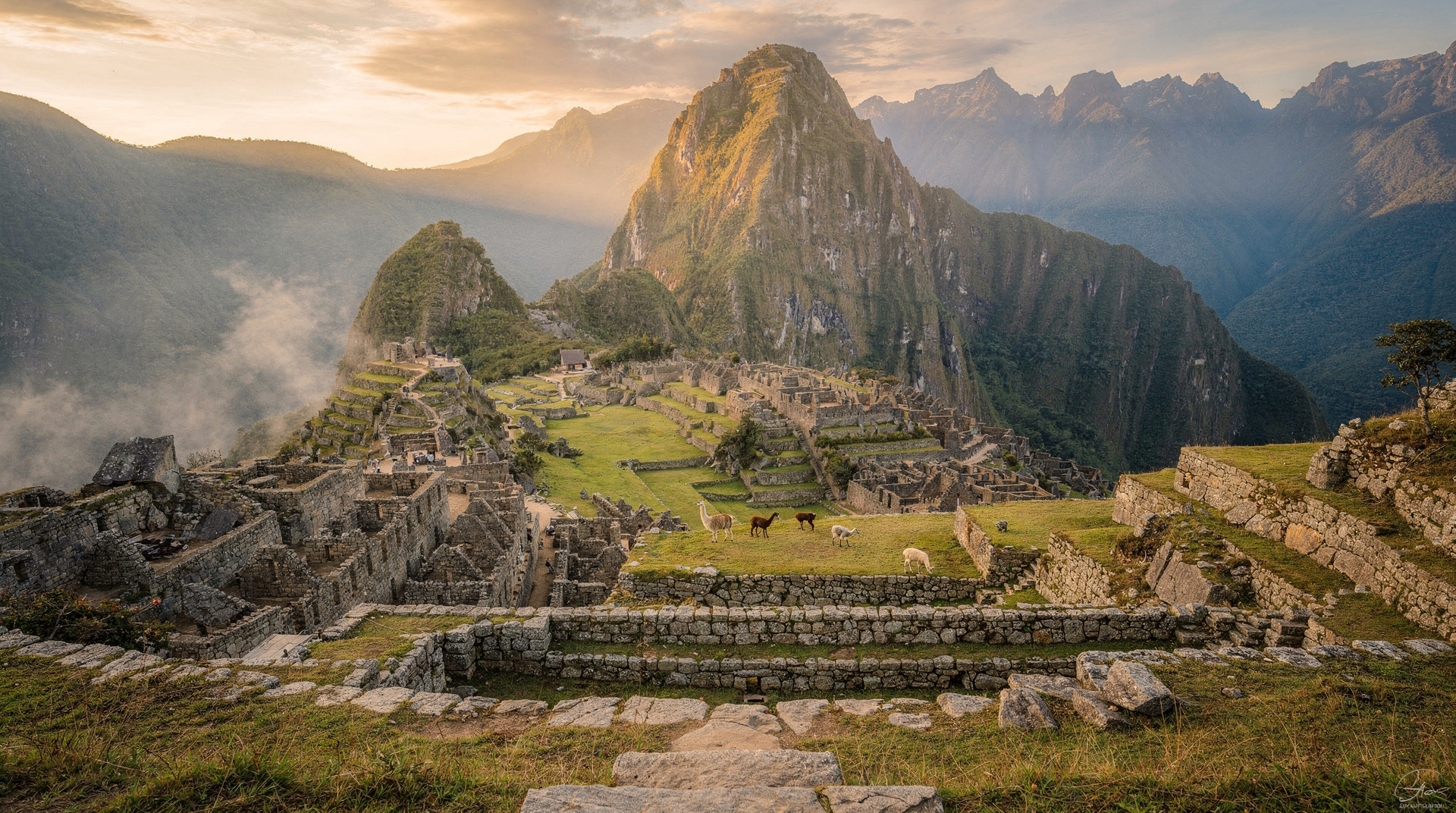
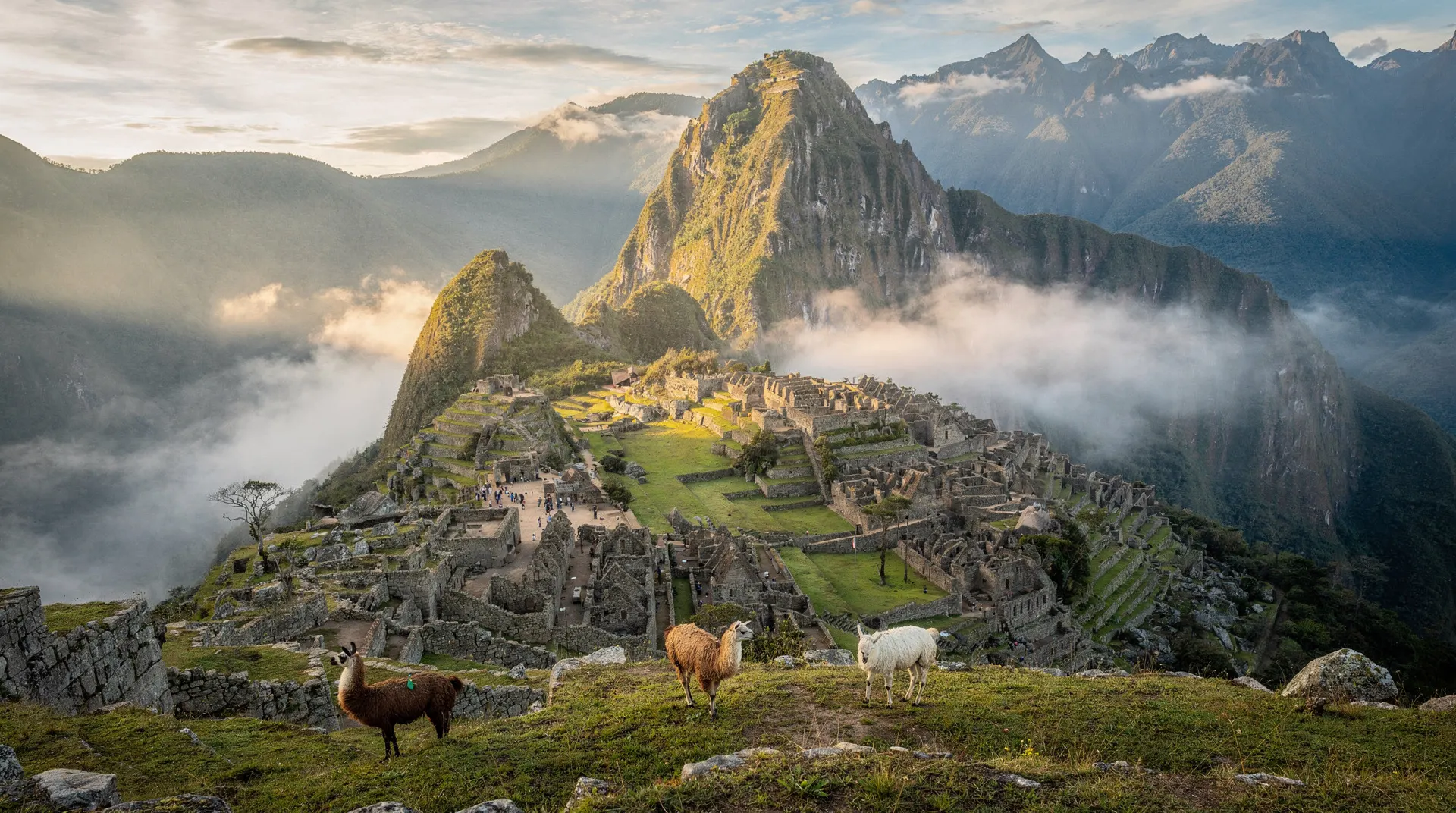
Machu Picchu sits in a notch between two mountain peaks (Huayna Picchu and Machu Picchu Mountain) above the Urubamba River gorge. The river valley drops steeply from Cusco’s highland plateau into the cloud forest and eventually the Amazon basin. Machu Picchu was built deliberately at this altitude: high enough for dramatic mountain views, low enough that cloud forest vegetation reached it, and in a defensible position above the river.
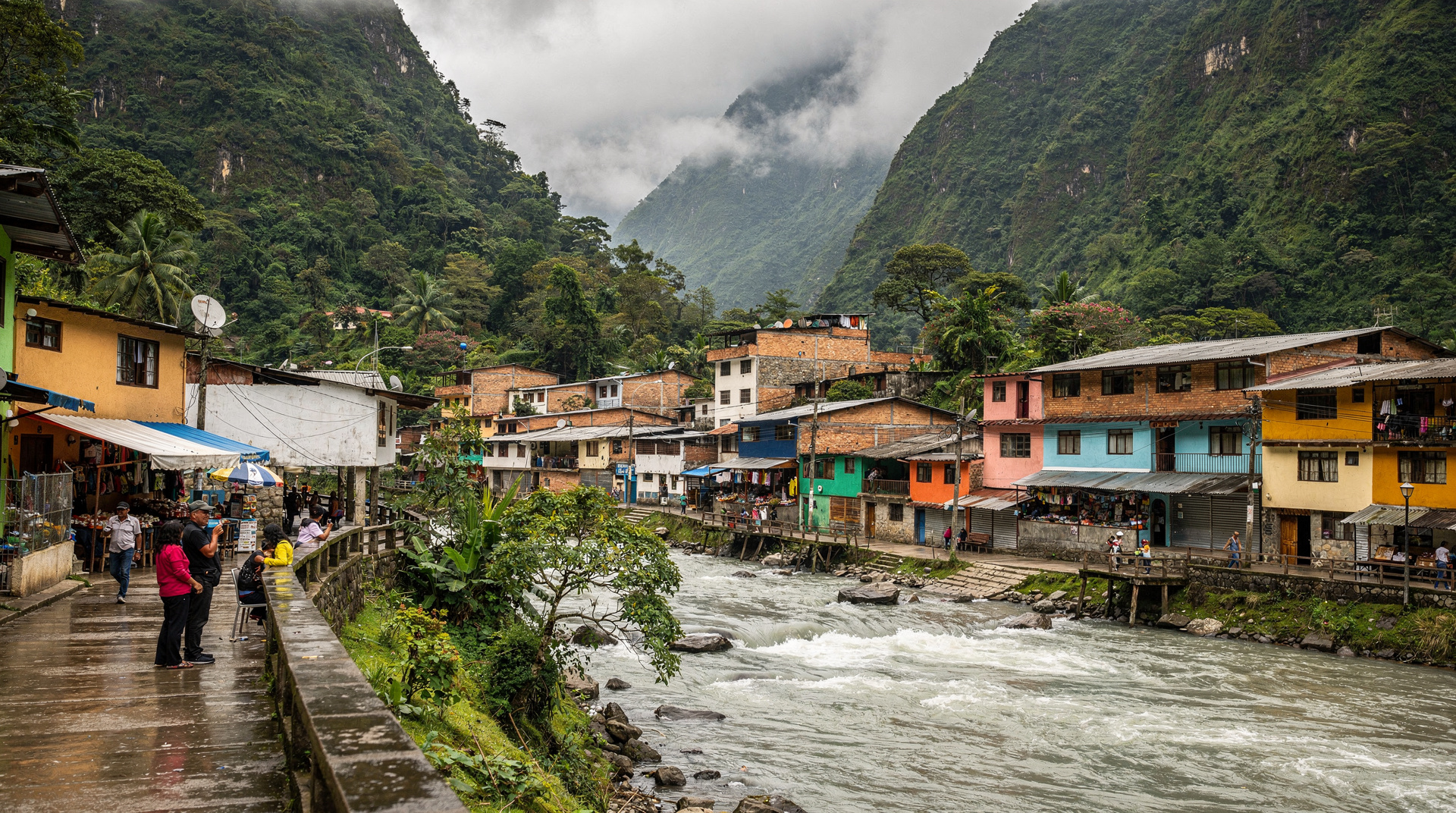
Aguas Calientes — the town at the base of the access road — sits at 2,040 m, lower still. The bus journey from Aguas Calientes to the site’s entrance climbs approximately 390 m in about 25 minutes on a series of switchbacks. This rapid gain is worth noting: some people who feel completely fine in Aguas Calientes experience mild breathlessness in the first 20 minutes at the citadel, simply from the quick ascent by bus. Sitting quietly for 10–15 minutes on arrival before beginning your tour is sensible.
Who will feel altitude effects at Machu Picchu
People who have acclimatised in Cusco (2+ nights): Almost no altitude symptoms at Machu Picchu. Many describe the site as “easy” compared to how they felt on their first day in Cusco. Normal exertion tolerance.
People coming from the Sacred Valley without Cusco time: Slightly more altitude exposure than Machu Picchu visitors from Cusco, but the Valley towns are already close to Machu Picchu’s altitude range. Typically fine.
People who flew Lima–Cusco and immediately took the train to Machu Picchu: Most will feel okay at 2,430 m — it is not extreme altitude. But they spent time at Cusco’s transfer altitude (3,400 m) at the airport and Ollantaytambo station (2,792 m), and a small proportion experience mild symptoms. The risk is manageable but higher than for acclimatised visitors.
People with no altitude experience at all: At 2,430 m, genuinely sensitive individuals can feel mild effects — mild headache, slight breathlessness on stairs. This is the minority. Ibuprofen for a headache and a slow pace is usually sufficient.
Children: Generally fine at 2,430 m for healthy children. More tiring than a visit at sea level, but altitude sickness at this elevation is uncommon in children. Keep them hydrated and pace the visit.
Inside the site: what the walking is actually like
Machu Picchu is not flat. The citadel spans agricultural terraces, a residential zone, a ceremonial zone, and several distinct precincts — all connected by stone staircases of varying steepness. The internal elevation change from the lowest agricultural terrace to the highest ceremonial platform is approximately 80–100 m.
For the majority of visitors, this is comfortable at a steady pace. The main challenges:
- Uneven surfaces: The Inca stone is polished smooth in places by millions of visitors. Traction is lower than it looks; some sections are genuinely slippery in wet weather.
- Sun exposure: At 2,430 m, UV radiation is significantly higher than at sea level. Sunscreen is not optional. The site offers limited shade.
- No mid-site exit: You are walking a one-way route through the site (the circuit system introduced in 2024 directs visitor flow). Plan for 1.5–3 hours of walking depending on your pace and chosen circuit.
The Machu Picchu circuits guide explains the 2024 circuit system in detail — choosing the right circuit affects how much climbing you do and how crowded different sections feel.
Huayna Picchu and Machu Picchu Mountain: the altitude within the altitude
The optional mountain climbs within the site warrant their own altitude assessment.
Huayna Picchu (2,720 m): The iconic steep peak rising directly above the citadel. The ascent is 290 m above the citadel entrance, mostly on very steep stone steps with fixed ropes in sections. The climb takes 45–60 minutes up, 45 minutes down. Permits are limited and sell out quickly — they must be booked as part of your entry ticket in advance. The altitude at the top is still lower than Cusco, so altitude sickness is not the primary challenge here; steep terrain and a head for heights are the real requirements.
Machu Picchu Mountain (3,082 m): A longer, lower-gradient route to a higher peak. Ascent takes 1.5–2 hours. The top at 3,082 m is only slightly below Cusco’s altitude and offers panoramic views of the citadel from above. More altitude exposure than Huayna Picchu, less technical terrain. Permits required in advance.
Neither of these additions is advisable for visitors who are experiencing AMS symptoms at the citadel level. They are appropriate for fit, acclimatised visitors who specifically want the extended hiking experience.
Visiting Machu Picchu: getting there and the altitude journey
A day trip to Machu Picchu by train is the standard approach from Cusco and the most comfortable altitude transition. The train departs from Ollantaytambo or Poroy (near Cusco) and descends through the Urubamba valley over 1.5–2 hours. You feel the altitude decrease as the vegetation changes from highland grassland to cloud forest.
For those already in Ollantaytambo — which is close to Machu Picchu’s altitude — the train journey is even shorter (approximately 1.5 hours) and the altitude difference less pronounced.
Booking the entry ticket with a specific circuit in advance is mandatory. Tickets for popular dates sell out weeks ahead. The Machu Picchu tickets guide covers the booking process and the specific circuit options.
What to do if you feel altitude effects at Machu Picchu
It is uncommon but possible. If you arrive at the site and feel a headache coming on:
- Sit down at the entrance area and rest for 10–15 minutes before beginning your tour.
- Drink water — the bus journey is dehydrating and water is available at the entrance.
- Take ibuprofen for headache if needed.
- Walk slowly. The site does not require a fast pace to cover it adequately.
- If symptoms are significant (strong nausea, dizziness), take the next bus back down to Aguas Calientes. At 2,040 m, you will feel better quickly.
The altitude sickness guide covers the full spectrum of soroche symptoms and when to seek medical attention — though the likelihood of needing that level of care at Machu Picchu’s altitude is genuinely low for most visitors.
The altitude advantage of visiting Machu Picchu early in your trip
Given that Machu Picchu is the lowest destination in the Cusco circuit, there is a case for visiting it early in your stay — ideally day two or three after arrival — rather than saving it as a final highlight.
Arguments for this approach:
- If you are still mildly symptomatic from Cusco’s altitude, Machu Picchu will feel like a recovery day as much as a highlight
- You acclimatise in Aguas Calientes at 2,040 m, the lowest altitude in the region
- You can take an optional overnight in Aguas Calientes, sleeping at 2,040 m, which is excellent acclimatisation preparation for Cusco activities
Arguments against:
- You need to reach Ollantaytambo or Poroy for the train, which requires either overnight in Cusco or an early Sacred Valley transfer
- Guides often recommend knowing the overall Inca context (Cusco, Sacsayhuamán, Qorikancha) before visiting Machu Picchu for maximum appreciation
The honest answer is that both sequences work. The altitude argument slightly favours visiting Machu Picchu earlier; the cultural immersion argument favours visiting it after a few days in Cusco. Choose based on what matters more to you.
The specific worry about Machu Picchu most visitors can let go
The most common question about Machu Picchu altitude is essentially: “Will altitude sickness ruin my Machu Picchu visit?”
For the vast majority of visitors who have spent two or more nights in Cusco or the Sacred Valley before going, the answer is confidently no. The site at 2,430 m feels easier than Cusco and easier than most of the hiking routes in the region. The altitude story at Machu Picchu is much less dramatic than at Rainbow Mountain or on multi-day treks.
The things that require more attention at Machu Picchu than altitude are: booking entry tickets in advance (they sell out), booking train tickets in advance (they sell out), arriving on time for your timed entry slot, and not forgetting sunscreen.
The complete Machu Picchu guide covers all of those practicalities in full.
How Machu Picchu’s altitude compares to other Peru highlights
Machu Picchu’s altitude story only makes sense next to the rest of the region, because the gap between “easy” and “genuinely demanding” is enormous once you leave the citadel:
| Site | Altitude | Altitude difficulty |
|---|---|---|
| Machu Picchu citadel | 2,430 m | Low — easier than Cusco for acclimatised visitors |
| Huayna Picchu peak | 2,720 m | Low-moderate — steep terrain, not altitude, is the challenge |
| Machu Picchu Mountain peak | 3,082 m | Moderate — approaching Cusco’s altitude |
| Salkantay Trek high pass | 4,630 m | High — genuine AMS risk without proper pacing |
| Rainbow Mountain | 5,200 m | High — the steepest altitude gain most travellers attempt |
If you’re deciding between the two optional climbs inside the site, the Huayna Picchu vs Machu Picchu Mountain guide breaks down which suits your fitness and nerve for heights, and the Huayna Picchu destination page has the permit logistics. If you’re weighing whether to add a multi-day trek before your Machu Picchu day, the best treks to Machu Picchu guide is the honest comparison — those routes carry real altitude risk in a way the citadel itself does not.
Building altitude into the rest of your itinerary
Because Machu Picchu is the low point of a Cusco trip, the smartest itineraries treat it as a release valve rather than a final test. If you’re still deciding how to sequence acclimatisation days against Sacred Valley time, the Cusco acclimatization plan lays out a day-by-day approach that slots a Machu Picchu visit in at the point where it does the most good.
Travellers torn between basing themselves in Cusco versus the lower Sacred Valley towns should read the Cusco vs Sacred Valley altitude guide, since your base affects how much of a “recovery” Machu Picchu actually feels like. And because crowd levels and weather both interact with how comfortable the walking feels, the best time to visit Machu Picchu guide is worth checking alongside this one — a cool, dry-season morning at 2,430 m feels very different from a humid, crowded one.
For the ticket and train logistics that matter more here than altitude ever will, see the how to get to Machu Picchu guide.
If you’re comparing entry ticket types before you book, note that the circuit you choose changes how much internal climbing you do, not just what you see — the Machu Picchu ticket types compared guide and the circuits compared guide both flag which options involve the steepest stretches, useful context if altitude-related fatigue is a concern for anyone in your group.
Frequently asked questions about Machu Picchu altitude explained: is it high enough to cause problems?
Can I visit Machu Picchu without acclimatising to Cusco first?
How does Machu Picchu altitude compare to other Peru highlights?
Do children and elderly visitors struggle with altitude at Machu Picchu?
What about the climb to Huayna Picchu or Machu Picchu Mountain within the site?
Is it possible to feel altitude sickness at Machu Picchu?
What is the walk like inside Machu Picchu at altitude?
Top experiences
Bookable activities with verified prices and instant confirmation on GetYourGuide.