Machu Picchu ticket types compared: which one to buy in 2026
Machu Picchu: Circuit 3 Entry Ticket
Which Machu Picchu ticket should I buy?
There are three circuits (since June 2024). For a first visit, Circuit 2 Clásico (S/152/~$40) is the one that walks through the urban sector: temples, plazas and the Intihuatana. Circuit 1 Panorámico focuses on the upper terrace and viewpoints, and Circuit 3 Realeza adds routes such as Huayna Picchu (S/200/~$54), which sells out months ahead and involves a steep climb. Buy only at tuboleto.cultura.pe — never through third parties.
Why this decision must be made before you book anything else
Machu Picchu operates on a timed-entry, circuit-based admission system introduced to control visitor numbers and reduce erosion damage to the site. Every admission slot has a fixed capacity; the most popular slots and the mountain add-ons fill up months ahead in peak season. The practical consequence for visitors is that the ticket you buy determines exactly which parts of the citadel you can walk, at what time, and for how long — and the decision must be made before you book your train, before you book your accommodation in Aguas Calientes, and ideally before you book your flights.
All official tickets are purchased at tuboleto.cultura.pe using your passport number and paid by Visa or Mastercard. There is no other legitimate purchase channel. This matters because the fake-ticket market around Machu Picchu is one of the most damaging tourist scams in Peru — detailed below.
| Where | tuboleto.cultura.pe (the only official source) |
| Cost | Around S/152 ( |
| Time needed | Routes 1-B, 2-A and 3-B allow a maximum stay of 2 h 30; mountain routes take longer |
| Booking window | As soon as your dates are confirmed, especially for mountains in peak season |
| Best for first visit | Circuit 2 Clásico (walks through the urban sector) |
The three main circuits
Since 1 June 2024 there are three circuits, grouping ten routes. There is no Circuit 4; descriptions of four or five circuits belong to the old 2021–May 2024 system. The ticket screen on tuboleto.cultura.pe shows exactly what each route includes on your date.
Circuit 1: Panorámico
Circuit 1 groups four routes: 1-A (Machu Picchu Mountain), 1-B (upper terrace), 1-C (Sun Gate, Intipunku) and 1-D (Inca Bridge). Routes 1-C and 1-D are available only in high season. Route 1-B climbs to the upper part of the site (lower and upper platforms, the area of the Inca Bridge) and does not enter the urban sector, so it is a viewpoint-focused choice rather than a walk through the temples. Maximum stay on route 1-B is 2 h 30.
The Sun Gate (Inti Punku) is the ceremonial gateway through which Inca Trail trekkers arrive at Machu Picchu. It sits at approximately 2,745 m, around 300 m higher than the main citadel (2,430 m). From it, the view back over the citadel with Huayna Picchu behind is the classic panorama of Machu Picchu. It is a stone path with no technical difficulty, though some sections have significant drop-offs to one side.
Price: approximately S/152 (~$40 USD at mid-2026 exchange rates). Since 1 May 2026 the SERNANP protected-area authority also charges a separate sanctuary fee of S/11 per foreign adult (S/5 for ages 3–17, free under 3), not applied on the Inca Trail network; check the final amount at checkout on the official site.
Circuit 2: Clásico, the Inca city circuit
Circuit 2 has two routes: 2-A (the designed route through the urban sector) and 2-B (lower terrace). Route 2-A is the one that crosses the heart of the citadel: the Temple of the Sun viewpoint, the Plaza of the Temples, the Intihuatana pyramid, the Sacred Rock, the Doce Vanos, the eastern qolqas, the Water Mirrors, the Temple of the Condor and the Pisonay plaza. Maximum stay on route 2-A is 2 h 30.
For most first-time visitors this is the circuit that shows the architecture you came for. It is also the straightforward choice for families with young children or anyone with mobility concerns, since it has no mountain climb.
Price: approximately S/152 (~$40 USD).
Circuit 3: Realeza
Circuit 3 has four routes: 3-A (Huayna Picchu), 3-B (another designed route through the urban sector), 3-C (Gran Caverna) and 3-D (Huchuy Picchu). Routes 3-C and 3-D are available only in high season. Maximum stay on route 3-B is 2 h 30.
Circuit 3 tickets are the ones to look at if the Huayna Picchu climb is the point of your visit. If you only want the citadel itself, Circuit 2 is the simpler match.
Price: approximately S/152 (~$40 USD).
The mountain add-ons
Huayna Picchu
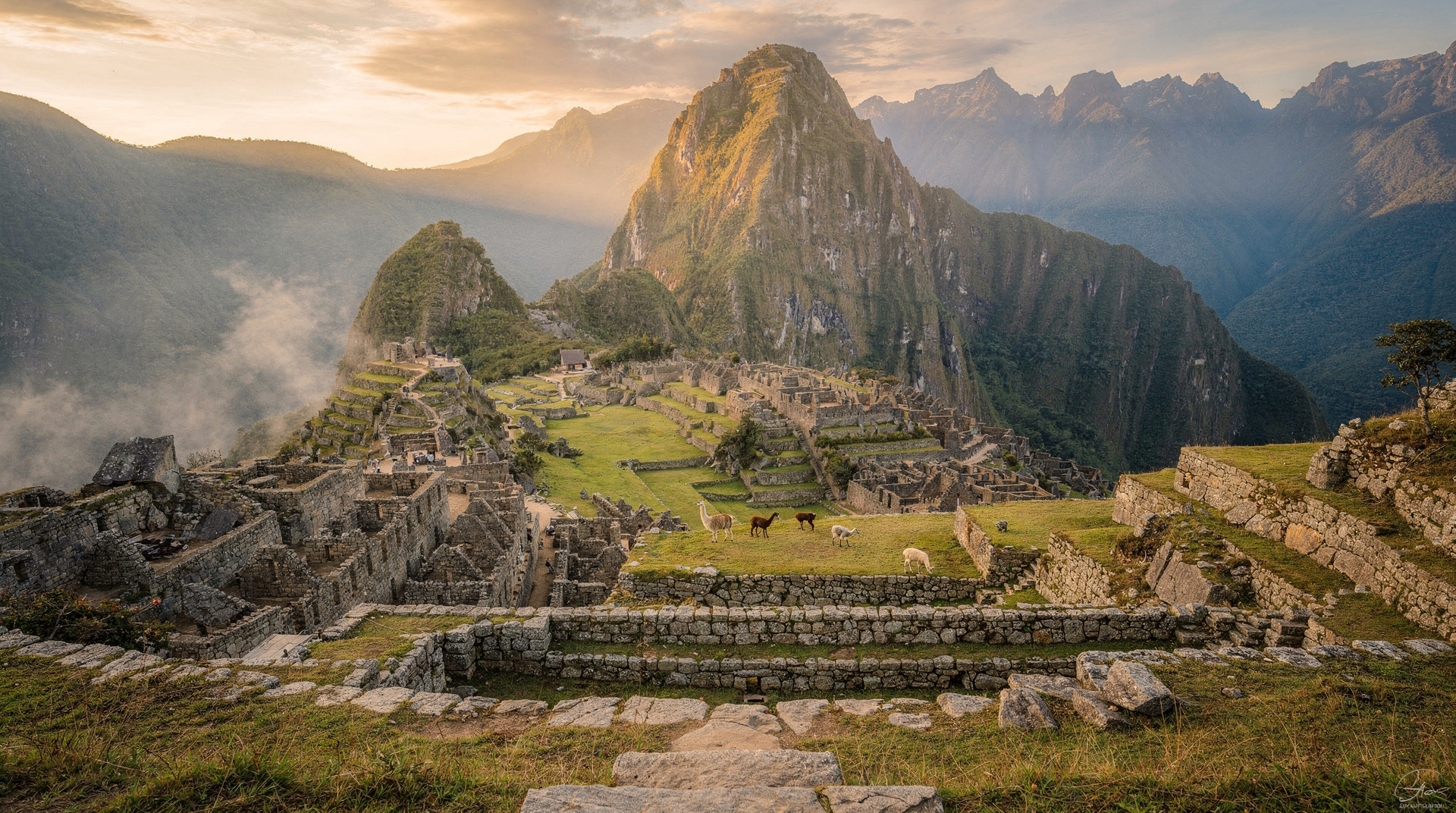
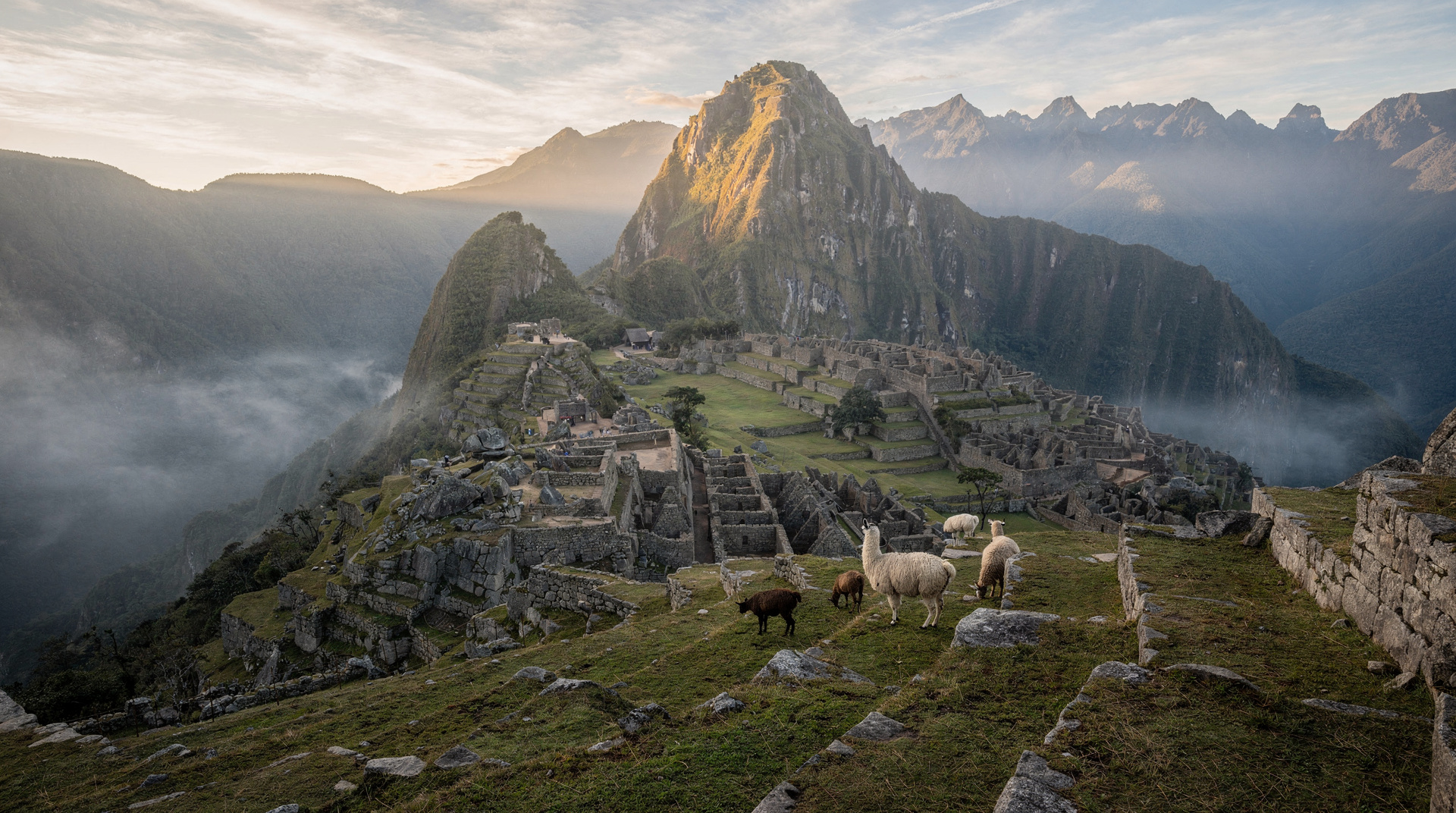
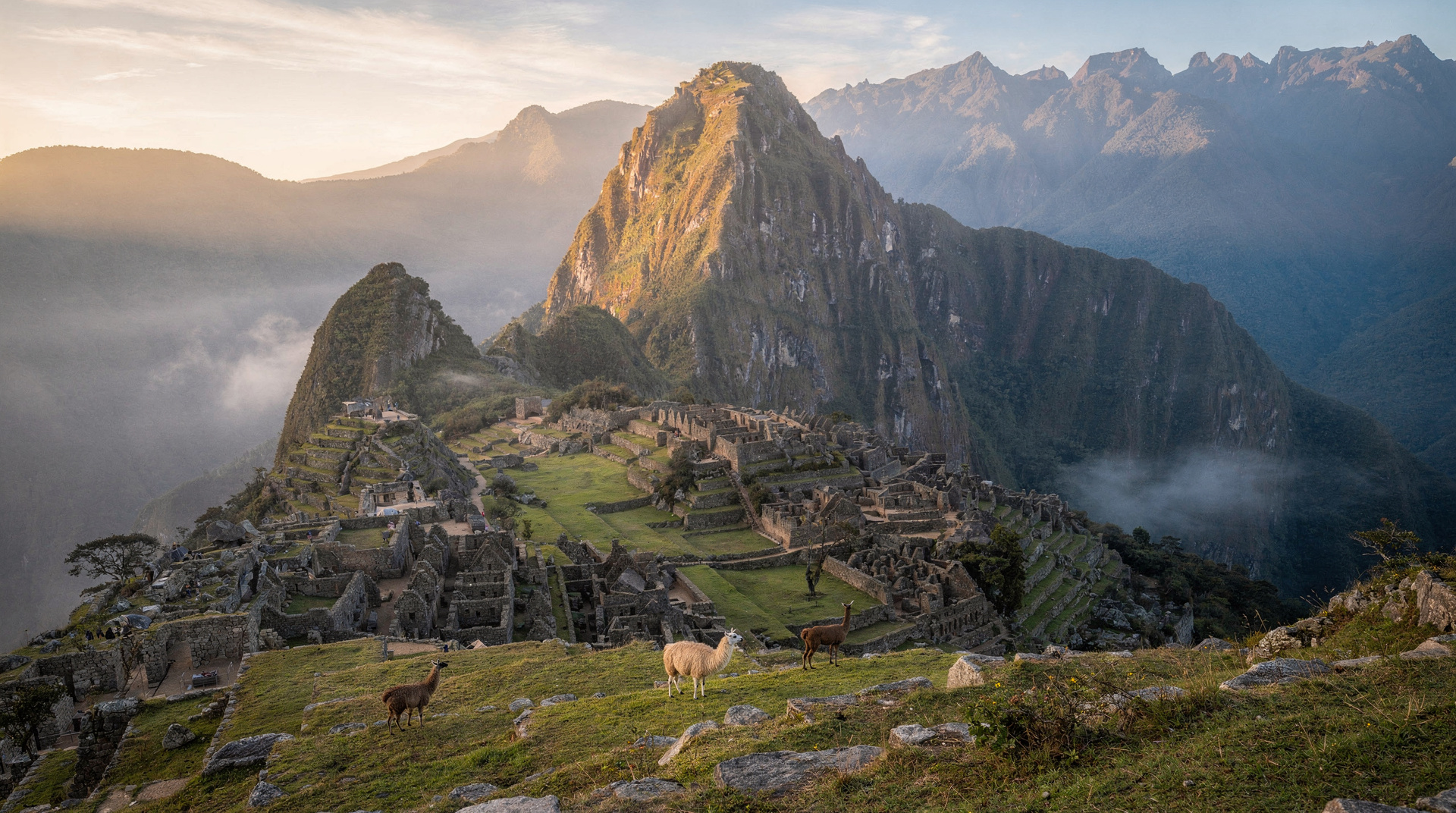
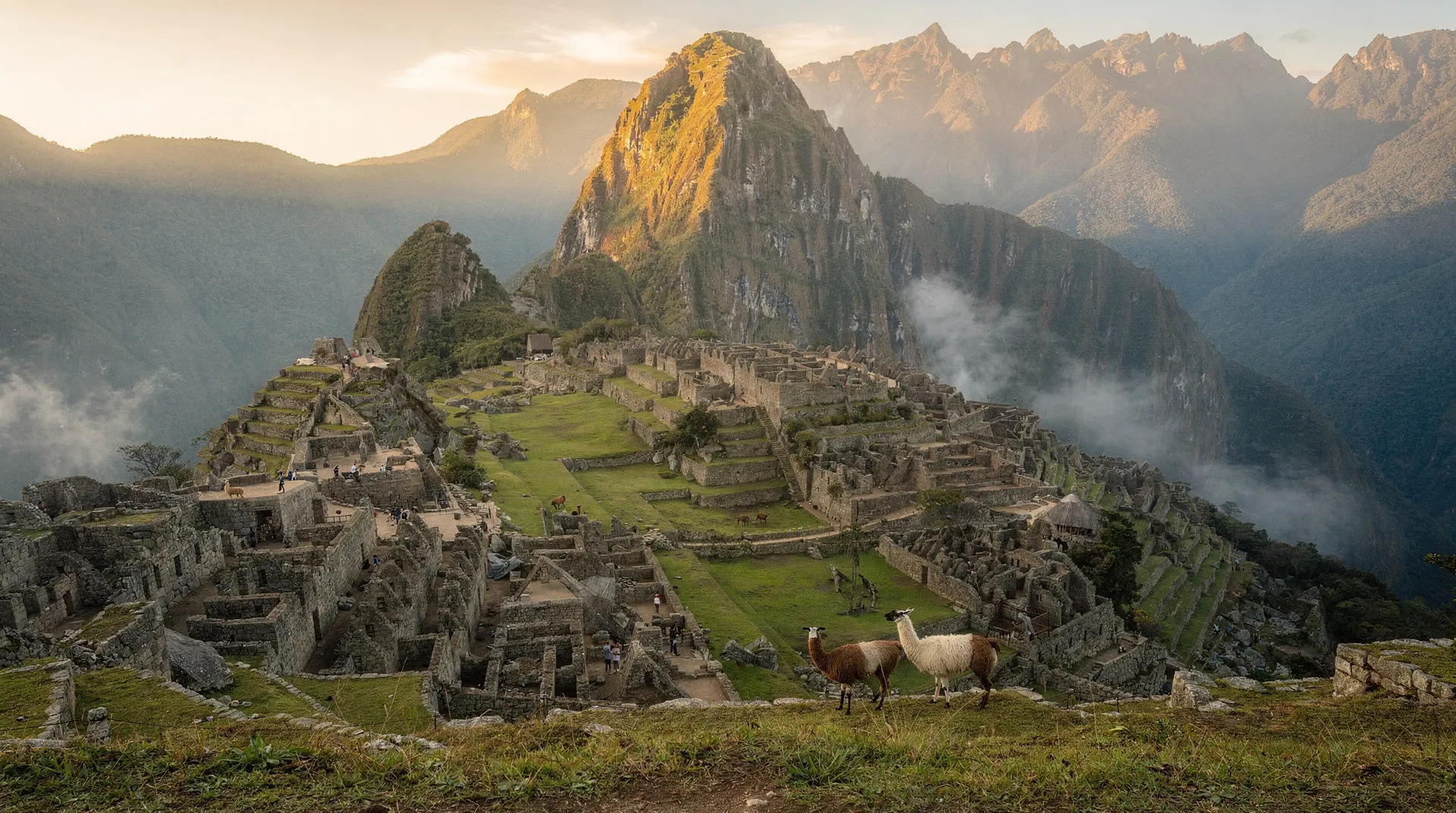
Huayna Picchu is the dramatic mountain spike that rises behind the citadel in the iconic postcard photograph. A path climbs to its summit at approximately 2,693 m — a number that understates the experience, since the ascent involves sections of near-vertical Inca stairway, passages narrowed to single-file between rock walls, and exposed traverses with wire rope handholds where significant drops fall away on both sides. The summit view is spectacular: the full citadel below, the Urubamba River gorge visible in multiple directions, and on clear days the distant snow peaks of the Vilcanota range.
Huayna Picchu is route 3-A of Circuit 3. There is no tolerance for late arrival at the mountain checkpoint. Huayna Picchu tickets sell out months ahead in peak season, and the quota and available time slots change, so check the live availability on tuboleto.cultura.pe. If Huayna Picchu is a priority, book at the moment your travel dates are confirmed — not after you have booked flights and accommodation, but at the same time.
Honest assessment: the path is genuinely vertiginous. People who are uncomfortable with heights or whose knees do not manage sustained steep descent should not underestimate the difficulty. The round trip takes 2–3 hours from the base of the mountain. The view from the summit of Huayna Picchu looking back over the citadel is extraordinary; so is the view of Huayna Picchu from within the citadel, which you get for free on any ticket. Both views are different, and the summit climb adds a physical dimension to the visit that some visitors find meaningful and others find excessive.
Price: approximately S/200 (~$54 USD), including main sector admission.
Machu Picchu Mountain (Montaña Machu Picchu)
A less famous but often preferable alternative. Machu Picchu Mountain rises on the opposite side of the archaeological park from Huayna Picchu, reaching approximately 3,082 m. The path is longer — 2–3 hours round trip from the main entrance — but significantly less steep and exposed than the Huayna Picchu route. The difficulty is stamina rather than nerve.
The view from the summit is arguably broader than Huayna Picchu: you see both the citadel and Huayna Picchu simultaneously, plus a wide panorama of the Urubamba valley system below. Cloud permitting, it is the better photography position for the full landscape context.
Machu Picchu Mountain is route 1-A of Circuit 1. There is no tolerance for late arrival at the mountain checkpoint. It sells out less aggressively than Huayna Picchu but still requires advance booking in peak season; check available time slots on tuboleto.cultura.pe.
Price: approximately S/200 (~$54 USD), including main sector admission.
Entry time slots: how to choose
Each ticket requires a timed entry slot: one slot per hour at the main gate, at 6:00, 7:00, 8:00 and so on up to 15:00. You can arrive up to 30 minutes late in normal season and up to 45 minutes late in high-traffic periods (1 June to 15 October, and 30–31 December). At the mountain checkpoints (Machu Picchu Mountain, Huayna Picchu, Huchuy Picchu) there is no tolerance at all. Routes 1-B, 2-A and 3-B have a maximum stay of 2 h 30.
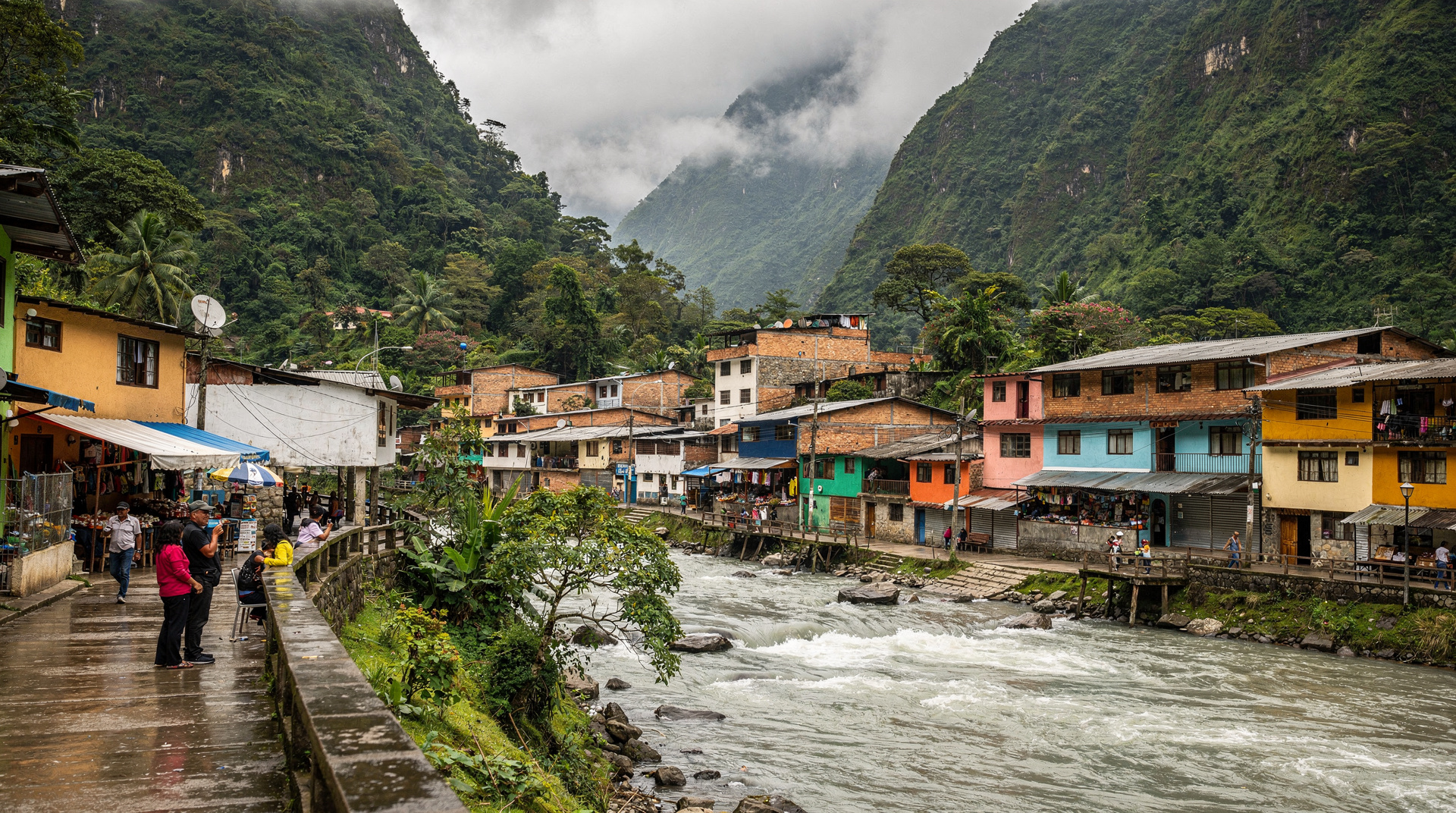
The 6 am slot (first entry) has the best morning light and the least crowded site. It requires the first bus from Aguas Calientes (departing from 5:30 am, ~S/15 one way) or the walk up the switchback path (~1.5 hours). The 6 am slot fills first.
For Huayna Picchu, check the time slots offered on tuboleto.cultura.pe and allow time to walk to the mountain checkpoint, which has no late tolerance. An early slot requires the first bus.
Whichever circuit you pick, an early slot gives you the best light for photography.
The fake ticket warning: the most important paragraph in this guide
Machu Picchu admission scams are the most financially damaging ticket fraud in the Cusco region. The mechanism is consistent: a third-party booking website (often appearing prominently in search results, with professional design and customer reviews) accepts payment for a Machu Picchu ticket. The confirmation arrives. When the visitor arrives at the turnstile in Aguas Calientes, the ticket either does not exist in the system or is registered to a different passport number, making it invalid.
The entry system photographs each visitor at the turnstile and matches the image against the passport photograph registered to the ticket. A ticket bought under someone else’s passport number — or a fictitious booking — cannot pass this check. Visitors caught by this scam in Aguas Calientes typically discover there is no valid replacement ticket available because the relevant circuits have sold out weeks earlier.
The only legitimate purchase path is tuboleto.cultura.pe, operated by the Peruvian Ministerio de Cultura. Every other website selling Machu Picchu tickets is either a reseller accessing the same system at a markup (legal but overpriced) or a fraud (expensive and devastating). There is no authorised third-party exclusive quota for Machu Picchu tickets. The fake Machu Picchu ticket guide describes the specific websites and patterns to avoid.
What Machu Picchu actually is and why it matters
Before deciding which ticket to buy, it helps to understand what Machu Picchu is architecturally and historically — because the answer shapes which circuit makes most sense for your specific interests.
Machu Picchu is a 15th-century royal estate built by the Inca emperor Pachacutec, probably around 1450 CE. It is not a city in the administrative sense — it was a royal retreat, a ceremonial centre and a demonstration of Inca engineering capability, rather than a populated urban hub. The construction was abandoned (probably not completed) after the Spanish conquest and was not widely known outside the local Quechua-speaking community until Hiram Bingham’s 1911 expedition brought it to international attention.
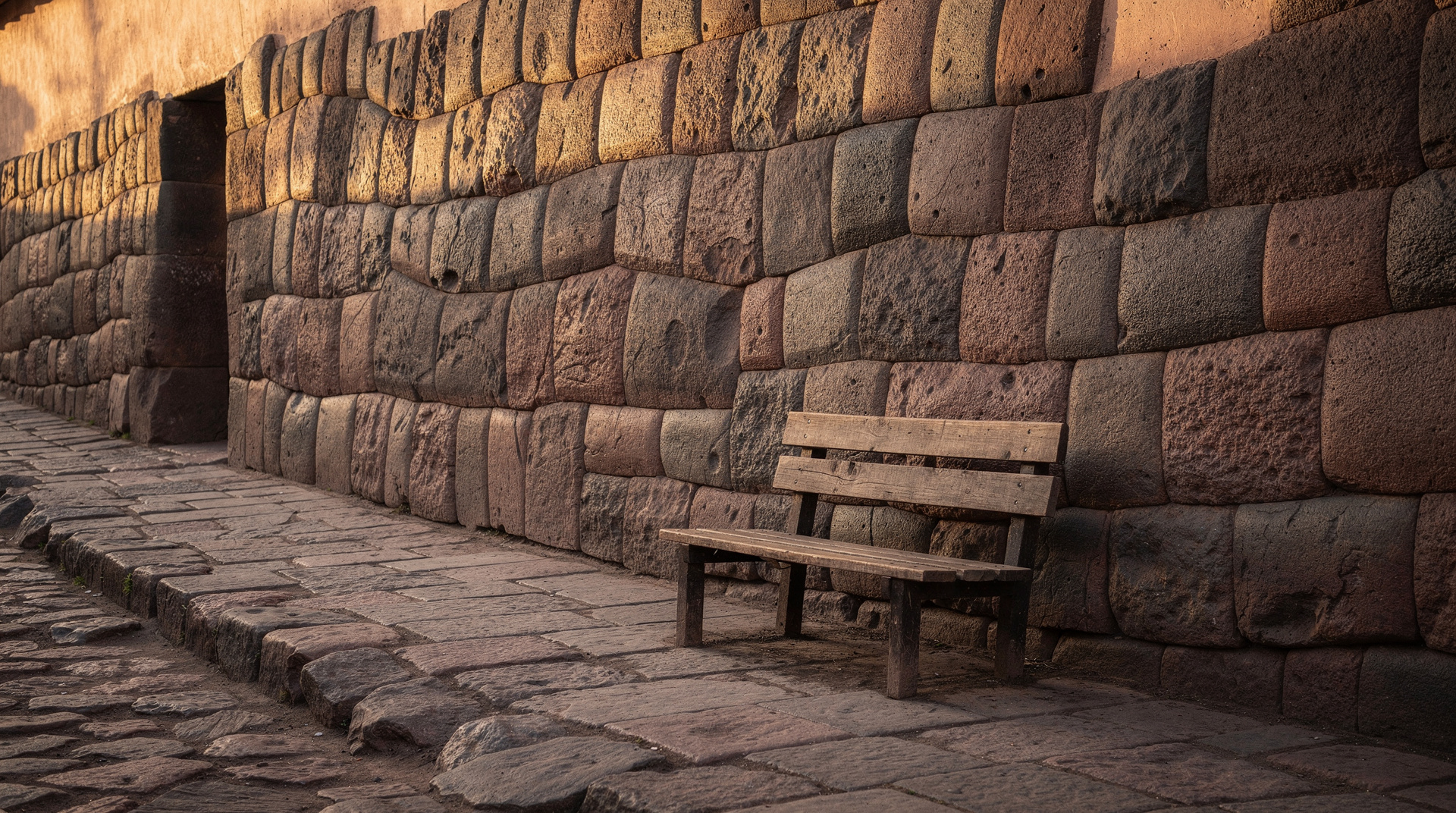
The site is divided into an agricultural zone (terraces) and an urban zone (temples, palaces, workshops, plazas and residences). The urban zone contains the most architecturally significant structures: the Temple of the Sun (a curved-wall construction over a natural rock formation used as an astronomical sighting stone), the Intihuatana (a carved stone pillar whose shadow tracks solar events — the only surviving unhewn example in Peru, others having been destroyed by the Spanish), the Principal Temple, and the Temple of the Three Windows.
The setting is integral to the experience: the site occupies a saddle between Huayna Picchu and Machu Picchu Mountain at 2,430 m, with the Urubamba River visible 450 m below in the gorge on three sides. On clear mornings, the cloud forest vegetation on the surrounding peaks and the stone architecture of the citadel create a composition that is genuinely unlike anything else on earth.
Understanding what you are looking at makes all three circuits more rewarding. A guided visit — available from licensed local guides at the main entrance — provides the historical and architectural context that site signage cannot fully convey.
How to choose your entry time slot
Every ticket requires a timed hourly entry slot. The choice of entry time shapes the experience significantly.
6 am–7 am (first entry): Best morning light for photography. Fewest people on site for the first hour. Requires catching the first Consettur bus from Aguas Calientes (departs 5:30 am, queue forms from 4:30–5 am). Worth the early start if photography or solitude matters. This slot fills first and sells out earliest.
7 am–9 am: The standard productive window. Cloud often builds from mid-morning, so viewpoints and mountain routes are best done early.
10 am–noon: Midday light on the site. Heavier visitor numbers at the main sector. Still entirely viable if early viewpoints are not your objective. Late-morning arrivals also have the advantage of avoiding the 5 am alarm in Aguas Calientes.
After noon (last slot 3 pm): Useful for a second entry (requiring a separate ticket) to see the late afternoon light on the main citadel. Visitor numbers thin after 2–3 pm as morning arrivals depart. If you have booked a two-day visit to Machu Picchu, combining a morning first-day entry with an afternoon second-day entry can give you both the morning light and the quieter afternoon.
How long to spend at Machu Picchu
Budget more time than you think you need. The standard advice — “you can see it in two or three hours” — is technically true for covering the circuit route, but it leaves almost no time to sit with the site, to revisit a section that caught your attention, or to wait for cloud cover to clear from Huayna Picchu peak for a photograph.
Routes 1-B, 2-A and 3-B allow a maximum stay of 2 h 30. Mountain routes take extra time on top of that. Check the details of your route on tuboleto.cultura.pe before planning your train times.
One hour for lunch in Aguas Calientes is a common mid-day break for visitors who book a morning entry and want to return to the site in the afternoon — requiring a second ticket.
At the site: what to know before you go
There are no food stalls or vending machines inside Machu Picchu. Bring water (at least 1 litre per person) and snacks in a small day pack. Large bags and backpacks over 20 litres are not permitted; store them at the left-luggage facility near the main gate in Aguas Calientes before boarding the bus. Sunscreen and a hat are essential; the UV at 2,400 m is significant even in cloud. Trekking poles are permitted.
Drone use is prohibited throughout the site and the surrounding protected area. Photography of all kinds without commercial purpose is permitted and unrestricted.
The main gate and entrance area has toilets (clean, small fee) and an information point. Site guards are stationed throughout the circuit and can direct you if you lose the route.
Coordination with train tickets
Machu Picchu admission and train tickets are completely separate bookings from separate systems. Both are required for a visit. The correct sequence: book your Machu Picchu entry slot first (it is the most constrained), then book the train from Ollantaytambo or Cusco that arrives in Aguas Calientes at least 60–90 minutes before your entry slot. The Machu Picchu train tickets guide covers train booking, operators and timing in full.
How this ticket naming maps to other circuit guides on this site
The circuit numbering and content described above reflects the official three-circuit system in force since June 2024, but you may also see circuits described differently in the Machu Picchu circuits explained guide and the circuits compared guide, since older descriptions refer to the previous four- or five-circuit system. If you’re cross-referencing multiple guides while planning, treat the ticket screen on tuboleto.cultura.pe as the final source of truth for what a given circuit number actually includes on your travel date.
Huayna Picchu vs Machu Picchu Mountain: which add-on to book
If you’ve decided a mountain climb is worth the extra cost and time, the choice between Huayna Picchu and Machu Picchu Mountain comes down to nerve for heights versus stamina — the Huayna Picchu vs Machu Picchu Mountain guide lays out the honest trade-offs in more depth than the summary above, including which one books out faster in each season and which gives the better photography position.
Fitting your ticket choice into the rest of your day
Whichever ticket type you buy, it needs to fit around your train schedule and, if applicable, your acclimatisation plan. The Machu Picchu complete guide ties ticket choice, train timing and overall logistics together in one place, while the day trip from Cusco guide is essential reading if you’re trying to fit any of these circuits into a single day rather than an overnight stay — a mountain route is genuinely difficult to combine with a same-day return to Cusco.
Timing your visit within the year, not just within the day
Ticket availability and how far ahead you need to book both shift significantly by season — the best time to visit Machu Picchu guide covers exactly how much earlier you need to act for June–August travel versus the quieter November–March window, which matters more for Huayna Picchu and Machu Picchu Mountain than for the standard citadel routes.
Choosing a ticket type for families
Circuit 2 is the soundest choice for families with young children or anyone with mobility concerns, since it avoids the mountain climbs and the high-season Sun Gate and Inca Bridge routes. The Machu Picchu with kids guide has more detail on pacing a family visit around whichever ticket you choose, including how to structure rest breaks.
Does altitude affect which ticket you should pick?
Not significantly at the main-sector level — the Machu Picchu altitude explained guide confirms that 2,430 m is comfortably lower than Cusco for most acclimatised visitors. Where altitude becomes a genuine factor is the Sun Gate (2,745 m) and the mountain routes (2,693 m and 3,082 m respectively) — none of these are extreme, but combined with sustained climbing they are more physically demanding than the urban-sector routes, so factor general fitness into your ticket choice alongside altitude.
Frequently asked questions about Machu Picchu ticket types compared: which one to buy in 2026
How much does a Machu Picchu ticket cost in 2026?
What is the difference between Circuit 1, 2 and 3 at Machu Picchu?
When do Machu Picchu tickets sell out?
Where do I buy official Machu Picchu tickets?
Can I buy Machu Picchu tickets on the day in Aguas Calientes?
Can I re-enter Machu Picchu on the same ticket?
Top experiences
Bookable activities with verified prices and instant confirmation on GetYourGuide.