Sleep in the Sacred Valley first: why it beats arriving in Cusco directly
From Cusco: Sacred Valley of the Incas Full-Day Tour
Should I sleep in the Sacred Valley or Cusco first for altitude?
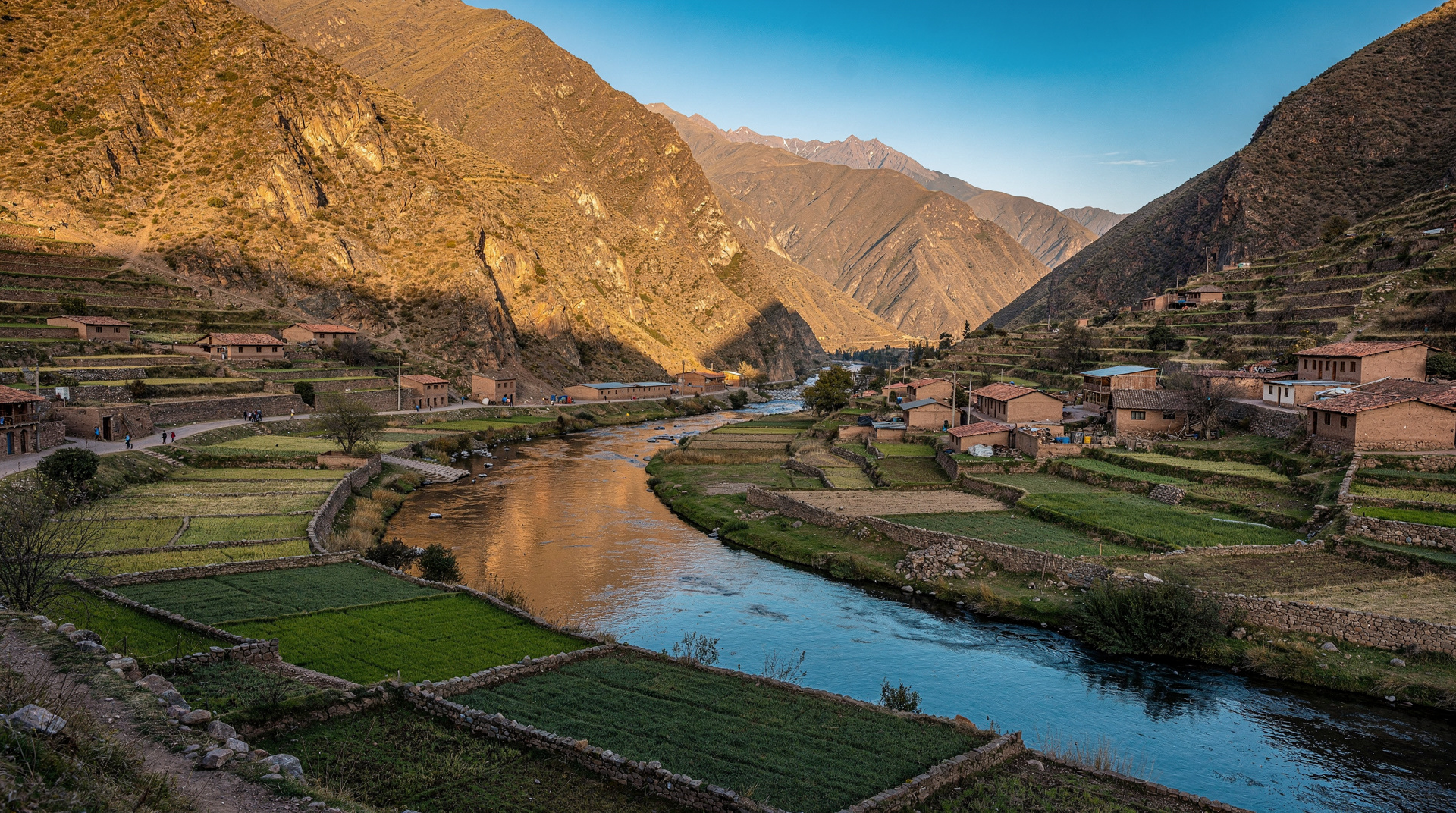
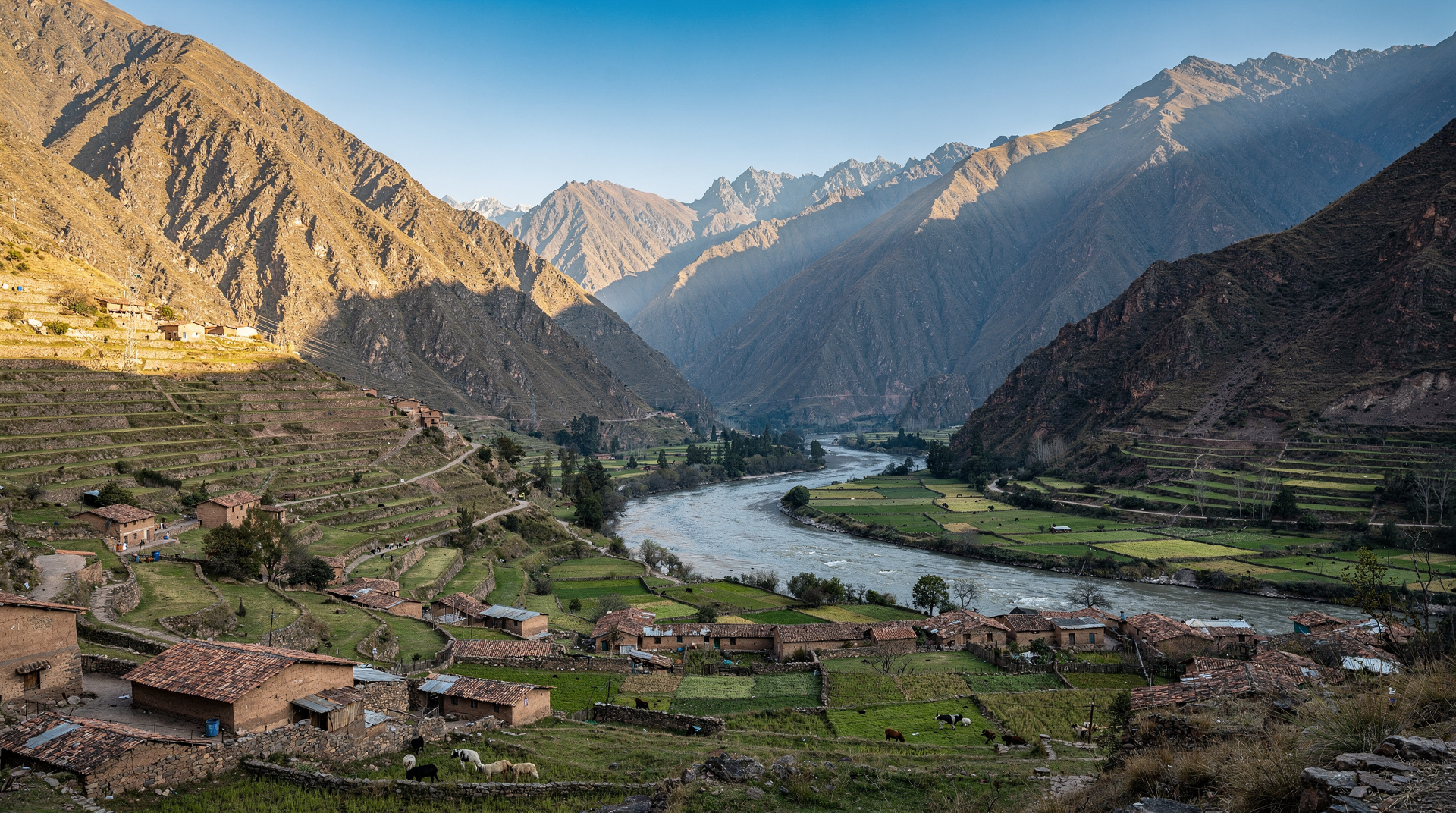
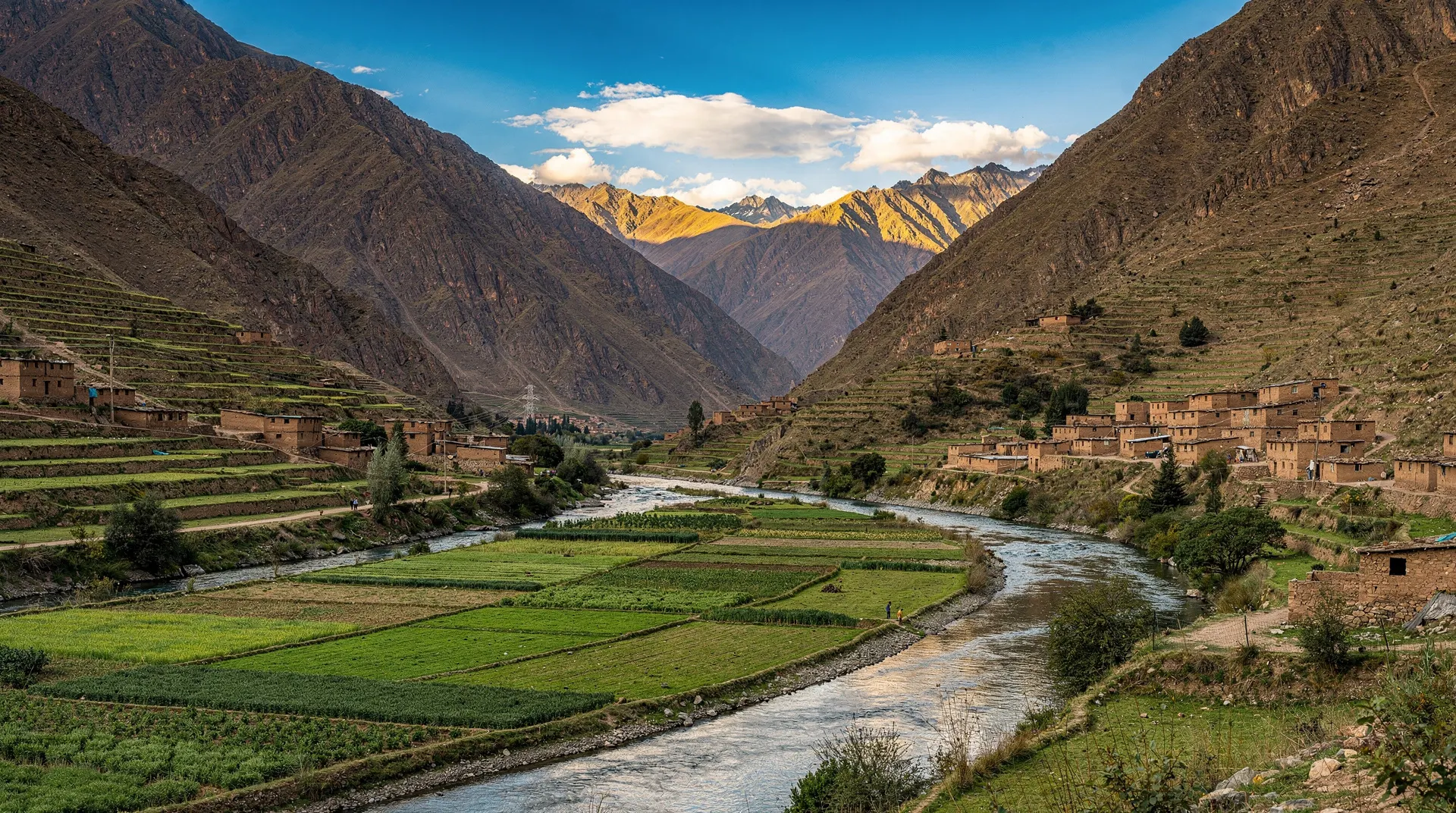
Sleep in the Sacred Valley first if at all possible — specifically Ollantaytambo (2,792 m) or Urubamba (2,863 m). At roughly 600 m lower than Cusco (3,400 m), the Valley gives your body a gentler first-night at altitude. Most visitors who do this arrive in Cusco on day two noticeably better adapted than those who flew directly to the city. The detour adds only 1.5 hours of transfer time.
The piece of altitude advice that most operators will not give you
There is one altitude strategy for Cusco that genuinely makes a difference to how most visitors feel in their first 48 hours, and it is the one that tour operators most consistently omit from their pre-trip briefings.
That strategy is: spend your first night in the Sacred Valley rather than Cusco.
The reason operators do not flag this is that it complicates their logistics. Their city tours, cooking classes, and arrival-day airport pickups are designed around guests going straight to Cusco. Suggesting that you detour to Ollantaytambo first means a different transfer, possibly different hotels, and a different day-one programme.
From a pure altitude physiology perspective, it is the clearest single improvement you can make to your arrival plan.
| Where | Ollantaytambo (2,792 m) or Urubamba (2,863 m), Sacred Valley |
| Cost | Around S/80–100 taxi from CUZ airport, or S/30–40 shared shuttle |
| Time needed | One or two nights before moving on to Cusco |
| Getting there | Taxi or shared transfer, ~1.5 hrs from Cusco airport |
| Best for | Anyone with a trek, Rainbow Mountain, or Puno on the itinerary |
The altitude gap: what the numbers mean in practice
Cusco sits at 3,400 m above sea level. The main Sacred Valley towns are:
- Ollantaytambo: 2,792 m
- Urubamba: 2,863 m
- Chinchero: 3,762 m (do not go there first — it is higher than Cusco)
- Pisac: 2,972 m
- Machu Picchu: 2,430 m
The relevant comparison is between Ollantaytambo at 2,792 m and Cusco at 3,400 m. That is a 608 m difference — not enormous in absolute terms, but physiologically meaningful for the acclimatisation process.
At sea level, your blood oxygen saturation runs around 98–99%. At Cusco’s altitude, it typically drops to 85–92% in the first hours after arrival. At Ollantaytambo’s altitude, it is closer to 90–94%. The difference in how your body responds to that first night of sleep — when your breathing naturally slows and oxygen delivery to the brain drops — is tangible.
Travellers who sleep in Ollantaytambo on night one and arrive in Cusco on night two typically report noticeably milder symptoms than those who flew directly to the city. This is anecdotal consensus among experienced guides and long-term Cusco residents, consistent with the physiological reasoning.
The logistics: how to actually do it
The Sacred Valley first approach is straightforward. Here is how it works from the airport:
Cusco airport (CUZ) to Ollantaytambo: approximately 1.5 hours by taxi or shared transfer. The standard route goes through the Sacred Valley towns. A private taxi from the airport costs roughly S/80–100 (around $22–28 USD) to Ollantaytambo. Shared tourist shuttles are cheaper (S/30–40) but require coordination. Many guesthouses and hostels in Ollantaytambo offer airport pickup for a modest fee — worth arranging in advance.
The day after: Ollantaytambo to Cusco: approximately 1.5 hours by the same route. Taxis and colectivos (shared minibuses) run throughout the day. Or, if your itinerary puts Machu Picchu early, you take the train directly from Ollantaytambo station — the most convenient departure point for trains to Aguas Calientes.
The total additional time compared to going straight to Cusco is approximately three hours of travel (the Valley leg plus the subsequent Cusco transfer). For most itineraries, that is a worthwhile investment.
What to do in Ollantaytambo on arrival day
The point of arrival day is rest, not sightseeing. But Ollantaytambo is the kind of place where gentle exploration is pleasant and does not require exertion.
The town itself: Ollantaytambo has one of the best-preserved examples of Inca urban planning in existence — the original Inca street grid, with narrow cobblestone alleys and water channels running alongside every street. A slow walk through the town centre, browsing the textile stalls and watching the water flow through the channels, takes 30–45 minutes and involves minimal altitude stress.
Plaza de Armas: Ollantaytambo’s small main square has a church built on Inca foundations, cafes, and restaurants. It is a pleasant place to sit and drink coca tea while your body begins adjusting.
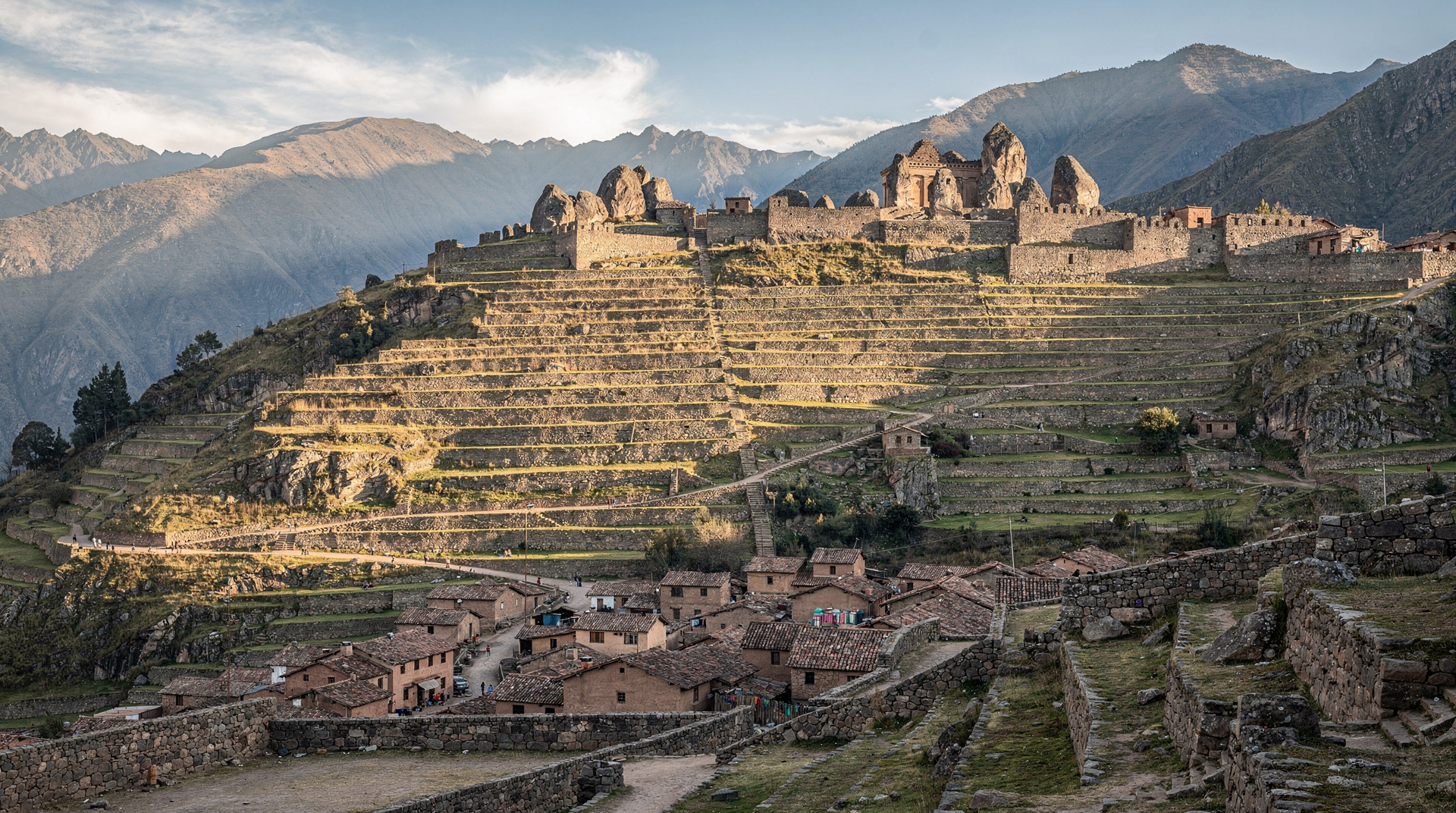
Save the fortress for morning: The Ollantaytambo ruins — the great terraced fortress with its Temple of the Sun and the enormous pink granite blocks — are genuinely worth your time. But they involve a significant staircase climb, which you should not attempt on arrival day. Save them for the morning of day two, when you feel more like yourself. You will be glad you waited.
Dinner: Ollantaytambo has a handful of good restaurants around the plaza. Order soup — potato and vegetable, quinoa chowder, or any of the local caldo-based dishes. Light and easy to digest. Early to bed.
What to do in Ollantaytambo on day two (before heading to Cusco)
Morning at the ruins: Visit the fortress in the morning, when the light is best and the temperature is coolest. Take the steps slowly. At 2,792 m you will notice some breathlessness on the climb — that is normal and manageable. The view from the top terrace across the valley is spectacular, and Wiñay Wayna — a residential complex with water features — is directly accessible from the main site. Allow two to three hours.
Leave for Cusco mid-morning: This allows you to arrive in Cusco in the early afternoon, check in, and still have a rest period before evening. Arriving in Cusco at 6 p.m. and trying to function through dinner and an early night is harder than arriving at 2 p.m. and getting a proper rest.
Why Cusco itself still requires a rest day
Spending one night at 2,792 m before arriving at 3,400 m is a significant improvement, but it does not mean you can land in Cusco and immediately run up to Sacsayhuamán. The difference in altitude still requires adjustment.
Plan the first afternoon in Cusco the same way you would plan arrival day if you had flown there directly: rest, water, coca tea, light meal. The difference is that after one night in the Valley, you are arriving already partway through the adjustment process rather than starting from zero.
Most visitors who follow the Sacred Valley-first approach find that they feel good by the second morning in Cusco rather than the third. That is a meaningful day gained in a trip of seven to ten days.
The Sacred Valley as a base: a longer-term option
Some visitors take the logic further: base themselves in the Sacred Valley for the first two or three nights and do Cusco as a day trip. This is a legitimate approach if you have the time and if your itinerary is flexible.
The Sacred Valley offers:
- Lower altitude sleeping, which genuinely helps
- Ollantaytambo fortress — substantial ruins with a good guide
- Pisac market and ruins — market days Tuesday, Thursday, Sunday
- Maras salt mines and Moray terraces — within day-trip range
- Access to the Salkantay and Inca Trail trailheads
- A quieter, less touristically saturated environment than Cusco city A full Sacred Valley day tour is an excellent way to cover Pisac, Maras, and Moray from a Valley base or from Cusco, and it keeps you at lower altitude for a full day while doing genuinely rewarding sightseeing.
The trade-off is that Cusco city is worthwhile in its own right — the historic centre, Qorikancha, San Blas, the restaurant and bar scene — and deserves more than a rushed day trip. If your total trip is nine days or longer, using the first two or three nights in the Valley before moving to Cusco gives you the best of both approaches.
The ‘climb high, sleep low’ principle in your daily itinerary
Even if you are based in Cusco, you can apply the Sacred Valley principle to individual days. The classic Cusco day includes activities at 3,400 m or higher; but day trips to the Sacred Valley (2,700–2,900 m) mean returning to a lower sleeping altitude for the night.
More practically: if you plan Rainbow Mountain (5,200 m) in your itinerary, the day before and after should ideally be spent at a lower altitude than Cusco where possible, or at minimum with complete rest in Cusco. Rising to 5,200 m and immediately doing another high-altitude day is the pattern most likely to push mild AMS into moderate territory.
The acclimatisation plan builds this principle into a full week-by-week itinerary framework, including the trek days that go highest.
A comparison of first-night strategies
| Strategy | First night altitude | Cusco arrival day | Expected state at 48h |
|---|---|---|---|
| Fly straight to Cusco | 3,400 m | Day 1 | Moderate symptoms likely, better by day 3 |
| Sacred Valley first (one night) | 2,792 m | Day 2 | Mild symptoms on Cusco arrival, better by day 3 |
| Sacred Valley first (two nights) | 2,792 m | Day 3 | Well-adapted by Cusco arrival for most visitors |
| Sacred Valley base, day-trip Cusco | 2,792 m | N/A (day trips) | Easiest adaptation curve |
The one-night Sacred Valley option is the best balance of practical and physiologically sound for most travellers. The two-night option is significantly better if your schedule allows it.
Accommodation options in Ollantaytambo for an acclimatisation night
Ollantaytambo has a surprisingly good range of accommodation for a small town of its size, driven by its position as a train gateway and its own architectural interest. Options for a one or two-night acclimatisation stay:
Budget (S/60–120 / $17–33 per night): Numerous guesthouses along the cobblestone side streets of the Inca grid. Basic but clean; some have good courtyards. Hot water is standard. Look for places on Calle del Medio or near the Patacancha river for the most characterful locations.
Mid-range (S/180–350 / $50–95): Several comfortable guesthouses and small hotels with private bathrooms, decent Wi-Fi, and helpful staff. Las Orquídeas and similar places in this tier are typically family-run and well reviewed. The extra spend buys more reliable hot water, better bedding, and breakfast.
Boutique/upscale (S/450–900 / $125–250): A handful of genuinely lovely small lodges in and around Ollantaytambo, some with mountain views and Inca ruin vistas from the rooms. Pakaritampu and similar properties are a step up from anything in this price tier in Cusco city itself. Worth considering for couples or honeymoon travellers.
Urubamba as an alternative base: Urubamba has a wider range of accommodation including some larger resort-style properties (Explora Valle Sagrado, Sol y Luna) that are among the best hotels in Peru. If budget allows, a first night at a quality Urubamba hotel is an excellent combination of altitude management and comfort.
How guides and locals actually talk about this
Ask a long-time Cusco guide privately, rather than a tour brochure, and most will confirm the Sacred Valley-first approach without hesitation — it’s common local knowledge among people who watch visitors arrive daily, even though it rarely appears in official pre-trip materials. The pattern they describe is consistent: guests who fly straight into Cusco and go straight into a city tour the same afternoon are visibly more likely to cut the day short or skip the evening plans, compared with guests who had a Valley night first. None of this is scientific data, but it lines up closely with the blood-oxygen reasoning above, and it is the kind of practical, repeated-observation knowledge that is worth weighing alongside the physiology.
Combining the Valley night with your Machu Picchu logistics
If Machu Picchu is early in your itinerary, the Sacred Valley-first strategy solves two problems at once. Ollantaytambo is the main departure station for trains to Aguas Calientes, so sleeping there on night one puts you at the train station already, rather than needing a separate transfer from Cusco on a later day.
A workable sequence: night one in Ollantaytambo, morning at the fortress, afternoon train to Aguas Calientes for a night there, Machu Picchu the next morning, then train back to Ollantaytambo and on to Cusco. This front-loads the two lower-altitude activities (Sacred Valley and Machu Picchu, both under 2,900 m) before you ever sleep at Cusco’s 3,400 m — arguably the single most altitude-friendly way to sequence a first-time Cusco region trip.
The Sacred Valley on a transit day: what to realistically see
If your Sacred Valley first night is specifically a transit stop rather than dedicated sightseeing time, you can still absorb a good deal without exerting yourself.
On arrival afternoon (2–5 p.m.): A gentle walk through Ollantaytambo town takes 30–45 minutes and requires no effort. The living Inca streets — many unchanged since the 15th century in their basic grid layout — are absorbing at a slow pace. The water channels along every cobblestone lane are particularly beautiful in the afternoon light. A cup of coca tea and a piece of fresh bread from a market stall is the ideal arrival ritual.
Morning before moving to Cusco (8–11 a.m.): The Ollantaytambo fortress opens at 7:00 a.m. A two-hour visit covers the agricultural terraces, the Temple of the Sun, and the extraordinary megalithic walls of the upper complex. The stones here — some weighing hundreds of tonnes, transported from a quarry visible across the valley — are arguably more arresting than anything in Cusco city itself. The fortress is included on the Boleto Turístico (full pass or the Circuit III partial).
By 11:00 a.m. you are back at your hotel, taxi to Cusco is arranged, and you arrive in the city in the early afternoon — already partly acclimatised, with a significant Inca site under your belt, and feeling considerably better than the travellers who flew directly to Cusco the day before.
The honest bottom line
Sleeping in the Sacred Valley first is not a tour-company-recommended strategy because it complicates their logistics. It is not widely publicised in guidebooks because the books are organised around Cusco as the hub.
But for the traveller whose priority is feeling well and making the most of their time in Peru — rather than accommodating tour-operator convenience — it is the clearest, most practical, and most evidence-consistent altitude advice available.
If you can get to Ollantaytambo before sleeping at altitude, do so. Your first morning in Cusco will be noticeably better for it. And the Sacred Valley is not a consolation prize for missing Cusco city — it is one of the most rewarding landscapes in Peru, with Inca sites and Andean scenery that would be the centrepiece of almost any other destination on earth.
The Sacred Valley complete guide covers the full range of what the valley offers, well beyond the transit-night framing of this article.
What if you can’t fit the Valley detour in?
Not every itinerary has room for an extra transfer, especially on a tight schedule with a fixed Machu Picchu train date. If flying straight to Cusco is the only realistic option, the strategy isn’t ruined — it just shifts the emphasis entirely onto the arrival-day rest rule: no exertion, no alcohol, no rushing, and a genuine commitment to treating day one as a write-off for sightseeing. Pair it with a Sacred Valley day trip on day two or three instead, which delivers much of the same “climb high, sleep low” benefit even without a first-night stay. The acclimatisation plan covers this direct-to-Cusco route step by step, including exactly which activities are safe on which day.
A Sacred Valley day trip covering Pisac, Maras and Moray is the single best substitute if an overnight stay in the Valley isn’t practical — you still get a full day at 2,700–3,000 m before returning to sleep in Cusco.
Booking the transfer and avoiding a wasted first night
The most common mistake with the Sacred Valley-first strategy is booking it too late to matter: arranging the Ollantaytambo transfer only after landing, when a pre-booked pickup would have saved 20–30 minutes of standing around at altitude while you sort logistics. Book your airport-to-Ollantaytambo transfer at the same time you book your accommodation, ideally through the guesthouse itself — most can arrange a driver for a small fee, and having a named driver waiting removes one more source of arrival-day stress. If you’re travelling with a group or family, confirm vehicle size in advance; standard sedans struggle with more than two large suitcases plus passengers on the mountain road.
Frequently asked questions about Sleep in the Sacred Valley first: why it beats arriving in Cusco directly
How much lower is the Sacred Valley than Cusco?
What is there to do in the Sacred Valley on the first day if I am tired?
Can I base myself in the Sacred Valley for the whole trip and day-trip to Cusco?
Does it help to spend time in the Sacred Valley during the day even if I sleep in Cusco?
Which Sacred Valley town is best for the first night?
What is the altitude at Machu Picchu and how does it compare?
Top experiences
Bookable activities with verified prices and instant confirmation on GetYourGuide.