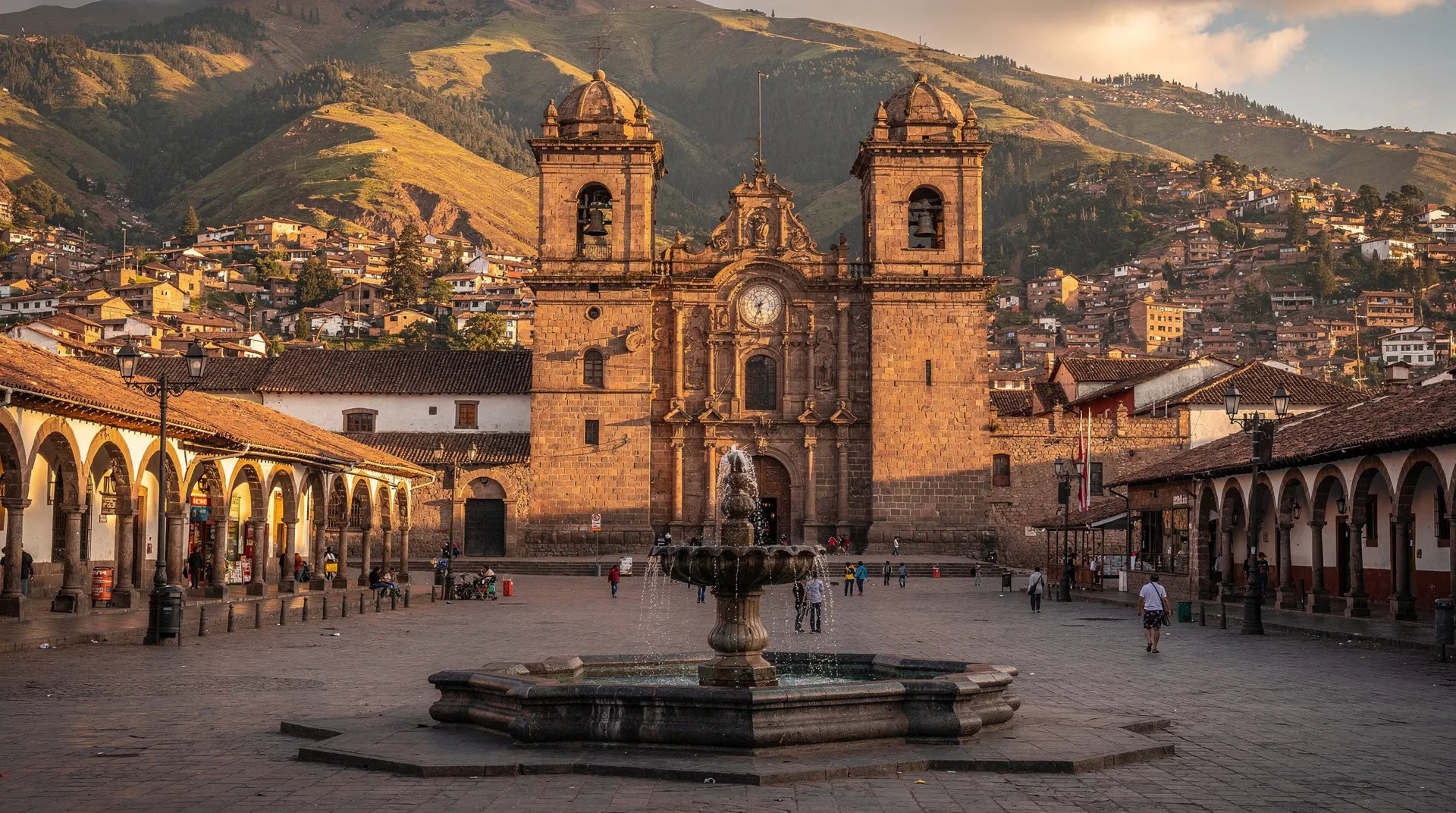
Historic Centre of Cusco
Walk the Plaza de Armas, Cathedral and colonial streets layered over Inca foundations. Honest guide to Cusco's historic centre with prices.
Cusco: Half-Day City Tour with Sacsayhuaman and Q’enco
Quick facts
- Country
- Peru
- Altitude
- 3,400 m / 11,150 ft
- Currency
- Peruvian sol (S/) — USD widely used
- Best for
- Colonial architecture, Inca stonework, street food, atmosphere
The most layered city centre in the Americas
Nowhere else on the continent does colonial Spanish architecture sit quite so openly on top of a conquered civilisation. Cusco’s historic centre is not a metaphor — it is a literal vertical stack. The walls of the Convent of Santo Domingo are built from stones cut by Inca masons; the Cathedral’s foundations are the remains of the palace of Inca Viracocha; and the cobbled lanes radiating from the Plaza de Armas follow the grid that Pachacuti planned in the fifteenth century. Walking here is an exercise in reading time.
At 3,400 m, Cusco sits high enough that a first afternoon’s sightseeing should be gentle. The historic centre rewards a slow pace anyway — there is too much detail to absorb on a rushed circuit. Plan at least a full day here, ideally two, before pushing on to the outlying ruins or Machu Picchu.
| Where | Central Cusco, around the Plaza de Armas |
| Time needed | Half-day minimum, full day with San Blas and San Pedro Market |
| Cost | Cathedral ~S/30, Qorikancha (rates on the official Qorikancha site), plaza itself free |
| Getting around | Walkable, compact, but steep in sections |
| Best time | Before 8 am or evenings for photos, avoid mid-morning crowds |
Plaza de Armas
The central square is the obvious starting point and it never fully loses its power, even when tour groups descend at ten in the morning. Two enormous churches frame it: the Cathedral (begun 1559, finished 1654) on the northeast side, and La Compañía de Jesús to the south. The Cathedral is the more historically significant; La Compañía is arguably the more beautiful facade.
Cathedral admission costs around S/30 and is included in some combination tickets. The interior holds 400 years of colonial art, silverwork, and carved altarpieces. The painting to find is the “Last Supper” by Marcos Zapata, hung in the sacristy: Christ and his apostles share a meal that includes cuy (guinea pig) as the centrepiece dish — Andean reality quietly inserted into European iconography.
Early morning before 8 am, when mist still sits on the surrounding rooftops and the square is dominated by locals rather than tourists, is the best time to photograph the facades. Evenings, when both churches are illuminated, are a close second.
Beneath the streets: Inca foundations and walls
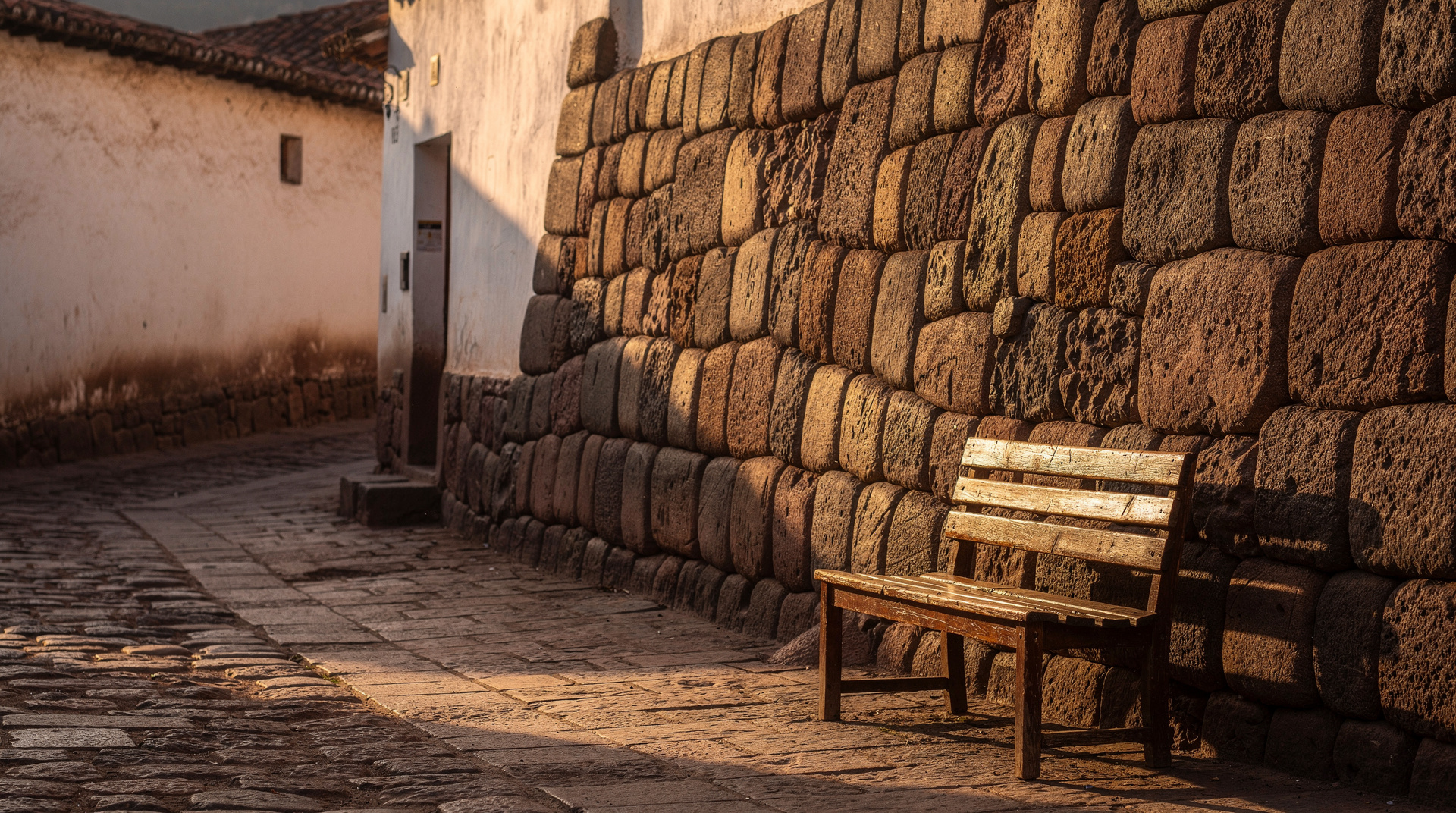
The most significant thing about the historic centre is what you see at ground level rather than above it. Walking northeast from the Plaza along Calle Hatunrumiyoc, you will reach the famous twelve-angled stone — a single block fitted with extraordinary precision into a retaining wall that once formed part of the palace of the Inca Roca. Stonemasons today cannot fully explain how the cuts were achieved with the tools available.
The street itself is free to walk and is one of the most-photographed single stones in Peru. It is also surrounded by vendors and a person dressed as an Inca, which is unavoidable but does not diminish the stonework. Look beyond the twelve-angled stone: the entire length of Hatunrumiyoc is built from Inca walls, and the quality of the fitting is consistent from one end to the other.
A half-day guided city tour will bring you to these walls with a guide who can explain the architectural differences between various Inca periods and how the Spanish adapted — and often damaged — what they found. The context makes the stones legible in a way that solo wandering does not.
The Cathedral up close
If you pay the Cathedral admission, set aside 45 minutes rather than 15. Beyond the Marcos Zapata painting, the choir stalls are extraordinary — 200 individual carvings in cedar, each a portrait of a different bishop or saint, completed between 1633 and 1654. The side chapels hold silver altarpieces that weigh in the hundreds of kilograms. The whole interior is darker and more overwhelming than the bright exterior suggests.
The Cathedral technically occupies the site of the palace of Inca Viracocha, and excavations beneath the nave have uncovered original Inca stonework at the base of the foundations. None of this is publicly visible, but knowing it is there changes how you stand in the nave.
Qorikancha and Santo Domingo
Ten minutes’ walk from the Plaza, Qorikancha is the most important Inca site in the city proper. The Temple of the Sun was covered in hundreds of sheets of gold and held an eternal flame tended by priests; when the Spanish arrived, they stripped the gold within weeks and eventually built the Convent of Santo Domingo over the temple walls. A dedicated city tour covering Qorikancha is worth booking if Inca history is your main interest — the contrast between the Inca masonry (curved, perfectly fitted, no mortar) and the Spanish colonial construction above it is the single most visceral illustration of the conquest you will find in Cusco.
Check current rates and opening hours on the official Qorikancha site; the Boleto Turístico includes the Qorikancha site museum, not the convent. See the dedicated guide to Qorikancha for the best approach if you are combining it with the Cathedral in a single morning.
San Blas and the artisan quarter
The neighbourhood of San Blas begins where the historic centre’s main tourist circuit ends — uphill along steep lanes from the Plaza de Armas. It is technically separate from the colonial core but forms the upper frame of the historic district and is included on most walking tours. The San Blas walking tour goes into the quarter’s artisan workshops and the small church with its celebrated carved pulpit.
A guided walk through San Blas is worth pairing with a historic centre visit because the neighbourhood mood is so different — quieter, more residential, more genuinely local in character, particularly on weekday mornings.
Mercado de San Pedro and the food dimension
The San Pedro Market sits at the western edge of the historic district, a ten-minute walk from the Plaza. It is the largest and most authentic daily market in Cusco and the right place to eat and shop before the tourist restaurants get busy. Fresh juice costs S/2–3; a bowl of quinoa soup with bread runs S/6–8; and the chicharrón stalls (fried pork with hominy corn) do brisk trade from 7 am onwards.
For visitors who want a structured introduction to Andean ingredients and traditional cooking, the market tour and cooking class is the most consistently well-reviewed half-day activity in Cusco. It typically starts with a guided walk through San Pedro, then moves to a kitchen for a two-hour session covering ceviche, lomo saltado, or causa depending on the day. Prices run around $30–45 per person.
The Peruvian food guide covers what to order, what to avoid, and why Cusco’s food scene is genuinely worth your time even if you are not a dedicated foodie.
Colonial churches beyond the Cathedral
Beyond the Cathedral and La Compañía, several smaller colonial churches around the historic centre reward a look even though they rarely make the top of a rushed itinerary. The Church of San Blas, uphill in the artisan quarter, has a modest exterior but holds one of the most intricately carved wooden pulpits in the Americas, attributed to an anonymous colonial-era master craftsman. The Museum of Religious Art, housed in the former Archbishop’s Palace on Hatunrumiyoc, sits directly above further Inca foundations and displays Cusco School paintings in a series of period rooms — a quieter, less crowded alternative to the Cathedral for visitors who want colonial art without the queues. Admission runs approximately S/15.
La Merced, a few blocks southwest of the Plaza, is less visited than the two main churches on the square but has an exceptional cloister and a small museum holding an elaborate gold and jewelled monstrance considered one of the finest colonial religious objects in Peru. It is easy to miss on a first pass through the centre and worth deliberately seeking out if colonial-era craftsmanship interests you.
How long to spend here
The historic centre itself — Plaza de Armas, Cathedral, Qorikancha, Hatunrumiyoc, and a circuit of the colonial streets — takes a focused half-day. Adding San Blas and San Pedro Market extends this to a full day. Allow a second morning if you want to revisit the square at a different time of day, explore the Museum of Pre-Columbian Art (housed in a colonial mansion on Plazoleta Nazarenas, admission ~S/20), or take a cooking class.
If you are consulting the how many days in Cusco guide, the consensus advice is that three to four days in the city allows you to cover the historic centre, the outlying ruins, a day trip to Sacsayhuamán, and still leave energy for an evening meal in a restaurant that deserves your attention.
Photography in the historic centre
Light matters enormously here. The pale stone of the Cathedral and La Compañía takes on a warm golden tone in the hour after sunrise and again in the hour before sunset, while flat midday sun renders the same facades comparatively dull. Early morning also has the advantage of a near-empty square, since most organised tours do not arrive until closer to 9 or 10 am.
If you want a photograph of the twelve-angled stone on Hatunrumiyoc without other tourists in frame, arrive before 8 am — by mid-morning the street is reliably busy with both visitors and the vendors who work it. Evening illumination of the two main churches is a different but equally rewarding subject, best shot from the northeast corner of the plaza where both facades are visible together.
Getting around
The historic centre is compact and best navigated on foot. Nearly every sight of significance is within a 20-minute walk of the Plaza de Armas. The catch is altitude: 3,400 m means that steep sections — and there are many, particularly toward San Blas — leave even reasonably fit travellers breathing hard. Budget extra time for every uphill stretch on your first two days. The altitude sickness guide covers the standard acclimatisation advice, but the short version is: arrive, rest, drink water, eat lightly, and resist the urge to sprint up cobblestones on day one.
Taxis within the historic centre are available but rarely necessary given the distances. For reaching the outlying ruins at Sacsayhuamán or the south valley sites, taxis or guided tour transport make more sense.
Practical details
The Plaza de Armas and the outdoor spaces are free at all times. The Cathedral charges around S/30 for entry; for Qorikancha, check current rates on the official Qorikancha site. The Boleto Turístico at roughly S/130 for the full circuit does not cover the Cathedral but does cover the outlying sites including Sacsayhuamán, Q’enqo, Puca Pucará and Tambomachay. Consider which combination of sites you plan to visit before buying tickets individually.
Most churches and museums open from 9 am to 5 pm Monday to Saturday, with reduced Sunday hours. The Cathedral closes on Sunday mornings during mass but is accessible to worshippers rather than tourists — a good reason to return in the afternoon instead. ATMs are plentiful around the Plaza but carry high transaction fees (S/12–18 per withdrawal); draw larger amounts less often.
The 4-day Cusco and Machu Picchu itinerary is the most reliable framework for fitting the historic centre into a complete Cusco trip without feeling rushed.
Top experiences
Bookable activities with verified prices and instant confirmation on GetYourGuide.