South Valley: Tipón and Pikillacta
Visit Tipón and Pikillacta in Cusco's south valley. Honest guide to the Inca terraces, the Wari city, Boleto Turístico entry and Andahuaylillas.
Cusco: Half-Day City Tour with Sacsayhuaman and Q’enco
Quick facts
- Country
- Peru
- Altitude
- 3,200 m / 10,500 ft
- Currency
- Peruvian sol (S/) — USD widely used
- Best for
- Inca water engineering, pre-Inca Wari ruins, colonial church art, uncrowded sites
The valley most Cusco visitors never reach
The south valley — the stretch of road running 25 to 30 km southeast from Cusco toward Puno — holds two of the most technically impressive and least-visited archaeological sites in the Cusco region. Tipón is an Inca hydraulic complex that operates to this day, producing a continuous flow of water through channels built six centuries ago. Pikillacta is a pre-Inca Wari city that predates the Inca by three to four hundred years and challenges the assumption that sophisticated urbanism in this valley began with the Inca Empire.
Neither site is on the standard tourist circuit. Neither is particularly crowded, even in July. And both sit at around 3,200 m — slightly lower than central Cusco and Sacsayhuamán — which makes this an easier half-day excursion from an altitude perspective than the outlying ruins to the northeast.
The catch is transport: the south valley sites require a taxi or a guided excursion because public transport connections to the sites themselves are limited. A taxi hired for a half-day costs approximately S/60–90 from Cusco; organised tours typically combine these sites with the church at Andahuaylillas (the “Sistine Chapel of the Americas”) for a full south valley excursion.
| Where | 23–30 km southeast of Cusco, toward Puno |
| Cost | Taxi S/60–90 half day; sites covered by Boleto Turístico |
| Time needed | Half day for Tipón + Pikillacta, full day with Andahuaylillas |
| Getting there | Taxi or guided tour — public transport is limited |
| Best time | Morning departure, dry season for comfortable walking |
Tipón: Inca water engineering at its most sophisticated
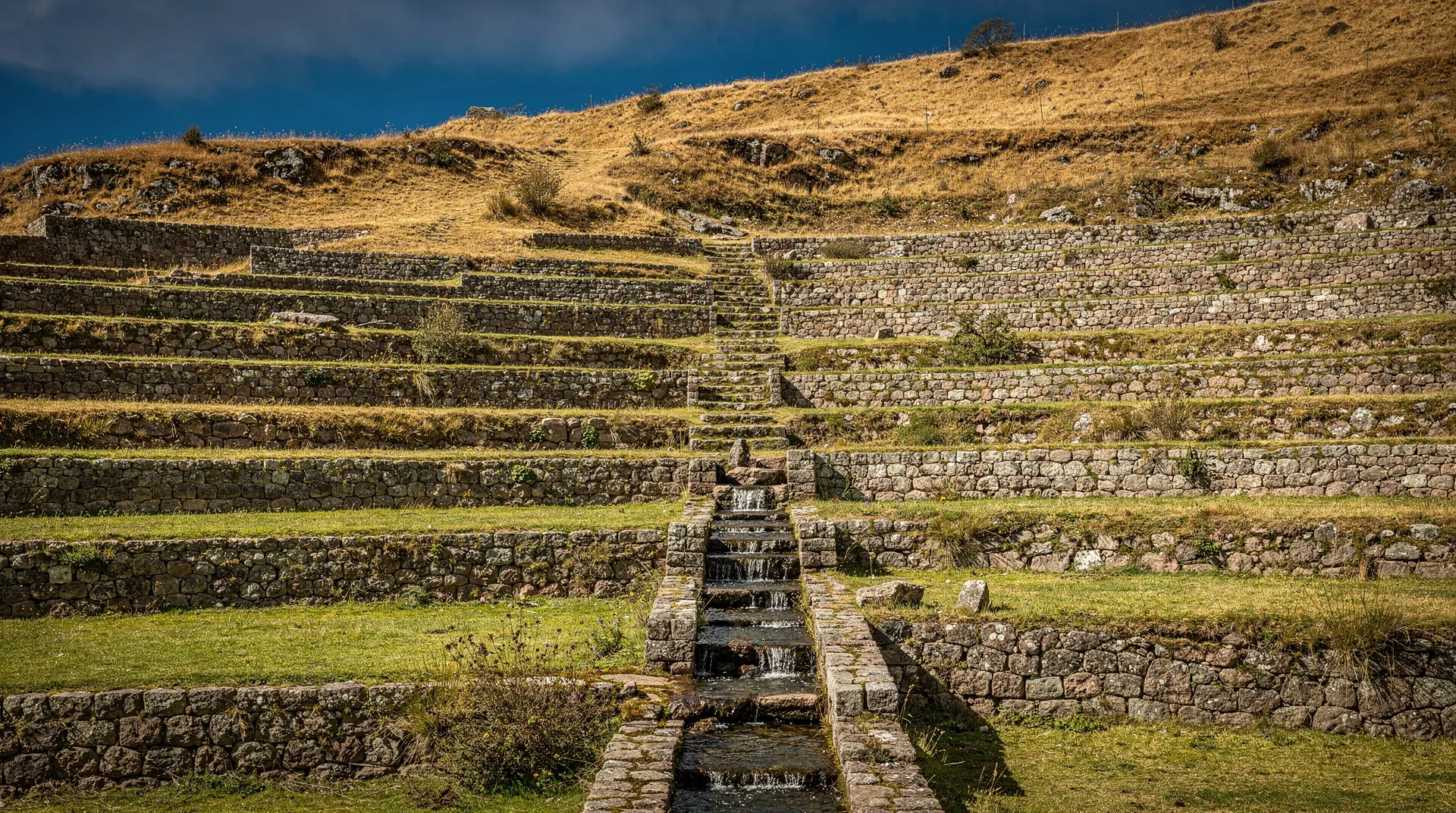
Tipón is 23 km southeast of Cusco, a 40-minute drive, and it is the most technically impressive demonstration of Inca hydraulic engineering you can visit in the Cusco region without going to Machu Picchu. The site occupies a high valley above the modern village of Tipón and consists of twelve large agricultural terraces (andenes) fed by an elaborate system of aqueducts, fountains, channels and water-control structures that take water from a spring above the site and distribute it precisely across the entire complex.
The engineering precision is extraordinary. The main water channel, carved from stone and running for several kilometres from the spring to the terraces, maintains a gradient consistent enough to produce controlled flow without erosion or overflow. The distribution fountains — jet-fed niches where water emerges in a controlled stream and falls to a lower channel — are still functioning. The sound of water moving continuously through a six-hundred-year-old stone system is, for visitors who appreciate engineering, more moving than the stonework alone.
The terraces themselves are exceptionally wide by Inca standards and were clearly not built primarily for subsistence agriculture. The scholarly consensus is that Tipón was an Inca royal estate — a country retreat and ceremonial centre where the sophisticated water management was as much about demonstrating imperial technological mastery as about irrigation. The comparison to a European palace garden built to display wealth and control over nature is imperfect but not entirely wrong.
Allow 1.5 to 2 hours at Tipón. The site involves a moderate uphill walk to reach the upper terraces; the altitude is lower than Cusco city, but the effort of climbing through the site is real. Bring water. The site is covered by the Boleto Turístico full circuit (S/130), and the entrance is staffed. Independent visits on foot around the terraces are straightforward with the site map available at the entrance.
Pikillacta: the city before the Inca
Pikillacta (“place of the flea” in Quechua) is 30 km from Cusco and is a different kind of site entirely — the preserved remains of a Wari administrative city built between approximately 600 and 1000 CE, three to four hundred years before the Inca Empire coalesced in this valley.
The Wari (or Huari) were the dominant civilisation of the Andes in the early medieval period, centred on a capital near modern Ayacucho and extending a sophisticated imperial system across Peru. Pikillacta was one of their major provincial capitals, built to a standardised orthogonal grid plan with hundreds of identical cellular rooms arranged in walled compounds. The uniformity of the room sizes — each cell precisely the same dimensions, accessed by narrow doors from internal courts — is typical of Wari administrative architecture, which prioritised standardisation and control over the aesthetic variation found in Inca building.
The site covers approximately 2 km² and is only partially excavated. Walking through it gives a strong sense of urban scale: this was a planned city with a population of several thousand at its height. The walls, built from small fitted stones rather than the large polished blocks associated with the Inca, stand 3–4 m high in several sections. The overall impression is of a vast and slightly melancholy grid city, abandoned for reasons not fully understood around 1000 CE.
Pikillacta also provides a critical piece of context for understanding the Inca. The Inca did not emerge from nowhere — they inherited and built on a regional tradition of urbanism, road networks, and imperial administration that the Wari had established centuries earlier. Seeing Pikillacta helps explain why the Inca were able to organise an empire so quickly: the infrastructure of the idea was already in place. The Inca Empire guide for travellers covers this relationship between Wari and Inca in depth.
A half-day guided excursion from Cusco covering the south valley typically includes both Tipón and Pikillacta with an English-speaking guide. The guiding is particularly valuable at Pikillacta, where the site’s significance is not legible from the physical remains alone without background context. The Wari civilisation is substantially less well-known to most visitors than the Inca, and the guide’s explanation of why an urban grid city existed here 400 years before the Inca is the intellectual highlight of the south valley excursion.
For a city-focused alternative that still covers outlying Inca sites, a Qorikancha-centred city tour sometimes includes a south valley component on the full-day version — check the itinerary when booking.
Andahuaylillas: the Sistine Chapel of the Americas
Ten kilometres before Pikillacta, the small village of Andahuaylillas holds a seventeenth-century church — San Pedro Apóstol de Andahuaylillas — that is routinely described as the most lavishly decorated colonial church in Peru. The interior walls are covered floor to ceiling in frescos, oil paintings, carved and gilded woodwork, and polychrome ceiling panels. Unlike the Cathedral in Cusco, the scale is intimate: the entire interior is perhaps 20 m long, and the density of decoration in that small space is overwhelming.
The church was built on the foundations of an Inca temple in 1631 and decorated over the following century by a succession of indigenous and mestizo artists who incorporated Andean elements — suns, moons, local flowers, faces that read as Inca rather than European — into ostensibly Catholic iconography. The overall effect is similar in ambition to Qorikancha in reverse: two traditions occupying the same space, neither fully absorbed into the other.
Admission costs around S/10. The church is usually included in south valley guided tour itineraries. Photography inside is restricted; check with the attendant on arrival.
Planning the south valley day
The logical sequence from Cusco is: Andahuaylillas first (closest, 30–35 km), then Pikillacta (adjacent to Andahuaylillas, easy to combine), then Tipón on the return journey (23 km from Cusco, so encountered last when heading back). This order minimises backtracking and allows the most time at Tipón, which requires the longest on-site visit.
A half-day starting at 8 am allows comfortable visits to all three with a taxi waiting between sites. A full-day with a guide allows more time at each and a longer lunch stop in one of the valley villages, where S/12–15 buys a full set-menu lunch in a local restaurant that has never appeared in a travel article.
The 4-day Cusco and Machu Picchu itinerary positions the south valley as an optional add-on for visitors with a fourth day in Cusco before or after Machu Picchu. If your schedule allows only three days in the city, prioritise Sacsayhuamán and the northeast ruins circuit; if you have a fourth day with energy remaining, the south valley is the most rewarding way to spend it.
How to read the sites once you are there
Both sites reward a slower pace than the headline monuments. At Tipón, start at the lower terraces and follow the water upward rather than heading straight for the top: the point of the place is the relationship between channel, fountain and terrace, and it only makes sense if you watch where the water goes. Pause at each fountain and look at how the stream leaves the stone and drops to the next level. The same idea of engineered water appears at Moray and Maras, and the Moray terraces guide is a useful comparison if you plan to see both.
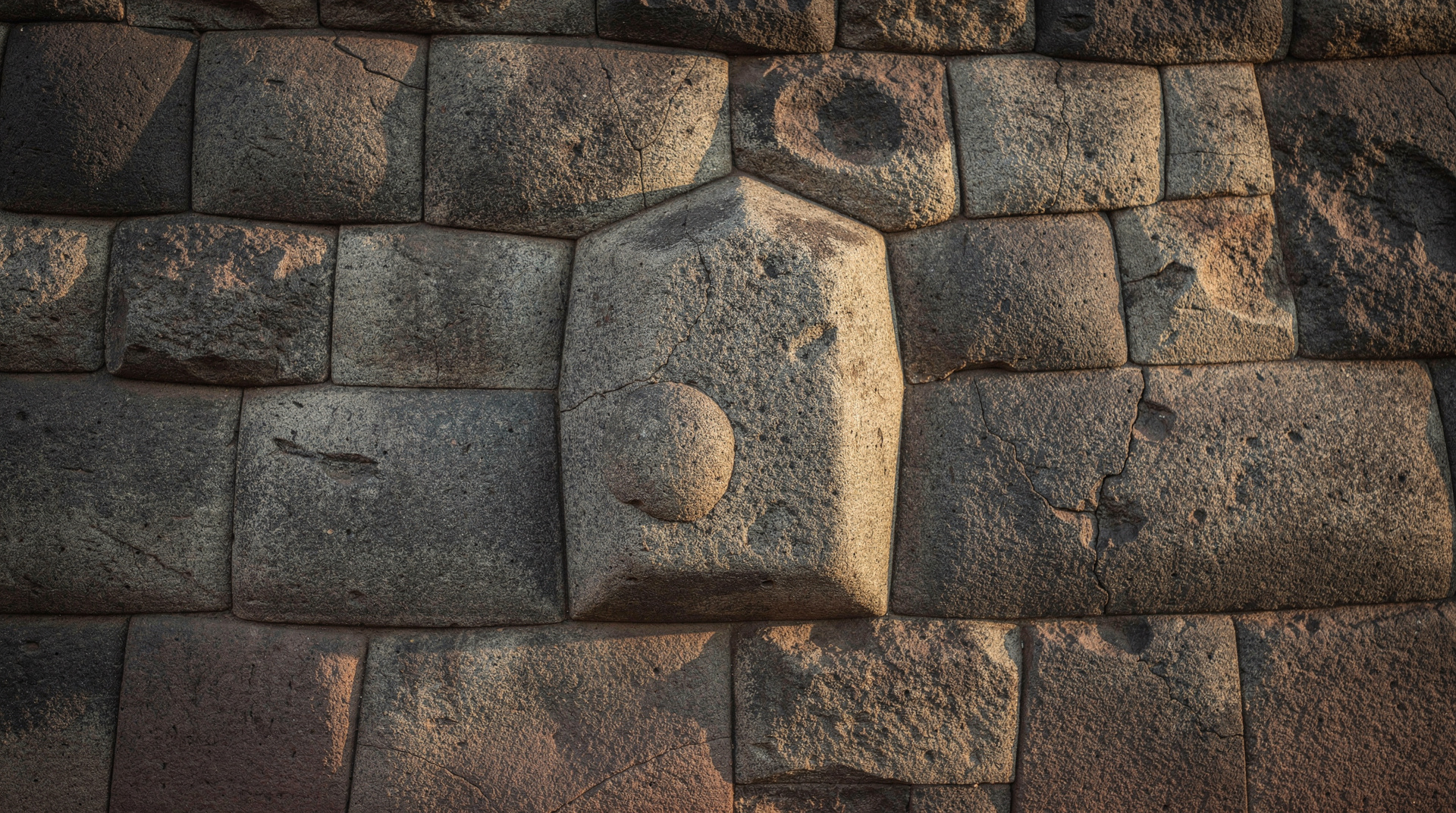
At Pikillacta, resist the urge to hurry along the long walls. Choose one compound, step inside, and notice how the identical rooms repeat. That repetition is the whole message of the site: a state that could build the same cell again and again was an organised state. Compare it mentally with the irregular, finely fitted masonry you saw at Sacsayhuamán or in the streets of the historic centre of Cusco, and the difference between Wari and Inca ideas of building becomes clear.
If the contrast between Inca and pre-Inca history interests you, the Cusco archaeological sites guide places these two ruins alongside the better-known ones, so you can decide how much of the region’s archaeology you want to see.
Practical tips for an easy half day
- Go in the morning, when the light on the terraces is soft and the air is cooler for the uphill walk.
- Wear shoes with grip: the stone steps and paths at Tipón can be uneven, and the grass on the terraces is slippery after rain.
- Carry water, sun protection and a light layer. There is little shade at either site, and the weather at this altitude changes quickly.
- Agree the plan with your taxi driver before leaving, including the order of the stops and how long you intend to spend at each one, so that nobody is rushed or kept waiting.
- Bring your Boleto Turístico and your passport or a copy, in case staff ask to see it.
- If the altitude bothers you, read the Cusco altitude sickness guide first and consider this trip once you have spent a day or two acclimatising; the Cusco acclimatization plan suggests how to sequence your first days.
Who gets the most out of the south valley
This excursion suits people who enjoy understanding how things were made. Engineers, gardeners, history readers and anyone curious about how states organise land and labour tend to leave Tipón and Pikillacta more satisfied than visitors who only want a famous skyline. Travellers who value quiet will also appreciate it: with fewer people on the paths, you can hear the water, take photos without queueing and talk with your guide at length.
It is less suited to anyone who wants a dramatic mountain panorama or a single iconic sight. If that is what you are after, Machu Picchu or the viewpoints of the Sacred Valley will serve you better. Families can do the south valley too, but younger children may find Pikillacta abstract; the Cusco with kids guide and the family-friendly day trips give ideas that hold a child’s attention more easily.
For a wider choice of excursions, the best day trips from Cusco compares the options, and the south valley day trip guide goes deeper on this particular route.
Boleto Turístico coverage
Tipón and Pikillacta are both covered by the full Boleto Turístico (approximately S/130). If you are not planning to visit the Sacred Valley sites also covered by the ticket (Pisac, Ollantaytambo, Moray, Chinchero), the economics of buying the full ticket versus individual entrance fees deserve consideration. Individual entry to each south valley site costs approximately S/15–20. The Boleto Turístico guide covers all the combinations, which circuit covers which sites, and whether the full ticket makes financial sense for your specific itinerary.
The ticket is not sold at the individual sites — buy it at the Ministerio de Cultura offices on Avenida El Sol in Cusco or through your guided tour operator before heading out.
South valley versus the northeast ruins circuit
| South Valley (Tipón/Pikillacta) | Sacsayhuamán circuit | |
|---|---|---|
| Crowds | Light, even in peak season | Busier, especially mornings |
| Focus | Inca water engineering, pre-Inca Wari city | Inca military/ceremonial scale |
| Distance from Cusco | 23–30 km southeast | 2.5–8 km, closer to the city |
| Best for | Travellers with a spare day, archaeology-curious visitors | Every first-time visitor to Cusco |
If you only have three days in Cusco, prioritise Sacsayhuamán and the standard circuit; the south valley is the reward for a fourth day.
Frequently asked questions about South Valley
Is the south valley worth it if I only have three days in Cusco? Probably not as a priority — Sacsayhuamán and the standard ruins circuit deliver more per hour for a first-time visitor. The south valley rewards travellers with a spare fourth day or a genuine interest in pre-Inca archaeology.
Can I visit Tipón and Pikillacta without a guide? Yes for Tipón — the site map at the entrance is enough to navigate the terraces independently. Pikillacta benefits far more from a guide, since the Wari city’s significance isn’t obvious from the physical remains alone without context on who built it and why.
Top experiences
Bookable activities with verified prices and instant confirmation on GetYourGuide.