Peruvian food guide: what to eat in Cusco
Cusco: Peruvian Cooking Class & Market Tour
What should I eat in Cusco?
Cusco's unmissable dishes are lomo saltado (stir-fried beef and chips), ají de gallina (creamy chilli chicken), alpaca steak, cuy (guinea pig, best at a traditional lunch spot), and chicha morada to drink. San Pedro market is the cheapest and most authentic starting point; Cicciolina and Chicha are the benchmark sit-down restaurants.
Cusco eats better than its altitude suggests
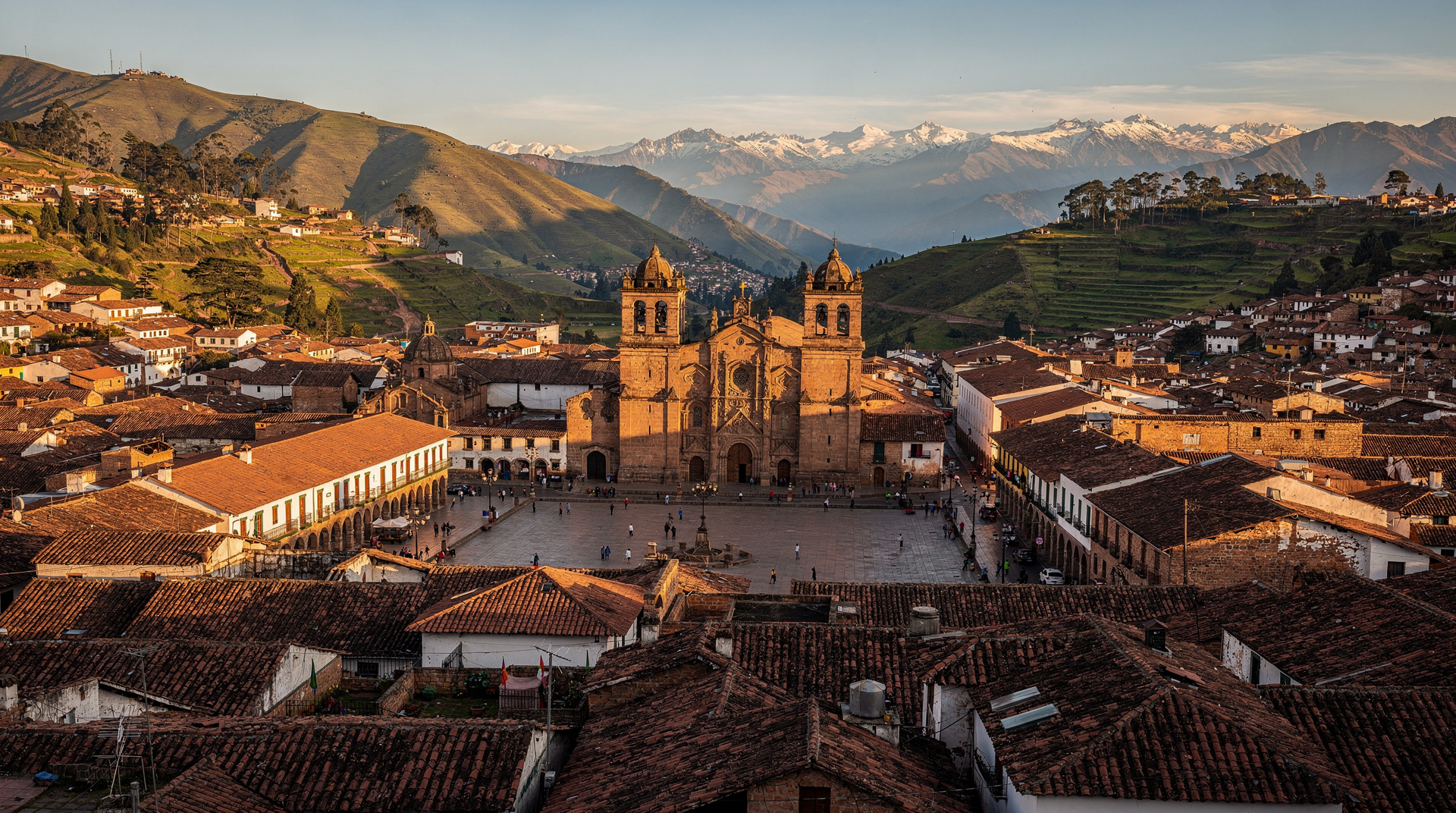
At 3,400 m, where thin air makes running for a bus uncomfortable, you might expect restaurant standards to be low. They are not. Cusco has spent the past fifteen years building a food scene that now appears on Latin American best-restaurant lists, draws chefs trained in Lima, and produces some of the most interesting cooking in Andean South America — not just for tourists, but on genuine culinary merit.
| Where | San Pedro market (budget), San Blas and city centre restaurants (mid-to-high) |
| Cost | S/8–15 market lunch; S/40–80 mid-range; S/80–150 high-end |
| Time needed | A market visit (30–45 min) plus any meal; a cooking class runs 3–4 hours |
| Getting there | Walkable within central Cusco and San Blas |
| Best time | Lunch for the best market atmosphere; evening for restaurants and pisco sours |
The reasons are structural. Cusco sits at the intersection of the Amazon basin, the high plateau and the Pacific trade routes, which means its traditional larder includes high-altitude cereals and tubers found nowhere else, tropical fruits and chillies from the rainforest edge, fresh trout from the Urubamba river, and a cattle and sheep economy that produces good meat at altitude. The Inca understood this geography and created an agricultural system adapted to it — more than 3,000 native potato varieties were cultivated across the Andes, along with quinoa, kiwicha, oca and olluco. Contemporary Cusco chefs are excavating this archive seriously and productively.
This guide covers what to eat, where to eat it, and what to spend. If you want a wider look at the classics beyond the Andes, the guide to ceviche and other Peruvian dishes fills in the coastal side, and the list of the best restaurants in Cusco goes deeper on sit-down options. Travelling on a tight budget? Cusco on a budget shows how eating well and spending little fit together.
The essential dishes
Lomo saltado
Peru’s most famous dish after ceviche, and more at home in Cusco than on the coast. Lomo saltado is a stir-fry of tender beef strips, tomato, red onion, yellow chilli (ají amarillo) and soy sauce, finished with a pile of fried chips (papas fritas) and served over white rice. The combination of Asian stir-fry technique with Andean ingredients reflects Peru’s Chinese immigration history (19th century), which produced the chifa culinary tradition that transformed Peruvian cooking permanently.
A well-made lomo saltado balances the charring from a very hot wok, the acidity of the tomato, the heat of the chilli and the richness of the beef. A mediocre version is oily and slightly sweet. The difference lies almost entirely in whether the wok is hot enough and whether the beef is rested properly before cutting. Price in Cusco: S/28–55 depending on venue.
Ají de gallina
A Peruvian comfort dish — shredded chicken in a rich, pale yellow sauce made from ají amarillo chillies, bread soaked in evaporated milk, ground walnuts and Parmesan. Served over white rice with black olives and boiled potato, it looks modest and tastes remarkable: creamy without being heavy, with the fruity-hot quality of ají amarillo giving the sauce its distinctive warmth. It is one of the dishes most closely associated with Peruvian home cooking, which means the best version is usually found in a cevichería or family restaurant rather than at a tourist-facing spot. Price: S/22–45.
Alpaca
Alpaca meat (alpaca or llama) appears on most Cusco menus either as steak, burger or in stews. The flavour is lean, dark and slightly gamey — closer to venison or bison than beef. It is low in fat and cholesterol, which at altitude is not entirely a virtue (some fat intake is helpful for acclimatisation), but nutritionally it is an excellent option. Alpaca steak is best medium-rare; well-done becomes noticeably tough. Look for it at Pachapapa in San Blas or at Chicha, where it appears in both traditional and contemporary preparations. Price: S/45–85 for a main.
Cuy (guinea pig)
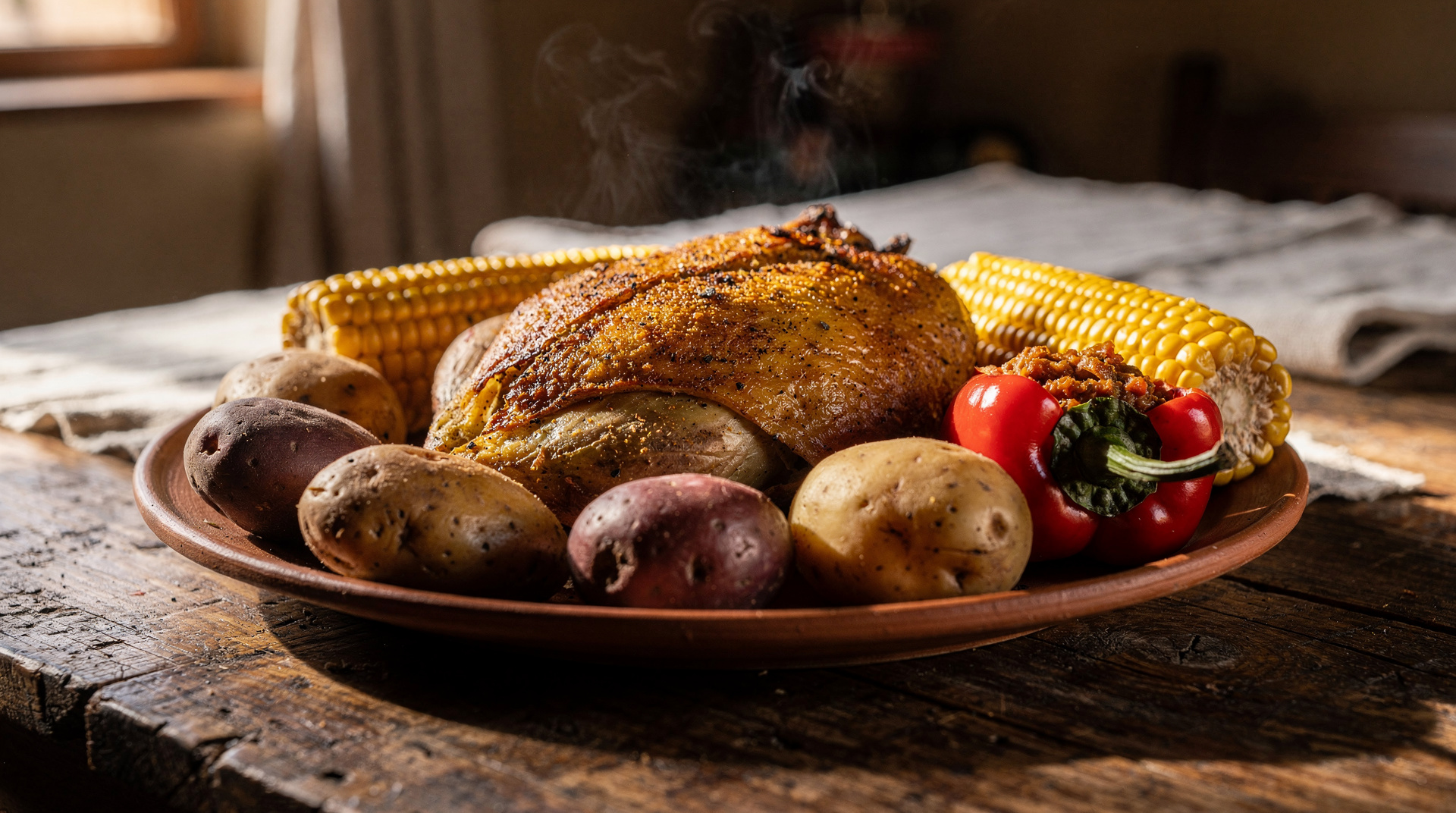
Cuy has been a protein source in the Andes for at least 5,000 years. It appears famously in the Cusco Cathedral’s “Last Supper” painting, placed on the table as the centrepiece dish. Roasted whole, the animal is rubbed with cumin and served with potatoes and salsa criolla. The flavour is mild and slightly fatty — closer to rabbit than chicken. A whole cuy, which serves one person generously, costs S/40–70 and is best approached as a cultural experience rather than a gastronomic highlight, though the meat is genuinely good when roasted at the right temperature. The full guide on cuy covers where to eat it and what to expect. For a first-person account of trying it for the first time, read eating cuy in Cusco, which captures the nerves, the surprise and the verdict better than any menu description.
Rocoto relleno and other chilli dishes
Rocoto, a meaty, hot red pepper native to the Andes, is stuffed with spiced minced beef, raisins, olives and cheese, then baked in a creamy egg sauce. It is more common in Arequipa than in Cusco, but appears on traditional menus throughout the region. Worth trying for the quality of the chilli itself, which has a clean, high-altitude heat different from Mexican or Thai equivalents.
Quinoa and native grains
The altiplano around Cusco is one of the original quinoa-growing regions. Quinoa soup (sopa de quinoa) is cheap, filling and genuinely good — a thick broth with vegetables, potato and the characteristic slightly nutty grain. Available at market stalls for S/4–8 and at restaurants for S/15–25. Kiwicha (amaranth) appears in porridge and baked goods. These grains have been trendy globally for a decade; eating them at source, cooked in the traditional manner, is rather different from the packaged version at a London supermarket.
San Pedro market: where to start
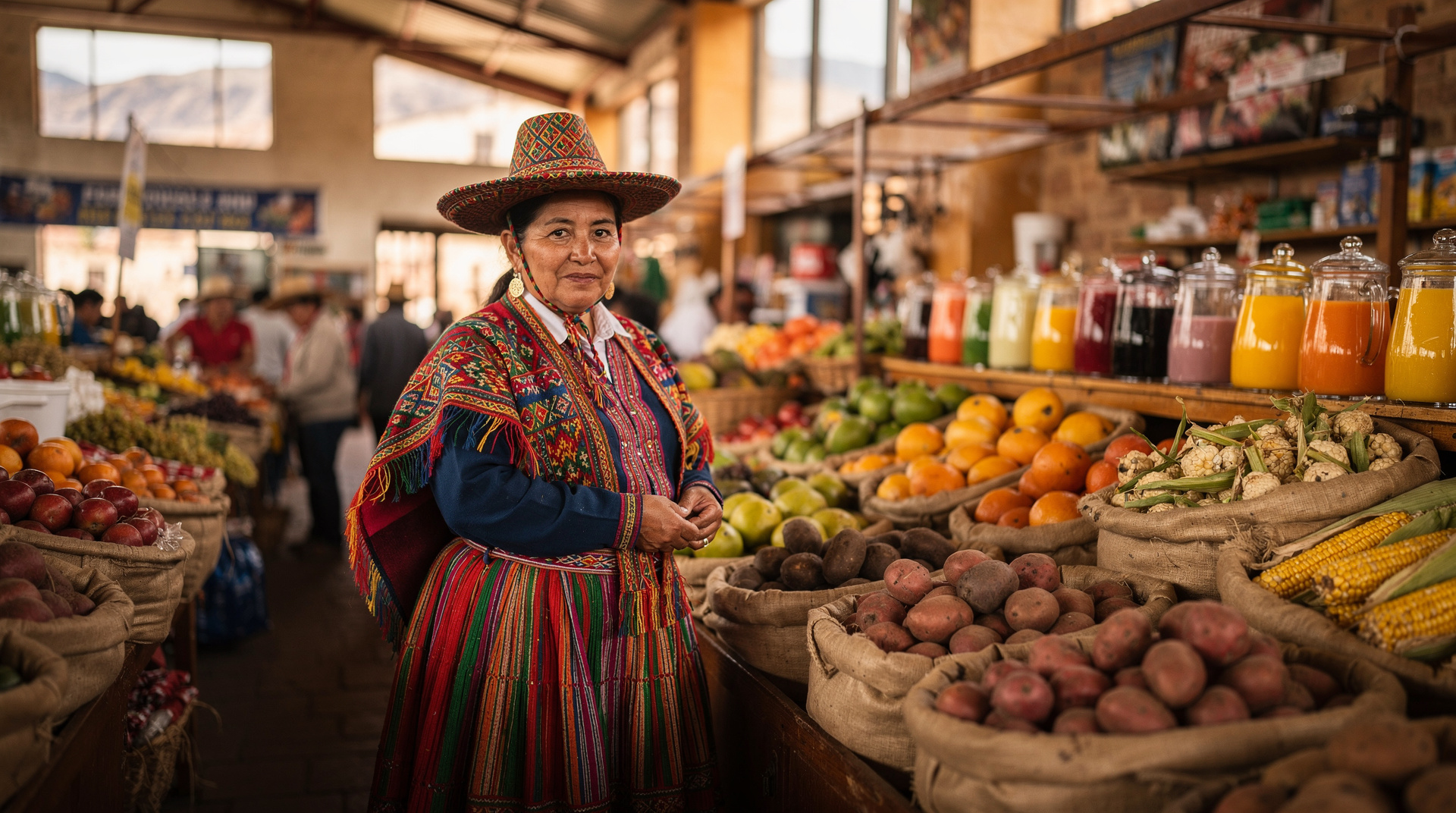
San Pedro market — Mercado Central de San Pedro — is the most important food stop in Cusco for any visitor who wants to understand the local diet before they start eating in restaurants. It is not primarily a tourist market; it serves the city’s population and operates at Cusco prices.
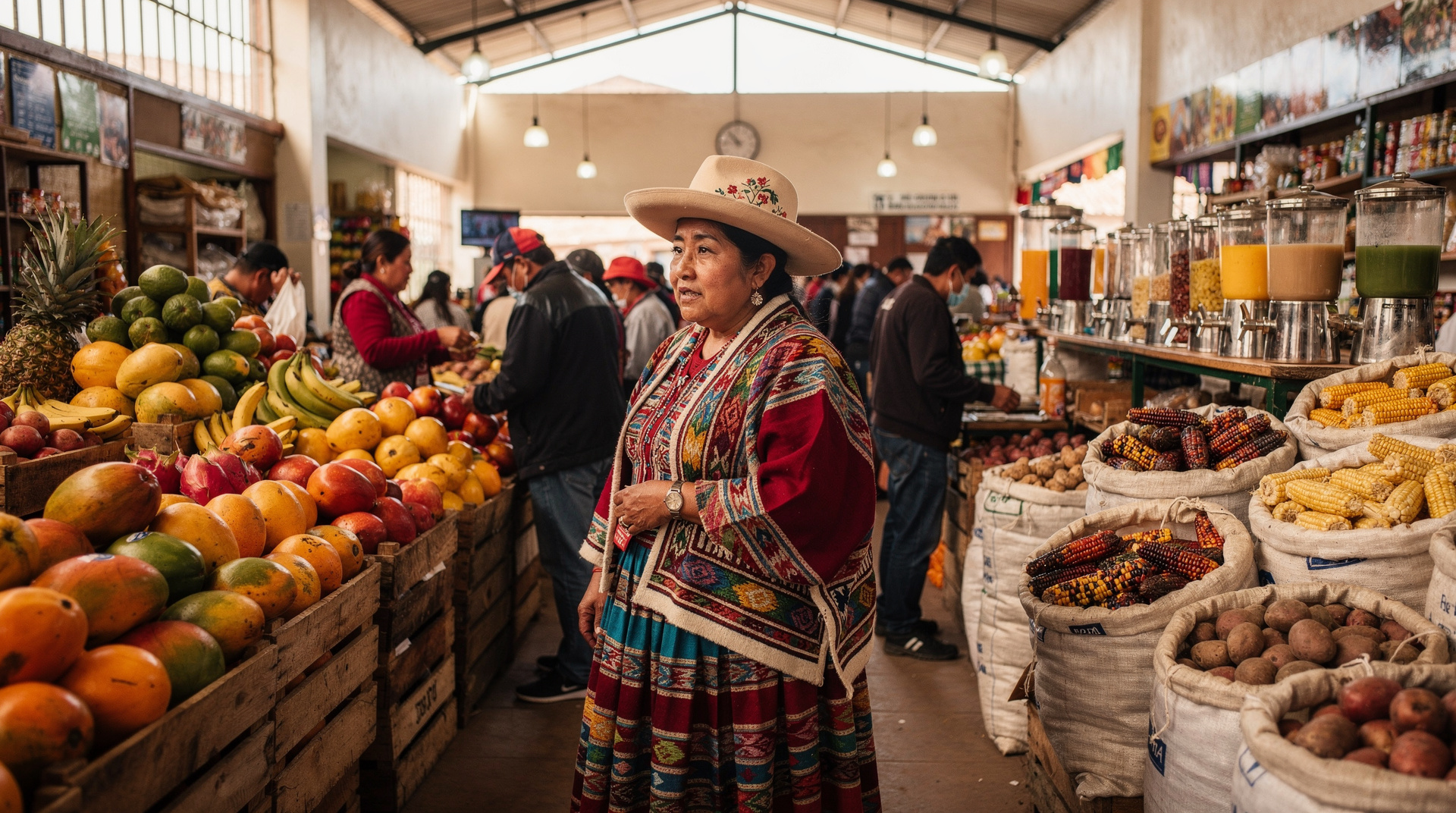
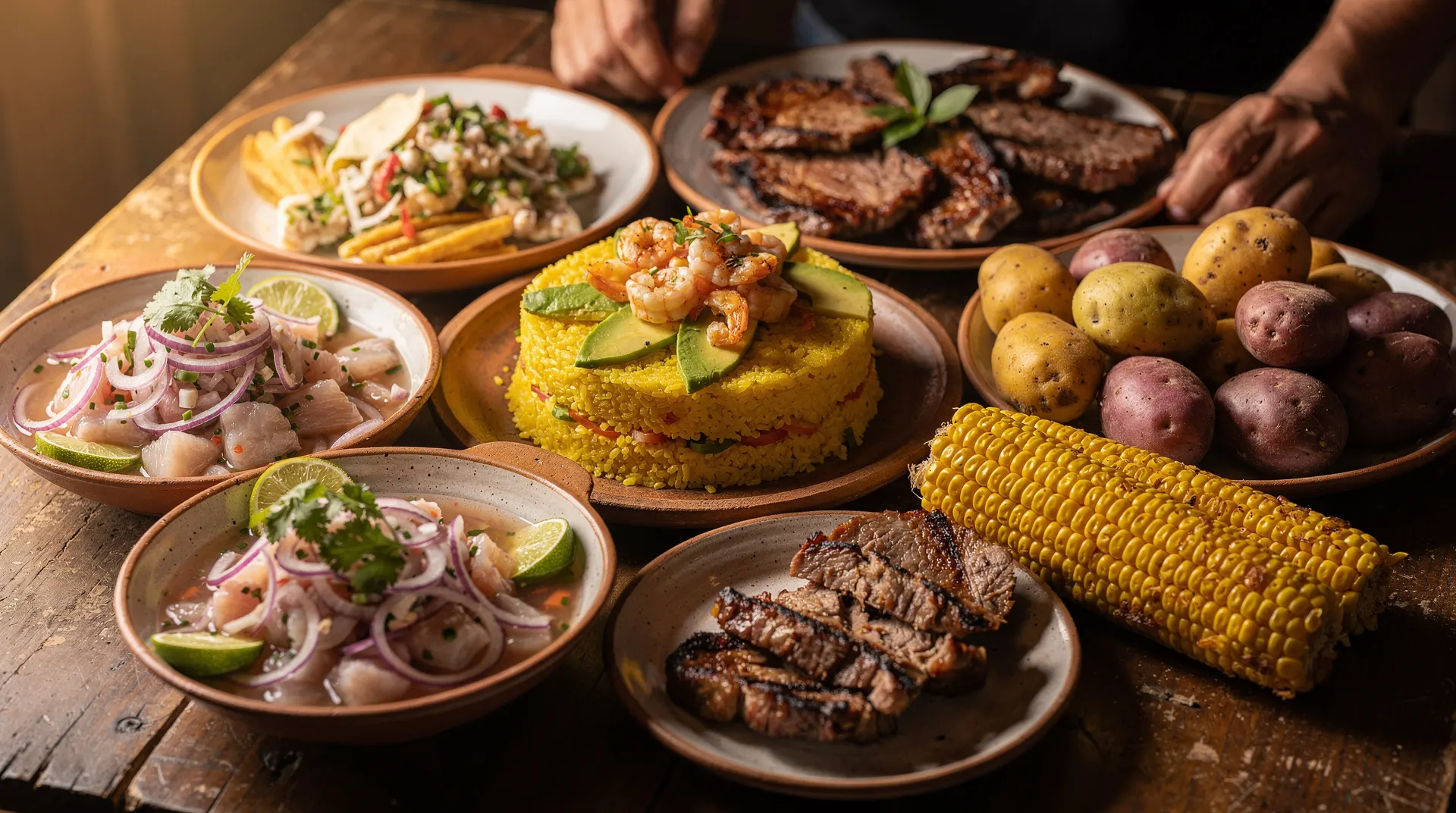
The main hall is divided roughly into: fresh produce (the best native potato varieties in extraordinary colour range — purple, yellow, red, spotted); juice stalls (freshly pressed combinations for S/2–3); dry goods and grains (stalls of quinoa, kiwicha, dried chillies in a dozen varieties, corn); meat (everything, including cuy, whole or cut); and the prepared food section at the back and sides.
The prepared food section is where to eat breakfast or lunch. Stalls offer: caldo de gallina (hen broth with noodles and potato, S/5–8, excellent for altitude mornings); chicharrón (fried pork) served with corn and mint relish; anticuchos (grilled beef heart skewers on a charcoal grill, S/5–8); fresh juices; and the daily lunch menu — usually soup and a second course — for S/8–12. The food is honest, portions are generous and the environment is cheerful and noisy in a way that has nothing to do with tourism.
A market tour combined with a cooking class starts here, typically running for 30–45 minutes through the stalls with a guide explaining ingredients before moving to a teaching kitchen. This is the most efficient way to contextualise the market if you are unfamiliar with Andean produce.
If you prefer to wander on your own, the dedicated San Pedro market food guide maps the stalls and what to order at each, and the blog diary of a morning at San Pedro market gives a feel for the rhythm of the place. Go with an empty stomach and small notes, and let the stalls with the longest queues of locals guide your choice.
Where to eat: honest recommendations
Mid-range and worth it
Cicciolina (Triunfo 393, second floor — Cusco): One of the most consistent restaurants in the city for the past decade. The menu combines Italian-influenced cooking with excellent Peruvian ingredients — the alpaca carpaccio and the pasta with trout roe are frequently cited as the best versions in Cusco. Busy at dinner; lunch is calmer. Mains S/55–90. Booking advisable in June–August.
Chicha (Plaza Regocijo 261): The Cusco outpost of Arequipa chef Gastón Acurio’s national brand. Contemporary Peruvian with strong Andean sourcing — the pork ribs braised with chicha de jora, the ají de gallina in an updated format, and the best lomo saltado in the tourist restaurant tier. Two courses at lunch: around S/70–90 per person.
MAP Café (inside the Pre-Columbian Art Museum, Plazoleta Nazarenas 231): A special occasion restaurant rather than an everyday choice — the setting, in a glass-walled courtyard of a 17th-century colonial mansion housing exceptional Pre-Columbian art, is extraordinary. The cooking is accomplished Peruvian-contemporary. Mains S/70–110. Museum admission is separate.
Local and inexpensive
Green Point (Heladeros 149): Cusco’s best-established vegetarian restaurant, serving reliable lunch menus with good quinoa dishes, vegetable guisos and fresh juices. S/20–35 for a full meal. Useful to know for days when altitude reduces appetite for heavy protein.
Pachapapa (Plazoleta San Blas 120): A reliable option for traditional food — cuy, alpaca, chicharrón — in a courtyard setting near San Blas. Prices are above the market, as expected. Ignore the negative comments in the cusco.mdx about it being overpriced; it is priced fairly for its location and quality.
La Cusqueñita and similar market-adjacent lunch spots along Calle Amargura and near the covered section of the Plazoleta Regocijo: These are set-lunch operations producing two-course meals for S/10–15. No concessions to tourism; menus written on whiteboards; the second course is typically a grilled or braised meat with potato and rice. Excellent value.
Cooking classes: learning the dishes
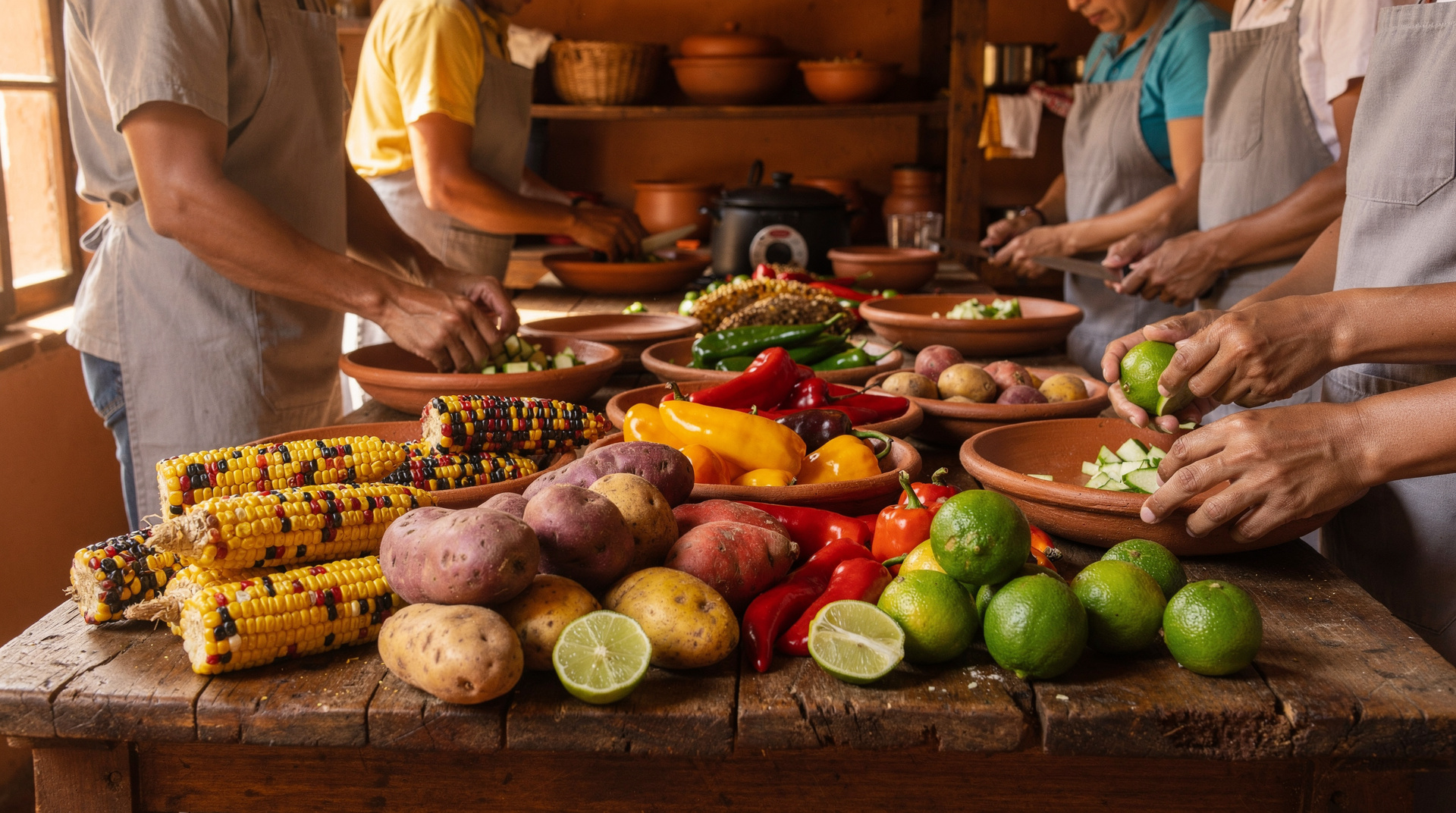
Cusco has a genuine tradition of half-day cooking classes that combine a market visit with hands-on instruction. The best run for three to four hours and produce three dishes — typically a soup, a main course (lomo saltado or ají de gallina) and a dessert — plus a pisco sour.
Costs run S/110–165 ($30–45) per person depending on group size and what is included. The value is real: the class teaches technique (how hot the wok must be for lomo saltado; how to manage the colour and heat of ají amarillo without making it bitter), and the market visit before cooking gives context for the ingredients. It is one of the better half-day activities in the city. Several schools compete for the same travellers, so it is worth reading the side-by-side comparison in Cusco cooking classes compared before you pick one. Book early in your stay: what you learn on day two tells you what to order on every other day.
A market tour and cooking class covers both elements in a single booking, with a guide who explains the market before cooking. This is the most popular format. A faster, more compact version — a three-hour cooking class — skips the extended market walk and focuses on the kitchen session, which suits travellers with less time.
Drinks: what to order
Chicha morada is non-alcoholic, made from purple maize boiled with spices, slightly sweet and extremely refreshing. Order it everywhere — restaurants that do not have it are not trying hard enough. S/5–8 in restaurants; S/2–3 in market stalls.
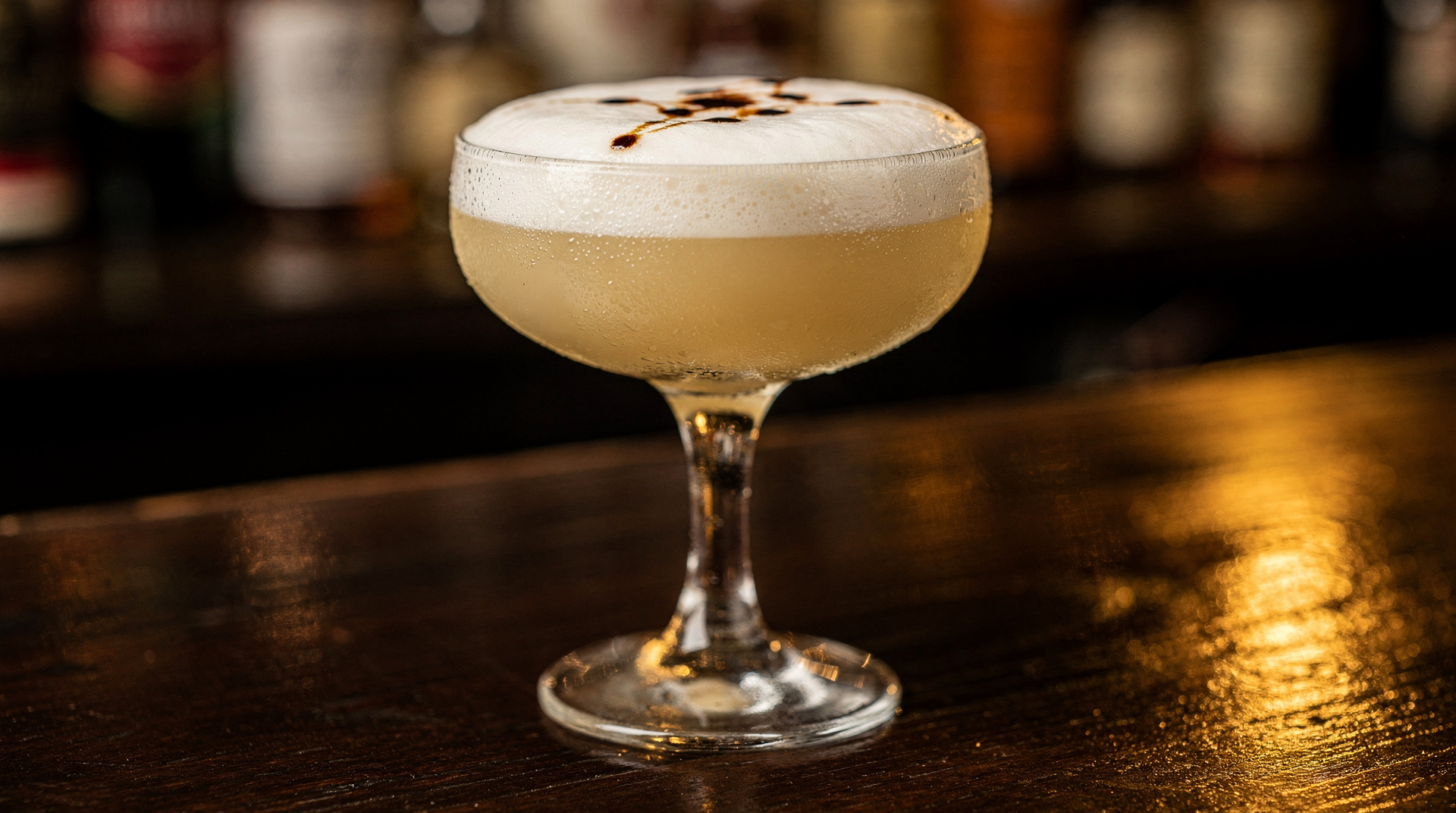
Pisco sour is Peru’s national cocktail: pisco (grape brandy), lime juice, syrup, egg white and Angostura bitters. Cusco’s bar scene executes this correctly at most establishments. See the full pisco sour guide for the drink’s history and the best places to try it. Note: alcohol hits harder at altitude, and a pisco sour at 3,400 m has a more pronounced effect than the same drink at sea level.
Herbal teas: Mate de coca (coca leaf tea) is everywhere and mildly helpful for altitude adjustment. Muña tea (a native Andean mint) is also worth trying for its flavour. Both are served at S/3–5 in restaurants.
What to avoid
A few honest warnings. The menú turístico boards near the Plaza de Armas — three courses including a pisco sour for S/20 — are uniformly bad: frozen imported beef, instant potato, ceviche made from reconstituted fish. The saving they represent is not worth the meal you will eat. Give them a wide berth and walk two streets further for a real lunch.
The San Blas area has several restaurants marketing “traditional Andean” food at tourist prices without the quality to back it up. A useful test: is the menu printed in four languages with photographs? If yes, step back and look for an alternative. The best restaurants here post a smaller menu on a board and change it daily.
Vegetarian and dietary considerations
Cusco’s food culture leans heavily on meat, but vegetarian visitors are not badly served. Quinoa soup, native potato varieties prepared simply, oca and olluco stews, and rocoto relleno made with a vegetable filling on request are all genuinely good options rather than compromises. Green Point (Heladeros 149) is the most reliable dedicated vegetarian restaurant, with full lunch menus for S/20–35. San Pedro market’s juice stalls and grain-based prepared foods are naturally vegetarian-friendly and cheap.
Vegan visitors have a harder time, since dairy (evaporated milk, cheese) and eggs appear in many traditional dishes including ají de gallina and the classic pisco sour. Communicate dietary needs clearly and in advance at cooking classes and sit-down restaurants; most kitchens can adapt with notice, fewer can improvise on the spot during a busy dinner service.
Gluten: Peruvian cuisine is naturally lower-risk than many, since potatoes, rice and quinoa rather than wheat form the base of most dishes. Lomo saltado’s fried chips and most stews are gluten-free by default; check specifically on soups thickened with wheat flour and any bread-based preparation. Ají de gallina’s bread-and-milk sauce base is the main dish to flag if gluten is a genuine concern rather than a preference, since the bread is integral to the sauce’s texture rather than a garnish that can simply be omitted.
What to drink for altitude while you eat
Mate de coca (coca leaf tea) and muña tea, a native Andean mint, are both genuinely helpful for mild altitude symptoms and are available at essentially every restaurant and market stall for S/3–5. Both pair naturally with a meal rather than needing to be sought out separately. Alcohol is a different matter: it is metabolised more slowly and absorbed faster at 3,400 m, so a pisco sour or a beer with dinner on your first night hits harder than the same drink would at sea level. The pisco sour guide covers the altitude and alcohol interaction in more depth.
For a wider look at remedies, coca tea and altitude remedies explains what the tea can and cannot do. If symptoms are more than mild, the altitude sickness guide for Cusco and the Cusco acclimatization plan are the pages to read before your next meal, not after. Eating small, regular portions and drinking plenty of water tends to feel better than one large dinner.
Putting it together: a food itinerary
Day one arrival (eat lightly): Mate de coca, quinoa soup, mild chicken broth. Altitude reduces appetite and increases nausea risk; heavy proteins and alcohol on day one are unwise.
Day two (proper eating begins): Breakfast at the market — freshly squeezed juice and a tostada with avocado. Lunch at a local set-lunch spot: two courses for S/12. Book a market and cooking class for the late morning — this covers both market and lunch in a single session. Dinner at Cicciolina.
Day three and beyond: Explore further. Try cuy at Pachapapa for lunch (see the full cuy guide). Have a pisco sour at a craft bar in San Blas. Revisit the market for anticuchos at the grill stalls.
The Cusco destination guide has a broader context for planning your stay. For more on the San Blas neighbourhood and its food scene, the specific district guide covers the streets worth knowing. If you are sleeping in the valley first to ease into the altitude, the Sacred Valley destination page and the Sacred Valley complete guide will help you plan where to eat out there before returning to Cusco for the restaurants above.
Cusco’s food repays attention. The altitude may dampen your appetite for the first 24 hours, but by day two you will be eating well. The city has earned its culinary reputation honestly.
Frequently asked questions about Peruvian food guide: what to eat in Cusco
Is Peruvian food in Cusco the same as in Lima?
How expensive is eating in Cusco?
Where should I buy a cooking class if I want to understand Andean ingredients?
Is it safe to eat street food in Cusco?
What is chicha morada and is it alcoholic?
Are there good vegetarian options in Cusco?
What should I drink to help with altitude while eating?
Top experiences
Bookable activities with verified prices and instant confirmation on GetYourGuide.