Qorikancha: the Temple of the Sun guide
City Tour in Cusco: Qorikancha and Sacsayhuaman
The Temple of the Sun
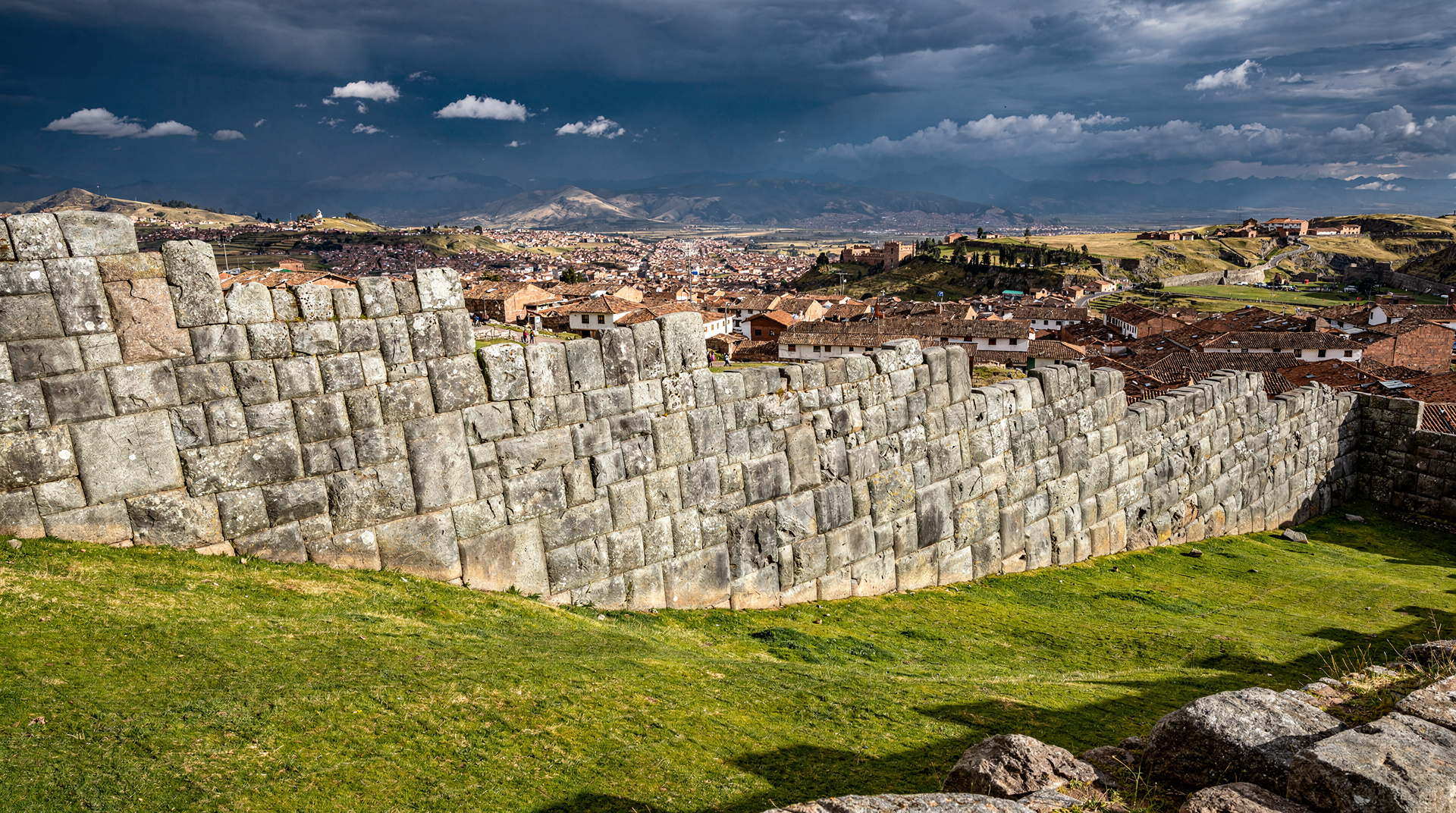
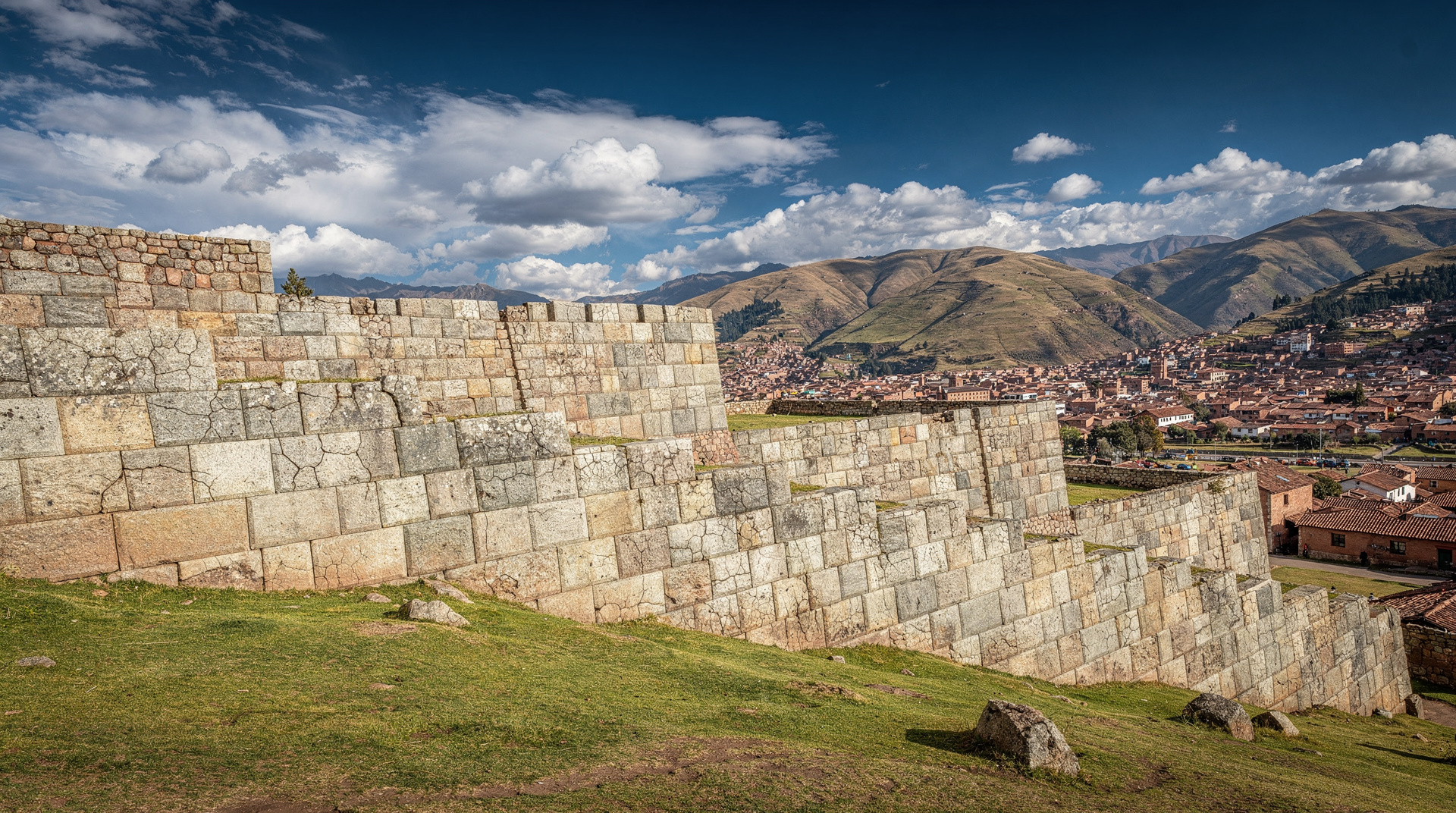
Qorikancha (Temple of the Sun) sits at the corner of Av. El Sol and Pampa del Castillo in Cusco. It is covered by the full Boleto Turístico (S/130). Check current standalone prices and hours with the Santo Domingo convent or the Qorikancha site museum before you go. Allow 1–1.5 hours. The Inca stonework inside the convent is among the finest in Cusco — easily the equal of Sacsayhuamán for craftsmanship, though far less well-known.
A temple hidden inside a convent
Qorikancha (from the Quechua quri, gold, and kancha, enclosure) was the most sacred building in the Inca Empire. It stood at the navel of Tawantinsuyu — the Inca term for their realm — at the junction of the four great roads radiating to the four quarters of the empire. Its walls were reportedly sheathed in gold plate. Its garden held life-size gold and silver replicas of maize plants, llamas, and insects. The mummified remains of dead Inca emperors were brought out for festivals to sit in golden court around a golden disc representing the sun.
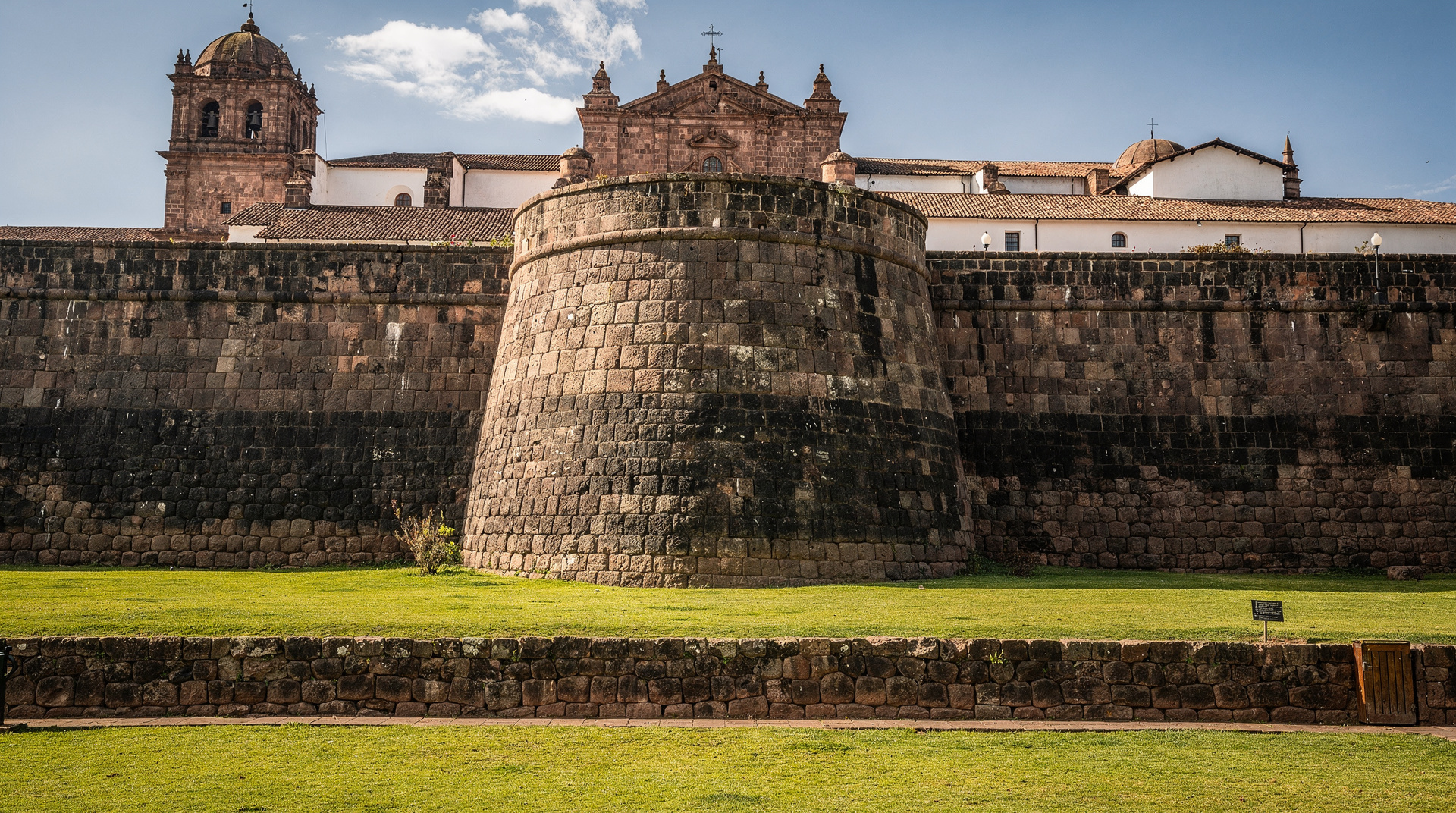
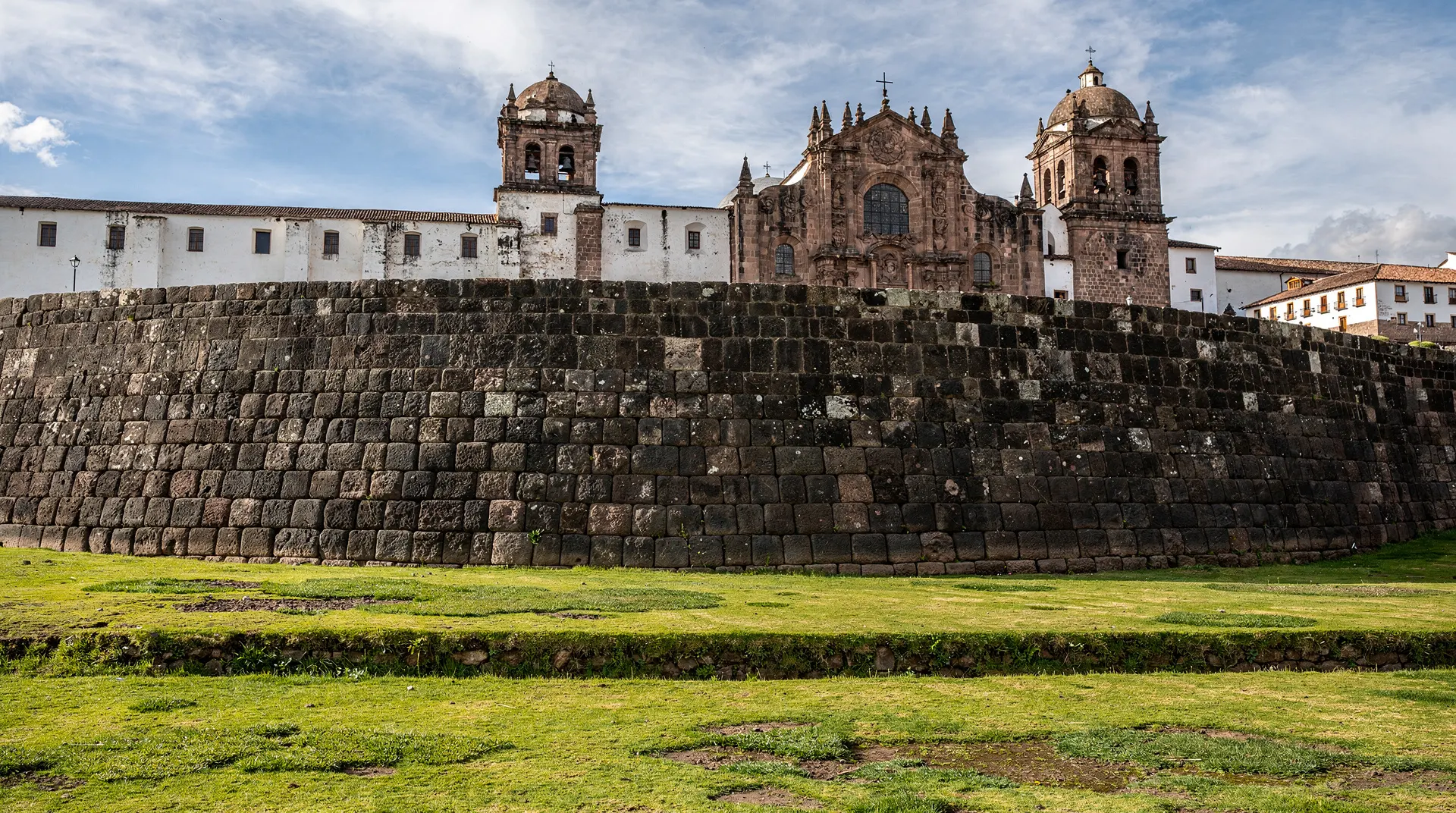
By 1534, the Spanish had stripped the gold, melted it into ingots, and sent most of it to Spain. Then they built the convent of Santo Domingo directly on top of the Inca foundations, incorporating the original walls into the new structure. Most visitors walking along Av. El Sol in Cusco see only the colonial exterior and move on. Those who buy a ticket and go inside find some of the finest surviving Inca stonework in the world, set within a baroque convent that has the peculiar atmosphere of a building that has not quite decided what it is.
Qorikancha is covered by the full Boleto Turístico (S/130) and is also available with a standalone ticket (check current prices with the Santo Domingo convent or the Qorikancha site museum before you go). It sits at the corner of Av. El Sol and Pampa del Castillo, about 400 m southeast of the Plaza de Armas — a ten-minute walk from the centre of the city.
| Where | Av. El Sol & Pampa del Castillo, Cusco (400 m from Plaza de Armas) |
| Cost | Included in Boleto Turístico (S/130); check current standalone prices before you go |
| Time needed | 1–1.5 hours, more with the museum |
| Getting there | 10-minute walk from Plaza de Armas |
| Best time | Weekday mornings; check current hours before you go |
What Qorikancha was
The complex was built, in its final form, under the Inca Pachacuti in the mid-fifteenth century, though the site had held a sacred structure of some kind well before his reign. The name Qorikancha applies specifically to the inti wasi — the house of the sun — but the complex included separate sanctuaries dedicated to the moon, Venus, thunder, the rainbow, and the Pleiades. Each had its own carved stone altar and, in the original, its own precious metal revetment.
The temple functioned not only as a place of worship but as the centre of the ceque system — a network of 41 imaginary lines (ceques) radiating out from Qorikancha through the Cusco valley and linking approximately 328 sacred sites (huacas). Each ceque line and its associated huacas were maintained by specific family and social groups within the Inca administrative hierarchy. The system was cosmological, calendrical, social, and hydraulic simultaneously — and Qorikancha was its focal point. This is why, for the Inca Empire, Qorikancha was more important than Sacsayhuamán: it was not a garrison but the spiritual axis of a continental empire.
The masonry: what you can still see
Two major categories of original Inca structure survive inside the convent.
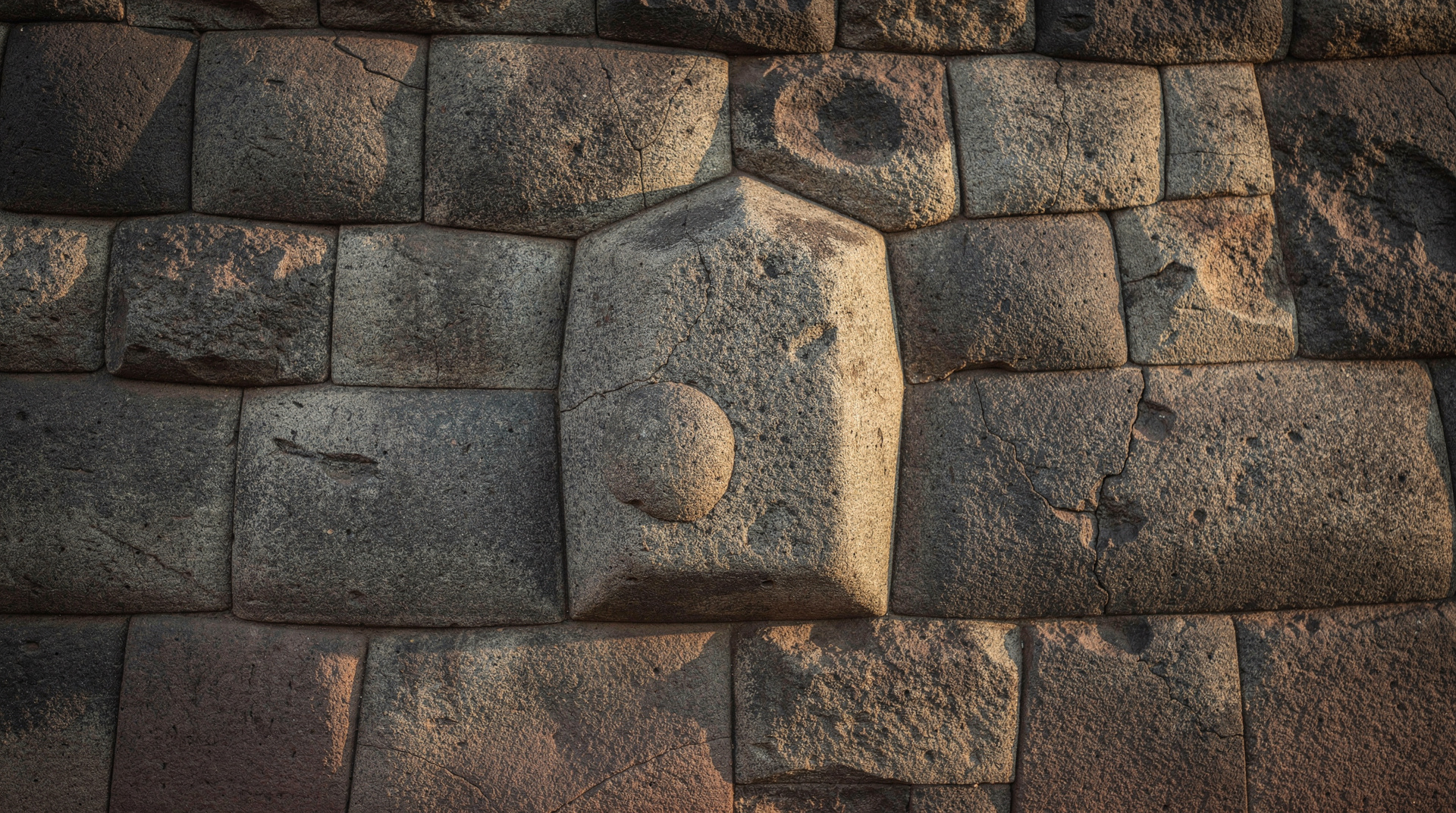
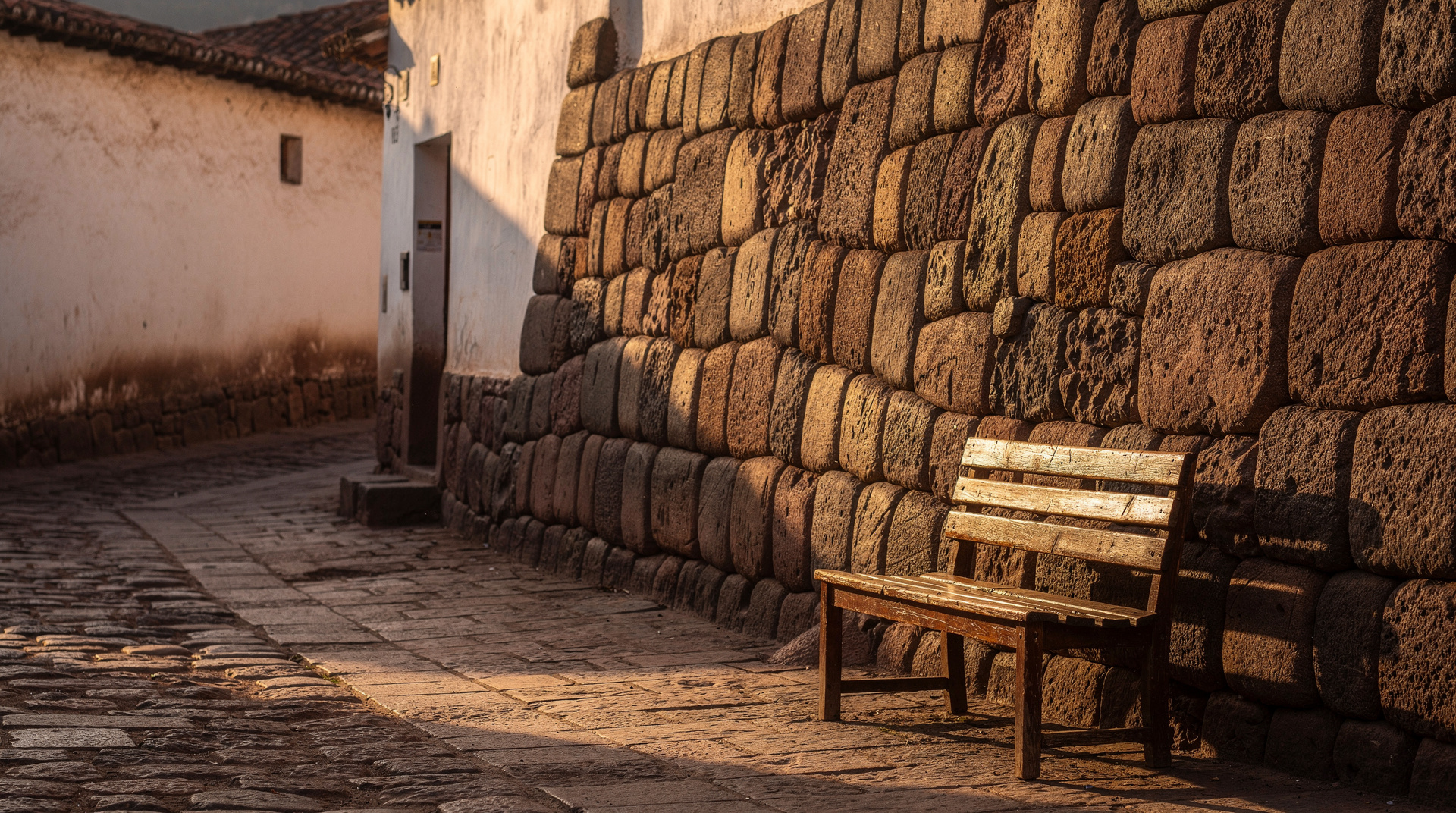
The curved exterior wall of the original inti wasi, visible from the street on the Av. El Sol side, is perhaps the most technically accomplished piece of Inca masonry in Cusco. Its individual stones are cut to follow the curve of the wall without any straight joints, fitted so precisely that the mortar-less joints are almost invisible. The wall has survived several major earthquakes — including a devastating event in 1950 that destroyed large sections of the colonial convent above it — because Inca polygonal masonry of this quality absorbs seismic movement differently from the rigid colonial stonework. The Inca walls are, in the most literal sense, earthquake-proof in a way that colonial construction is not.
The interior rooms, visible through the convent courtyard once you have your ticket, show a sequence of apsidal (semi-circular niche-lined) chambers. The trapezoidal niches cut into these walls held golden figures, cult objects, and mummies during the Inca period. In several rooms the original Inca floor level is below the current surface — excavations in the 1990s exposed additional foundations and artefacts now displayed in the on-site museum.
The garden area of the convent was the location of the famous golden garden. Nothing of it remains above ground, but the space retains an unusual quality of stillness that may be partly the architecture and partly the weight of what was destroyed there.
Entering and navigating the site
Standalone ticket: check current prices with the Santo Domingo convent or the Qorikancha site museum before you go. This covers the museum inside the convent and access to the Inca rooms and courtyards. If you plan to visit only Qorikancha and no other Boleto sites, this is the logical choice.
Boleto Turístico (full): S/130 (~$35). Covers all 16 participating sites. If you are also visiting Sacsayhuamán, Pisac, Ollantaytambo, or Maras and Moray, the full ticket pays for itself within one day.
Opening hours: check current hours with the Santo Domingo convent or the Qorikancha site museum before you go. Hours are shorter on Sundays — check ahead.
A guided tour focused on Qorikancha typically spends 45–60 minutes at the temple with a guide who can explain the ceque system, the construction sequence, and the specific function of each surviving room. This is the most efficient way to absorb the available information without reading three books first.
The layers of history inside Santo Domingo
The convent of Santo Domingo was begun in the 1550s, and its construction was deliberate in its symbolism as well as its architecture. The Spanish built their church directly over the most sacred space in the Inca religious world. The high altar of the church was positioned over the location of the golden sun disc. The friary’s domestic buildings were constructed from Inca stonework removed from other parts of the complex.
What makes the contemporary experience interesting — and slightly disorienting — is that the building never fully resolved the collision. The 1950 earthquake destroyed most of the colonial church while leaving the Inca foundations intact, and the restored convent that exists today is a somewhat awkward hybrid that is honest about the layering in a way the original was not. You can stand in a room and see, in a single glance, Inca masonry forming the walls, colonial barrel vaulting above, and a glass floor section through which the original Inca level is visible below your feet.
The museum inside the convent has artefacts from the excavations and several good scale models of what Qorikancha likely looked like in the Inca period — these are worth 15 minutes before you walk the courtyards, as they help you interpret what you are looking at.
Combining Qorikancha with the city circuit
Qorikancha and Sacsayhuamán are the two most important Inca sites in Cusco proper, and they complement each other directly: Qorikancha represents the religious and administrative centre of the empire; Sacsayhuamán represents the military and ceremonial hilltop. Visiting both on the same day is both logistically practical and intellectually rewarding — you see two aspects of the same political programme.
The standard sequence is Qorikancha first (it is in the city centre and takes 1–1.5 hours), then by taxi or tour vehicle to Sacsayhuamán and the outlying ruins circuit (Sacsayhuamán, Q’enqo, Puca Pucará, Tambomachay) for the afternoon. This is the structure used in most full-day city tours and is also what the guide to Inca archaeological sites around Cusco recommends for a coherent day.
For visitors with limited time, Qorikancha alone — with the standalone ticket and a focused hour inside the convent — provides more insight per minute into Inca civilisation than almost any other single site in the city. The scale is human, the masonry is accessible, and the museum context is better than at the outlying ruins.
Altitude, timing, and practical notes
Qorikancha is at approximately 3,400 m — the same elevation as central Cusco, unlike Sacsayhuamán which adds another 300 m. For visitors managing the first day at altitude, Qorikancha is the more accessible of the two major Inca sites in Cusco: it involves no sustained uphill climbing and the courtyards provide shade and somewhere to sit if you need to rest.
Even so, the standard altitude acclimatisation advice applies: take your first day in Cusco slowly, drink plenty of water, and avoid rushing from attraction to attraction. Qorikancha on day one is fine for most people; Sacsayhuamán is better on day two or three.
A tour that centres on Qorikancha also removes the logistical burden of finding the site, buying tickets at the right counter, and navigating the slightly confusing internal layout of the convent — small advantages that matter more on a first day at altitude than at any other time.
Practical summary:
- Address: corner of Av. El Sol and Pampa del Castillo, Cusco
- Hours: check current hours with the Santo Domingo convent or the Qorikancha site museum before you go; shorter on Sundays
- Entry: included in the full Boleto Turístico (S/130); check current standalone prices before you go
- Time needed: 1–1.5 hours, more with the museum
- Nearest landmark: 400 m southeast of Plaza de Armas on foot
The 4-day Cusco and Machu Picchu itinerary places Qorikancha on day two of the city sequence, after the Cathedral on day one — a structure that gives you the colonial before the Inca, then lets you appreciate the collision more fully at Qorikancha itself.
The garden that was dismantled
One of the most frequently cited descriptions of Qorikancha is the garden. Spanish chronicler Cieza de León and others described a garden adjacent to the main temple that contained life-size replicas of plants and animals made from gold and silver: maize stalks with golden tassels and silver leaves, golden llamas tended by golden herders, silver insects on golden flowers. The descriptions agree broadly on the nature of the garden; they differ on its precise location and exact contents, which is not surprising given that almost all of it was melted down before any systematic recording could take place.
What the garden represents is not just wealth — the Inca had enormous wealth — but a particular religious and philosophical concept. The Inca understood the natural world as permeated by divine force (camac), and the creation of a sacred garden in which every element of the natural world was replicated in imperishable metal was an act of theological statement: permanence given to what is naturally impermanent, a frozen image of the living world placed in the house of the sun god.
Nothing of the garden survives. The site where it stood is now the convent courtyard. But knowing what was there transforms the experience of standing in it: you are in the space where one of the most extraordinary religious objects ever created once stood, and it is gone so completely that the evidence for it is entirely textual rather than physical.
The earthquake test
The 1950 earthquake that struck Cusco on 21 May was one of the most damaging seismic events in the city’s recorded history. It destroyed or severely damaged large sections of the colonial city: the cathedral towers were cracked, many church facades collapsed, and residential buildings throughout the historic centre were destroyed or damaged beyond repair.
The Inca walls at Qorikancha — including the curved exterior wall on Av. El Sol — survived largely intact. This was not chance. Inca polygonal masonry is designed for seismic resilience in a way that colonial rigid-mortar construction is not: the stones can flex slightly against each other during ground movement, distributing and absorbing the energy rather than cracking. The earthquake, in effect, ran a 500-year-later quality test on the Inca engineering and the Inca engineering passed.
The post-earthquake restoration of Santo Domingo Convent used the surviving Inca walls as the structural foundation for the rebuilt colonial superstructure — an irony that the original builders of both might have found interesting. The visible layering of the current building — Inca at the base, colonial above, with clear transition lines visible in several locations — is the direct record of the earthquake’s differential effect on two construction traditions.
What most visitors miss
Because the entrance ticket to Qorikancha is bought quickly and the temptation is to move through the courtyards in twenty minutes, several details are routinely overlooked. The trapezoidal doorway and window shapes throughout the complex — narrower at the top than the base — are a deliberate Inca architectural signature found at every major Inca site from Sacsayhuamán to Machu Picchu; once you notice the shape here, you will start noticing it everywhere else in the empire’s remaining architecture.
The small garden courtyard, unremarkable at first glance, occupies the approximate footprint of the golden garden described by the Spanish chroniclers — knowing this while standing in it changes how the empty space reads. And the glass floor panel in one of the interior rooms, easy to walk past without noticing, is one of the only places in Cusco where you can see an undisturbed Inca floor level directly beneath a colonial one without needing to imagine the layering.
Visitors travelling with the Inca archaeological sites guide or the Inca Empire primer in mind will get considerably more from a slow, deliberate 90-minute visit than from a rushed 30-minute pass-through — Qorikancha rewards attention disproportionately to the size of the site.
Nearby sights worth combining
Qorikancha’s central location makes it easy to pair with other short visits without adding much walking. The Plaza de Armas and the Cathedral are a five-minute walk north along Av. El Sol, making a natural first stop before or after Qorikancha. San Blas, the bohemian artisan quarter with steep cobbled streets and workshop-galleries, is a further ten to fifteen minutes uphill and works well as an afternoon follow-on once the legs have recovered from the convent’s stone floors.
For a market contrast to the temple’s stillness, San Pedro market is about a fifteen-minute walk southwest and gives a completely different — noisier, more commercial — sense of Cusco life. None of these require re-buying a ticket or retracing your steps significantly; they simply extend a Qorikancha visit into a half-day loop of the historic centre.
Should you hire a guide inside, or go alone?
Qorikancha rewards guidance more than most Cusco sites because so much of what is significant is not self-evident from the architecture alone — the ceque system, the specific function of each apsidal chamber, and the precise history of the 1950 earthquake’s differential damage are not signposted in detail on-site.
Independent visitors with the museum’s information panels and a guidebook can follow the physical layout perfectly well, but a guide (either a private hire at the entrance or as part of a Qorikancha-focused tour, which shares the same booking id as the tour linked earlier in this guide) adds the layer of interpretation that turns “impressive stonework” into “the spiritual centre of an entire empire, deliberately buried under a church.” For visitors with only a single day in the city and a preference for a fast, informed overview, the guided route is the more efficient use of time; for visitors who enjoy reading before they arrive and prefer to explore at their own pace, the standalone ticket and self-guided route work equally well.