Sacsayhuamán: the complete visitor guide
Cusco: Half-Day City Tour with Sacsayhuaman and Q’enco
Visiting Sacsayhuamán
Sacsayhuamán is included in the full Boleto Turístico (S/130, ~$35). The site is open 7 am–6 pm daily, about 2.5 km from Cusco's Plaza de Armas on foot or a S/10–15 taxi ride uphill. Allow 1.5–2 hours. It sits at 3,700 m — 300 m above the city centre — so visit on day two or three, not day one.
The walls that refused to be destroyed
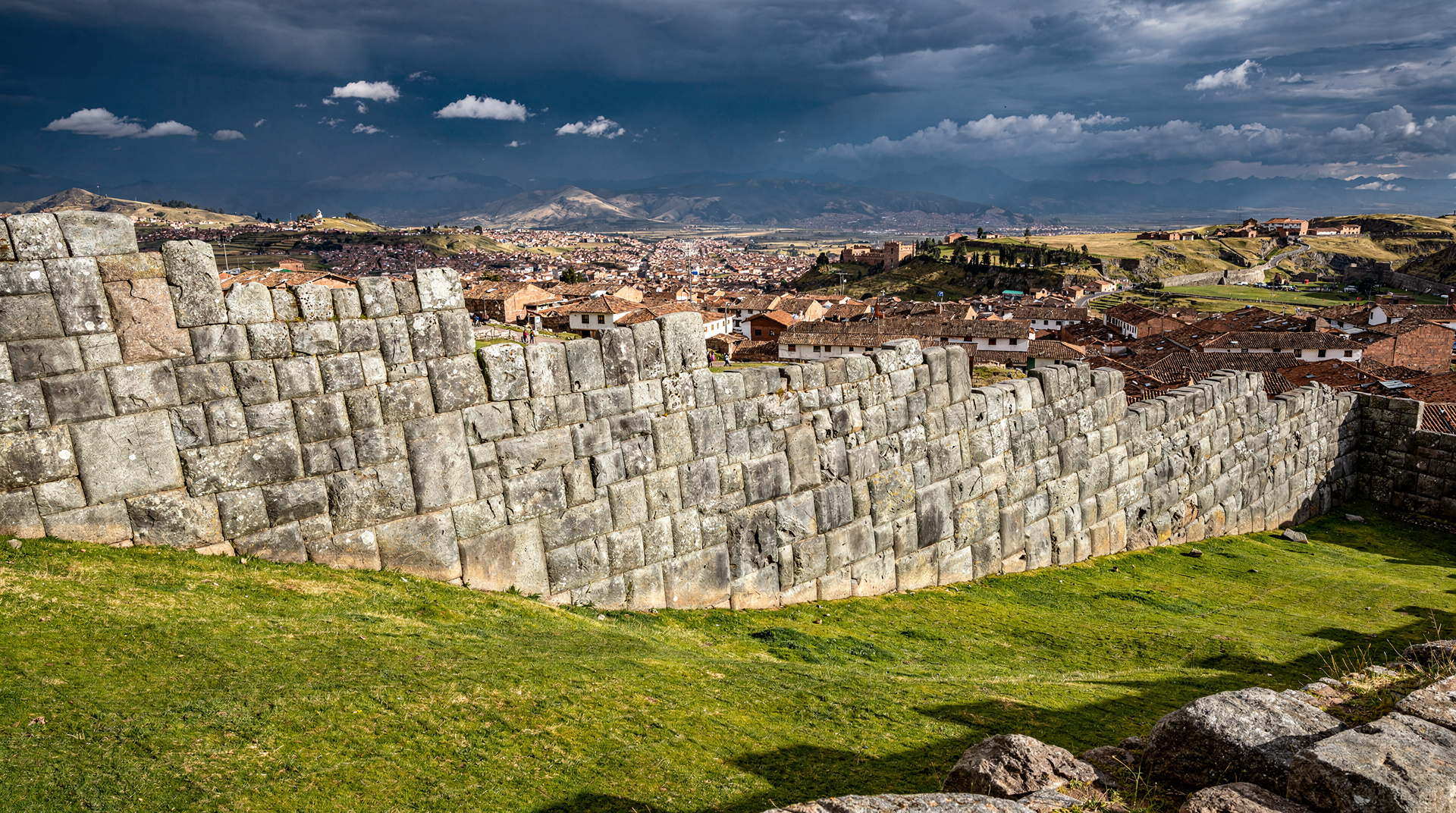
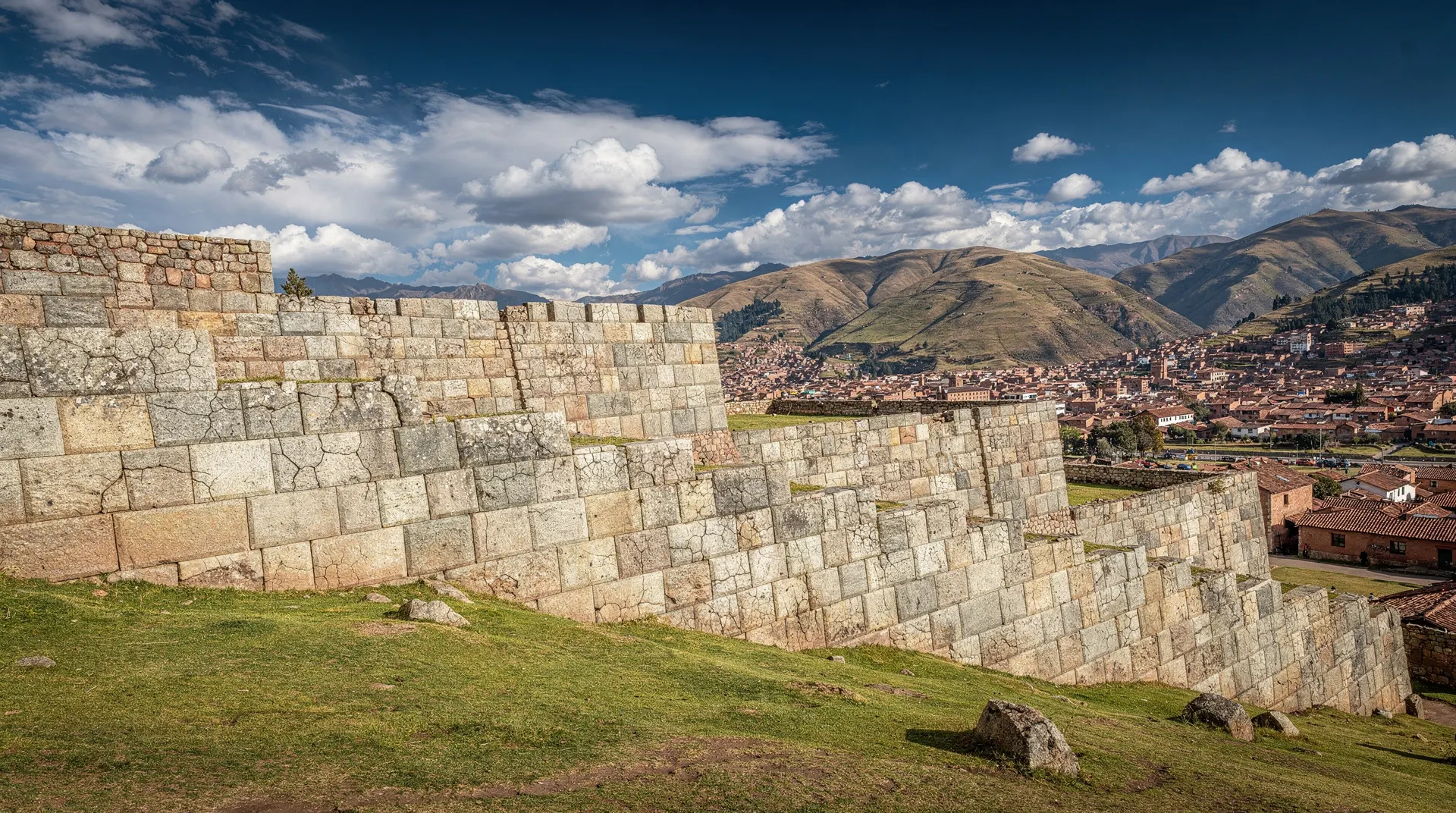
Sacsayhuamán occupies a hillside 300 m above Cusco, and the first thing you notice is scale. Three parallel terraces of limestone zigzag across the slope for roughly 360 m, the largest individual blocks weighing an estimated 125 tonnes each. They were moved, lifted, and slotted together without mortar, without metal tools, and without the wheel — and they were fitted so precisely that a knife blade cannot be pushed between them. When Spanish chroniclers encountered Sacsayhuamán intact in the 1530s, several concluded that demons must have done the work. The presumption reveals the chroniclers’ limitations rather than anything about the Inca.
| Where | 2.5 km / 300 m uphill from Plaza de Armas |
| Cost | Full Boleto Turístico, S/130 (~$35) |
| Time needed | 1.5–2 hrs self-guided, 3–4 hrs with Circuit I |
| Getting there | Walk 30–45 min, taxi S/10–15, or tour |
| Best time | 7–9 am, second or third day in Cusco |
What you see today is what the Spanish could not steal. After the conquest, colonisers systematically dismantled the upper structures of Sacsayhuamán and carted the smaller stones downhill to build Cusco’s cathedrals, churches, and private residences. The massive base stones — some too heavy for sixteenth-century extraction techniques to shift economically — were left in place. The site is already extraordinary; what it once was, complete, would have been overwhelming.
Sacsayhuamán is the most dramatic single site on the Boleto Turístico circuit and, for most visitors, the most memorable archaeological experience in Cusco outside Machu Picchu itself.
What Sacsayhuamán actually was
The “fortress” label applied by Spanish writers has stuck through centuries of usage, but it is misleading. Construction began under the Inca Pachacuti, the ninth Sapa Inca, approximately in the mid-fifteenth century, and continued under his successors Tupac Yupanqui and Huayna Capac for roughly 70 years. The final complex functioned as a ceremonial centre for state religion, a garrison for the Inca army, a storage depot for weapons and provisions, and possibly a sanctuary for the coya (queen) and high-ranking acllas (chosen women). Labelling it solely a fortress reduces a multi-purpose imperial complex to its most legible function for a European military audience.
The three terraced walls are named Tikacocha, Sallaqmarca, and Paucamarca in some colonial sources, though the precise application of those names is disputed. The engineering logic of the construction is clearer: the largest stones are placed in the lowest terrace and the stones diminish in size upward, anchoring the structure at its base. The zigzag profile of the walls is not decorative but structural — each angle creates an additional defended corner, multiplying the defensive positions available and giving the walls their distinctive silhouette.
For the broader story of how the Inca state organised construction labour and why Sacsayhuamán fits into the pattern of Inca imperial architecture, the guide to the Inca Empire for travellers provides context that the site itself cannot communicate without background knowledge.
The Boleto Turístico: what you need to know
Entry to Sacsayhuamán requires the full Boleto Turístico (S/130, approximately $35 at current exchange rates) or the Circuit I partial (S/70). There is no ticket for Sacsayhuamán alone. The full circuit includes 16 sites in three packages:
- Circuit I (outlying ruins): Sacsayhuamán, Q’enqo, Puka Pukara, and Tambomachay.
- Circuit II (city and south valley): the Qorikancha site museum, the Regional History Museum, the Contemporary Art Museum, the Popular Art Museum, the Centro Qosqo de Arte Nativo, the Pachacútec monument, Tipón and Pikillaqta.
- Circuit III (Sacred Valley): Pisac, Ollantaytambo, Chinchero, and Moray.
The full ticket (all three circuits) costs S/130. Individual circuits are S/70 each. If you plan to visit Sacsayhuamán, the outlying ruins, and either Pisac or Ollantaytambo, the full ticket is almost always better value. Buy it at the COSITUC office on Av. El Sol 103 in Cusco, at any of the participating sites, or through authorised operators — not from anyone approaching you on the street. The Boleto Turístico guide covers legitimate purchase points and the common reseller scams in detail.
A half-day guided city tour including Sacsayhuamán typically incorporates the Boleto entry fee and transport, which removes the need to buy separately and navigate the taxi logistics on your own.
Walking the site
The site opens at 7 am and closes at 6 pm daily. From the main entrance, the path climbs first to the open esplanade (Esplanada de Rodadero) in front of the three terraced walls, then up through the terraces themselves to the summit where the foundations of three circular towers remain visible at ground level.
The esplanade is where the site’s scale becomes fully apparent. Walking the length of the zigzag walls from east to west takes about 15 minutes at a moderate pace and gives a ground-level appreciation of the engineering that photographs cannot convey. Forty thousand to fifty thousand labourers are thought to have worked on the construction at its peak, drawn from across the Inca Empire through the mit’a system of labour tribute.
The tower foundations at the top of the complex once supported three large circular towers — Muyuqmarka, Sallaqmarka, and Paucamarca — that have been almost entirely removed. The foundations of Muyuqmarka, the largest and central tower, survive clearly enough to show its concentric ring structure, which some researchers link to the astronomical alignment of the complex. An interpretive sign marks the location; a guide can explain the competing interpretive theories.
The Rodadero rock area, to the east of the main walls, contains polished channels, carved ceremonial thrones, and surfaces worn smooth by millennia of use. The “Inca throne” here is one of the most photographed carved stone features in the region. The interpretation of these features remains debated — they may have served royal ceremonial purposes, astronomical observation functions, or both.
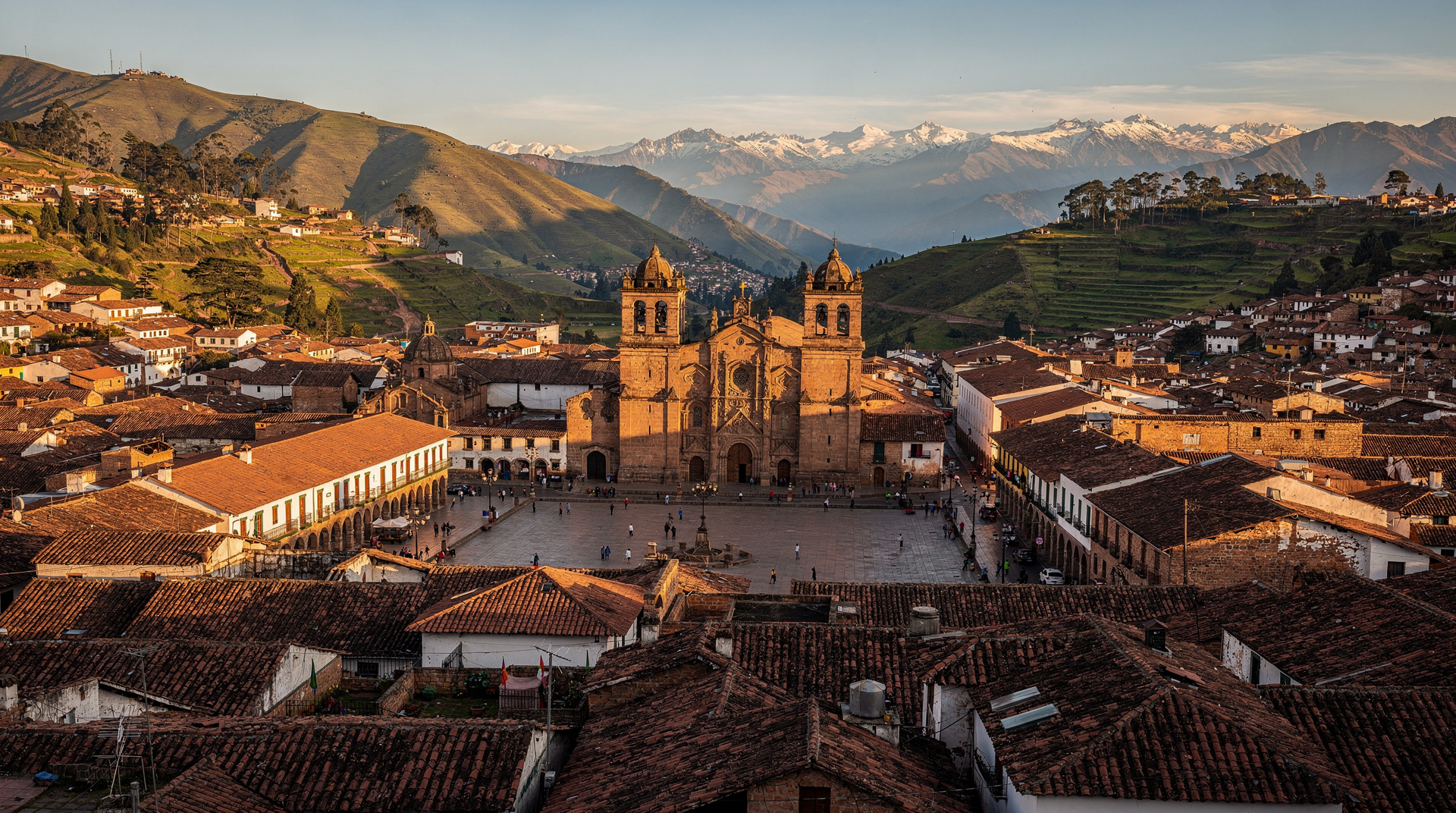
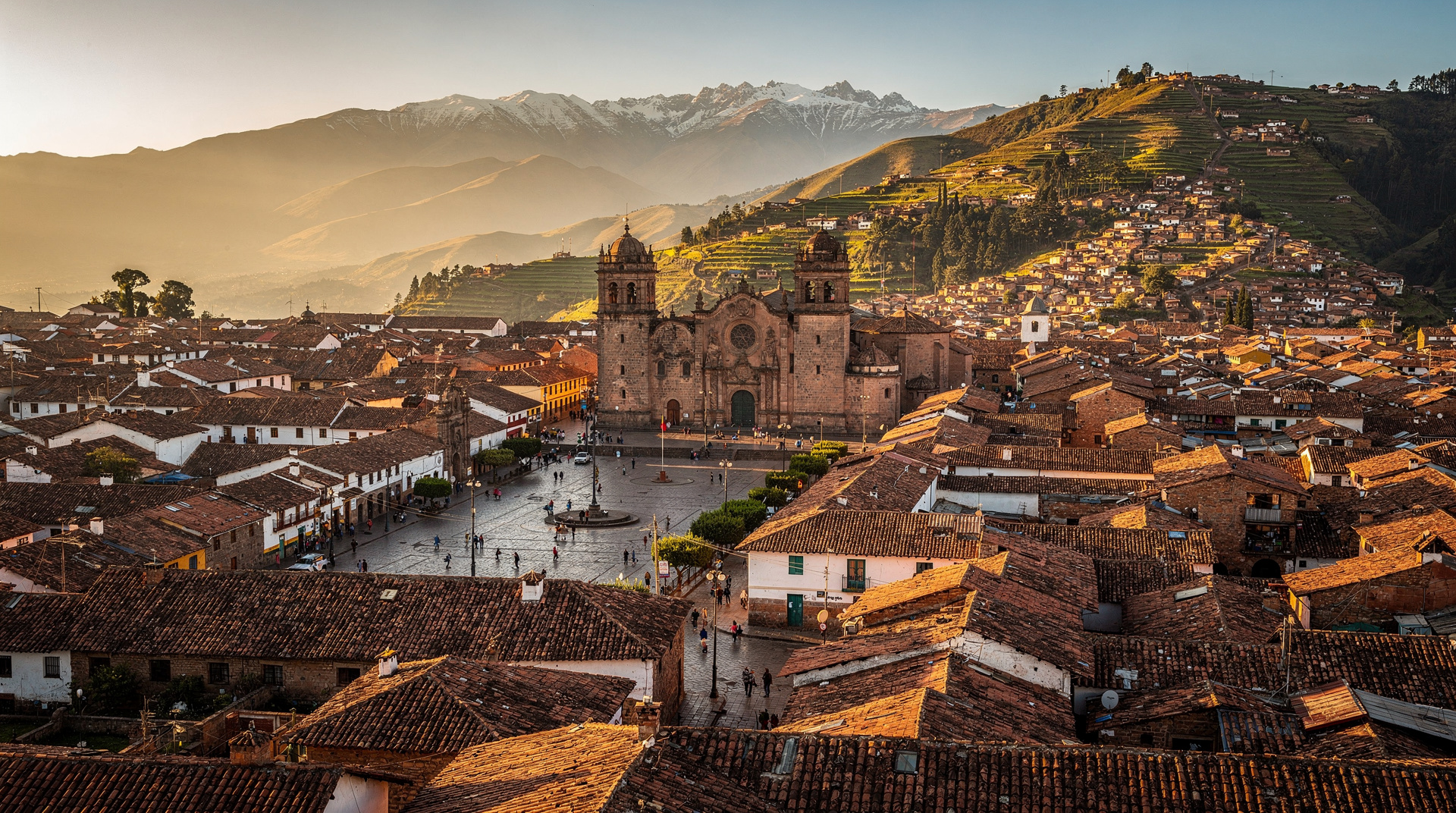
Summit views are among the best in the Cusco area. On clear mornings the full bowl of the valley is visible with Cusco’s cathedral towers, tiled rooftops, and — on particularly clear days — the distant snow of the Andean peaks beyond the city.
Getting to Sacsayhuamán
The site is approximately 2.5 km from Cusco’s Plaza de Armas, reachable by three methods:
On foot: A path climbs steeply through residential streets north of the historic centre. The walk takes 30–45 minutes and passes through a neighbourhood that most group tours bypass entirely, with the views improving steadily as you gain height. It is a worthwhile approach if you are acclimatised and keen on the additional exercise. Use a GPS app — the route is not always well signed in the residential section.
By taxi: Approximately S/10–15 from the Plaza de Armas. The drive takes 10 minutes. Many visitors take a taxi up and walk back down through the San Blas quarter, which makes for a pleasant 45-minute descent through lanes rarely on tourist itineraries.
On a guided tour: A half-day city tour typically covers Sacsayhuamán, Q’enqo, Puca Pucará, and Tambomachay in a single morning with transport included. This is the most efficient approach if you have limited time and want explanation rather than self-guided exploration.
Altitude and physical preparation
Sacsayhuamán sits at 3,700 m — 300 m above central Cusco and nearly 1,300 m above Machu Picchu. If you are already managing mild altitude symptoms at 3,400 m (headache, shortness of breath on stairs, difficulty sleeping), the extra elevation will be noticeable. The effort of climbing the terraced walls, which involves uneven stone steps of considerable height, adds to the physiological load.
The practical recommendations are straightforward:
- Visit on your second or third day in Cusco, not your first. Your body needs 24–48 hours to begin adjusting to 3,400 m before you add another 300 m of elevation gain and sustained climbing.
- Move at a pace that keeps your breathing steady. The most common visitor mistake is arriving with an ambitious timetable and climbing too quickly.
- Drink water before and during the visit. Dehydration accelerates altitude symptoms and is easy to prevent.
- Bring sunscreen and a hat. At 3,700 m the UV index is extreme even in cloud cover, and the esplanade has no shade.
The detailed guide to altitude sickness in Cusco covers the full acclimatisation protocol and distinguishes between normal adjustment symptoms and the warning signs of more serious altitude illness.
Combining Sacsayhuamán with the ruins circuit
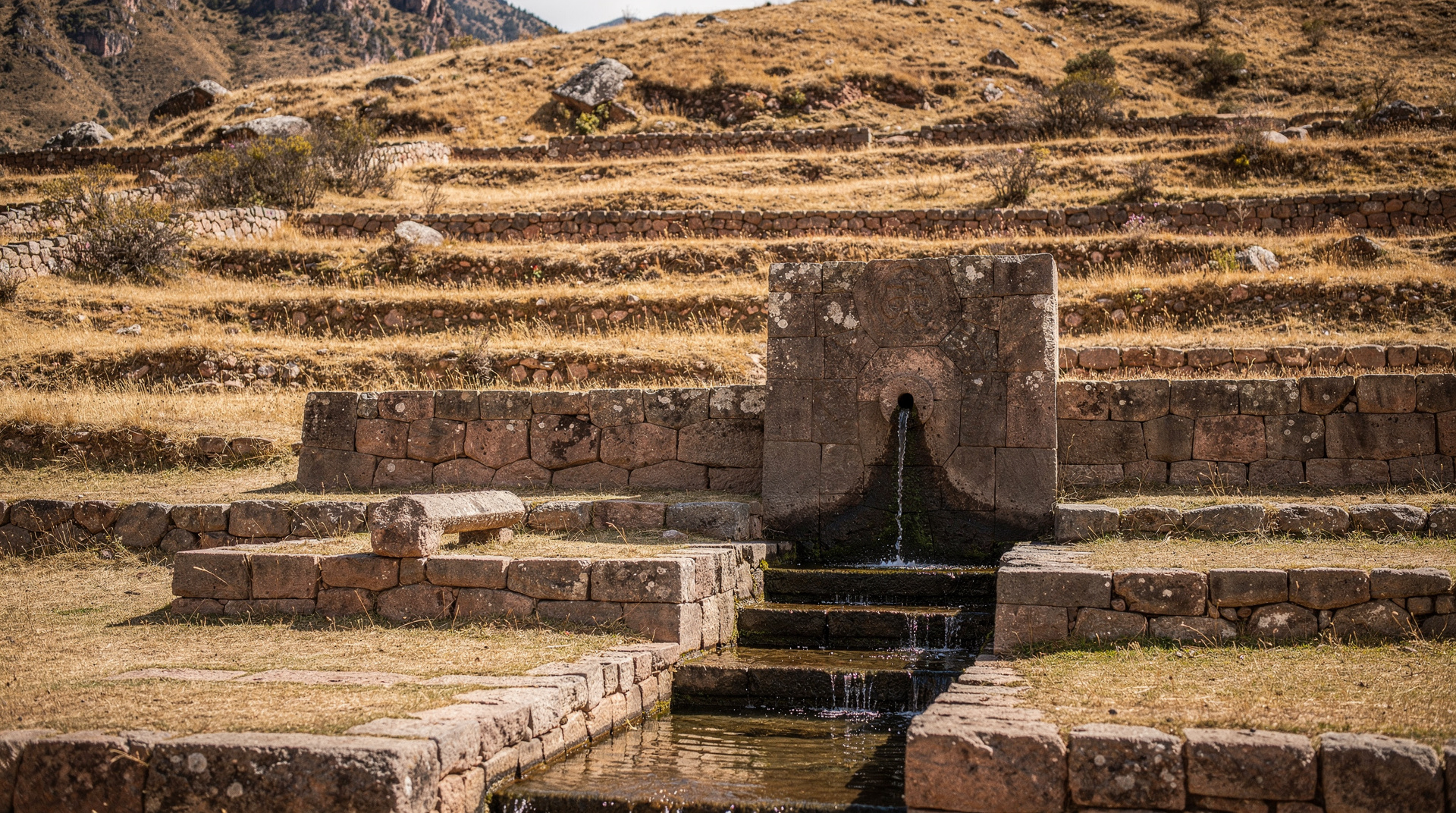
Sacsayhuamán is the most dramatic site on the Circuit I outlying ruins, but the other three — Q’enqo, Puca Pucará, and Tambomachay — complete the picture of Inca sacred geography around the city and take only another 1.5–2 hours combined. All four are covered by the same Boleto Turístico circuit.
The standard sequence is Sacsayhuamán first (closest to the city, most time required), then continuing by taxi or tour vehicle along the Cusco–Pisac road to Q’enqo, then Puca Pucará, and finally Tambomachay before returning to Cusco. Total elapsed time for all four sites with transport is typically 3–4 hours.
The guide to Inca archaeological sites around Cusco covers what to expect at each site in the circuit and how to sequence them effectively.
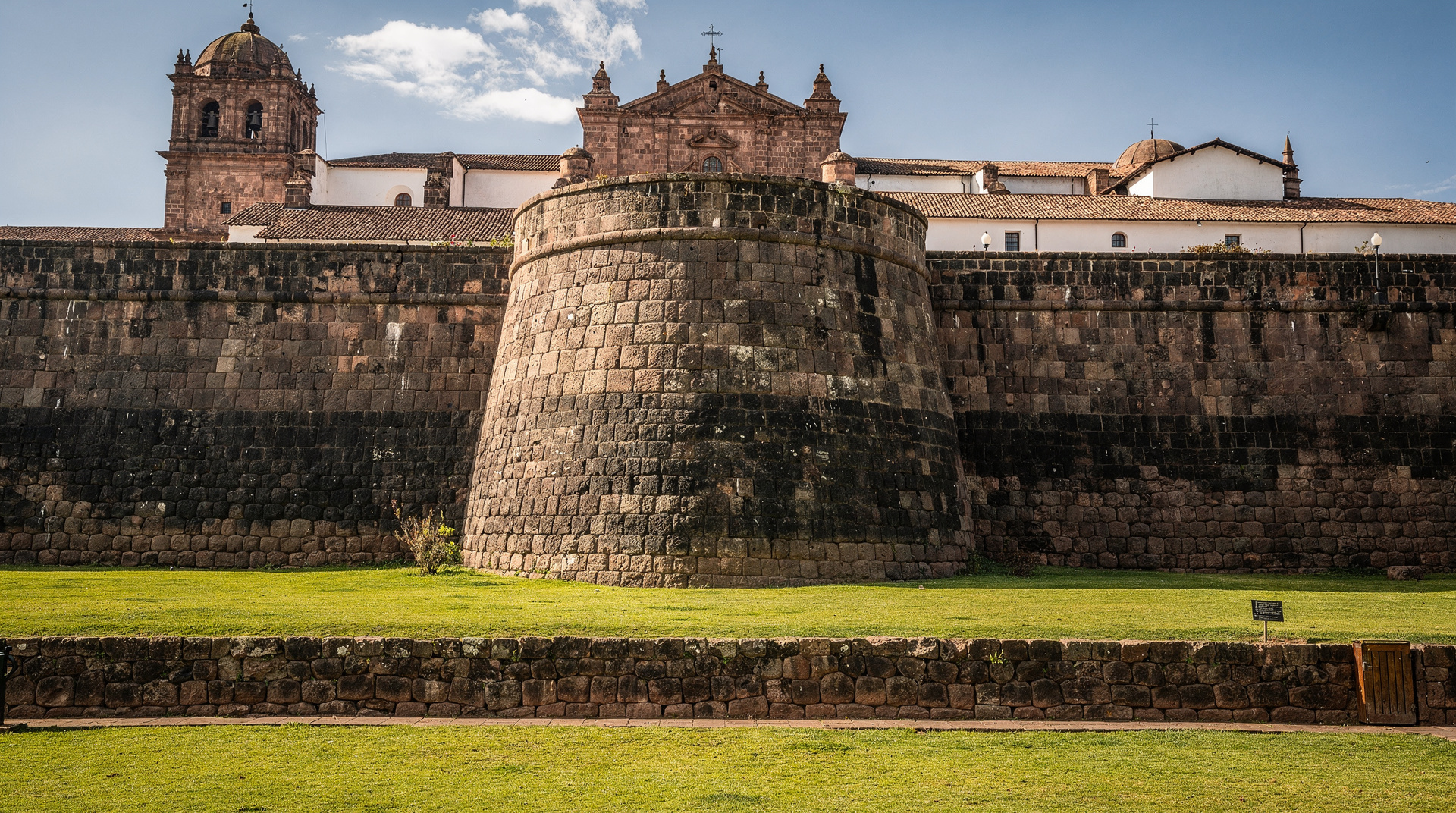
For a tour that connects the outlying ruins with the most important in-city Inca site, a city tour focused on Qorikancha in its full-day format typically includes Sacsayhuamán as well, giving you both the in-city Temple of the Sun and the hillside fortress complex in a single day. Qorikancha and Sacsayhuamán represent different aspects of the same Inca imperial programme — the spiritual and administrative centre on one hand, the military and ceremonial hilltop on the other — and they make more sense together than either does alone.
What a guide adds
The gap between a self-guided visit and a guided one at Sacsayhuamán is larger than at most archaeological sites. The scale of the engineering is immediately apparent to anyone. What is not apparent without knowledge: the astronomical alignments, the function of the Rodadero carvings, the extent of what was destroyed and where it was taken, the sequence of construction across multiple Inca reigns, and the differences between the polygonal masonry here and the more regularly coursed ashlar at Qorikancha.
A guide who explains why the zigzag profile was structurally rational, what the tower foundations once supported, and how the mit’a labour system made a project of this scale organisationally possible transforms what is, without that context, a walk among very large stones into a coherent story about engineering, religion, and empire. The investment — whether in a structured half-day city tour or in reading the background material before you arrive — pays back many times in understanding.
Practical information
Opening hours: 7 am – 6 pm daily (reduced activity on Inti Raymi, 24 June).
Entry: Full Boleto Turístico (S/130) or Circuit I partial (S/70). Buy at COSITUC (Av. El Sol 103), at the site, or through authorised operators.
Getting there: On foot 30–45 min from Plaza de Armas; taxi S/10–15; tours include transport.
Time required: 1.5–2 hours self-guided; 2 hours with a guide; 3–4 hours including the full Circuit I.
Facilities: Café and toilets at the entrance. Bring water regardless — the café may be closed early in the morning.
Photography: No restrictions on personal photography. Drone permits are required and rarely granted for commercial use.
Inti Raymi (24 June): Site partially closed during the theatrical ceremony. Separate, considerably more expensive tickets required for the ceremony itself. Cusco is substantially busier and more expensive the entire week of 24 June.
The 4-day Cusco and Machu Picchu itinerary places the ruins circuit on day three, after two days of city exploration and acclimatisation — the sequence that makes the most physiological and interpretive sense.
The stonework technique, close up
Look closely at the joints between the largest blocks and a genuine engineering puzzle emerges. The stones are not roughly stacked — each face has been shaped to match its neighbour with a precision that modern quarrying with power tools would struggle to reproduce by hand. The leading theories involve a combination of bronze and stone hammers to pound the surfaces into shape, a trial-and-fit process repeated many times per stone, and possibly a form of controlled friction polishing using sand and water as an abrasive.
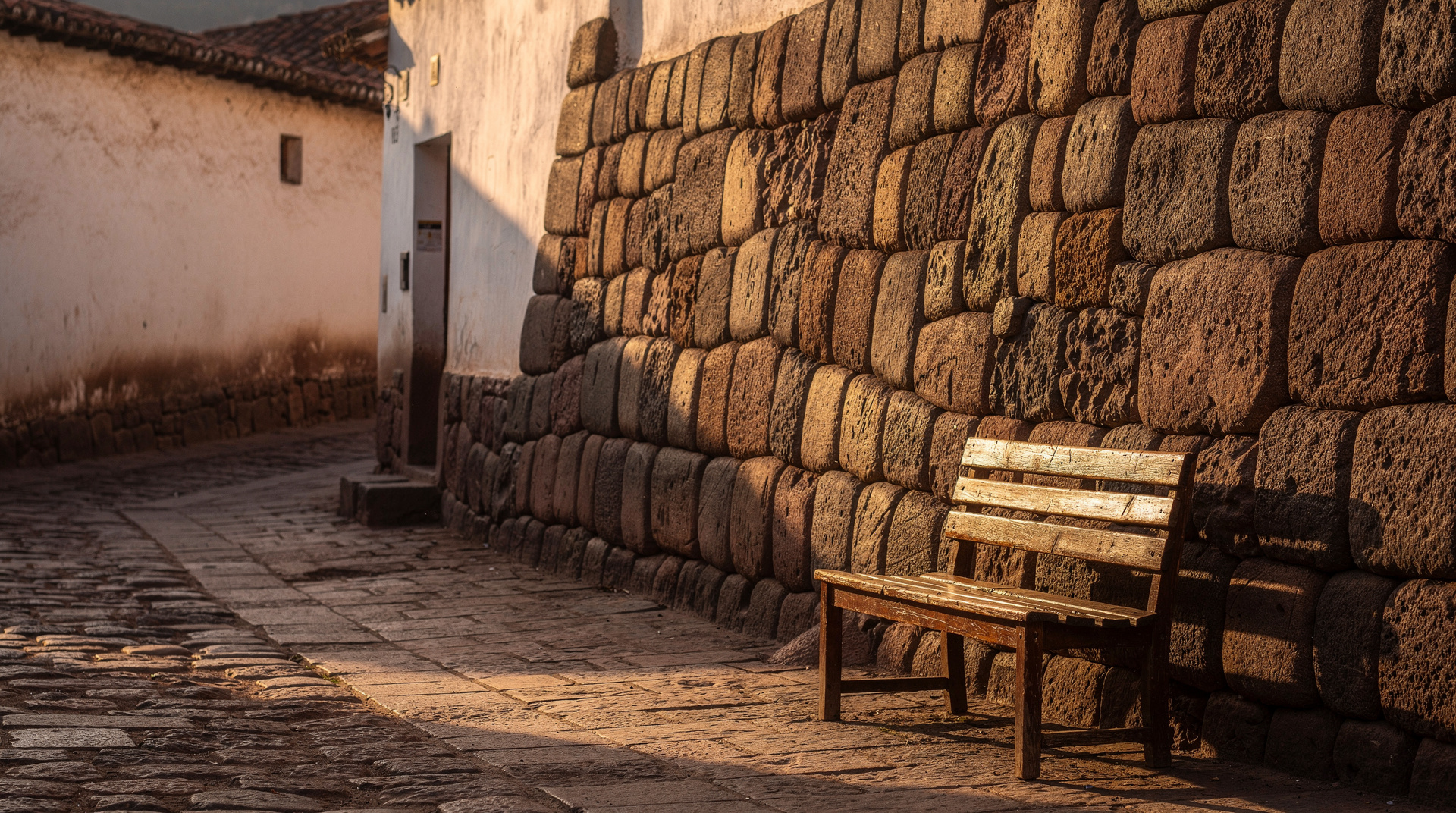
No mortar was used anywhere in the complex; the friction fit and the sheer weight of the stones hold the walls together, which is also why Sacsayhuamán has survived numerous serious Cusco earthquakes (including the 1950 quake that damaged much of colonial Cusco) essentially undamaged. The guide to Cusco’s archaeological sites compares this polygonal masonry technique with the more regular ashlar stonework found elsewhere in the region.
Visiting with limited mobility or in a wheelchair
Sacsayhuamán is one of the more physically demanding Boleto Turístico sites. The esplanade and the lower terraces are on relatively flat, compacted earth and are manageable for most visitors with limited mobility, but the terraces themselves involve stone steps of uneven height with no handrails, and the summit area requires sustained walking on natural, occasionally loose ground.
There is no wheelchair-accessible route to the upper levels. Visitors who want the experience of the site without the climb can see the lower esplanade and the full sweep of the zigzag walls from ground level, which captures much of the visual impact, then arrange for a vehicle to continue on to lower-effort sites such as Qorikancha in the city centre.
Photographing the zigzag walls well
The classic photograph is taken from the esplanade looking up at the full length of the terraces, ideally in the low side-light of early morning, which throws the joints between blocks into sharp relief and shows the scale of the largest stones. A wide-angle lens or panorama mode captures the full 360 m sweep; a standard lens forces a choice between width and detail. Midday light flattens the stonework and makes the famous precision joints much harder to see in photographs — another reason the 7–9 am window recommended above is worth the early start, on top of the crowd and altitude benefits.
Frequently asked questions about Sacsayhuamán: the complete visitor
Do I need the Boleto Turístico for Sacsayhuamán?
How long does a visit to Sacsayhuamán take?
Can I walk to Sacsayhuamán from Cusco?
What is the best time of day to visit?
Is Sacsayhuamán open during Inti Raymi?
What are the carved rock features near the walls?
Top experiences
Bookable activities with verified prices and instant confirmation on GetYourGuide.