Huayna Picchu
Huayna Picchu is the steep peak behind Machu Picchu citadel. Strictly limited access, timed entry, book well ahead. Here is what to expect.
Machu Picchu: Huayna Picchu Entry Ticket
Quick facts
- Country
- Peru
- Altitude
- 2,720 m / 8,924 ft
- Currency
- Peruvian sol (S/) — USD widely used
- Best for
- Steep summit climb above Machu Picchu, aerial citadel views, limited-access experience
The peak in the postcard
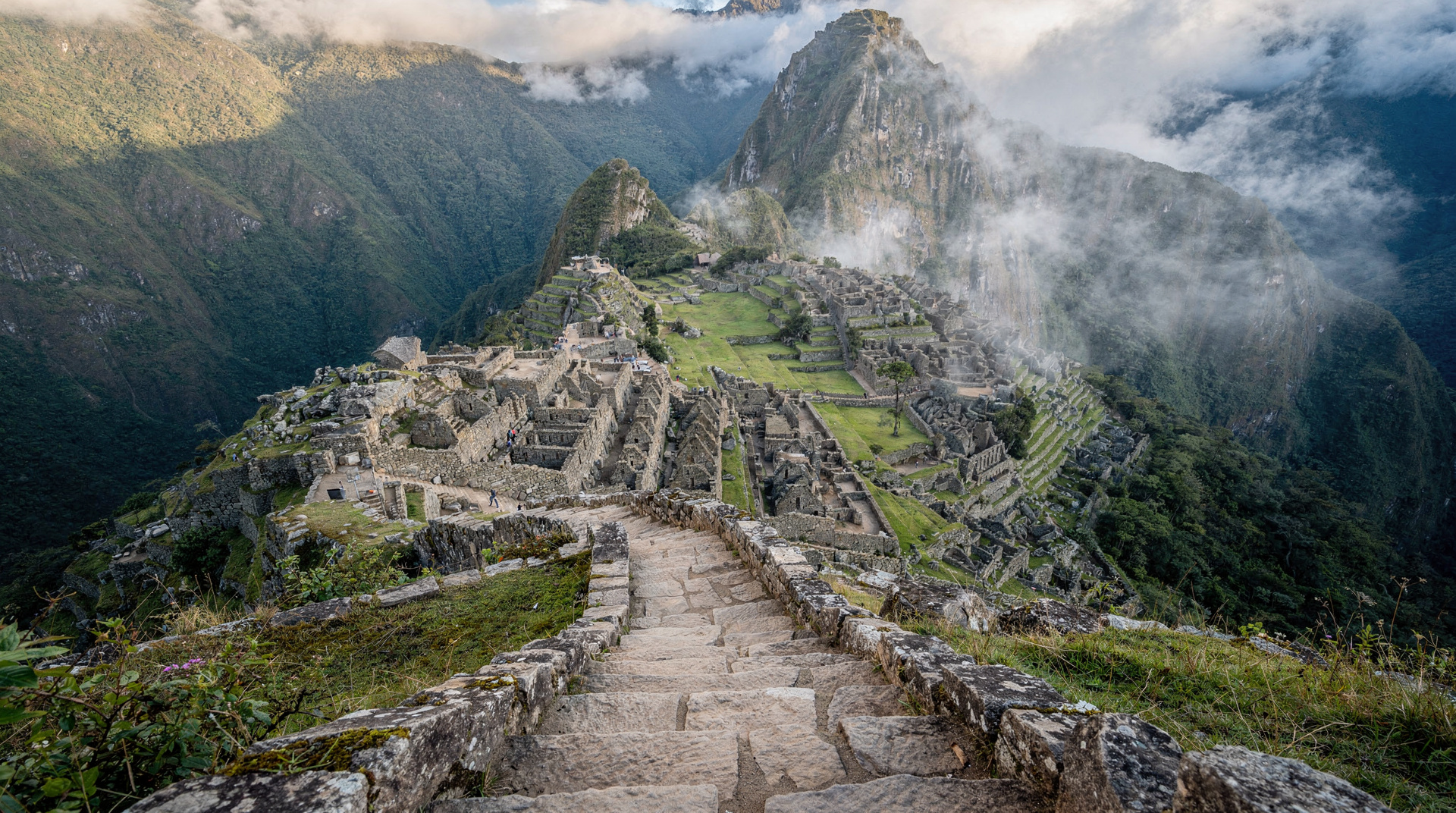
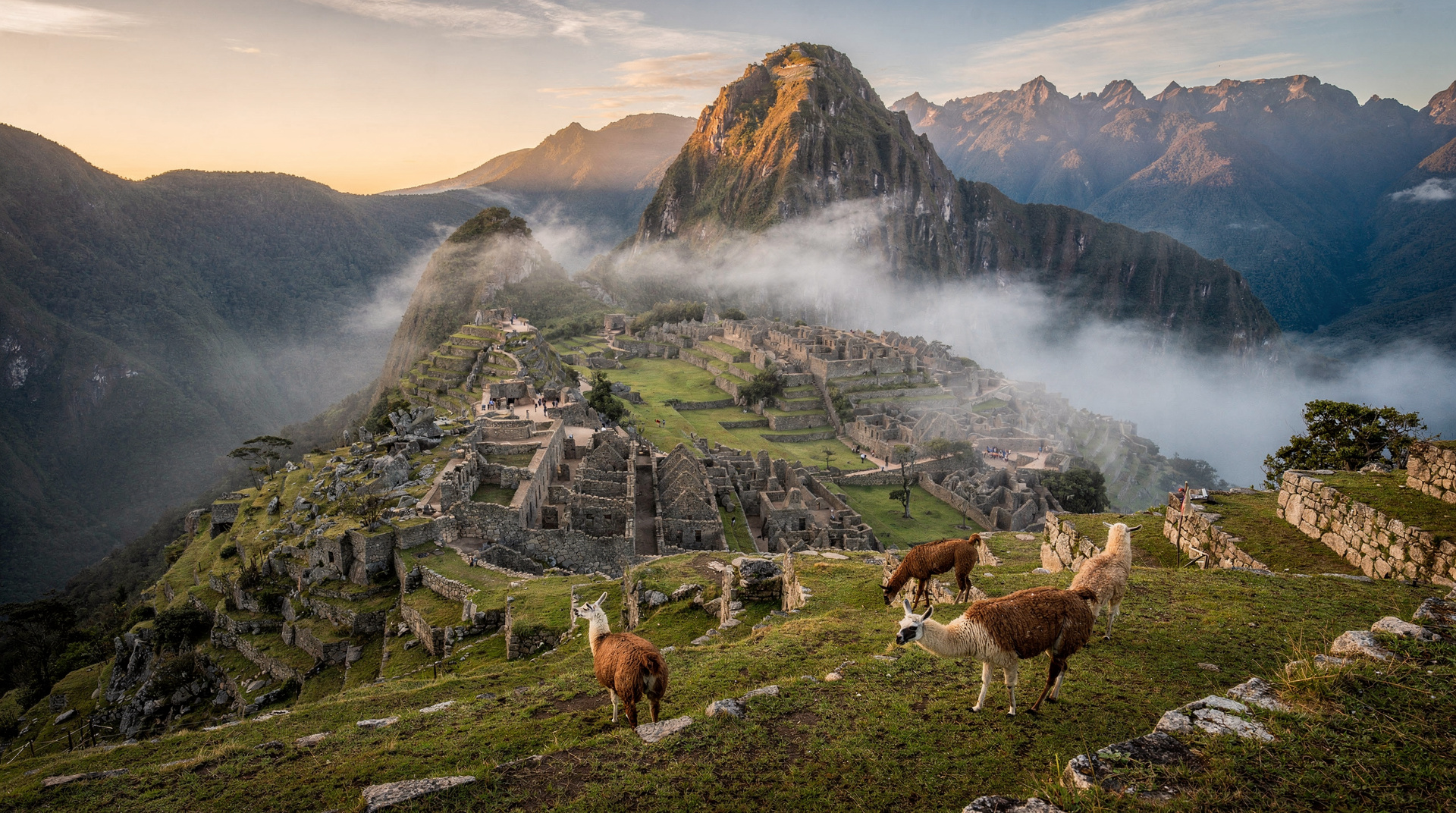
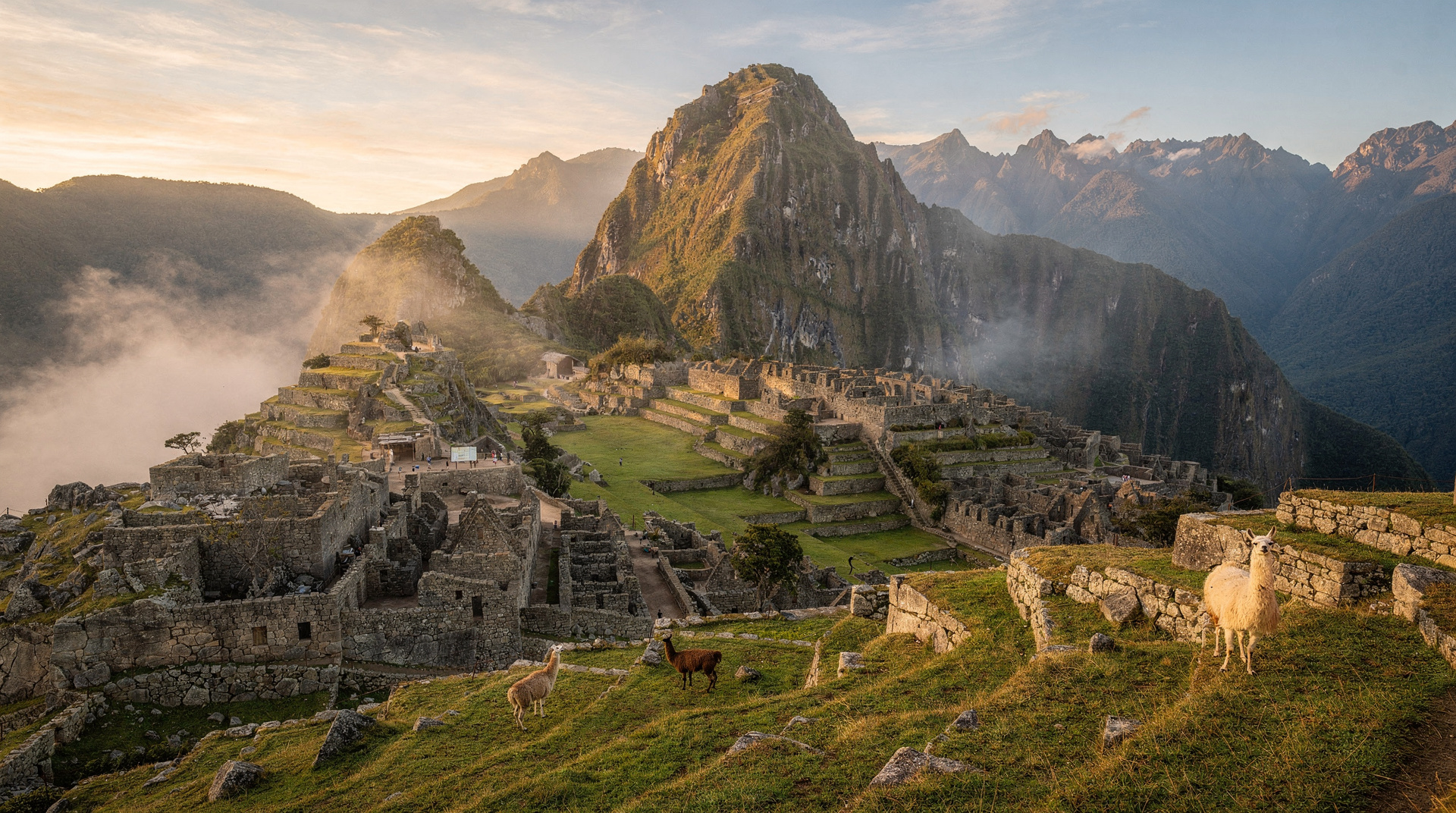
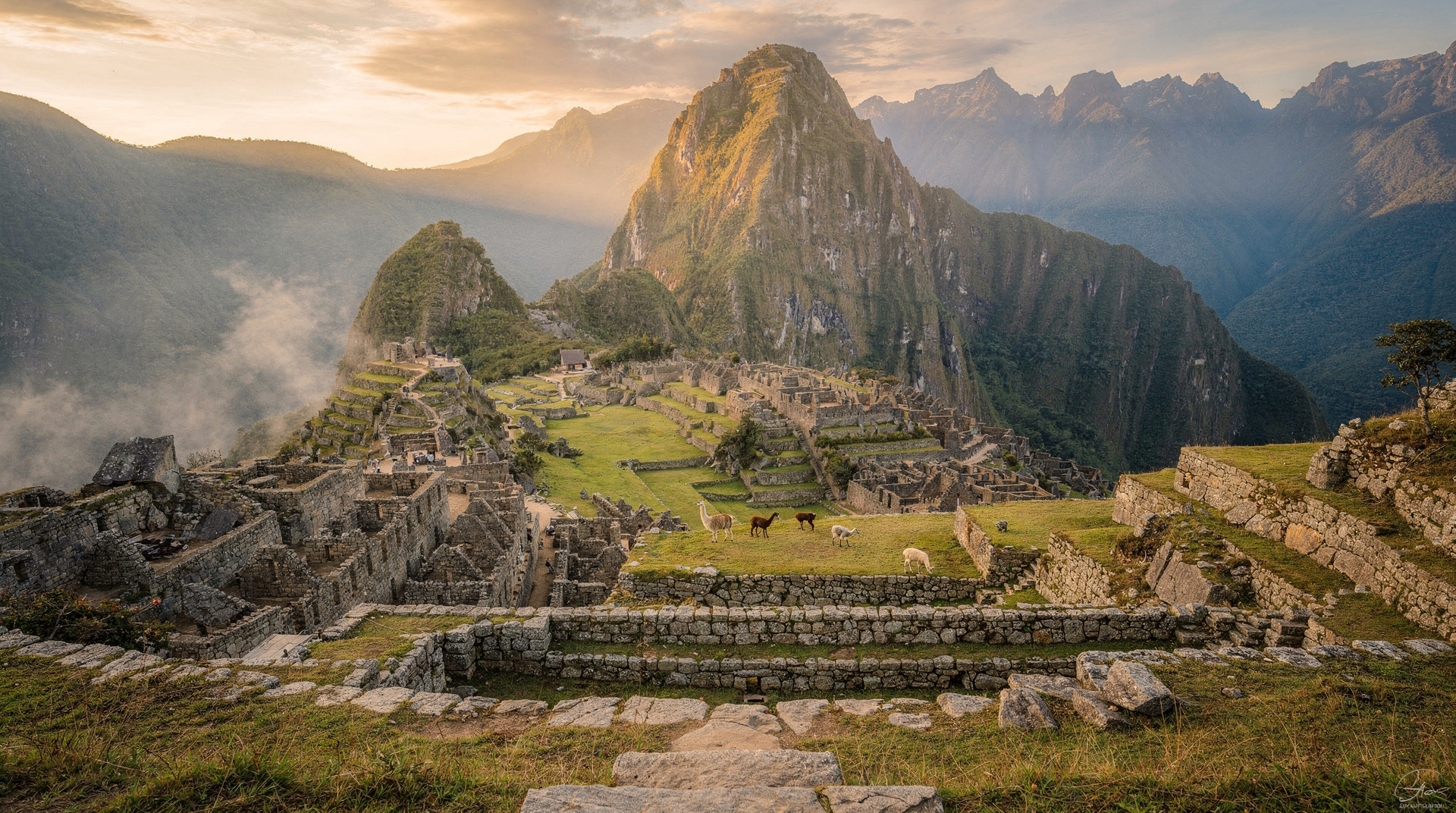
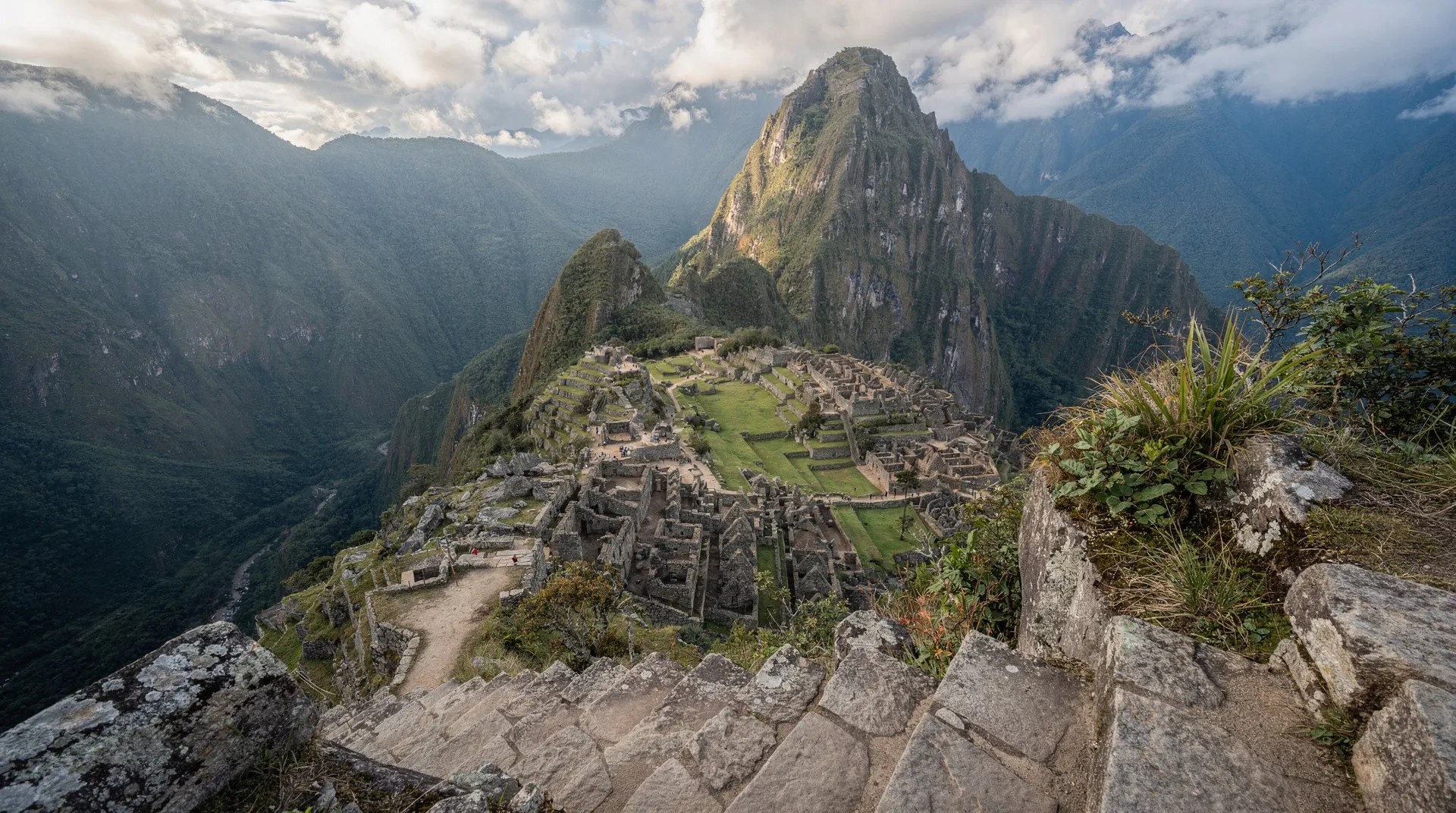
Every photograph of Machu Picchu has it: the steep, almost impossibly dramatic peak rising behind the citadel, its summit often wreathed in cloud, the terraces of the Inca ruins spread across the saddle below it. That peak is Huayna Picchu — “Young Mountain” in Quechua — and it is climbable, from the citadel itself, via a trail that existed in Inca times and has been in continuous use since.
At 2,720 m, Huayna Picchu sits only about 290 m above the Machu Picchu citadel at 2,430 m. The vertical gain sounds modest until you factor in the terrain: this is not a gentle ridge walk but a near-vertical ascent on narrow stone steps, with fixed ropes to assist on the steepest sections and drops of hundreds of metres on either side of the path. The summit is small enough to hold perhaps twenty people comfortably. On a clear day, the view from the top looking down at the citadel spread below, the Urubamba River snaking through its gorge thousands of metres beneath, and the layers of Andean ridges receding towards the horizon is extraordinary. It is arguably the finest single viewpoint in all of Peru.
The catch is the ticket. Huayna Picchu access is strictly limited and timed, and tickets can sell out months in advance. Check the current daily allocation and time slots on tuboleto.cultura.pe. Getting to the top requires planning that starts well before your travel dates.
| Where | Inside the Machu Picchu citadel, at 2,720 m |
| Time needed | 2–3 hours including the climb and summit time |
| Cost | Combined ticket, priced above standard Machu Picchu entry |
| Booking window | Exactly 60 days ahead — sells out fast in peak season |
| Best time | The earliest available slot, for clearer views before afternoon cloud |
The ticket system: what you need to know
Since the Peruvian government overhauled the Machu Picchu entry system, all tickets must be booked online at tuboleto.cultura.pe and must match the name and passport number of the person entering. Tickets cannot be transferred, and there is no secondary market for legitimate tickets.
Since June 2024 Machu Picchu has three circuits grouping ten routes. Huayna Picchu is route 3-A, part of Circuit 3 (Realeza), so it needs a Circuit 3 ticket that includes the Huayna Picchu mountain route. It is not part of the standard Circuit 1 or Circuit 2 tickets. Entry time slots and the daily allocation for the mountain are set on the official platform, so check them there when you book.
An earlier slot is the more coveted option because it allows you to ascend in cooler morning temperatures and reach the summit before the midday clouds and potential afternoon rain arrive. Later in the day, cloud and haze can significantly reduce visibility from the top.
Booking window: Tickets go on sale approximately 60 days in advance and can sell out within days to weeks for peak season months (June–August), especially as many visitors now plan specifically around a Huayna Picchu ascent. For May, September and shoulder months, availability is slightly better but still limited.
The practical recommendation is to book as close to 60 days out as possible — set a calendar reminder and book the morning the tickets go on sale. A Machu Picchu with Huayna Picchu combined ticket secured through a licensed operator can sometimes simplify the booking process, particularly for non-Spanish speakers navigating the official government platform.
The Machu Picchu tickets explained guide covers the full range of ticket types, pricing, the booking platform in detail, and what to do if your passport changes between booking and visiting.
The trail: what to expect on the climb
The Huayna Picchu trail begins inside the citadel, at a gate in the northern section above the main ruins. Entry is checked against your ticket and passport at your appointed slot time, and there is no late-arrival tolerance at the mountain checkpoints. The trail itself is not technically difficult — it is essentially a staircase — but it is physically demanding and requires confidence on exposed terrain.
Distance and time: The ascent covers approximately 1.5 km of trail with 290 m of vertical gain. Allow 45–75 minutes going up at a moderate pace. The descent takes 45–60 minutes. Total time on the mountain, including time at the summit, is typically 2–3 hours.
The terrain: The lower section of the trail runs through cloud forest vegetation — mossy and sometimes slippery when wet — on broad stone steps. As you climb higher, the path narrows, the exposure increases, and fixed ropes bolted to the rock assist the steepest pitches. One section known as “the cave” passes through a narrow rock tunnel. The final approach to the summit involves a short sequence of exposed steps where handholds matter. None of this is technically challenging for anyone with basic hiking fitness, but it is absolutely not suitable for those with a serious fear of heights or unsteady knees on descents.
Physical requirements: The trail is closed to visitors with mobility aids and to children under 12. There is no upper age limit, but realistic self-assessment is important. The key factors are reasonable cardiovascular fitness, steady legs, and comfort with exposure. Trekking poles are not recommended because they are difficult to manage in the narrow fixed-rope sections.
Weather: The trail is closed in heavy rain because the stone steps become dangerously slippery. The dry season from May to September substantially reduces this risk but does not eliminate the afternoon convective showers that are common even in the dry months. An early-morning slot puts you on the summit well before the typical afternoon cloud builds. If conditions deteriorate, staff at the trail gate will close access.
Photography on the climb and at the summit
The summit platform is small and often crowded within the same entry slot, so patience matters more than gear. A wide-angle lens or a phone’s standard camera captures the citadel-and-river composition better than a telephoto — the scene is expansive rather than distant, and cropping tighter loses the context that makes the shot recognisable. Morning light in the 6–8 am window is directionally favourable for photographing the citadel below, since the sun rises behind Huayna Picchu and lights the ruins from a low angle without the harsh overhead glare that develops by mid-morning.
Space at the summit is limited, so be considerate about how long you occupy the best vantage points — a few minutes for photos and then step back to let others through is the accepted etiquette. On the trail itself, resist the temptation to stop for photos on the narrowest fixed-rope sections; there is rarely room to do so safely while others are passing, and the better photo opportunities come at the small clearings and the cave section partway up.
What you see from the top
The summit of Huayna Picchu is a narrow rocky platform with Inca-built structures at the edges — the highest agricultural terraces and what appears to have been a small ceremonial platform or observation post. The view is the reason the climb exists for most visitors.
Looking south, Machu Picchu spreads below in a way no photograph taken from inside the citadel can replicate: you see the entire plan at once, the logic of the site’s arrangement suddenly apparent. The residential sectors, the agricultural terraces stepped down to the valley, the ceremonial plazas and temples, the Intihuatana hill — all visible simultaneously and from above, as if you were standing over an architect’s model. The Urubamba River below forms a near-complete horseshoe bend around the citadel mountain, the gorge walls dropping steeply to the river several hundred metres beneath the citadel platform.
Looking north, the cloud forest ridges and snow peaks of the Vilcabamba range recede into the distance. On very clear mornings you can see the distant white forms of the higher Andean summits to the north and northeast. The depth of the view, and the silence broken only by wind and the occasional bird call, is a worthwhile counterpoint to the busy paths inside the citadel itself.
Huayna Picchu versus Machu Picchu Mountain at a glance
| Huayna Picchu | Machu Picchu Mountain | |
|---|---|---|
| Summit altitude | 2,720 m | 3,082 m |
| Vertical gain | ~290 m | ~650 m |
| Terrain | Steep, exposed, fixed ropes | Longer, more consistent gradient |
| Circuit route | 3-A (Circuit 3) | 1-A (Circuit 1) |
| View | Iconic overhead shot of citadel | Broader panorama, more distant |
| Best for | Confident with exposure, wants the classic photo | Prefers a longer walk, less exposure |
Huayna Picchu versus Machu Picchu Mountain
The most common question from visitors planning to add a summit to their Machu Picchu day is how Huayna Picchu compares to Machu Picchu Mountain (Montaña Machu Picchu). The answer depends entirely on what you are looking for.
Huayna Picchu is steeper, more dramatic, shorter in overall distance, and gives the famous overhead view of the citadel from directly above and behind. The exposure is real and the terrain is more demanding. Its limited allocation makes it harder to book.
Machu Picchu Mountain is a longer, less technical hike to a higher summit at 3,082 m — roughly 650 m above the citadel. The views are different: you look down at the citadel at more of a distance, and the panorama takes in a wider stretch of surrounding valley and ridgeline. It is route 1-A of Circuit 1, so check availability on tuboleto.cultura.pe. The trail gradient is more consistent and the exposure less severe.
Neither peak is objectively better. If you want the iconic overhead shot of the citadel and are comfortable with steep exposed ground, Huayna Picchu is the choice. If you prefer a longer walk with more altitude gain but less technical exposure, and a broader rather than directly overhead view, Machu Picchu Mountain is the better fit. The Huayna Picchu vs Machu Picchu Mountain guide sets out the comparison in full, including the current ticket prices for both. A Machu Picchu with Machu Picchu Mountain ticket is available for those who prefer the longer, less exposed alternative.
Fitting Huayna Picchu into your Machu Picchu day
The sequencing of your Machu Picchu visit matters when you have a Huayna Picchu ticket. Since June 2024, Machu Picchu operates on three timed circuits — Circuit 1 (Panorámico), Circuit 2 (Clásico) and Circuit 3 (Realeza) — and Huayna Picchu is route 3-A of Circuit 3. Your entry slot determines how you structure your day around the citadel. Main-gate entry is hourly, and the Huayna Picchu checkpoint has no late-arrival tolerance.
With an early slot, the recommended approach is to be at the gate on time, climb while the site is quietest and the air is cool, then use the late morning to continue exploring the citadel on the route included in your ticket. A Circuit 3 ticket is the ticket family that includes the Huayna Picchu route.
With a later slot, the summit will be reached around noon or early afternoon, when cloud coverage is typically higher. Be off the mountain before 2–3 pm to avoid the risk of rain closing the trail while you are still on it.
The Machu Picchu circuits explained guide covers all three circuits in detail, including how to plan your day around a mountain add-on.
Fitness and preparation specifics
The physical demands of Huayna Picchu are frequently understated in casual trip reports, so it is worth being precise. The trail gains 290 m over roughly 1.5 km, which translates to an average gradient steeper than most stair climbs most travellers do in daily life — closer to a sustained flight of stairs than a hiking trail for much of the upper section. Cardiovascular fitness matters less here than steady footing and comfort with exposure; someone reasonably fit but nervous of heights will likely find the climb more taxing psychologically than physically.
Because the trail is at 2,430–2,720 m — considerably lower than Rainbow Mountain or the passes on the Inca Trail — altitude itself is a minor factor compared with most other trekking destinations in this guide. The main preparation that matters is footwear with real grip, comfort on narrow fixed-rope sections, and a realistic assessment of vertigo before you commit a non-refundable ticket to the attempt.
Getting to Machu Picchu for the climb
Huayna Picchu is inside the Machu Picchu citadel — you need to be at the citadel entrance gates before or at your entry slot time. The citadel is accessible via bus from Aguas Calientes (approximately 25 minutes, S/12 each way), which is the town at the base of the mountain served by trains from Ollantaytambo in the Sacred Valley.
For an early-morning Huayna Picchu entry, you need to be on the first buses from Aguas Calientes well before your slot. This means being in Aguas Calientes the night before — there is no realistic way to catch a first morning train from Ollantaytambo and make a 6 am entry. One night in Aguas Calientes is a near-mandatory part of the logistics for anyone taking an early slot.
Train tickets from Ollantaytambo to Aguas Calientes (PeruRail or Inca Rail) cost approximately $50–130 depending on service class and season. Book well in advance — the trains on the afternoon before a peak-season Machu Picchu day fill quickly. The 7-day Sacred Valley and Machu Picchu itinerary shows how the train, Aguas Calientes overnight, and Huayna Picchu day fit together within a full Cusco region trip.
Honest tips
Book at exactly 60 days out, not 59, not 61. The government booking platform at tuboleto.cultura.pe releases Huayna Picchu tickets exactly 60 days in advance. In peak season, slots can sell out quickly. Set a phone alarm for the time the platform opens (typically midnight Peru time, UTC-5) if you are in a very different time zone.
Bring nothing you do not need on the trail. There is no cloakroom or bag storage on the mountain. Large backpacks are awkward on the fixed-rope sections. A small daypack with water (at least 1 litre), a snack, a rain jacket and your passport is the appropriate load.
Your passport is not optional. The trail gate staff check your passport against the name on your ticket. Bring the actual passport used when booking, not a photocopy or a different document. This rule is enforced.
Do not rush the descent. More accidents happen on the way down than on the way up because people hurry. The fixed-rope sections require the same care descending as ascending. Face into the rock on the steepest pitches going down.
The cloud forest section collects moisture. Even in the dry season, the lower trail can be damp and slippery in the early morning hours. Footwear with grip matters — trainers with worn soles are not appropriate. Lightweight hiking shoes or trail runners with reasonable tread are sufficient.
If you cannot get a Huayna Picchu ticket, Machu Picchu Mountain is a genuine alternative. It is not a consolation prize. Several visitors who have done both prefer the broader view from Machu Picchu Mountain. The Huayna Picchu vs Machu Picchu Mountain guide helps you decide which suits your priorities before you commit.
Huayna Picchu requires effort — logistically months before you arrive, and physically on the day. But standing on the summit with the entire citadel laid out below you and the Andean cloud forest falling away on every side is the kind of experience that justifies considerable planning. Book early, travel light, and give yourself enough time to sit at the top without hurrying.
Top experiences
Bookable activities with verified prices and instant confirmation on GetYourGuide.