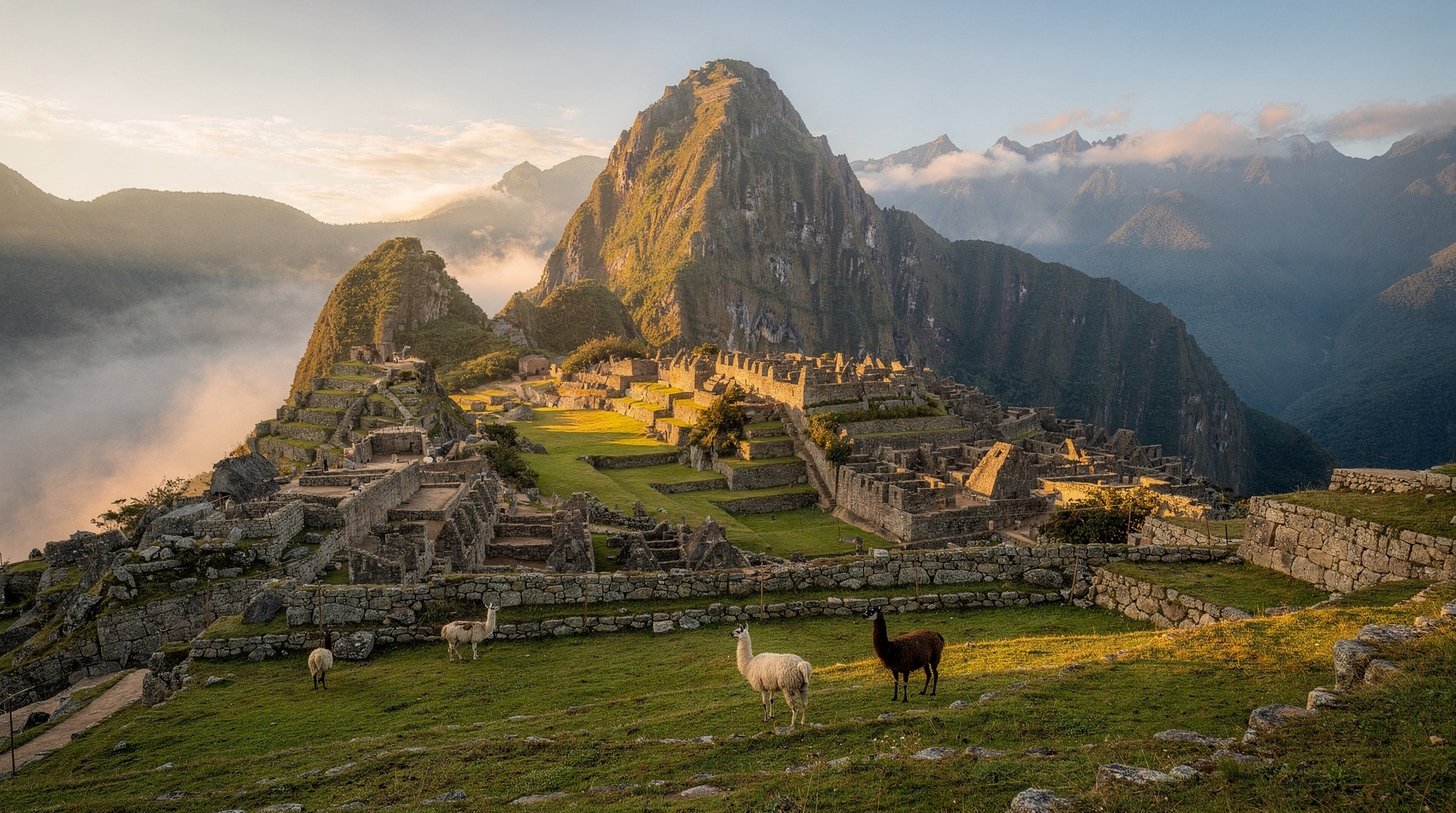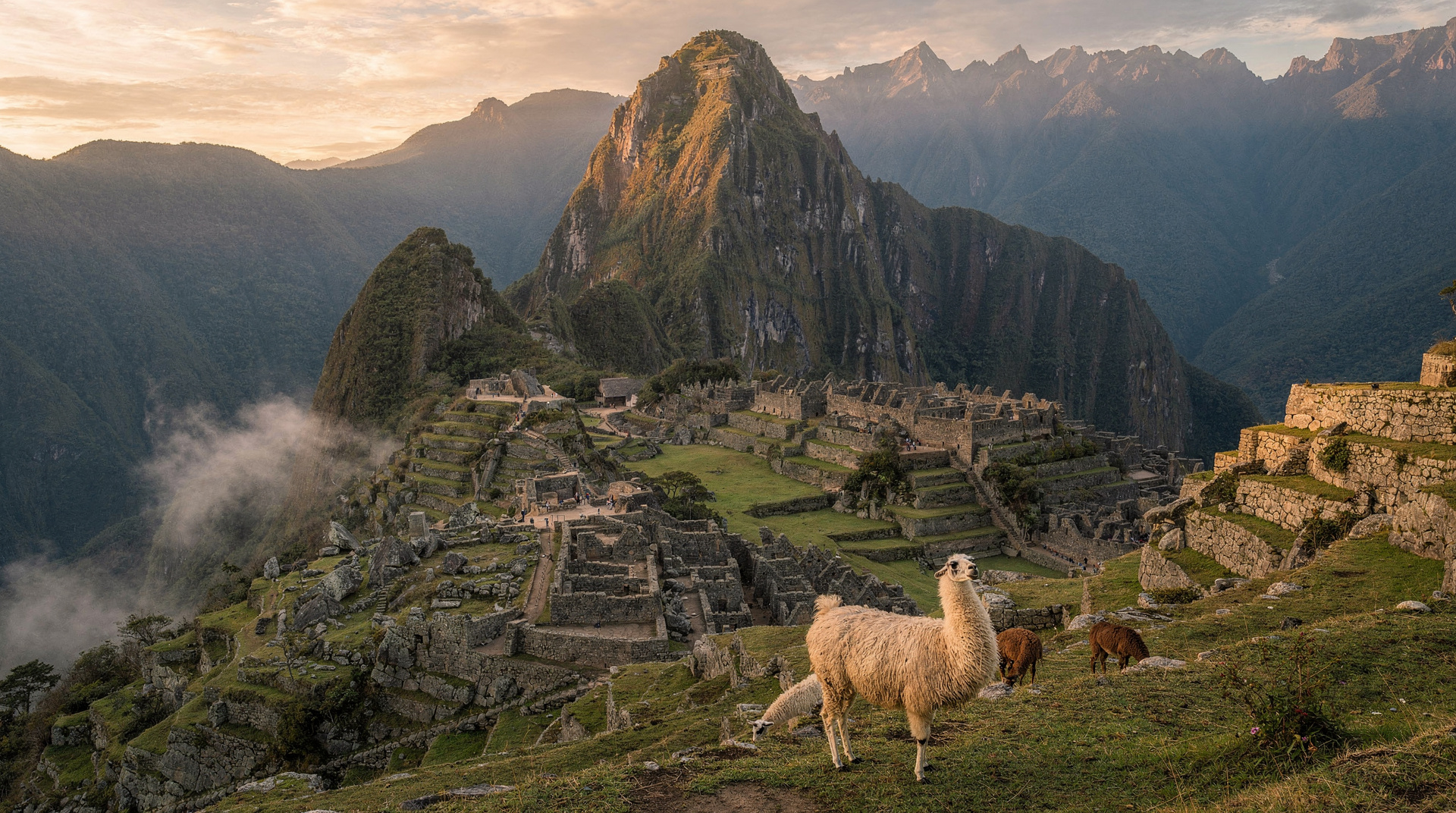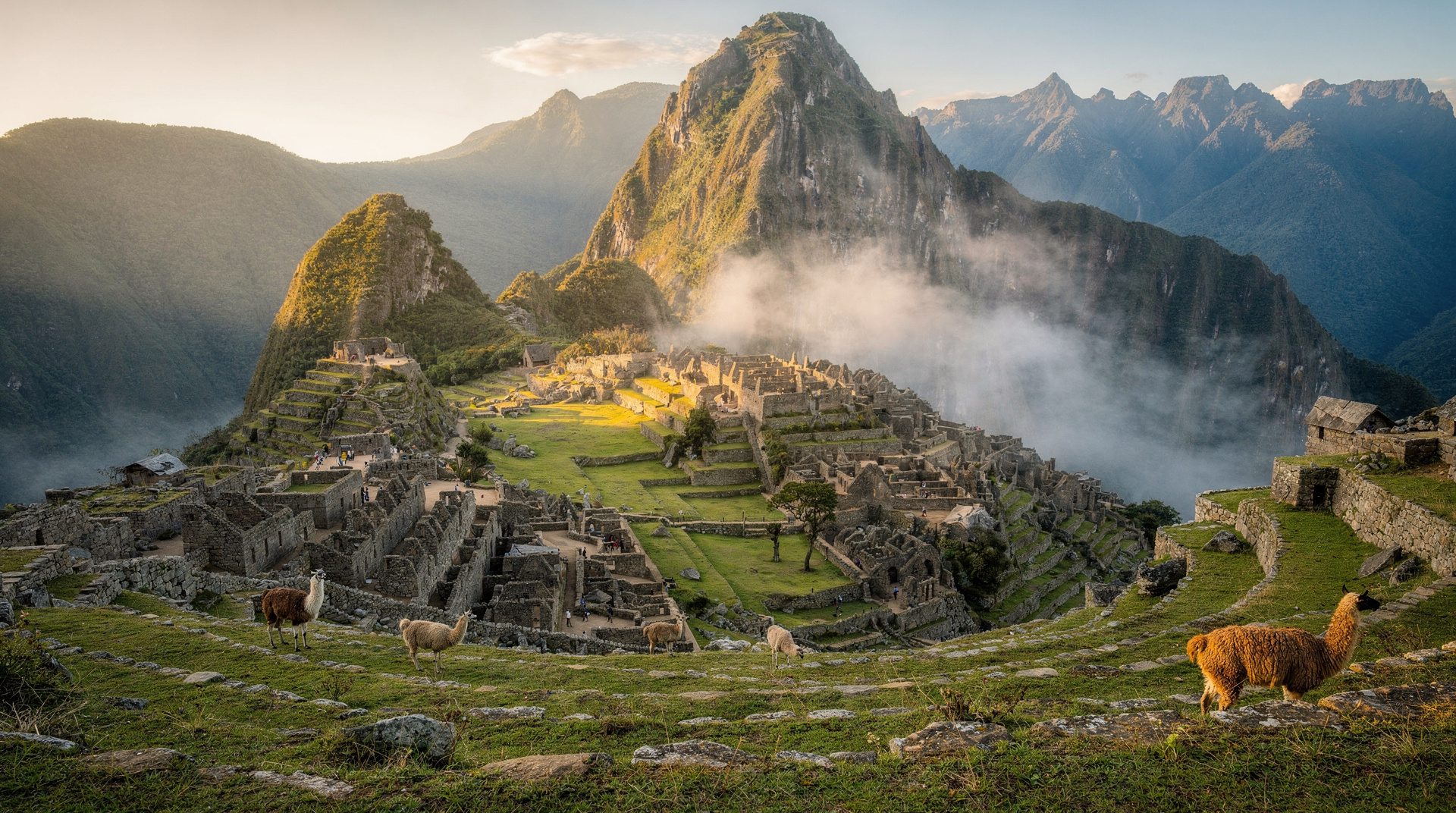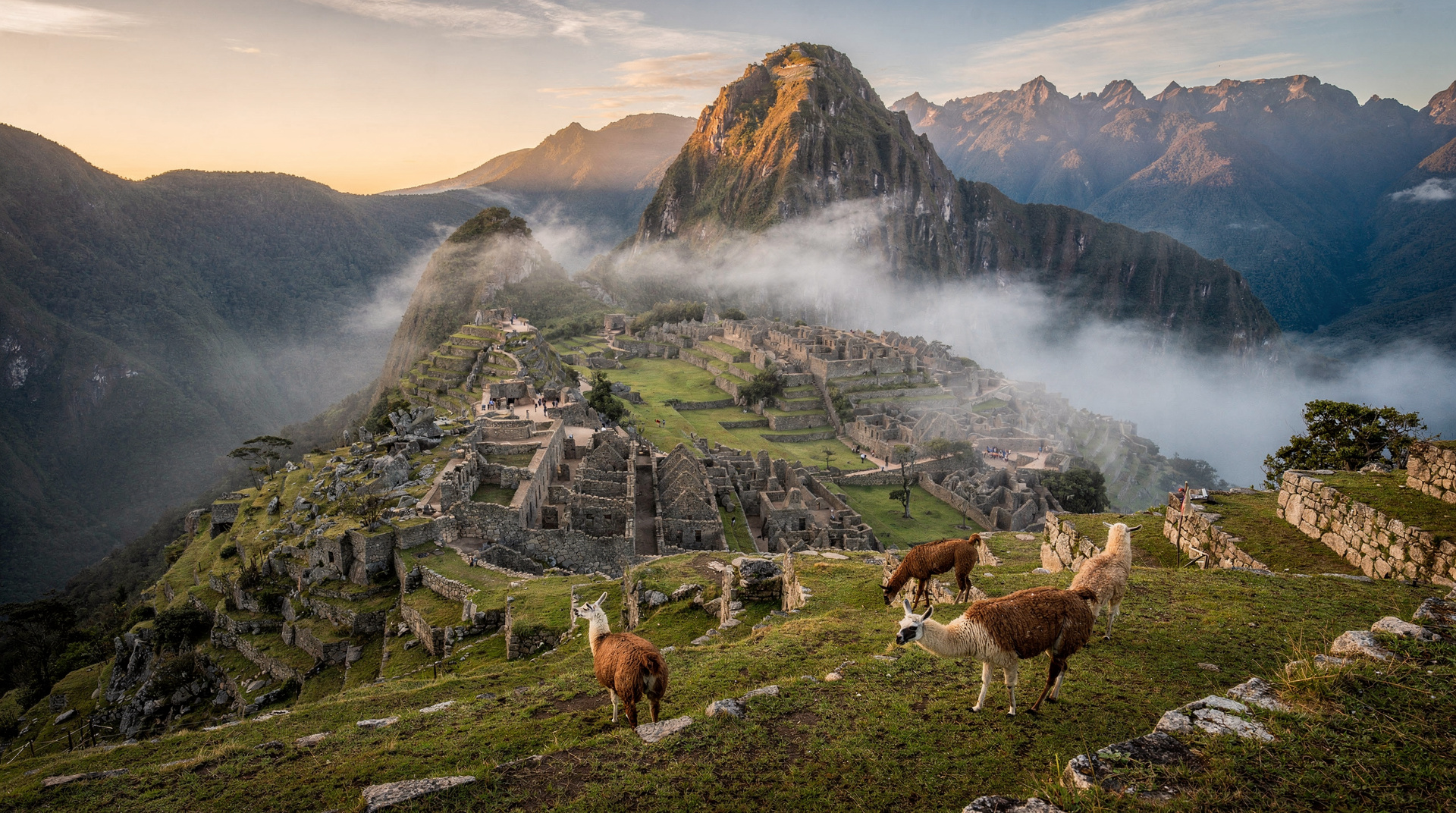
Aguas Calientes guide — the town below Machu Picchu
Excursion to Machu Picchu + Huayna Picchu Mountain
What is Aguas Calientes like and should I stay there?
Aguas Calientes is a small tourist town in a narrow river gorge below Machu Picchu, accessible only by train or on foot — no public road reaches it. It exists primarily to serve visitors to the citadel. Staying here rather than day-tripping from Cusco gives you the single most valuable Machu Picchu advantage: the ability to board the first buses to the gate at 5:30 am without a 3:30 am start from Cusco. It is not charming in the conventional sense, but it is functional, affordable at every budget, and genuinely useful.
The town you will either love or find perfectly functional
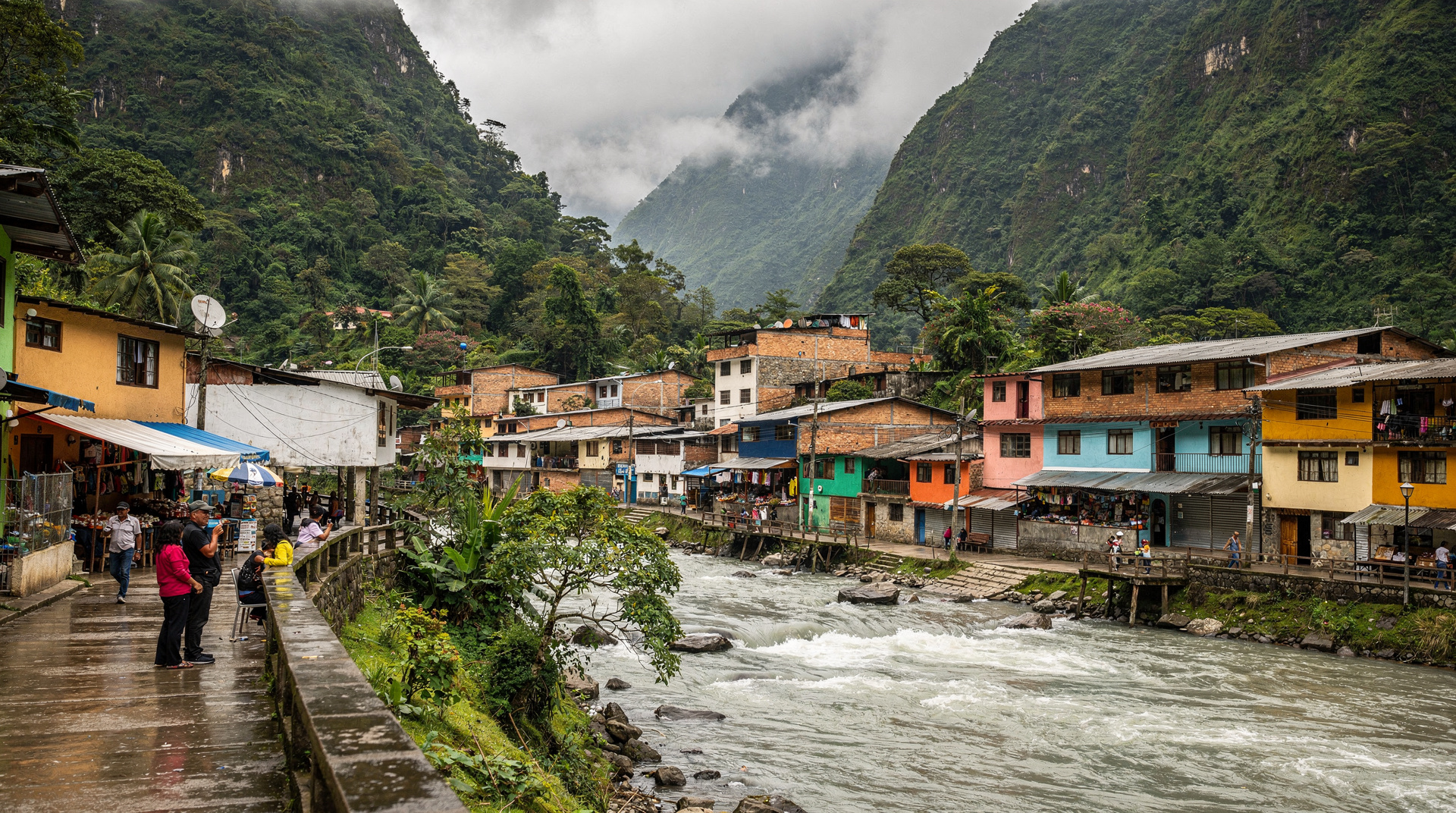
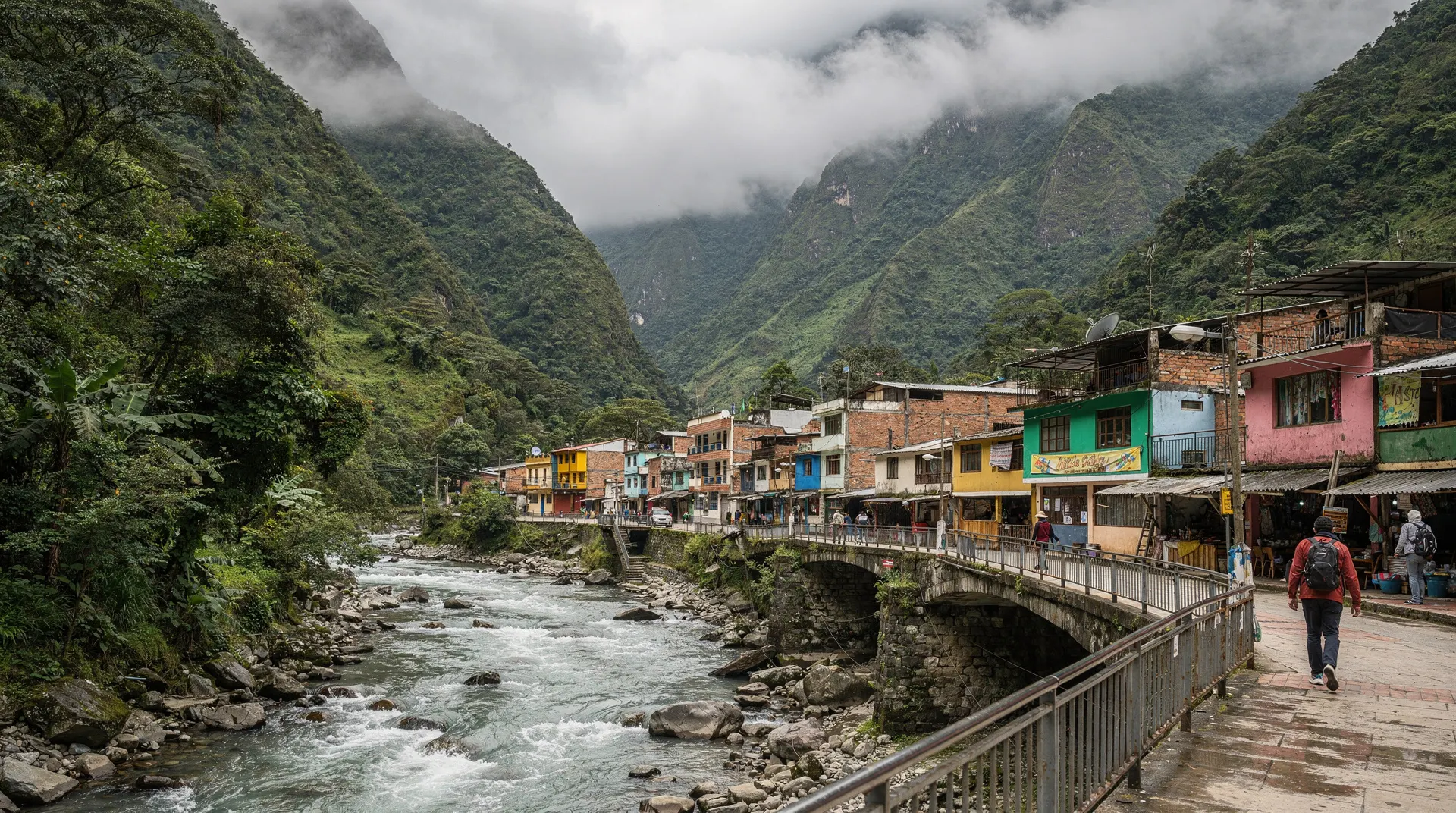
Aguas Calientes — officially named Machu Picchu Pueblo — sits in a deep river gorge at roughly 2,040 m, squeezed between the Urubamba River and the steep forested slopes rising toward the citadel above. No public road reaches it. The only ways in are a train journey through the cloud forest or a 10 km walk from Hidroeléctrica station along the riverside path. This geographic isolation has shaped everything about the town.
The honest assessment: Aguas Calientes is a purpose-built tourist town. It exists entirely to service visitors to Machu Picchu. Its architecture is functional, its main restaurant strip serves competing menus of near-identical dishes, and its craft market sells items you have seen at every market in the region. Nobody comes to Aguas Calientes for Aguas Calientes.
But it serves its purpose well, and it serves it in a way that significantly improves the quality of your Machu Picchu visit. Staying here instead of day-tripping from Cusco gives you the single most valuable practical advantage in visiting the citadel: you board the first buses at 5:30 am without having woken at 3:30 am in Cusco, travelled 1.5 hours to Ollantaytambo, and ridden a train. That advantage — arriving at the citadel gate rested, in the first 30 minutes of the day when the site is nearly empty — is worth more than any amount of travel-tip optimisation.
| Where | River gorge below Machu Picchu, no road access |
| Getting there | Train from Ollantaytambo (~1.5–2hrs) or van + 10km walk from Hidroeléctrica |
| Cost to stay | Around S/80 (budget) to $400+ (upscale) per night |
| Time needed | One night is usually enough |
| Best for | First buses to the citadel gate at 5:30am |
Getting to Aguas Calientes
By train (standard route)
The standard approach: train from Ollantaytambo to Aguas Calientes (officially “Machu Picchu station”). Journey time: approximately 1.5 hours on the Vistadome service, 2 hours on Expedition class. Both PeruRail and Inca Rail operate multiple daily services. Return tickets cost roughly $60–130 depending on service class and how far ahead you book.
The train journey is genuinely scenic. The route descends from the dry Sacred Valley through the Urubamba canyon, the vegetation thickening progressively into cloud forest in the final 30 km. The approach into Aguas Calientes — the track running through the centre of town — is unusual and memorable. Full detail in the train guide.
Book your train and citadel entry together through an authorised operator to coordinate both components in a single transaction and avoid timing conflicts between your arrival in Aguas Calientes and your timed citadel slot.
By the Hidroeléctrica walking route
The budget alternative: a shared van from Cusco to Hidroeléctrica station (4–5 hours, S/60–90 per person), then a 10 km walk along the riverside path (2.5–3 hours). Total transport cost is approximately half the train price. Full detail in the Hidroeléctrica guide.
The town layout
Aguas Calientes is small enough to cross in 20 minutes on foot. The train station (Machu Picchu station) sits at the southern end of town and discharges passengers directly into the commercial zone. The main street — Avenida Imperio de los Incas — runs north parallel to the railway tracks, lined with restaurants, tour operators and souvenir stalls on both sides.
The Plaza de Armas (also called Plaza Manco Capac) is a few hundred metres north of the station, slightly quieter and surrounded by the better restaurants. The Aguas Calientes river runs through the centre of town, noisy and fast, crossed by several footbridges. A pleasant riverside walkway has been developed on both banks.
The bus terminal — where buses depart for the citadel gate — is at the northern end of the commercial zone, approximately 10 minutes’ walk from the station. Budget accommodation concentrates around the station end of town; better mid-range and upscale options are scattered around the plaza and the quieter streets rising above the main drag.
Accommodation: a complete overview
Budget (under S/150 per person/night)
Aguas Calientes has a solid supply of budget guesthouses and small hostels, concentrated around the station and the lower end of the commercial street. At the lower price points expect shared bathrooms; at S/120–150 per person, private bathrooms are standard. The beds are functional and the welcome is generally warm. At this tier, the main selection criterion is proximity to the bus terminal rather than views — a five-minute walk versus a 15-minute walk at 5 am is a real difference when you are tired and cold.
Notable for budget travellers: Calle Lloque Yupanqui and the streets running perpendicular to the main commercial strip have a concentration of small guesthouses with competitive prices and quieter settings than the railway-side strip.
Mid-range (S/200–450 per room/night)
This is where value improves significantly. Rooms with private en-suite bathrooms, reliable hot water, comfortable beds and — at the better places — a breakfast service. Several hotels in this tier are positioned above the main commercial strip with terrace views over the cloud forest or the river, which meaningfully improves the experience after a day at the site.
At this tier, request rooms away from the railway side of town — even mid-range hotels on the main commercial drag can be noisy from early morning restaurant touts and train arrivals.
Upscale (S/600–1,500 per room/night)
Inkaterra Machu Picchu Pueblo Hotel is the most distinctive option in town at this tier. A collection of casitas spread across cloud-forest gardens, with conserved orchid varieties, bird feeders with resident naturalists, and a genuine sense of being embedded in the cloud forest rather than just sleeping in a tourist town. Breakfast is excellent; the gardens are available to explore in early morning before departure to the site. The birding here is serious — over 350 species have been recorded in the property’s gardens and immediate forest.
Casa Andina Premium and a few comparable boutique hotels offer reliable upscale quality at somewhat lower prices than Inkaterra, with comfortable rooms and attentive service without the extraordinary garden setting.
At the citadel gate: the Belmond Sanctuary Lodge
The only hotel at the Machu Picchu entrance itself. You wake up and walk to the citadel gate in two minutes. The price — approximately S/1,600–3,500+ per night — reflects that single exceptional privilege. For a milestone occasion or a genuine once-in-a-lifetime splurge, this is defensible. For most visitors, the quality of the experience at the site itself is the same regardless of where you sleep the night before.
Food and drink in Aguas Calientes
The restaurant density in Aguas Calientes is remarkable for a town of 10,000 people. Competition on the main strip is fierce and menus have converged toward near-identical offerings: trout (fresh from the Urubamba valley fisheries — the genuine local speciality), alpaca steak, lomo saltado (the Peruvian stir-fry of beef or chicken with vegetables, rice and chips), pasta, and pizza. Quality is generally fine rather than memorable at the mid-range level.
Best value at any meal: The menú del día (set meal, usually lunch only) for S/20–25 includes soup, a main dish and often a drink. Order this rather than à la carte unless you have a specific dish in mind.
Best ingredient: Trout from the Urubamba River system is genuinely good and much cheaper here than in Cusco. Trout ceviche, if available, is the dish to order. A few restaurants on the plaza and the quieter side streets do this well.
What not to eat: Inside the citadel. The Sanctuary Lodge café charges S/60+ for basic sandwiches. Pack everything you need in Aguas Calientes before boarding the bus.
For dinner the evening before your visit: Eat properly, drink enough water, and avoid significant alcohol. Altitude fatigue after a day in Cusco, combined with a 5 am start and a physical visit to the site, makes this practical rather than puritanical advice.
The thermal baths
The “aguas calientes” (hot waters) that name the town are natural thermal springs at the top of the commercial street — a 10-minute walk uphill from the plaza. Multiple pools at varying temperatures (approximately 30–38°C) are clean and well maintained. Entry costs approximately S/25 (~$7). Hours: roughly 5 am–10 pm.
This is the one genuinely good thing to do in Aguas Calientes beyond sleeping and eating. An hour in the pools after a full day at the citadel — sore feet, sore legs, pleasant tiredness — is an excellent use of an evening. The pools are rarely crowded in the early morning or mid-evening, which are the best times to go.
Planning your Machu Picchu morning
This is the practical heart of staying in Aguas Calientes. Everything the evening before is preparation for the 5 am departure.
Night before:
- Confirm your citadel entry ticket QR code is saved offline on your phone (signal can be weak at the gate)
- Set two alarms — 4:30 am and 4:45 am
- Lay out your kit: passport (exact one used for ticket booking), ticket QR code, water (fill your bottle the night before), snacks, layers, rain gear
- Eat a proper dinner; avoid heavy or rich food
Morning:
- 4:45–5:00 am: walk to the bus terminal (allow 15 minutes from most accommodation; more if you are in the upper streets or near the thermal baths)
- 5:00 am: join the queue forming at the terminal. In July–August this queue is already 20–30 minutes long by 5 am. In shoulder season, 5:15 am is usually fine.
- 5:30 am: first buses depart. In peak season you may not board until 5:50–6:10 am depending on queue length.
- 5:50–6:15 am: arrive at the citadel gate. Present QR code and passport. Enter.
The difference between this experience and a day trip from Cusco — where you have been awake since 3:30 am and in transit for 3+ hours — is immediately apparent at the gate.
After the site: returning to Cusco
Most visitors return to Cusco the same afternoon. The critical booking point: reserve your return train before you arrive in Aguas Calientes. Afternoon trains back to Ollantaytambo are heavily subscribed in dry season. Common departure windows are 1:00–2:30 pm (giving 4–6 hours at the citadel if you entered at 6:30 am) and 3:00–4:30 pm (giving 6–8 hours at the site plus time for lunch in Aguas Calientes).
Missing a booked return train in peak season typically means a minimum 3–4 hour wait for the next available service, or paying for an additional night in Aguas Calientes. Do not leave the return booking until arrival.
From Ollantaytambo, take a colectivo (S/20–30) or private transfer back to Cusco — journey time 1.5–2 hours.
The Machu Picchu complete guide covers everything that happens at the citadel itself, and the how to get to Machu Picchu guide covers all transport options in detail.
How many nights to stay in Aguas Calientes
One night: The standard and sufficient option for most visitors. Arrive the afternoon before your citadel visit, eat and sleep, visit the citadel on day two, take the afternoon train back. This covers one circuit comfortably; check on tuboleto.cultura.pe which routes and mountain options are available for your date. If you would rather not assemble the pieces yourself, a two-day tour that includes the Sacred Valley, the train and a night in town packages the overnight stay for you.
Two nights: Worth considering if you want a relaxed full day at the site plus a mountain route such as Huayna Picchu (route 3-A of Circuit 3), or if you want to visit on two separate days with different circuits. Also worth it during peak season when having two morning entry opportunities gives genuine flexibility if one day’s weather is poor. If the mountain climb is the reason for the second night, book a Huayna Picchu entry ticket early, since availability for the mountain routes is limited; check tuboleto.cultura.pe.
Three or more nights: Rarely necessary and most visitors who stay longer do so because they missed a train or extended voluntarily. There is genuinely not enough in Aguas Calientes itself to justify three nights unless you are using it as a base for walking toward the Sun Gate or exploring the thermal baths repeatedly.
Aguas Calientes and the honest planner’s view
There is a version of the Aguas Calientes criticism that focuses on its lack of authenticity — plastic restaurant chairs, identical menus, souvenir stalls selling the same items as every other Peruvian tourist market. This criticism is fair but misses the point. Aguas Calientes exists because visitors to Machu Picchu need somewhere to sleep that is not Cusco. It fills that function competently. Expecting it to be charming is the wrong frame.
The more useful question is whether staying here improves your Machu Picchu experience. It does, measurably. The early morning entry advantage alone justifies the extra accommodation cost for most visitors who have come to Peru specifically to see the citadel. The thermal baths are genuinely good. The cloud forest surrounding the town is remarkable and accessible even from the town’s outskirts. And Aguas Calientes has something Cusco lacks entirely: the ability to walk to the foot of Machu Picchu Mountain before breakfast.
Avoiding the common Aguas Calientes mistakes
Not booking the return train: The single most common logistical mistake. Visitors arrive in Aguas Calientes without a confirmed return train and discover that the afternoon services are sold out for two days.
Eating in the first restaurant you see: The restaurants immediately adjacent to the bus terminal and train station are targeting the post-site weary tourist and charge accordingly. Walk five minutes to the plaza before choosing where to eat.
Underestimating the bus queue timing: In July and August, the queue at the bus terminal at 5 am is real and substantial. If your citadel entry slot is 6 am, you need to be in the queue by 4:50 am at the latest. Arriving at 5:30 am means you will not board until 6:15–6:30 am at best.
Leaving valuables in your room: Standard advice for any tourist accommodation, but relevant in Aguas Calientes where the rapid turnover of guests and the focus on the citadel means security at budget properties varies.
Getting beyond the tourist strip
The commercial centre of Aguas Calientes is genuinely dense with restaurants and souvenir shops competing loudly for attention. It is easy to forget that the town is surrounded by extraordinary cloud forest that begins literally at the edge of the paved streets.
The most accessible escape is the path that runs alongside the Aguas Calientes river upstream from the town centre. Within 10 minutes of walking you are in progressively wilder cloud forest, with orchids on the rock faces and consistent birdlife. No guide required; the path is clear. This is a particularly good early evening option after a day at the site — cooler, quieter, and completely different from the town’s commercial atmosphere.
The Mariposa butterfly garden near the town centre (approximately S/15 entry) is modest but pleasant, with cloud-forest butterfly species and a reasonable orchid collection. About 30–40 minutes of your time.
For those interested in birding: the hotel gardens at Inkaterra are among the most productive single-point birding locations in the southern Peru cloud forest. Even non-guests can request access to the trail in some periods; ask at the hotel reception.
Weather and what to pack by season
Aguas Calientes sits low enough (2,040 m) and far enough into the cloud forest that its climate differs noticeably from Cusco’s dry-and-cold pattern. Expect frequent light rain even in the dry season, given the cloud forest setting — the town rarely gets the intense sun of the high Andes above it.
May–September (dry season): Mornings are often clear, with afternoon cloud building most days and occasional light showers. Daytime temperatures 18–22°C, nights 10–13°C. This is the best window for photographs from the citadel, though clear mornings are not guaranteed even now.
October–April (wet season): Rain is a near-daily occurrence, sometimes heavy, particularly December through March. Trails can be slick and the Camino Hiram Bingham footpath up to the citadel gets genuinely muddy. Pack a proper rain jacket, not just an umbrella, and quick-dry layers — nothing dries fully overnight in the humidity.
Whatever the season, bring a light rain layer for the bus queue and the walk between your accommodation and the terminal; a sudden shower at 5am is common even in dry season.
Aguas Calientes in the broader Machu Picchu region context
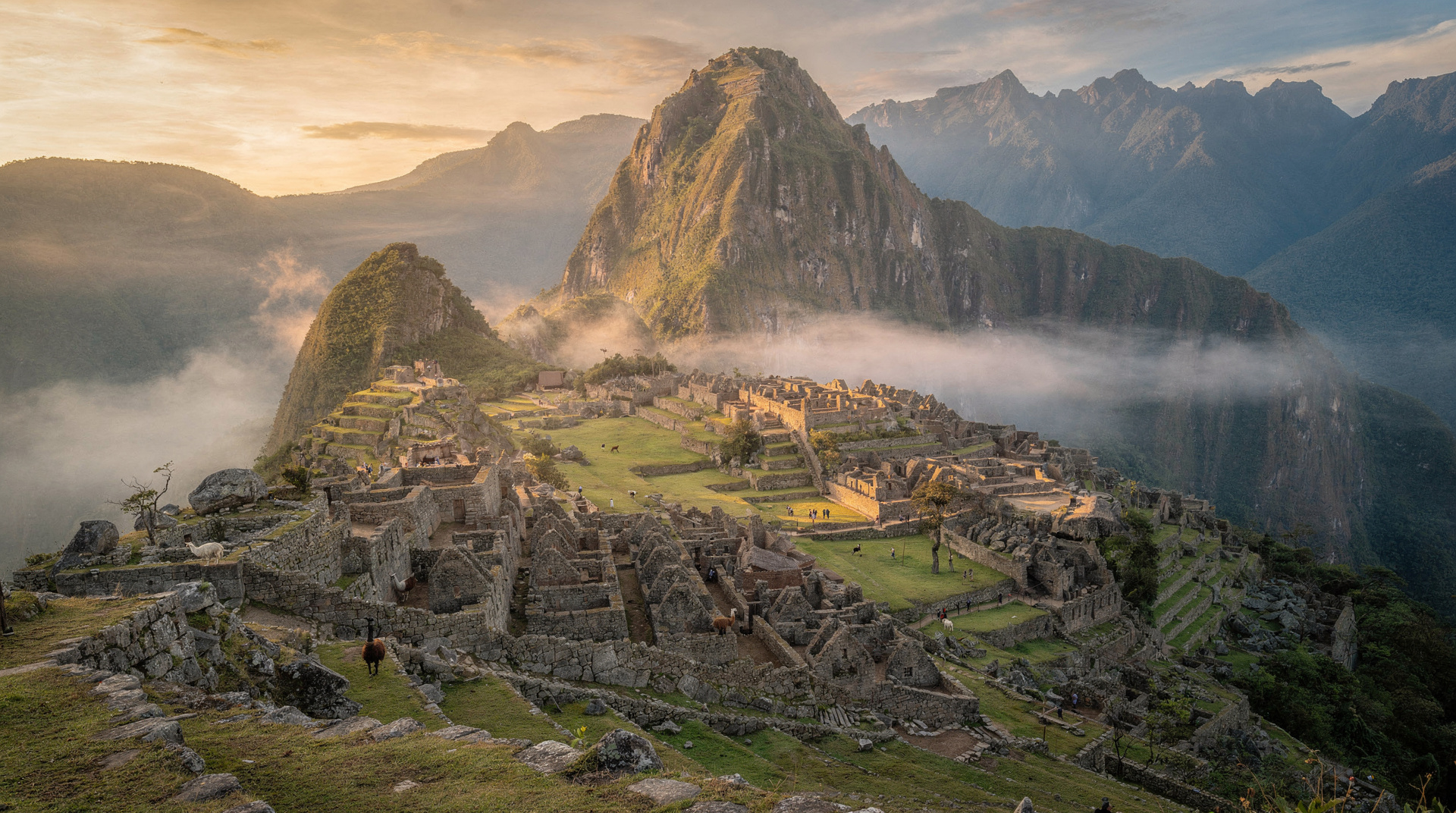
The town is one of the few inhabited settlements in the Machu Picchu Historic Sanctuary, the 37,302-hectare protected area that surrounds the citadel. The sanctuary encompasses cloud forest, high-altitude Andean grassland (puna), the Urubamba river gorge and multiple archaeological sites beyond the main citadel. Walking trails within the sanctuary that do not require special permits include paths toward the Sun Gate (route 1-C of Circuit 1, available in high season only) and the Inca footpath to Aguas Calientes.
The thermal waters themselves come from underground springs warmed by the geothermal activity that is prevalent throughout this part of the Andes. The same volcanic geology that shapes the Andean mountain landscape is responsible for the springs — a rare comfortable consequence of the tectonic forces that built the mountains around you.
The Machu Picchu complete guide covers the citadel visit in full. For the full transport picture — how to reach Aguas Calientes and return — see the how to get to Machu Picchu guide.
Linking Aguas Calientes to the rest of your trip
Aguas Calientes works best as one step in a longer plan rather than a destination on its own. Many visitors spend their first days in the Sacred Valley or in Cusco, then take the train from Ollantaytambo for a single night below the citadel. Sleeping at lower altitude before the physical day at the site is a quiet advantage; the Machu Picchu altitude guide explains why the citadel feels easier than Cusco for most people.
If you are still choosing between a day trip and an overnight stay, the day trip from Cusco guide lays out what the long day involves, and the train comparison helps you pick between the two operators. Anyone weighing a walking approach should read the train versus trek guide before booking.
Tickets deserve the same care as the bed. Entry slots, circuits and mountain add-ons are explained in the circuits guide and the ticket types comparison, and the page on fake Machu Picchu tickets is worth a read before you buy from anyone other than an authorised seller. If you want the mountain climb mentioned above, see Huayna Picchu and the Huayna Picchu versus Machu Picchu Mountain guide to decide which suits you.
For a ready-made schedule that includes a night in town, the 2-day budget itinerary and the 4-day Cusco and Machu Picchu itinerary show how the pieces fit together. Travelling with children changes the pacing, so the Machu Picchu with kids guide is the better companion for families.