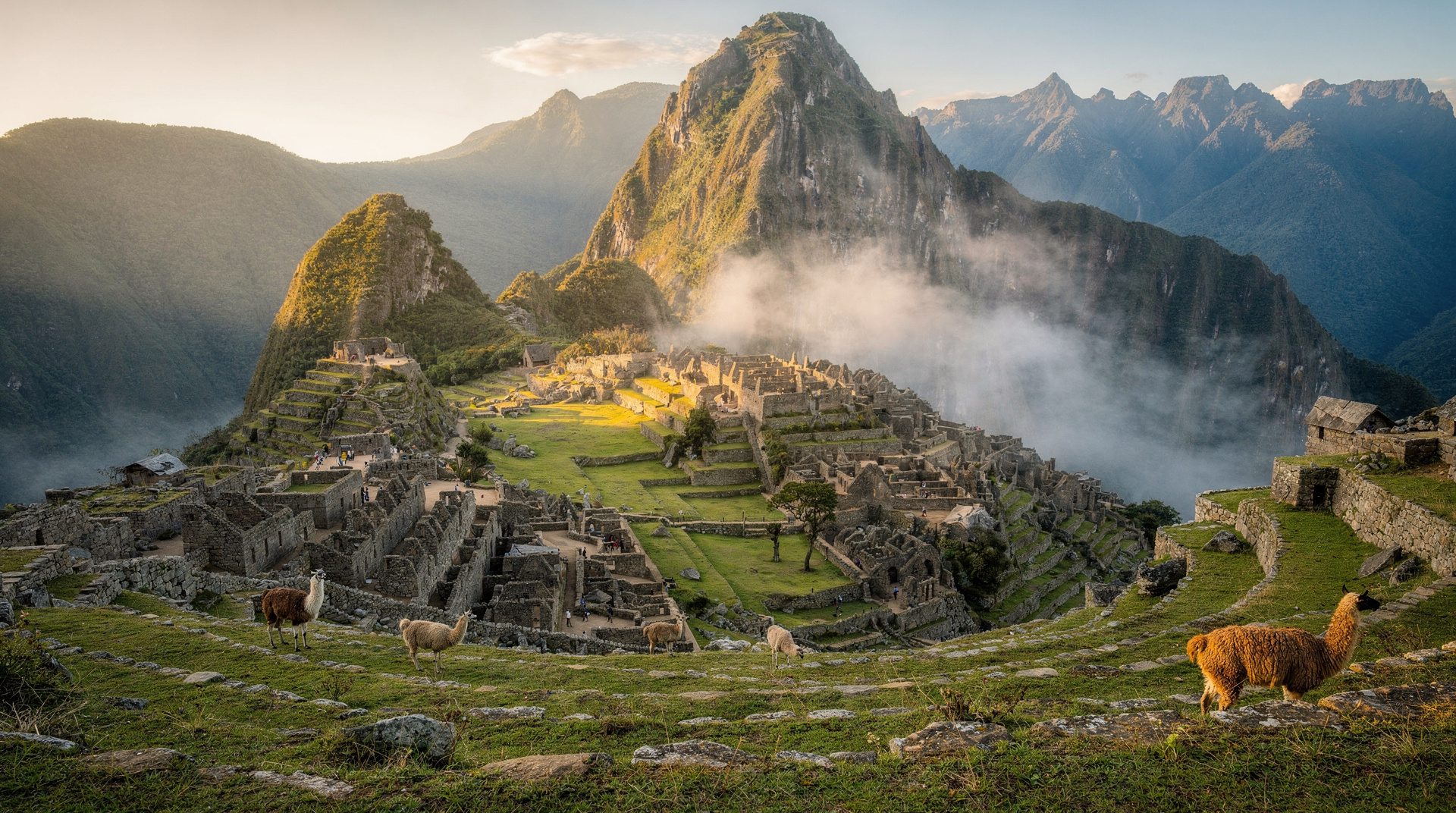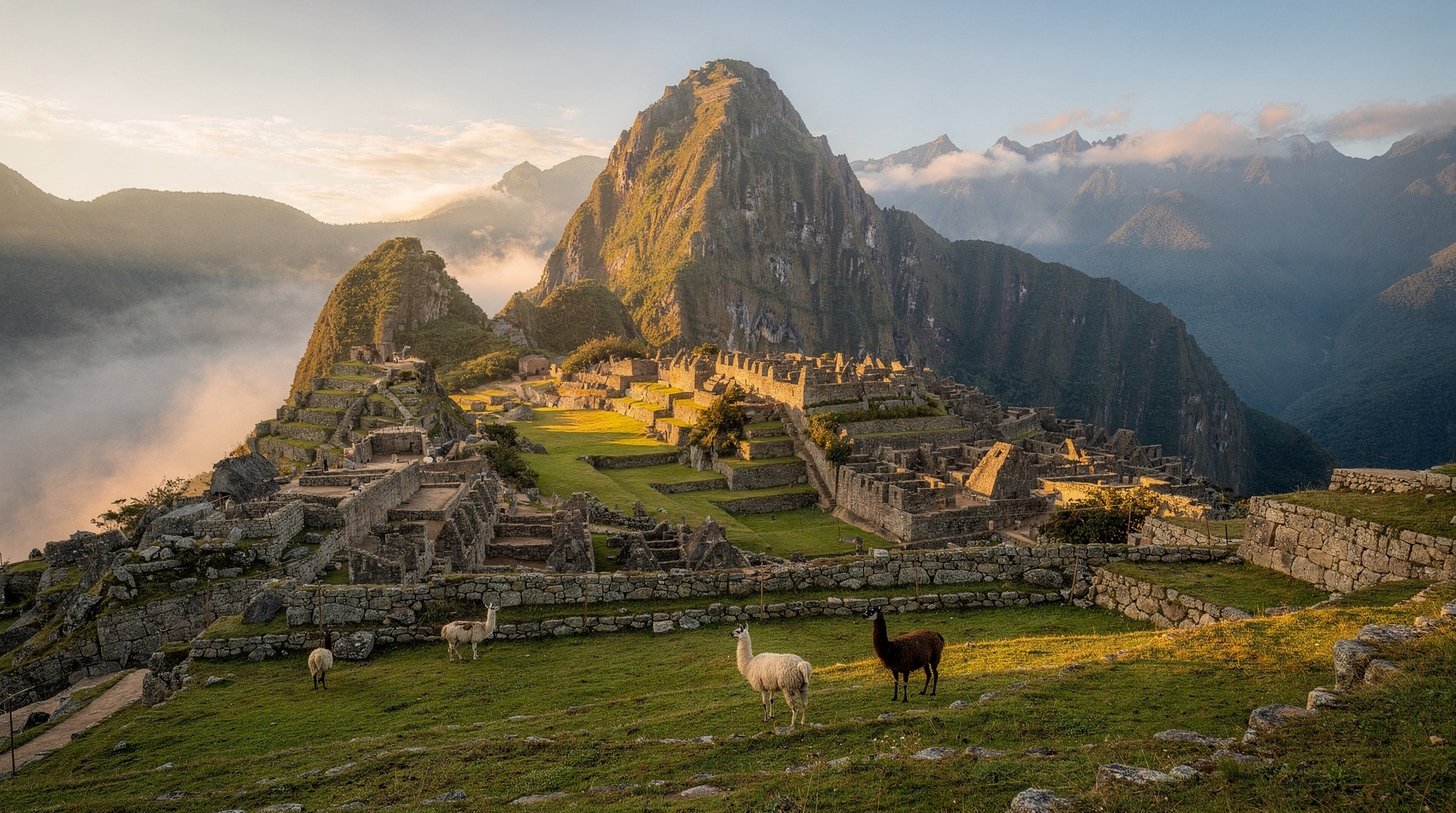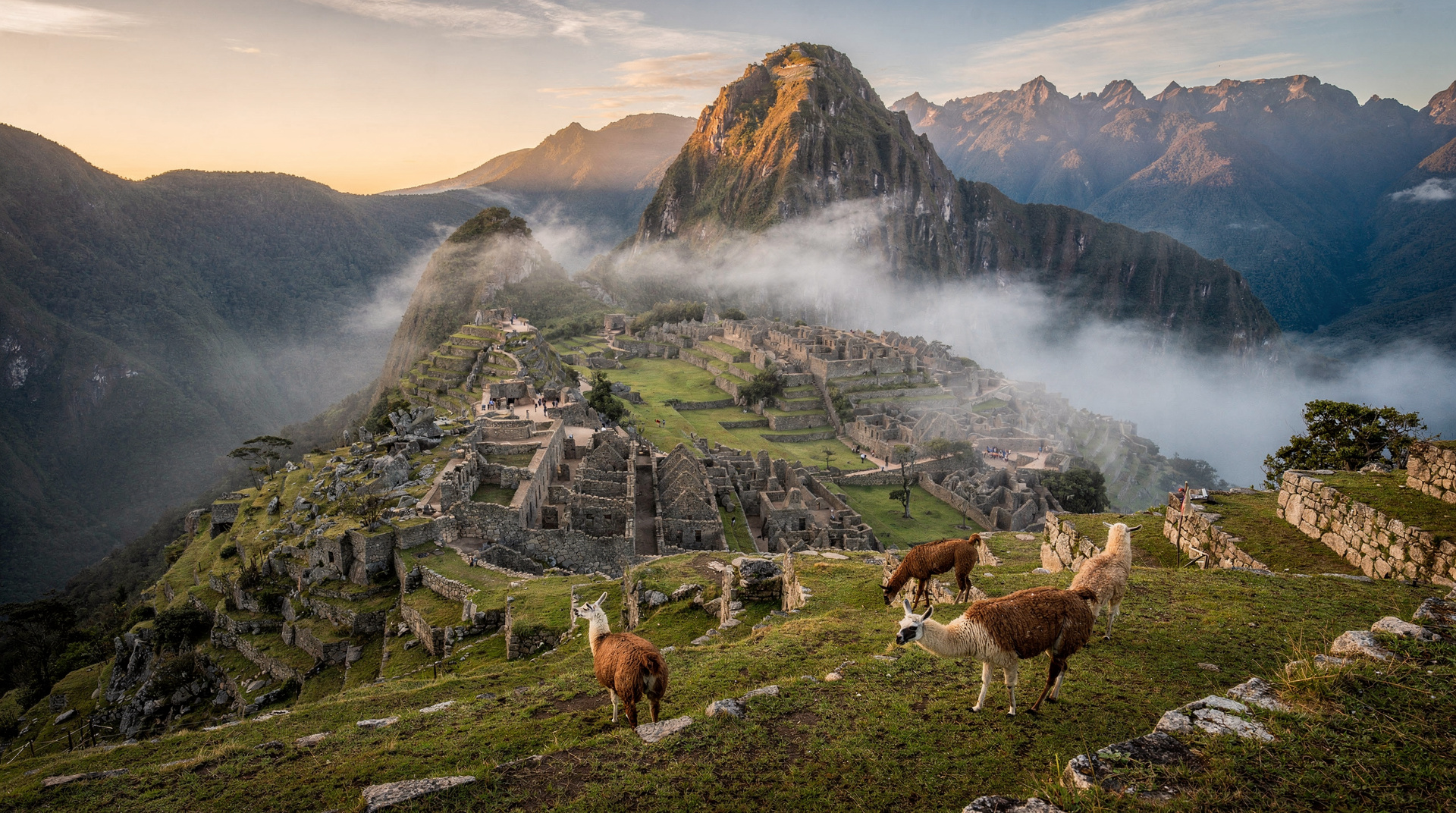
The train to Machu Picchu — PeruRail vs Inca Rail, all services explained
Excursion to Machu Picchu + Huayna Picchu Mountain
How do I take the train to Machu Picchu?
Book a PeruRail or Inca Rail service from Ollantaytambo to Aguas Calientes (the station serving Machu Picchu). The journey takes 1.5–2 hours through cloud-forest scenery. Return tickets cost roughly $60–130 depending on service class. Book well in advance — peak season trains sell out weeks ahead. Board at Ollantaytambo after taking a bus or colectivo from Cusco (~1.5 hours).
The only way in (unless you are walking)
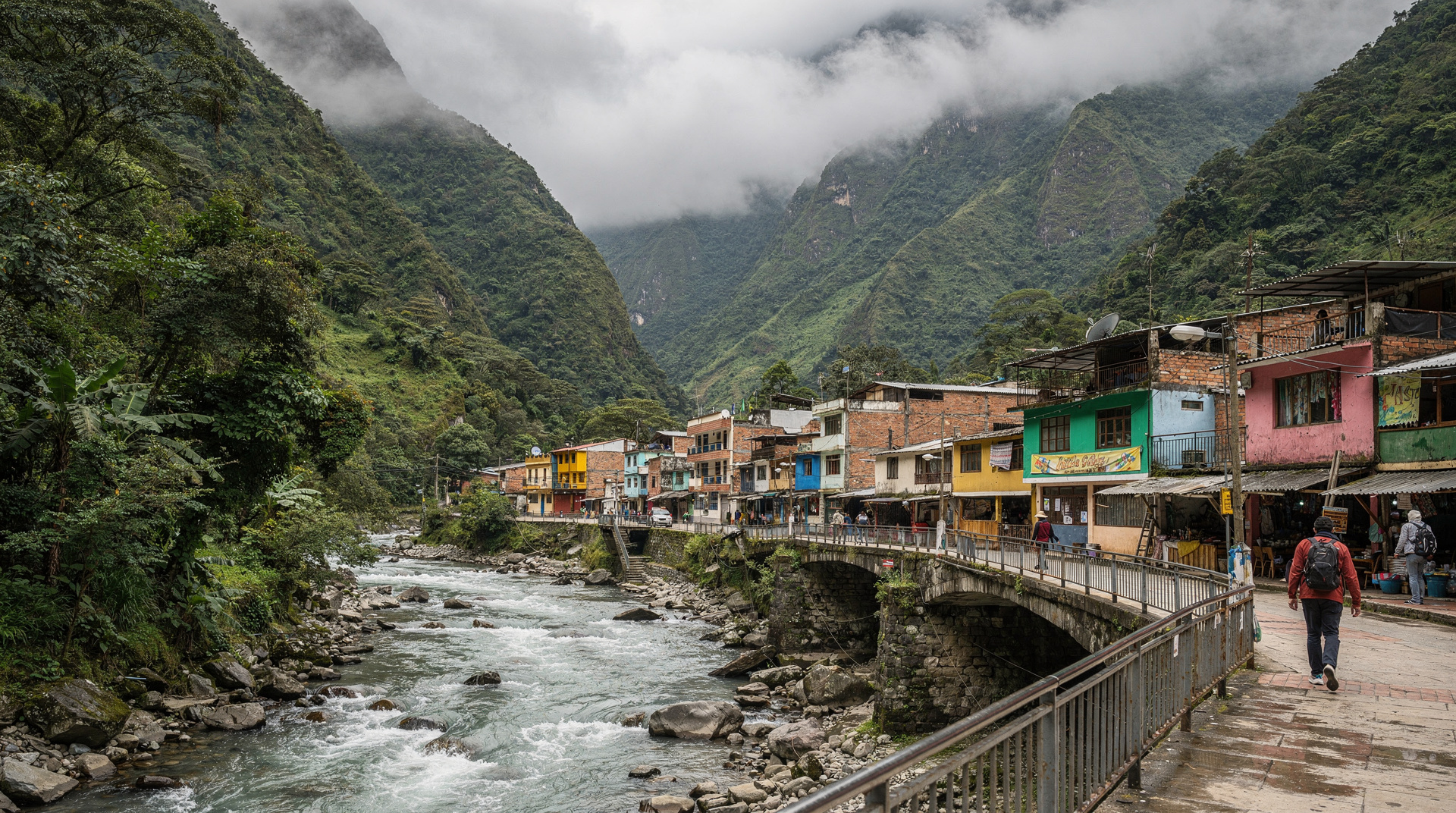
The town of Aguas Calientes has no road connection. No public highway reaches it. Getting there requires either a train journey along the Urubamba valley or a long walk along the railway tracks from Hidroeléctrica station. For the vast majority of visitors, the train is the approach, the highlight of the journey, and — for many — the first indication that the trip is going to be extraordinary.
Two rail operators compete for this route: PeruRail and Inca Rail. Between them they offer half a dozen service classes ranging from clean and functional economy to a full-service luxury dining train. Choosing the right service means understanding what each provides, what the price differences reflect, and whether the upgrade is worth it for your trip.
This guide explains every service, with current prices, honest assessments of value at each tier, the booking logistics, and how to avoid the growing number of third-party websites that intercept passengers searching for train tickets.
| Where | Ollantaytambo → Aguas Calientes (some services from Poroy/Cusco) |
| Cost | Around $60–130 return standard/Vistadome; $300–450+ premium |
| Time needed | 1.5–2 hrs from Ollantaytambo (3.5+ hrs from Poroy) |
| Getting there | Bus/colectivo from Cusco to Ollantaytambo (~1.5 hrs) to catch the train |
| Best time to book | 6–8 weeks ahead in July–August; 2–4 weeks the rest of the year |
The route: what you actually see
Starting at Ollantaytambo at approximately 2,800 m, the line descends gradually into the Urubamba canyon. The valley is broad and dry at this elevation, with the distinctive terracing of Inca agricultural engineering on the hillsides. Within 20–30 minutes of departure, the landscape begins to change.
The canyon narrows. Vegetation thickens. The scrubby hillsides give way to increasingly lush cloud forest — first bromeliads and ferns appearing on the canyon walls, then orchids visible from the carriage windows, then full subtropical forest closing in as the altitude drops. The Urubamba River runs alongside the track in the lower section, turbulent and green-brown after rain.
In the final 15 km to Aguas Calientes the canyon has narrowed to a gorge, the forest is dense on both sides, and the train is threading its way through one of the more dramatic pieces of railway in South America. This section is what the Vistadome’s panoramic glass ceiling is designed for. If you have not taken a glass-ceiling Vistadome train before, this route is a good argument for it.
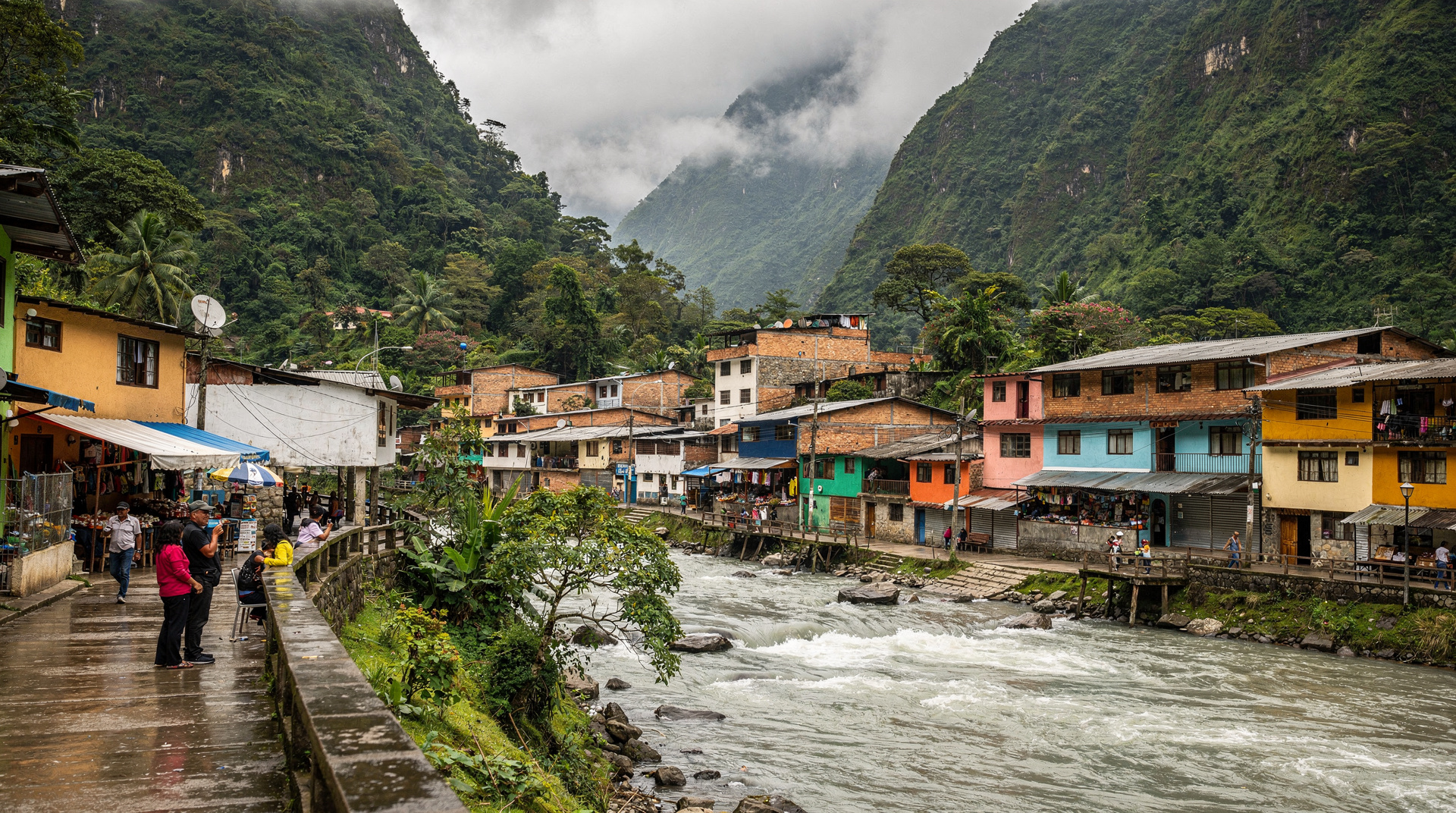
The approach into Aguas Calientes itself is unusual — the track runs through the centre of town, effectively as a street, with restaurants and hotels on either side. The station is in the middle of the commercial district, a short walk from everything.
PeruRail: the dominant operator
PeruRail is the older, larger operator and runs the most frequent schedule on the Ollantaytambo–Aguas Calientes route. It also operates the only service from Cusco/Poroy directly, though this longer route is used primarily by premium train passengers.
Expedition class
The standard PeruRail service. Clean carriages with padded seats in rows of four, panoramic windows (standard size, not ceiling glass). A snack box is typically included — biscuits, juice, and a small item. The level of comfort is entirely adequate for the 1.5–2 hour journey. This is what the vast majority of independent budget and mid-range travellers book.
Return price range: approximately $60–90 per person. Prices vary significantly with demand and how far in advance you book — the same seat on the same train can cost $60 if booked 8 weeks out and $90 if booked the week before in peak season.
Vistadome
The most popular upgrade. Carriages with large panoramic windows extending across the ceiling, giving an observation-car atmosphere. Seats are wider and arranged in groups of four around small tables. An enhanced snack/beverage service is included. The ceiling glass makes a genuine difference on this particular route — the canyon scenery in the lower section is best appreciated with a full-sky view.
For most travellers, this is the sweet spot between cost and experience. The extra $20–40 over Expedition class is well spent on a route this scenic.
Return price range: approximately $90–130 per person.
Vistadome Observatory
A further step up from standard Vistadome with wider panoramic viewing areas and a more elevated service quality. Available on some services.
Return price: approximately $120–150 per person.
Hiram Bingham (luxury)
Named after the explorer who introduced Machu Picchu to the world. A full-service dining train departing Cusco/Poroy once daily in each direction. The outbound journey includes cocktails and live Andean music; the return includes a three-course lunch or dinner with wine service, served on white tablecloths in a vintage-styled dining car. The total experience runs approximately 3.5 hours from Poroy to Aguas Calientes — longer than the Ollantaytambo route.
For travellers celebrating a milestone, on a honeymoon, or simply wanting the most indulgent version of this arrival, the Hiram Bingham is genuinely excellent. For everyone else, the Vistadome from Ollantaytambo delivers the same scenery at a fraction of the price.
Return price: approximately $380–450 per person (includes cocktails, meals and bus to the citadel on the outbound journey).
Book via the PeruRail website: perurail.com. English language available. International credit cards accepted.
Inca Rail: the boutique alternative
Inca Rail is the smaller, newer operator with departures from Ollantaytambo only. Its rolling stock is newer in the premium classes and the service is attentive and well-regarded. The main practical consideration is that Inca Rail’s schedule is less frequent than PeruRail — there are fewer departure times to choose from, which can be a limiting factor if you are trying to coordinate with a specific citadel entry slot.
The Explorer
Inca Rail’s economy class. Comparable to PeruRail Expedition in price and comfort — clean, adequate, and fine for the journey.
Return price range: approximately $55–85 per person.
First Class
Wider seats, better onboard service, panoramic windows comparable to the Vistadome. This is the sweet-spot class for Inca Rail passengers.
Return price range: approximately $90–125 per person.
The 360
Inca Rail’s premium experience, positioned as the Hiram Bingham competitor. A glass-dome observation carriage, four-course dining with wine, cocktail service, and Andean music. Departs once daily. The 360 dome gives extraordinary views and the food quality is notably high.
Return price: approximately $300–420 per person.
Book via incarail.com. English language available.
Book train and citadel entry together through an authorised operator to coordinate both bookings in a single transaction — this removes the risk of timing conflicts between your train arrival in Aguas Calientes and your timed citadel entry slot.
Booking: how far ahead and common mistakes
Timing
July–August: Book 6–8 weeks ahead minimum. Specific departures on popular dates sell out. If you want the 5:30 am Expedition from Ollantaytambo on a Saturday in August, it may be gone by mid-June.
May, June, September: 4–6 weeks ahead is usually sufficient. Earlier is always safer.
October–April: 2–4 weeks ahead for most services. Christmas week (22–30 December) is an exception — treat it as peak season.
Universal rule: book your return train at the same time as your outbound. Afternoon trains from Aguas Calientes are heavily subscribed in peak season.
Booking directly vs through agencies
Book directly on the PeruRail or Inca Rail websites. This gives you the most competitive price, immediate confirmation, and clear refund/exchange policies. Authorised travel agencies can also book legitimately on your behalf, usually at or near the same price.
Third-party websites: a genuine risk
A significant number of websites appear at the top of search results for “Machu Picchu train tickets” and charge 20–50% above face value while presenting themselves as official booking platforms. They are not. Some are legitimate price-adding middlemen; a subset are outright scams. The legitimate booking URLs are perurail.com and incarail.com — use these and nothing else as your primary booking source. If you see a price significantly above what either operator quotes on their website, you are looking at a markup. The train ticket scams guide documents the known operators in detail.
From the station to the citadel
Aguas Calientes station deposits you in the centre of town. The bus terminal is a five-minute walk north. Buses to the citadel gate begin at approximately 5:30 am and run continuously. Buy your bus ticket at the terminal (S/80 return, approximately $24). In peak season (July–August), queue at the bus terminal by 5:00 am to board a bus within 20–30 minutes of the 5:30 am start.
If you are staying overnight in Aguas Calientes and have your citadel ticket for the first morning slot, this timing is entirely manageable. If you are arriving by an early train and trying to make a 6 am entry slot, the maths is tight — the earliest trains arrive around 6:30 am, making a 6 am slot impossible on the same day. Book your entry slot for the 7 am or 8 am window when arriving by early train.
The Camino Hiram Bingham footpath is the alternative to the bus. Starting from the bus terminal area, it takes 45–60 minutes uphill to the citadel gate. Many visitors walk the descent (30–40 minutes, a pleasant forest path) and save the return bus fare. Full Aguas Calientes practical information is in the town guide.
Staying overnight vs day-tripping: the transport impact
If you are doing a day trip from Cusco, your train schedule is tightly constrained: earliest possible departure from Ollantaytambo, maximum time at the site, return train at a specific afternoon hour. Missing any component cascades into the next. The day trip guide explains how to manage this.
If you are staying overnight in Aguas Calientes, you have much more scheduling flexibility. You can take a mid-morning train from Ollantaytambo on the first day, settle into your accommodation, visit the thermal baths, and be at the bus terminal at 5 am the next morning fully rested. This format is significantly more enjoyable. The Aguas Calientes guide covers what to expect from the town itself.
The full picture — tickets, circuits, timing and all the other logistics — is in the Machu Picchu complete guide.
PeruRail vs Inca Rail: which one in practice?
Both operators are legitimate and both run reliable services. The practical differences:
Schedule depth: PeruRail has more departures per day, which means more flexibility if your first-choice time is unavailable. If your target departure time is sold out on PeruRail, check Inca Rail immediately — the schedules are different and the second operator often has availability when the first does not.
Service quality comparison: At equivalent price tiers, both operators deliver similar quality. PeruRail’s Vistadome is well established and consistently rated highly. Inca Rail’s First Class carriages are newer in some services. For most travellers the difference in experience between the two operators at the same price tier is minimal.
Premium trains: PeruRail’s Hiram Bingham is the more famous luxury option and departs from Poroy/Cusco. Inca Rail’s 360 is comparable in quality and departs from Ollantaytambo. If the premium experience matters, the 360 has the practical advantage of the shorter and more scenic Ollantaytambo–Aguas Calientes route rather than the Poroy route.
Luggage: Both operators have luggage limits — approximately 5–8 kg carry-on in economy class. Enforced inconsistently but worth knowing if you are travelling with trekking equipment.
The Poroy/Cusco departure: is it worth considering?
PeruRail operates some services from Poroy station (a suburb of Cusco, approximately 20 minutes by taxi from the centre) and from Cusco Wanchaq station. These services are primarily used for the Hiram Bingham and for visitors who specifically prefer not to travel to Ollantaytambo first.
For standard class travellers, the Poroy/Cusco departure has significant disadvantages: the train journey is substantially longer (3.5+ hours versus 1.5 hours from Ollantaytambo) and the early sections between Cusco and the Sacred Valley are less scenic than the final cloud-forest descent. Unless you specifically have a reason to avoid Ollantaytambo, the Ollantaytambo departure is the right choice.
Checking current train ticket options directly
Before finalising dates, it’s worth cross-checking live availability rather than relying on published price ranges alone — the Machu Picchu train tickets guide walks through the booking screens on both operator sites step by step, which is useful if this is your first time booking Peruvian rail tickets online and the currency/date format conventions feel unfamiliar.
Handling delays and missed connections
Train delays on the Machu Picchu line do occur, particularly in rainy season when track maintenance is required. If your train is delayed:
- If the delay causes you to miss your citadel entry slot: contact the Ministry of Culture through tuboleto.cultura.pe with a written record of the delay from the rail operator. Rescheduling is sometimes possible but not guaranteed; the system is not designed for day-of changes.
- If the delay causes you to miss your return train: contact the operator directly. Both PeruRail and Inca Rail have staff at Aguas Calientes station and will assist with rebooking onto the next available service if the delay was operational. Costs for rebooking vary.
- Build buffer into your schedule: booking your entry slot 90 minutes after your expected arrival in Aguas Calientes (rather than the minimum feasible gap) provides useful resilience against minor delays.
The train journey as its own experience
Many visitors treat the train as purely functional transport. In fact the Ollantaytambo to Aguas Calientes journey is among the more distinctive rail experiences available in South America, comparable to the Cusco–Puno Andean Explorer route in terms of scenery, and more accessible in terms of frequency and price.
The deliberate choice to take a Vistadome or higher class carriage, pack your own snacks, and treat the 1.5 hours as a meaningful transition from the dry valley to the cloud forest — rather than staring at a phone — rewards attention. The birdlife visible from the train in the final 30 km to Aguas Calientes is worth watching: tanagers, hummingbirds, and on lucky mornings, pairs of blue-and-yellow macaws along the riverside vegetation.
Connecting train travel with the wider Sacred Valley visit
The Ollantaytambo station is not just a rail terminal — it sits in one of the most interesting Inca towns in the Sacred Valley. Arriving early to your Ollantaytambo departure gives you time to walk the Inca streets, see the great fortress above the town, and eat at one of the plaza restaurants before boarding. The Ollantaytambo guide covers the town in full; allow at least 90 minutes if visiting the fortress.
Several visitors choose to stay overnight in Ollantaytambo rather than Cusco on the night before their Machu Picchu trip. This is a smart option: Ollantaytambo at 2,800 m is lower than Cusco (3,400 m), which can reduce altitude fatigue; and the 5:00–5:30 am train is a short walk rather than a 1.5-hour drive. The Sacred Valley complete guide and the Sacred Valley vs Cusco guide explore the sleep-in-the-valley strategy in detail.
Train tickets for the Salkantay and Inca Trail combinations
Visitors who trek the Salkantay route to Machu Picchu typically arrive in Aguas Calientes on foot from the cloud forest direction on day five of the trek. They need a one-way train from Aguas Calientes back to Ollantaytambo on the return. This is the same booking process — PeruRail or Inca Rail, one-way ticket, Aguas Calientes to Ollantaytambo — and should be booked in advance, particularly in peak season.
Inca Trail trekkers arrive through the Sun Gate on day four and enter the citadel directly; their entry to Machu Picchu is included in the trek permit. They need a separate train back from Aguas Calientes after their citadel visit. Permits include citadel access but not train travel. The Inca Trail complete guide covers permit logistics; train booking for the return is identical to standard visitors.
What happens if the railway is closed
The Machu Picchu railway line is occasionally closed due to floods, landslides, or maintenance — particularly in the wet season. In these cases:
- PeruRail and Inca Rail will notify ticket holders and offer alternatives (rescheduling, refunds, or alternative transport where available)
- The Hidroeléctrica route sometimes remains open when the railway is blocked, though it also depends on the condition of the Santa Teresa road
- In extreme closure events (several weeks during the 2010 floods, for example), the citadel may be temporarily inaccessible
For visitors with confirmed bookings during a closure: contact the operator immediately. For visitors planning travel during high-risk periods (January–February especially), travel insurance covering trip disruption is genuinely recommended for this itinerary.
The full logistics summary
Getting to Machu Picchu by train from Cusco involves four bookings: the citadel entry ticket (tuboleto.cultura.pe), the train ticket (perurail.com or incarail.com), the bus to the citadel gate (purchased on arrival in Aguas Calientes), and accommodation if staying overnight. All four should be confirmed before you leave Cusco.
The Machu Picchu complete guide ties all the logistics together in a single planning reference. For a side-by-side breakdown of every service class across both operators, the PeruRail vs Inca Rail comparison guide and the trains to Machu Picchu compared guide are worth cross-checking against current prices before you book.
Booking your train ticket alongside guided options
A fully guided Machu Picchu experience with train included is worth considering even if you would otherwise book everything separately, because it removes one of the more error-prone parts of independent planning: matching your train arrival time in Aguas Calientes to a citadel entry slot with enough buffer to walk from the station to the bus terminal, queue, and ride up. For a first Machu Picchu visit, having a single confirmation covering both pieces reduces the number of things that can go wrong on the day.
Choosing a seat and where to sit for the views
Within any given carriage, seat position matters more than most passengers realise. On standard Expedition and First Class carriages, forward-facing window seats on the river side (the side the canyon deepens on as you descend) give the best views of the final gorge section; ask staff which side that is for your specific departure, since it can flip depending on which direction the train is running that day.
In Vistadome and 360 carriages the glass ceiling reduces how much this matters, but a window seat is still worth requesting at booking if the platform allows seat selection. Solo travellers and couples should note that most economy-class seating is arranged in groups of four facing each other — you may end up sharing a table with strangers for the journey, which is normal and often a pleasant part of the trip.
If you’re flying into Cusco the same week
Your flight schedule affects your train plan more than most visitors expect. Cusco’s airport has a limited daily flight window, and the Cusco airport guide covers arrival logistics; the Lima to Cusco flights guide explains why booking an early-morning Lima–Cusco connection matters if you plan to train onward to Machu Picchu the same day (not recommended, but sometimes unavoidable on a tight schedule). Give yourself at least one full day in Cusco or the Sacred Valley before your train day — both for acclimatisation and as a buffer against flight delays, which are common on this route in the rainy season.
Day trip vs staying overnight: which train schedule fits
If you’re still deciding between a single long day and an overnight stay in Aguas Calientes, the choice largely comes down to how much train-schedule stress you want to absorb. The Machu Picchu day trip guide walks through the tightest version of the single-day plan, train times included, while an overnight stay (covered above) removes almost all of that pressure.
Families in particular benefit from the slower pace — see the Machu Picchu with kids guide for why an overnight often works better with children than a dawn-to-dusk train day. Travellers who want the plushest possible version of either plan should also look at the luxury Cusco guide, since Hiram Bingham and 360 tickets are usually bundled with higher-end accommodation packages.